
Yaowarat Bangkok: What to Do, Eat, and Expect in Chinatown

Yaowarat is worth one evening, minimum, and the version most travelers come for starts after sunset, when Yaowarat Road turns into a long street-food crawl. The district is Bangkok's Chinatown, centered on Yaowarat Road in Samphanthawong District, and it packs temples, gold shops and market alleys into a walkable pocket. This guide covers what Yaowarat is, who it suits, how to get there by MRT or river boat, where to eat, and how Sampheng Market and Talad Noi fit into the same visit.
Plan for the evening, not the afternoon. Daytime Yaowarat is a working commercial street of gold shops and shophouses, while the neon, the stalls and the crowds arrive later, as one neighborhood guide describes the shift. If you have half a day, use the daylight hours for temples and markets and keep the night free for eating.
What Yaowarat Is and Where It Sits
Yaowarat Road is the spine of Bangkok's Chinatown, in Samphanthawong District, which sits between the Chao Phraya River and the modern city center near Hua Lamphong. Modern Chinatown spreads around Yaowarat and Charoen Krung roads, so the district is bigger than the single street most people picture.
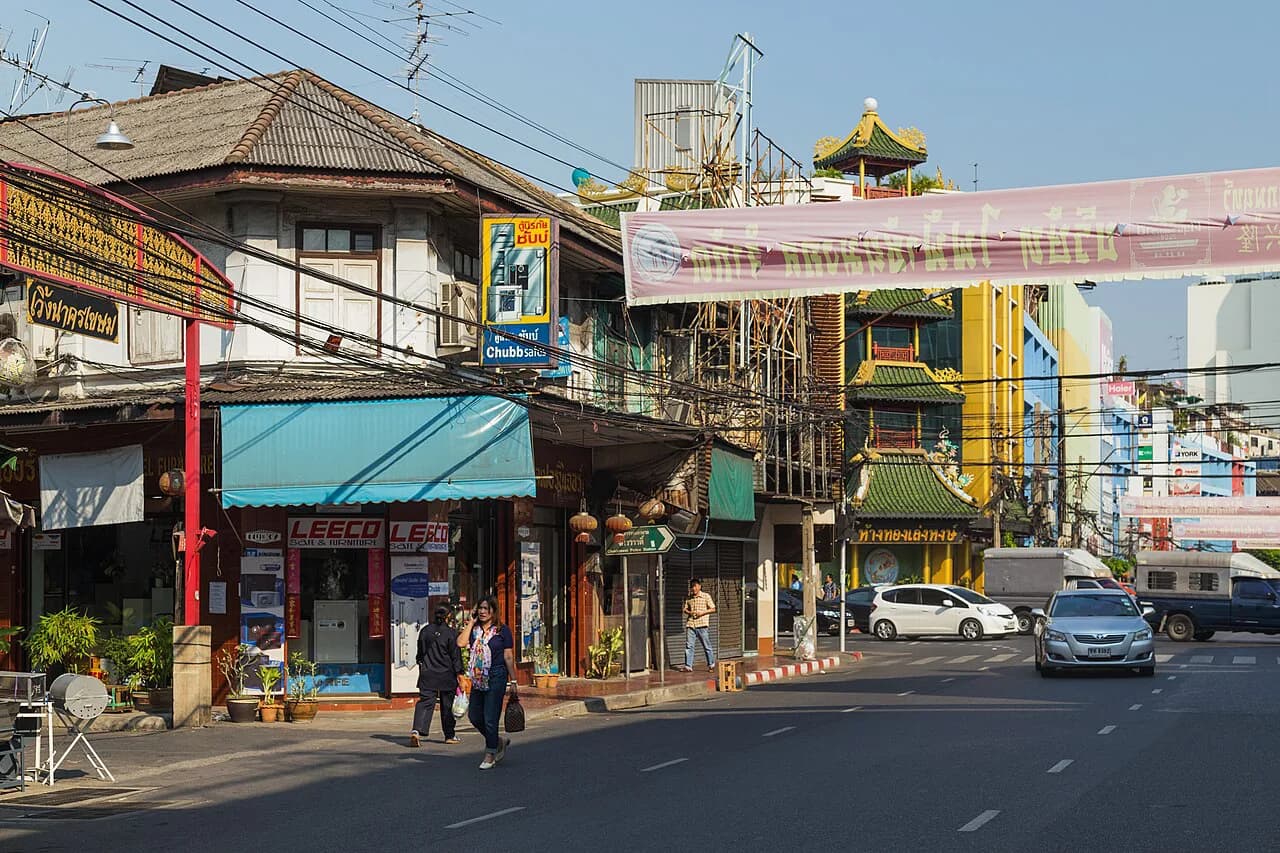
It is a dense, old, commercially alive neighborhood rather than a polished sightseeing zone. Gold shops, Chinese medicine pharmacies, shophouses and food stalls sit stacked along the same blocks, and the side lanes fill with vendors as evening arrives. Treat the area as a functioning appetite rather than a museum, and you will enjoy it more.
Who Yaowarat Suits and Who It Does Not
Yaowarat suits night owls, street-food grazers and bargain hunters who are happy to eat standing or on a plastic stool and to walk shoulder to shoulder through crowds. It rewards people who abandon a rigid checklist and follow the smell of frying batter, broth and charcoal instead.
It does not suit travelers who want quiet, air-conditioned, polished sightseeing in the evening. The traffic thickens, the pavements narrow under the weight of people, and the noise is part of the package. If that sounds like a chore, a calmer neighborhood base with a single evening trip here may work better than staying in the district.
Getting There: MRT, River Boat, or Road
The MRT Blue Line to Wat Mangkon Station is the most convenient arrival, putting you steps from the main food stalls. For a scenic approach, take a Chao Phraya Express boat to Ratchawong Pier and walk into the market streets from the river.
Taxis and tuk-tuks are readily available across the city, but Yaowarat Road traffic can be heavy, especially in the evening rush when the food crowds arrive. Public buses such as 21, 25 and 73AC pass through the area for a cheap, local ride if you are not in a hurry. The trade-off is simple: rail for speed and predictability, boat for scenery, road for door-to-door convenience with a real chance of sitting in traffic.
If you are comparing areas to sleep in, Bangkok neighborhoods: choose the area that suits your days breaks down what each district is like before you commit to Chinatown as a base. Travelers who prefer nightlife without the market crush often look at Khao San Road, Bangkok: What It's Really Like and Who It Suits, while Sukhumvit, Bangkok suits those who want malls, condos and BTS access over shophouse alleys.
Getting Around on Foot
Yaowarat is a walking district, and the main street makes the most sense on foot once the stalls set up. Walk Yaowarat Road first to get the measure of it, then duck into the side lanes where the crowds thin and the vendors get more specific.
Two adjacent zones are easy to add on foot: Sampheng Market, the covered alley maze east of the main artery, and Talad Noi, the old riverside quarter on the Chinatown edge known for street art and traditional architecture. Both reward wandering rather than a fixed route. Wear shoes you can walk in for a couple of hours and expect to double back more than once.
Neighboring areas give you a useful sense of scale: Ari, Bangkok is calmer and café-led, while Thonglor, Bangkok is the polished nightlife contrast to Yaowarat's street-level chaos. If you are still deciding where to spend your Bangkok days overall, Things to do in Bangkok sorts the city by area and time.

Temples and Landmarks: Wat Traimit and Wat Mangkon Kamalawat
Wat Traimit, the Temple of the Golden Buddha, houses a solid-gold Buddha statue that is one of the district's defining landmarks. It sits at the Chinatown end of the area and makes the most sense as a daytime stop before the food stalls set up.
Wat Mangkon Kamalawat is the other temple name that comes up repeatedly in Chinatown guides, a working Chinese temple in the district. Both temples are active places of worship rather than attractions built for visitors, so check current details on hours before you build a day around them.
The Bangkok Attractions: 12 Visitor Guides hub covers the city's bigger-name sights if you want to pair Chinatown's temples with the Grand Palace side of town on a separate day.
Yaowarat Road by Day vs by Night
By day, Yaowarat Road is a hub for gold shops glistening with jewelry and traditional Chinese medicine pharmacies in old shophouses. This is when you can move easily, see the architecture and run errands without fighting a crowd.
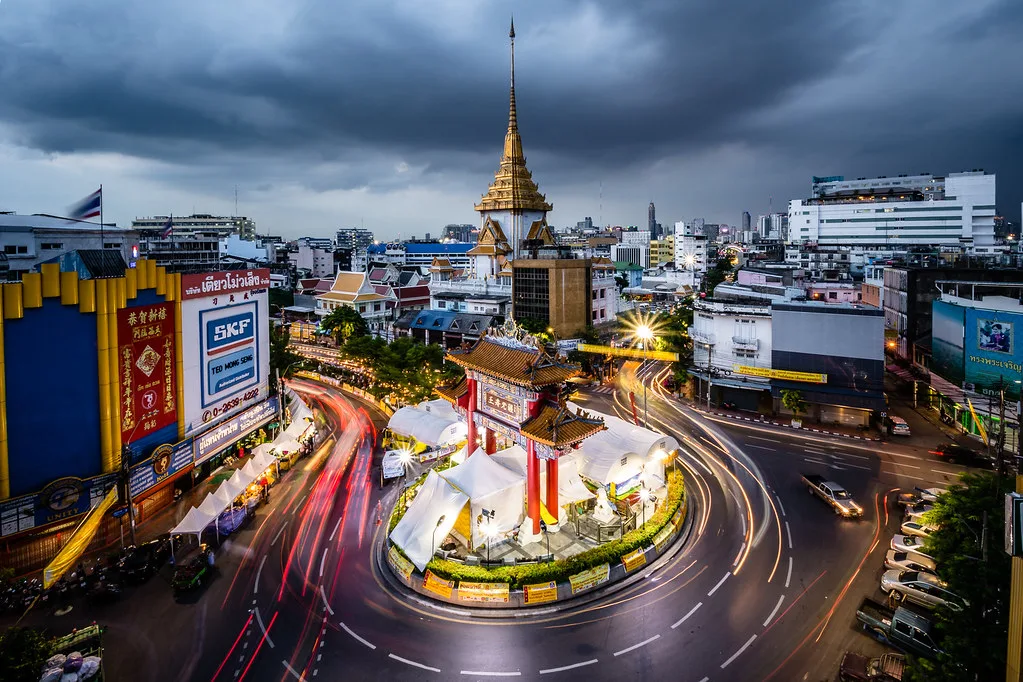
At night, the whole street changes rhythm: neon signs light up in red and yellow, sidewalks become a culinary stage and the crowd thickens into one long crawl. Most travelers come for that second version, and it is why a single evening barely covers the district. If you only have one slot, take the night.
Eating on Yaowarat Road
A Yaowarat food crawl does not need a paid tour. The strongest approach is to arrive hungry and move stall to stall: something fried, then something soupy, then a dessert, then whatever looked good while you were queuing. Pa Tong go, the hot fried dough, is the classic opener, and kway chap, the dark peppery noodle-and-offal bowl, is the more serious middle course.
Several names recur across guides: Pa Tong Go Savoey, Nai Ek Roll Noodle, Jek Pui Curry, Yaowarat Toasted Bread and T&K Seafood on the restaurant side, with K Seafood noted for grilled river prawns and shellfish. Recognizable spots like these tend to draw the longest lines, so pick two or three targets and eat opportunistically in between rather than queuing all night.
Snacking sideways works well here: prawn dumplings, late-night dim sum, buns, skewers and sweets can add up to a full dinner across several stops. Dessert options range from mango sticky rice to toasted buns stuffed with Thai milk tea or chocolate. Fresh juice carts and shophouses offer a liquid reset when the heat starts negotiating with your patience, and one long-standing coffee shop on Phat Sai is known for traditional coffee and kaya toast.
Prices at individual stalls change and most do not publish menus online, so carry cash in small notes and check the posted price or ask before ordering. Menus that appear in older write-ups, including specific dish prices, are not a reliable guide to what you will pay tonight.
Sampheng Market: The Covered Alley Maze
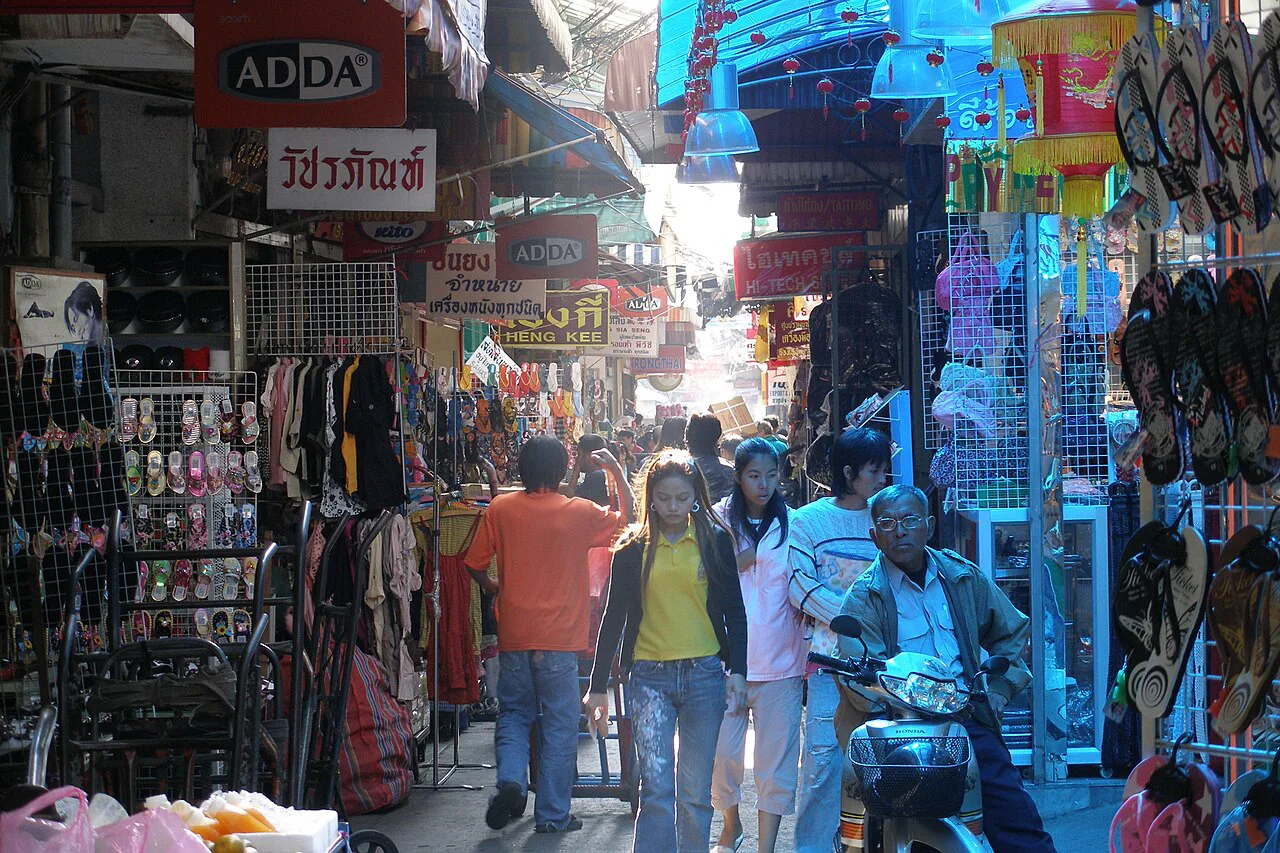
Sampheng Market is the commercial soul of Chinatown: a narrow, covered alleyway that has traded for generations and now sells wholesale stationery, fashion accessories, kitchenware, dried spices and cheap souvenirs. It is crowded and chaotic, and that is exactly what makes it worth an hour.
Go with room in your bag and no fixed shopping list, because the fun is in the browsing. Prices here are among the lowest in the city, which makes it a better stop for small souvenirs than the polished malls. Keep your pace slow and your expectations of personal space low.
Talad Noi: Street Art and Old Backstreets Next Door
Talad Noi, the old riverside quarter on Chinatown's edge, has become a hub for street art and murals that tell the local community's story. Wander its historic backstreets and you will find large-scale portraits and small pieces tucked behind stacks of old car parts.
It is a natural add-on to a Yaowarat day: temples and market in the afternoon, Talad Noi's lanes before the light goes, then back to Yaowarat Road for dinner. The neighborhood is residential and working, so treat the art as something you find while walking rather than a ticketed attraction with a route.
Where to Stay In or Near Yaowarat
Staying in Yaowarat puts you inside the evening action and lets you eat late without a long ride home. The trade-off is noise, traffic and fewer polished hotel options than the modern city center offers. Check current details on a specific property before booking, since Chinatown's small hotels and hostels change hands and refurbish often.
Staying elsewhere and visiting for one evening is the more common approach, and it works well if you base near an MRT Blue Line station for an easy ride to Wat Mangkon. If you want a quieter base with a different rhythm, compare against Ari, Bangkok for cafés and local life, or Thonglor, Bangkok if dining and nightlife matter more than market alleys.
Time Needed and How to Sequence a Visit
One evening covers the food crawl but not much else. A half day lets you add Wat Traimit and Wat Mangkon Kamalawat in daylight, browse Sampheng Market, and walk Talad Noi's lanes before returning to Yaowarat Road for dinner.
A sensible sequence starts with an MRT ride to Wat Mangkon Station in the afternoon, then temples, then Sampheng, then Talad Noi as the light softens, finishing on Yaowarat Road when the stalls are in full swing. If you would rather arrive by river, take the boat to Ratchawong Pier and walk in, accepting that you will start at the Chinatown edge rather than the middle.
Keep the plan loose after dark. The street rewards improvisation, and a fixed reservation-style schedule will have you walking past the best-looking stalls to make a time. Build in a buffer for the ride home, since evening traffic on and around Yaowarat Road is slow.
Should You Give Yaowarat a Full Evening?
Yes, if you like street food, crowds and old commercial streets. Build the trip around one evening on Yaowarat Road, arrive by MRT to Wat Mangkon Station or by boat to Ratchawong Pier, and add daylight time for Wat Traimit, Wat Mangkon Kamalawat, Sampheng Market and Talad Noi only if you have a half day to spare.
Skip it, or visit briefly, if you want calm, air-conditioned sightseeing after dark. Either way, use the Bangkok Neighborhoods guide to pick the base that fits your trip, and treat Yaowarat as the loud, hungry, memorable district it is.
Explore more Bangkok guides
Frequently Asked Questions
Is Yaowarat worth visiting?
For most travelers, yes, at least once and in the evening. Yaowarat Road's street-food scene, gold shops and Chinese temples give you a dense, walkable slice of Thai-Chinese Bangkok that is hard to replicate elsewhere in the city. If you dislike crowds, heat and noise, one short evening is enough.
What time should I go to Yaowarat?
Late afternoon into evening works best for a first visit: see the temples and Sampheng Market while it is light, then stay for the food stalls as they set up after sunset. Arriving by MRT to Wat Mangkon Station or by boat to Ratchawong Pier is simpler than fighting evening road traffic.
What does Yaowarat mean in English?
Yaowarat is the name of the district's main road, and in Bangkok the term is used to mean the Chinatown area around that street. For practical purposes, treat Yaowarat and Bangkok's Chinatown as the same district.
What is Chinatown in Bangkok famous for?
Yaowarat is best known for its evening street food, its gold shops and Chinese medicine pharmacies, its Chinese temples including Wat Mangkon Kamalawat and Wat Traimit, and the covered Sampheng Market alleys. The neighboring Talad Noi quarter adds street art and old riverside architecture.