
Hua Hin Railway Station: Visiting the Old Wooden Station and the New One Next Door

Hua Hin railway station is really two buildings: the historic wooden station, now a preserved monument and photo stop, and the modern station next door where you buy tickets and board trains. Most visitors arrive expecting one quaint building and find both, so knowing which is which saves confusion.
This guide covers where the station sits in town, how to reach it, what to look at in the old building, how much time to allow, and how the stop pairs with nearby markets. It stays focused on the station itself rather than turning into a full town itinerary, and you can browse Hua Hin Attractions: Plan Your Beach and Temple Stops if you want to plan the rest of the day around it.
Old Station vs. New Station: Which One You Want
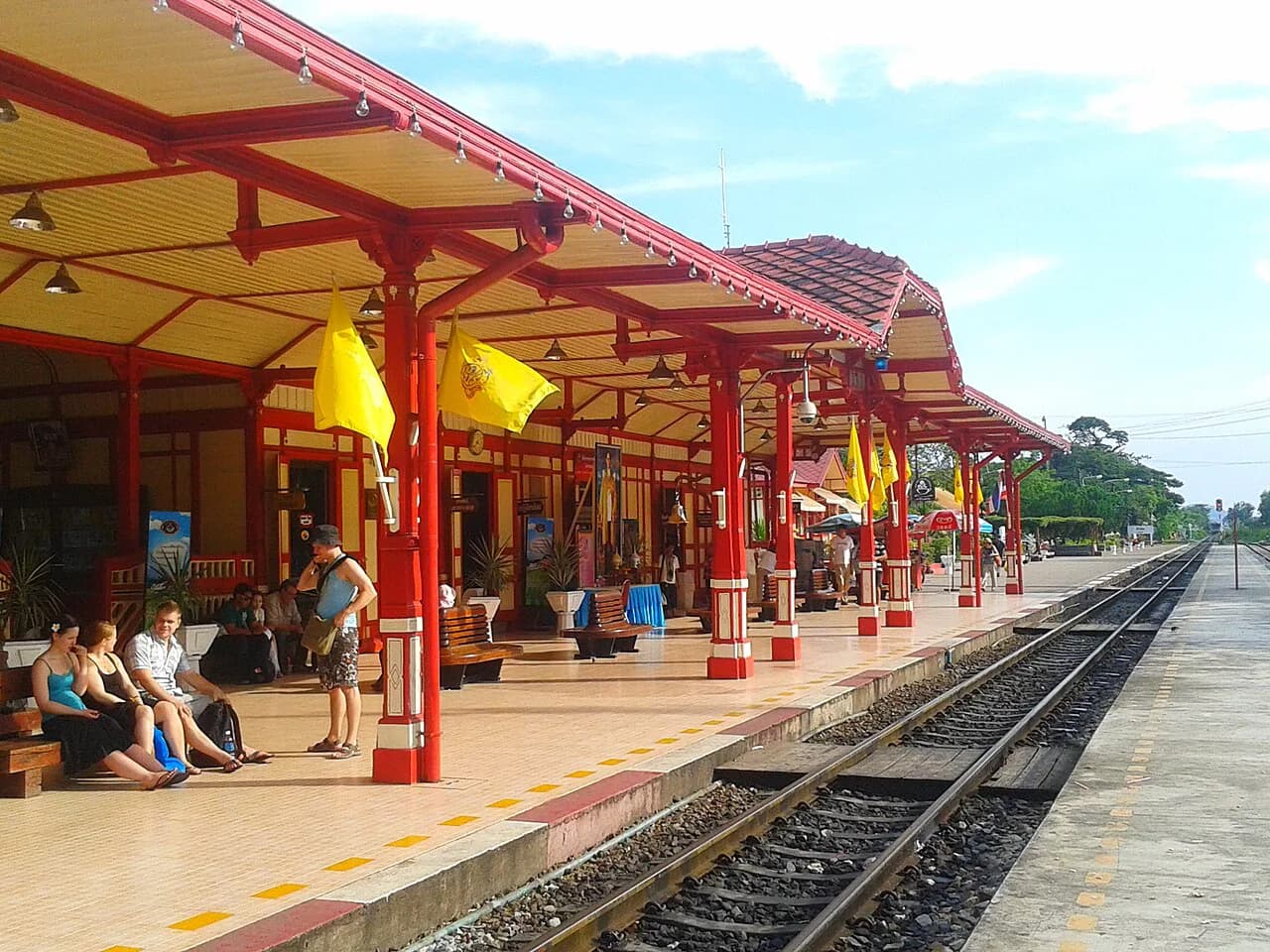
The building most people picture, the small wooden structure painted red and yellow with a Thai colonial look, no longer handles departures. The old station functioned from the early 20th century, was renovated in 1926 with the addition of a royal pavilion, and has since been retired as a working stop after a new station was built beside it.
The new station sits directly next door and keeps a similar color scheme, but it is a large modern building with ticket offices on its ground floor. If your goal is catching a train, head straight there; if your goal is photographs, the wooden building is the draw.
Plan for a short stop at the old building rather than a half day. It is a compact piece of architecture in the middle of town, not a museum with exhibits, and the visit is mostly about looking, photographing and reading the facade.


Where It Is on Damnoenkasem Road
The station address is Damnoenkasem Road, Hua Hin 77110, in Prachuap Khiri Khan province, with the old building and the new one sharing the same central block.
That puts it within walking distance of much of the town center, which is why many travelers simply stroll over rather than arranging transport. A local news page describes the station as sitting in the center of Hua Hin and easy to reach on foot or by taxi.
If your hotel is farther out, a tuk-tuk or a Grab ride is the usual fallback, and drivers know the station without explanation. Do not count on songthaews serving it: one guide says it doubts the local songthaew routes stop there and advises checking locally, so treat a blue songthaew as unreliable for this destination.

What to See in the Old Wooden Building
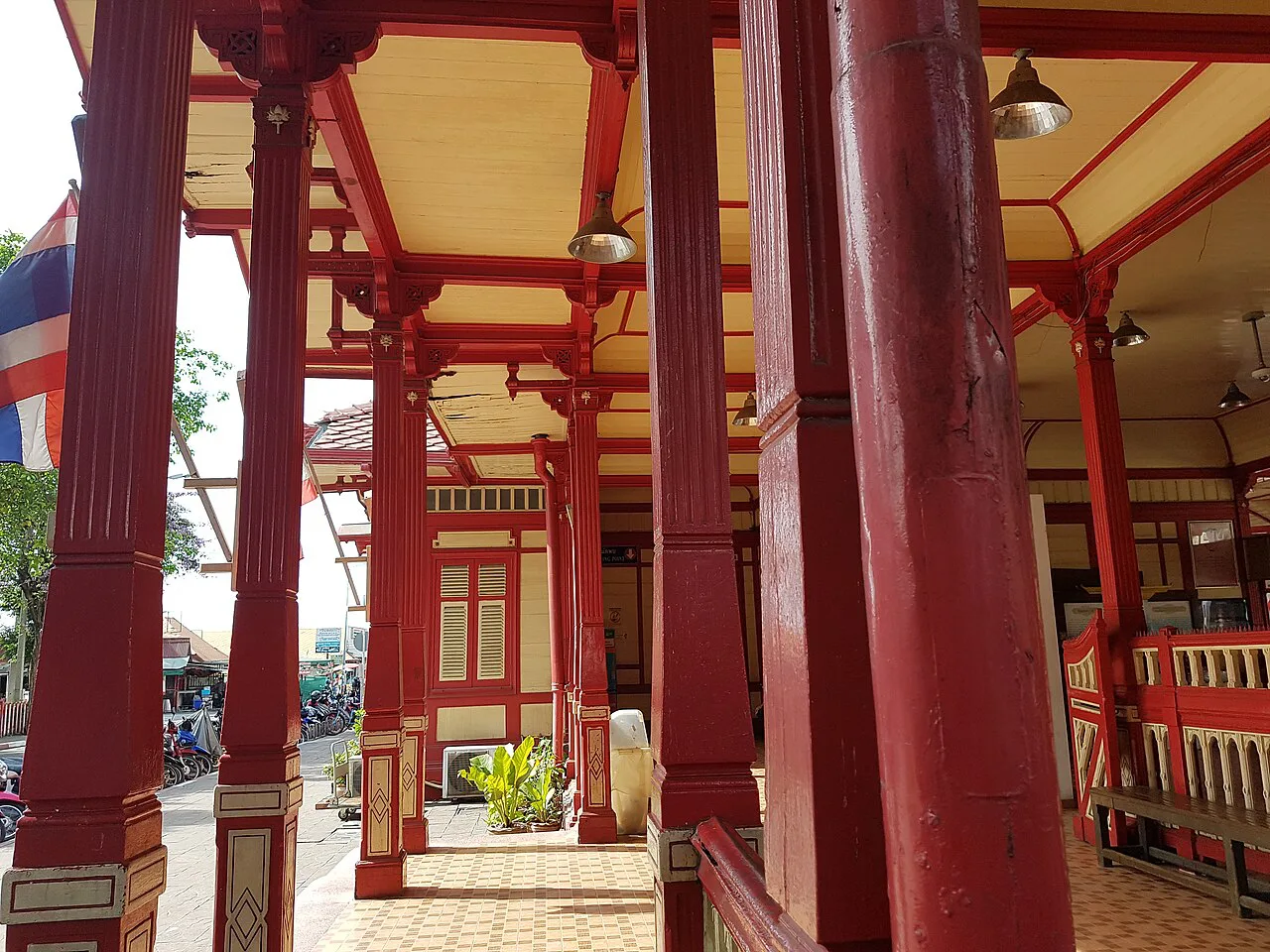
The appeal is the architecture: a low wooden structure in red and yellow, with the trim and gabled roofline that give it a slightly Victorian air while staying Thai in concept. It reads as an obvious relic against the modern buildings around it, which is exactly why people stop.
Next to it is the royal waiting room, the pavilion added for the royal family's seaside trips and the piece most often photographed alongside the main facade. The station's history is tied to Hua Hin's identity as a royal resort town, and that building is the clearest physical reminder of it.
There is no need to look for a ticket window or a departure board at the wooden building. View it from the street side and the forecourt, frame the facade, and move on; the working station for boarding is the structure next door.
The Train Library and the New Station Building
The new station is a big, three-level modern building with escalators, elevators, ticket offices, waiting rooms and first aid facilities, and the old building sits just a short walk away. It is functional rather than charming, so set expectations accordingly.
The 'Train Library' label sometimes appears in traveler posts about the station complex, but it is not a documented, separately ticketed facility in the sources available here. Do not plan your visit around it; if you are curious, ask at the new station's ticket counters on arrival rather than counting on set hours.
Facilities at the new station are still thin. A recent visit noted toilets and ticket counters but no luggage storage and no small shops, so do not plan to kill time there with errands; this is the one detail to double-check if you are arriving early for a departure.
How Long to Allow and When to Go
Budget 20 to 40 minutes for the old building and a quick look at the new station, which is enough for photos and a wander along the platform edge. Add time only if you are actually catching a train.
The wooden building is heavily photographed, and the small forecourt can feel crowded when a group arrives, so try to time your visit between tour groups if you want clean frames. Light on the red and yellow paintwork is at its best in the late afternoon, which also lines up with the walk to the nearby markets.
A sensible slot is late afternoon, pairing the station with the markets a short walk away, then dinner. Treating it as a standalone outing rarely justifies the trip unless you are a railway or architecture enthusiast.
Tickets, Departures and Boarding
Buy tickets and check departures at the new station's ground-floor counters, not at the wooden building. For ordinary daytime trains, one guide notes third-class tickets can usually be bought shortly before departure, while express and sleeper services are better booked days ahead; confirm current rules at the counter or through the State Railway of Thailand.
Hua Hin sits on the southern line, with services running north to Bangkok and south toward Surat Thani and beyond. Published timetables shift, so pull current departure times from the official railway operator rather than from older travel posts.
Allow a buffer if you are departing: the new station is large and you will need to find your platform rather than simply stepping onto the old wooden one. Arriving 20 to 30 minutes before a long-distance train is a reasonable habit.
What's Nearby Within Walking Distance
The Hua Hin Night Market and Chatchai Market sit in the same central cluster as the station, which makes the stop easy to fold into an evening rather than a separate trip. The station map resource for the area lays out these central streets together, useful for orienting yourself before you walk.
If you want more of a market evening, the Cicada Market in Hua Hin is the weekend art-and-food option on the other side of town. Come back toward the center afterward and you are close to the station again.
For a beach walk before or after, Hua Hin beach is a short ride east of the station, and the town's seafront stretches south toward Khao Takiab. Both are easy to add if the station stop leaves you with an hour to spare.
Is the Station Worth a Stop?
Yes, if you are already in central Hua Hin and have 20 to 40 minutes. The old wooden building is genuinely handsome, the royal waiting room gives it a story, and looking at the exterior and forecourt is a casual, low-commitment stop, so the risk is low.
Skip it if you were hoping for a working heritage railway experience or a long museum visit; the historic building is scenery now, and the trains run from the modern block next door. Build the stop into an evening with the night market and it earns its place.
Explore more Hua Hin guides
Frequently Asked Questions
Can you get a train from Hua Hin to Bangkok?
Yes. Hua Hin is on the southern line, and services run north to Bangkok from the new station next to the old wooden building. Departure times change, so check the current schedule with the State Railway of Thailand or at the ticket counters rather than relying on an old post.
Do trains still leave from the old wooden station?
No. The historic red-and-yellow wooden building is now a preserved monument and photo stop. Ticketing, waiting rooms and boarding all happen in the modern station directly beside it.
Is there an entry fee for the old station?
The old wooden building and its royal pavilion sit openly in the center of town as a public monument, so there is no ticketed entry to view them. Any money you spend relates to train travel, and fares should be confirmed at the new station's counters or the railway operator's site.
How far is the station from the night market?
Both sit in the same central block of Hua Hin, so it is a short walk rather than a taxi ride. Use the station as a starting point and head toward Chatchai Market and the night market on foot.