
Maya Bay on Phi Phi Leh: How to Visit, What It Costs and What to Expect

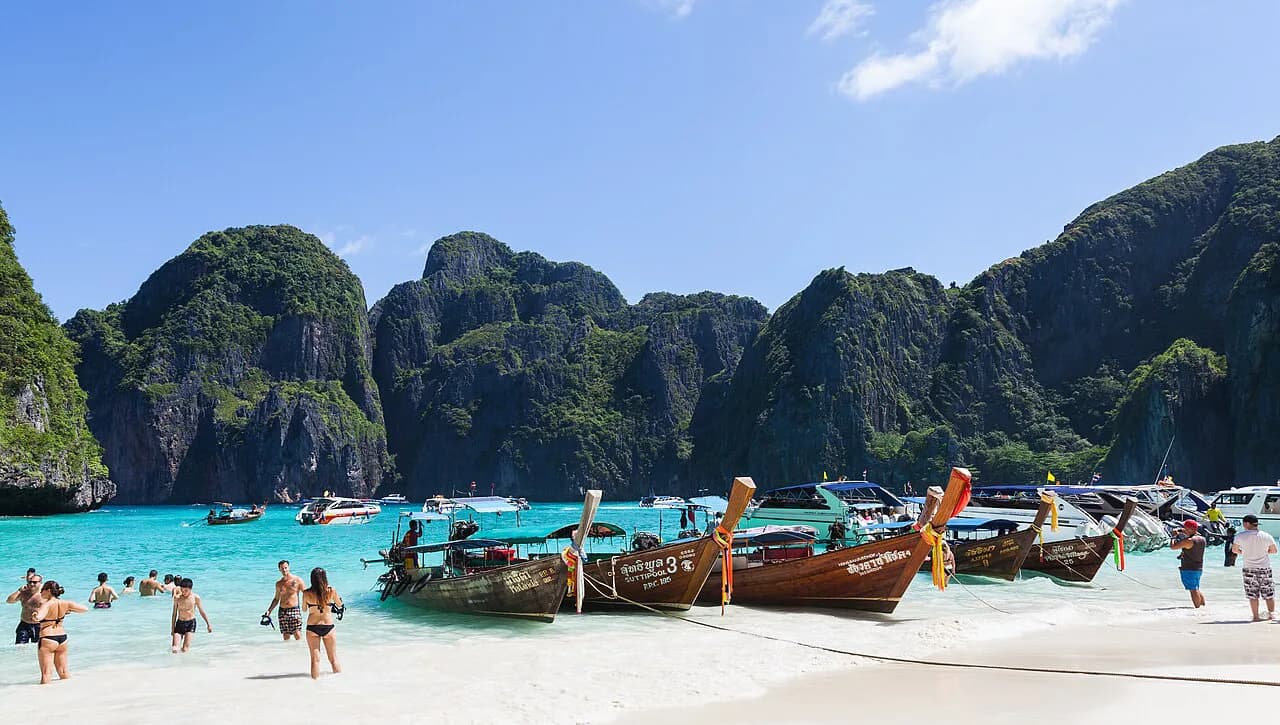
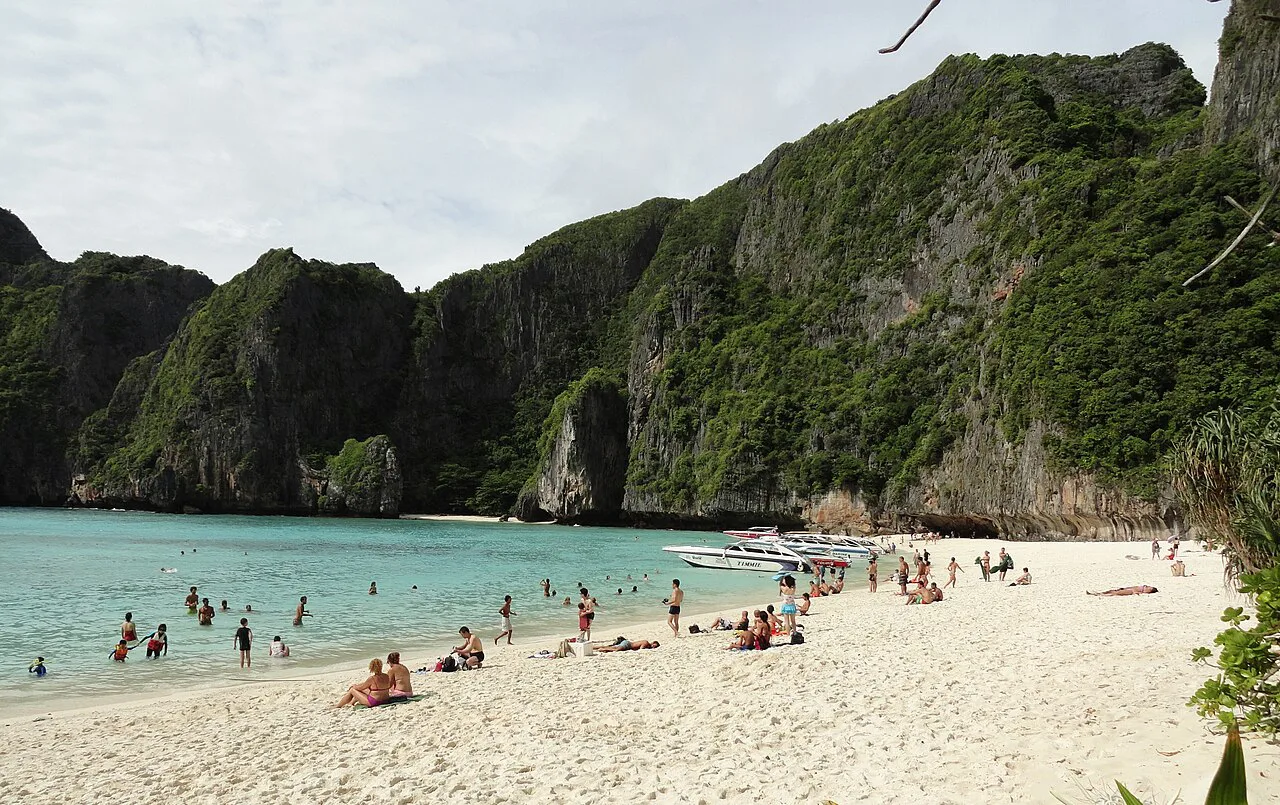
Maya Bay is worth seeing once, but go knowing what you get: a 200-meter white-sand cove ringed by cliffs over 100 meters high, knee-deep water only, and a crowd that arrives mid-morning. The bay sits on Koh Phi Phi Leh, an uninhabited island in Krabi Province, so there is no village, no hotel and no walking route in. This guide covers where the bay is, how boats actually land, the fee and on-site rules, how long to allow and which base makes the earliest arrival easiest.
What Maya Bay actually is
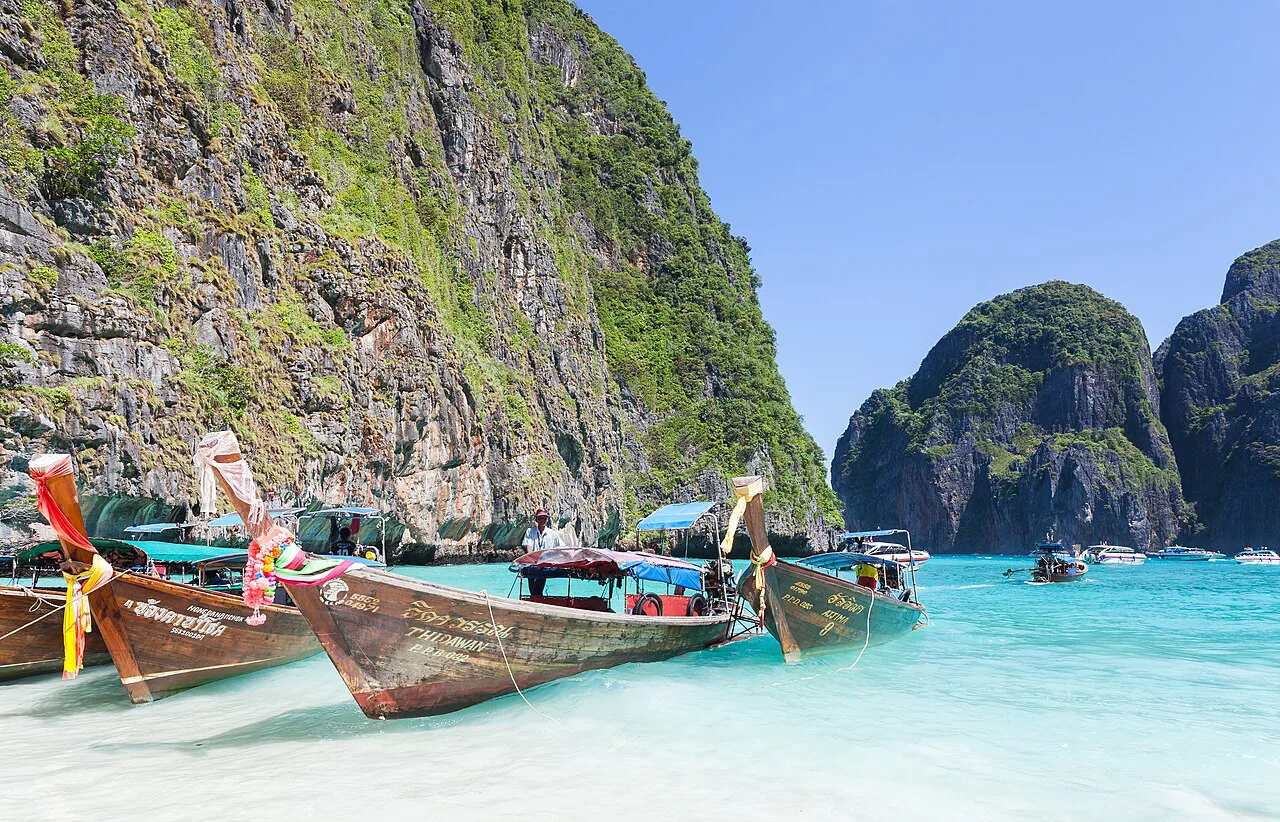
Maya Bay is a long cove on Koh Phi Phi Leh, with cliffs sheltering it on three sides and a main beach of roughly 200 meters. The bay became globally famous after The Beach was filmed here in 1999, and the resulting traffic pushed the sand, seabed and reef into decline. That history explains why the rules you meet today are stricter than at almost any other Thai beach.
Koh Phi Phi Leh has no settlements, and you arrive and leave entirely by boat. Eat before you sail or bring something with you, and plan to carry your own water, since you should not count on buying a meal at the bay itself.
Is Maya Bay open right now?
Maya Bay is open, but it closes annually for conservation, and operators report that window as 1 August to 30 September, with normal hours of 7:00am to 6:00pm for the rest of the year. Treat those dates as the pattern rather than a guarantee, because the national park confirms each year's closure and weather can shut the bay at short notice. Check the dates with your boat operator or the park before you commit to a Phuket or Krabi day trip built around this stop.
Out of season, tour companies still run Phi Phi itineraries and swap Maya Bay for another stop, usually Bamboo Island. If Maya Bay is the reason for your trip, book inside the open window rather than assuming a substitution will satisfy you. Sources also disagree about the exact closure and reopening years in the bay's recent history, so rely on the current operating rules rather than any single timeline.

Where Maya Bay sits and which base to choose
Maya Bay is technically in Krabi Province but lies close to Phuket, which is why both provinces feed it with day boats. The trade-off is simple: staying on Koh Phi Phi Don gives the shortest transfer and the best shot at arriving early, while Krabi and Phuket suit travelers who want a packaged speedboat tour with hotel pickup. If you are still choosing where to sleep, our Phi Phi Attractions: 10 Visitor Guides covers the island's beaches and how they differ, and Laem Tong Beach is the quieter northern stretch on Phi Phi Don.
How you actually get onto the beach
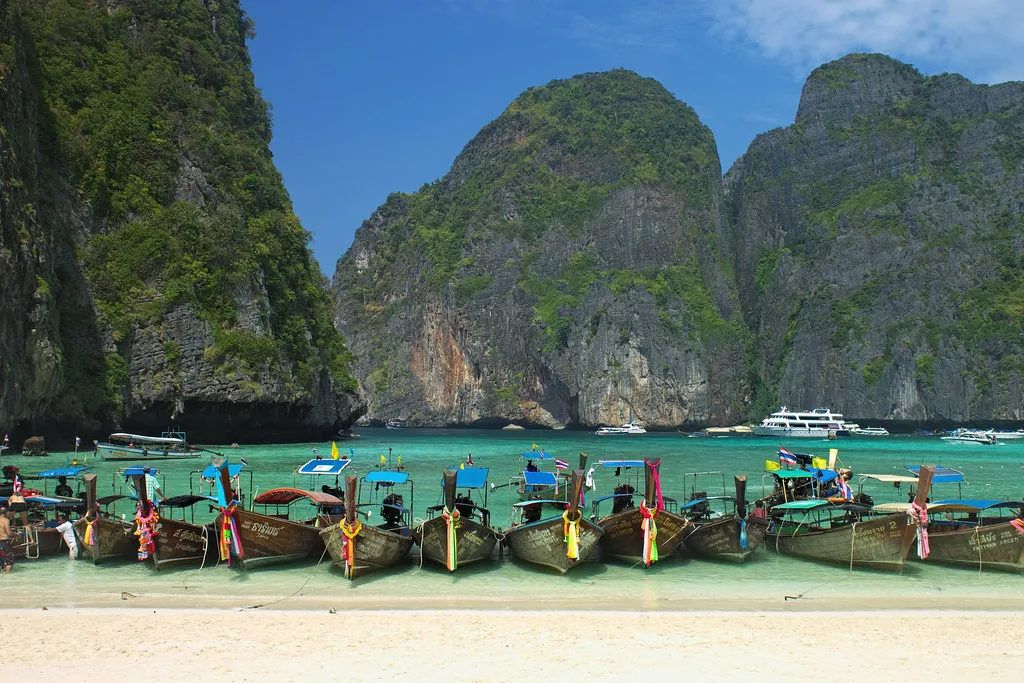
Boats no longer pull up on the famous sand. You arrive at Loh Samah Bay on the back of the island, step onto a floating pier and walk a wooden boardwalk through the jungle for about 5 to 10 minutes before the bay opens up in front of you. It is a calmer arrival than the old free-for-all and keeps boat traffic off the beach entirely.
Getting there from Phi Phi Don
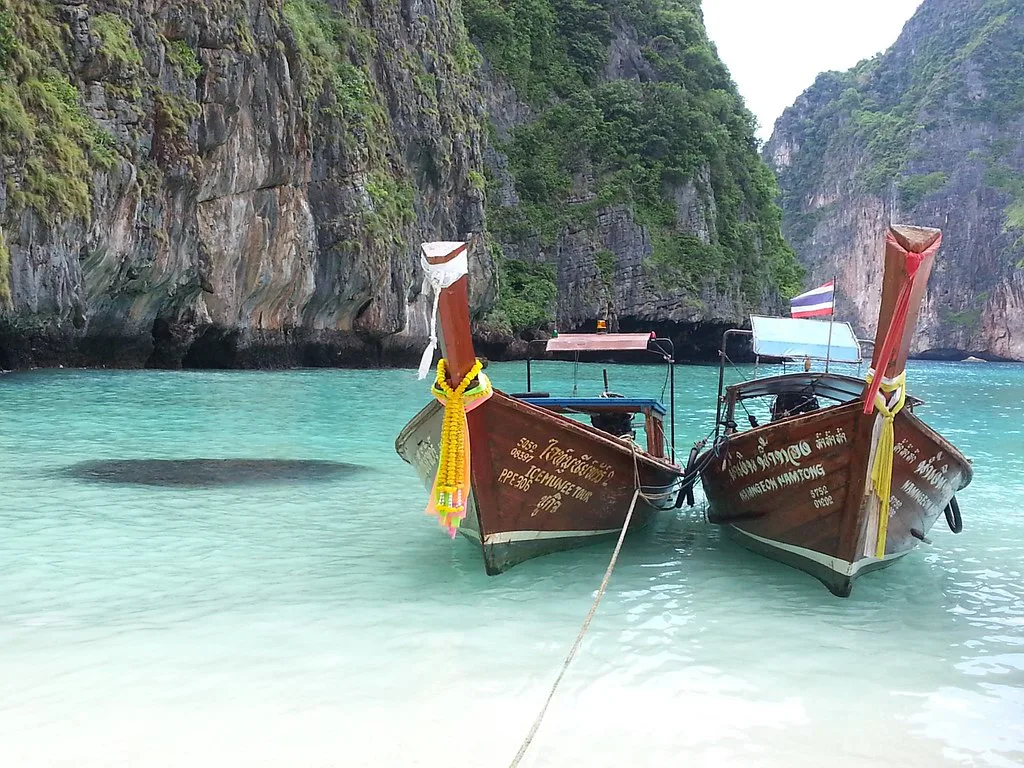
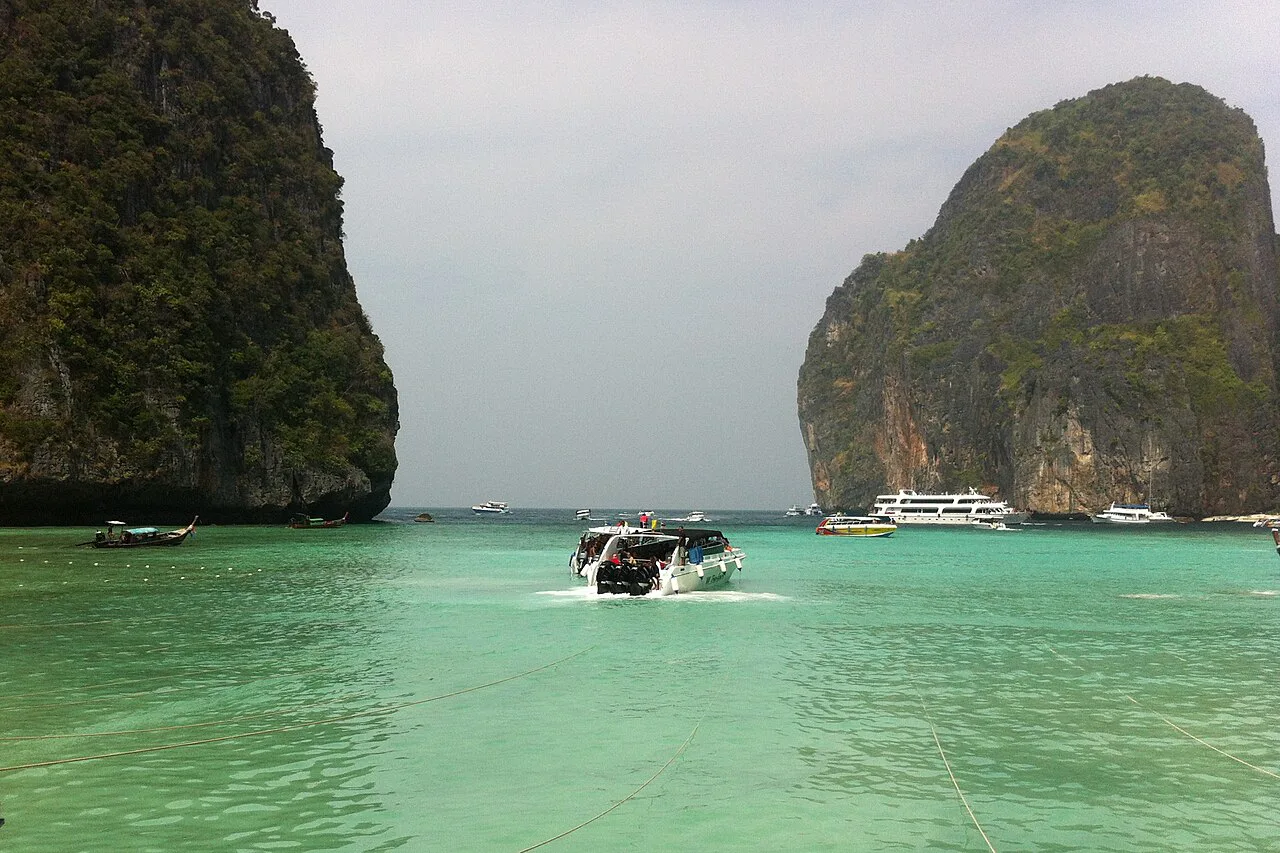
From Koh Phi Phi Don the standard approach is a longtail boat, with a crossing of roughly 20 to 30 minutes, or a speedboat if you want to move faster and cover more of the archipelago. Longtails are typically rented by the boat rather than by the seat, so a group of three or four usually pays less per person than a solo traveler. Agree the price, the stops and the return time before you leave the pier.
Boat rental on Phi Phi Don is usually quoted for a half day or a full day, with longtails capped at about four passengers and speedboats at about six. If your group is larger, you need two boats or a joined tour, which changes the math. Confirm what your quote includes, because national park fees may be collected separately from the boat price.
Getting there from Phuket and Krabi
From Phuket and Krabi, most visitors arrive on organized speedboat day tours that depart in the morning and bundle Maya Bay with other Phi Phi stops. Travelers going independently usually take a ferry to Phi Phi Don first and then arrange a longtail from the island, which takes longer but gives you control over timing. One source describes the ferry crossing at about 1.5 hours, though schedules and fares change, so confirm at the pier.
The rules in practice
Swimming is not allowed. You may wade in only to knee depth, and lifeguards on the beach enforce it, so plan on admiring the water rather than entering it. The shallow water is a nursery for blacktip reef sharks and the replanted coral is still fragile, which is the reason for the restriction rather than an arbitrary rule.
Capacity is capped at roughly 380 people at a time, with an on-site limit of about one hour, and boats are not permitted to anchor on the sand. Standing on coral, taking shells, non-reef-safe sunscreen and drones are all banned. Because the cap is enforced, your arrival time matters more than your plan for the day.

Entry fee and what a tour includes
Foreign visitors pay a national park entry fee of 400 THB for adults and 200 THB for children. Whether it is folded into your tour price or collected on the day depends on the operator: some bundle it so you hand over no cash at the pier, while others collect it separately. Read the inclusions line before you book, because a cheap-looking tour with the fee excluded is not actually cheaper.
How much time to allow
Budget about one to two hours at the bay itself, plus boat travel in each direction, which from Phi Phi Don means roughly 20 to 30 minutes each way. From Phuket or Krabi, the crossing eats far more of the day, and the bay becomes one stop on a longer island-hopping loop. The practical consequence is that a Phi Phi Don base buys you more time on the sand and a Phuket base buys you convenience.

When to go
Arrive at opening if you can. The bay is quietest before the mainland day-boat fleet lands, and the capacity cap means the experience degrades quickly once the morning tours converge. Staying on Phi Phi Don is the simplest way to be on an early longtail rather than on a boat that left Phuket two hours earlier.
November to April is described as the calmest and clearest window, with easier access to the bay. Rough seas from May to October can hinder access, though they rarely deny it outright, and the bay is closed for part of that stretch anyway. Build flexibility into your dates if the bay is a priority.
What you actually see and do on the sand
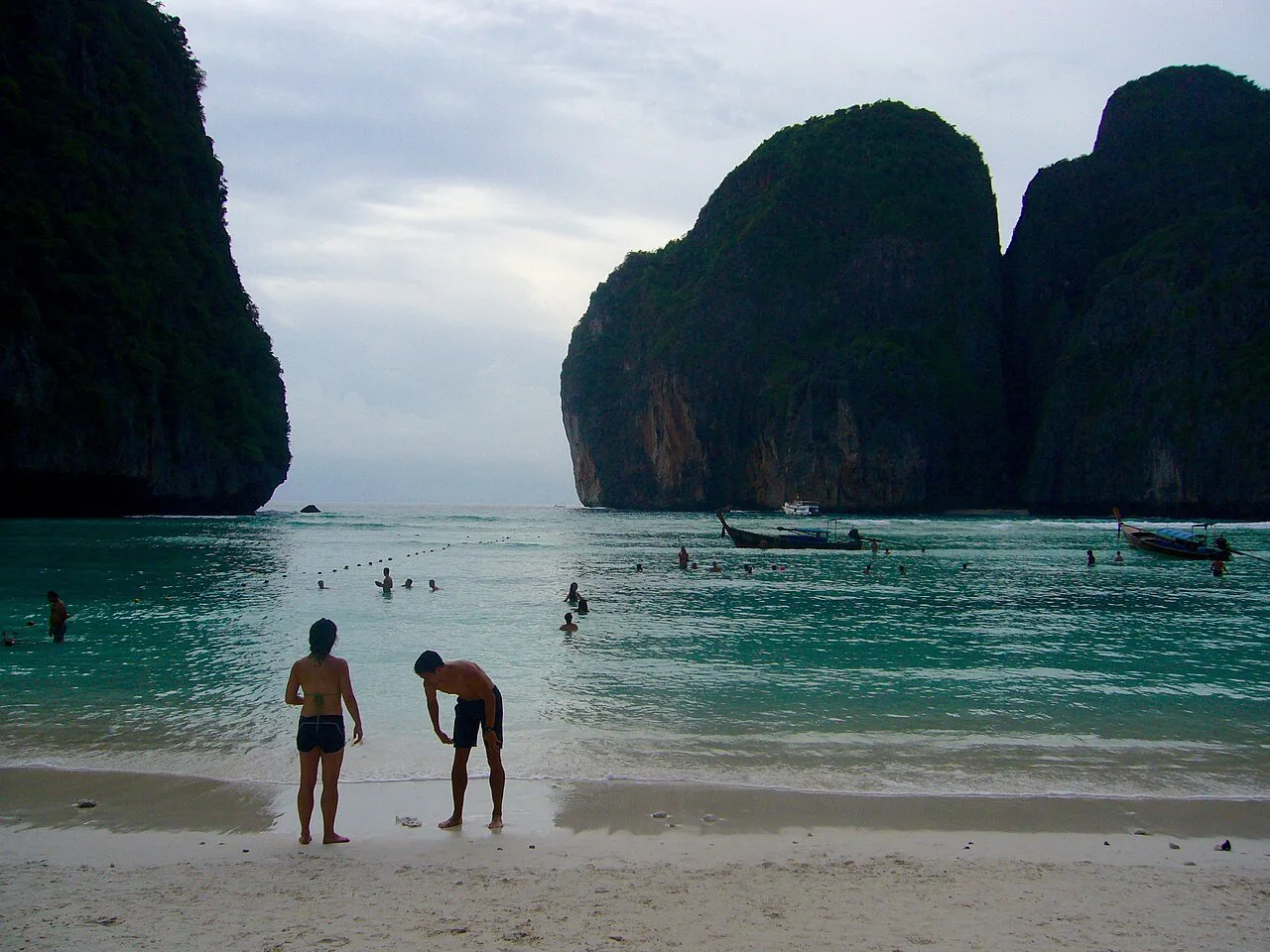
The headline sight is the setting itself: emerald water, pale sand and cliffs that appear to seal off the lagoon entrance. Beyond that, most of your hour goes to walking the beach, photographing the cove and standing in the shallows. There is no hiking trail network to explore here, so do not budget for a long walk.

Honest trade-offs
Maya Bay is beautiful but not secluded, and it has not been for years. Even with capacity limits and no anchoring on the sand, you are sharing a 200-meter beach with several hundred other people at peak times. The no-swimming rule also means a beach day here is really a viewing day, which disappoints anyone expecting to float in the lagoon.
Nearby alternatives if you want a swim
If swimming is the point, plan a different stop and confirm with your operator that swimming is allowed there. Bamboo Island, Koh Poda, Railay Beach and Phra Nang are commonly folded into the same Phi Phi and Krabi boat loops and give you more open water than Maya Bay's knee-deep wading zone. On Phi Phi Don itself, Monkey Beach and Loh Moo Dee Beach are the easy, close-in options for a lazy afternoon.
Two Phi Phi Don beaches cover very different moods. Monkey Beach is usually visited by longtail from the water, while Loh Moo Dee Beach, Koh Phi Phi Don is the long, quiet stretch that suits travelers who want space over convenience.
Practical details before you book
Carry water and use the restroom before you board, and treat the bay as a viewing stop rather than a place to eat. Hours, fees and closure dates shift with park policy and weather, so confirm both with your operator on the day before you travel, and verify the fee at the park entrance rather than relying on a booking page.
Is Maya Bay worth it for your Phi Phi day?
If you accept the terms, yes: a 200-meter cove under 100-meter cliffs, reached by a short boardwalk, is still one of the most striking landscapes in southern Thailand. Go early, sleep on Phi Phi Don if the bay is your priority, and plan a swimmable stop elsewhere in the same trip. If knee-deep wading and a roughly one-hour on-site limit would leave you underwhelmed, skip it and spend the day on Phi Phi Don's own beaches instead. For the wider picture of how the bay fits into an island day, see Phi Phi sightseeing: plan your beach stops and early starts.