
Pileh Lagoon (Pi Leh Bay), Phi Phi Leh: How to Visit, What to Expect

Pileh Lagoon is worth building a boat day around only if you accept what it is: a sheltered emerald inlet with no beach, no facilities and no road access, reached entirely by water. It sits on uninhabited Phi Phi Leh, and most group tours give you roughly 20 to 40 minutes there rather than a lazy half-day.
This page covers where the cove sits on the island, how boats reach it from Phi Phi Don, Phuket and Krabi, how the national park fee works separately from your tour price, and how to judge whether a stop this short is worth your day. It is part of our wider guide to Phi Phi Attractions, which covers the other islands, beaches and viewpoints in the same archipelago.
What Pileh Lagoon actually is
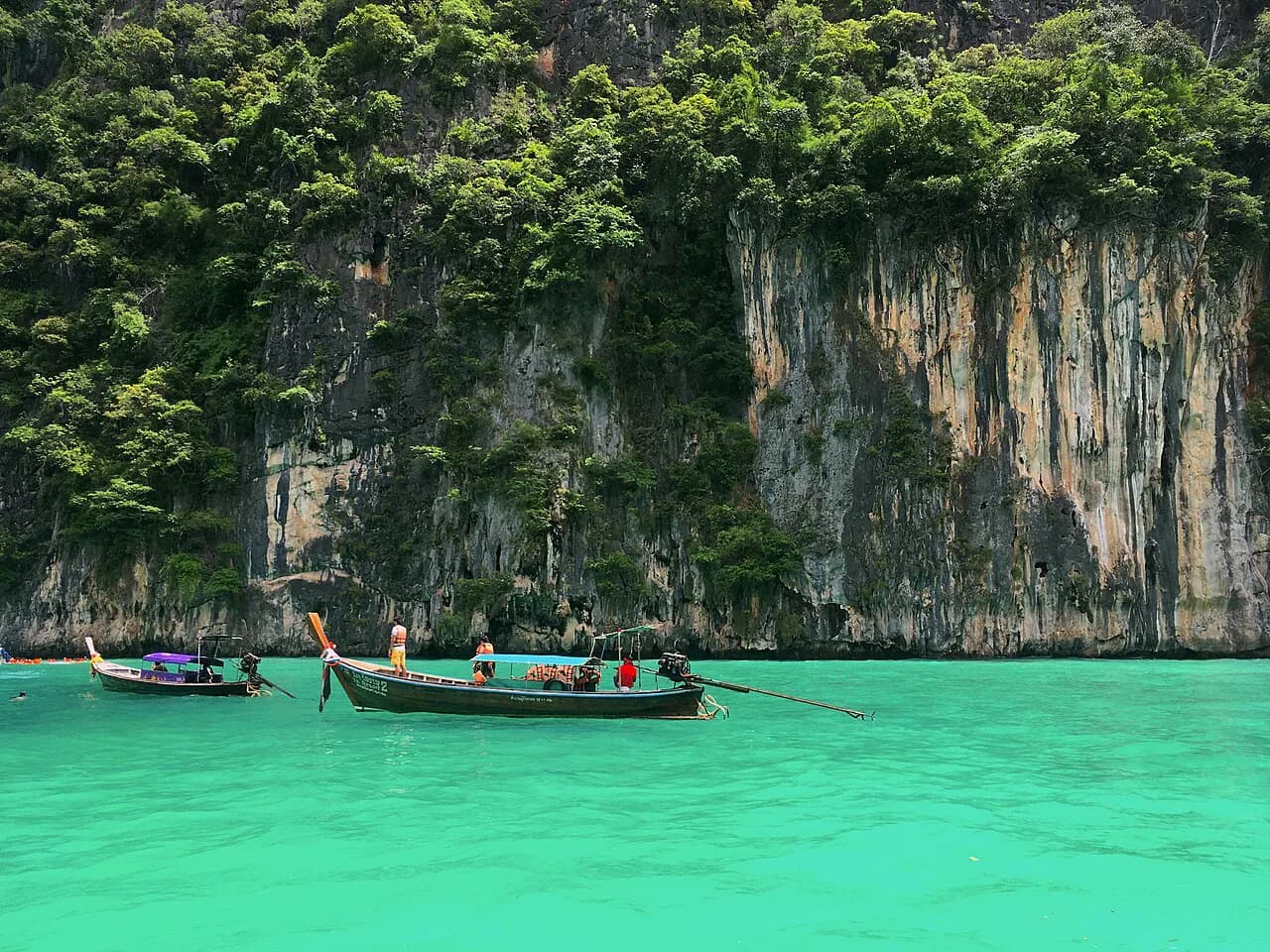
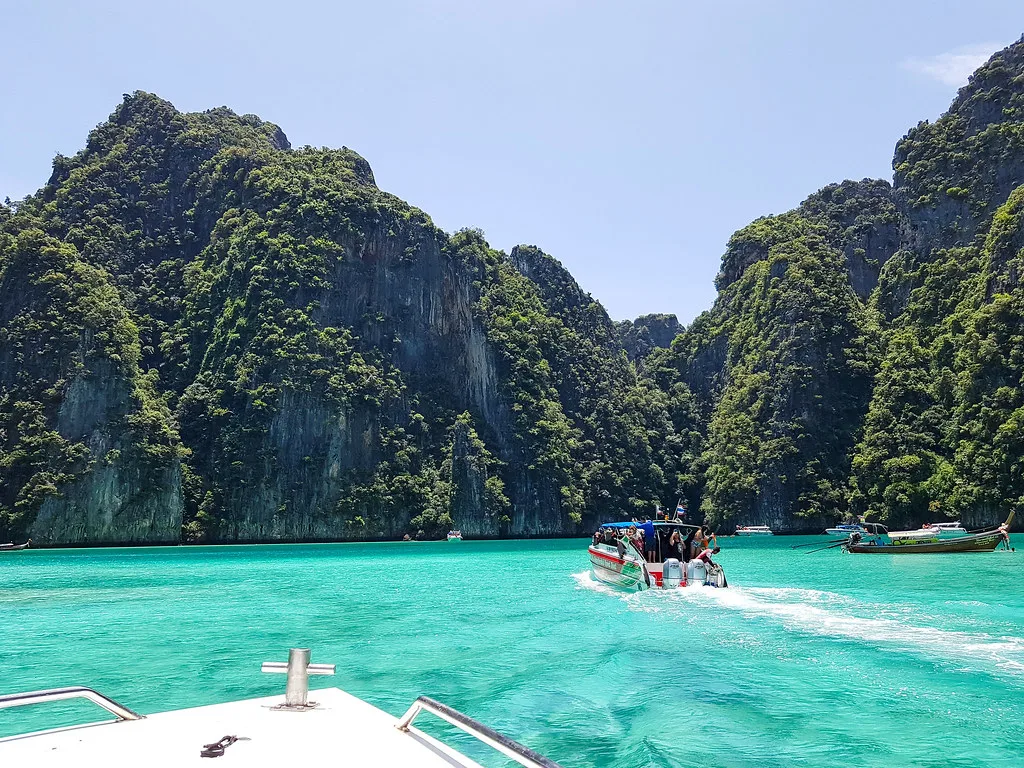
Pileh Lagoon, also spelled Pi Leh Bay or Ao Pileh, is a long, thin inlet that almost cuts Phi Phi Leh in two, roughly 600 meters from end to end and framed by limestone walls that rise about 100 meters. There is no proper beach to spread a towel on and no buildings or snack stalls, just open water and vertical rock; small cliff-foot beaches are reported inside the bay.
The depths run from shallow water near the entrance to a swimmer-friendly center, so you can wade in some sections and float in others. Because the cove is enclosed, the water stays calmer than the open sea on most days, which is why boats can idle in the middle while passengers swim.
Where it sits on Phi Phi Leh
The lagoon lies a few hundred meters south of Viking Cave, and a longtail boat covers the run from Tonsai Bay on Phi Phi Don in about 30 minutes. That makes Tonsai Bay the closest practical departure pier if you are already staying on the Don.
Phi Phi Leh itself has no accommodation, so everyone visiting the lagoon arrives on a day boat or a charter and leaves the same way. If you are planning your base, that fact alone shapes the trip: staying on Phi Phi Don shortens the ride, while a day trip from Phuket or Krabi adds a long speedboat crossing each way.
How you get there: boat only
There is no road, pier or path into the lagoon, so every visitor arrives by longtail boat, speedboat or chartered yacht. Boats run from Phi Phi Don, Phuket, Krabi and Ao Nang, and some itineraries start as far away as Koh Lanta; ferries are too large to enter the shallow inlet, which is why tours use smaller craft.
Group longtail tours are the budget route and often pack a couple of dozen people aboard, while speedboat charters and private boats cost more and give you more say over timing. Before booking, confirm in writing that Pileh Lagoon appears in the stop list, because many Phi Phi day tours lead with Maya Bay and vary the rest of the circuit.
Which base makes sense
Staying on Phi Phi Don gives you the shortest boat ride and the most flexibility, since operators there can run half-day trips that reach the lagoon without a dawn start. A day trip from Phuket or Krabi is doable but consumes most of a day in transfers and crossings before you even reach the cove.
If you are weighing the crossing against other Phi Phi sights, note that Maya Bay on Phi Phi Leh usually shares the same itinerary, so a single boat day can cover both. Our guide to Maya Bay on Phi Phi Leh explains how that stop is managed separately, which helps you judge how much time your operator will allot to each.
Choosing a tour that actually stops here
The single most useful check is the stop list. Ask how many minutes the boat spends at Pileh Lagoon, how many other stops the day includes, and whether snorkeling gear is provided, since some tours supply masks and others expect you to rent on Phi Phi Don.
Group tours typically allow about 20 to 40 minutes in the lagoon, while private charters can stretch that toward 90 minutes or more if you ask. If floating in a cliff-walled cove is the point of your day, a private boat or a small-group speedboat is the trade-off worth paying for over a packed longtail.
National park admission, separate from your tour price
Phi Phi Leh sits inside Hat Nappharat Thara-Mu Ko Phi Phi National Park, so a park admission fee applies on top of whatever you pay the boat operator. One guide reports the fee as 400 baht for non-Thai visitors and 40 baht for Thai visitors, collected in cash at Loh Samah Beach, but fee amounts and collection points can change, so treat that figure as a planning estimate and confirm with your operator before you go.
Budget the fee as cash in hand rather than assuming it is bundled into your ticket, and ask your operator directly whether the park fee is included or collected on the boat. Tour prices themselves vary widely by departure point and boat type, so compare quotes rather than relying on a single published number.
Swimming and snorkeling in the lagoon
The cove is built for a calm swim: the seabed slopes gently, the center is deep enough to float comfortably, and the sheltered shape keeps the surface glassy when the open sea is choppy. Snorkelers can find coral clusters and tropical fish along the edges, and reports mention parrotfish, clownfish and butterflyfish, with occasional turtles and shy black-tip reef sharks in the mornings.
Bring your own mask if you have one, because gear inclusion varies by tour and rental is available on Phi Phi Don. If you plan to fly a drone over the lagoon, permission is required, so check local drone rules before you pack one.
Timing your visit: light, shade and crowds
The cliffs put most of the bay in shade except roughly 11am to 1pm, when direct sun lights up the emerald water and makes the best photographs. That midday light window is also when boat traffic peaks, so the prettiest hour is rarely the quietest one.
Early morning, roughly 8am to 10am, brings softer light, calmer water and fewer boats, while the afternoon gives you more shade along the cliffs and cooler swimming. If crowds bother you, aim to arrive before 10am or after 2pm and accept less vivid color in the water.
Seas around the Phi Phi Islands are described as choppier with unpredictable showers from May to September and smoother from November to April, so the season affects how comfortable the crossing is. Check with your operator on the day, since local conditions can override the general pattern.
How long to allow
Plan on 20 to 40 minutes in the water on a group tour and up to about 90 minutes on a private charter, which is enough time for a swim, a snorkel and a few photos against the cliffs. The larger time commitment is the boat circuit itself, since most itineraries string together several stops across Phi Phi Leh.
A realistic half-day from Phi Phi Don covers the lagoon plus one or two nearby sites, while a full day from Phuket or Krabi eats most of your daylight. If you only have one boat day, decide in advance whether you want breadth across many stops or a longer float in the cove.
Nearby stops to pair with it
Viking Cave sits just north of the lagoon and Loh Samah Bay is close by, so most boat routes pass both without much extra time. Maya Bay is the headline stop on Phi Phi Leh and usually appears alongside Pileh on the same tour, though its visitor rules are managed separately.
On the Phi Phi Don side, Monkey Beach is a common add-on for boats looping back toward Tonsai Bay, and it works as a short stop rather than a destination in itself. Our guide to Monkey Beach, Phi Phi Don covers what to expect from the shoreline there.
Bamboo Island often closes out eastbound itineraries, and some operators combine it with the lagoon on a single full-day run. Confirm the exact loop before you book so you know whether you are getting three stops or six.
Is the lagoon worth your boat day?
Pileh Lagoon earns its place on a Phi Phi boat day if you want a calm, cliff-walled swim and you book a tour that genuinely stops there for longer than a photo pause. If you are coming from Phuket or Krabi for a single day, choose an itinerary that pairs it with Maya Bay and confirm the stop times before you pay.
Base yourself on Phi Phi Don for the shortest ride, bring cash for the park fee, and ask your operator about current opening status, fees and sea conditions rather than assuming last season's details still hold. For the broader picture of what else to see on the islands, browse our things to do in Phi Phi before you lock in a boat.
Explore more Phi Phi guides
Frequently Asked Questions
Can you swim in Pileh Lagoon?
Yes. The cove is sheltered and the water is calm enough for swimming, with a gentle slope near the entrance and a deeper center where you can float. Most tours stop specifically so passengers can swim and snorkel.
How deep is Pileh Lagoon?
Reports differ, with one operator describing a shallow entrance and depths reaching about 20 meters in the middle, and another describing the lagoon as mostly 1 to 5 meters deep. Ask your guide where the deep section is before you jump in.
Do you need a permit to visit Pileh Lagoon?
No separate permit is required beyond the national park admission that applies to Phi Phi Leh. The fee is collected on top of your tour price, often in cash, so confirm the current amount and collection point with your operator.
Is Pileh Lagoon currently open?
Opening status can change with park management and weather, and operators are told first. Ask the company you plan to book with whether the lagoon is on the route on your dates rather than relying on older trip reports.