
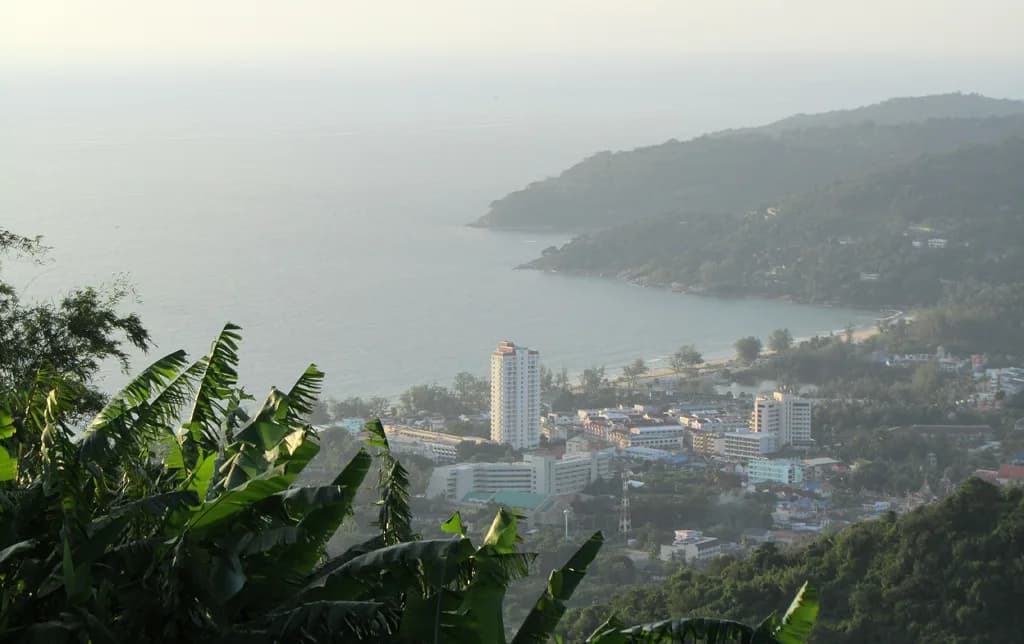
Karon, Phuket: A Practical Guide to the Beach Town

Karon is the middle choice on Phuket's west coast: a long beach town that is calmer than Patong and less polished than Kata, with hotels, restaurants and shops packed into a strip behind the sand. If you want a base where the beach is the main event and the nightlife is optional rather than inescapable, Karon is the straightforward pick; if you want constant buzz or a resort-only bubble, look elsewhere. This guide covers what the district is like, how the beach and strip are laid out, the temple and its market, the side trips within reach, where to eat and stay, and how to arrive and move around.
What Karon is like, and who it suits
Karon runs along the coast just south of Patong and north of Kata, and a published Karon guide frames it as the compromise between the two: Patong's street hustle and nightlife on one side, quieter and more upscale Kata on the other. The district itself is a beach resort rather than a historic town, so the rhythm is set by the sand, the beach road and the clustered restaurants and bars behind it. That makes it easy to plan: you choose a stretch of the strip and most of your day happens within a short walk.
It suits travelers who want a big, broad beach with room to spread out, a walkable cluster of meals and errands, and the option to dip into Patong or Kata for an evening without sleeping in either. It suits families and couples who want a base that is lively but not loud. It is a weaker fit if you want the cheapest backpacker strip, a dense dining scene on your doorstep every night, or a car-free old quarter to wander, because Karon is a linear beach suburb, not a grid of lanes.
The trade-off is that Karon is not a place where everything sits within five minutes of your door. The beach is long, the strip follows it, and your hotel's position decides how much you walk for dinner or a convenience store. Before booking, look at your hotel's pin against the beach road and decide whether you want to be in the middle of the restaurant cluster or at a quieter end.
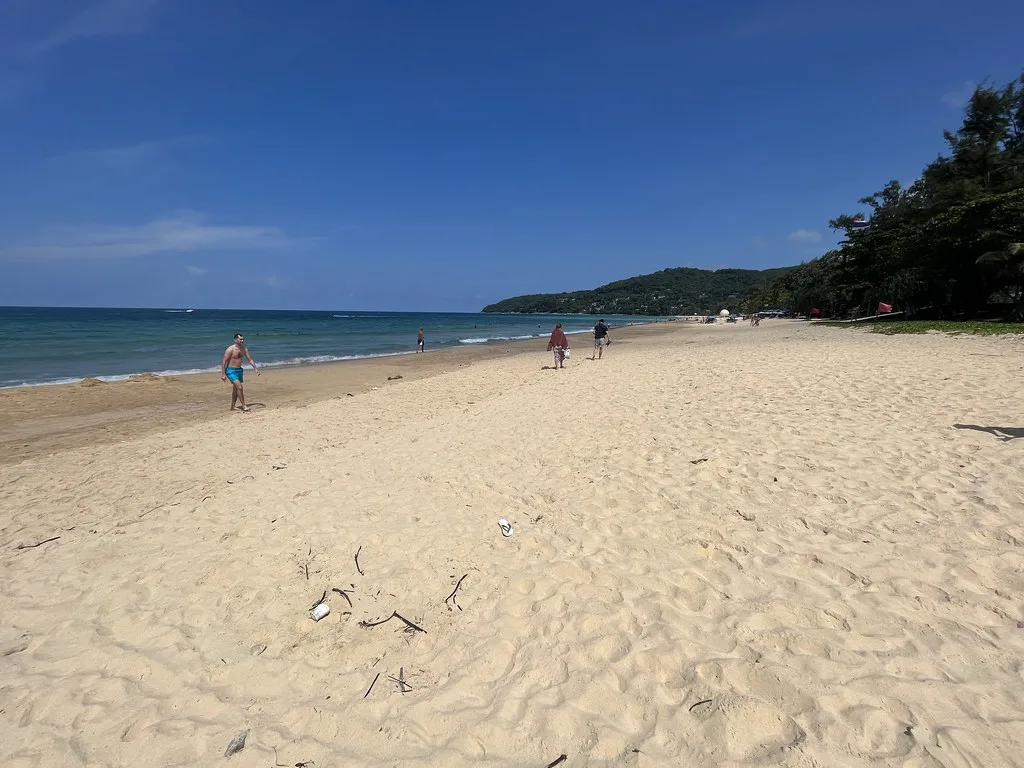
Karon Beach: three miles of sand and how crowded it gets
Karon Beach is the reason most people come: a broad, long stretch of pale sand reported at roughly three miles, backed by palms and a mountainous backdrop rather than a wall of high-rises. A published Karon guide describes it as attracting a big crowd but staying noticeably less packed than Patong's beach, which is the central trade-off of choosing Karon. If you want space on the sand without leaving the west coast, this is the point of the district.
Because the beach is so long, where you sit changes your day. The northern end is where you find the small temple within a short walk of the sand, while the middle and southern stretches put you closer to the densest run of shops and restaurants. A traveler account of the beach also describes deck chairs in abundance along the sand and water-sports activity in parts of the water, so expect a working beach rather than an empty one.
For swimming, Karon's openness means the water can be active, and the sources here do not publish season-by-season swimming conditions or flag patrol arrangements. The practical move is to read the signage and flags posted on the beach on the day and follow what lifeguards or local staff tell you, rather than relying on a guide written months earlier. If swimming is the main reason for your trip, check conditions in the weeks before you go.
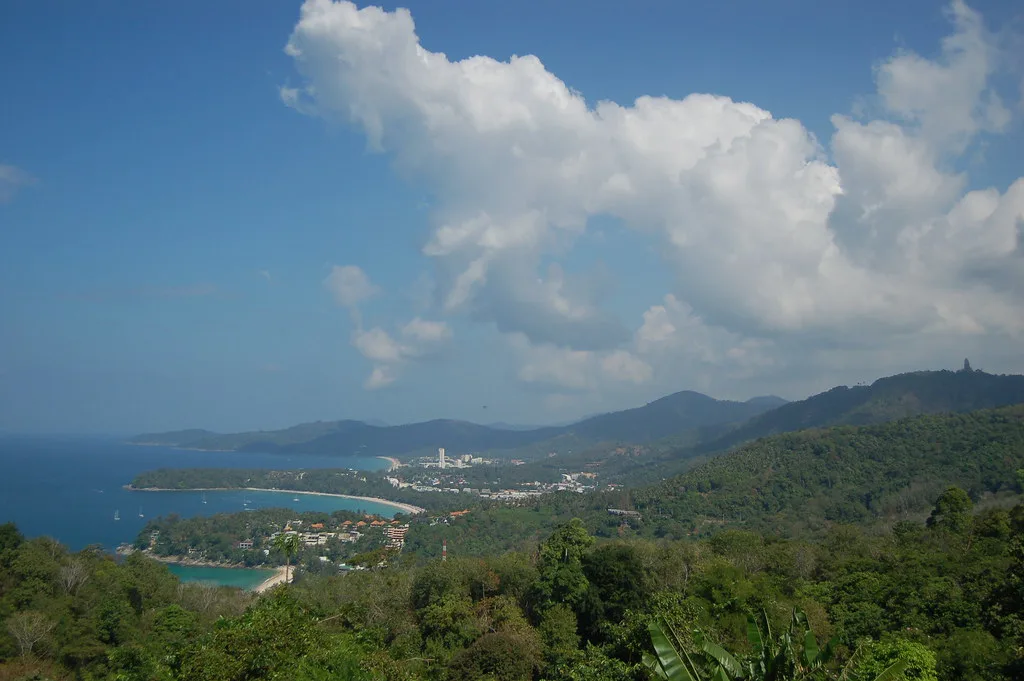
Walking the strip: beach road, shops and nightlife
Karon's layout is simple to hold in your head: the beach runs along the west edge, and a parallel road carries the shops, restaurants, bars and hotels behind it. The Karon guide sums the district up as accommodations for most budgets, dining, nightlife and water sports packed into that corridor. Practically, that means you can treat the strip as your daily circuit: beach in the morning, walk back for lunch, out again in the evening.
The useful planning question is not what is in Karon but where on the strip it sits. A hotel at the north end puts you near the temple and a quieter stretch, while one closer to the middle keeps you within a short walk of more dinner options. Note that the beach road is a road, not a pedestrian promenade, so crossing and walking alongside traffic is part of the routine, especially after dark.
Nightlife here is present but secondary to the beach, which is the honest version of Karon's reputation. If you want bars as the main event, book Patong and visit Karon for the day; see how the beach district really compares in Patong, Phuket: What the Beach District Is Really Like, and if you want a drink within walking distance of your room and an early night, Karon works without any effort.
Wat Suwan Khirikhet and the Karon Temple Market
Wat Suwan Khirikhet is a small but elaborately decorated Buddhist temple with gardens, sitting a short walk from the north end of Karon Beach. It is the one genuinely cultural stop inside the district, and its position makes it an easy add-on to a morning on the sand rather than a separate outing. Treat it as an active place of worship: quiet, respectful visiting is the expectation.
The temple grounds reportedly host the Karon Temple Market on Tuesdays and Thursdays, when the compound turns into a local food and shopping market. That schedule comes from a third-party guide rather than a published temple notice, so treat it as a planning hint and confirm locally when you arrive, at your hotel or at the temple itself, before building an evening around it. If the timing lines up, it is the best low-effort way to eat where locals eat.
Side trips within reach: Kata, Kata Noi and the Big Buddha
Kata Beach sits just south of Karon and is a separate district, not a walk from the middle of Karon's strip; plan on a short ride rather than a stroll. It is framed as quieter and more upscale than Karon, split into Kata Beach and the more secluded Kata Noi by a rocky headland, with some of the island's better shopping and dining. The same source notes Kata as Phuket's regular surfing spot during the May to October monsoon period, a claim worth checking against current conditions if surfing is your reason to go.
The Big Buddha, named in the sources as Phra Putthamingmongkolekanagagiri, sits on the ridge above town and towers over the resort, with views from the top described as the draw. The guide puts the figure at 147 feet, a number to treat as reported rather than official; the point is that it is a hilltop monument with a panorama, reached by road. Check current access arrangements and any site rules locally before you go, since hilltop sites can change how visitors arrive.
Both are day-trip material, not neighborhood errands. Keep Karon as your base and slot Kata or the Big Buddha into a half-day, ideally early before the heat builds. Do not assume either is walkable from a mid-strip hotel.
Where to eat in Karon
Two named spots come up for Karon eating in the same guide: the Pad Thai Shop, described as unpretentious and known for crab fried rice, and Red Chopsticks, cited for delicate curries and contemporary Thai cooking. Between them they sketch the district's range, from a casual local-style counter to a sit-down Thai meal. Neither is presented here as a booking recommendation; both are simply the venues a published guide singles out.
Beyond those two names, expect the usual beach-strip mix along the road behind the sand: Thai restaurants, casual cafes and places aimed at visitors. A sensible plan is to eat lunch near the beach and walk the strip in the evening to see what is actually open and busy before committing. Prices are not published in the sources used here, so check menus on arrival rather than budgeting from a guide.
Where to stay: strip versus the quieter ends
Karon's room stock spans budgets, from simple guesthouse-style places to larger resort hotels, according to the guide's summary. The real decision is positional. A hotel on or just off the beach road in the middle of the strip buys you walkable dinners and easy beach access at the cost of more noise; a place toward the north end trades a few minutes' walk for quiet and proximity to Wat Suwan Khirikhet.
Before booking, check three things against the map: distance to the sand, whether the road between your hotel and the beach is a busy stretch, and how far you are from the restaurant cluster. Read recent guest reviews for noise rather than trusting a star rating, since beach-road rooms and hillside rooms behave differently. If you want a comparison of Phuket's other bases before committing, work through the Phuket Neighborhoods guide rather than defaulting to Karon.
Getting to Karon and getting around
Karon is reached by road from Phuket's airport and from Patong, and the sources here do not publish transfer times, fares or scheduled services. Rather than rely on a figure from a guide, arrange a metered taxi or a ride-hailing car on arrival and confirm the price before you set off, and ask your hotel for the going rate. For a Patong-to-Karon hop, the same applies: it is a short road journey, but treat the cost as something to confirm on the day.
Inside Karon, walking is the default for the beach and the strip, with taxis and ride-hailing for Kata, Kata Noi and the Big Buddha. Because the district is linear, a hotel near the middle saves you the most steps; one at either end means more reliance on short rides. If you plan several hops, compare the area's other bases in Phuket neighborhoods: match your base to your days first, then decide whether Karon's walkability is worth the trade.
Which side of Karon should you book?
Choose Karon if you want a long, broad beach that is calmer than Patong, a walkable strip of restaurants and shops, and an easy half-day to Kata or the Big Buddha. Skip it if you want nightlife as the headline, a dense old-town grid, or a resort where everything happens inside the gates.
Then decide your position on the strip: middle for walkability, north for quiet and the temple, south for the shortest hop to Kata. Confirm the Tuesday and Thursday temple market timing and current beach conditions when you arrive, since those are the details most likely to shift after publication.
Explore more Phuket guides
Frequently Asked Questions
How many days do you need in Karon?
Two full days covers the beach, Wat Suwan Khirikhet and the temple market if it is running, with a half-day left for Kata or the Big Buddha. Three or four days lets you use Karon as a relaxed base without rushing the side trips. If you mainly want to lie on the sand, a single full day is enough to judge whether the district suits you.
Is Karon Beach good for swimming?
The sources used here do not publish swimming conditions, patrol arrangements or seasonal advice for Karon, so no guide can tell you in advance whether the water will be calm on your dates. Read the flags and signage at the beach on the day and follow instructions from lifeguards or local staff. If swimming is central to your trip, check recent traveler reports and local conditions shortly before you travel.