
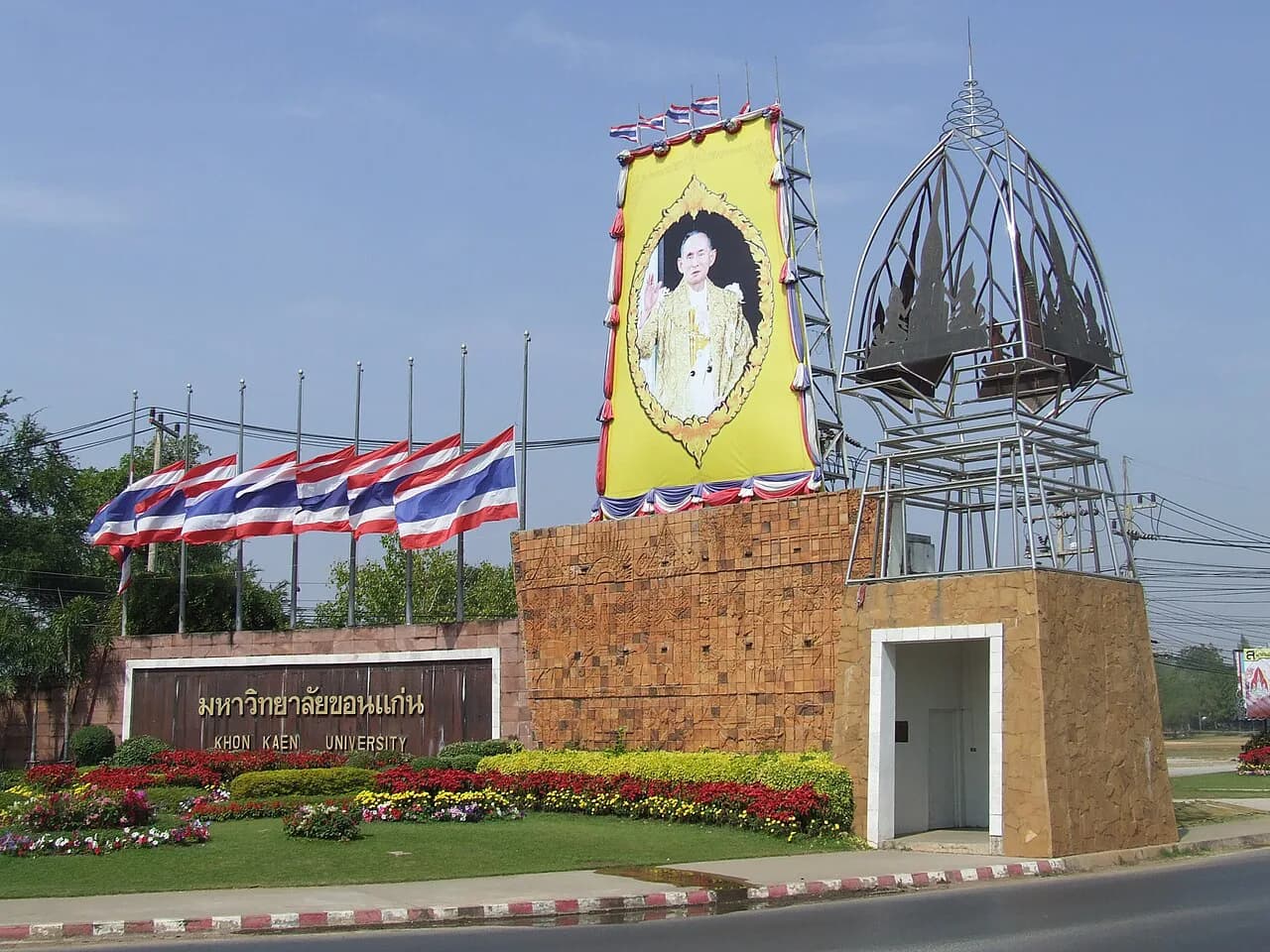
Khon Kaen University: How to Visit the Campus and What to See

Treat Khon Kaen University as a big, green, working campus you walk through rather than a sight with a gate and a ticket booth. It sits on Mittaphat Road in Mueang Khon Kaen district, and the most useful reason to go is the scale and quiet of the place, not a checklist of monuments. This guide covers where the campus is, how to arrive from the city and the airport, what to walk to once you are inside, and how many hours to set aside.
What Khon Kaen University is and where it sits
KKU was founded in 1964 to extend higher education into northeastern Thailand, and it was formally inaugurated in December 1967. That origin story explains the campus's character: it was built as a regional institution for a large, mostly rural part of the country, not as a tourist landmark. The university's own history page lays out the founding vision and the three eras of its growth.
Khon Kaen University lists its main campus at 123 Moo 16 Mittaphat Road, Nai-Muang, Muang District, Khon Kaen 40002. Mittaphat Road is the spine most visitors use, running through the campus from the city side toward the university's interior. If you are navigating by phone, search the English name rather than the Thai one to avoid landing at a satellite site.
Scale is the thing to understand before you arrive: Times Higher Education reports more than 40,000 students, around 350 study programmes and roughly 2,200 academic staff on the main campus. In practice that means distances are long and a single walk from one edge to the other will eat an hour of your day. Plan to see a slice of campus well rather than the whole thing.
How to reach the campus from Khon Kaen
Khon Kaen Airport handles flights into the city, so many travelers arrive either by air or by train into Khon Kaen Railway Station in the city center. From either point, a metered taxi or a ride-hailing app such as Grab is the least fussy way to reach Mittaphat Road, because you are dropped at a named gate rather than guessing where to get off. Confirm the fare in the app before you accept the ride.
City buses and songthaews do run along the main roads near the university, but routes, numbers and pick-up points change and Khon Kaen University does not publish a visitor-facing transit map. Ask at your hotel desk or check a current local transit app on the day rather than relying on an old blog post. If you are combining the campus with other stops, the Khon Kaen attractions guide is a sensible place to sequence your day.
Once inside, expect to keep walking or to use a short ride between faculties; the campus is not arranged around a single central plaza. Wear shoes you can cover a few kilometers in, and carry water, because shade between buildings is patchy in the middle of the day.
Orientation on foot: layout and faculties
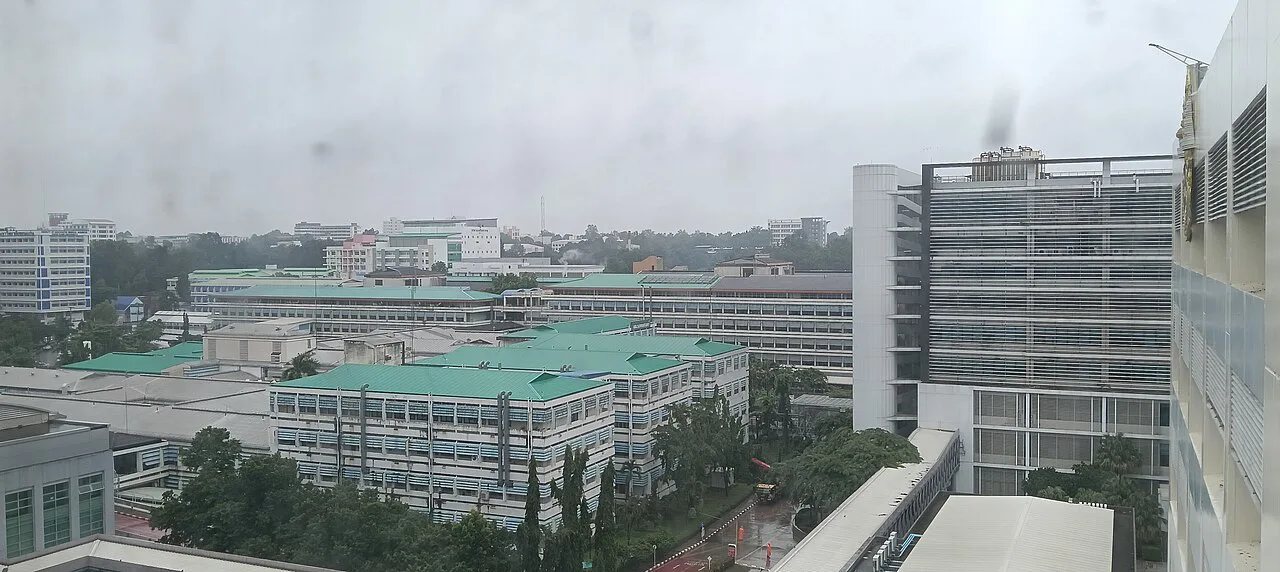
The campus is organized around a network of internal roads rather than a grid, with faculties spread across a large green site. Mittaphat Road forms the approach from the city, and the university's own site lists faculties and colleges including Agriculture, Engineering, Medicine, Science and Education. Those names are your best landmarks when you are working out which part of campus you are standing in.
An open stretch, where the campus feels unbuilt, gives the site its most walkable character and is where a visitor gets the clearest sense of the place as a park-like setting rather than a set of buildings. Walk one side, sit for a while, and treat the surrounding faculties as scenery rather than destinations. Do not expect signage aimed at tourists; you are reading a university, not a museum.
Other Khon Kaen sights sit in the city rather than on campus, so keep them separate. The wider Khon Kaen guide covers temples, markets and other city-side stops best paired with an evening rather than squeezed into a campus morning.

What to see as a visitor
The honest answer is that KKU's appeal is atmosphere and architecture at scale, not individual attractions. The Golden Jubilee Convention Hall is a named venue the university uses for major events, and it appears in KKU's own events listings, so it is a reasonable orientation point if you are walking the central part of campus. Beyond that, the memorable things are the long tree-lined roads, the open ground, and the sight of a working Thai university going about its day.
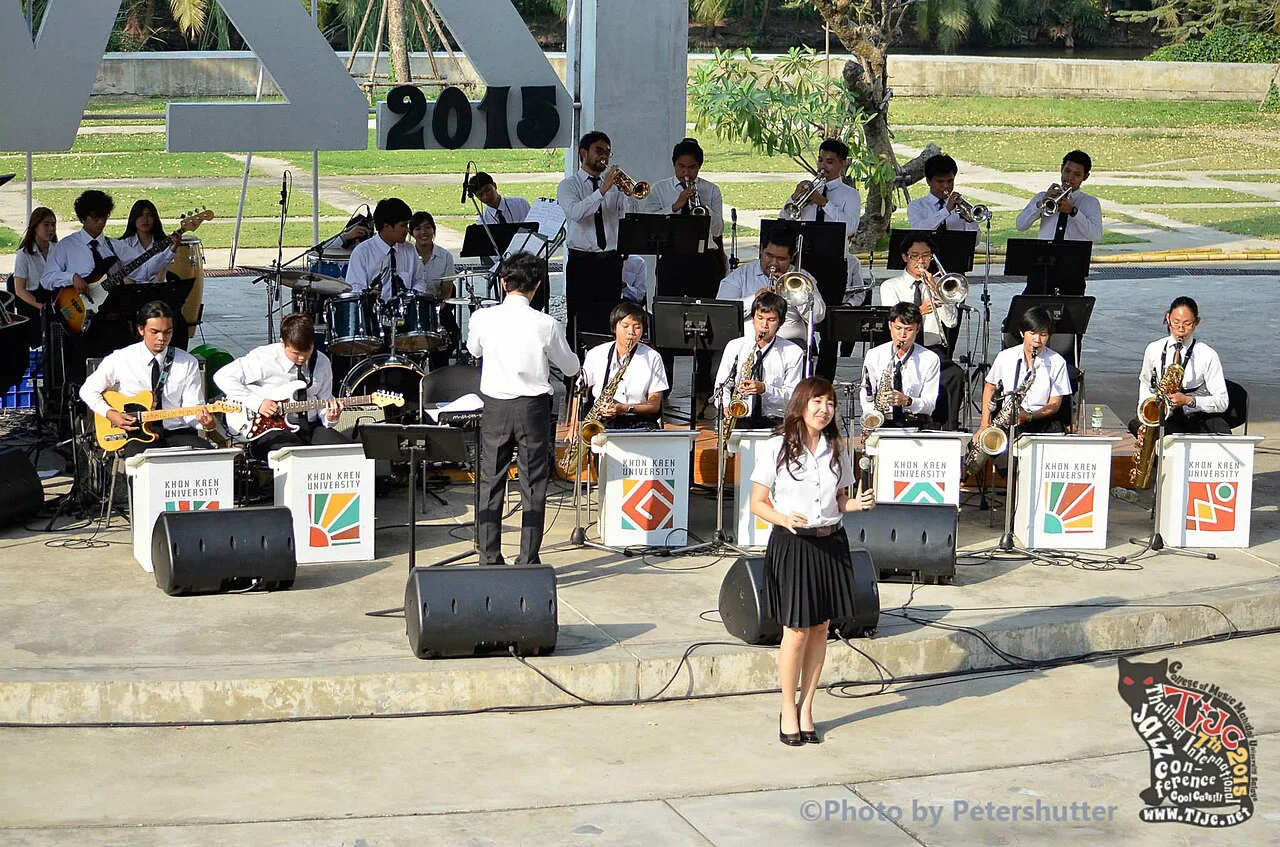
Seasonal events do happen on campus, and the university posts them with dates: recent listings have included an international music and marching arts competition at the Golden Jubilee Convention Hall and a one-day market at the Sirikunakorn Building. Treat any of these as a bonus rather than a reason to plan a trip, since the programme changes each year. Check the What's On page in the week you visit if you want to catch something.
Buildings themselves are academic space, and Khon Kaen University does not publish visitor rules for entering faculties, libraries or lecture halls. Read the campus from the outside unless you have a specific reason to be inside, such as an open event or a meeting. If you need to know whether a particular building is open to the public, ask at the information desk rather than assuming.

How long a campus visit takes
Allow about half a day if you want the open ground, a loop of the central roads and a meal, and treat two hours as the minimum for a walk that does not feel rushed. Because the site is spread over a large area with faculties far apart, a quick in-and-out stop usually means seeing one corner and leaving. If your time in Khon Kaen is short, the campus is a pleasant filler rather than a must-see.
Distances are not published in a visitor-friendly form, so judge by feel: walk for 20 minutes, note what is around you, and decide whether to continue or turn back. Late afternoon is the friendliest window, when the heat eases and students are out on the roads.

Eating and stopping near campus
Food is one of the better reasons to linger, because campus cafeterias and the streets around the Mittaphat Road entrances serve a student population rather than tourists. Expect simple, cheap Thai plates at canteen-style counters, plus coffee shops aimed at students. Menus are usually Thai-first, so pointing at what someone nearby is eating works well.
Khon Kaen University does not publish visitor prices or opening hours for its canteens, so check on arrival rather than planning around a specific outlet. For a more predictable evening, Ton Tann Market in the city is a well-known open-air eating and shopping stop.

What pairs well with a campus visit
Give the university its own half-day and keep the city's sights for a separate block. Save the wide list of Khon Kaen attractions for a day when you are not already walking the campus.
If you are building an Isan itinerary, weigh the campus against other Khon Kaen stops and decide whether it deserves a morning or just a passing hour. The wider Khon Kaen attractions guide and the things to do in Khon Kaen list are the sensible places to compare before you commit.

Practical checkpoints before you go
Opening access to the campus, building hours and any event-day restrictions are not published as a single visitor policy by Khon Kaen University. Confirm with your accommodation or at the campus information point on the day you plan to walk, especially if you are visiting around a graduation or ceremony period. Budget a little flexibility and the visit almost always works out.
If you are choosing how to spend a limited stay in Isan, weigh the campus against the city's other options. The wider Khon Kaen attractions guide and the things to do in Khon Kaen list make that comparison easier before you commit a morning to the campus.
Is Khon Kaen University worth the detour?
Yes, if you want an unhurried walk in a green, working university and you already have time in Khon Kaen; no, if your trip is built around temples and markets and you only have a day. The campus rewards a half-day more than a rushed stop, and walking the public roads from the outside is the normal way to see it. Treat it as a calm counterweight to the city rather than a headline sight.
Before you go, decide how you will arrive, since a ride-hailing app to a named gate saves the most time, and pick one area to walk. Leave the temples and markets for a separate block of your Khon Kaen itinerary.
Explore more Khon Kaen guides
Frequently Asked Questions
Can visitors walk around Khon Kaen University?
The campus is viewed as a park-like site with roads running through it, and walking is the normal way to see it. Individual buildings are academic space, and Khon Kaen University does not publish visitor rules for entering them, so plan to admire the grounds from outside unless you have a specific reason to be inside.
How far is Khon Kaen University from the city center?
The main campus is on Mittaphat Road in Mueang Khon Kaen district, away from the central city area, so it is a taxi or ride-hailing trip rather than a walk from downtown. Confirm the drop-off gate with your driver, since the site is large and has more than one entrance.
Is there a charge to visit the campus?
Khon Kaen University does not publish an admission ticket or a posted visitor fee for walking the campus grounds, so no ticket is planned for. Any costs you should plan for are transport to get there and food if you eat on or near campus; check canteen prices on arrival.