
Phra That Kham Kaen: A Practical Guide to Khon Kaen's Sacred Stupa

Phra That Kham Kaen is worth roughly 45 to 60 minutes, and it only makes sense if you have your own transport or a booked ride, because the stupa sits in Nam Phong district rather than in Khon Kaen city. Traveler listings describe no admission fee, and the temple does not appear to publish its own schedule, so confirm locally before you go. Treat it as a half-day add-on to a city temple run rather than a destination on its own. This guide covers where the temple is, how to reach it, what you actually see on the grounds, and how to pair it with other stops.
What Phra That Kham Kaen actually is
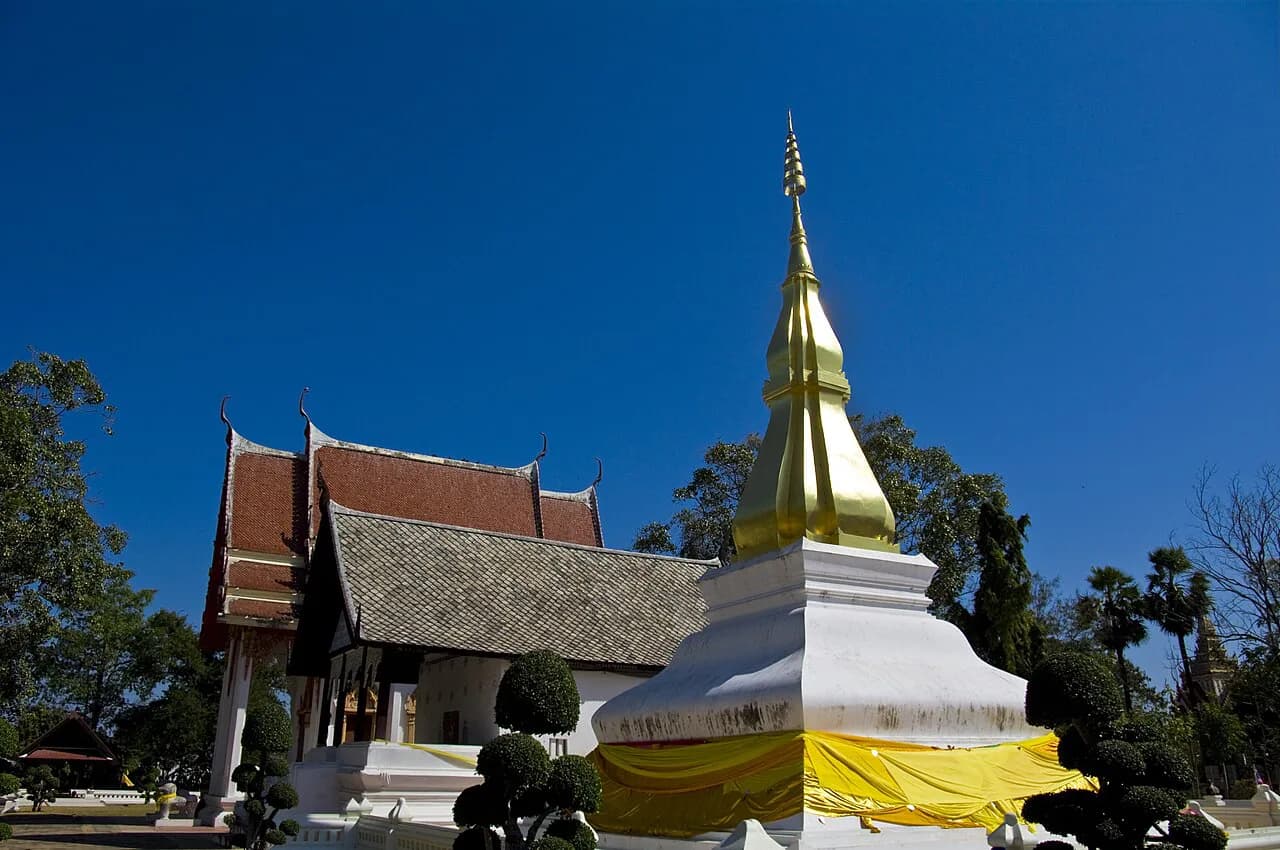
Phra That Kham Kaen is an ancient stupa, originally called Phra That Ban Kham, standing inside Wat Chetiyabhumi, a temple locals also call Wat Phra That Kham Kaen. Because the names multiply, match all three on maps and road signs before you set out. The stupa is the reason to come: a white, bell-shaped chedi with a golden spire, set among large trees.
It is more than a photo stop for Khon Kaen residents, who treat the site as a spiritual anchor and a symbol of the province; it appears in the provincial emblem and motto. Expect people making merit and circling the chedi rather than a museum-style visit with labels. Read the grounds as a working place of worship, and keep your visit low-key.
One traveler post dates the site to the Dvaravati period and describes the stupa as more than 1,300 years old, but that age is legend and attributed history rather than a firmly documented founding date. Treat the number as part of the story you will hear on site, not a fact to plan around.
Where it is, and how to get there from Khon Kaen city
The temple address is Ban Kham subdistrict, Nam Phong district, Khon Kaen province 40140, on rural highway 4007. It sits outside the city, so a city-center hotel is a starting point, not a walking distance. One traveler describes the road as very good, with no potholes or difficult travel, which makes the drive easy even for a first-time visitor.
The most reliable approach is a private car, a rental, or a booked Grab ride, since the sources describe driving and motorcycle trips rather than public transport to the gate. Travel times vary by source and traffic: one post puts the drive from Khon Kaen city at about 30 minutes, while a motorcycle ride is described as 40 to 50 minutes. Once there, the temple has a very spacious parking lot, so you are not hunting for a space.
If you are relying on a rideshare, arrange the return leg before you leave or keep the driver waiting, because there is no evidence of a regular songthaew or bus service running to the temple. For the rest of your city sightseeing, the broader Khon Kaen attractions: plan your stops from campus to stupa guide shows what else is within reach of a Mueang Khon Kaen district base.
The tamarind stump legend, in plain terms
The name means stupa of tamarind heartwood, and the story explains why. In one version, a ruler traveling with relics stopped overnight and placed them on a large dead tamarind stump with only its core left; by morning the stump had sprouted green branches, so a chedi was built over it to enshrine the relics. A traveler account says the site was originally called Phra That Ban Kham and the temple's name was changed to Wat Chetiyabhumi in 1955.
That sprouting stump is also wrapped into the origin story of Khon Kaen's name, which is why locals treat the pagoda as the province's sacred heart. You will hear a second, folk version in which villagers found a dead tamarind core that put out leaves and began to respect it, then built a pagoda over it. Either way, you are looking at a shrine built over a tree, not a monument to a king.

What you see on the grounds
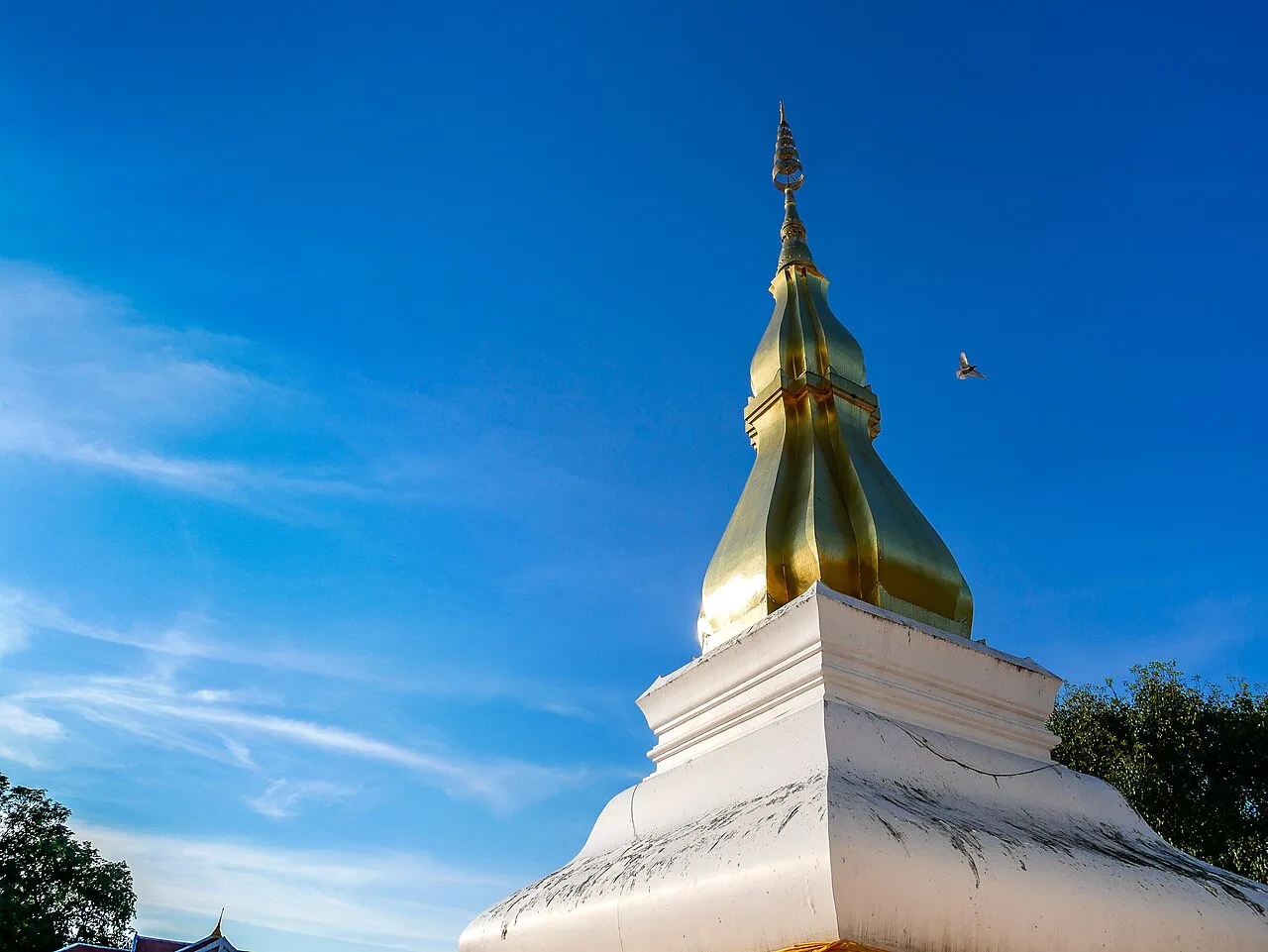
The centerpiece is the white, inverted bell-shaped chedi with a golden spire rising against the sky, an easy subject in morning light. Its base is octagonal and built of brick and mortar, and the structure blends Dvaravati and Lan Xang stylistic elements. The Fine Arts Department has renovated the stupa and improved the surrounding grounds, which is why the approach feels tidy and simple.
Beyond the chedi, look for Buddha images representing each day of birth placed at points around the grounds for people to pay respects, and for a smaller chedi east of the ubosot. Expect the chedi, not the ordination hall, to be the main draw. Large trees provide shade around the grounds.

Hours, admission and offerings
Travel listings currently show the site open daily from 05:00 to 19:00, but the temple does not appear to publish its own schedule, so confirm locally before a pre-dawn or evening trip. The same listings describe admission as free for both Thai and foreign visitors. There is no ticket window to queue at, according to those listings.
Offerings such as flowers, incense, candles, and gold leaf are described by travelers as available at the temple, paid as your own contribution rather than a set price. Bring small notes, since no official price list is published. If you want to make merit, budget a few minutes for it rather than rushing the chedi and leaving.
Note that the site is a religious place, so photography should stay respectful of anyone praying or circling the stupa. Treat any on-site signage as the final word on where you can walk and what you can touch.

How long to allow, and when to go
A focused visit takes 45 to 60 minutes: walk the grounds, look closely at the chedi, and photograph it from a couple of angles. If you are making merit, lighting incense, or applying gold leaf, add 20 to 30 minutes. There is not enough here to fill a full morning on its own.
One traveler recommends arriving between 8:00 and 10:00, when sunlight hits the pagoda and shadows are less harsh. Late afternoon works too, and the site is generally quiet and uncrowded, so you rarely need to work around a crowd. September, late in the rainy season, is described as lush and green with slightly cooler weather.

What to pair with it nearby
The natural pairing is in the city: Phra Mahathat Kaen Nakhon at Wat Nong Wang, the nine-story pagoda by Kaen Nakhon Lake with city views from the top floor, which makes a good contrast to the older stupa outside town. Other posts also group Phra That Kham Kaen with Wat Thung Setthi, known for its Naga-flanked ordination hall, on a merit-focused loop. Pick one or two rather than stringing together a long list.
If you want a non-temple stop on the same half-day, a museum in Khon Kaen city can give regional context and balance the religious site with an indoor visit. Travelers with more time sometimes combine the stupa with Phu Wiang's dinosaur sites, but that turns a short stop into a full day out.

Who should skip it
Skip Phra That Kham Kaen if religious sites do not interest you, because the visit is a single stupa and shaded grounds with no interpretive center to carry the stop. Skip it, too, if you have no transport: it is outside the city, and there is no documented public transport to the gate. The honest trade-off is that it is free, quiet, and genuinely meaningful to locals, but limited to a short stop rather than a half-day in itself.
Is the detour to Phra That Kham Kaen worth it?
Yes, if you have wheels or a booked ride and 45 to 60 minutes to spare, especially in the morning when the light hits the white chedi and the site is at its quietest. Build it into a temple run with a city stop such as Wat Nong Wang, and check the listed 05:00 to 19:00 hours before an early or late trip.
No, if you are depending on songthaews or buses, or you want a sight with displays and interpretation; the stupa and its legend are the whole experience and there is no evidence of scheduled public transport to the gate. A half-day spent in the city, or a visit to the Khon Kaen University: Visiting the Campus in Khon Kaen area, may suit that kind of trip better.
Explore more Khon Kaen guides
Frequently Asked Questions
Is Phra That Kham Kaen free to enter?
Travel listings describe admission as free for Thai and foreign visitors, with no ticket window. Offerings such as flowers, incense, and gold leaf are optional and paid as your own contribution, so bring small notes if you plan to make merit. These are traveler-listing claims rather than an official temple statement, so treat them as a guide and confirm on arrival.
Do you need a guide to visit Phra That Kham Kaen?
No guide is required. The legend and architecture are simple enough to take in on your own, and the visit is short. If you want the full story, read up on the tamarind-stump legend before you go.
How do you get to Phra That Kham Kaen without a car?
Arrange a private ride or a Grab from Khon Kaen city and agree on the return trip, because no songthaew or bus service to the temple is documented. The temple has a large parking lot, and the drive from Khon Kaen city is described as straightforward on rural highway 4007.