
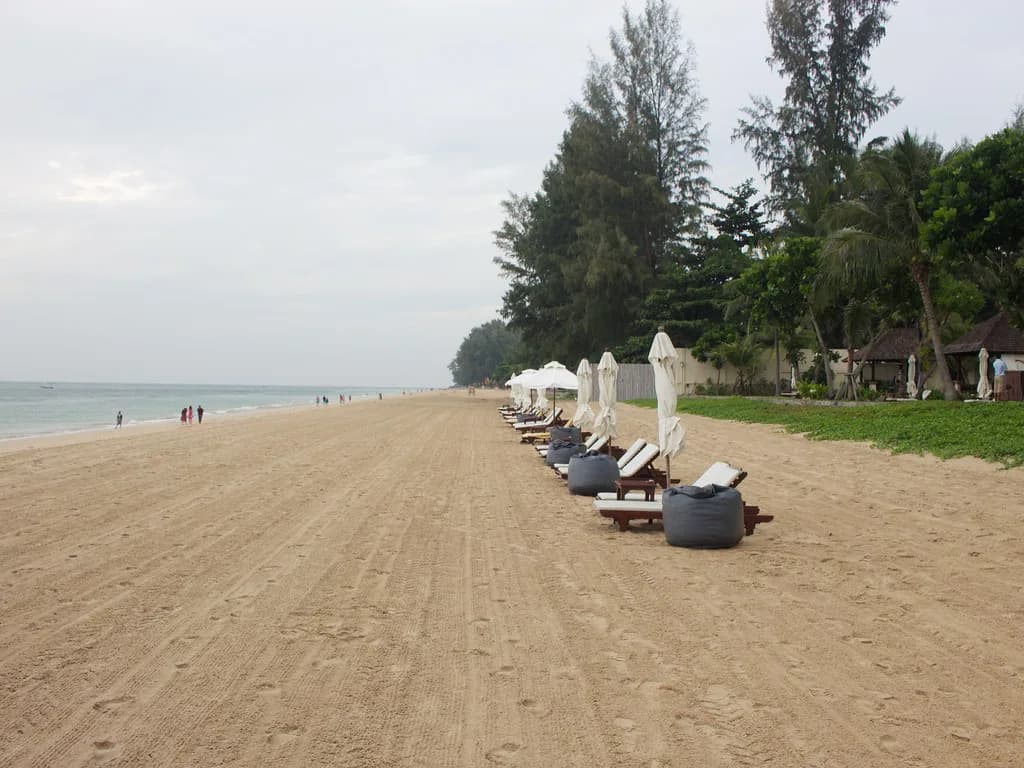
Long Beach, Koh Lanta: A Visitor's Guide to Phra Ae Beach
Long Beach, known in Thai as Hat Phra Ae, is the broad sandy strand on the west coast of Koh Lanta Yai, and it suits travelers who want a lazy beach base rather than a sightseeing hub. It runs unbroken behind a beach road lined with bungalows, bars and small shops. This guide covers where the beach sits, how transfers actually work, when the water pulls back, what you eat and where you sleep, plus the nearby beaches and island trips worth building into a few days.
Where Long Beach is on Koh Lanta
Long Beach lies on the west-facing side of Koh Lanta Yai in Krabi province, Thailand. The sand runs in one long band backed by palms and low-rise buildings, with the beach road and bungalow strip just behind it. Because the beach is so long, the busy patch near the main access points thins out quickly as you walk.
Practically, you treat Long Beach as its own village rather than a corner of a town: guesthouses, restaurants and bars cluster along the road that parallels the sand, and the ferry pier and main town at Saladan sit at the northern end of the island. Your day is mostly beach, food and a short walk, not a schedule of temples and museums.
Getting to Long Beach: boats, buses and your drop-off point
Most travelers arrive by boat from Krabi or Koh Phi Phi, and the crossing is straightforward; the awkward part is the final transfer. Boats land at the pier area and passengers are moved by minibus or taxi to their beach, and drivers often drop people at a general point rather than at their accommodation. One traveler who came from Koh Phi Phi was dropped well away from Long Beach and paid extra for the onward leg, so tell the operator your exact resort name before you board.
From Bangkok, the usual overland route is an overnight bus, followed by a short ferry crossing and a minibus leg to the beach. That is a long haul, so treat arrival day as a write-off and book your first night close to where you actually want to be. Operators and resorts publish current transfer arrangements and pickup points, so confirm the details with your booking rather than assuming door-to-door service.
Laying out the beach and choosing your spot
Think of Long Beach as one continuous runway of sand rather than a series of separate coves. Palms and low buildings sit behind it, the water in front, and walking is the main way to move between sections. That makes it easy to pick a base and drift: settle near your bungalow, then walk in either direction when you want a different bar or a quieter patch.
The sand is widest at low tide, when the sea pulls back and exposes a broad apron of beach. If you want space, palm shade and a short walk to food, the middle stretches away from the main access lanes give you all three. If you prefer a bar within a minute of your towel, stay closer to the bungalow clusters behind the sand.
Swimming and the tidal swing
The west coast has a pronounced tidal range, and at low tide the water retreats far enough to expose reef and rock beneath the surface. One account from a neighboring west-coast beach describes roughly an eight-foot swing between high and low water, with the shoreline reef fully exposed within a few hours in the early afternoon and the usable beach width roughly doubling. Plan your swim around high water and expect a wide, shallow, sometimes rocky flat when the tide is out.
Because the bottom changes with the tide, footwear and caution around exposed coral go a long way; this is a beach to read before you wade in. Watch where other people enter the water and follow the locals' lead. Tide times shift daily, so check a tide table or ask at your accommodation for the day's high and low before you commit to a swim.
Eating and drinking on and behind the beach
Long Beach has two price tiers, and knowing which one you want saves money and disappointment. Beachfront bars and restaurants put you within earshot of the surf, serving mango shakes, cocktails and Thai standards at tables that often spill onto the sand; you pay for the view. Set back from the sand, shops and food stalls sell cheaper, faster meals, and one long-term visitor noted that the beachfront places cost noticeably more than the stalls behind them.
Menus and vendors change season to season, and stalls that anchored someone's trip a few years ago may be gone by yours, so treat any specific food recommendation as a starting point. Walk the beach road once on your first afternoon and note what is actually open. Then decide whether you want the sunset table or the cheap plate, because on Long Beach the two are rarely the same place.
Where to sleep: bungalows versus beachfront resorts
Accommodation splits cleanly into two experiences. Behind the beach, clusters of simple bungalows sit a short walk from the sand, often with a deck, a proper bathroom and air conditioning, and one visitor reported paying a few hundred baht a night for exactly that. These are the value option, and being a minute from the beach is normal rather than a compromise.
At the top end, beachfront resorts occupy the prime sand. Long Beach Chalets describes 48 standalone chalets, seaview pavilions and lagoon-side rooms, with ocean-facing pools, a spa, a beachside restaurant and a café on the estate, and it publishes its own facilities directly. Rates vary by room type and season, so compare live prices for your dates rather than budgeting from an old figure.
Sunsets and evenings
The west-facing orientation is the whole evening draw: the sun drops into the Andaman and the beach becomes the viewing platform. People watch from loungers with a drink, from beanbags outside the bars, or standing on the sand with a beer from a nearby shop. Fire shows and lantern-lit bars appear along the strip after dark, and the mood stays relaxed rather than clubby.
Arrive twenty or thirty minutes before sunset to claim a spot, especially if you want a table facing the water. If you are staying behind the beach, the walk home after dark is short but unlit in places, so a phone light helps.
How long to allow at Long Beach
Two to four nights is the honest answer for most travelers. Long Beach rewards slow mornings, a swim at high tide, a long lunch and a sunset, and one full day is enough to see the strip and decide you like it. If you are using it as a base for the wider island, add a day for a west-coast beach run and another for a boat trip, which pushes you toward four or five nights.
With only a single night, treat Long Beach as a transit stop: arrive, eat, watch the sunset, and move on in the morning. The beach is the attraction, not a checklist, so a rushed visit mostly costs you the transfer time. Decide up front whether Long Beach is your destination or your sleep stop, because the two plans need different bookings.
Nearby beaches and island day trips
The realistic add-ons from Long Beach are other west-coast beaches and a boat trip. Kantiang Bay sits further south; one traveler took a taxi there and walked back toward Long Beach over a few hours, passing several beaches along the way. Klong Nin Beach is another west-coast option if you want a change of sand without a long drive.
Day trips to Koh Phi Phi are sold from the island, and one traveler paid a set rate that included pickup and drop-off at the guesthouse. Maya Bay on Koh Phi Phi Leh is the famous stop, and its access is controlled by closures and seasonal rules, so ask the operator what is open on your date before you book. If crowds drain you, ask whether the itinerary can skip the busiest stops.
At the northern end of the island, Klong Dao Beach is the long, calmer strand closest to Saladan and the ferry pier, a sensible first or last night if your boat leaves early. Klong Khong Beach, further south, has a similar west-coast sunset setup with a more established bar strip behind the sand. Together they justify renting a scooter or taking a taxi for a half-day.
Getting around from Long Beach
Long Beach itself is a walking place: the sand and the parallel beach road cover most of what you need. For the wider island, motorbike rental is the common local option, and taxis or songthaews cover the trips you cannot walk. The distances are not huge, but the heat and the lack of shade on the road make walking between beaches a commitment rather than a stroll.
If you plan to beach-hop, agree on a return price with your driver before you set off and confirm where you will be picked up. Either way, name your accommodation clearly, because Long Beach is long enough that the wrong drop-off means a hot walk with your bag.
Should Long Beach be your Koh Lanta base?
Yes, if you want a long, walkable beach, cheap bungalows behind the sand, and sunset as the main evening event. No, if you need a compact town, a big sightseeing list, or a beach that behaves the same at every tide. Long Beach is a base for doing very little well, with Kantiang Bay and a Koh Phi Phi boat trip as the natural escapes.
Book a bungalow or resort that matches how you actually want to spend the day, tell your transfer operator the exact name, and check the tide before you swim. That is the whole planning list; everything else at Long Beach is decided on the sand.
Explore more Koh Lanta guides
Frequently Asked Questions
Is Long Beach Koh Lanta nice?
It is a long, palm-backed stretch of sand with beachfront bars, cheap bungalows behind the beach, and strong sunsets. The trade-offs are a wide tidal swing that exposes reef at low tide and a final transfer that can drop you away from your accommodation if you do not name it.
Is it safe to swim at Long Beach Koh Lanta?
The water retreats a long way at low tide, exposing reef and rock, so the swimming window is tied to the tide. Check the day's high and low water, watch where others enter, and be careful on the exposed coral. Conditions change, so judge it on the day rather than from a fixed rule.
What is the nicest beach on Koh Lanta?
There is no objective answer, because the west-coast beaches differ in length, bar scene and how close the road sits to the sand. Long Beach suits travelers who want space and a long walk, while Klong Dao is closer to the pier and Klong Khong has a denser bar strip. Pick by the kind of evening you want.