
Pai Walking Street: A Practical Guide to Pai's Night Market

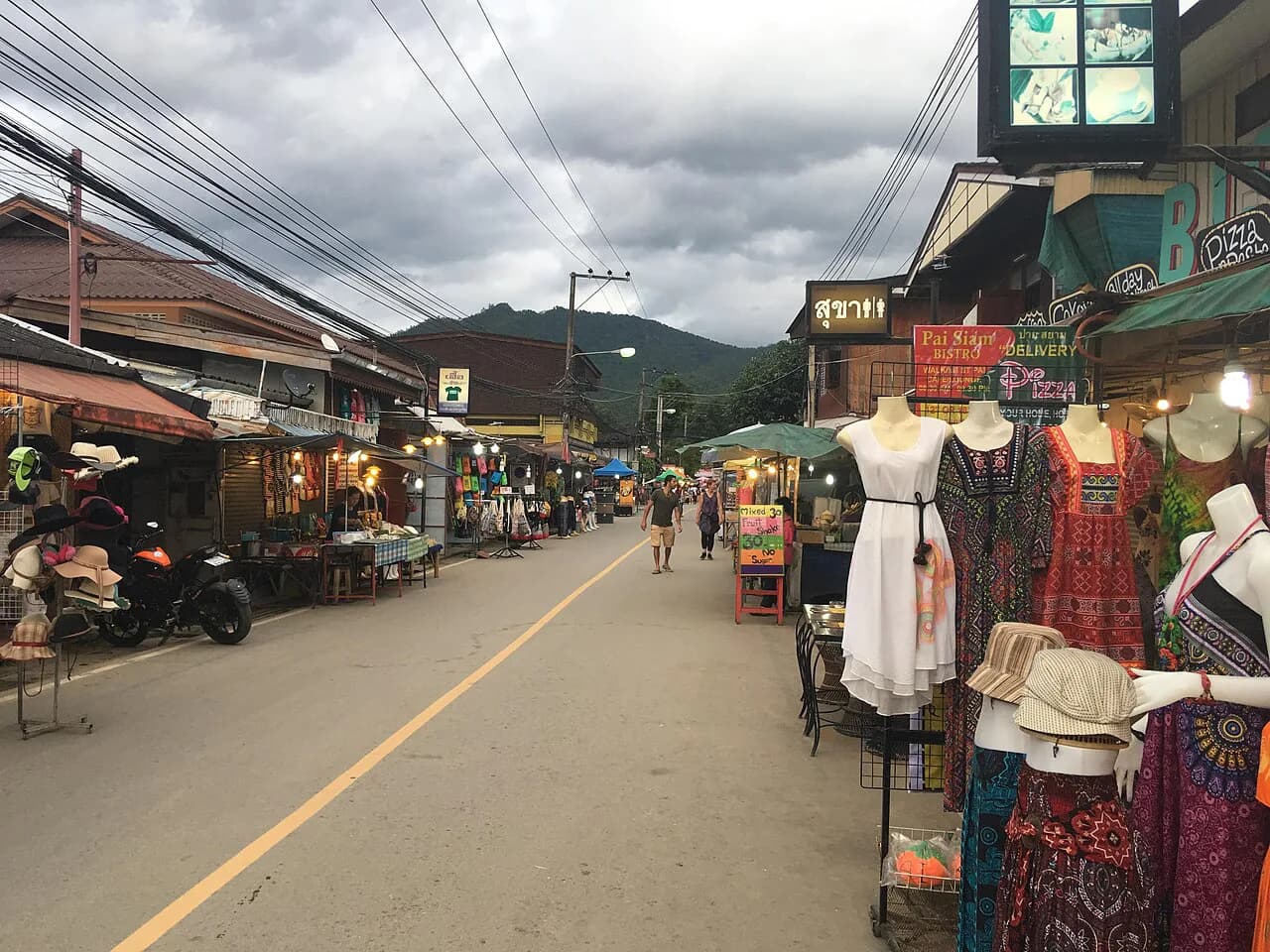
Pai Walking Street is a single short stretch of market stalls in the middle of town, open nightly from 18:00 to 22:00, and an hour or two is enough to walk it twice and eat well. It is not a sprawling city night bazaar, so plan it as the centerpiece of one relaxed evening in Pai rather than a destination that eats a whole night. This guide covers where the street sits, how to walk in from central Pai, what the stalls sell, how much time to allow, and what's within a few minutes on foot.
What Pai Walking Street actually is
Expect a compact market street lined with food carts and craft tables, not a maze of lanes. You can see the whole thing in a slow pass, and reviewers consistently describe it as small, walkable and far less overwhelming than the big-city night markets. That scale is the appeal: you graze, you browse, you loop back for a second dessert, and you're done.
The crowd skews heavily toward Western travelers, which gives the street a different flavor from a typical Thai market. Vendors respond with a menu spread that's genuinely international for a town this size. If you came to Pai expecting only northern Thai food, adjust: the market is more global snack bar than local food lane.
For a wider look at how the market fits alongside Pai's other sights and how long each needs, the Pai Attractions guides put the town's stops side by side.
Where it is and how to get there
The market sets up on Chaisongkram Road in Wiang Tai subdistrict, close to the Pai District Office and roughly 10 kilometers from the historic site the tourism authority references. In practical terms, that means central Pai: if you're staying anywhere in the guesthouse cluster around the bus station and the main lanes, you walk there.
There's no transit leg to plan. Walk toward the center of town as light fades, follow the stalls and the smell of grills, and you've arrived. From most central guesthouses the walk in is a few minutes; from the outer bungalows it's a slightly longer stroll, so give yourself ten to fifteen minutes and carry a light or use your phone on the way back.
One detail worth knowing before you set out: two temples sit along the walk in, depending on which end of the street you approach from. That makes the approach part of the visit rather than just a commute.
Hours and the best time to arrive
The street operates every night of the week from 18:00 to 22:00, according to the published listing, so you Don't need to match your trip to a particular weekday. Vendors are setting up as the light goes, which is why arriving around six pays off: you get a first pass with room to move before the street fills.
Crowds build later in the evening, and weekends are the busiest. If you want photographed stalls without elbows in your frame, come at opening and eat your savory courses first, then circle back for dessert as the street gets lively. Treat the published hours as a planning guide rather than a guarantee, since small-town markets can shift with the season, and confirm with your guesthouse on arrival day.
How much time to allow
Budget an hour for a fast graze and two hours if you plan to sit, listen to music and browse the craft tables. The street is short enough that a single unhurried pass covers it, and a second loop lets you go back for the thing you regretted skipping. Most visitors report the whole market is comfortably explored in an hour or two.
The real constraint is your appetite, not the size of the market. Eating one dish per loop and walking between stalls stretches the evening naturally. Don't schedule a second activity for 19:30 expecting to be quick about it.
What to eat: a wider spread than you'd expect
The food is the reason to come, and the range is unusual for a town of Pai's size: Thai, Vietnamese, Indian, Mexican, Chinese, Myanmar and Italian stalls, plus halal options. That means a group with different diets can split up and reconvene with something for everyone. It also means you should walk the full street before committing to your first plate.
Two items come up again and again in visitor reviews: mini pancakes and grilled corn on the cob. The dessert stalls in particular earn repeat praise, so leave room at the end rather than front-loading on a main. Grilled corn works as a savory starter while you decide.
If you'd rather build an evening around a sit-down meal before or after the market, the things-to-do-in-Pai rundown pairs the street with the town's other stops and timing notes.
What to buy: crafts straight from the makers
Between the food carts you'll find handmade jewelry, clothing and local art, and much of it is sold by the people who made it. That's the difference between this street and a wholesale souvenir market: you can ask the seller how a piece was made and get a real answer. If you want one souvenir from Pai that isn't a fridge magnet, this is where to look.
If you want to buy crafts, keep bargaining light and friendly rather than grinding for the last few baht—many sellers are the makers themselves, and aggressive haggling is generally poorly received in Thailand. If a stall lists fixed prices, take them at face value; confirm whether a given vendor negotiates before assuming so.
Cash versus cards at the stalls
Bring cash. Plenty of vendors on the street Don't take cards, and the ATMs in central Pai are a walk away rather than at your elbow. Withdraw before you head out, and keep small notes so you're not asking a pancake stall to break a large bill at peak hour.
Live music and bars on the same street
Live music drifts out of a few spots along the market, and bars line the same stretch, so the evening doesn't have to end at ten. Eat early, then settle in for a drink as the stalls pack up. Within a minute's walk you'll find cocktail bars and music bars clustered near the market, which makes the handoff from dinner to nightcap effortless.
Nearby on foot: Wat Klang and the surrounding lanes
Wat Klang sits essentially at the market's edge, roughly 20 meters away depending on where you enter, so it's an easy add before the stalls open or as a quiet pause mid-evening. The lanes around the street hold a dense cluster of restaurants, bars and cafés within a couple of minutes' walk.
If you're in Pai for several days, the hillside temple at Wat Phra That Mae Yen makes a natural counterpoint to the market: one is a sunset viewpoint, the other a night street; see the Wat Phra That Mae Yen: Pai's White Buddha Temple Guide for the temple side. Going the other direction, Pai Canyon (Kong Lan): What to Expect, Trails and Timing is a late-afternoon stop that pairs with an early market dinner.
Further out, the Pai Bamboo Bridge (Kho Ku So) and the Pai Memorial Bridge at Tha Pai fill a daytime loop, both on the road through the valley. Many travelers tack Santichon Chinese Village onto the same ride, since it's a short detour in Mae Hong Son Province countryside. None of these are evening stops; do them earlier and save the market for after dark.
Practical trade-offs: crowds, heat and scale
The market is small, and that cuts both ways: it's easy to cover but it won't fill a whole night on its own. Pair it with a bar or a temple visit rather than expecting four hours of entertainment. Late evening brings the heaviest foot traffic, especially at weekends, so an early arrival is the single best fix.
Pai stays warm into the evening, and the street is outdoors with cooking heat on top of it. Dress light, plan to sit down somewhere with a drink partway through, and Don't commit to a long walk back before you've had water. If you want a calmer version of the same market, aim for a weekday and arrive at opening.
Is Pai Walking Street worth an evening?
Yes, if you treat it as one relaxed evening rather than a headline attraction. Arrive around opening time, walk the full street before ordering, eat across two or three cuisines, bring cash, and finish with live music at one of the bars on the same stretch. An hour or two covers it well, and the compact scale is exactly why it works.
Check the current hours and any changes to the street's setup locally when you arrive, since small-town markets can adjust with the season. For the rest of your Pai planning, see Pai attractions: choose your canyon, temple and market stops, which keeps each stop in its own lane.
Frequently Asked Questions
Do I need a ticket for Pai Walking Street?
No. It's an open street market with no entry gate, so you simply walk in and pay stall by stall. Bring cash, since many vendors Don't accept cards, and confirm any tour or guided option separately if you book one.
Is Pai Walking Street open every night?
The published listing shows it running nightly from 18:00 to 22:00. Small-town markets can shift with the season or weather, so confirm with your guesthouse on arrival day if the market is central to your plans.