
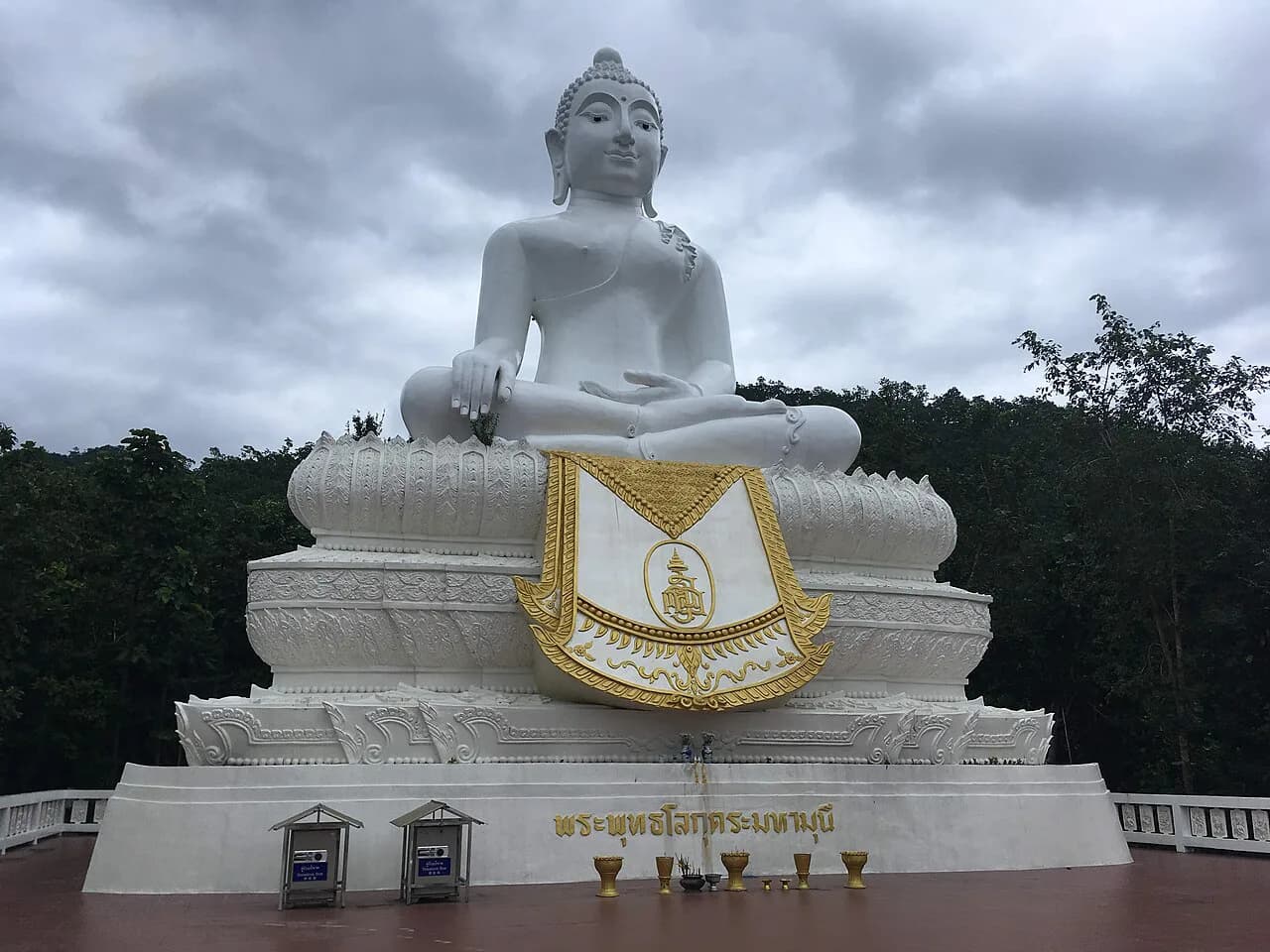
Wat Phra That Mae Yen: Visiting Pai's Hilltop White Buddha

Wat Phra That Mae Yen is worth roughly one to two hours, and the climb is the point: 353 steps to a hilltop white Buddha with the Pai valley spread below. It is a working temple, not just a viewpoint, so the small chedi and reclining Buddha at the top deserve as much of your time as the panorama. This guide covers where the temple sits, the two routes up, what you actually see, and the practical details for timing your visit.
Where Wat Phra That Mae Yen sits
The temple stands in Mae Yen village in Pai District, Mae Hong Son Province, on a hill east of the town center. Sources put it roughly 2 to 3 km from Pai town, which on a scooter is a short ride and on a bicycle a manageable one. A map pin is more useful than a street number, because the listing gives a location in the Mae Hi area of Pai District rather than a navigable street address.
If you are sorting out how the temple fits with the rest of your time in town, Pai attractions: choose your canyon, temple and market stops lays out the area's main sights in one place. The temple is a natural first or last stop of a day because it sits outside the center, not on the walking-street grid.
Getting there from Pai town center
Head east from town toward Mae Yen village and watch for the turnoff just past the entrance to Mae Yen Waterfall, where signs point you up to the temple. A car, scooter or bicycle all work, and the access road is described as well maintained with clear signage. There is no published bus or songthaew route in the sources for this temple, so arrange your own transport or ask your guesthouse what is running.
Once you reach the base, you choose between the Naga staircase and the paved road that continues to a higher parking area near the viewpoint. Riders and drivers should park considerately rather than along the narrow approach. If you are combining the temple with other stops west of town, the bamboo bridge and the Pai Memorial Bridge sit on a different loop and are better saved for another half-day.
Choosing between the staircase and the access road
The staircase is the better experience when the day is cool and your knees are willing; it climbs through forest and gives the white Buddha a proper sense of arrival. The paved road is the pragmatic choice in midday heat, for anyone with limited mobility, or when you are short on time and want the view without the sweat. Many visitors walk up and ride down, which is a fair compromise.
Either way, you end at the same terrace, so nothing is lost by taking the road. Travelers consistently describe the final stretch as steep on foot, which is worth factoring in if you are carrying water or camera gear.
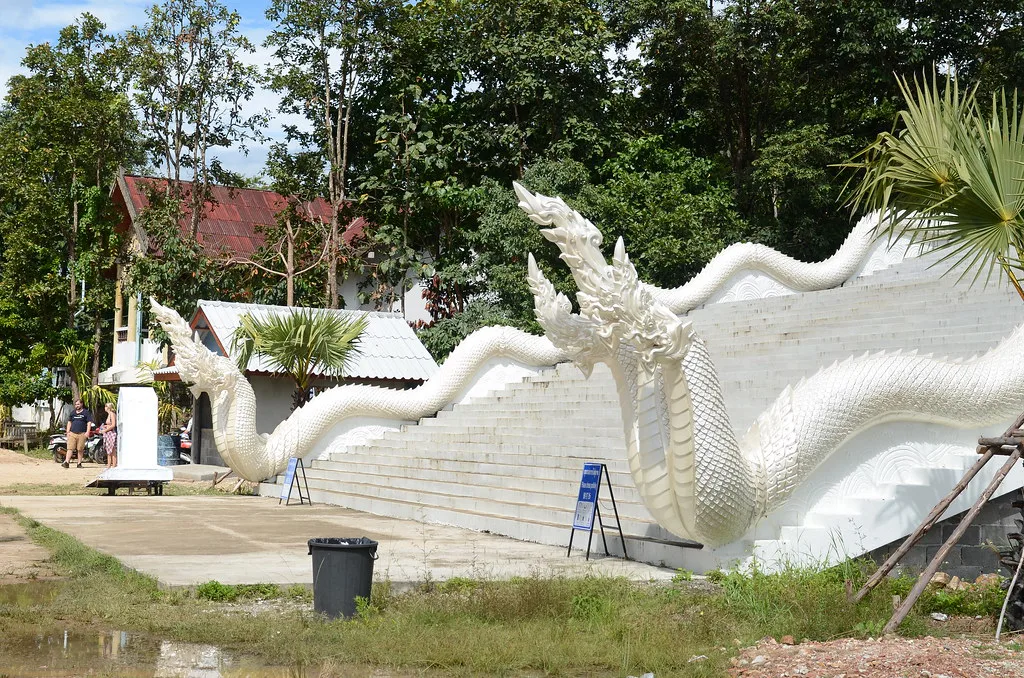
The Naga staircase and the white Buddha
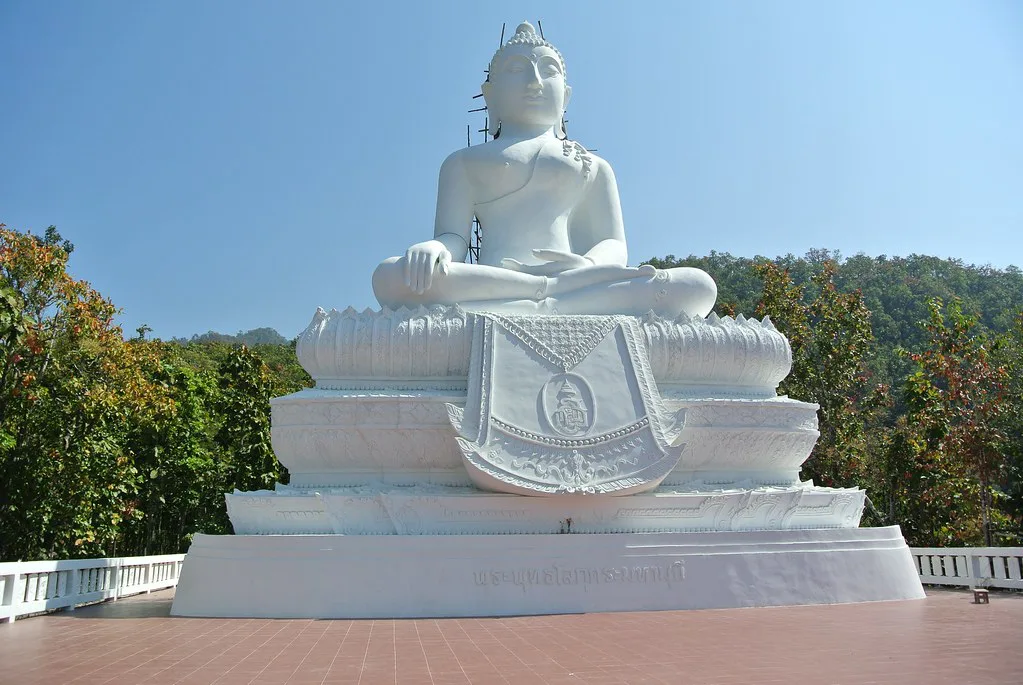
The climb runs 353 steps up a Naga-flanked staircase, and the reward at the top is Phra Phuttha Lokuttara Maha Muni, a large white seated Buddha in the Mara-Vijaya posture. From the terrace you look over green valleys, the river, rice fields and the roofs of Pai town. Give yourself ten minutes at the top simply to sit rather than shoot and leave.
The statue is the temple's signature image and the reason most travelers come, but it is an object of veneration first. Keep voices low near the Buddha and step aside when worshippers approach. Trip.com's listing describes the site as free to enter, which matches the other sources here, though donations are customary.
The rest of the temple grounds
Below and around the big Buddha, the grounds hold a small bell-shaped chedi topped with a Burmese-style umbrella, a modest ubosot, and a reclining Buddha known locally as Phra Chao Phon Thuk. The architecture mixes Lanna and Burmese elements, which reflects how close Pai sits to the Shan and Burmese cultural sphere. Walk the compound before you descend; most visitors skip it and miss the older heart of the temple.
Local vendors near the temple sell snacks, water and handmade crafts, which is a practical stop before or after the climb. Buying there keeps your money in Mae Yen village rather than in town.


How long to allow, and when to go
Budget one to two hours for the whole visit: twenty to thirty minutes up, half an hour at the top for the Buddha, chedi and views, and a relaxed descent. The listed recommended sightseeing time is 1 to 2 hours, which lines up with that pace. Add time if you plan to sit with the view or browse the vendors.
Early morning and the hour before closing give the softest light and the thinnest crowds, and they are far kinder for the climb than midday. The temple closes at 6:00 PM, so a true sunset viewing only works if you are on the terrace before then. Several travelers note arriving around 5:00 PM to catch the golden light.
The viewpoint is often recommended for sunrise as well as sunset, and the morning air makes the staircase far more pleasant. Whichever you pick, build in a buffer so you are not rushing the steps in the dark.

Opening hours, entry and what to confirm
Third-party listings put the temple at open daily from 6:00 AM to 6:00 PM with free admission and donations welcome. Those details do not come from a temple website, so treat them as a good guide and not a guarantee, particularly around Buddhist holidays. Check with your guesthouse or call the listed temple number before making a special trip at opening or closing time.
There is no ticket to buy, so the only cost is your transport up the hill, and the sources here do not quote fares for scooters, taxis or tours. Ask your rental shop or driver directly for the day rate. No tour is needed to visit; guided options exist but add little for a site this compact.
One source ties sky lantern activity at the temple to a specific festival period rather than a regular evening event, so do not plan around lanterns unless you have confirmed a date with a local operator. On ordinary days, expect a quiet temple and a view.

Pairing the temple with Pai Walking Street and Pai Canyon
The temple makes an easy late-afternoon stop before Pai Walking Street, the night market that fills Chaisongkram Road in Wiang Tai through the evening. Come down from the Buddha, park the scooter, and eat your way along the street. It is the natural end to a day that started on the hill.
Pai Canyon (Kong Lan) is the other classic viewpoint near town, and its ridgelines face a different direction from the temple terrace, so the two are worth doing on separate evenings rather than back to back. If you only have one clear afternoon, choose the temple for the Buddha and the canyon for the exposed rock formations, or split them across two days.
Travelers with a spare morning often add Santichon Chinese Village, a short ride west of town, to a broader loop that also takes in the bamboo bridge and Memorial Bridge. None of these are within walking distance of the temple, so plan them as a separate outing.
Is the climb to the white Buddha worth it?
Yes, if you go for the whole temple rather than only the photo. The 353 steps, the seated white Buddha and the valley view earn the trip, and the chedi, ubosot and reclining Buddha on the same hilltop make it more than a viewpoint. Go early or late, take the road up if the heat is against you, and give it a relaxed hour or two.
Explore more Pai guides
Frequently Asked Questions
Is Wat Phra That Mae Yen free to enter?
Listings describe entry as free, with donations appreciated rather than required. Because the hours and entry terms come from third-party sources rather than the temple itself, confirm with your guesthouse before a special trip.
Can you drive up to the white Buddha instead of climbing?
Yes. A paved access road continues past the base to a higher parking area near the viewpoint, so you can skip the staircase entirely. Many visitors walk up the Naga steps and ride or drive back down.
How far is Wat Phra That Mae Yen from Pai town?
Sources put it roughly 2 to 3 km east of the town center in Mae Yen village, a short scooter or bicycle ride. Watch for signs just past the Mae Yen Waterfall turnoff.
Can you watch the sunset from the temple?
Only if you are on the terrace before the 6:00 PM closing time, since the site shuts at that hour. Arriving around 5:00 PM gives you the golden light and enough margin to descend before dark.