
Santichon Chinese Village: Pai's Yunnanese Hill Village

Santichon Chinese Village is worth roughly 90 minutes to two hours, not a half day. The village, also called Ban Santichon, sits about 4–5 km west of Pai town in Mae Hong Son Province, where the descendants of Yunnanese Kuomintang settlers built mud-brick houses and tea shops into a hillside. This page covers how the village is laid out, how to reach it from Pai, what the stalls and tea houses actually offer, and how to fold it into a scooter loop with Yun Lai Viewpoint, Pai Canyon or the other Sights in Pai further east.
One honest caveat shapes the visit: the village is openly touristy. Newer mud-brick copies stand beside the original settler houses, and the swings and costume racks draw the loudest crowds, so come expecting a curated stop rather than a living museum. That's fine if you treat it as a relaxed tea-and-food break with a view, and the payoff is a courtyard where Yunnanese families still roast and pour the tea.
Where Santichon Chinese Village Is and How It's Laid Out
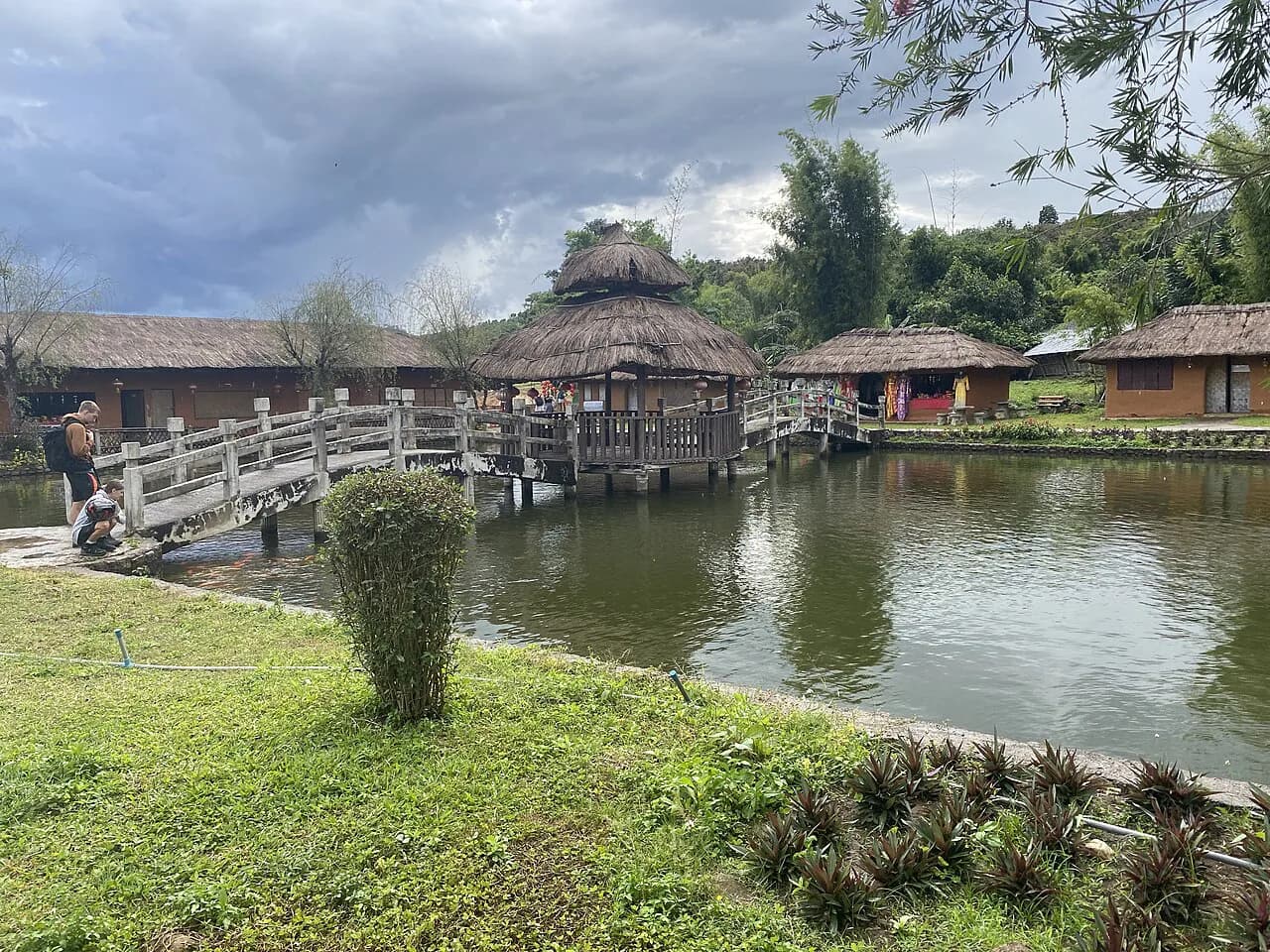
The village spreads across a ridge west of Pai town, close enough that the ride from the center takes only several minutes once you leave the main road. You arrive at a gate area and a covered eating zone, then the courtyard of low wooden tea pavilions rings the open space where red lanterns hang between the mud-brick walls. Walk five minutes off the main courtyard and the stalls thin out into back lanes with the older buildings and the valley view beyond.
Think of the site in three bands. The gate end handles food and souvenir stalls, the courtyard holds the tea houses and the costume photo stalls, and the western ridge has the bamboo swings and the viewpoints facing the valley and the distant Myanmar border hills. A ridge viewpoint just up the road, Yun Lai Viewpoint, is a separate stop that locals reach at dawn for the sea-of-clouds effect, so many visitors pair it with Santichon in one morning.
How to Get There from Pai
A scooter is the simplest way up: the paved road climbs gently west out of town and the signs are clear from the main road. A private tuk-tuk or taxi takes about ten minutes from Pai center, and drivers often wait for a small extra fee, which helps if you want to continue to Yun Lai afterward. Songthaews leave from Pai's walking street on a fixed per-person fare and depart only when full, so travelers without a scooter should budget extra waiting time.
Cycling also works for reasonably fit riders, since the hills are gentle by northern Thai standards. Group tour vans from Pai are another option if you would rather not drive, and they usually combine the village with other stops on the same road. If you're sorting out the rest of the day, the walking street guide covers the night-market end of it, while the Memorial Bridge sits on a different road entirely and is a separate trip.
What to See and Do Inside the Village
The tea houses are the heart of it. Six low pavilions pour Yunnanese oolong and pu-erh from clay pots, rinsing the leaves and refilling a thumb-sized cup several times while the terraced gardens drop away behind you. Food stalls near the gate keep the same rhythm: hand-pulled noodles in pork broth, pork belly with pickled mustard greens, and steamed mantou buns, sometimes served with condensed milk. Prices here sit above street-stall rates but below walking-street restaurant tabs, so carry cash for snacks and small add-ons.
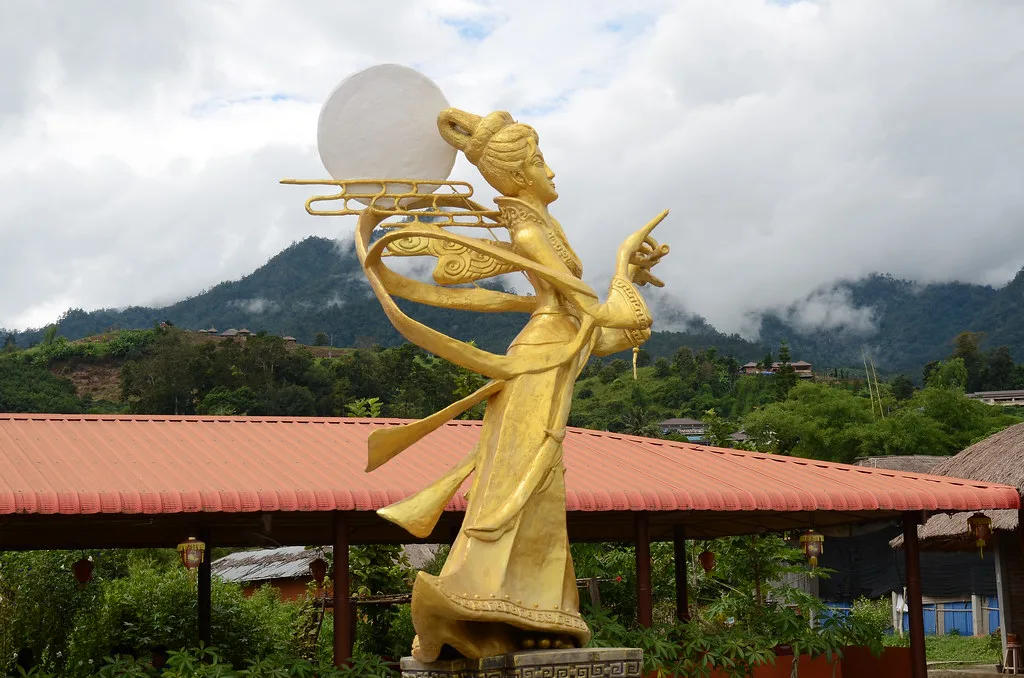
Look past the photo props for the original architecture. The first Kuomintang settlers built with local clay and timber, and a handful of those originals still stand among the newer copies, recognizable by slumped roofs and stripy ochre walls with low doorways. The ridge swings and selfie platforms draw a queue and a small fee, while free viewpoints a few meters away give the same panorama. Costume rentals at several stalls include a sash, hat and sometimes a parasol, with staff adjusting the fit and pointing out backdrops.
Costs to Budget
Entry to Santichon Chinese Village is free, so the only money you spend is on what you choose to do. Recent visitor accounts list the wooden swing at about 25 baht, short horseback rides at about 50 baht with a one-hour village loop around 300 baht, and costume rental starting near 100 baht per set. Treat those figures as an indication rather than a fixed price list, since vendors adjust rates over time.
For tea, meals and the extras, bring Thai baht in cash: the stalls that rent costumes and run the swings work on small notes, and it keeps the visit quick. If a sign for a specific activity does not show a price, ask before you start, because this is a market-style setup rather than a ticketed attraction with a published rate card.
How Much Time to Allow
Most visitors stay ninety minutes to two hours. That covers a tea session, one meal, a wander down the back lanes and a batch of photos; if you settle in for a long tea session with refills, half a day slips away without much effort. For a tighter schedule, 90 minutes is enough to taste the village and still fit Yun Lai Viewpoint and Pai Canyon into the same afternoon.
A sensible sequence starts at the food stalls when you're hungry, moves to the tea houses, and finishes on the ridge for photos as the light softens. Because the site is compact, you won't spend much of that time walking between parts; most of it goes to eating, drinking and queueing for the swing.

Best Time of Day and Year
Mornings are quiet, the light is soft, and the mist can make the hills feel like another country. Many visitors start at Santichon and continue to other Yunnanese and temple stops. Afternoons fill up with day-trippers from Pai, so the courtyard and swings get busier as the day goes on.
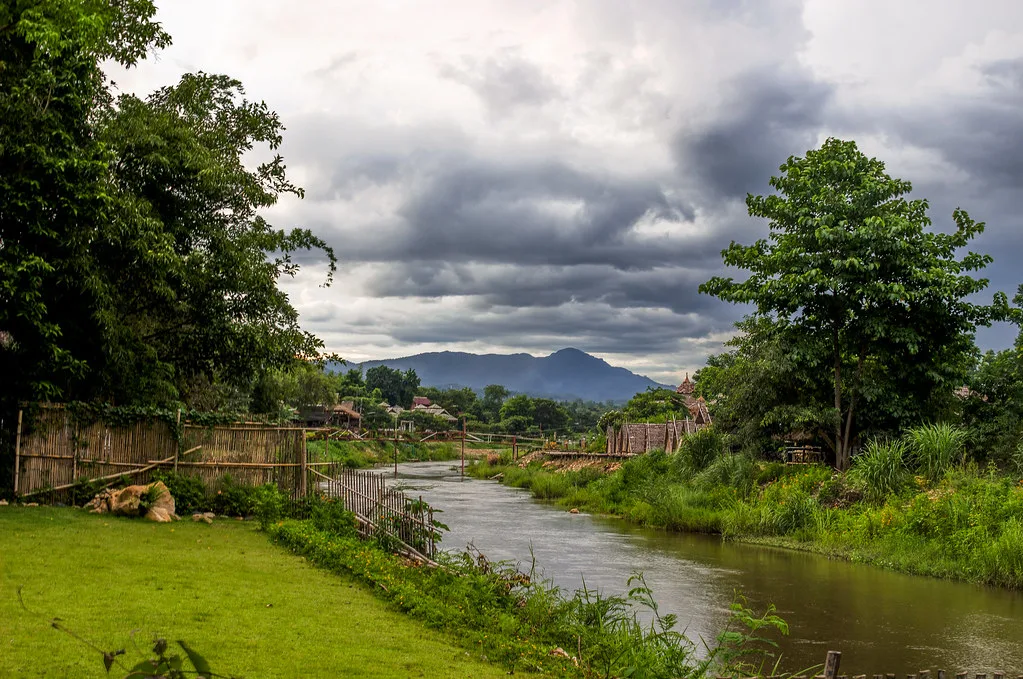
Season changes the visit noticeably. The cool season from November to February brings crisp mornings and clear valley views. March and April can bring haze from burning fields that flattens the panorama. The wet season from June to October means fewer visitors and greener hills but slick dirt paths after afternoon downpours, so check the day's conditions in Pai rather than relying on a fixed assumption.

What's Nearby on the Same Road
Yun Lai Viewpoint is just up the road, which makes it the easiest add-on: arrive at dawn and you may catch the sea of clouds over the valley floor. Pai Canyon lies east of town, ten minutes from the center on a narrowing road, and works well at sunset when the light hits the red-earth ridges. Pairing Santichon in the afternoon with a canyon rim walk in the evening is a common route.
Riders heading further out can continue past the village toward Mo Paeng Waterfall, which is several kilometers along the same road. Wat Phra That Mae Yen, with its white Buddha on the hill above town, is a separate stop on the other side of Pai and better saved for another ride. None of these requires a booking; they're independent stops you string together with your own transport or a hired driver.
Practical Cautions
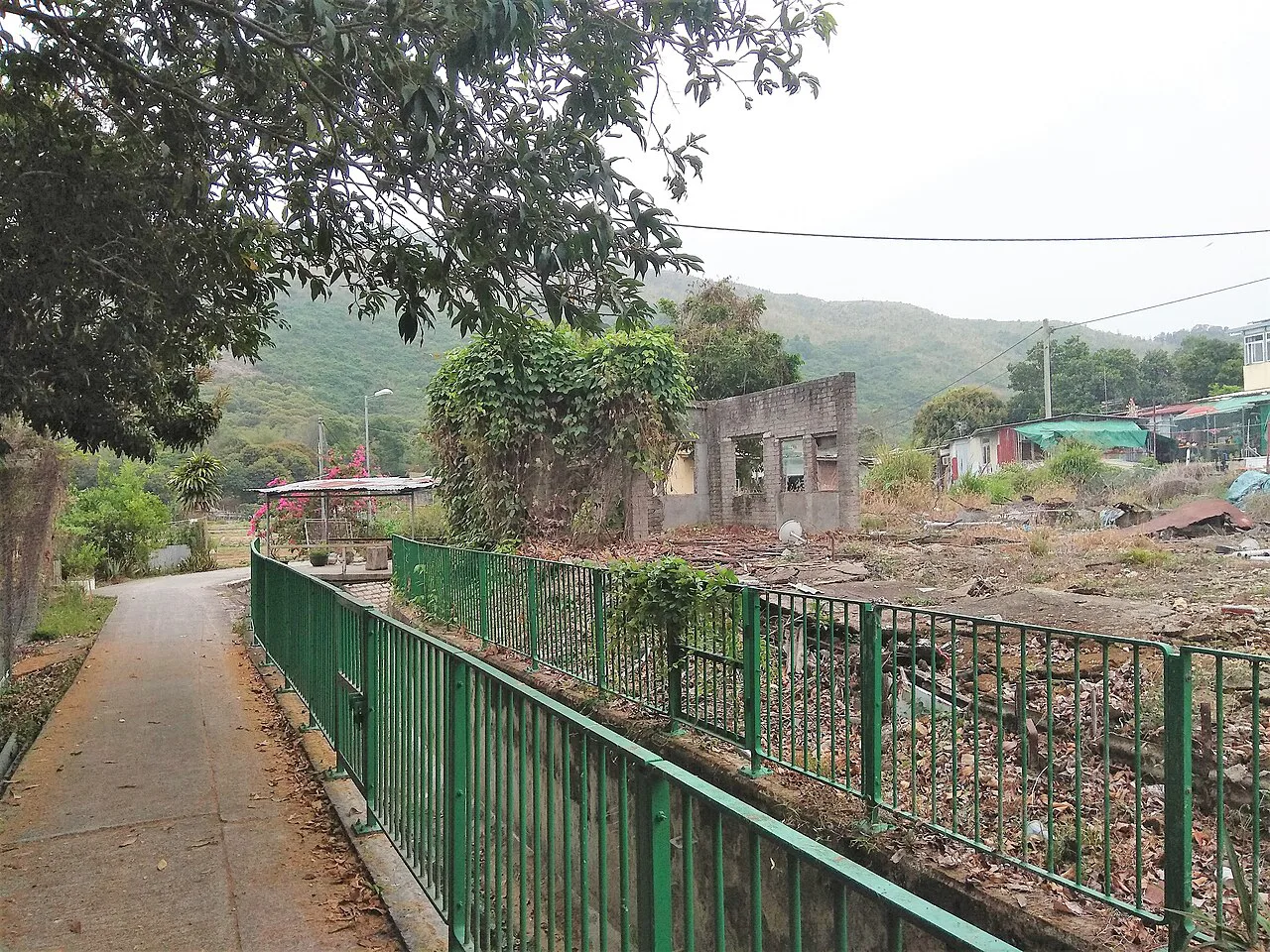
Two things blunt the visit for some travelers: the touristy packaging and the newer construction mixed in with the originals. If you're after authenticity, focus on the tea houses and the older mud-brick corners rather than the photo sets. Opening hours aren't published by a confirmed operator, and guides describe doors opening around 8am with most stalls closing by 6pm; check on arrival, since individual vendors set their own schedules.
Bring cash for the swing, horseback rides, costume rental and snacks, and wear shoes that handle packed dirt, which turns slick after rain. There is easy, spacious parking at the village entrance, so a scooter or car is no hassle. No official website or booking channel for the village is confirmed, so arrange transport in Pai and pay vendors on site.
Should Santichon Make Your Pai Loop?
Yes, if you want a low-effort tea-and-food stop with a valley view and Don't mind the touristy sheen. Give it 90 minutes to two hours, go early for quiet and soft light, and carry cash for the swing, a costume or a bowl of noodles.
Build the ride around it: Santichon in the morning or late afternoon, Yun Lai Viewpoint just up the road, and Pai Canyon for sunset on the way back into town. Skip it if you're chasing an untouched hill-tribe village, because that isn't what this is.
Explore more Pai guides
Frequently Asked Questions
Does Santichon Chinese Village have an entrance fee?
Published guides describe entry as free, with costs only for optional extras such as the swing, horseback rides, costume rental, food and tea. Vendors set their own rates, so confirm any charge before you start an activity rather than assuming a fixed price list.
Can I visit Santichon Chinese Village without a scooter?
Yes. Songthaews run from Pai's walking street on a per-person fare and leave when full, so allow extra waiting time, or hire a private tuk-tuk or taxi for roughly a ten-minute ride from the center. Group tour vans from Pai also stop at the village.
How far is Santichon Chinese Village from Pai town?
It sits roughly 4–5 km west of Pai town in Mae Hong Son Province, depending on which guide you read. The paved road climbs gently, and the drive takes only a few minutes by scooter, tuk-tuk or car.