
Big Buddha Phuket: Visiting Nakkerd Hill's White Marble Buddha

Big Buddha Phuket closed in August 2024 after a landslide damaged the access roads on Nakkerd Hill, then reopened on 3 March 2026, so the site is worth planning around again if you were told it was shut. Some map apps still label it permanently closed, which is why checking live status before you climb matters more than any description of the statue. This guide covers where the monument sits, how to get up the hill from Patong, Karon, Kata, Chalong or Phuket Town, what to see once you are there, and how to fit it into a half-day.
Expect roughly 60 to 90 minutes on site, most of it spent on the upper terrace and the viewpoints rather than queuing. Entry has been free with donations welcome, and the trip is a hilltop drive rather than a walk from the beach. Plan the logistics first: the 94 steps and the ride back down shape how the visit feels.
Where Big Buddha Phuket sits on Nakkerd Hill
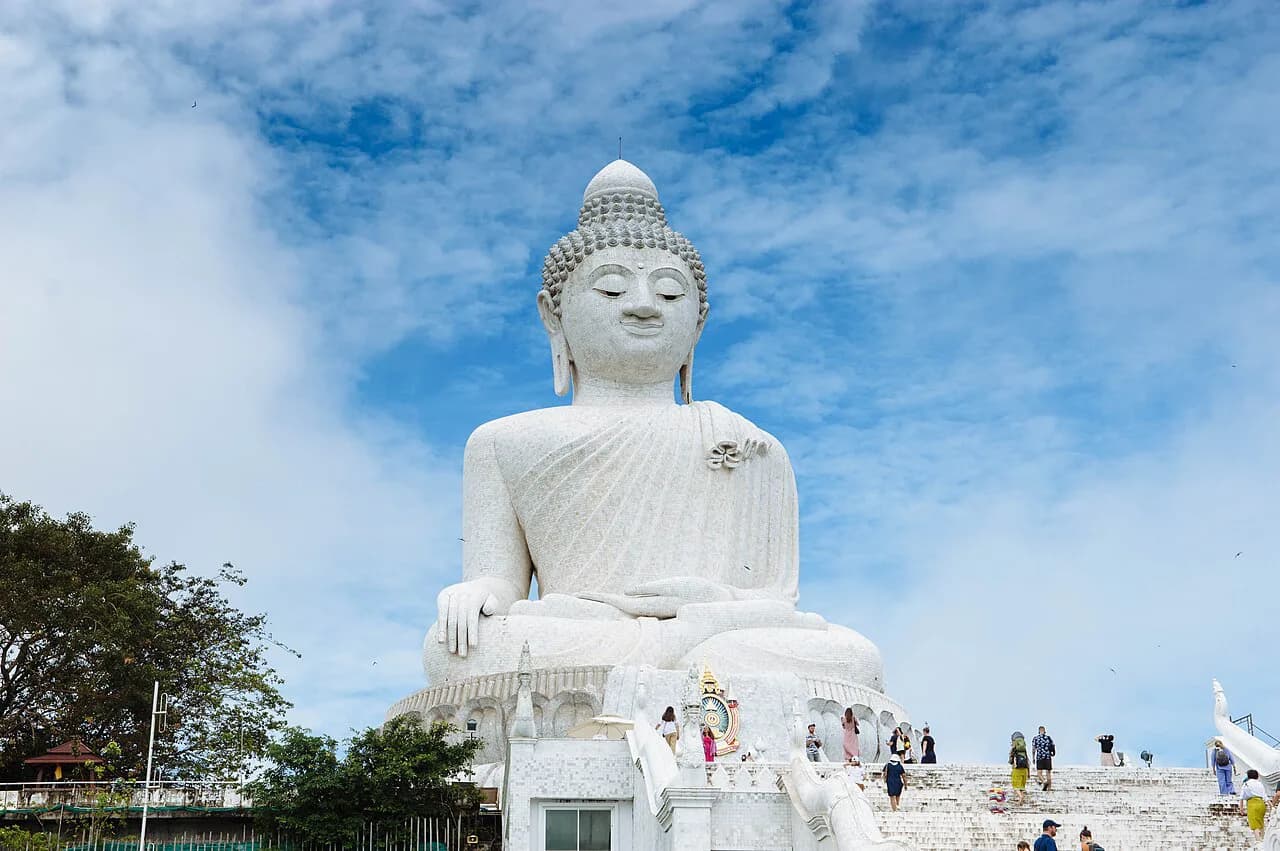
The statue stands near the summit of Nakkerd Hill, also written Mount Nagakerd, in Karon Subdistrict of Mueang Phuket District in southern Phuket. It sits at nearly 400 meters above sea level on the high ground between Karon and Kata to the west and Chalong Bay to the east, so the white marble is visible from Karon Viewpoint, Chalong Bay and much of southern Phuket on a clear day. The access road climbs six kilometers from Chaofa West Road, starting about two kilometers from Chalong Roundabout.
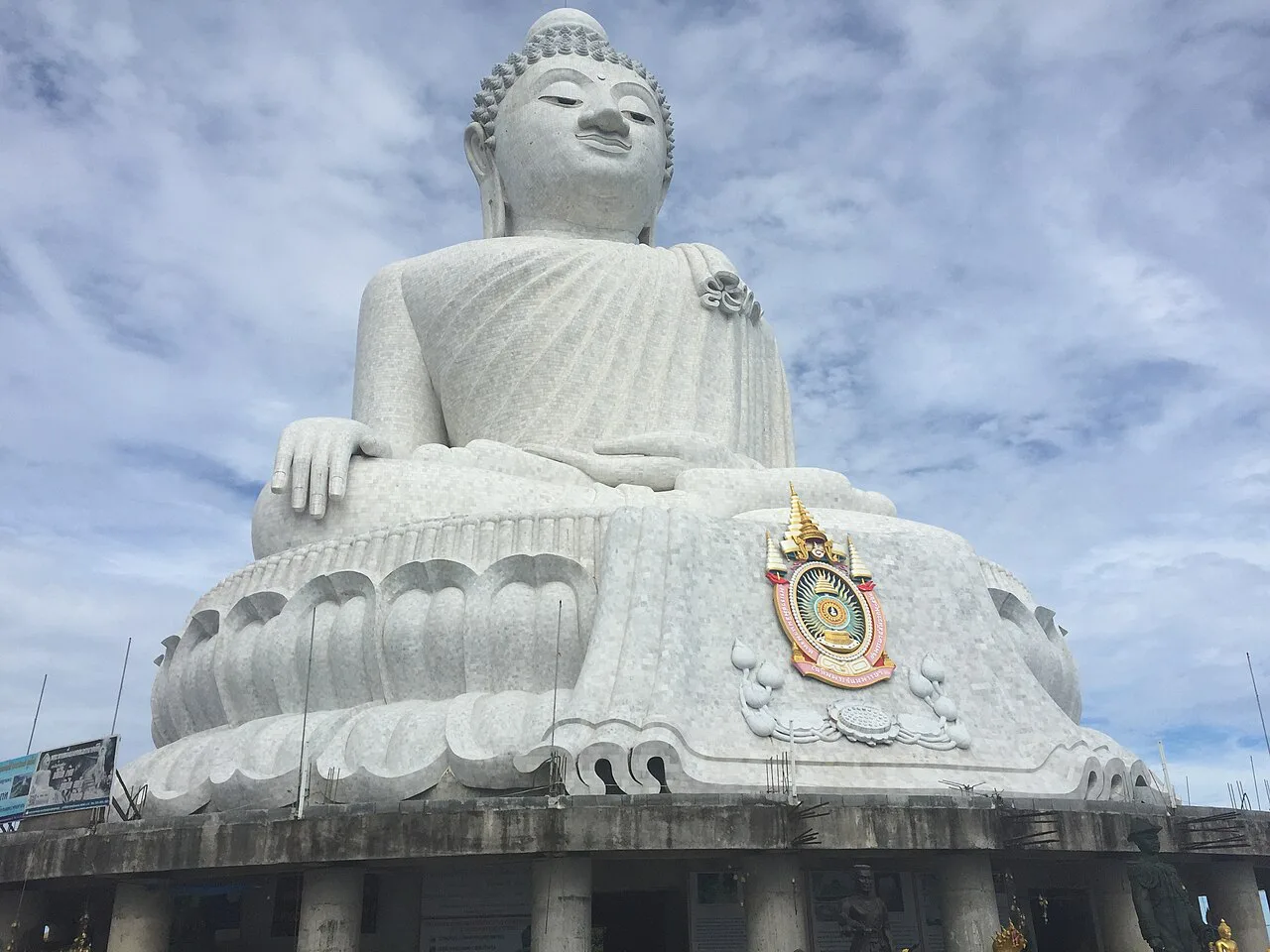
The monument is the centerpiece of the Wat Kitthi Sankaram temple complex rather than a standalone sculpture park, and resident monks administer the site as an active Buddhist temple. Its official name, Phra Phutta Ming Mongkol Eknakakiri, appears on signs and in guidebooks, and the seated Maravijaya posture, with the right hand touching the earth, faces east toward Ao Chalong Bay. Knowing this is a working temple changes the visit: you are walking through someone's place of worship with a spectacular view, not the other way around.
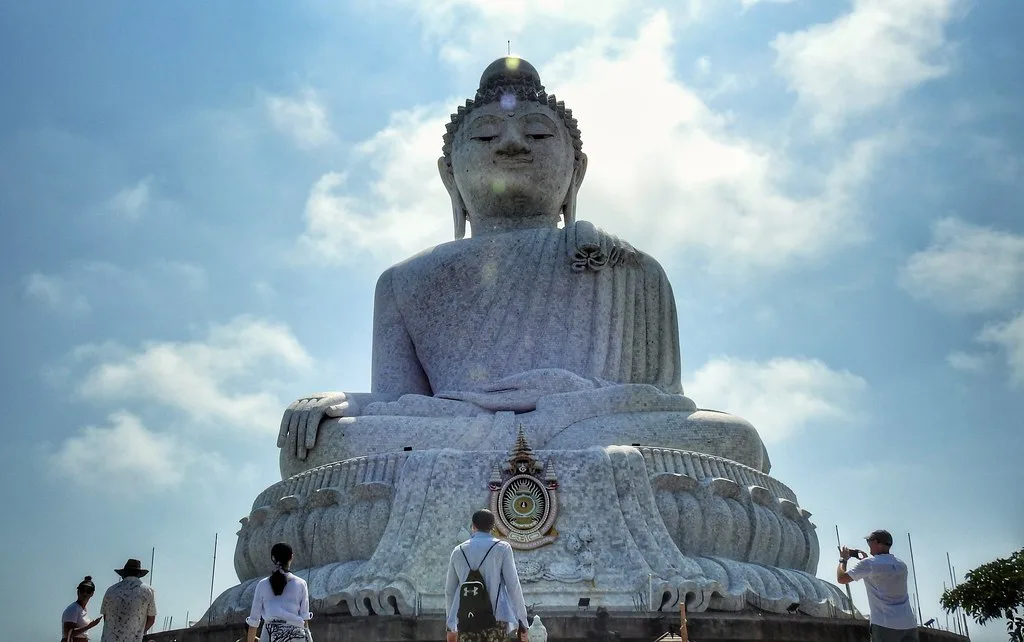
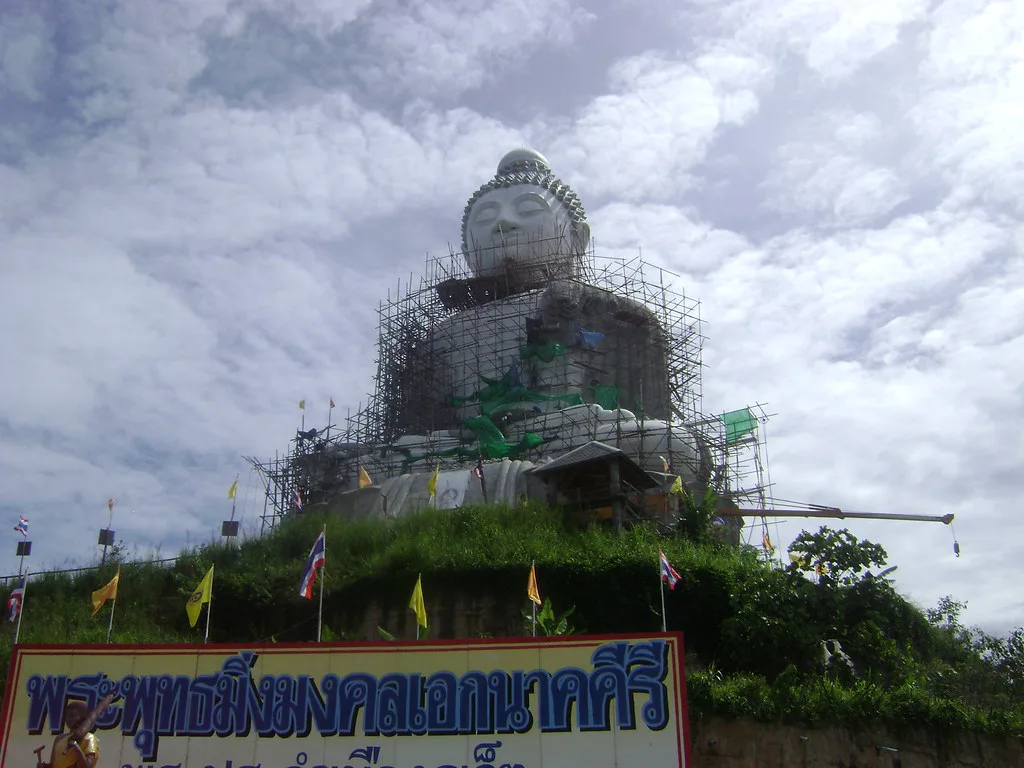
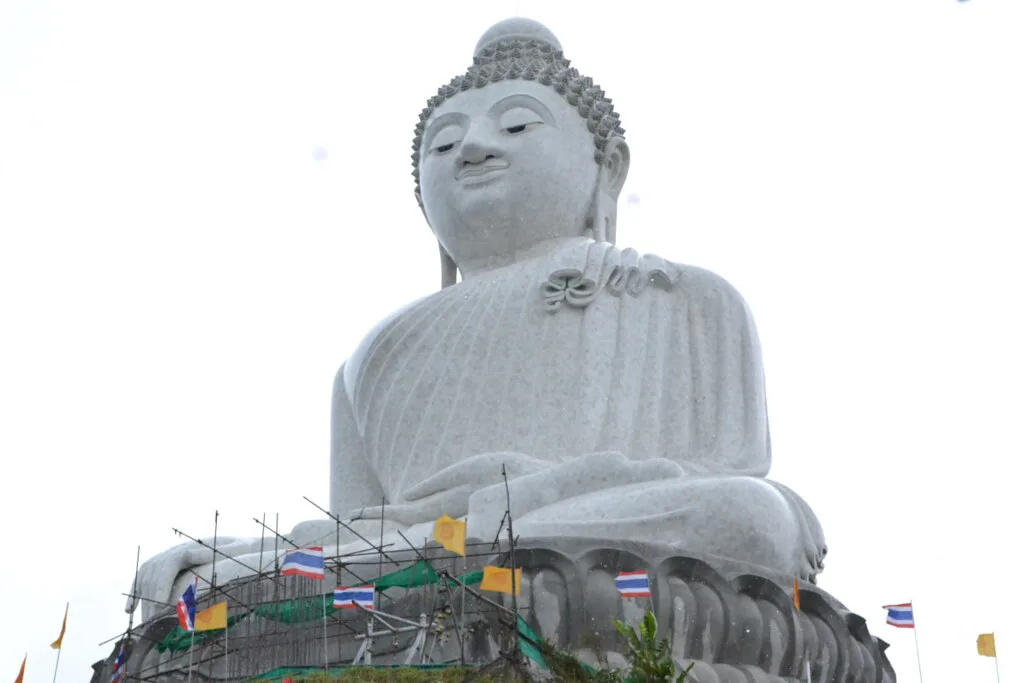
The statue is 45 meters tall and 25.45 meters wide, built from reinforced concrete and clad in white Burmese marble, with construction funded by public donations. It was conceived in the wake of the 2004 Indian Ocean tsunami and stands as a symbol of recovery for the island, which is why local devotees treat it as more than a photo backdrop. If you are mapping a wider day, the surrounding beaches, including Kata Beach, Phuket and Karon Beach, Phuket, sit close enough to combine with the hill.
Is Big Buddha Phuket open in 2026?
Yes, according to the most recent visitor reporting: the site reopened on 3 March 2026, Makha Bucha Day, after closing in August 2024 when a landslide damaged access roads on Nakkerd Hill. It has operated continuously since, and the Thailand Tourism Directory lists it as an active attraction in Karon Subdistrict. Because the closure lasted well over a year, plenty of older pages and review threads still describe the site as shut, and some mapping apps still flag it as permanently closed.
Treat the reopening as recent good news that still deserves a quick confirmation rather than a guaranteed certainty, since hilltop access roads can be affected by weather again. The published contact number for questions about conditions is 083 556 2242, and a short call before you commit to the drive is the simplest check. If a driver or hotel insists the site is closed, ask them to confirm with the temple rather than relying on a map pin.
How to get to Big Buddha Phuket from Patong, Karon, Kata and Phuket Town
Ride-hailing apps such as Grab and Bolt are the least stressful option because fares are fixed upfront and you skip negotiating with roadside taxis. The paved road suits ordinary sedans all the way to the summit parking area, and reliable mobile coverage at the summit makes booking a return trip straightforward. From Patong the drive takes roughly 35 minutes, and the approach from Karon, Kata, Chalong or Phuket Town is shorter, though exact times depend on traffic through the beach towns.
Driving yourself by scooter or rental car is rewarding but demands attention: the final kilometer is steep with sharp hairpin turns, and the temple provides a spacious, free parking lot below the main terrace. Arriving before noon usually means easier parking and softer morning light on the marble. If you are based near Karon or Kata, the hill makes an easy morning outing before the beaches get busy.
Getting back down: book the descent before you climb
The most common planning mistake is arriving with a one-way ride and assuming another will appear at the top. Ride supply on a hilltop is thinner than on the beach strip, and drivers who drop you may offer to wait for a fee, which can be convenient but locks in your timing. Booking a return trip with the same driver, or confirming the app still shows coverage at the summit before you head up, saves a long walk or an improvised negotiation.
If you plan to stay for sunset light, tell your driver upfront or arrange a pickup time, since demand spikes as the afternoon cools and the golden hour approaches. Late afternoon, around 4:30 to 5:30 PM, gives the best photographs as the white marble warms, but it also concentrates visitors. A mid-afternoon arrival with a confirmed descent is the calmer compromise.
Walking up: the steep jungle trail from Karon
There is a hiking route for anyone who wants the climb rather than the drive: a roughly two-kilometer jungle path starting near southern Karon that gains about 300 meters of elevation. The terrain is rough, with rope-assisted sections, so closed-toe shoes are necessary and sandals are a bad idea. This is a genuine workout in Phuket heat, not a casual beach walk, and the payoff is arriving at the terraces on foot.
Take the trail only if everyone in your group is comfortable with sustained climbing and uneven ground, and take the car or a ride if you are with children, older travelers or anyone managing mobility limits. The road route also lets you split the visit: the lower terrace is vehicle-accessible, and only the final stretch to the statue base requires stairs.
What to see at the summit
The main event is the statue itself, and the scale only registers when you stand at its base: 45 meters of white marble above you, with the Maravijaya posture and the sea beyond. Walk the terrace slowly, because the detailing on the base and the surrounding smaller figures rewards a closer look rather than a quick phone shot. Devotees come to pray, make offerings and receive monk blessings, so keep voices low and give people space at the prayer areas.
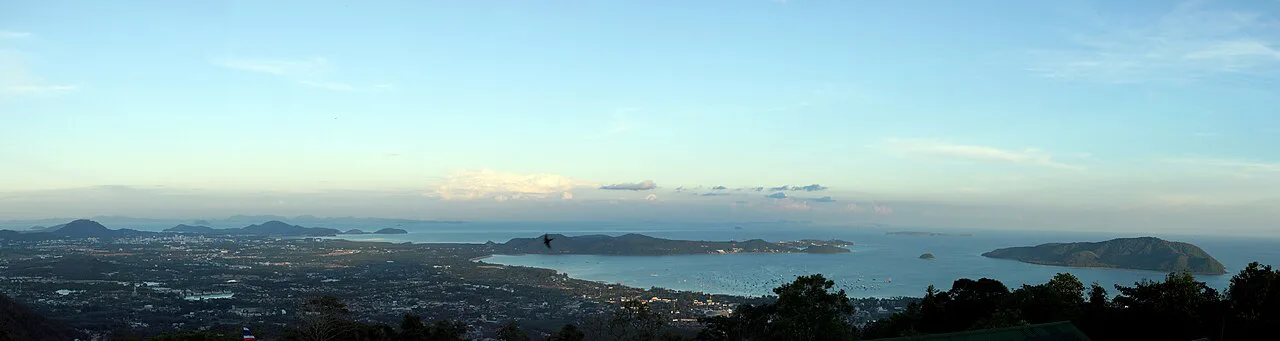
The viewpoints are the second reason to come: on a clear day the panorama sweeps across Chalong Bay to the east and the southern coastline, with Karon and Kata below to the west. Camera users get soft eastern light on the marble in the early morning, while late afternoon produces silhouettes against the descending sun. Bring water and expect exposed, sunny ground at midday, since shade on the upper terrace is limited.
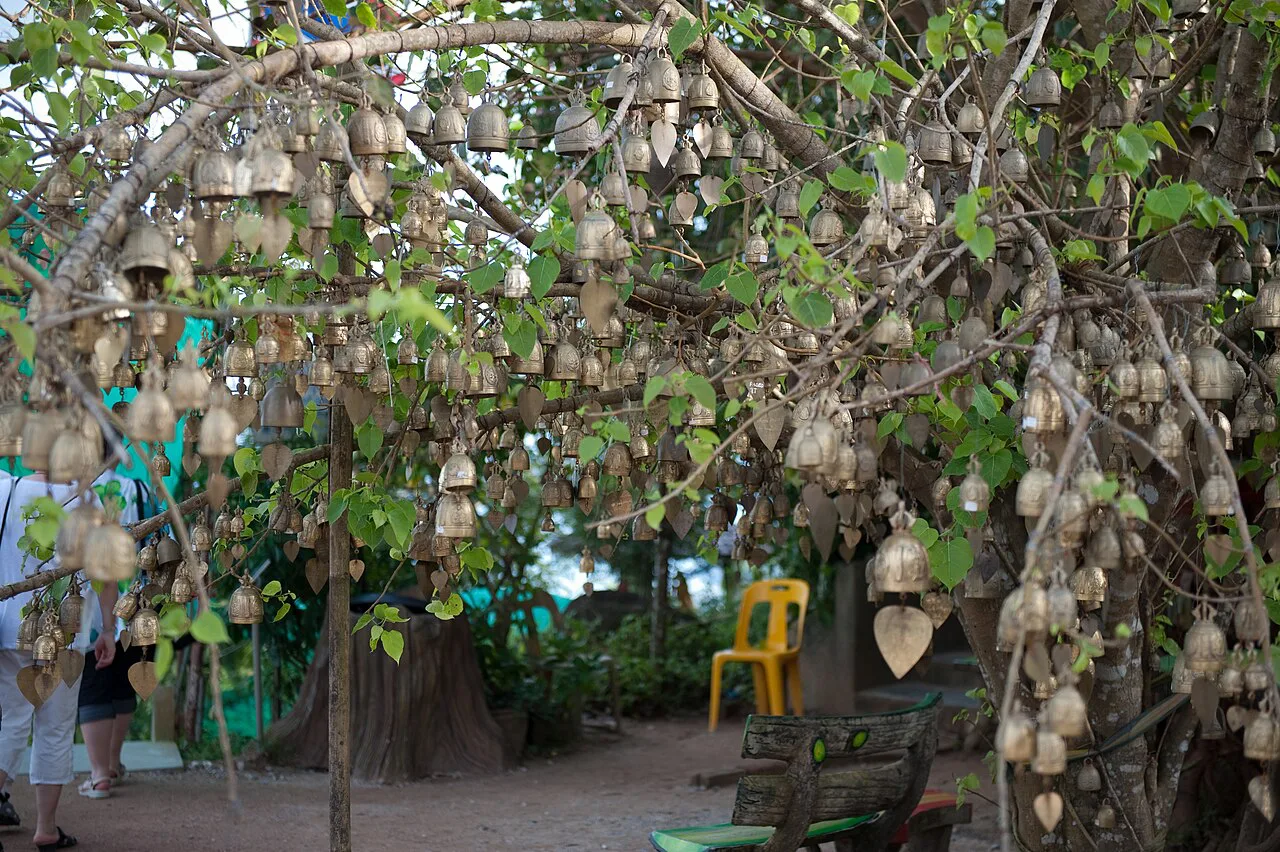

The 94 steps and how much time to allow
Reaching the upper statue area means climbing 94 steps from the lower terrace, which is the part of the visit to weigh if anyone in your group has knee trouble, a stroller or limited stamina. The lower terrace is accessible by vehicle and still offers views, so a partial visit is possible without the full climb. Budget 60 to 90 minutes on site if you want the statue, the viewpoints and a few minutes of quiet rather than a rushed loop.
Steps, hours, entry rules and the dress requirement enforced at the gate are all details the temple controls and can adjust, so confirm the current position by phone on 083 556 2242 or check the official Big Buddha Phuket site before you go. As of the latest visitor reporting, gates open from 9:00 AM to 6:00 PM daily and entry is free with donations welcome. Those details can change after weather events, so treat them as a starting point rather than a contract.

On-site practicalities: donations, macaques and temple etiquette
Bring small cash for donations, since the site runs on public support and the boxes are a normal part of a visit rather than an obligation. Macaques live on the hill and are wild animals, so keep food out of sight and do not pose with them; they are not a photo prop. The dress rule is enforced at the entrance, with shoulders and knees covered, and a light layer packed in your day bag is easier than buying a cover-up on site.
The difference between a photo stop and a temple visit comes down to timing and attention: sit for a few minutes at the prayer hall, watch how Thai visitors make offerings, and skip the urge to narrate loudly for a video. The monument was funded by donations rather than ticketing, and that spirit shows in how the site is used.

What's nearby: Wat Chalong and Promthep Cape
The natural pairing is Wat Chalong, about 10 minutes away by vehicle and Phuket's most historically significant temple, which makes a morning or afternoon with the Big Buddha feel complete. Promthep Cape, roughly 15 minutes further, is the island's best-known sunset viewpoint and a sensible final stop if you time the Big Buddha for late afternoon. Both have their own opening rules and entry arrangements, so check each site's current details before you rely on either as a backstop. Look at Wat Chalong, Phuket and Promthep Cape, Phuket for how each is laid out before you build the loop.
If you are staying on the southern beaches, the hill fits neatly between Karon, Kata and Chalong Bay, and a car or ride makes the three-stop loop realistic in an afternoon. Travelers with more time can browse Phuket Attractions: 9 Visitor Guides for how the island's other sights compare.
Is the Big Buddha worth the detour?
Yes, if you want one cultural stop with a genuinely spectacular view and you are already in southern Phuket. The combination of the 45-meter marble statue, the working temple atmosphere and the Chalong Bay panorama is hard to match for a 60-to-90-minute visit. The site reopened in March 2026 after a closure of well over a year, so confirm current access before building a day around it. The detour is easiest from Karon, Kata or Chalong, and still worthwhile from Patong or Phuket Town if you pair it with Wat Chalong and Promthep Cape.
Skip it only if stairs and a hilltop drive are a poor fit for your group, or if you have a tight schedule and no confirmed return ride. Otherwise, go early or late, bring small cash, book the descent before you climb, and check the temple's current status by phone the day before. That is the whole planning decision, and it is a much smaller one than the view suggests.