
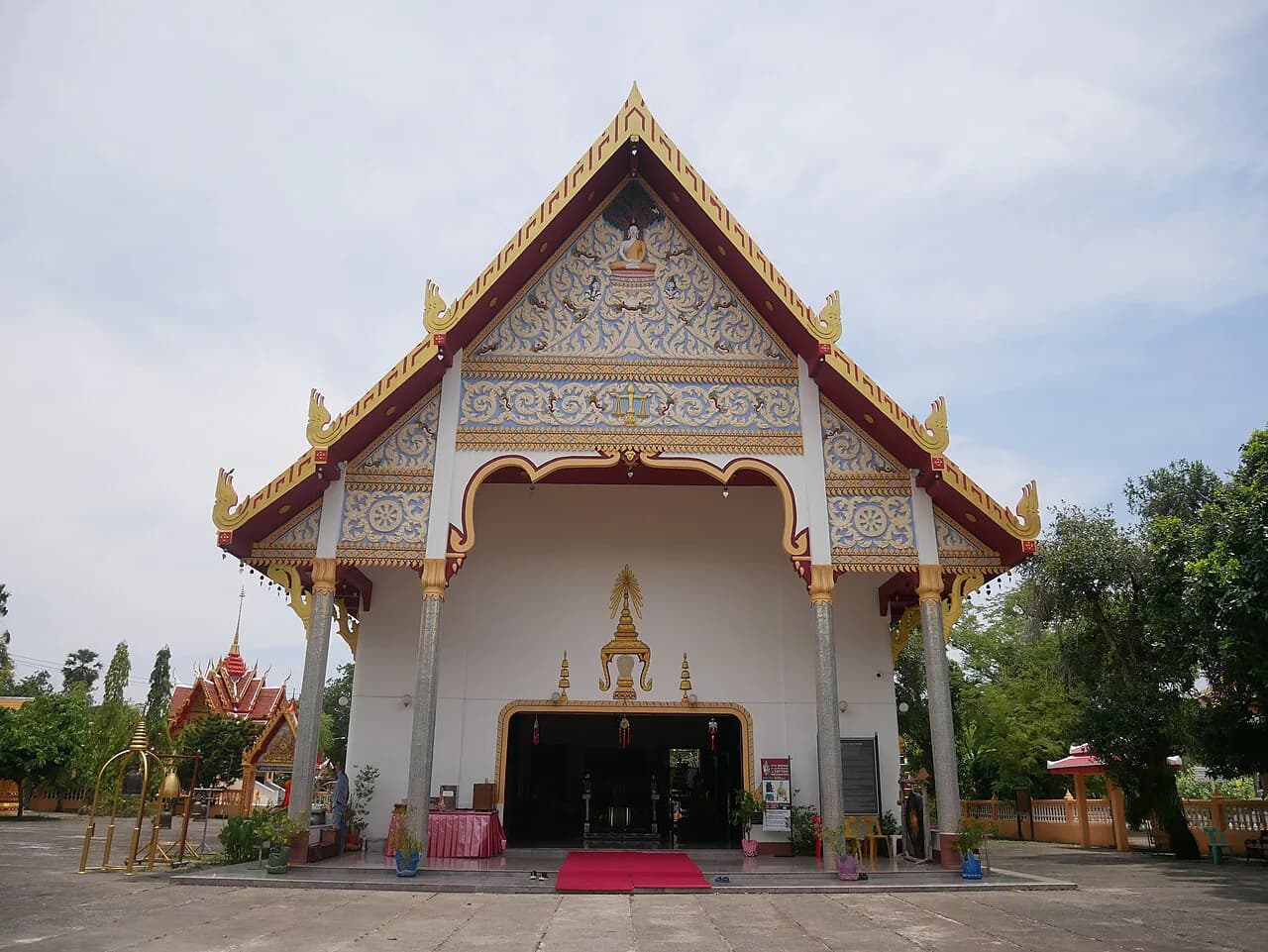
Wat Phra Thong: Visiting Phuket's Half-Buried Buddha Temple in Thalang

Wat Phra Thong is a modest temple in Thalang, northern Phuket, and a worthwhile stop of roughly an hour if you are already in the area. Its draw is a golden Buddha image that emerges only halfway from the earth, known as Luang Poh Phra Thong or Phra Phut, which gives the temple its nickname: the Temple of the Protruding Buddha. This guide covers where it sits, how to approach it by car, what you see inside, and how it fits with nearby temples.
Set expectations before you drive out. This is not a grand complex, and it pulls far fewer visitors than Wat Chalong because it sits well inland from the west-coast beaches. What you get instead is a compact working temple with a strange story attached, a small museum of local objects, and related temples a few minutes apart.
A small Thalang temple built around a buried Buddha
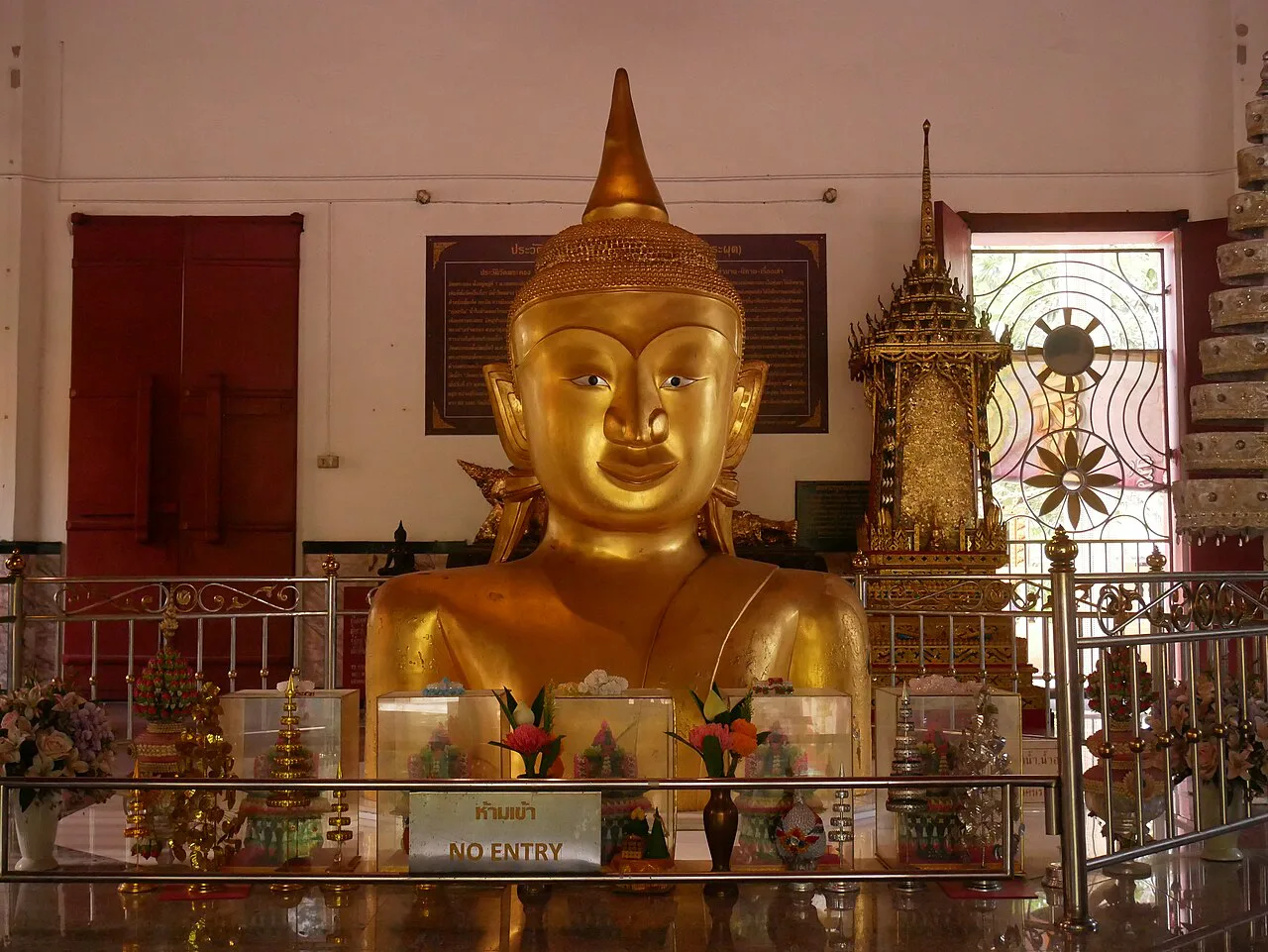
The temple's identity comes from one object: a large gold-covered Buddha image called Phra Phut that sits partly below ground level, so only the upper portion is visible. The Tourism Authority of Thailand describes the temple as home to this large, gold-covered image in Thep Krasattri sub-district off Thep Krasattri Road. Everything else on the grounds, including the main hall and the museum, is arranged around that central curiosity.
Some sources use the spelling Wat Prathong, and the name Phra Phut explains the temple's other moniker, Wat Phra Phud, which points to the protruding Buddha. Written accounts also connect the site to a royal visit in 1909 by King Rama VI, then crown prince, who is credited with giving the temple its official name. Treat that detail as background color rather than something you will see on a plaque.
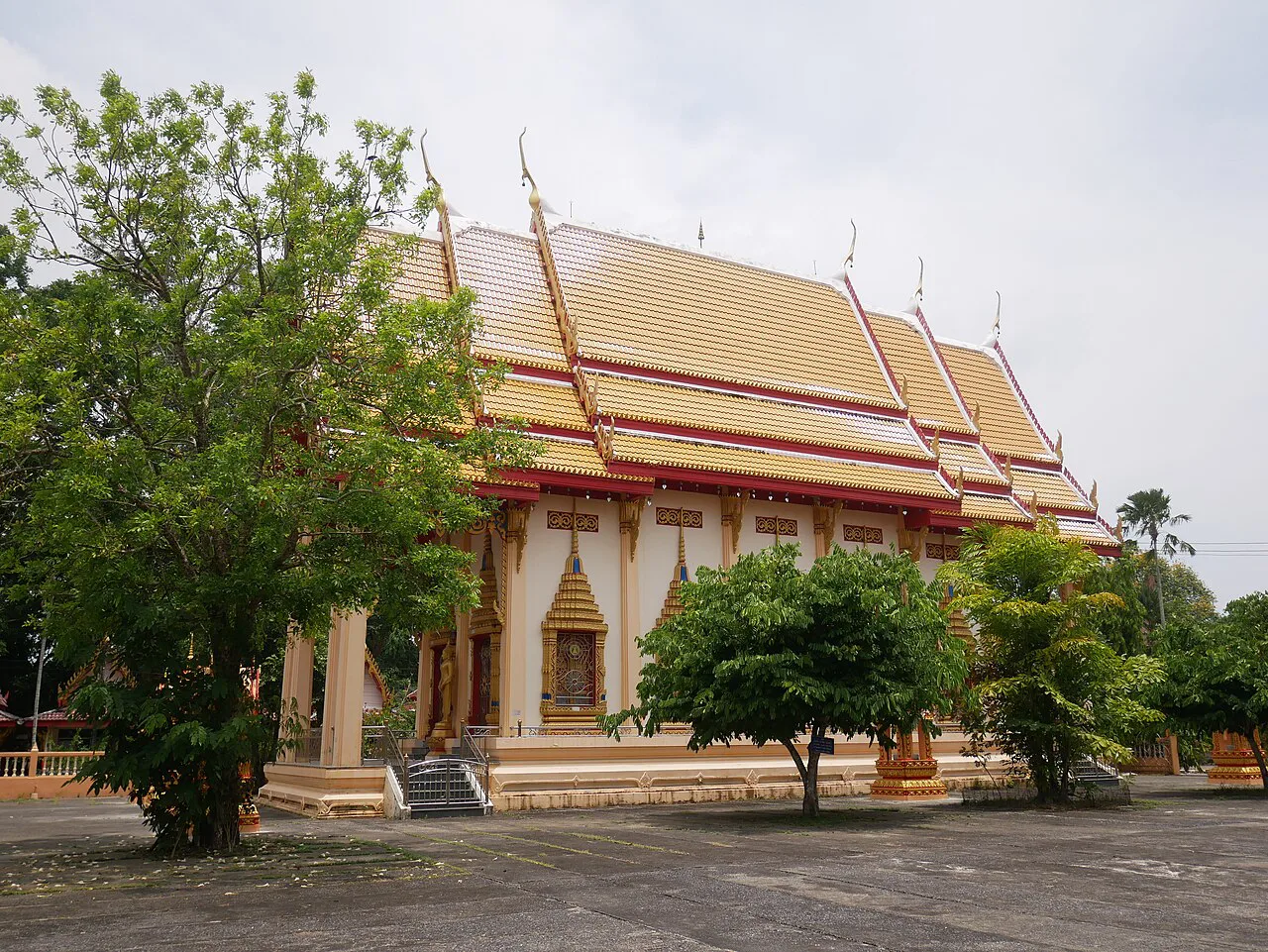
Size is the honest headline. The temple is relatively small, made up of several colorful buildings rather than a sprawling campus, and the main attraction sits inside one hall. If you picture monumental chedis and tour buses, adjust: this is a neighborhood temple that happens to guard an unusual relic.
Where it is in Thalang
The temple address is 172/2 Nanai Road, Thep Krasatti, Thalang, Phuket 83110, and it sits close to the Thalang District Office, about 13.5 km south of Phuket International Airport. It is nowhere near the popular west-coast beaches, which is the main reason it stays quiet.
On the ground, Wat Phra Thong is on the northern edge of Thalang Town, down a clearly signposted side street to the east. If you are coming from the south, you need to make a U-turn and head back south to reach that turning, and drivers heading toward the airport should watch for a small sign before reaching Thalang. Follow the side street to the Wat's parking area.
Parking is not a problem: the grounds have plenty of space, including room for buses, which matters because the temple gets busy on certain holidays. If you are based on the west coast, plan the temple as one leg of a northern-Phuket loop rather than a quick hop from the sand. Travelers weighing beach bases can compare [Karon Beach, Phuket: What It's Like and How to Plan a Visit] before committing to a long drive north.

How to get there without a car
Public transport to the temple is thin, so most travelers arrive by private car, hired driver, ride-hailing app or songthaew. Give your driver the Nanai Road address near the Thalang District Office rather than simply "Thalang," which covers a lot of ground, and confirm the return leg before you are dropped off. Self-driving is the least fussy option if you are combining the temple with other Thalang sights, since the signposted side street and the U-turn for southbound approaches both favor having your own wheels.
The legend of the boy, the buffalo and the post
The story locals tell is that a farmer's boy tied his buffalo to what looked like a post in an open field, then fell ill and died, along with the animal. His father dreamed about the incident and went to check the post, which turned out to be the top of a large buried Buddha image. Villagers dug and dug but could only expose half the statue.
A telling detail in the local version: those who dug without saying prayers were set upon by wasps, hornets and bees, which reinforced the sense that the image should be left alone. The idea of building a temple around the half-buried Buddha is credited to a monk on pilgrimage who spotted the holy image. It is a legend, not documented history, so enjoy it as folklore rather than fact.
A more prosaic explanation also circulates: a nearby canal changed direction and flooded the area, leaving the statue under a layer of silt. Believers treat the image as a protector and come from some distance to pay respects, so you may find local worshippers at the hall even on a quiet weekday.
The original image and the gold-leaf replica
The original Buddha image is not to be touched, so the gold leaf you see visitors applying goes onto a replica image instead. On busy days a steady stream of Thai visitors stops to pray and press gold leaf onto that copy, which is one of the liveliest things you will watch here. Keep the distinction clear: the half-buried figure is the relic, the replica is the hands-on one.
The building that houses the image does not look like much from the outside, so first-time visitors sometimes walk past it looking for something grander. Step inside before you judge the stop, because the hall's atmosphere and the sight of the emerging statue are the reason to come. Watch what local worshippers do and follow any signage on site.
The museum: ten minutes well spent
A small museum on the grounds holds historical items donated by local residents, and it is a better stop than its modest billing suggests. Displayed pieces include tin-mining paraphernalia, a Chinese dowry basket, Chinese teen-tuk foot-binding shoes, food carriers, cannons and Javanese daggers. That mix says a lot about Thalang's trading and mining past in a single room.
Budget about 10 minutes for the museum and treat it as a bonus rather than the main event. It is a collection of old objects without heavy interpretation, so the appeal is seeing the objects up close. If you travel with someone who likes local history, this is where they will linger while others wait outside.
The cannons and the temple grounds
Outside the museum, several cannons sit as a reminder of Phuket's past, and the Thalang area in particular was the island's main inhabited zone for centuries until tin mining shifted importance toward Phuket Town and Kathu in the mid-19th century. The cannons may once have been used against Burmese invaders in the late 18th century, which links the temple to the wider Thalang story. A slow lap of the colorful buildings and these outdoor pieces rounds out the visit.
Give the grounds 15 to 20 minutes on top of the hall and museum. The temple serves as a spiritual center for local communities, so the courtyards and outbuildings carry more everyday life than a tourist site would. If you want a much larger temple experience with far bigger crowds, our [Wat Chalong] guide covers the island's busiest temple instead.
Opening hours and entry: what to confirm
Published details conflict, so do not build your day around them. One visitor guide lists the temple as open daily from 8am to 5.30pm, while another lists it as open 24 hours and mentions an entrance fee, with no official confirmation of either. Call the temple phone number on the day, or ask your hotel or driver to check in Thai before you drive out.
Because you cannot rely on any published price, plan to bring cash in Thai baht and treat any fee as something to settle at the gate. This is the one loose end that follows the temple's online listings, which is why a quick call is worth more than more web research here.
How much time to allow
Plan on about an hour at Wat Phra Thong: the main hall, roughly 10 minutes in the museum, and a lap of the grounds and cannons. That is enough unless you arrive during a festival or holiday, when the temple gets busy and the halls fill with worshippers. Half that time covers the essential sight if you move quickly.
The smarter trade-off is to pair the temple with nearby Thalang sights rather than treat a long drive as a single-purpose trip. Our [Phuket attractions: plan your temple and cape stops] guide shows how this stop fits alongside the island's bigger-name sights, while [big Buddha Phuket] and its ridge-top views make a natural same-day contrast. Budget a half-day for the northern loop.

Nearby temples in the same Thalang cluster
Wat Phra Thong fits naturally with Wat Sri Sunthorn and Wat Phra Nang Sang, both close by in the Thalang area. Seeing them together adds a couple of hours to your outing, with each one different enough in scale and mood to justify the drive north. This is also why the temple draws fewer visitors than Wat Chalong: it sits far from the beaches most travelers base themselves on.
If you only have time for one temple stop and you are staying in the south, Wat Chalong is the easier choice, while this one rewards people already exploring the island's northern roads. Our Phuket attractions guide lists the full spread of sites so you can sequence them without backtracking. Wherever you go, check the day's plan against current temple details.
Is Wat Phra Thong worth the drive to Thalang?
Worth it if you are already in northern Phuket or want a quiet temple with a genuinely strange legend and a short museum stop close by. Not worth it if you picture a headline sight and would be driving an hour each way from the southern beaches for a 45-minute visit. Our overview of [Things To Do in Phuket] helps you weigh it against other options.
Before you go, confirm the opening hours and any entry details directly with the temple or through your driver, since published listings disagree. Bring cash for donations, allow roughly an hour, and combine the visit with Wat Sri Sunthorn and Wat Phra Nang Sang to make the drive north count.
Explore more Phuket guides
Frequently Asked Questions
Can I apply gold leaf to the half-buried Buddha at Wat Phra Thong?
No. The original image is not to be touched, and the gold leaf that visitors press on is applied to a replica image instead. Watch where Thai worshippers direct their offerings and follow their lead.
Do I need a guide to visit Wat Phra Thong?
No. The temple is compact and the main hall, museum and grounds are easy to see on your own in about an hour. A driver helps mainly with navigation, since the temple sits off the main road in Thalang.