
Wat Chalong: A Practical Guide to Phuket's Largest Temple
Wat Chalong is worth about one to two hours, and it is free to enter, though donations toward upkeep are welcome. It is Phuket's largest and most visited temple, an active place of worship rather than a museum, so the visit works best when you know what is inside the walls. This guide covers where the temple sits, how to reach it, what to see on the grounds, and how to fit it into a half-day on the island's southern end.
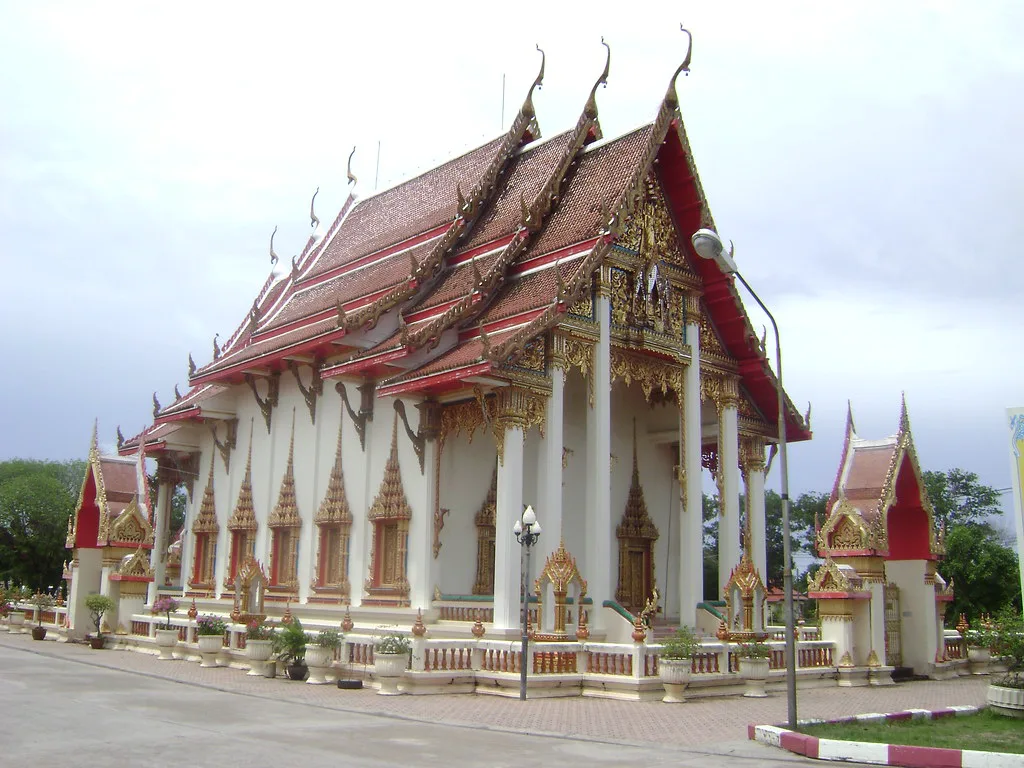
The temple's official name is Wat Chaiyathararam, which you will rarely see on road signs; locals simply say Wat Chalong or Chalong Temple. It sits in the Chalong subdistrict on Chao Fa West Road, roughly 8 kilometers from Phuket Town, which makes it an easy stop between town and the west-coast beaches.
What Wat Chalong Is and Why It Draws Crowds
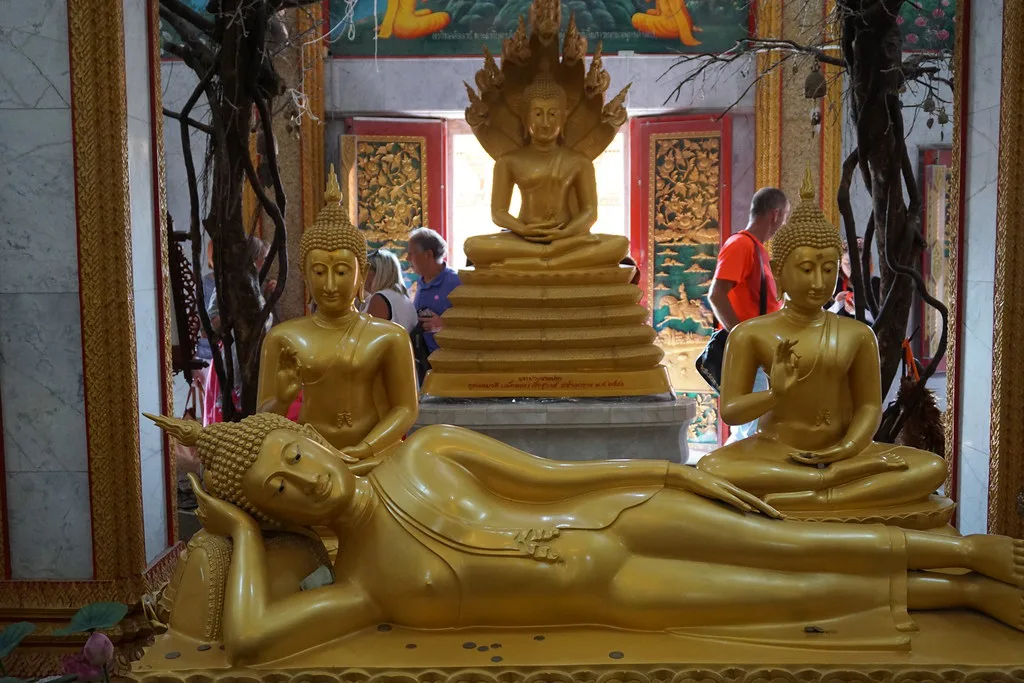
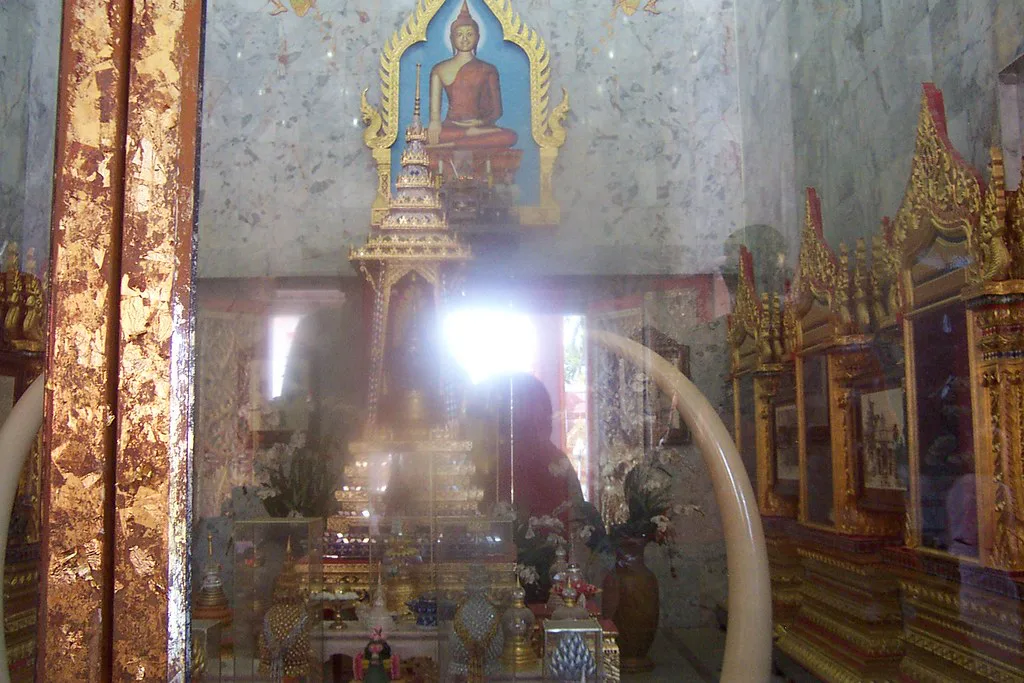
Founded in the early 19th century, Wat Chalong is dedicated to two revered monks, Luang Pho Cham and Luang Pho Chuang, who are credited with treating the wounded and helping restore order during the Chinese tin miners' rebellion of 1876. Their statues in the main hall are covered in gold leaf by devotees seeking health, luck, and prosperity. That history, more than the architecture alone, is why the temple carries weight for Phuket's residents.
You will see Thai families making merit, offering lotus flowers and incense, and receiving blessings, especially on weekends. Treat the halls as you would a working church: quiet voice, no touching the statues or relics, and no shoes inside the buildings. For a temple of this profile, the atmosphere stays calmer than you might expect.
Where Wat Chalong Sits
The temple address is 70 Moo 6, Chao Fa Road (West), Chalong, Phuket 83000, on the island's southeast side, about 8 kilometers from Phuket Town. If you are staying on the west coast, it is a straightforward ride across the island rather than a full-day excursion. The grounds sit slightly inland from Chalong Bay, so the sea is close but not visible from the main halls.
How to Get to Wat Chalong
There is no rail or public bus link to the temple, so most visitors arrive by tuk-tuk, taxi, or a ride-hailing app; local guides note it is reachable by tuk-tuk, taxi, or motorbike, and a rental car works if you are comfortable with Phuket traffic. From Phuket Town the drive is short, roughly 15 to 20 minutes in normal conditions, and from the west-coast beaches allow more time because you cross the island. Treat any specific travel time as an estimate and check your route in a maps app on the day.
If you are based at Kata Beach, Phuket, the temple is one of the closest big sights, and the ride is short enough to combine with a beach morning. From Karon Beach, Phuket the distance is slightly longer but still manageable as a half-day outing; many travelers pair the temple with the viewpoint on the ridge above Kata Yai before heading back down to the sand.
Opening Hours and Entry Cost
Entry is free, with donations welcome for temple upkeep. Sources put the daily closing time at 5 p.m. Opening time is less consistent: some sources say 7 a.m., others 8 a.m., so plan to arrive mid-morning rather than at dawn and confirm before you go. Wat Chalong is a working temple you simply walk into during open hours rather than a ticketed attraction, so plan around the hours rather than a booking.
If you visit around 5 p.m., you may catch monks praying, which is one of the more memorable parts of a visit. That said, closing time is when the grounds wind down, so do not count on late entry. Check the temple's contact page if you need to call ahead; the temple notes that phone calls are answered in Thai.
The Phra Mahathat Chedi: Three Floors and a View
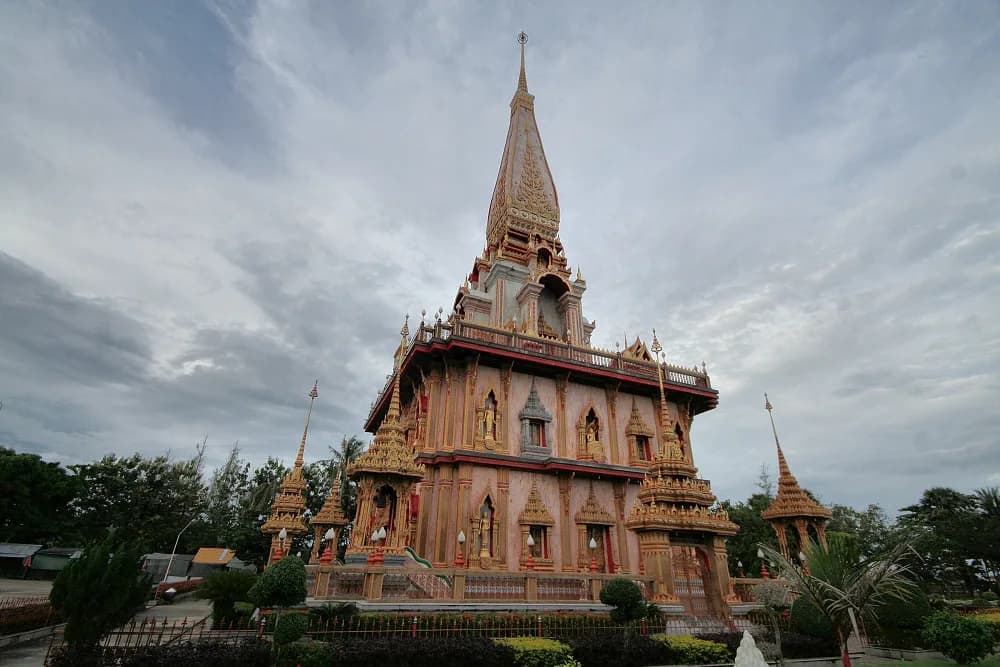
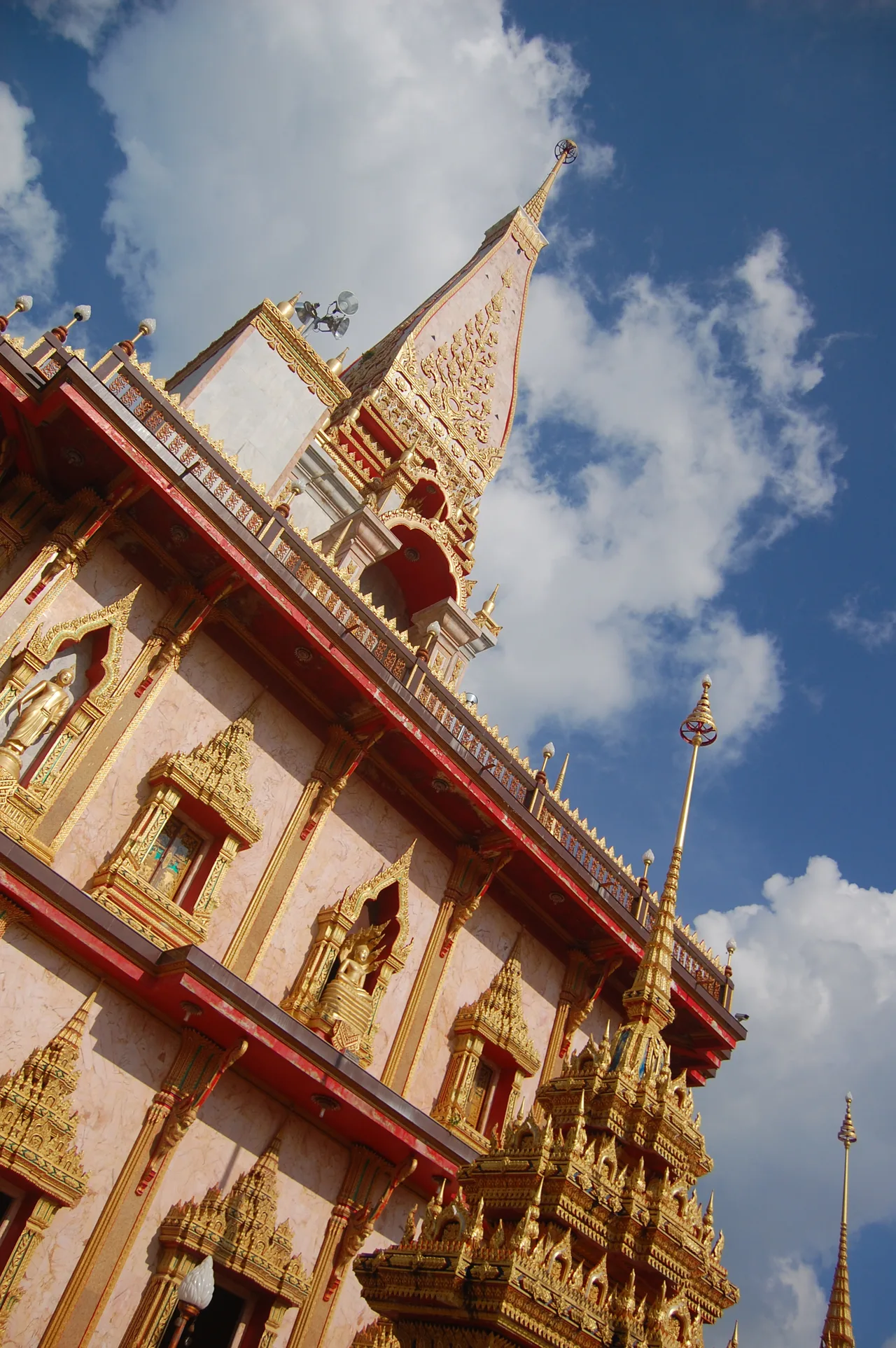
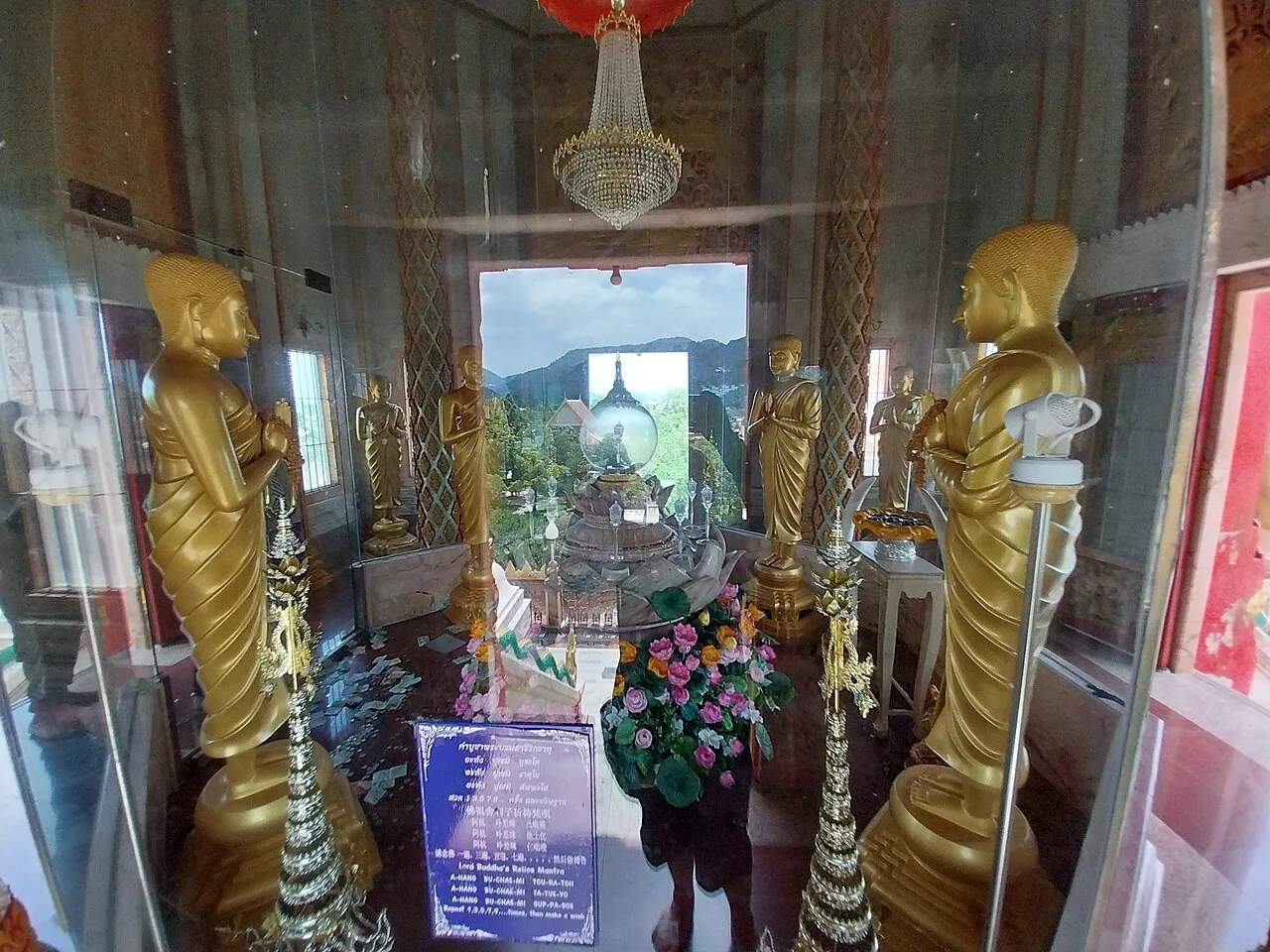
The temple's signature structure is the Phra Mahathat Chedi, a 60-meter stupa built between 1991 and 2001 that is said to shelter a bone splinter of the Buddha gifted from Sri Lanka. Its three floors are the reason to climb rather than admire from below. On the first two levels you will find Buddha statues in postures tied to different phases of his life, and the walls and ceilings are painted with murals telling his story.
The top floor holds a glass display with the relic and opens onto a terrace with a bird's-eye view over the temple grounds. Go up slowly, because the stairs are steep and the upper levels get hot by midday. The climb is short but the reward is the view and the quiet, so give yourself time to linger rather than rushing back down.
What Else to See on the Grounds
Beyond the chedi, the main hall holds the gold-leafed statues of Luang Pho Cham and Luang Pho Chuang, and around the compound you will find a bell tower, smaller shrine buildings, and landscaped gardens. There is also a museum with artifacts and historical items, plus a shop selling souvenirs, amulets, and sacred charms if you want to take something home. Allow time to wander rather than ticking off buildings one by one.
Fortune tellers using bamboo sticks or siem-si sometimes work on the grounds for a small donation, and an air-conditioned exhibition hall displays wax models of famous monks and antique items. These are small side attractions rather than headline sights, but they add texture to a visit. Check what is open on the day, since not every building operates on the same schedule.
Watching Temple Rituals Respectfully
Offerings of candles, lotus flowers, and incense are common, and you can join in or simply observe; the candles represent light, the lotus purity. Visitors are expected to dress modestly, covering shoulders and knees, and to remove shoes before entering temple buildings. Keep one thing in mind: this is a working temple, so step aside when a family is praying rather than photographing over their shoulders.

How Long to Allow, and When to Go
Most visits take one to two hours, which is enough for the chedi climb, the main hall, and a walk through the gardens. If you plan to sit with the atmosphere or wait for the late-afternoon praying, lean toward the longer end. Mornings are cooler and quieter before tour groups arrive in numbers, and weekdays are generally calmer than weekends, when local families come to make merit.
The trade-off is simple: a midweek morning gives you space, while a weekend visit shows the temple in fuller use. If heat is a concern, start early and save the terrace climb for before the sun is high. There is no single best time, so pick based on whether you want quiet or atmosphere.
What's Nearby to Pair With a Visit
Karon Viewpoint, also called Kata Viewpoint, is 15 to 20 minutes away and looks out over Karon, Kata Yai, and Kata Noi beaches, making it the natural pairing for a half-day that starts at the temple. Continue to the beaches if you want sand time, or head back through Phuket Town if you are returning to the east side. The temple is also a common stop on island tours, so you may see it as part of a wider loop.
If you are building a fuller day, the Big Buddha Phuket on Nakkerd Hill is a separate site and often combined with the temple in the same half-day. Farther south, Promthep Cape is the island's sunset point, and the Phuket Aquarium at Cape Panwa suits a different kind of afternoon. For a broader view of what else the island offers, browse Phuket attractions: plan your temple and cape stops.
Wat Chalong vs the Big Buddha
These are two different places and should not be confused. Wat Chalong is a temple complex with halls, a chedi, and a relic, while the Big Buddha Phuket is a hillside monument on Nakkerd Hill. They are often visited on the same half-day because they sit in the same southern part of the island, but each rewards its own visit rather than a quick photo stop at one before rushing to the other.
Is Wat Chalong Worth the Stop?
Yes, if you want to see how Buddhism shapes daily life on Phuket rather than just another beach view. One to two hours covers the chedi and the main hall comfortably, and the free entry makes it an easy addition to a day already heading south. Go early or late, skip the weekend crush if you want calm, and combine it with Karon Viewpoint or the Big Buddha for a fuller half-day.
Explore more Phuket guides
Frequently Asked Questions
Is Wat Chalong free to visit?
Yes, cited sources describe entry as free, with donations welcome for temple upkeep. There is no ticket counter to buy from; arrive during open hours (roughly 7 or 8 a.m. to 5 p.m., depending on source) and be ready to remove your shoes before entering the buildings.
Are Wat Chalong and the Big Buddha the same place?
No. Wat Chalong is a temple complex in Chalong on Chao Fa West Road, while the Big Buddha is a separate hillside monument on Nakkerd Hill. They are often combined in one half-day because they are close, but each has its own layout and visiting time.
What is Wat Chalong famous for?
It is Phuket's largest and most visited temple, known for the 60-meter Phra Mahathat Chedi, the relic it shelters, and the story of two monks who helped the injured during the 1876 rebellion. The gold-leafed statues of those monks in the main hall are a focal point for devotees.