Best Time to Visit Koh Kood: Month-by-Month Weather & Boat Access
When to visit Koh Kood: dry-season months, rain and rough-sea risks, boat access, crowds, and what's closed. Pick your month with confidence.
On this page
Last updated November 2026: the best time to visit Koh Kood is December to February, when rain is rare and boats run full schedules. November and March make good shoulder picks. June to September is the stretch most travelers should skip.
Best time to visit Koh Kood: the quick answer
Pick December, January or February. Modelled climate data puts December at about 1 rainy day, with highs near 31°C (88°F). Those figures are modelled, not station readings, so treat them as guidance rather than a guarantee. For official seasonal context, see the Thai Meteorological Department. Sailings stay frequent and every resort is normally open in this window. Book ahead for it.
- Best: December, January, February.
- Good: November and March.
- Acceptable with trade-offs: mid-October, April and May.
- Avoid: June to September.
Koh Kood month by month
Monthly rainy-day counts below come from modelled long-term averages. Local weather varies, so confirm conditions close to your dates.

| Months | Rain | Sea and boats | What's open | Verdict |
|---|---|---|---|---|
| Dec–Feb | 1–2 rainy days a month | Calm, full schedule | Almost everything | Best |
| Nov | About 3 rainy days | Mostly calm, routes reopening | Most places | Very good |
| Mar–Apr | 3–4 rainy days | Calm, hot | Everything | Good, very hot |
| May | About 18 rainy days | Turning rough | Some closures | Risky, hot and humid |
| Jun–Sep | 22–25 rainy days | Rough, reduced sailings | Many places closed | Avoid |
| Oct | About 13 rainy days | Improving late in the month | Reopening gradually | Acceptable, mid-month on |
Season breakdown: dry, hot and green season
Each season trades something. The dry season from roughly mid-October or November to February gives calm water and open resorts. Sea temperature runs about 28–31°C (82–88°F) across the year, so swimming is warm in every month.
March and April are hot and dry. April highs reach about 32°C (90°F). Green season, June to mid-October, brings showers most days and quiet beaches. It also brings fewer boats and closed stays. Operators disagree on the exact reopening date, with mid-October and end of October both quoted. Confirm with your resort.
Rain, rough seas and typhoons: what's the real risk?
Typhoons are rarely the problem. One modelled record says a tropical storm came within 200 km of the island only once between 1991 and 2025. Heavy rain, rough seas and unreliable boats are the real constraints.

Heat matters too. In May the heat index can reach about 40°C (104°F) in the afternoon despite 32°C (90°F) highs. Plan beach, kayak and waterfall time for the morning. January is mostly dry, with a median of about 33 mm of rain in modelled data.
Boats and island access by season

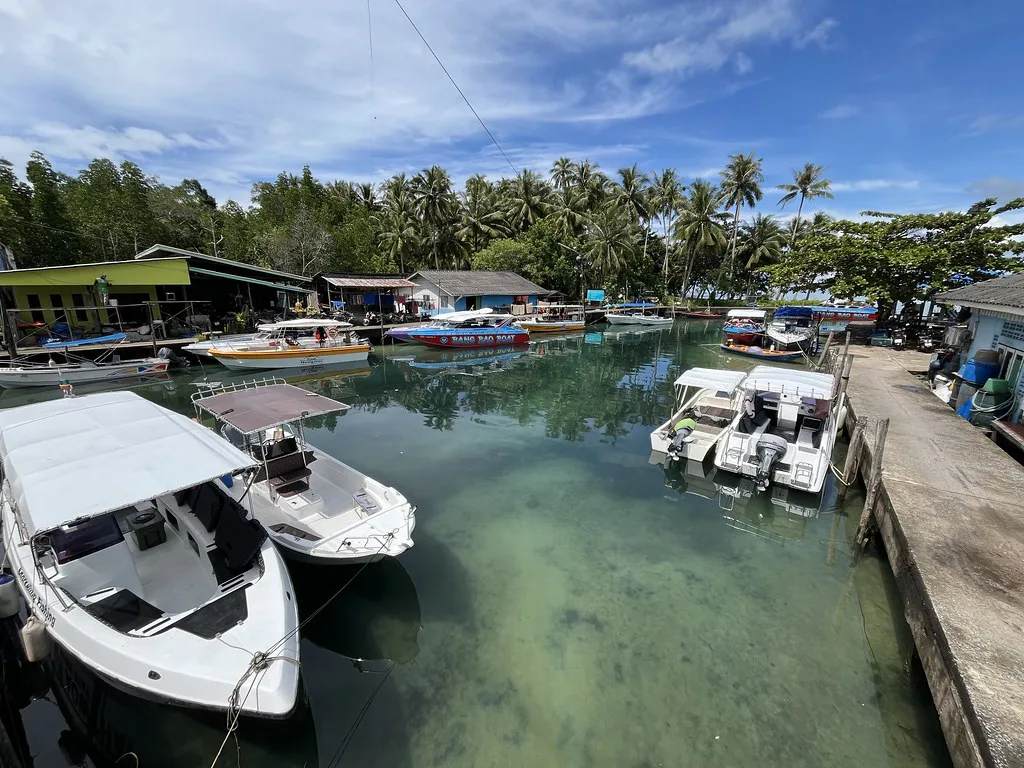
All boats leave from Laem Sok pier, south of Trat town. Ferry crossings are quoted at about 75 minutes and speedboats at about 45 minutes, though some guides say two hours for the ferry. Treat those durations as unconfirmed. Trat airport is roughly 30 minutes from the pier by minivan.
In green season, sailings are reduced and can be cancelled when seas are rough. Check the day's schedule before you set off. Our Koh Kood ferry guide covers operators. For routes, read How to Get to Koh Kood: Routes, Ferry Times and Costs (2026). Starting in the capital? See Bangkok to Koh Kood: Transport Options and Timing. Leave a buffer day before any onward flight.

Best time by traveler type
Match your priority to the window. Diving and snorkeling depend on calm seas, which means the dry months. One local dive operator says it dives in green season when conditions allow. That is an operator claim, so ask before booking.
| Traveler | Best window | Trade-off |
|---|---|---|
| Beach and swimming | Dec–Feb | Highest demand |
| Diving and snorkeling | Nov–Mar | Visibility drops with rain |
| Families and first-timers | Dec–Feb | Few evening options |
| Waterfall fans | Just after the rains, Oct–Nov | Boats less reliable in Oct |
| Budget travelers | Shoulder months, Nov or May | Needs a weather buffer |
| Couples | Jan–Feb | Book early |
Crowds, holidays and booking pressure
Christmas and New Year fill resorts and dive courses, so reserve early. Songkran runs 13–15 April. Expect water fights, tighter transport and higher prices around then. Check current dates with Thai tourism authorities. Our Koh Kood accommodation guide lists areas to compare. In green season, confirm your resort is open before paying. Choose refundable rates where possible. One guide lists scooter hire around ฿300 per day. Room-rate swings between seasons are not published in our sources, so compare quotes directly.
Songkran runs 13–15 April. Those days land in the hot, dry stretch where April highs reach about 32°C (90°F), so plan transport early.
What to do in each season
Dry months suit Koh Kood Beaches: Best Beaches by Season, Access and Vibe, kayaking up the Klong Chao river and sunset on the west coast. Klong Chao waterfall flows year-round and takes about 15 minutes on foot. Smaller falls such as Klong Yai Kee are best in or just after the rains. Ask locals if they have water.
For a full list, see 8 Best Things To Do In Koh Kood: Beaches, Waterfalls & Local Tips. Boat days are easiest in the dry window, as covered in island hopping around Koh Kood. Roads are steep and slick in heavy rain, so read Getting Around Koh Kood: Scooters, Taxis and Costs before renting a scooter. Low tide can pull water far out at small beaches such as Khlong Hin, so pick the time of day carefully.
If your dates are in the wet season: where to go instead
Modelled data suggests Koh Samet, about 158 km away, as an alternative from May to August. Pattaya at 231 km and Hua Hin at 301 km are other options. Verify current conditions before booking.
Koh Chang is bigger, busier and easier to reach, with nightlife. Koh Kood is two boats further, quieter after dinner, and better for reefs. Evening options such as the night market and nightlife may be limited in low season, so check before relying on them.
Common mistakes to avoid
Most planning errors come from underestimating access risk.
Trat airport is roughly 30 minutes from the pier by minivan. Add the boat crossing on top, so a same-day flight after the boat is tight.
- Booking non-refundable stays for June to September.
- Booking a same-day onward flight after a boat from Laem Sok.
- Relying on one waterfall that may be dry in March.
- Counting on a single ATM or steady mobile data in the interior.
- Skipping meal planning when restaurants close in low season.
Final recommendation
Aim for December to February if you want calm water and open resorts. Choose November or March for fewer people. Accept rain risk only for low prices and quiet beaches. Not sure the island suits you? Read Is Koh Kood Worth Visiting? Honest Verdict & Who Should Skip before you commit.
Frequently Asked Questions
How many days is enough for Koh Kood?
Three to four days is comfortable for beaches, a waterfall and a snorkeling day. Divers taking a course may need four days on the island.
What is the closest airport to Koh Kood?
Trat Airport is the closest, about 74 km in a straight line. From there, a minivan to Laem Sok pier takes roughly 30 minutes. Then you take a boat to the island.
Notes for your Thailand trip
Optional updates when we add or change a town or island guide.
You might also like



Continue reading
More guides you'll find useful