
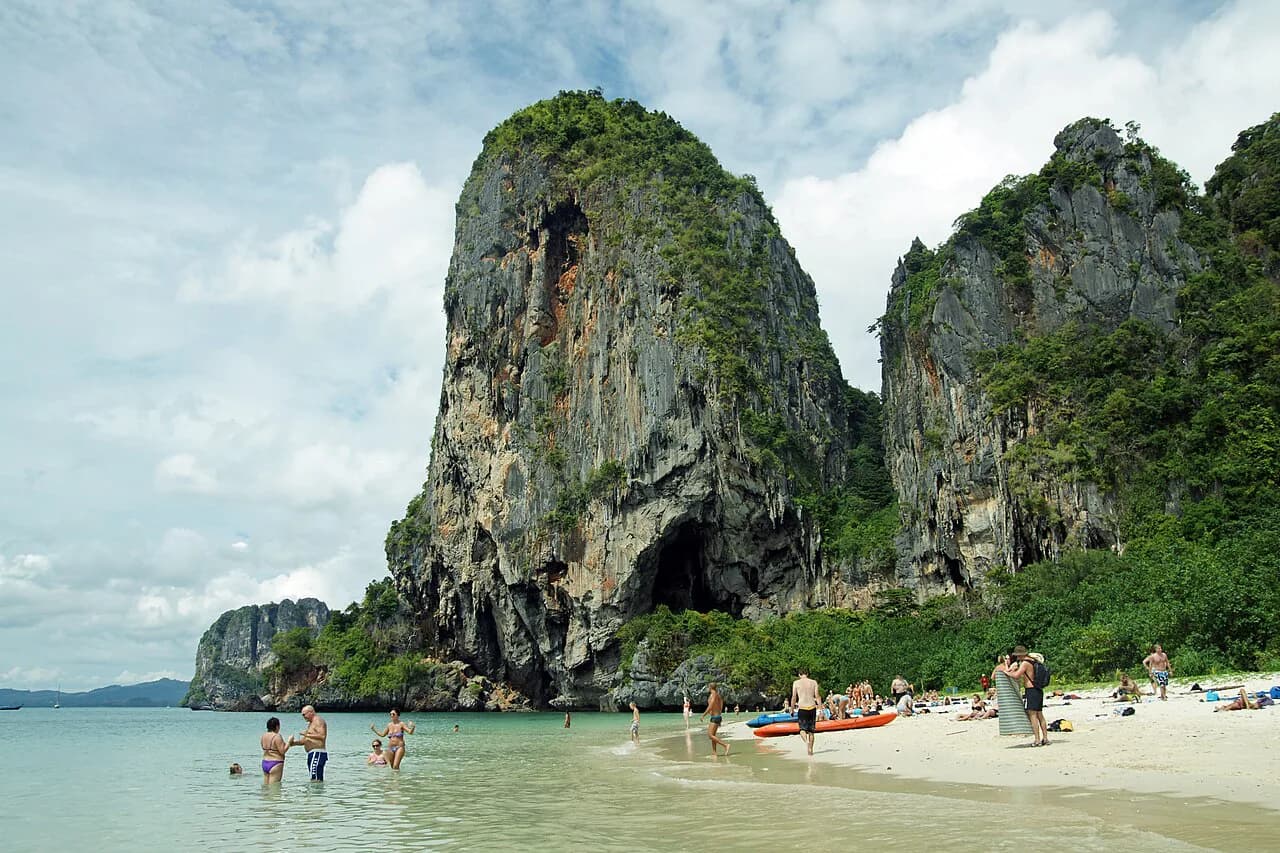
Phra Nang Beach: Railay's Cave-Shrine Beach and How to Reach It

Phra Nang Beach is the beach at the very tip of the Railay peninsula in Krabi, and there is no road to it: you arrive by longtail boat or on foot from elsewhere on the peninsula. Plan on roughly half a day if you are coming from Ao Nang, and considerably less if you are already staying in Railay. This page covers the boat fares and departure pattern, the walking route from Railay East, the cave shrine and how to behave at it, where the swimming is best, and who this beach does and does not suit.
What and where Phra Nang Beach is
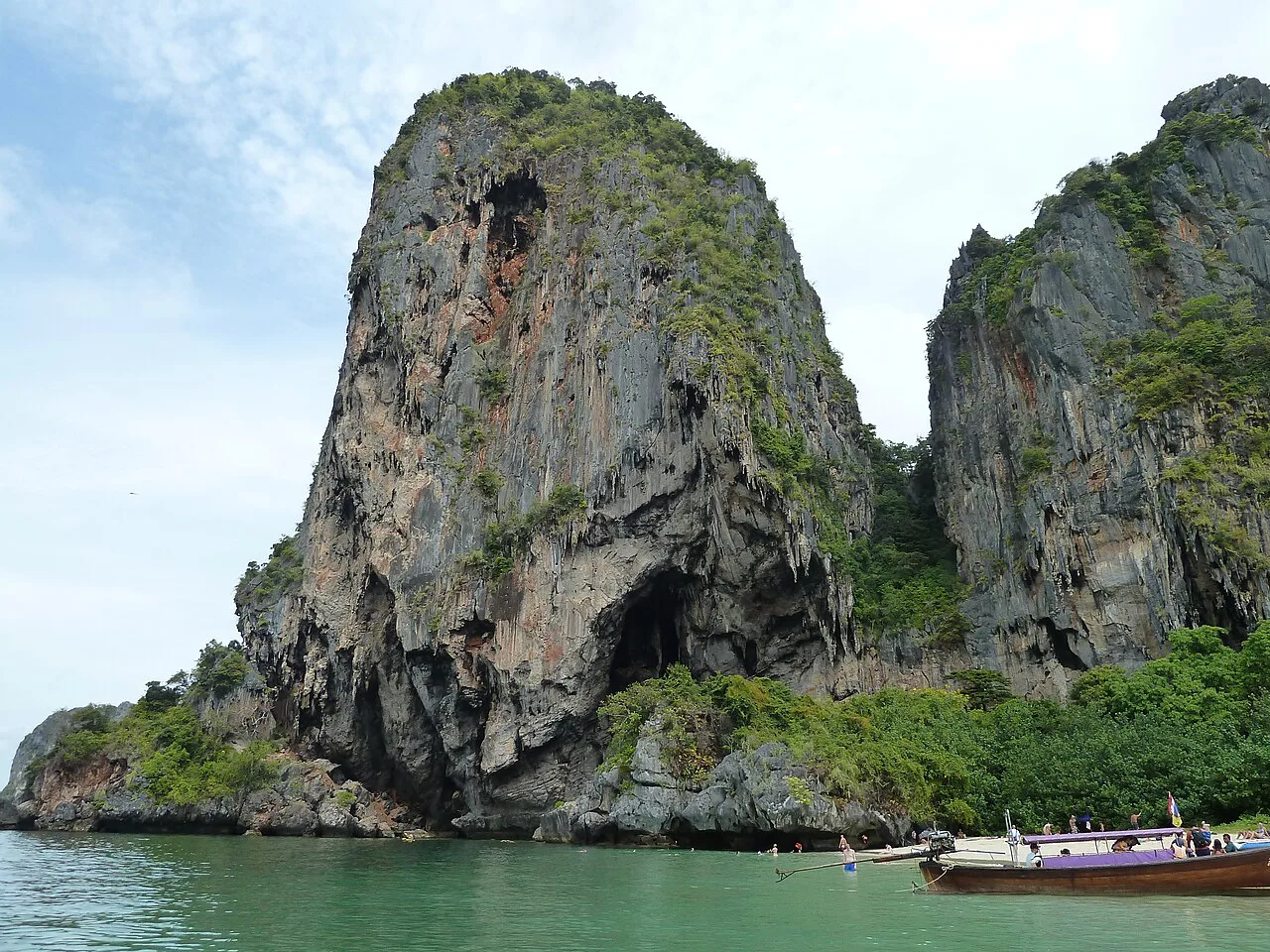
The peninsula has three main beaches: Railay West facing the open water, Railay East along the mangrove side, and Phra Nang at the southern tip beneath limestone cliffs. Because no road reaches Railay, everything you carry in comes by boat or on your back, which keeps the tip feeling cut off even when the sand is busy. Phra Nang is the scenic payoff of the peninsula rather than a place with services of its own; Railay neighborhoods: where each beach base fits is a useful way to sort the areas before you commit.
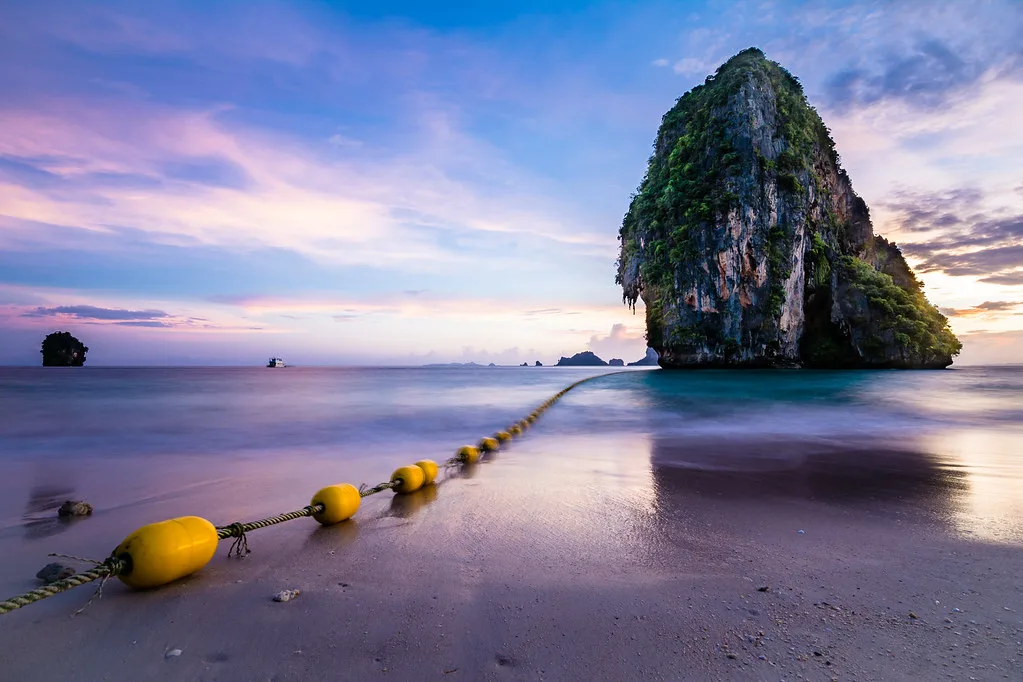
Treat the beach as a place with almost nothing on it: one small kiosk selling cans of drink and bottles of water, and kayaks available to paddle out around the offshore rock, Ko Rang Nok. There are no sun loungers or umbrella rentals, so bring your own towel and shade if you need it. The nearest proper facilities sit back along the access path rather than on the sand.
Getting there from Ao Nang by longtail
The usual approach is a shared longtail from Ao Nang Beach. The wooden ticket booth sits at the southern end of Ao Nang Beach, near the longtail boat service club, and the fare is fixed by the local boat cooperative at 100 THB per person one way or 200 THB return, cash only, with standard service running roughly 8:00 AM to 6:00 PM. Boats do not follow a timetable; they leave as soon as enough passengers have boarded, so high-season waits are short and low-season waits can stretch to about 20 minutes.
The crossing takes about 10 to 15 minutes and drops you directly on the sand at Phra Nang. Confirm the fare and the last return boat with the booth when you buy, because after the standard service ends the trip becomes a private charter priced by group size. Keep small notes handy rather than relying on a card or a phone payment.

Walking in from Railay East or West
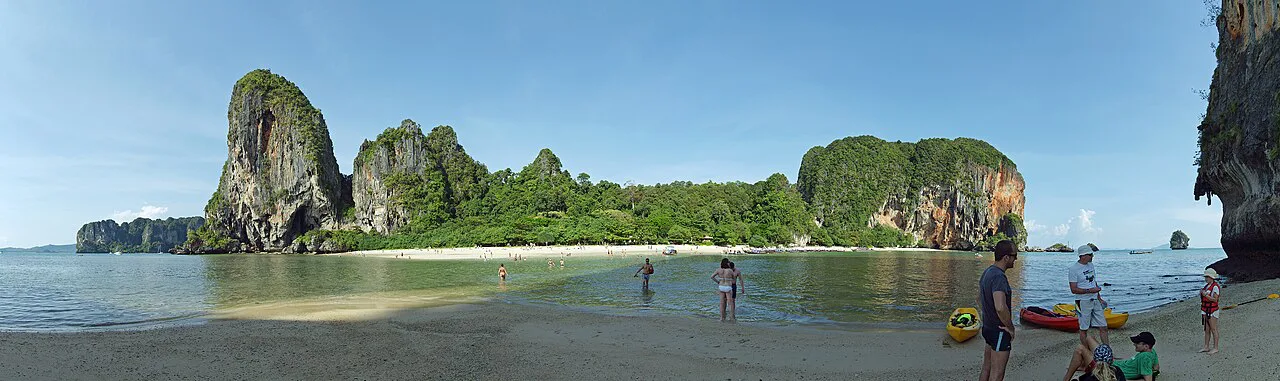
If you are already on the peninsula, the beach is a walk. From Railay East, follow the paved path south as it curves around the base of the cliffs; it takes about 10 to 15 minutes and passes cave-like rock formations before opening onto the sand. From Railay West Beach, cross the short walking street to the east side first, which takes around five minutes, then pick up the same trail south.
The path passes the trailhead for the Railay East Viewpoint climb and the turn toward the lagoon, so the walk doubles as a scouting trip for later. Public toilets sit along this stretch, before the beach, with a small entry charge paid in coins to an attendant at peak times; bring change rather than expecting to break a large note, and confirm the charge on the day. For the practical details, see the Railay guide.
Phra Nang Cave: a working shrine, not a photo prop
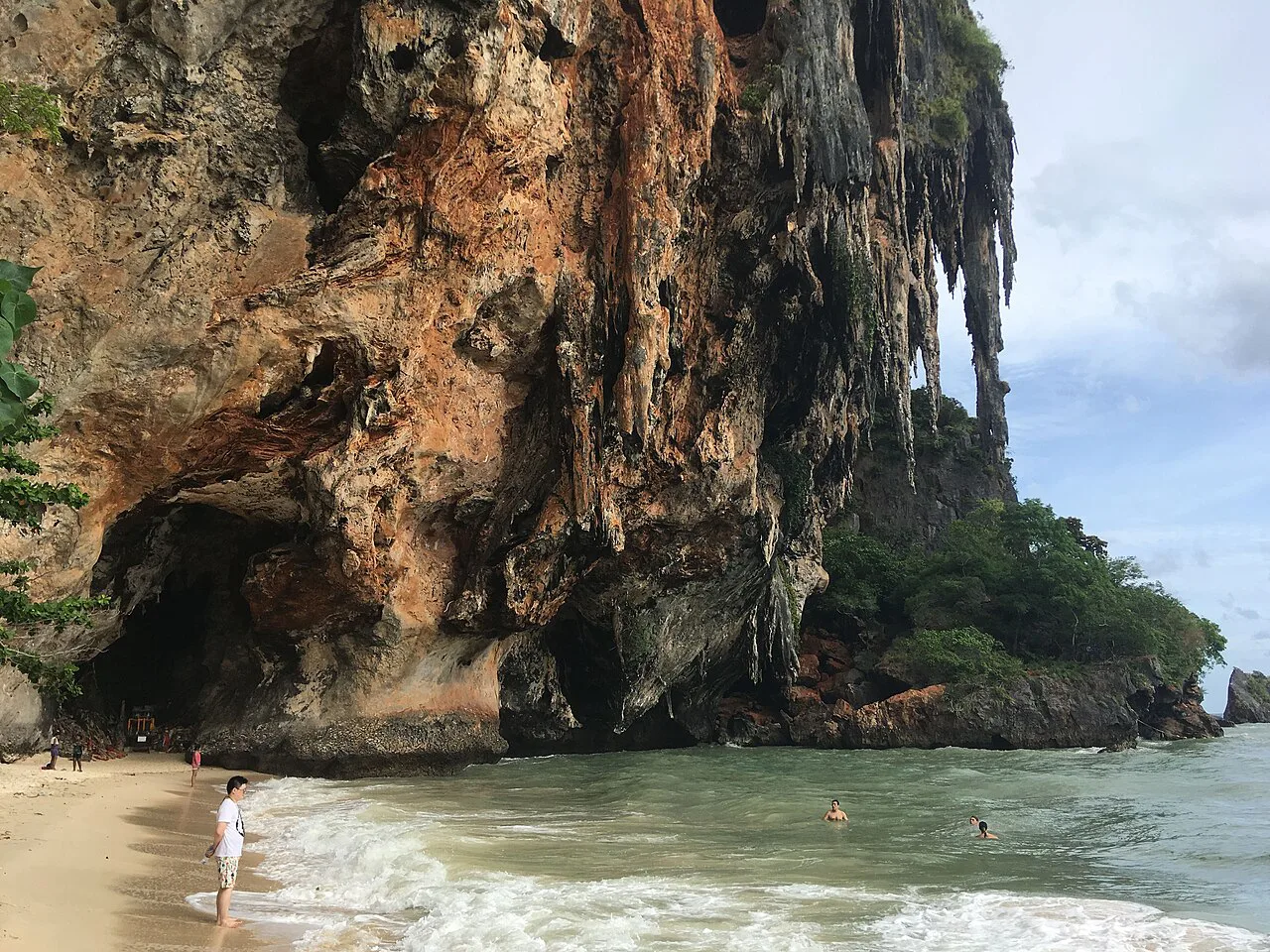
The cave sits at the eastern end of the beach, tucked into the cliff base and marked from the sand by masses of wooden offerings arranged around a small altar with flowers, incense and cloth. The carved wooden objects are lingams left by fishermen asking for safe passage and a good catch, and locals still come to make offerings through the day. It is an active place of worship, so watch from a respectful distance, keep quiet, and follow the guidance posted at the entrance rather than handling anything on the altar.
There is no ticket, no queue and no set opening time for the shrine; you simply walk up from the beach. Arriving early also means you may see fishermen paying their respects before heading out, which is a far calmer experience than the midday scrum. On naming, keep two things straight: the shrine itself is also called Tham Phra Nang Nok, while Diamond Cave (Tham Phra Nang Nai) is a separate cave further inland on the peninsula that you walk through rather than worship at.

Swimming: deep water, and which end stays quiet
The water at Phra Nang deepens fairly quickly, which makes it the better swim of the peninsula beaches rather than a paddling spot. Railay West stays shallow over a much wider area, which is why families with small children tend to gather there instead. If you want to actually swim laps rather than stand in the shallows, this is the beach for it.
The quietest stretch is the far end away from the cave, opposite the limestone rock Ko Rang Nok. At high tide the water covers part of the beach on the way there, which deters many day-trippers and leaves more space, but it also means wading through knee-deep water in the wrong shoes. The cave end, by contrast, is the most crowded because that is where the boats unload and the climbers gather.
Cliffs, shade and where the crowds collect
Above and beside the cave, the overhanging limestone draws rock climbers, and the routes need guides and ropes rather than a casual scramble; operators can be arranged on the peninsula. That same cliff gives the beach its only real shade, which is why the area near the cave fills up first. If you want shade without the crowd, come early or accept that the two go together here.


Timing your visit around the boats
Plan around boat traffic rather than around posted hours, because the beach itself never closes. Day-trippers cluster in the middle of the day, and the sand thins out before 10:00 AM and again after about 4:30 PM. Staying in Railay and walking in at first light is the single biggest upgrade to the experience, since you avoid both the shared-boat waves and the heat.
Sunset from the sand is a listed reason to linger, and the cliffs catch the last light while the day-trippers head back. The trade-off is that you will be walking back along the cliff path in fading light if you are staying on the east side, so carry a light or leave before dusk.
Add-ons on foot: viewpoint and lagoon
The Railay East Viewpoint trailhead sits on the walk between east side and Phra Nang, and the climb gives you a view back over the whole peninsula. It is a steep, rope-assisted scramble rather than a stroll, and it becomes genuinely unpleasant after heavy rain when the rock is slick. The Princess Lagoon branch shares part of that route; judge conditions on the day rather than committing from the beach.

Shared boat or private charter
The shared longtail is the right choice for couples and solo travelers: cheap, frequent and no planning needed. A private charter makes sense for groups, families with small children, or anyone wanting to combine Phra Nang with other stops such as Chicken Island or the Four Islands on their own schedule. Half-day charters are typically quoted in the low thousands of baht depending on operator and season, so ask at the Ao Nang booth for a current quote.
Where to stay for Phra Nang
Railay itself splits into distinct areas, and where you sleep changes how you reach the beach. Staying on the east side puts you closest to the walking path south, though the east beach is mangrove-lined rather than swimmable. The west side and the village area behind it offer the classic view but add a crossing to your walk.
Ao Nang is the practical alternative: more accommodation, restaurants and shops, with the longtail booth right on the beach for the 15-minute hop over. The trade-off is that you are dependent on the boat schedule and cannot be on Phra Nang at first light without an early start. Climbers who want cheap beds and a quieter base often look at Tonsai, Krabi: A Climber Beach Guide to Staying and Getting There, which connects to Railay by a cliff path and by boat.

Eating near the beach
There is no restaurant on Phra Nang Beach. The only food and drink option on the sand is the small kiosk selling canned drinks and bottled water, so plan a proper meal for before or after. Kayak rentals are also handled at that kiosk if you want to paddle around Ko Rang Nok.
The nearest convenience store sits back on the corner of the east-side walking street, which is also where you will find the bulk of Railay's cafés and restaurants. Stock up there before walking south, since carrying water for a few hours in the heat is not optional.
Who Phra Nang suits, and who it doesn't
Come here if you swim properly, want the cliff scenery and the shrine, and are happy to carry your own towel, water and shade. It also rewards climbers and anyone staying in Railay who can walk in before the boats arrive. Skip it as a primary destination if you want loungers, umbrella service, beach restaurants and easy toilets, because none of those are on the sand.
Travelers with limited mobility or small children should weigh the wading at high tide and the uneven cliff path against the payoff. Families often do better basing themselves at Railay West, where the shallow water and boat access are easier, and treating Phra Nang as a short excursion.
Should Phra Nang be your Railay beach day?
Yes, if you are willing to arrive by longtail or on foot and want the best swimming and the most dramatic setting on the peninsula. Take the shared boat from Ao Nang in the morning, walk in from Railay East if you are staying locally, and be respectful at the shrine.
If you need shade, facilities and shallow water, put your day at Railay West instead and save Phra Nang for an early walk. Either way, check the current fare and last-boat time at the Ao Nang booth on the day you go, since the cooperative sets them rather than any published online schedule.
Explore more Railay guides
Frequently Asked Questions
Can you walk to Phra Nang Beach from Ao Nang?
No. There is no road onto the Railay peninsula, so the route is a longtail boat from Ao Nang Beach or a walk from elsewhere on the peninsula itself. From Railay East the walk south takes about 10 to 15 minutes.
Is there an entrance fee for Phra Nang Beach or the cave?
No fee is charged for the beach or the cave shrine. You pay for the longtail crossing, and the public toilets along the access path have a small entry charge paid in coins.
How long do people usually spend at Phra Nang Beach?
Most day visitors stay two to four hours, which covers the swim, the shrine and the walk to the quiet end. Staying in Railay lets you spread that over a morning and return later.