
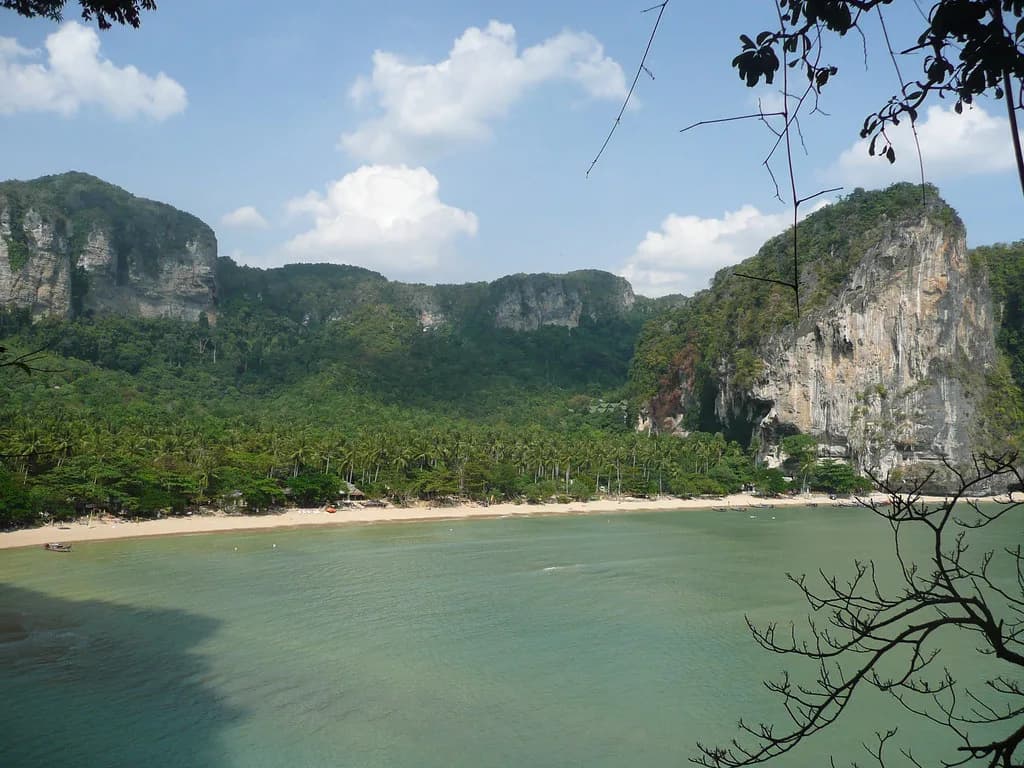
Tonsai: Krabi's Climber Beach, and Who It Actually Suits
Tonsai is a small bay on the western side of Krabi's Pra-nang peninsula, just north of Railay West, and you reach it only by longtail boat or a jungle trail. It best suits climbers, budget travelers and anyone planning a slow stay; it frustrates travelers who want air-con, hot water, an ATM and a suitcase rolled to the door. This page covers the character of the bay, the boat and foot approaches, where to sleep and eat, and the trade-offs against Railay and Ao Nang.
One clarification saves wasted journeys: the climbers' Tonsai is not on Phi Phi and is not one of the other Thai beaches with a similar name. It is the bay outside Krabi town, close to Ao Nang, on the same peninsula as Railay.
What Tonsai Is, and Where It Sits
Tonsai occupies the western flank of the peninsula, with limestone karst walls rising directly behind the sand. Accommodation sits up the hill rather than on the beach, which is part of why the bay feels like a village rather than a resort strip and why it is noticeably cheaper than the other parts of Railay. Several mini-marts serve the lane, and the climber population is the densest of any base on the peninsula.
Treat Tonsai as one option within a wider set of peninsula bases rather than a standalone island. The Railay neighborhoods overview sets out the beaches, piers and climber bases side by side, which is the right way to decide before committing to a bay with no road access.
Who Tonsai Suits, and Who Should Skip It
Tonsai suits climbers first, then budget travelers and people who want a slow, social stay. All of the infrastructure is off-grid: every business runs a generator, most accommodation has no air-con and cold water only, and power typically goes off during the day while guests are at the crags. If that reads as charm rather than a problem, you are the target visitor.
It suits travelers who treat Tonsai as a quick day trip far less. Crossings happen in daylight and stop just before sunset, so plan to arrive before late afternoon; if you come late, plan on a night in Ao Nang rather than a private charter after dark. The point of the bay is the evening and early morning that a rushed visit skips. Travelers with heavy rolling luggage, or anyone hoping to cook in an apartment, should look at Ao Nang, where self-catering setups exist.
Getting There: Airport, Piers and the Longtail
Fly into Krabi International Airport, the closest airport, or arrive by bus or ferry from nearby islands, with some high-season ferries dropping passengers in front of the bay. Phuket Airport is the alternative, roughly a two-and-a-half-hour taxi or minivan ride from Ao Nang. From Krabi airport or town, a taxi or minivan reaches Ao Nang Beach or Noppharat Thara in about 30 to 40 minutes.
The longtail from Ao Nang or Noppharat Thara takes 10 to 15 minutes, and the Basecamp Tonsai newsletter puts the fare at 100 THB per person with a full boat. Boats run as shared taxis rather than on a timetable: the Tonsai service leaves with six people and the Ao Nang service needs eight, so you go immediately only by paying for empty seats. Crossings happen in daylight and stop just before sunset, which should shape your arrival day.
Two details follow from the beach landing. You board and step off in the water, so water-friendly shoes help and a backpack beats a rolling case. There are no ATMs on Tonsai, so bring cash for boat tickets and daily spending; the nearest ATM is a walk away in Railay, and Basecamp also offers currency exchange and bank transfer in the bay. Fares and minimums change, so confirm locally before setting out.
Walking In From Railay
Tonsai Beach is adjacent to Railay, and a short jungle path links the two in about 15 to 20 minutes. Boats to Railay West run more frequently than boats to Tonsai, so many travelers take the Railay boat and walk across; the path is also reachable from the mainland pier at Ao Nam Mao.
That shortcut is not recommended with heavy luggage or in the rainy season, and low tide is where it gets awkward. One account of the crossing describes a muddy, slippery footpath and waist-deep water against the rocks when attempted too early, with the advice to wait for the tide rather than push through. Arriving with bags, take the boat.
The Beach, the Tides and the Sunset Scene
The bay is at its best at high tide, when the sand reads as a beach; as the water drops, rocks and slippery footing take over, so plan swimming around the tide rather than a schedule. On Tonsai the beach is rocky and slippery once the tide goes out, so time your swim accordingly. The reward is the view back at the karst walls and the sunset, which is what the bars along the sand sell. Sunset Pirate Bar, known for Bob Marley flags, peace signs and glow paint, is the sourced example of the scene.
Do not confuse this bay with the peninsula's headline beaches. If you want the wide sand and the cave shrine, cross to Phra Nang Beach, Railay and check the tide before you go.
Where to Sleep: Beachfront Resorts Versus the Second Row
Tonsai splits roughly into tiers. At the beach end sits Tonsai Bay Resort, a 72-room property with rooms and cottages, a café and restaurant, a beach club bar, a minimart and a rock shop, running on its own generator. Behind and up the hill sit budget hostels and bungalow places in the jungle, where most climbers stay and the cheapest beds are.
Mountain Project's area page lists a long run of bungalow and resort names, including Mambo Bungalows, Pakarang Bungalows and Forest Resort, plus mini-marts and a couple of internet cafés, which gives a realistic sense of how small and basic the village is. Most people spend little time in their room, so treat the bungalow as a shower and a bed rather than a destination. Ask directly about power hours and water temperature when you book; these properties do not publish reliable rates or hours to plan around.
Where to Eat and Drink
Eating well in Tonsai is not hard, but the named places are few and simple. Chai's Pyramid Cafe serves Thai curries and draws a mixed traveler crowd, Mamas Chicken Kitchen is the local spot for chicken and curries and can sell out before you arrive, and the restaurant at The Chill Out Bar & Bungalows is the sourced breakfast stop for banana pancakes. Freedom Bar does Thai basil chicken and cold beer on the sand, priced a little above the rest for the view.
None of these venues publishes dependable opening hours, and the rhythm of the bay shifts with the season and the climbing crowd, so check at your bungalow rather than planning a meal around a fixed schedule. Budget on cash for every meal, since there are no ATMs on the beach.
Climbing From Tonsai
Tonsai is one of Southeast Asia's established limestone destinations, and Mountain Project lists around 200 climbs spread across walls including Dum's Kitchen, Monkey World, Ao Nang Tower, Fire Wall and Tyrolean Wall, with routes from beginner grades into the 5.12s. The site also carries an important warning that stainless steel bolts near the coast are suspect, with extensive rebolting underway by the Thaitanium Project across the most popular routes, so verify the condition of any line with a local operator before you tie in.
Climbers base here rather than in Railay or Ao Nang for the community as much as the rock: on Tonsai your rest days happen with other climbers and partners are easy to find, while Railay is busier, more touristy and more expensive and Ao Nang sits too far out for a daily commute. Rental gear exists but is imported and costly, so bring at least your own shoes and harness, and note that the only resole service nearby is in Railay East.
Non-climbers are not left out: a ladder route up the rock face beside the beach gives a viewpoint over the bay, and the peninsula's other walks and beaches fill a rest day. The Railay things to do guide covers the viewpoints, lagoons and beaches beyond this bay.
How Long to Stay, and Tonsai Versus Railay and Ao Nang
One or two nights undersells Tonsai, and climbers in particular should plan on considerably longer. The bay rewards the people still there for the second sunset, when the day-trippers have gone. With only one day, spend it on the beach and the sunset rather than combining Tonsai with a long list of peninsula sights.
Weigh the three bases honestly. Railay gives you the famous west beach, more bars and easier boat connections, at higher prices and with more people. Ao Nang gives you air-con, ATMs, restaurants and apartment-style stays, but no climbing community and a boat ride each way. Tonsai gives you the rock, the cheapest beds and the climber scene, in exchange for generator power, cold water, cash-only logistics and a tide-dependent beach.
Blog accounts from earlier years describe a large resort changing the face of Tonsai, and that reported development is worth knowing before you book. Treat it as reported change rather than a current construction fact, and ask your accommodation about noise and access when you reserve.
Should You Base Yourself in Tonsai?
Choose Tonsai if you climb, if you want the cheapest bed on the peninsula, or if an off-grid, social bay sounds better than a polished resort. Skip it if you need air-con, hot water, an ATM at hand or a suitcase-friendly arrival, and base in Ao Nang or on the Railay side instead.
Either way, book the boat mentally before the room: arrive in daylight, carry cash, pack a backpack and confirm the crossing point with your driver on the day.
Frequently Asked Questions
Is Tonsai good for rock climbing?
Yes. It is one of Southeast Asia's established limestone destinations, with around 200 listed climbs across walls such as Dum's Kitchen, Monkey World and Tyrolean Wall, plus a long-standing climber community. Bolts near the coast have been flagged as suspect in places, with rebolting under way, so confirm route condition locally before climbing.