Sukhothai Weather: Best Months & Season Guide
Sukhothai weather by season: cool dry Nov–Feb, hot Mar–May, rainy Jun–Oct. See monthly temps, rain, and when to visit the ruins.
On this page
Last updated November 2026. Sukhothai weather follows a tropical savanna pattern with three seasons: cool and dry from November to February, hot from March to May, and rainy from June to October. Cyclists and photographers do best in November through February, while heat-sensitive visitors should avoid April. Use the season table and month matrix below to match your dates to the best things to do in Sukhothai.
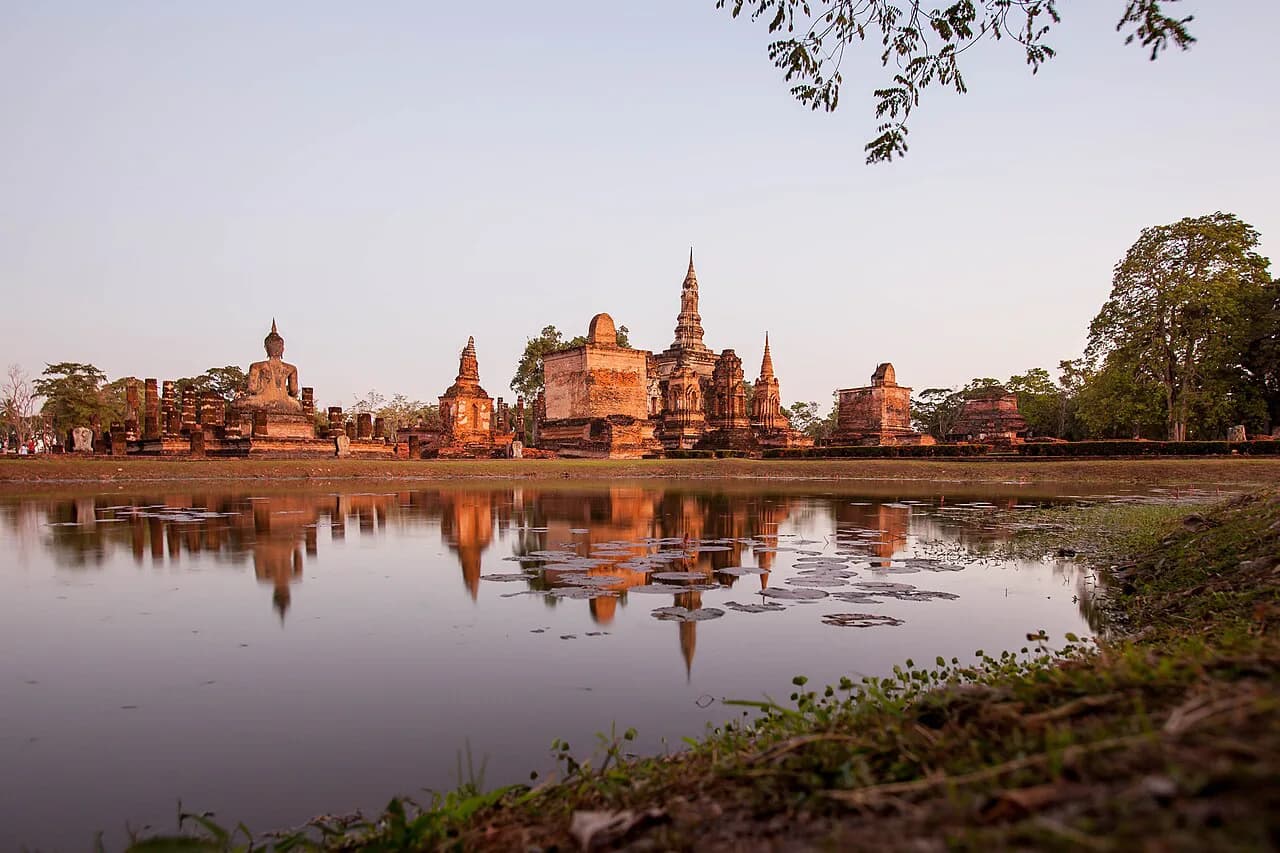
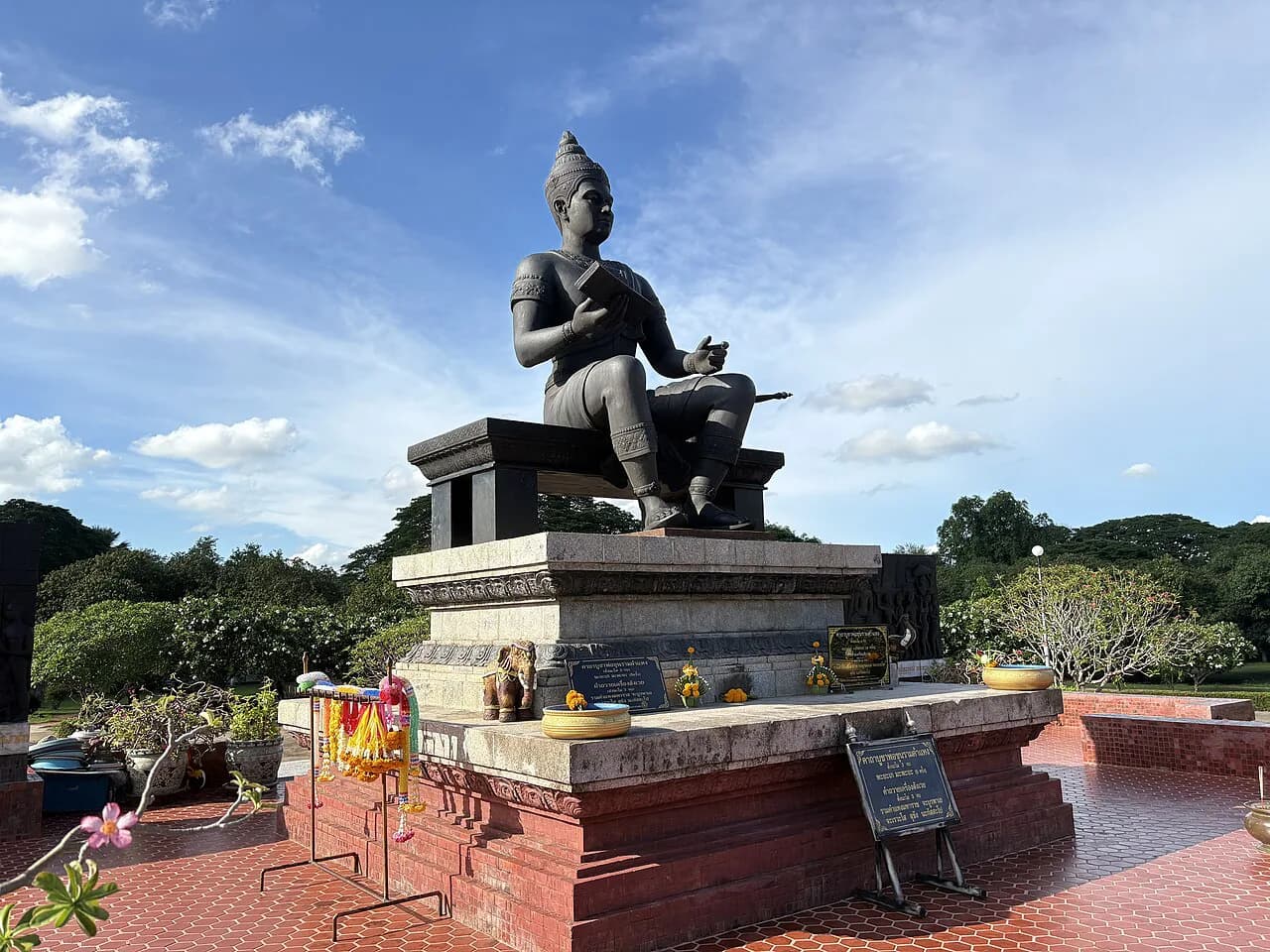
Featured image: Chainwit., CC BY 4.0, via Wikimedia Commons.
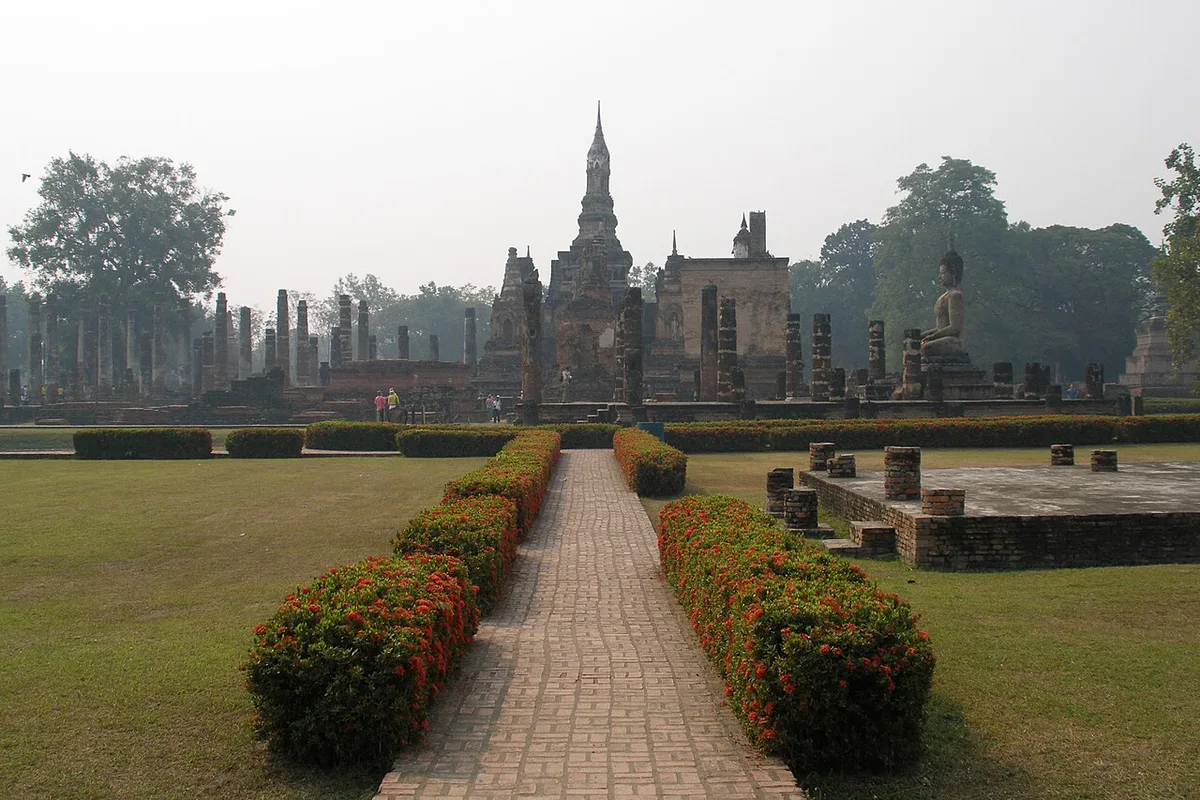
Sukhothai Weather at a Glance
Sukhothai has a tropical savanna climate (Köppen Aw). Annual rainfall is about 1,500 mm, and almost all of it falls between June and October. Daytime highs run from 33°C (91°F) in December to 40°C (104°F) in April. Humidity sits around 75–80% in the wet months. One caveat matters for planning: the published monthly averages describe New Sukhothai, about 12 km east of the Historical Park. Treat them as a close guide, not a park-gate reading. For official normals, check the Thai Meteorological Department.
| Season | Months | Typical highs / lows | Rain | Best for |
|---|---|---|---|---|
| Cool dry | Nov–Feb | 33–35°C (91–95°F) / 20–22°C (68–72°F) | 8–45 mm a month, 1–4 rain days | Cycling the ruins, photography |
| Hot | Mar–May | 36–40°C (97–104°F) / 25–27°C (77–81°F) | 30 mm in March, 60 mm in April, 210 mm in May | Early-morning visits only |
| Rainy | Jun–Oct | 33–34°C (91–93°F) / 24–26°C (75–79°F) | 170–260 mm a month, 14–19 rain days | Green scenery, thinner crowds |
Cool Dry Season (November–February)
November to February is the most comfortable stretch for open-air touring. Highs hold near 33–35°C (91–95°F), and nights fall to 20–22°C (68–72°F). December and January each average about 8 mm of rain, so skies stay clear for cycling between the Sukhothai Ruins: Zones, Routes and Tickets (Planning Guide). Photographers get clean light at both ends of the day. Loy Krathong falls in November and fills the Historical Park with lanterns. Confirm the current year's dates and format with an official tourism source before booking. Evenings suit the night market and the nightlife scene. Expect peak-season booking pressure, so reserve rooms early for festival week.
Hot Season (March–May)
March opens the heat at 37°C (99°F), and April peaks at 40°C (104°F) with lows near 27°C (81°F). Rain is still light in March at 30 mm and 60 mm in April. May jumps to 210 mm over 15 rain days as the monsoon builds. Stone and bare ground hold heat, and shade is scarce inside the park. Build the day around that. Start at 7:00 am, visit the major Sukhothai Temples: Which Wats to See and How to Route Them before the sun climbs, then break from roughly late morning. Lunch somewhere shaded with a cold drink. Return in late afternoon for the softer light. Humidity and dew point make the heat feel worse than the thermometer says, so check an air-quality source before outdoor days.
- 7:00 am: begin cycling the ruins with water.
- Late morning: shade, lunch and rest.
- Late afternoon: second round at the temples.
- Evening: dinner and the night market.
Rainy Season (June–October)
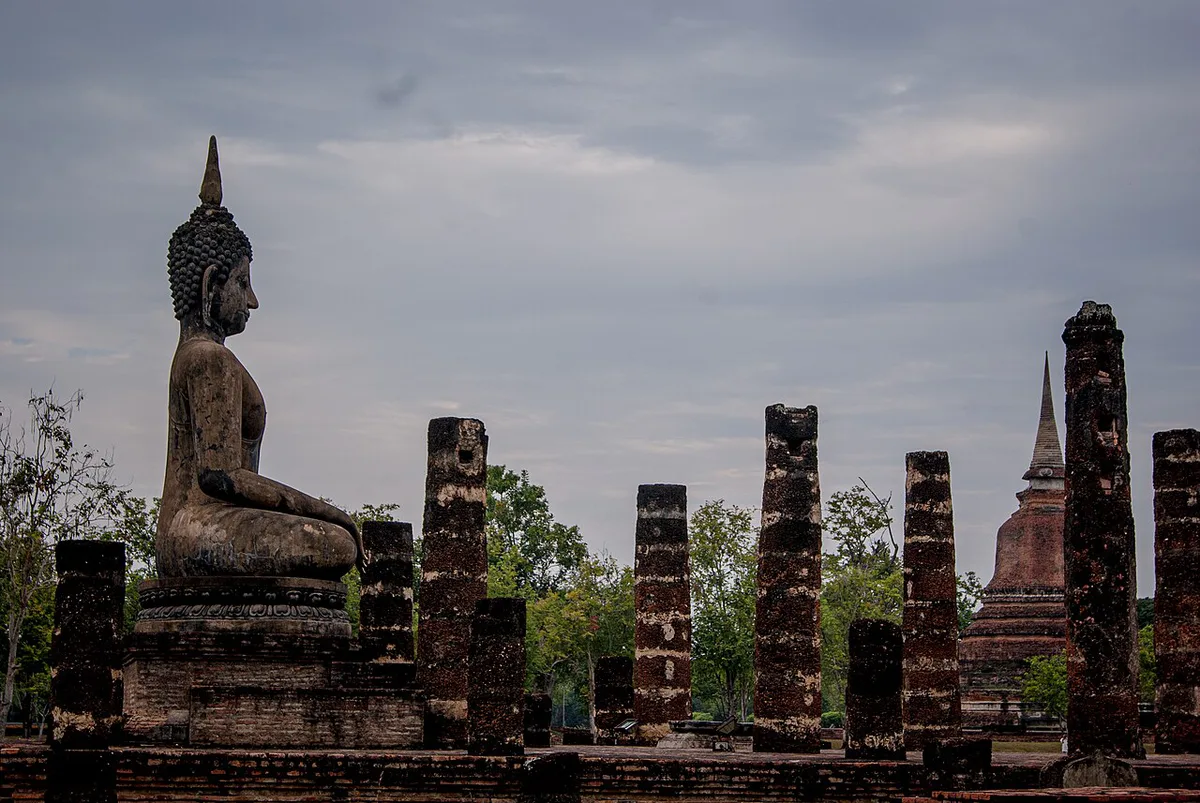
Rain comes from the southwest monsoon, and September is the wettest month with 260 mm across 19 rain days. August follows at 220 mm. Showers usually arrive as short, heavy afternoon downpours rather than all-day drizzle, so mornings often stay workable. Highs stay around 33–34°C (91–93°F). Trade-offs are fewer visitors and greener grounds against mud, wet paths and humidity. Wear shoes with grip on uneven stone. Official flood or road-closure risk should be checked with local authorities before travel. Keep a wet-afternoon plan: lunch at one of the 6 Best Restaurants in Sukhothai: Where to Eat by Situation, then a massage while the storm passes.
- Morning: temples and ruins while skies are clearest.
- Afternoon storm: indoor meal or a massage.
- Dry spell: short bike loop near your hotel.
Which Month Should You Visit?
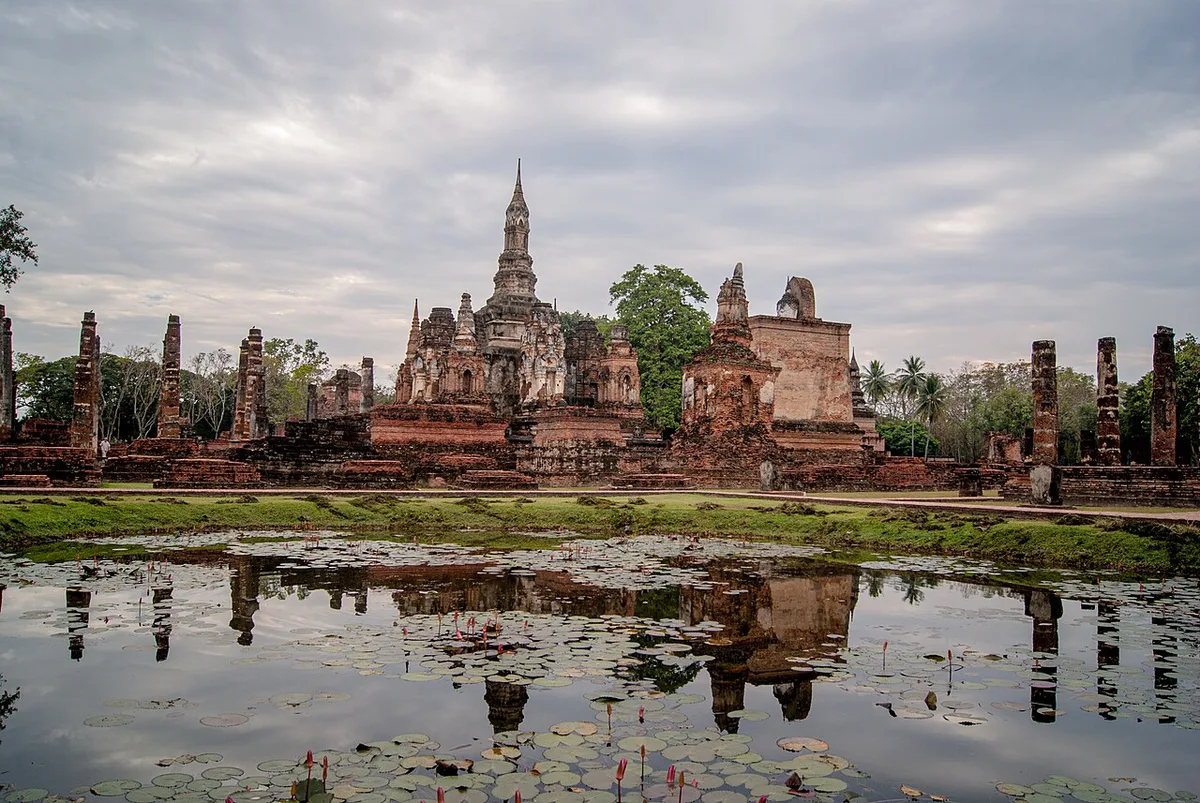
Match the month to your priorities. Budget travelers can compare lodging across seasons, since rainy months often cost less. As an illustrative planning benchmark only, not a quote, a room around ฿1,500 a night in December might compare with ฿1,000 in September. Check live listings for current rates. Still undecided? Read whether Sukhothai is worth visiting.
Cheaper rooms in the wet months come with a cost: September's 260 mm across 19 rain days needs a rain plan.
| Traveler | Best months | Skip if |
|---|---|---|
| Cyclists and photographers | Nov–Feb | You dislike peak-season crowds |
| Heat-sensitive visitors | Dec–Jan | You plan a late-April trip near 40°C (104°F) |
| Budget-conscious visitors | Jun–Oct | You cannot adapt to afternoon storms |
| Festival seekers | November | You need flexible, last-minute rooms |
What to Pack and How to Plan Your Days
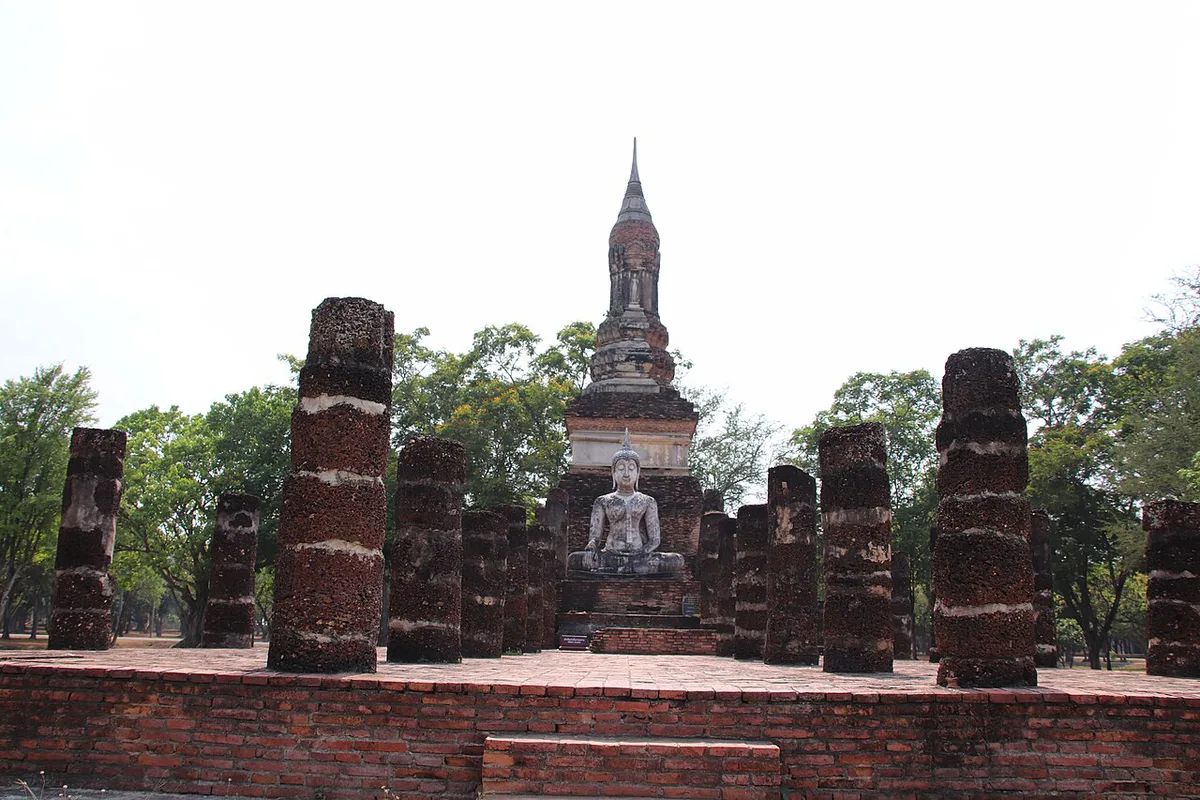
Pack for the season, not the country. Hot months call for a hat, sunscreen, light long sleeves and a refillable bottle. Rainy months need a compact rain jacket, a dry bag and closed shoes with grip. Cool months need only a thin layer for mornings near 20°C (68°F). Avoid four common mistakes in any season.
- Visiting ruins at midday in March–May.
- Carrying too little water.
- Having no rain plan from June to October.
- Skipping an air-quality check before hot-season days.
Where to Stay and Getting Around by Season
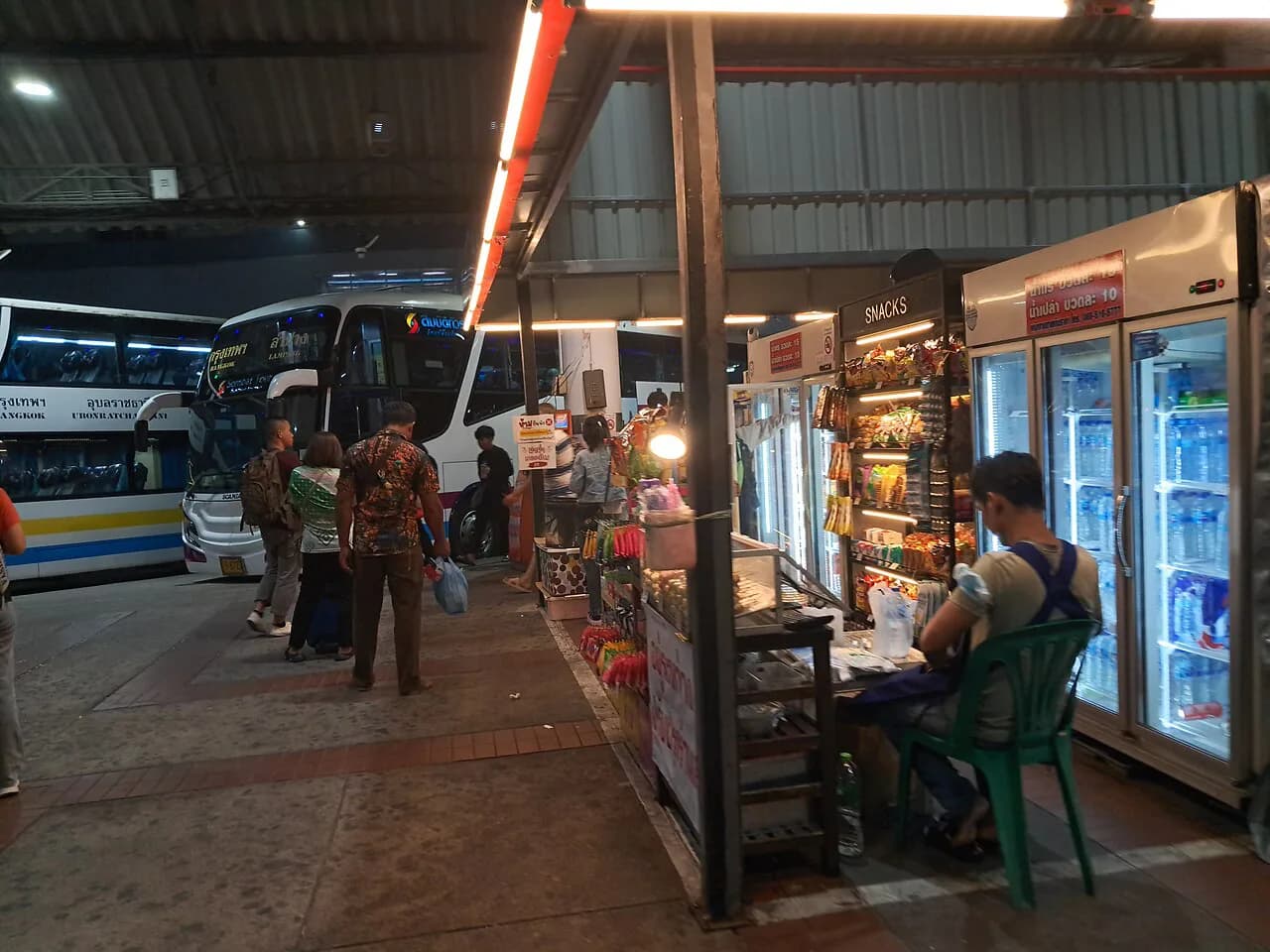
New Sukhothai has more food and services, and the park is about 12 km away. Staying near the park cuts the daily commute in heat and rain. Bikes work well in cool months. In April or the wet season, a short ride at dawn beats a scooter run through a storm. Arrivals from the capital are covered in Bangkok to Sukhothai transport. Flying? See the Sukhothai airport guide. For rail times, use the State Railway of Thailand. For buses, check Transport Co. bus service. Meal ideas for hot afternoons are in our Sukhothai Food: What to Eat and Where (2026 Guide) guide.
Park-side lodging makes a 7:00 am start realistic from March to May, since the commute to the ruins stays short.
Notes for your Thailand trip
Optional updates when we add or change a town or island guide.
You might also like
Continue reading
More guides you'll find useful