Sukhothai Ruins: Zones, Routes and Tickets (Planning Guide)
Plan Sukhothai's ruins: which of the five zones to see, route options by time, ticket and bicycle tips, and the best hours to beat the heat.
On this page
Last updated November 2026: the Sukhothai ruins are the Sukhothai Historical Park, a UNESCO World Heritage site split into five zones. Central zone is the first priority, with 21 temples inside a moat. Our guide sorts zones, routes, tickets and heat, and it slots into the wider Sukhothai trip planner.
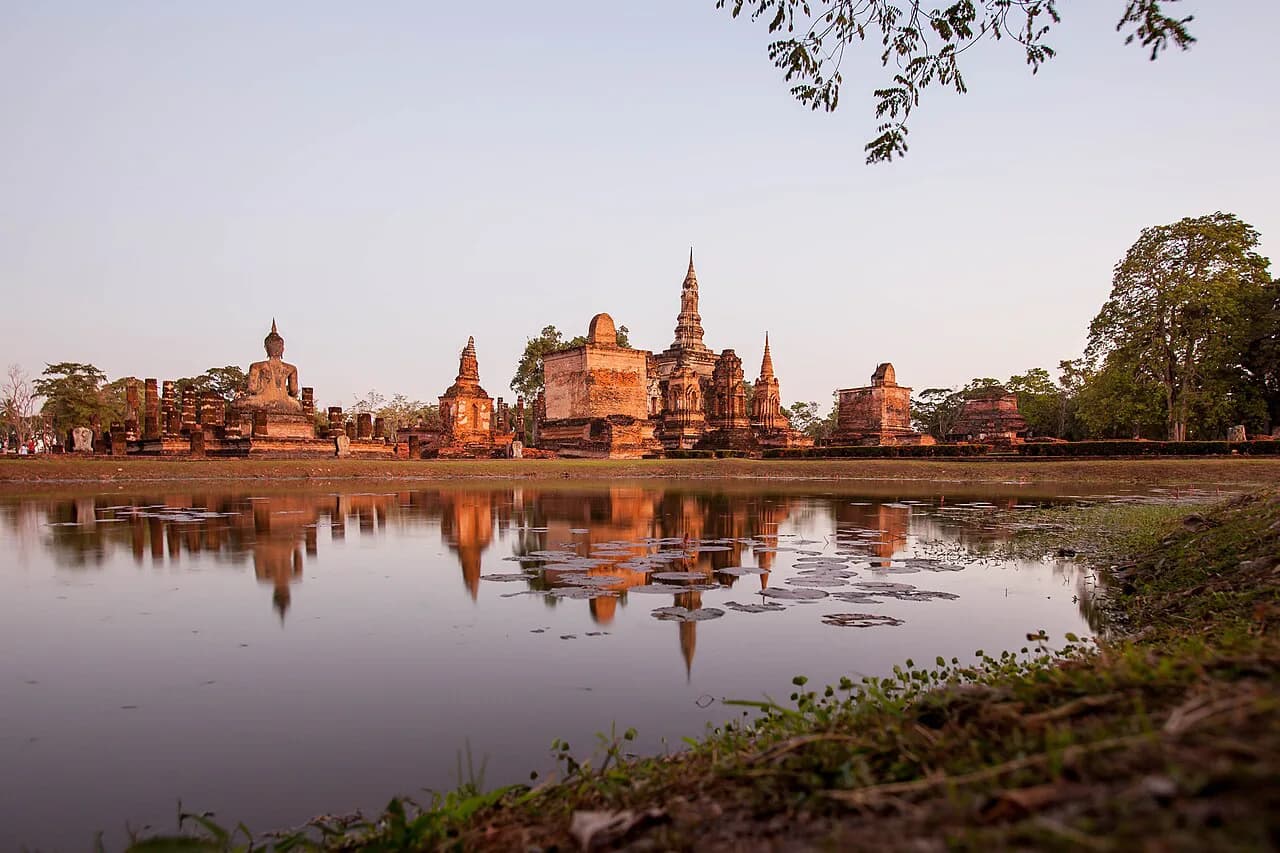
Featured image: Chainwit., CC BY 4.0, via Wikimedia Commons.
Sukhothai Ruins at a Glance
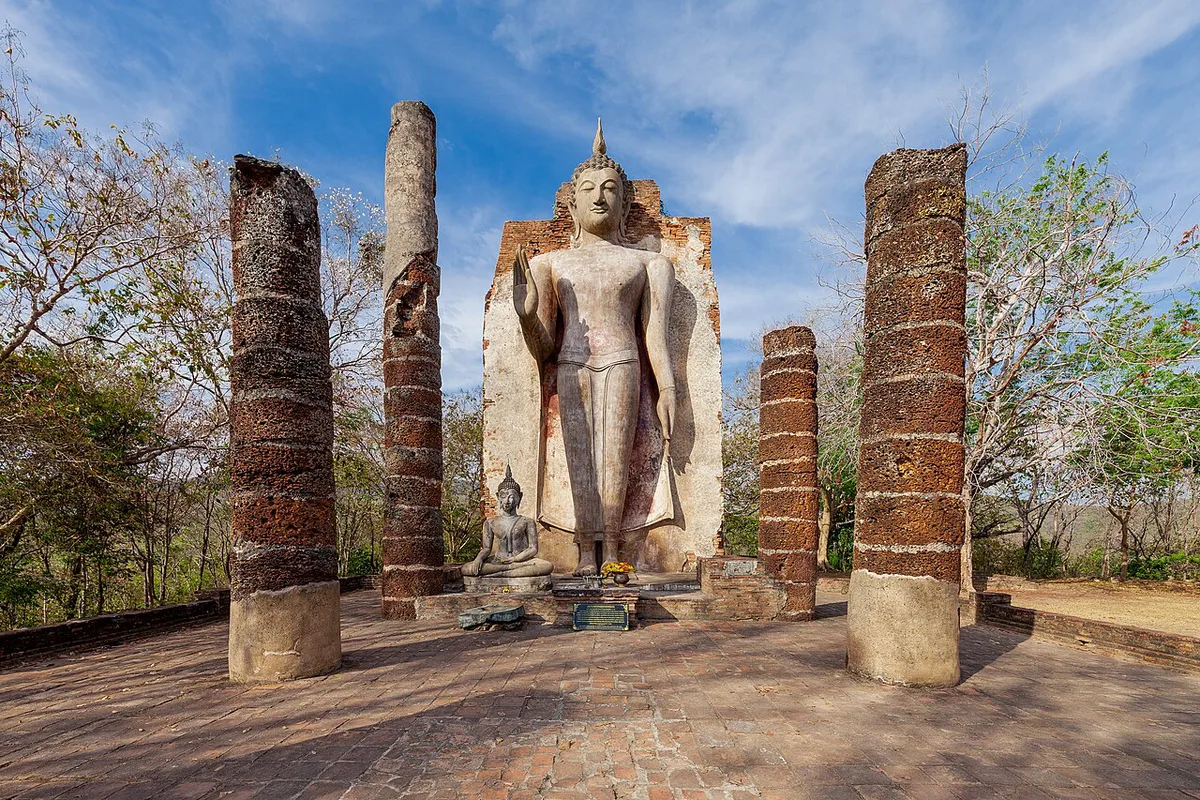
Old Sukhothai was the capital of a kingdom founded in 1238. Its ruins now sit in a historical park of about 70 sq km, per one competitor page. Five zones make up the park: Central, Northern, Western, Eastern and Southern. Central is the one nobody should skip. Our view is that two outer zones, Northern and Western, repay the extra pedalling, while Eastern and Southern are optional. For temple-by-temple detail, read our temple-by-temple guide. This page stays on zones, routes and logistics.
- Half day: Central zone only.
- Full day: Central plus Northern.
- Two to three days: all zones plus the museum and a culture add-on.
A Short History for Reading the Ruins
Sukhothai was founded in 1238 and is described as the first unified kingdom of Siam. Before that, local rulers answered to the Khmer empire of Angkor. Two Thai generals expelled the Khmers, and one of them, Intradit, became the first ruler. The name means "dawn of happiness" in Pali. The kingdom flourished for about 200 years. King Ramkhamhaeng, who reigned around 1278 to 1299, made Theravada Buddhism the national religion. Decline began in the 14th century as Ayutthaya rose. By the late 1300s Sukhothai was a vassal, and in 1438 it lost its independence. Two things help you read the ruins. Khmer-style prangs mark the oldest layer, while lotus-bud chedis and Sri Lankan-style chedis mark the Sukhothai style. Houses were made of wood, so only the temples survive.
Which Zone Is Worth Your Time?
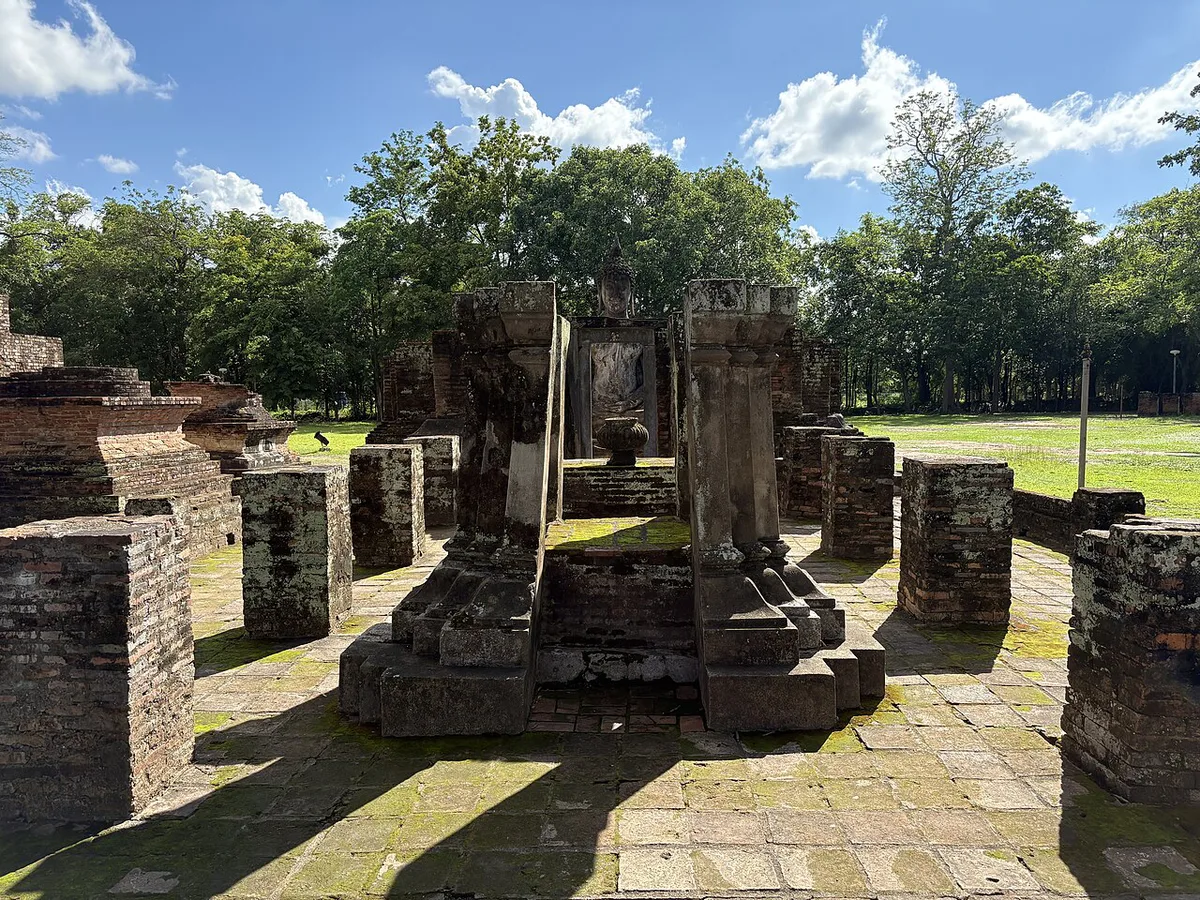
Our editorial assessment is simple. Central is essential, Northern is the best second choice, and Western suits people who like hills and quiet. Eastern is a handy add-on if you pass it. Southern is low value for most visitors. All the outer zones cover large areas, so you need a bicycle or other vehicle.
| Zone | Best for | Skip if | Ticket |
|---|---|---|---|
| Central | Wat Mahathat, Wat Sa Si, Wat Si Sawai | Never | Sources conflict; check on arrival |
| Northern | Wat Si Chum, Wat Phra Phai Luang, kilns | You only have a few hours | Sources conflict; check on arrival |
| Western | Wat Saphan Hin and forest temples | You dislike hills or climbing | Sources conflict; check on arrival |
| Eastern | Wat Chang Lom, Wat Tra Phang Thong Lang | Time is short | One source says free; confirm |
| Southern | Wat Chetuphon | Time is short | One source says free; confirm |
Central Zone Highlights
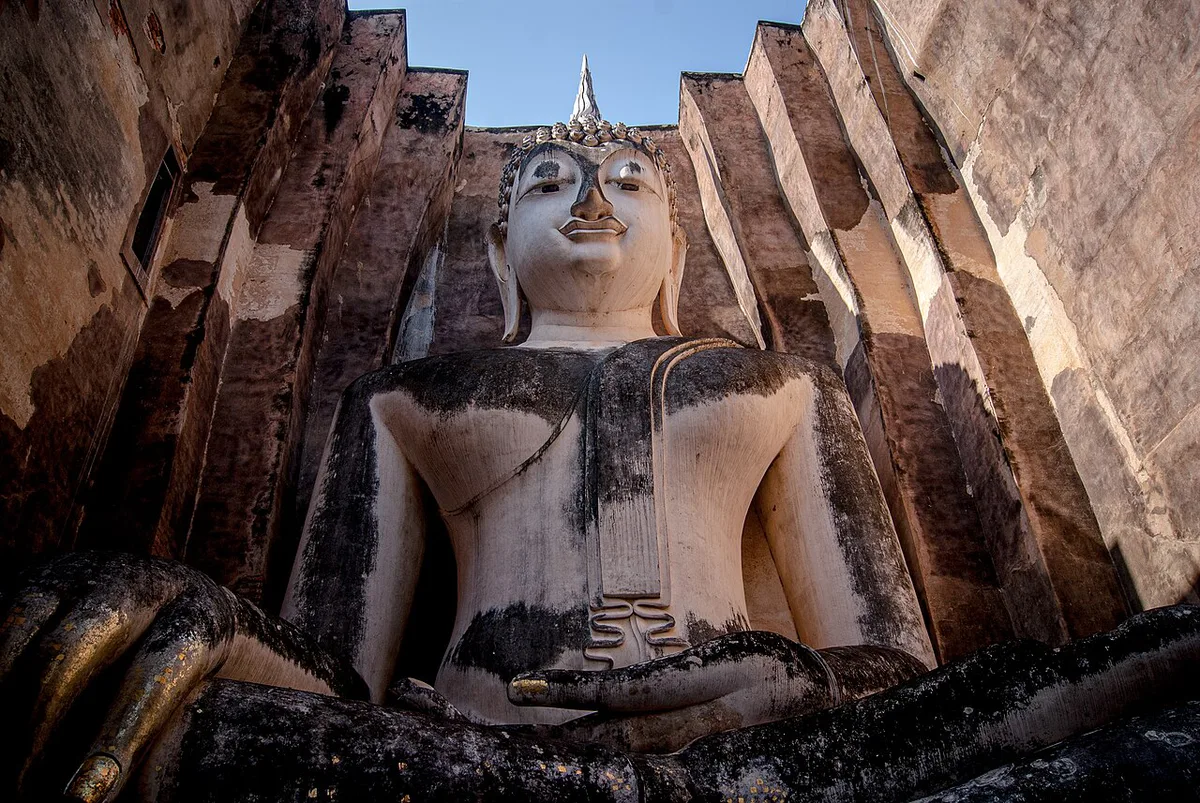
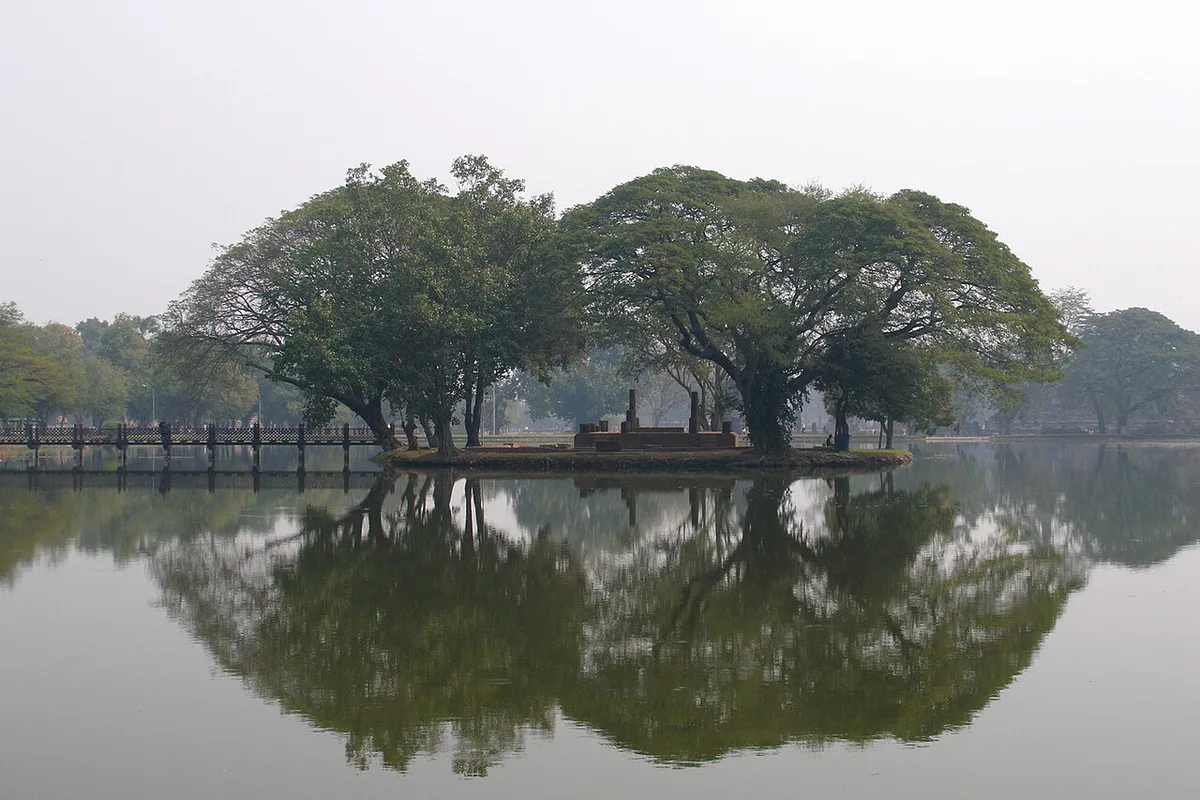
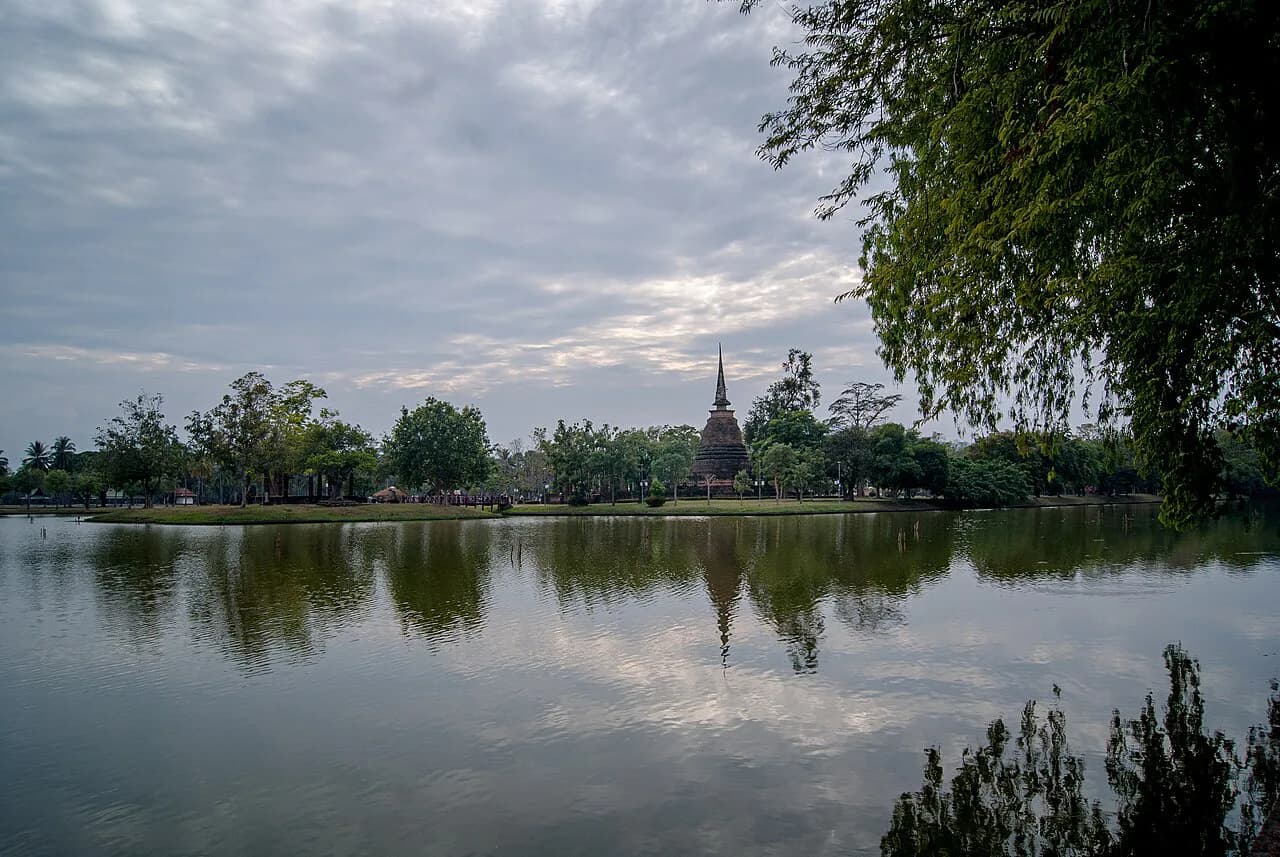
Central was the royal core. Its moat and walls measure about 1.8 km by 1.6 km, and 21 temples sit inside. Cars are not allowed into the central areas, so bring a bicycle. Wat Mahathat is the one to see if you see only one. Its lotus-bud chedi is ringed by about 200 smaller chedis. Wat Sa Si sits on an island in a reservoir, reached by a narrow bridge. Its Sri Lankan-style chedi and rows of stone columns make it the most photogenic stop in the zone. Wat Si Sawai is older than most neighbours. It has three tall Khmer-style prangs and some Hindu imagery. Plan roughly two to three hours here, plus a snack stop. Our pick for lunch ideas is Sukhothai noodles and local dishes.
Beyond the Walls: Northern and Western Highlights
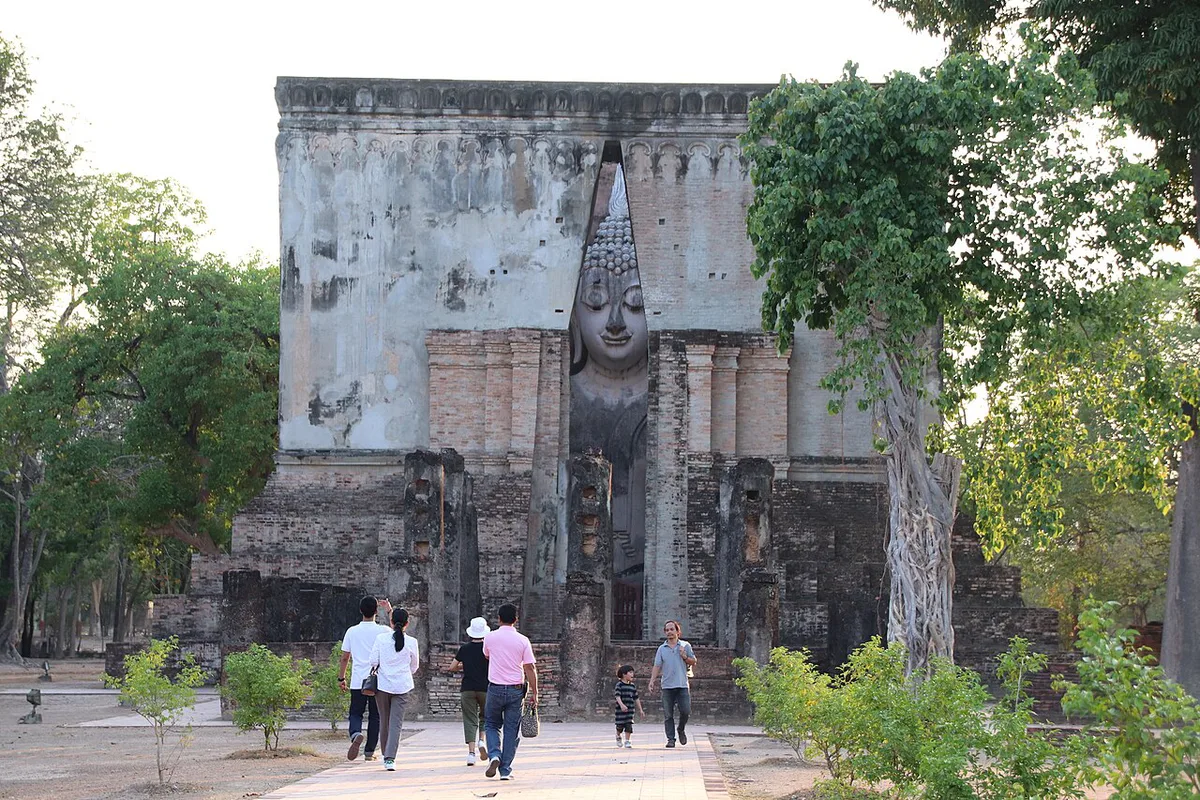
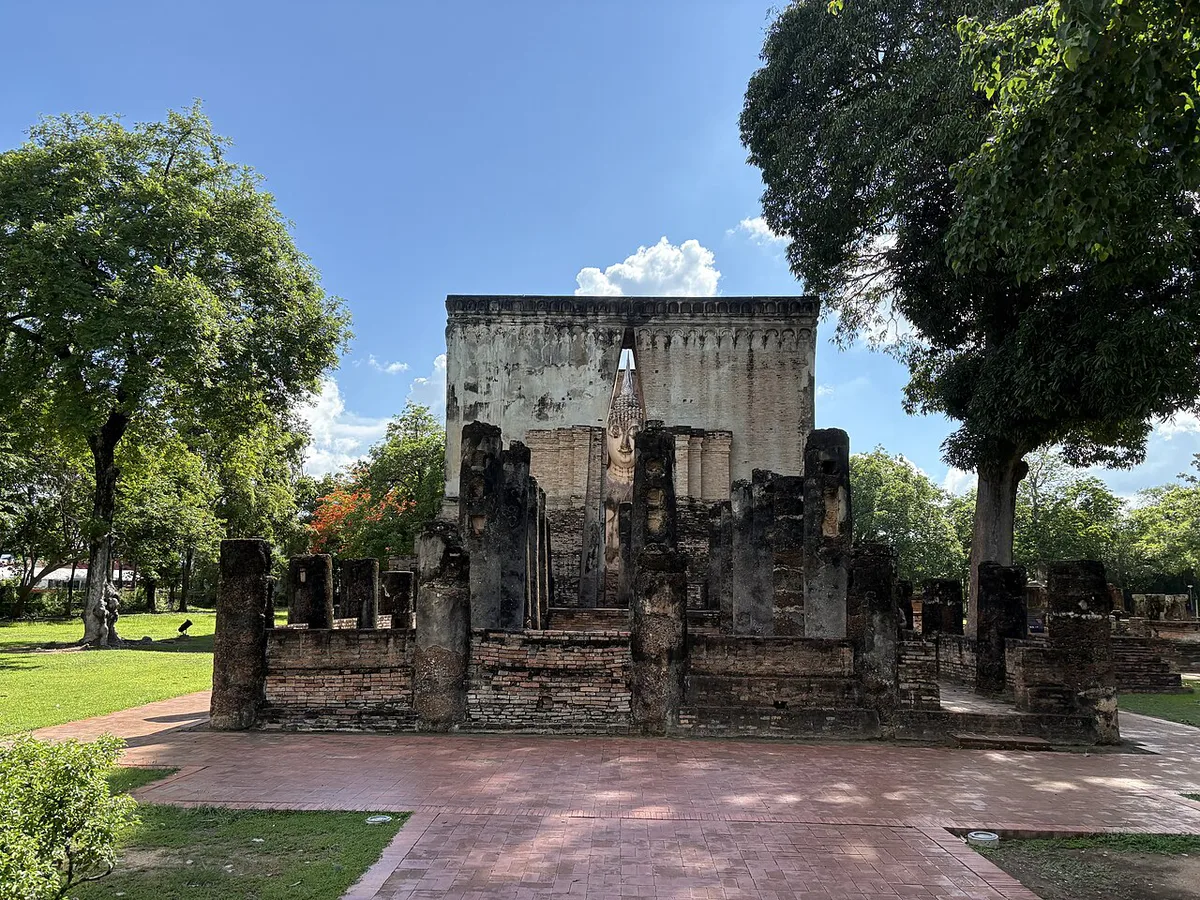
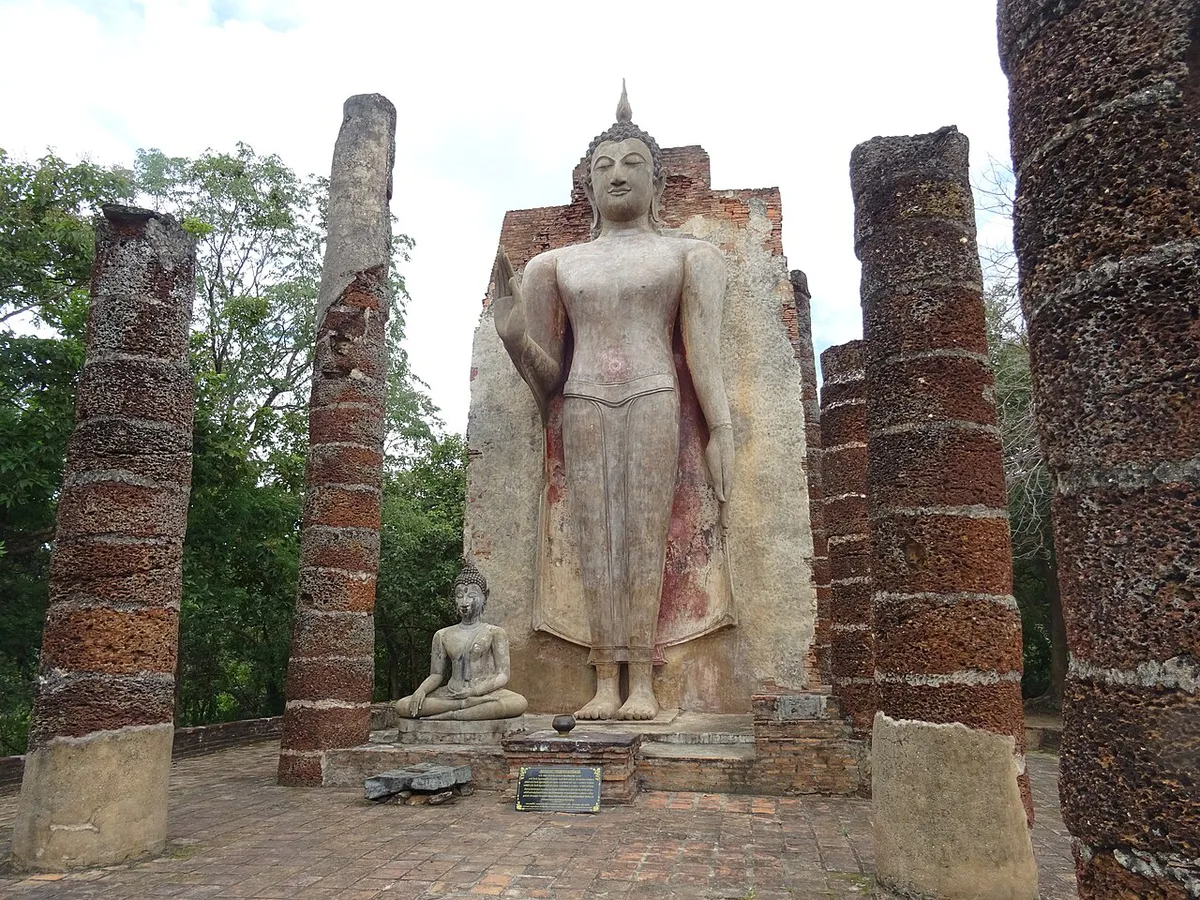
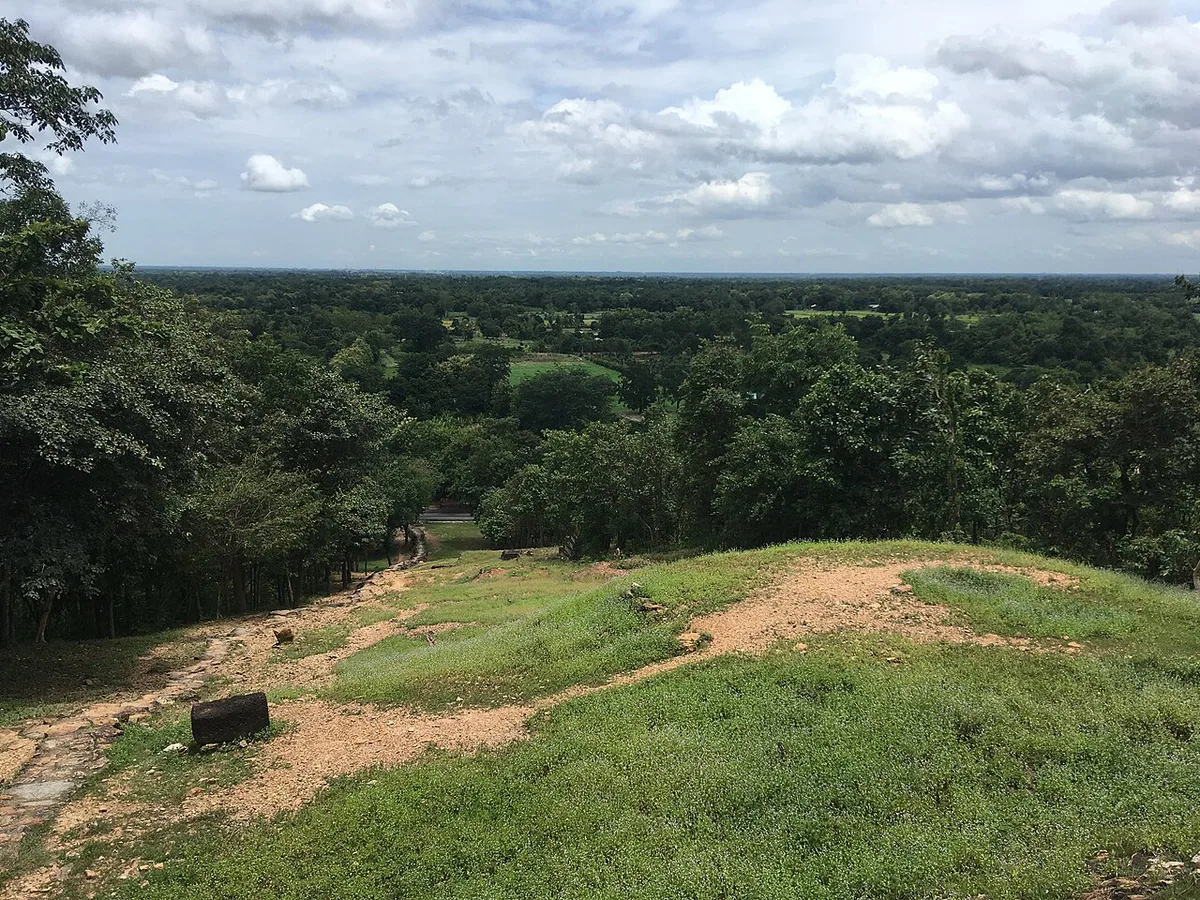
Wat Si Chum is the must-see in the Northern zone. Its seated Buddha is about 15 m high and sits inside four walls. Wat Phra Phai Luang has a moat and Khmer-era prangs. Nearby, the Tao Thu Riang kilns show where Sukhothai ceramics were fired. In the Western zone, Wat Saphan Hin crowns a hill, reached by a steep path of stone slabs. One source puts it about 5 km west of the main entrance. Sources disagree on whether the 200 m figure is the hill or the path, so ask on arrival. Expect a standing Buddha and open views. Eastern and Southern zones come next. Wat Chang Lom has an elephant-ringed chedi and Wat Tra Phang Thong Lang has stucco reliefs, both in the Eastern zone. Wat Chetuphon, in the Southern zone, is about 1.5 km from the Central wall. Skip both zones when short on time.
Three Routes: Half Day, Full Day, Two to Three Days
Pick one route before you rent a bicycle. Each suits a different traveler.
- Half day, 3 to 4 hours: Central only. Take a bicycle, buy the Central ticket and add the museum if heat peaks. Best for Bangkok-based short trips and anyone passing through.
- Full day, about 6 to 8 hours: Central plus Northern. Do Central first, rest at midday, then ride to Wat Si Chum. Best for first-timers who want the highlights without rushing.
- Two to three days: all five zones, plus the Ramkhamhaeng National Museum and a culture add-on. Spend one day on Central, one on Northern and Western, and a third on Eastern, Southern and add-ons. Best for history lovers and cyclists.
Tickets, Hours and Bicycle Fees
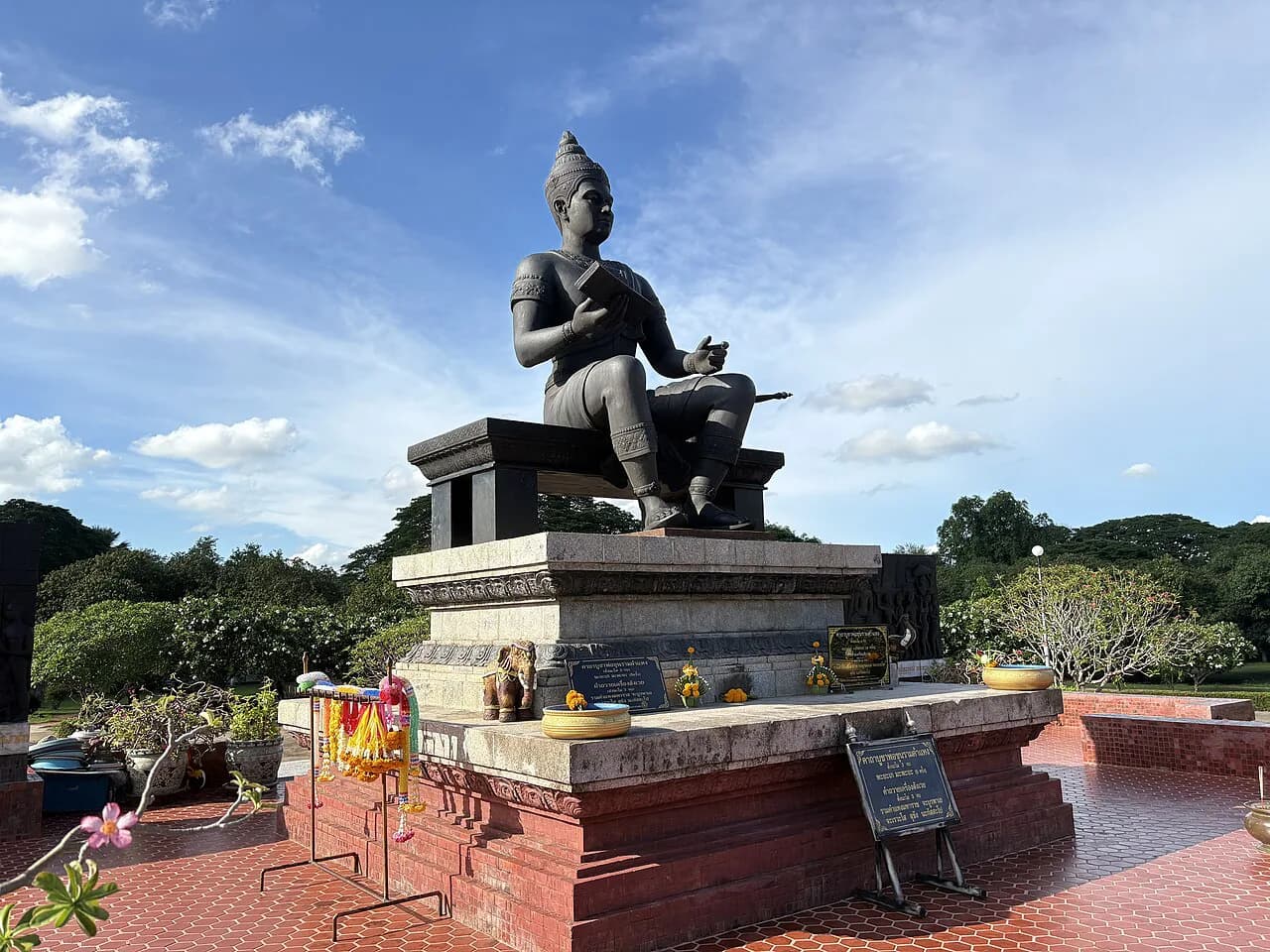
Each zone charges separately, according to one source. Figures conflict between pages. One lists ฿100 each for Central, Northern and Western, while the same page also lists ฿200 for Central and ฿120 for the others. Another says Eastern and Southern are free. We would not budget from any of these. Ask at the gate for the current fee for each zone. Bicycle use is reported at ฿10 per zone, so confirm that too. A competitor lists park hours of 6:00 to 18:00 daily, and the museum at 09:00 to 16:00 with a separate fee. Treat both as unverified until you confirm them on site. Add the museum only if you want context on the Ramkhamhaeng Inscription or a cool break. It is opposite the main entrance.
Bicycle use is reported at ฿10 per zone, so the Half day route, Central only, carries the smallest bike bill.
Beating the Heat: Best Times of Day
Schedule around the sun. Our editorial advice is to ride Central from opening at 6:00 until late morning. Rest from about 10:00 to 15:00. Return for late-afternoon light before closing at 18:00, and confirm current hours at the gate. Wat Mahathat and Wat Sa Si look best in softer light. Use the break for a meal or an air-conditioned stop at the museum. Check forecasts with the Thai Meteorological Department. Our seasonal weather guide covers what to expect by month. After a long ride, a Thai massage is a natural reward.
Rest from about 10:00 to 15:00 falls mid-day, so a Full day of 6 to 8 hours needs a 6:00 start.
Getting Around and Where to Base Yourself
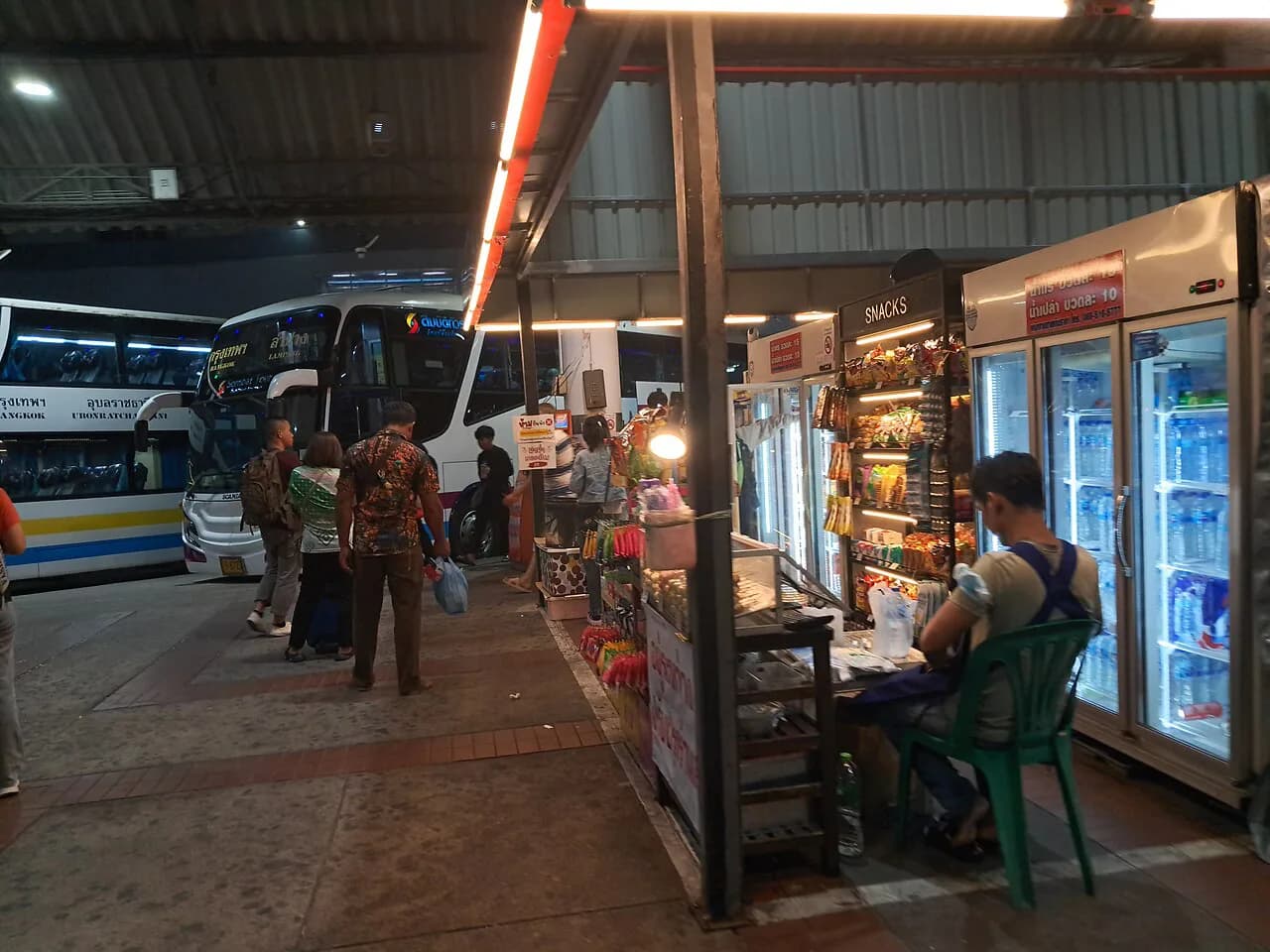
Old Sukhothai is separate from the modern town, about 10 km away. Walking between them is not realistic. A bike path links the two, but cycling it adds time to a day already packed with temples. Staying near the park saves that daily commute. Rooms in the modern town can be slightly cheaper, but we would pay the small premium for the old town. Evening options are thinner there, so see our night market guide. To reach Sukhothai, the city is about 400 km north of Bangkok. Read our Bangkok transfer guide for the options. Flying in? See our airport guide. Buses run on Transport Co. bus service, so check current timetables. Bicycle is the default inside the park. A motorbike or other vehicle helps for the outer zones, since they are spread out.
Sukhothai or Ayutthaya? A Quick Ruins Comparison
We keep this to the ruins only. Sukhothai is quieter, with open landscapes and good cycling. Ayutthaya is easier from Bangkok, which suits short trips. Choose Sukhothai if you want space, bike rides and fewer crowds. Choose Ayutthaya if time is tight or you are staying in Bangkok. Not sure it is worth the trip? Our worth-the-trip verdict helps you decide.
Mistakes to Avoid
Most problems are about timing and tickets.
- Arriving at midday. Heat peaks and shade is thin in the open Central grounds.
- Buying the wrong ticket. Zones are charged separately, so ask which zone each ticket covers.
- Trying all five zones in one day. Southern and Eastern are optional, so cut them first.
- Assuming the old town is walkable from the modern town. It is about 10 km away.
- Climbing on structures or ignoring dress at active Buddha images. Cover shoulders and knees, and stay off the ruins.
Frequently Asked Questions
What is the meaning of the name Sukhothai?
Sukhothai means "dawn of happiness" in Pali. It was the name chosen for the kingdom founded in 1238.
Why was Sukhothai abandoned?
Sukhothai declined in the 14th century as Ayutthaya's power grew. By the late 1300s it was a vassal of Ayutthaya, and in 1438 it gave up independence.
Notes for your Thailand trip
Optional updates when we add or change a town or island guide.
You might also like
Continue reading
More guides you'll find useful