
Baan Dam Museum: Visiting Chiang Rai's Black House
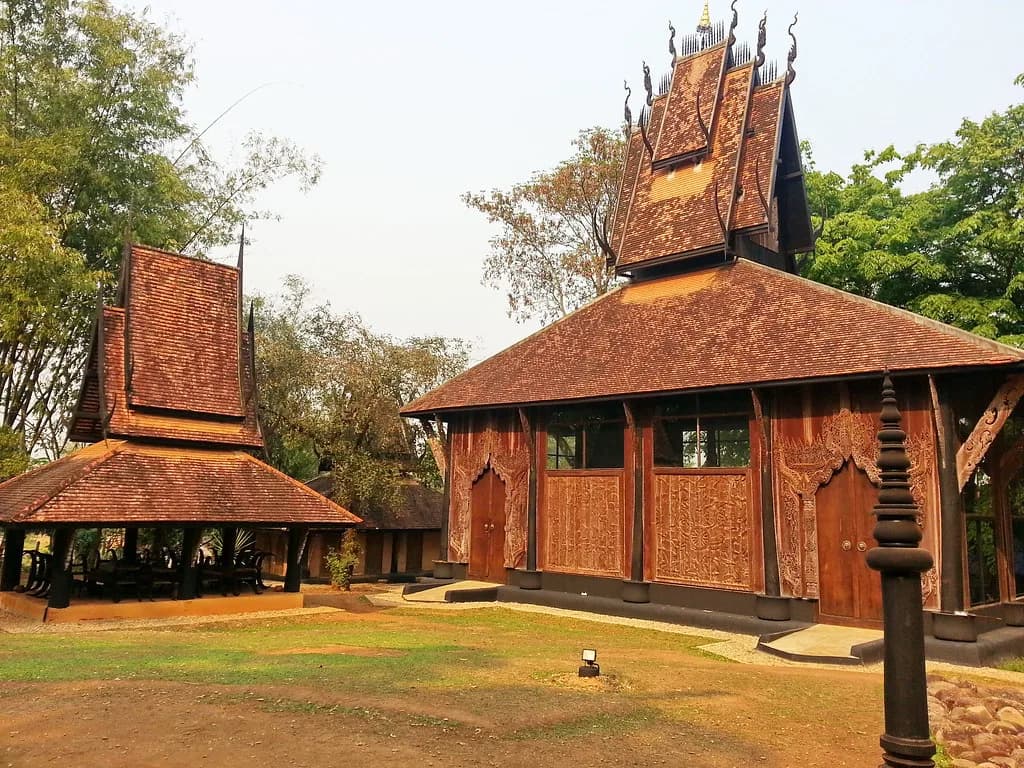
Baan Dam Museum is worth roughly an hour to ninety minutes if you want a break from gilded temples, and it is not a temple at all. It is the private art compound of the late artist Thawan Duchanee, known in English as the Black House, where dark timber buildings hold animal horns, skins and deliberately unsettling sculpture. This guide covers what you actually walk through, where the site sits relative to central Chiang Rai and the airport, how to get there, and where to confirm tickets and hours rather than trusting a number from a blog.
What Baan Dam Museum actually is
The Black House is a private art museum, not a working temple, and that distinction shapes the whole visit. There is no merit-making, no main ordination hall in active religious use, and no expectation that you behave as you would at a shrine. What you get instead is one artist's vision spread across a garden compound.
Thawan Duchanee created the collection as a single sprawling artwork rather than a curated gallery with wall labels. The material is confrontational by design: taxidermy, antlers, hides, carved figures and dark furniture arranged inside black-timbered halls. Travelers who arrive expecting another ornate Buddhist temple are the ones most often thrown by it.
That is also why opinions split so sharply. Visitors who enjoy contemporary and outsider art tend to rate it among the most memorable stops in the province, while those traveling mainly for temples find it grim or gratuitous. Decide before you go which camp you are in, because the compound is a deliberate detour rather than something you pass on the way to somewhere else.
Where the Black House sits in Chiang Rai
The museum is in Nang Lae, north of the city center on the road toward Mae Chan and the Mae Sai border. It is not a walkable stop from the central night bazaar or the riverside; you need wheels of some kind. The practical consequence is that you should slot it into a northbound half-day rather than treating it as an in-town sight.
Chiang Rai International Airport lies south of the city, so Baan Dam is on the opposite side of town from the terminal. If you are arriving or departing the same day, do not assume a quick stop en route; build the transfer into your schedule. Travelers staying in the center should treat the trip as a short out-and-back by vehicle.
Getting to Baan Dam: tuk-tuk, Grab or hired driver
Because the site sits outside the center, most visitors arrive by tuk-tuk, by ride-hailing app, or on a hired car and driver for the day. A tuk-tuk from central Chiang Rai is the classic option, and it is worth agreeing on a round trip with waiting time rather than a one-way drop, since hailing anything back from the gate is unreliable. Confirm the fare before you set off, and treat any figure you read online as indicative only.
A private driver for a half-day is the least stressful choice if you want to combine Baan Dam with two of the city's best-known temples in one northbound loop. If you plan that circuit, the [Chiang Rai Attractions: 5 Visitor Guides] guide lays out the main stops, and the [Wat Rong Khun] and [Blue Temple Chiang Rai] guides cover those two sites in detail. Bundling all three cuts down on repeated crossings of Chiang Rai. Riding a motorbike yourself works too, but the road is a busy highway rather than a quiet lane, so only do it if you are already comfortable in Thai traffic.
What you walk through at the Black House
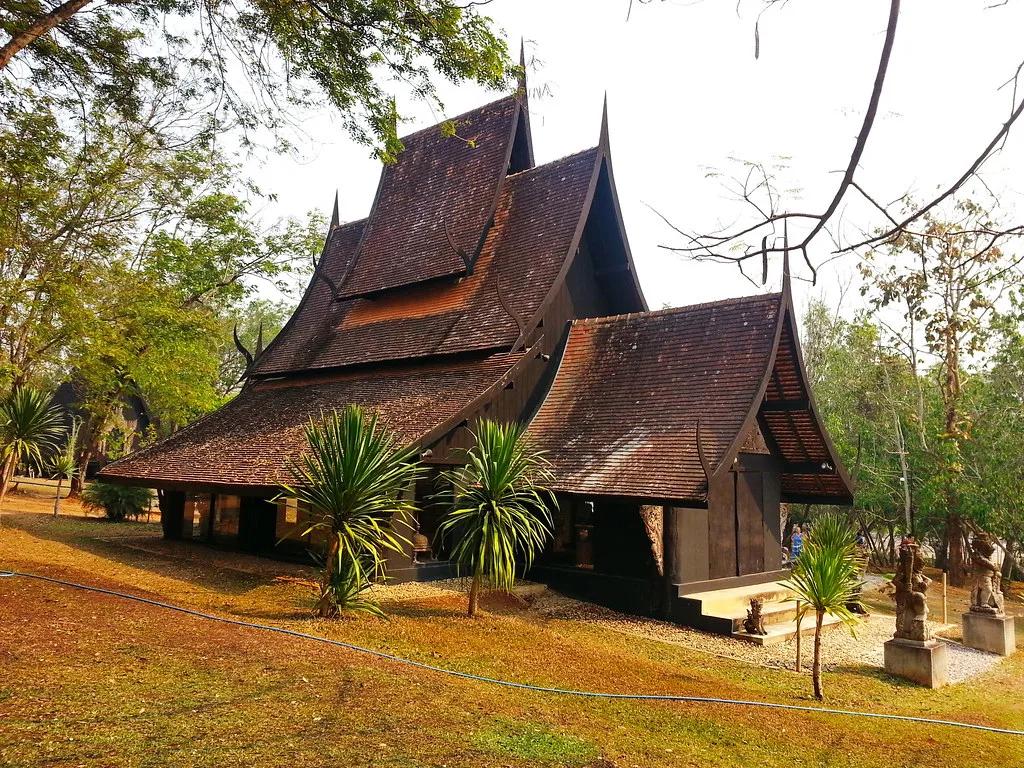
The compound is a scatter of separate dark wooden structures set among trees, lawns and paths, with the buildings functioning as display halls rather than rooms in one continuous museum. You move between them outdoors, which matters on a hot afternoon. Expect to be in the sun between halls and to be standing rather than sitting for most of the visit.
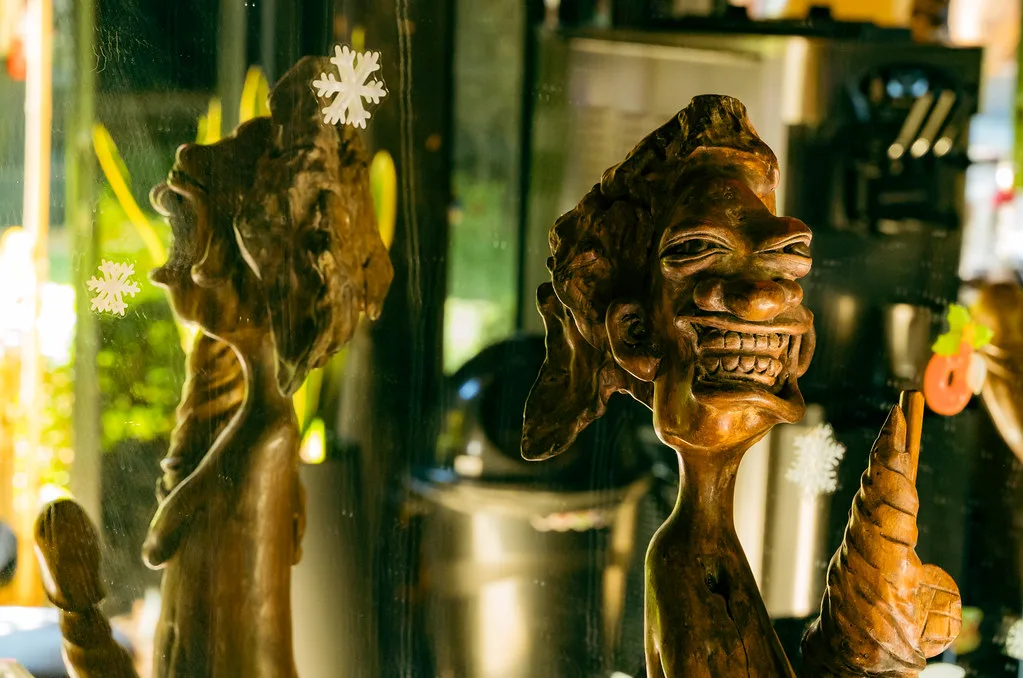
Inside, the objects are arranged as dense compositions: horns, skulls, pelts, carved wooden furniture and large sculptural pieces packed into dim interiors. The effect is closer to a cabinet of curiosities than to a conventional gallery, and there is little in the way of explanatory text to soften it. Look up as well as around, because much of the work is mounted high on the walls and under the rooflines.
Some pieces are designed to provoke rather than to please, and a few visitors find the animal material genuinely upsetting. That is a fair reaction, not a failure to appreciate art. If you are traveling with children or with someone who is sensitive to taxidermy, look at photographs of the interiors beforehand and make the call then.
The main hall and the signature works
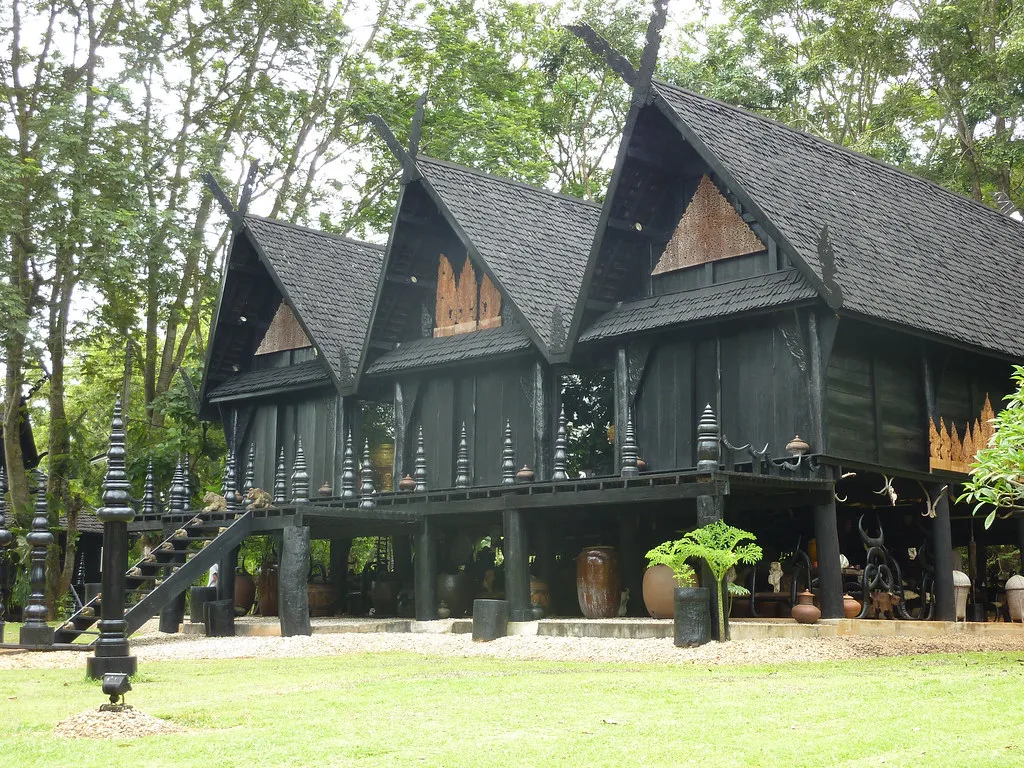
The centerpiece is the large black hall that most photographs of Baan Dam show, a tall timber structure with a steep roof and a dramatic interior. This is where the densest arrangements of horns, hides and furniture sit, and it is the part that lingers in memory. Give it the bulk of your time rather than spreading it evenly across the grounds.
Beyond the main hall, smaller pavilions hold individual pieces, including carved figures and furniture, and the grounds carry outdoor sculpture. Because the site is a single artist's collection rather than a chronological survey, there is no correct order to walk it in. Wander, then return to whatever caught your eye.
How long to allow, and the heat factor
A brisk walk-through takes about an hour; a slower visit with time to sit and look properly runs closer to ninety minutes to two hours. Because the halls are separate buildings linked by outdoor paths, you cannot compress the visit the way you can in a single museum building. Add buffer for shade stops in the middle of the day.
The open-air layout means heat and glare do most of the work in deciding your pace. Morning is generally the more comfortable window, and it also fits neatly ahead of a White Temple stop before the tour buses build up. Carry water and plan to move slowly rather than trying to sprint the compound.
Tickets and opening hours: verify before you go
Ticket prices and opening hours for Baan Dam Museum change, and no official operator page in this guide's sources confirms a current figure. Check the museum's own site and the sign at the gate on the day rather than budgeting from a blog post or an old review. If you are on a tight schedule, confirm by phone or message the day before, since a closure would waste a paid tuk-tuk round trip.
Some travelers report free or donation-based entry at other Chiang Rai art sites, which is why muddled numbers circulate for the Black House in particular. Do not carry that assumption across; the museum is a private operation and its entry arrangements are its own. Ask your driver to confirm the current gate price when you set off.

Pairing Baan Dam with the White Temple and Blue Temple
The natural full-day loop north of Chiang Rai combines Baan Dam, the White Temple (Wat Rong Khun) and the Blue Temple (Wat Rong Suea Ten), and the three give you genuinely different experiences rather than three versions of the same thing. Wat Rong Khun is the elaborate white complex by Chalermchai Kositpipat, the Blue Temple is the saturated sapphire hall with its white Buddha, and Baan Dam is the dark counterpart. Doing all three in one day is realistic with a driver but rushed if you are relying on separate tuk-tuk hops.
If you only have time for one temple alongside the Black House, pick based on taste: the White Temple for spectacle and crowds, the Blue Temple for color and a quieter visit. Both are documented as short trips from the city center, so either fits the same vehicle itinerary. Leave Baan Dam for the slot when you want to be indoors and out of the sun at your own pace.
Is Baan Dam worth it?
Go if you want contemporary art, unusual architecture and something that is not another gilded temple, and if you have a spare half-day beyond the White Temple and Blue Temple. Skip it if taxidermy and animal remains bother you, if you are traveling with young children who will find the interiors frightening, or if your time in Chiang Rai is down to a single day that you would rather spend on the classic temple circuit.
For more of what the province offers beyond this one compound, the wider [Chiang Rai Attractions: 5 Visitor Guides] set covers temples, the old town and the mountain districts around Doi Tung and Doi Chang, which reward a separate day trip in their own right.
Should Baan Dam make your Chiang Rai shortlist?
Baan Dam Museum earns its place on a Chiang Rai shortlist for travelers who want one deliberate contrast to the temple circuit, and it is easily skipped by everyone else. Budget an hour to ninety minutes, arrange a round-trip vehicle with waiting time, and go in the morning before the heat builds. Confirm the current ticket and hours at the gate or through the museum directly, and build the rest of the day around the White Temple and Blue Temple so the driving makes sense.
Explore more Chiang Rai guides
Frequently Asked Questions
Is Baan Dam Museum a temple?
No. It is a private art museum created by the artist Thawan Duchanee, known in English as the Black House. There are buildings on the grounds and Buddhist references in the work, but it is not a working temple and you visit it as a collection rather than as a shrine.
How do you get to the Black House from central Chiang Rai?
Arrange a tuk-tuk round trip with waiting time, book a ride-hailing car, or hire a driver for a half-day loop that includes the White Temple and Blue Temple. Agree the fare before you leave and confirm that the driver will wait, because finding a ride back from the gate on your own is unreliable.
How much time should you spend at Baan Dam?
Plan on about an hour for a brisk walk-through and ninety minutes to two hours if you want to linger in the main hall and the smaller pavilions. The buildings are separate and linked by outdoor paths, so heat slows you down more than you might expect.