
Singha Park Chiang Rai: A Practical Visitor's Guide to the Farm

Singha Park Chiang Rai needs roughly half a day — and that is if you ride the farm tram and get off at only a couple of stops. The park is a privately run agricultural estate southwest of the city rather than a national park or a quick photo stop, so the real planning question is how you move around inside it. This guide covers where the park sits, how to reach it, how the zones are laid out, what the tram, bikes and carts each cost you in time and money, and which nearby sight pairs most naturally with it.
Treat every number below as a starting point rather than a booking rate. Published figures for park hours, tram fares and rentals disagree between sources, so the park's own channels and your driver are the final word. Where a source is cited, it supports the specific claim in that paragraph; where none is, the article says what to verify.
What Singha Park actually is
Singha Park — often still called by its old name, Boon Rawd Farm — is an agricultural tourism estate operated by Singha Corporation, developed since the early 2010s on rolling farmland outside Chiang Rai. Rather than one attraction, it strings together terraced Oolong tea plantings, seasonal flower plots, an animal zone, a farm-education area and a landmark hilltop statue. That spread is why first-time visitors misjudge it: you cannot see it on foot in an hour.
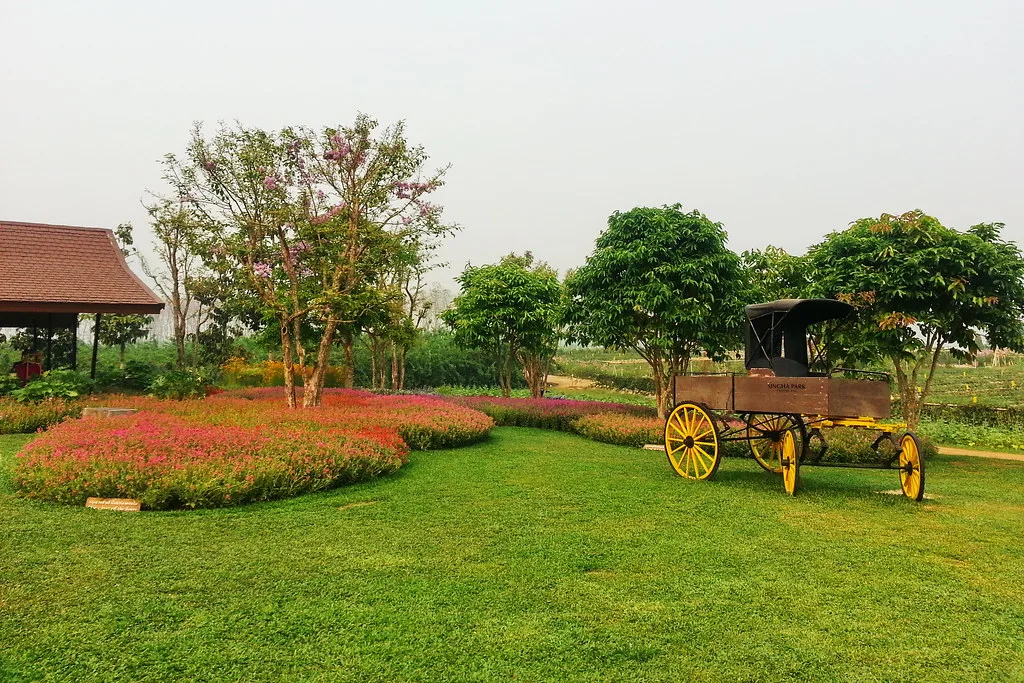
The signature image is the large golden Singha lion statue near the front of the property, framed by landscaped gardens that shift with the season — cosmos and sunflowers appear in different months. Behind it, the estate opens into the tea slopes and the working farm sections. Photography is the main draw for many visitors, and the tea terraces are the second.
Where it is and how to get there
The park sits roughly 12 km southwest of central Chiang Rai, off Den Ha–Dong Mada Road (Route 1211) in Tambon Mae Kon, on the road toward the White Temple. TripAdvisor puts Singha Park about 6 km from Wat Rong Khun (White Temple), which makes the two a sensible single loop by car or hired driver; see our guide to Wat Rong Khun (White Temple), Chiang Rai: What to See and How to Visit for the temple side of the trip.
If you drive yourself, Route 1211 is a straightforward run and parking is free. Without a car, the usual option is a blue or purple songthaew from the old bus station on the edge of the city, or a Grab or Bolt ride booked one way. Ask the songthaew driver before boarding whether the run is shared or a charter, because a charter costs more.
Return transport needs thought: Grab cars are thinner out here than in the city center, so agree on a pickup time with your driver or keep the app open before you leave the park. If you are combining Singha Park with the White Temple, hiring a car and driver for four to five hours usually beats two separate ride-hail bookings.
How the park is laid out
Think of the estate as four bands. The landmark zone sits at the front around the Golden Singha, with gardens and flower beds and the easiest flat walking. The tea-plantation zone beyond it holds the terraced Oolong rows, where you can walk between the bushes and see pickers at work in season.
The third band is the animal and farm zone: a small valley enclosure with giraffes, zebras and cattle, plus vegetable baskets sold for feeding, and an organic-agriculture section with melon houses and seasonal strawberry picking. The fourth is the hill section used for adventure activities and for the high-point restaurant with the long view.
Because the bands are spaced across open hills, the distance between them is the thing that eats your day. Choose two or three zones in advance instead of trying to cover all four. A photographer can stay in the landmark and tea zones; families tend to head straight for the animals.
Farm tour tram, bicycles and golf carts
The park's designed solution is the farm-tour tram, whose price is published as around 150 THB for adults and 50 THB for children under 110 cm, with departures roughly every half hour through the day. The route includes stops where you can get off, walk a zone, and pick up a later tram — which is what makes a roughly 45- to 60-minute loop last far longer if you use it properly.
Self-propelled options are cheaper per hour and freer: bicycle and e-bike rental has been quoted from about 100–150 THB per hour, with designated bike lanes running through the hills. Private golf carts quote from roughly 600 THB up to about 1,500 THB depending on size and rental length, which suits couples or families who want their own pace without pedaling in the heat.
The trade-off is simple. The tram is the cheapest way to see the most ground with no effort, but you are tied to its schedule and its stops. A bike gives you spontaneity but exposes you to sun and hills, and a cart solves both at the highest cost. Whatever you choose, confirm current rates and departure intervals at the ticket window on arrival, since published figures vary and can change with the season.
Opening hours and entry: what to confirm
Sources do not agree on hours. One travel listing shows the park grounds open daily from 08:00 to 18:00, while a visitor-listing platform reflects a shorter daytime window with last entry well before dark. Neither is the operator's own page, so check the park's official site or social channels for the day you plan to visit, especially if you are aiming for late afternoon light.
Entry to the front area around the Golden Singha has been described as free, with the cost coming from the tram, rentals and activities rather than a gate ticket. That is an important budgeting detail: you can walk the gardens without paying, then decide on the paid extras once you are inside. Treat it as current guidance, not a guarantee, and confirm at the entrance.
How much time to allow
A realistic minimum is three hours: queue for the tram, ride the loop, and get off at the tea terraces and the animal zone. If you also want a slow lunch and a wander through the flower gardens, plan on four to five. Cycling or carting the park yourself adds time because you set the pace, so budget closer to five hours.
Morning is the least punishing slot for walking in the open sun, and arriving before the first tourism wave means shorter waits at the tram stop. If your priority is photography, allow extra time for the tea slopes, which reward a slow walk down the rows rather than a passing glance from the tram.
What to see and do, by traveler type
Photographers should give the Golden Singha and the tea terraces the bulk of their time, and watch for the seasonal flower fields that change the front gardens through the year. Families with children will get more value from the animal valley, where feeding baskets keep kids engaged, and from the flatter garden paths near the entrance.
Travelers who mainly want tea and a view should skip the adventure hill and ride the tram to the tea zone, then settle into one of the cafés rather than racing the whole estate. The park also runs organized farm tours beyond the standard tram loop, which is worth asking about at the ticket desk if you want interpretation rather than a ride.
Food, drink and shopping inside
The main sit-down option is Phu Pirom Restaurant on the high point of the estate, described as serving Northern Thai dishes and tea-leaf specials with a mountain view; its published hours run through the evening, which makes it a sunset stop rather than a lunch-only one. Down the hill, the Barn House covers Western food like pizza and pasta, and Singha Coffee & Tea handles drinks built around the estate's own Oolong.
The Singha Shop is where you buy the farm's tea sets, melons, jams and branded merchandise, which makes it the practical last stop before you leave. Since prices are not published in a stable form, look at the shelf prices before committing — and remember that fragile tea sets are awkward in a songthaew.
When to go: flowers and park events
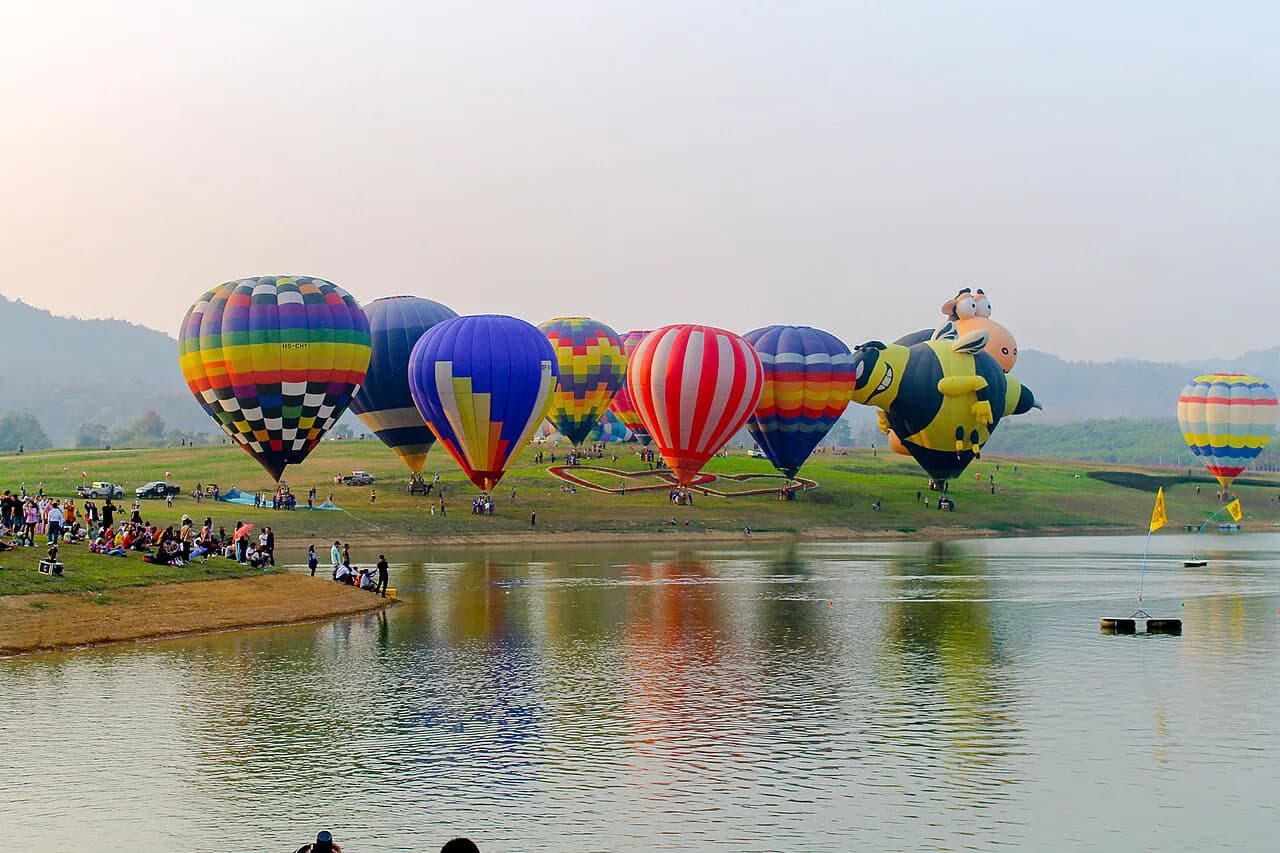
The estate's appearance shifts with the seasons: winter months tend to bring the cosmos bloom and cooler walking weather, while the hot months push you toward early starts and shade. The park is also known for hosting large periodic events — balloon gatherings, music-oriented farm festivals and a cycling race — that fill the grounds and change traffic and opening patterns.
Event dates are not fixed in any canonical calendar, so confirm them on the park's own channels before you plan a trip around one. Attending on an event day is a very different experience from a normal morning: expect crowds, road controls and higher demand for ride-hailing.
Nearby options to pair with Singha Park
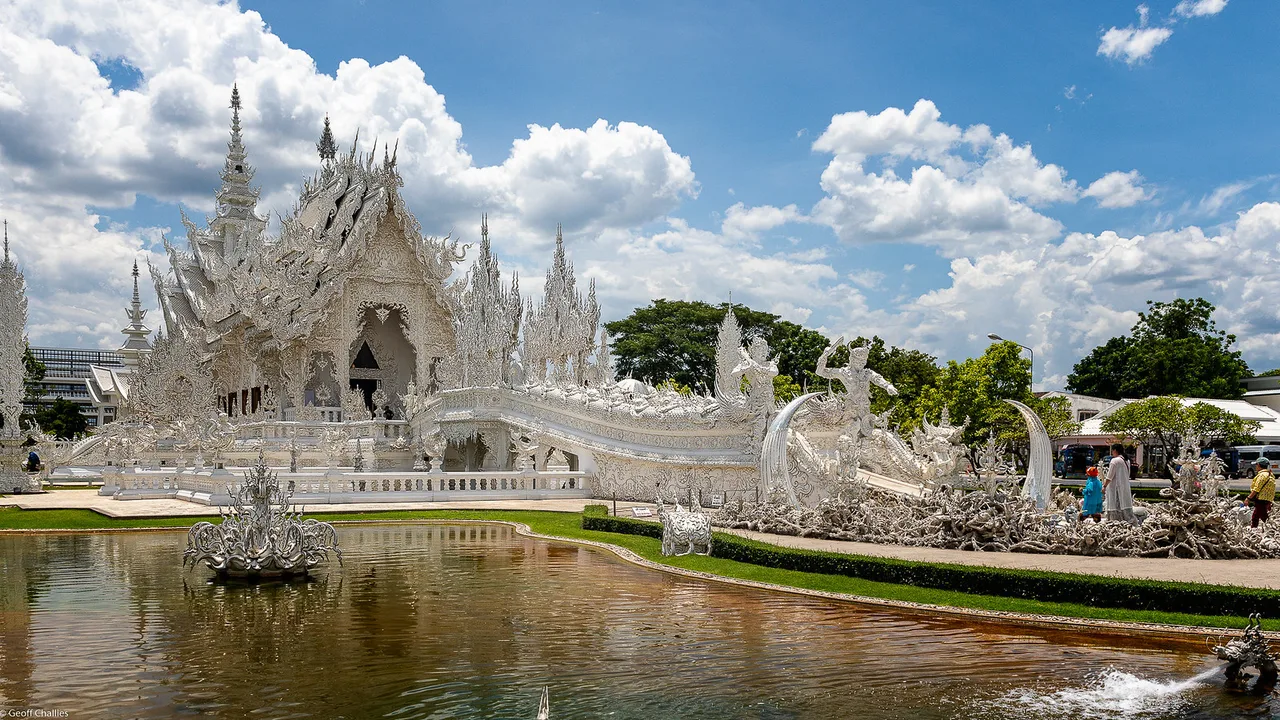
The closest companion sight is Wat Rong Khun (White Temple), only about 6 km away, so most visitors combine the two in one afternoon. Wat Rong Khun is an exterior-and-interior walk-through of roughly an hour, which fits neatly after a morning at Singha Park.
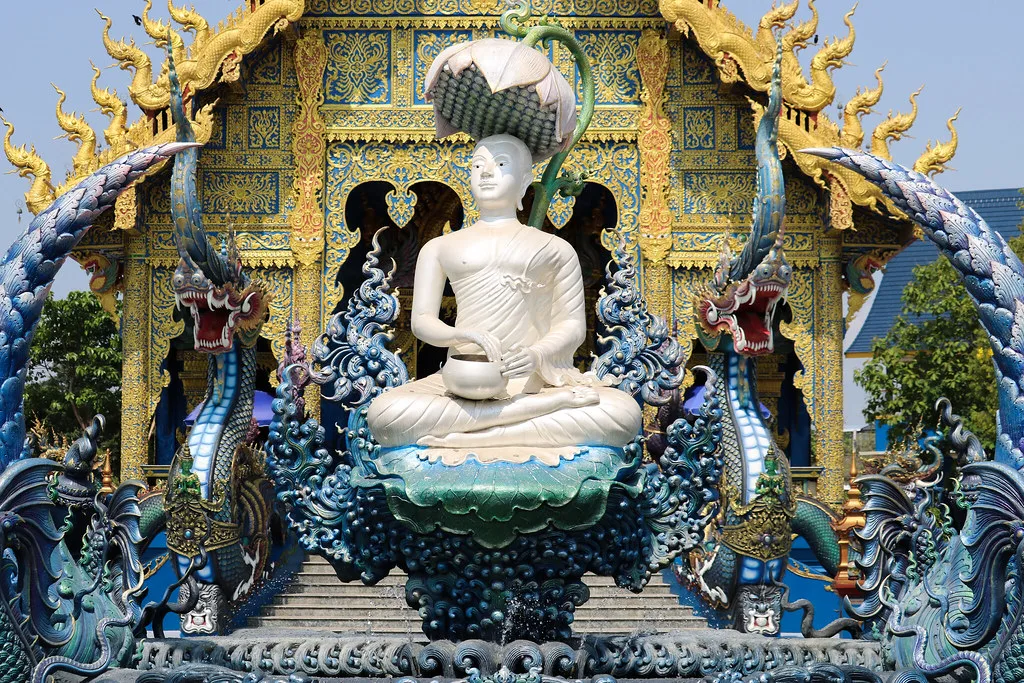
If you still have daylight, the Blue Temple Chiang Rai (Wat Rong Suea Ten) sits closer to town and takes under an hour, making it a good third stop on the drive back. For the fuller menu of sights and how they cluster geographically, work through Chiang Rai attractions: plan your stops from temple to farm before you lock your route.
Is Singha Park worth a half day?
Yes, if you treat it as a farm estate to explore rather than a monument to tick off. It rewards travelers who pick two or three zones, ride the tram or a bike, and stop for tea with a view; it frustrates anyone expecting a quick photo and out. The one thing to settle before you go is transport back, since the park is well outside the city.
Confirm the day's hours and tram fares with the park directly, then build the drive around Wat Rong Khun so you are not making the Route 1211 run twice. If you want more Chiang Rai options laid out town by town, the wider things to do in Chiang Rai list is the place to browse next.
Explore more Chiang Rai guides
Sources
- Farm Tour 🚎🌳✨ Happiness ❤️ Singha Park Chiang Rai -------------------------------------- #SinghaParkChiangRai #Singha #SocialEnterprise #สิงห์ปาร์คเชียงราย #chiangrai #Thailand #beautifuldestinations #amazingthailand #เที่ยวไทยเท่ #ที่เที่ยวเชียงราย #มาเชียงรายต้องแวะ #hilightchiangrai #hilightthail
- 🌿 Singha Park — A green space for relaxation. | Trip.com Chiang Rai
- Singha Park: ‘Sip a cup of tea in the middle of mountains.’
- Singha Park (Boon Rawd Farm), Chiang Rai
- Singha Park - All You SHOULD Know Before Going (2026 ...