
Blue Temple Chiang Rai: A Visitor's Guide to Wat Rong Suea Ten

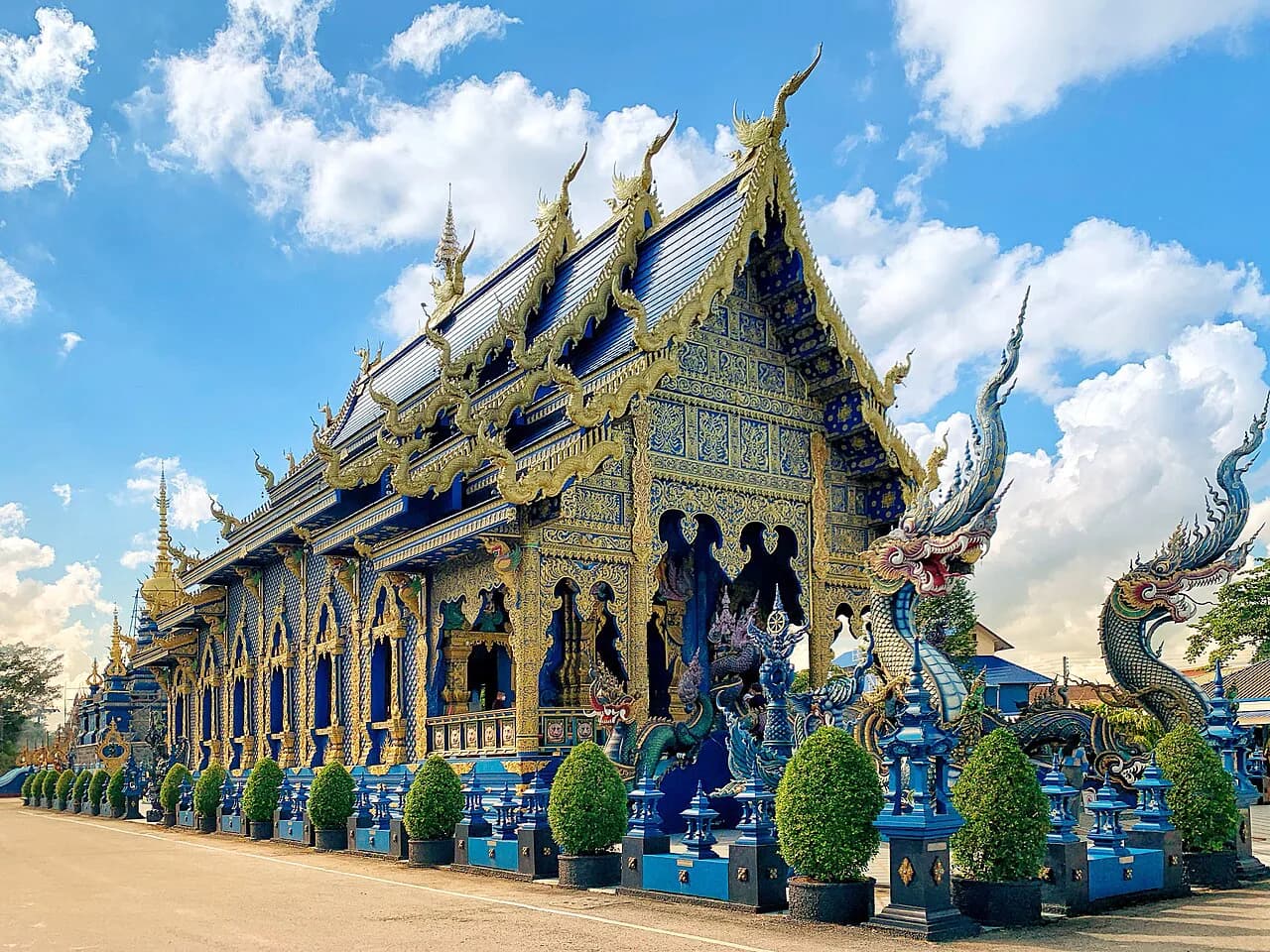
The Blue Temple in Chiang Rai, formally Wat Rong Suea Ten, is a modern temple completed in 2016, not an ancient ruin, and it takes most visitors 30 to 60 minutes to see. Entry is free, with donations welcome, and the draw is the saturated cobalt-and-gold exterior and a white Buddha image that appears blue inside the main hall. This guide covers where the temple sits, how to reach it from central Chiang Rai, what to look for outside and inside, and how to slot it into a day with the White Temple and Black House.
What the Blue Temple actually is
Wat Rong Suea Ten is a contemporary temple whose current complex was built between 2005 and 2016 on the site of a long-abandoned shrine, with small decorative projects still being added. Its name means something like the Temple of the Dancing Tiger, a reference to local lore about tigers once roaming the riverbanks nearby. The architect, Phuttha Kabkaew, studied under Chalermchai Kositpipat, the artist behind the White Temple, which explains the bold, modern style travelers notice at both sites. Treat it as a living place of worship and a work of contemporary religious art rather than a historic monument.
The cobalt blue is not arbitrary: sources describe it as symbolizing the spread of Buddhist teaching, with gold trim and naga serpents providing contrast. Inside, murals blend Buddhist themes with Thai folklore, and the central white Buddha sits against blue walls that reflect color onto the figure. Because the temple is new, some visitors expect a ruin and leave puzzled; go for the color, the craftsmanship, and the active worship, not for age.

Where it sits and how to get there
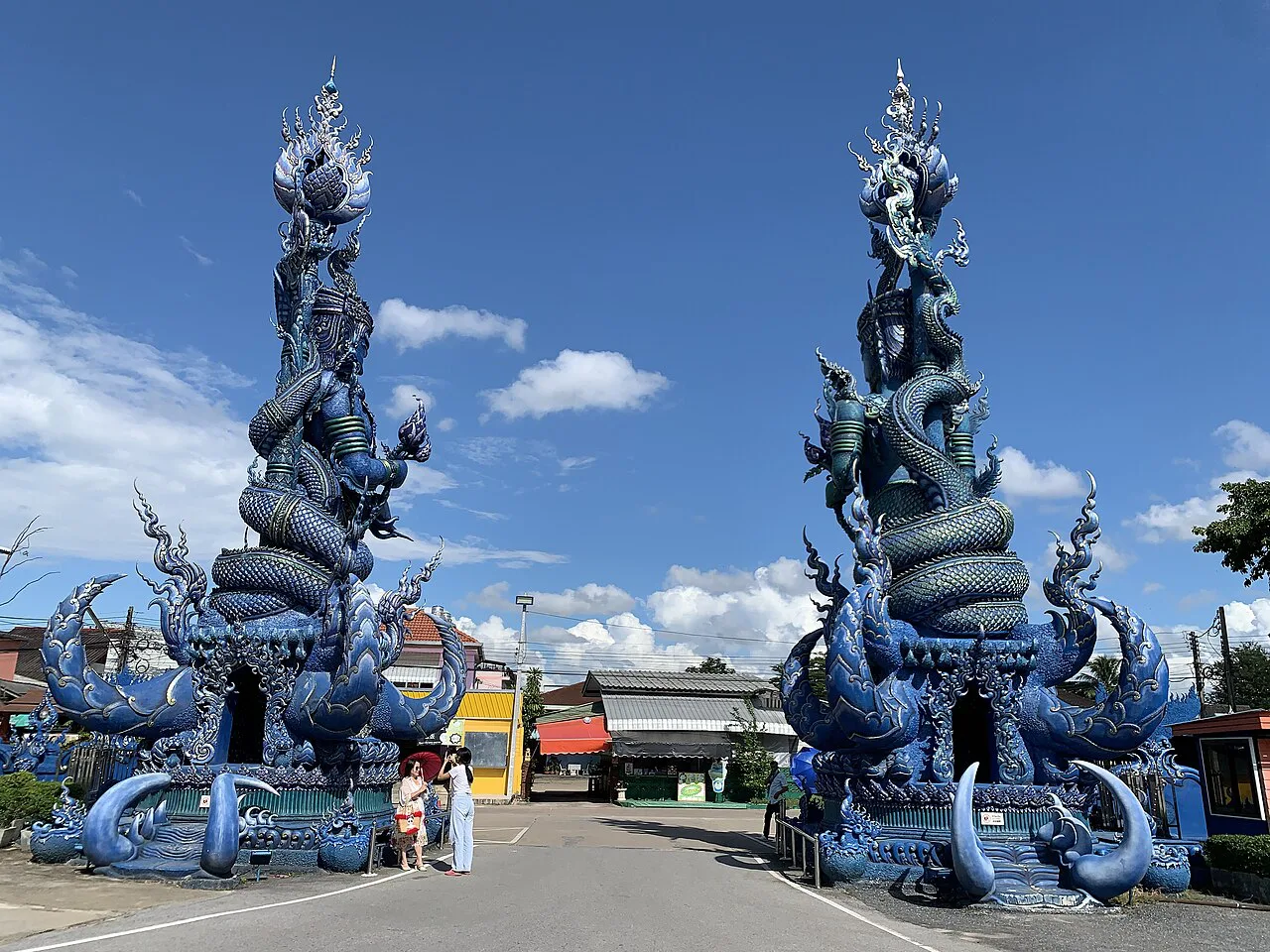
The temple is in the Rim Kok area on Mae Kok Road, addressed as 306 Moo 2, Tambon Rim Kok, Mueang Chiang Rai District. Distance from the city center is reported inconsistently, roughly 3 to 10 kilometers depending on where you start, so check the pin against your hotel before setting out. A tuk-tuk or taxi from town is the simplest approach, and a scooter works if you are comfortable riding in traffic. If you want a fixed plan and commentary, many temple tours combine it with the White Temple and Black House.
One blogger reports paying around 50 baht for a tuk-tuk and suggests asking the driver to wait, but that is casual guidance rather than a published fare, so agree on the price and waiting time before you leave. A DIY trip gives you control over how long you spend inside; a tour trades that flexibility for a fixed route and less haggling. Either way, confirm the return leg with your driver, since the temple sits off the main tourist strip.
Entry and opening hours
Visitor reports describe the Blue Temple as free to enter, with donations welcome to support upkeep and ongoing construction, and list daily hours of 7:00 AM to 8:00 PM. No booking or ticket system is described, so you can turn up during those hours. Hours and donation practices can change, so confirm on arrival or via a current listing before you build a tight schedule around it. If you want to contribute, cash donations are the norm.

What to see outside
Start at the entrance stairway, flanked by large naga serpents whose heads and tails are worked in detail; they frame the facade and set up the blue-and-gold contrast. Look at the side windows, decorated with Yakshi figures and nagas beneath a meditating Buddha image, and find the winged guardian whose staff is tipped with a Dharma wheel. Green Yaksha figures also stand guard around the building. These are easy to walk past if you are focused on the main hall, so slow down on the approach.
The exterior is where the color reads most intensely, especially when the sun is low. A small strip of shops and food stalls sits nearby, which is handy if you are combining the temple with other stops and need a quick break. Construction and expansion are part of the visit, so unfinished sections are normal rather than a sign you have arrived at the wrong time.
What to see inside
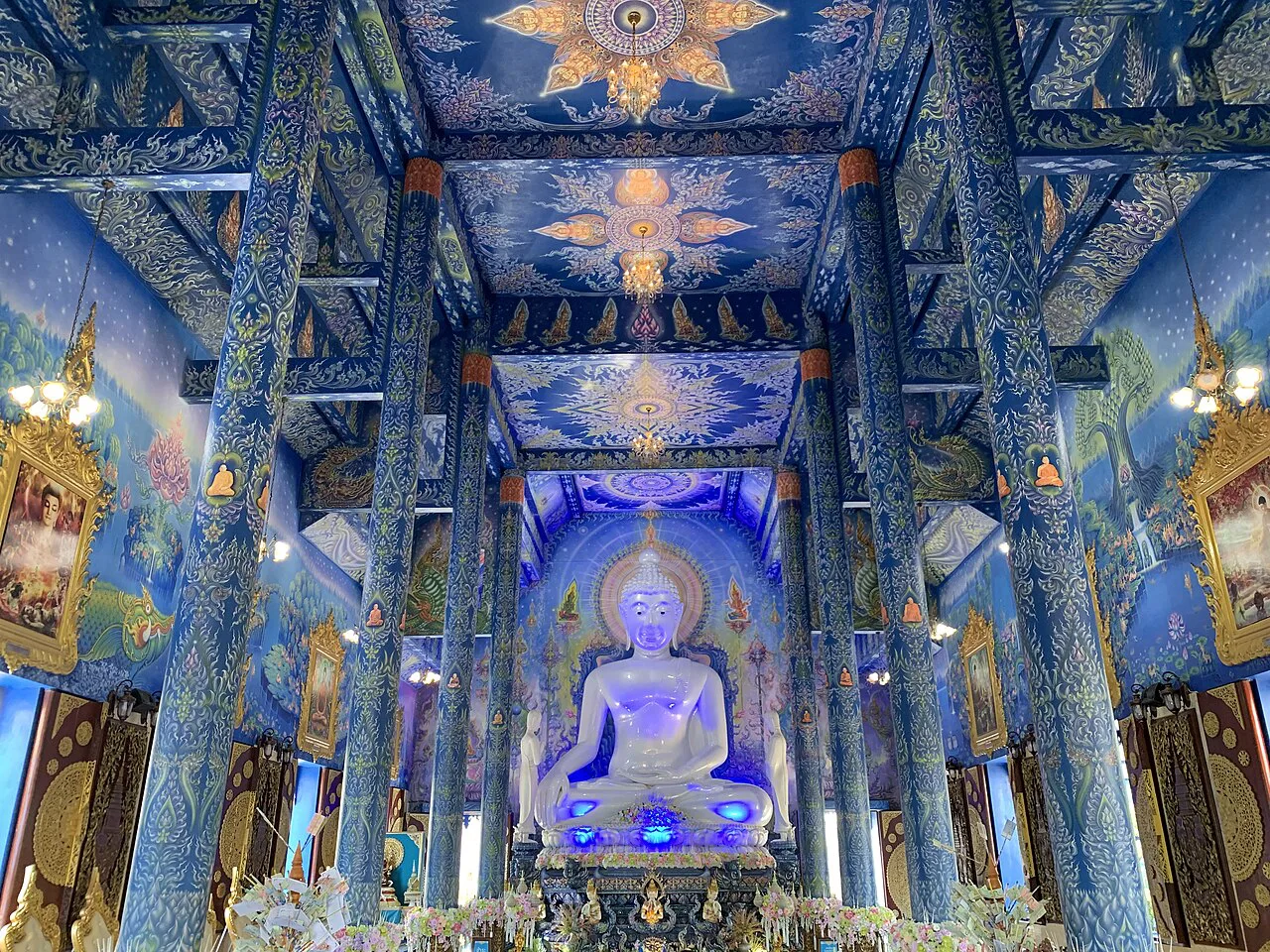
The main hall holds a large white Buddha, often described as about six meters tall, whose pale surface picks up the blue of the surrounding walls and can look blue in photographs. The pose is the earth-witness gesture, and the figure is the focal point of the interior. Murals cover the walls and ceiling with Buddhist scenes and folklore, so remember to look up rather than only at eye level.
Above the door on your way out, look for a depiction of hell, an easy detail to miss. Shoes come off at the steps before you go up, shoulders and knees should be covered, and photography is allowed inside, but turning your back to the Buddha for a selfie is considered disrespectful. Keep voices low and avoid large backpacks that could brush the delicate carvings.
How long you need and the best time to go
Most visitors spend 30 to 45 minutes at a walk-through pace, and up to an hour if they linger over the murals and exterior details. That makes it a short stop rather than a half-day destination on its own. Mornings and late afternoons are quieter and give softer light that makes the blue and gold read better in photos. Midday is hotter and busier, especially if tour groups are moving through.
Some sources describe the Blue Temple as less crowded than the White Temple, though it has become more popular in recent years, so treat that as a relative impression rather than a guarantee. If you want the calmest experience, arrive near opening time. If you are fitting it into a longer Chiang Rai day, plan it as one stop on a loop rather than the main event.
Pairing it with the White Temple and Black House
The Blue Temple is commonly combined with Wat Rong Khun, the White Temple, and Baan Dam Museum, the Black House, on a half-day or full-day loop from Chiang Rai. The White Temple and Black House sit outside the city in different directions, so the order matters less than allowing travel time between them. A guided circuit handles the logistics and commentary; a DIY tuk-tuk or scooter gives you more control over how long you stay at each stop.
The White Temple connection is worth knowing: Phuttha Kabkaew trained under Chalermchai Kositpipat, so the stylistic overlap between the two sites is not accidental. If you are building a temple day, start early, keep the Blue Temple as a shorter stop, and leave more time for the larger complexes. For other options in the city, the Chiang Rai Clock Tower on Banphaprakan Road is a public-art landmark that fits easily into an evening.
Is the Blue Temple worth the stop?
Yes, if you go for the color and craftsmanship rather than history. It is free, close to town, and short enough to fit into a half-day loop with the White Temple and Black House without eating your schedule. Treat 30 to 45 minutes as the baseline, add time if you photograph slowly, and confirm current hours and donation expectations before you set out. If you want a quieter visit, aim for the morning opening or late afternoon rather than midday.
Explore more Chiang Rai guides
Frequently Asked Questions
Is the Blue Temple in Chiang Rai the same as the White Temple?
No. The Blue Temple is Wat Rong Suea Ten, a modern temple finished in 2016 with cobalt-blue walls and gold trim. The White Temple is Wat Rong Khun, a separate site by a different artist. They are often visited on the same day, and the Blue Temple's architect studied under the White Temple's creator, which is why the styles can feel related.
Can I visit the Blue Temple without a tour?
Yes. Visitors commonly reach it by tuk-tuk, taxi, or scooter from central Chiang Rai, and one blogger suggests asking the driver to wait for the return trip. Agree on the price and waiting time first, since fares are not published. A DIY visit gives you control over how long you stay.
How far is the Blue Temple from Chiang Rai city center?
Sources differ, describing it as roughly 3 to 10 kilometers from the center depending on where you start. The address is in the Rim Kok area on Mae Kok Road. Check the map pin against your hotel before you leave so you can plan the ride or drive accurately.