
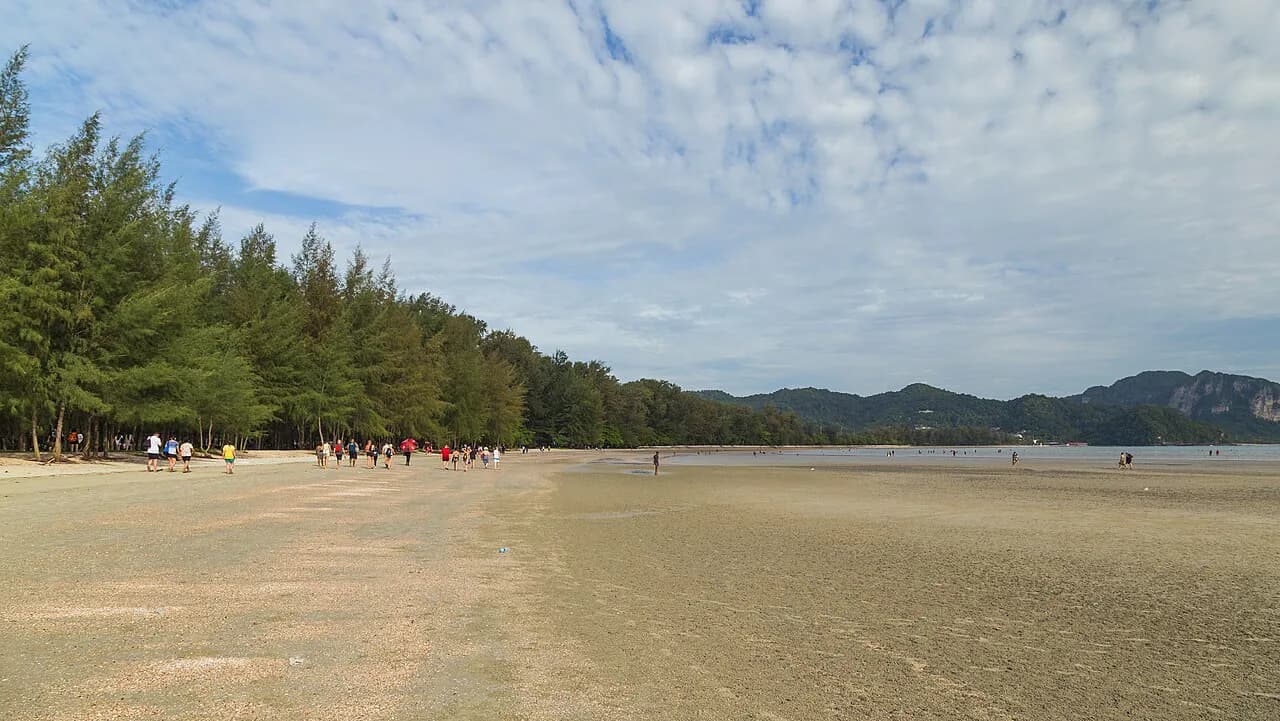
Nopparat Thara Beach: Krabi's Quiet National Park Beach and Sandbar

Give Nopparat Thara Beach half a day, or a single late afternoon, and treat the sandbar as the main event. It is the calm counterweight to Ao Nang: a roughly two-kilometre national park beach running north-west from town, backed by casuarina trees and largely free of development. This page covers where the beach sits, how to reach it from Ao Nang, how the low-tide island walk works, and how to fit it into Krabi attractions: plan your beach days and river stops.
What and where Nopparat Thara Beach is
Hat Noppharat Thara is the long strand immediately north-west of Ao Nang in Krabi Province, on Thailand's Andaman coast. Sources describe it as roughly two kilometres of sand, part of the national park that also takes in the Phi Phi islands, and distinctly quieter than Ao Nang's front.
The orientation matters more than any list of features. The eastern end holds the park visitor centre and the pier used by Phi Phi ferries, so it feels like working waterfront; walk west and the village fringe thins into trees, stalls and open sand. If you want the quiet version, head away from the pier rather than stopping at the first stretch you reach.
At the western end, a sandbar surfaces at low tide and can be walked out toward the small island offshore. That walk is the reason many people come, but it is a tide-dependent feature, not a permanent path. Check a tide table for your date before you build the day around it.
One traveller note from open map contributions describes the beach as quieter with fewer boats, and notes the tide already out in the afternoon with no swimming. Treat that as a prompt to plan around the water rather than a rule, since conditions shift daily and by season.
How to get there from Ao Nang and the pier end
The simplest approach is on foot from Ao Nang Beach Road: follow the coast north-west and you arrive within a couple of kilometres, with the walk itself passing the transition from town to trees. Allow 25 to 40 minutes at an easy pace in heat, or take a short tuk-tuk or Grab ride if you are carrying a day bag or arriving at midday.
If you are coming from Ao Nang, Nopparat Thara Pier is the landmark for the eastern end, and route listings show speedboats and ferries shuttling between that pier and Koh Yao Noi, Koh Yao Yai and Phi Phi. Those listings are sample booking data rather than a published timetable, so confirm departures with your operator before you plan around them.
The park visitor centre near the eastern end is the place to ask about current access, national park arrangements and the beach's condition on the day. Opening hours and any entry arrangements are not published consistently in visitor sources, so check with the centre rather than assuming the beach operates like a ticketed attraction.
If you are basing yourself in Krabi Town instead, allow a longer transfer; songthaews and Grab are the usual options, and the ride is short enough that the beach works as an afternoon trip rather than a full day out. For a wider look at how this strand fits with the rest of the province, browse the Krabi Attractions guide.
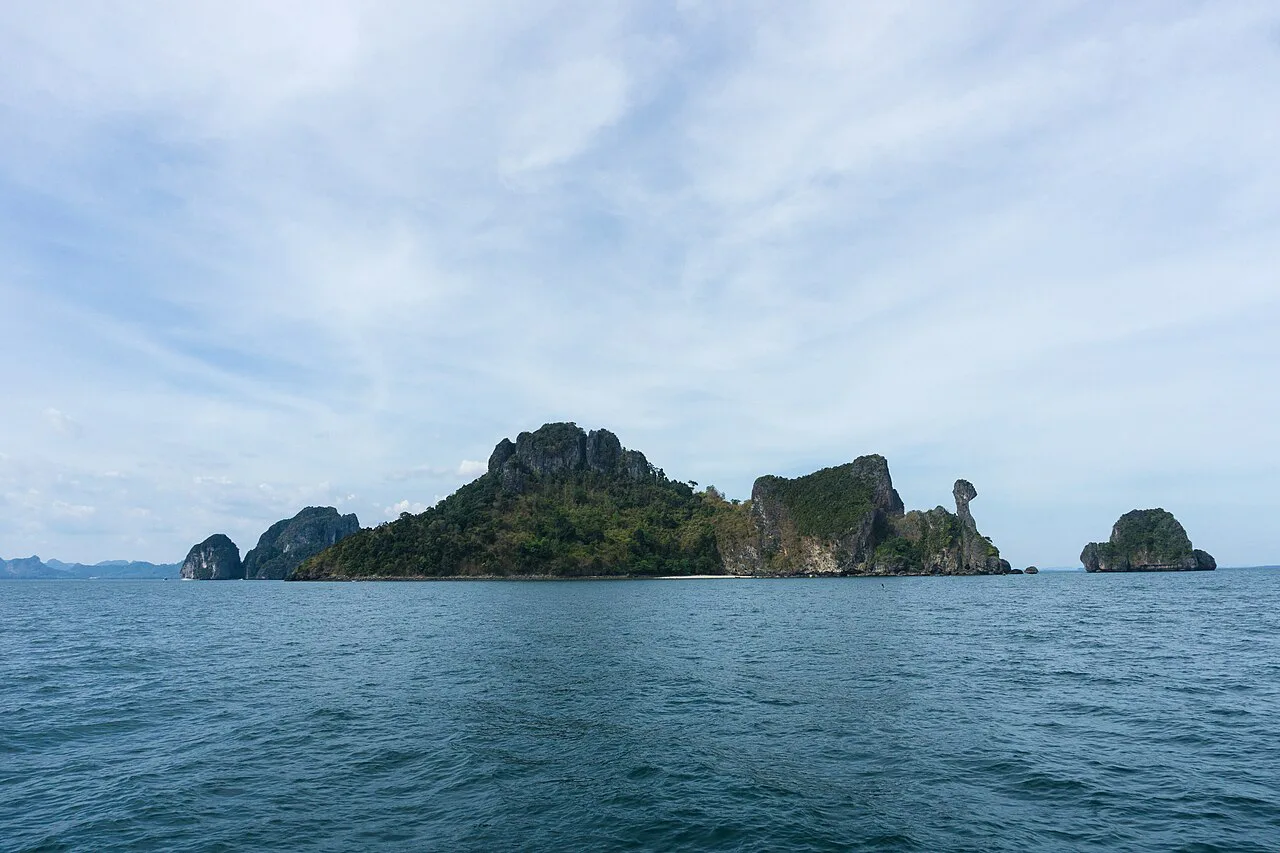

The low-tide sandbar walk to the offshore island
The sandbar appears at the western end of the beach as the tide drops, forming a wet corridor out to the small island offshore. Sources describe walking it as free and memorable; what they do not provide is a schedule, because the window moves with the tide each day. Look up a tide table for Krabi for your exact date and give yourself a margin on either side.
Plan the walk as a there-and-back decision rather than a crossing. Start out as the water is still falling, keep an eye on the returning tide, and turn around well before it does so you are not caught mid-bar. The bar is exposed sand and shallow water, so footwear that can get wet makes the walk more comfortable.
Do not assume the island walk is available on every visit. Afternoon low tides, spring-tide swings and weather all change the picture, and a map note already flags the afternoon water as out at least on some days. If the tide does not cooperate, the beach itself is still worth the trip for shade, sunset and space.

What to see along the sand
The appeal here is horizontal rather than vertical: casuarina and coconut trees giving shade, picnic spots under them, a scattering of local food stalls, and sunset views over the Andaman Sea. Bring a mat and plan to sit, because there is little built infrastructure to structure your time.
Development is deliberately thin, which is the trade-off. You get quiet and space, but you also get fewer cafés, no beach-club scene and limited shade once you leave the tree line. Buy water and snacks near Ao Nang or from the stalls before you commit to a long stretch of sand.
Walking the full length takes about half an hour at an unhurried pace, so treat the beach as a place to wander rather than a circuit with sights. The pier end gives you boat traffic and people-watching; the western end gives you the sandbar and open sea. Most visitors end up drifting toward the west.

How much time to allow, and when to arrive
Two to four hours covers the beach comfortably: a walk from Ao Nang, time under the trees, the sandbar if the tide allows, and sunset. If you are combining it with Ao Nang, do the beach first and finish on the sand rather than walking back in the dark.
Time your arrival against the tide rather than the clock. A falling tide in the late afternoon gives you both the sandbar and sunset in one visit, while a high-tide window leaves you with shade and a swim-free shoreline. Heat is the other constraint: midday sand is exposed, and the casuarina line is your shade.
Water quality, swimming conditions and lifeguard presence are not documented consistently in visitor sources, so judge conditions on the day and follow any signage or instructions from park staff. The beach is free to walk in ordinary circumstances, but confirm any current park arrangements at the visitor centre before relying on that.

What is nearby: Ao Nang, the pier and the rest of Krabi
Ao Nang is the obvious pairing: its beachfront, restaurants and bars sit a short walk south-east, and its boat traffic makes the contrast with Nopparat Thara obvious. If you want the livelier version of the same coastline, spend the morning there and walk north for the quiet.
The pier at the eastern end is the practical link to the islands, which makes the beach an easy pre-ferry or post-ferry stop. Phi Phi, Koh Yao Noi and Koh Yao Yai all appear in route listings from Nopparat Thara Pier, though schedules and fares change, so book with an operator and recheck departure times the day before.
Beyond the beach, Krabi's other draws sit inland or across the water. Wat Tham Sua (Tiger Cave Temple) is the well-known hilltop temple with its long stair climb, while Railay Beach is reached by boat rather than road. Neither is a substitute for the beach, but both work as a separate half-day.
Railay Beach, Krabi is the other classic Andaman stop in the province, and its boat-only access and limestone walls make a sharp contrast with this flat, tree-backed strand. Pair them on different days rather than trying to squeeze both into one afternoon.
Where to confirm conditions before you go
Tide state is the one thing worth checking the morning of your visit, since it decides whether the sandbar walk is on. Use a tide table for Krabi, not a general weather app, and note that the beach has no published opening hours or ticket price to plan around.
For anything to do with national park arrangements, access at the pier end, or changes on the ground, ask at the park visitor centre at the eastern end of the beach. Local operators and your accommodation in Ao Nang are the next best check if you are visiting early or late in the day.
Recent visitor footage from the beach shows the morning scene on the sand, which is useful for setting expectations about space, shade and how developed the strip feels before you commit the walk. Treat it as a snapshot of one day rather than a guarantee of yours.

Should you walk north from Ao Nang for the sandbar?
Yes, if you want quiet sand and a tide-timed walk rather than a beach with facilities. No, if you need cafés, shade on demand and easy swimming; Ao Nang's front serves that better. The deciding factor is your tide window, so check it before you set out.
Build the visit around a falling tide in the afternoon, walk west from the pier end, and keep the return leg short of the incoming water. That plan gives you the sandbar, the casuarina shade and sunset in a single unhurried half-day.
Explore more Krabi guides
Frequently Asked Questions
Can you swim at Nopparat Thara Beach?
Swimming isn't documented consistently in visitor sources, and one map note describes the water out in the afternoon with no swimming that day. Conditions change with the tide and season, so judge the water on arrival and follow any park signage rather than assuming a swim is available.
Is Nopparat Thara Beach free to visit?
It is a public national park beach with no gate or ticket mentioned in visitor sources, and the sandbar walk is described as free. Confirm any current park arrangements at the visitor centre at the eastern end, since details can change.
Is Nopparat Thara Beach quieter than Ao Nang Beach?
Yes, sources describe it as far quieter than its neighbour, with minimal development and casuarina shade. The eastern pier end is busier, so walk west for the quiet version.