
Wat Tham Sua (Tiger Cave Temple), Krabi: What to See and How to Get There

Wat Tham Sua — the Tiger Cave Temple — is a working forest temple inland from Krabi town, and it deserves about half a day if you climb to the summit. The draw is split in two: a cool cave complex at ground level and a punishing staircase of roughly 1,260 steps to a hilltop chedi with a wide view. This guide covers where the temple sits, how to reach it, what the climb and the cave walk each involve, and how to fit it into a Krabi day.
What Wat Tham Sua Actually Is
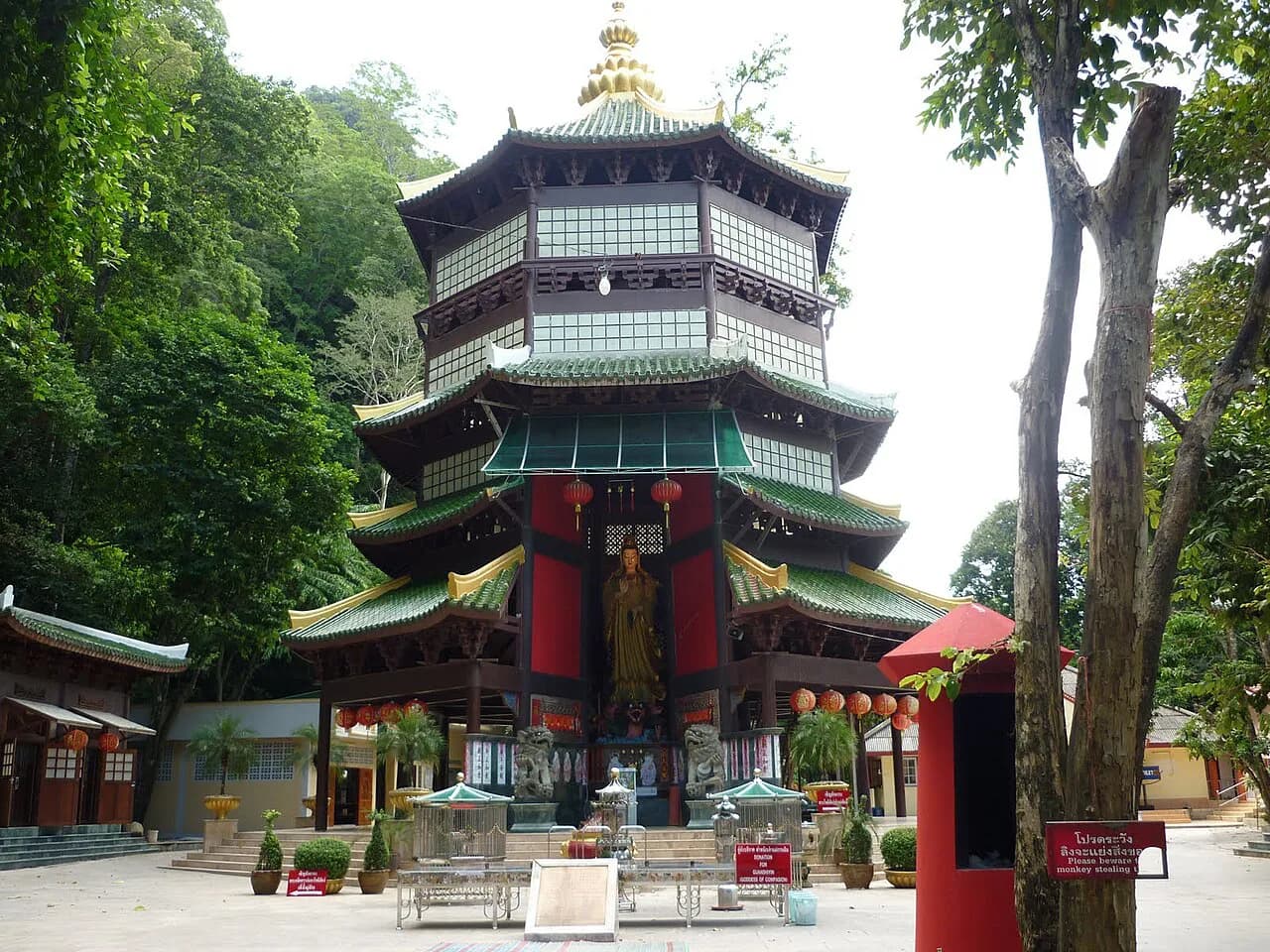
Despite the name, this is not an animal attraction and there are no tigers on display. The name comes from legends attached to the cave rather than from captive animals, so nobody should book expecting a tiger show. The temple is an active religious site where monks live and worship, and the cave shrines are the reason it exists.
The founding story, as one guide retells it, dates the temple to 1975, when a monk came to meditate in the cave and saw tigers moving around it. Other local versions involve paw prints on the cave walls or a rock formation shaped like a tiger paw. Pick whichever version you like, but the practical takeaway is that the cave, not the summit, is the temple's original core.
There is a naming trap worth flagging early: a different Wat Tham Suea stands in Kanchanaburi, west of Bangkok, and it has a giant seated Buddha that shows up in search results. Everything on this page refers to the Krabi temple, which has a small golden chedi at the top rather than a giant Buddha statue. If photos in a listing look nothing like a limestone cave under a karst hill, you may well be looking at the Kanchanaburi temple instead.
Where the Temple Sits
Wat Tham Sua is a few kilometers outside Krabi town, set against the karst hills rather than on the coast. The entrance is marked on Google Maps at roughly 8.124, 98.925, which is the pin to send a driver or check against your ride-hailing app before you set out. The surrounding land is forested temple ground, so the approach road feels rural even though town is a short drive away.
Getting There from Krabi Town by Red Songthaew
The cheapest way from Krabi town is the red songthaew, a converted pickup that runs as a local bus. One guide reports that they pick up on Utarakit Road along the river, in front of the River View Hotel, though you can also flag one in the street. The same source reports a fare of about 50 baht and a ride of roughly half an hour, so treat those figures as a recent report and confirm the price with the driver before boarding.
The return leg is the weak point. Songthaews are not set up as a reliable round trip at the temple, so many visitors end up paying for a tuk-tuk or taxi to get back. The same source prices a tuk-tuk or taxi at around 120 baht and describes a lift from the police box near the entrance for 150 baht for two people. Those are reported one-off figures rather than a rate card, so have cash and a backup plan instead of counting on a cheap truck to appear.
Getting There from Ao Nang, Railay and the Islands
From Ao Nang Beach, Krabi, the simplest approach is a taxi, a private car or a Grab ride straight to the entrance, which keeps the return under your control. One traveler's account describes haggling at Ao Nammao pier for a same-day transfer and recommends agreeing the price before you get in, whether you book at a walking-street agency or online. Tours that combine the temple with other stops are widely sold, and they solve the return-leg problem at the cost of a fixed schedule.
Boat-based bases add a step. If you are staying at Railay Beach, Krabi, or on Phi Phi or Koh Lanta, you first need to reach the mainland by boat, then transfer by road, which turns a half-day outing into most of a day. Travelers based on the islands often do better booking an organized tour that handles the boat and the van together rather than improvising both legs.
The 1,260-Step Staircase to the Summit
The summit staircase is the main event for most visitors, and the count is slightly confusing: signs reportedly read 1,237 steps, but the last step is numbered 1,260. Assume around 1,260 and stop counting. The climb is steep and exposed, and one frequent visitor reckons a reasonably fit person can reach the top in under an hour, sometimes well under, which is a fair planning benchmark rather than a promise.
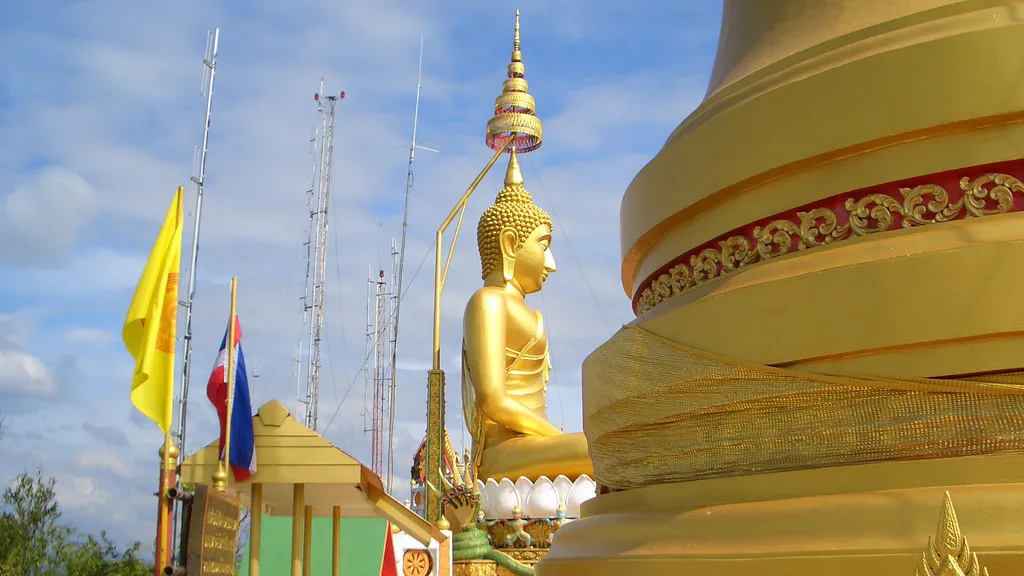
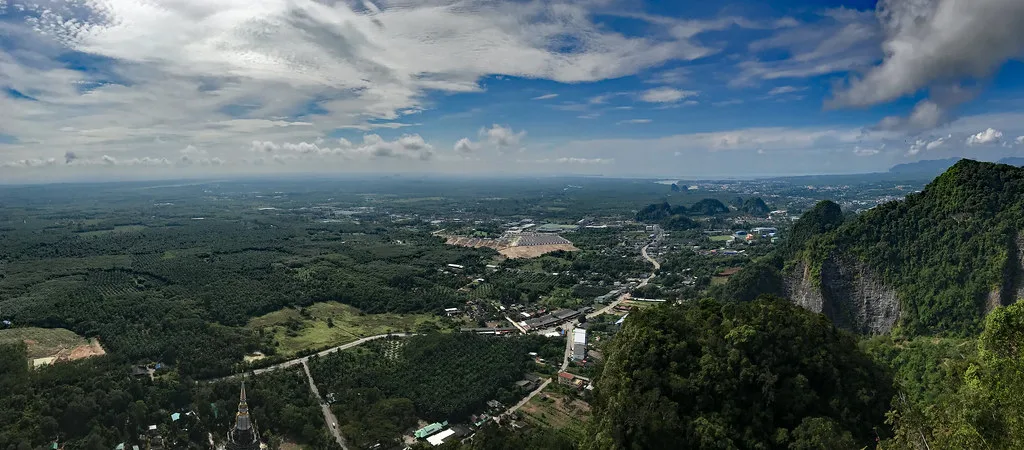
At the top you get a broad view over the surrounding plain plus a small golden chedi and a seated Buddha image. The view is the reward, not the architecture, so if you are not interested in the panorama, the climb is easy to skip. Anyone with knee trouble, heart or breathing conditions, or a fear of heights should treat the staircase as optional and enjoy the cave level instead.
Start the climb earlier in the day rather than at midday, and carry water, because the stairs are hot and shade is patchy. Monkeys live around the temple. One guide calls them non-aggressive, though that reflects a single visitor's experience more than a guarantee, so keep food and loose items out of reach.
The Cave Area and the Forest Walk
At ground level, the temple's cave shrines are the reason the site exists, and they are far easier to reach than the summit. A forested walking area known as Wonderland holds the caves, old trees and a sanctuary with a colorful Buddha, and one guide describes it as peaceful and quiet. If the staircase is beyond you, this is where to spend your time.
The famous tiger cave itself is a shallow shrine rather than a deep cavern, so do not picture a long underground trek. Combine the cave with a slow loop through the forest paths and allow for shade and quiet rather than a checklist of sights. The temple's Tripadvisor listing describes a maze of natural caves and shrines around resident monks, which fits the picture of short cave shrines rather than one long passage.
Entry Cost and Hours
A widely cited guide reports no admission fee for Wat Tham Sua, which makes it one of the cheaper stops in Krabi province. Treat that as a reported detail rather than a permanent policy, and confirm at the entrance before you build a budget around it. Your real spending is transport and water.
Published hours are inconsistent across third-party listings. A travel-app page currently shows the temple open from 8:00 AM to 5:00 PM, but that is a commercial listing rather than a temple notice, so check the gate times on arrival day instead of relying on a screenshot. Plan your summit climb with enough daylight left to descend comfortably.
How Much Time to Allow
For a summit-focused visit, budget around two hours on site: half an hour each way for the climb plus time at the top for the view. Add the cave walk and you are closer to three hours, which is still a comfortable half-day from Krabi town. If the climb is beyond you, the cave level alone can fill an hour.
Build in a buffer for the return leg, especially if you came by songthaew, because waiting for a ride back can eat 30 minutes or more. If you are on a fixed tour with a set itinerary, the temple portion is usually kept short, which is enough for the climb but not for lingering in the forest.
Pairing It with Nearby Krabi Sights
The classic combination is the temple plus the Sa Morakot Emerald Pool and the Hot Springs Waterfall on one loop, since all sit inland from Krabi town. One traveler argues that if you are going to the trouble of a day trip, you should see more than one inland stop rather than turning around after the climb. Do the temple first while it is cooler, then move on to the pools.
In town, a whitewashed hilltop temple and the local food market both pair easily with the temple as an evening follow-on, so pick one rather than stacking both into the same afternoon.
Is the Tiger Cave Temple Worth the Climb?
Yes, if you want the summit view and can handle roughly 1,260 steps on a hot day; skip it if stair climbs are not your idea of a good morning. The cave level alone justifies the trip from Krabi town for anyone who prefers shade and quiet to a panorama. Go early and arrange your return transport in advance to get the most out of a half-day inland.
If your Krabi time is short, put the temple on the same day as the Emerald Pool rather than squeezing it between beach days. And if you are still choosing where to base yourself on the coast, Ao Nang puts you closer to the temple road than Railay does, at the cost of the beach's boat-only feel.
Explore more Krabi guides
Frequently Asked Questions
Is Wat Tham Sua the same as the Tiger Cave Temple?
Yes. Wat Tham Sua is the romanized Thai name and Tiger Cave Temple is the common English name for the same site in Krabi province. Do not confuse it with the similarly named temple in Kanchanaburi, which has a large seated Buddha statue and sits west of Bangkok.
Are there tigers at Tiger Cave Temple Krabi?
No. The name comes from local legends about tigers seen around the cave or paw-like markings there, and the temple does not keep or display captive animals. It is an active Buddhist temple with monks resident on site.
Can you reach the top of Wat Tham Sua if you're not fit?
It is a steep, exposed staircase of about 1,260 steps, and there is no shortcut to the summit. Less-fit visitors can still enjoy the cave shrines and forest paths at ground level, which require no climbing. Start early in the day and carry water if you attempt the stairs.
How do you get back to Krabi town from the temple?
Red songthaews run out to the temple but do not reliably wait for return passengers, so many visitors arrange a taxi, tuk-tuk or private car for the trip back. Ask your driver to wait or agree a pickup time, and keep cash for the fare. Confirming your return plan before leaving town avoids a long wait at the gate.