
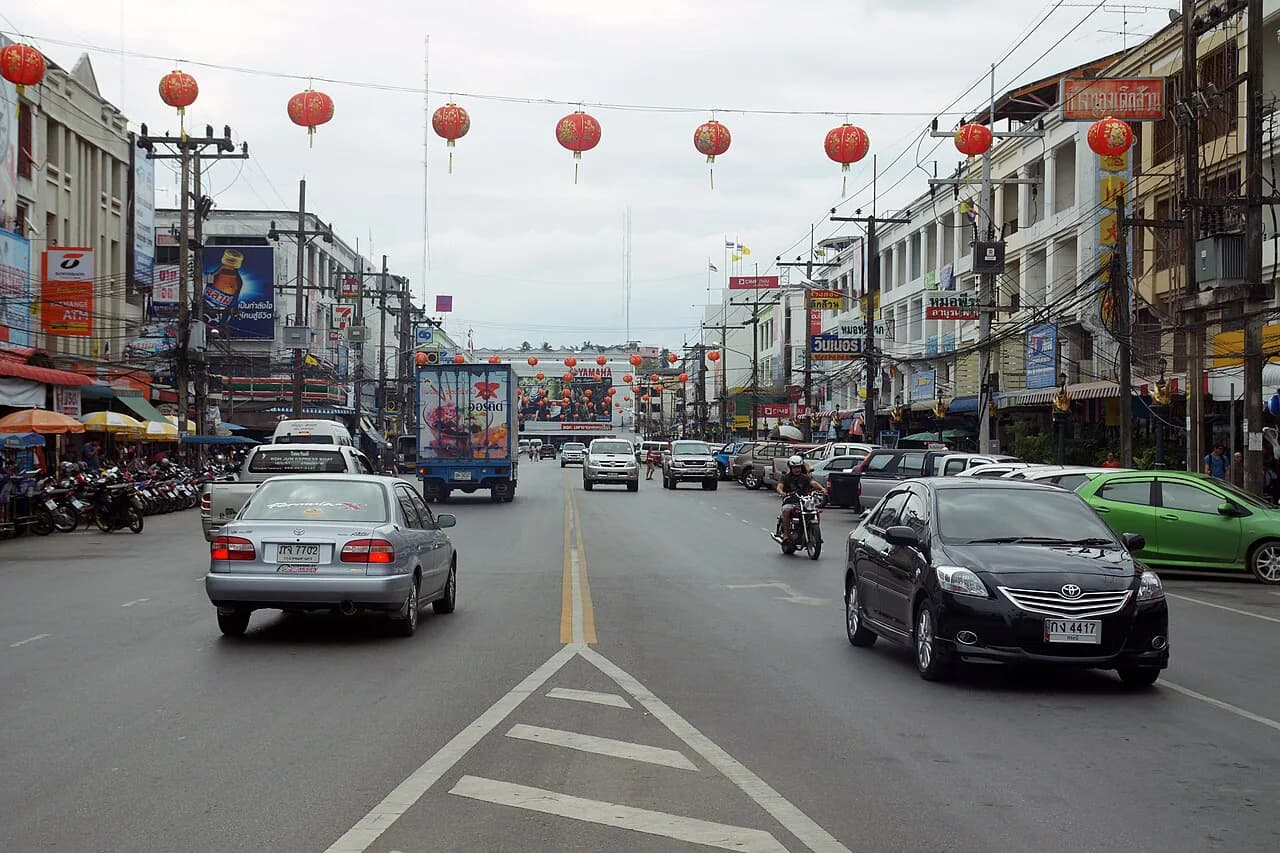
Krabi Town: What to See, Eat and Whether It's Worth Your Nights

Krabi Town is worth a night or two if you want a slower, more local base than the beach towns, but it is not a beach destination and will disappoint anyone who wants sand at the door. It works as a quieter base for the same island tours, with a compact center you can walk in an evening. This guide covers the district itself: what to see, where to eat and stay, how to arrive, and how it compares with Ao Nang and Railay.
What Krabi Town is and how it differs from Ao Nang and Railay
Krabi Town is the provincial capital and the everyday commercial center, so its streets are built around local life rather than tourism. Travelers describe it as far more slow-paced than Ao Nang, with fewer tourist shops and more locals going about their day. That is the appeal: a riverfront town with markets, temples and ordinary neighborhoods. For the wider context, see Krabi Neighborhoods: 5 Area Guides.
Ao Nang is the busy beach base with the nightlife and the boat-trip touts, while Railay is a boat-only peninsula reached by longtail from Ao Nang or Krabi Town. Krabi Town has no beach of its own, which is the trade-off you accept in exchange for calmer evenings. If beach time is the point of your trip, the coast is the better base — see Ao Nang: A Candid Guide to Krabi's Beach Base and Railay: A Practical Guide to Krabi's Boat-Only Peninsula.


Who Krabi Town suits, and who should base in Ao Nang instead
Choose Krabi Town if you value walkable street food, a riverside promenade at sunset and a bed that costs less than a beachfront room. It also suits travelers using Krabi as a transit point for islands or the airport, since you are already in the transport hub. Give it one or two nights and you will have seen the center properly.
Choose Ao Nang instead if you want to swim, bar-hop, or roll out of bed onto a longtail for the four-islands or Hong Islands trips. Its density of agencies makes comparing tour prices easy, and the nightlife runs late. Travelers who dislike noise should read recent reviews carefully, because the bar strip is loud.
A common compromise is to sleep in Krabi Town and day-trip to the coast, since songthaews connect the two throughout the day. That one-way ride runs about 40 minutes, so it works for a couple of beach days but not for a beach-focused week.


Getting there: Krabi airport, songthaews and walking the center
Krabi International Airport sits outside town and is the usual arrival point for flights from Bangkok and elsewhere in Thailand. From the airport you take a taxi or arrange a hotel transfer into the center; the ride is short, but confirm the fare with the desk before setting off rather than guessing.
For the coast, local songthaew buses run between Krabi Town and Ao Nang through the day, and one traveler account puts the trip at about 40 minutes each way. Fares change, so ask at your guesthouse or the stand what the current rate is instead of relying on an old figure. From Ao Nang, longtails continue to Railay.
Once in the center, you walk. Wat Kaew Korawaram, the night market area and the riverside promenade sit close enough that a loop on foot takes an evening rather than a taxi. Staying near the river or the market streets saves you repeated rides.
Wat Kaew Korawaram, the white temple in the middle of town
Wat Kaew Korawaram is the white temple at the top of a long staircase in the center of Krabi Town, with carved dragons, a golden Buddha and a blue interior. It is small, rarely crowded in the way the big-name temples are, and easy to fold into a morning walk. Because it sits in the middle of town, it is the one sight you can see without planning transport.
Go in the late afternoon if you want photographs, when the low light warms the white facade. As at any active temple, cover shoulders and knees and behave as you would in a place of worship; there is no ticket queue to manage. Twenty to thirty minutes is enough unless you linger.
The riverside promenade and longtail boats on the Krabi river
The riverside promenade is where Krabi Town is at its best in the evening, when locals come out to walk and the light drops over the water. It is a stroll, not an attraction with an entrance, so budget an hour with a drink rather than a half-day. This is the part of town that wins over travelers who expected nothing from the capital.
Longtail boats run along the Krabi river and into the mangrove channels, and you can hire one for a couple of hours from the waterfront. Rates are negotiated per boat, so agree the route, the duration and the total before you step aboard. Mangrove trips are best in the morning, when the heat is lower.
Krabi walking street and the town's other markets
Krabi's weekend walking street market takes over the center in the evening, with Thai barbecue, mango sticky rice, handicrafts and small outdoor music sets. One source says it runs Friday, Saturday and Sunday from about 5 PM, and that Saturday is the biggest night when the smaller markets merge into one large sprawl. Check locally on the day, since holiday weeks can shift things.
Outside the weekend, the town still eats well. Maharaj Market in the morning covers fruit, snacks and local dishes; Chao Fah Night Market is the riverside option for evening meals and seafood; and the Maharat Plaza food court is reliable for cheap plates. Together they mean you never need a tourist restaurant strip.
Prices at these markets are low and often posted at the stall, so a full dinner costs a fraction of a beach-town bill. Bring small notes and expect some stalls to close once the food runs out rather than at a fixed hour.
Tiger Cave Temple (Wat Tham Sua) as a half-day from town
Wat Tham Sua, the Tiger Cave Temple, combines a ground-level temple with a hilltop shrine reached by a long, steep staircase that sources put at roughly 1,200-plus steps, with counts differing slightly between guides. The climb is genuinely hard in the heat and can take about an hour for a moderately fit visitor with breaks. The view from the top is the reward, and it is the one Krabi Town sight worth building a morning around.
Start early, before the sun is high, or go late in the afternoon and carry a light for the descent. Monkeys around the lower levels are bold, so keep bags zipped and food out of sight. Entry arrangements and any donation expectations are set on site, so confirm at the gate rather than trusting a blog figure.
Kayaking Klong Root from Krabi Town
Klong Root, the mangrove canal nicknamed the Jurassic Park lagoon after film crews shot there, is one of the closest nature outings to town. The channels are genuinely easy to get lost in, so a guided kayak trip is worth the extra cost over a bare rental, especially on a first visit.
Tours bundle transport, kayak and guide, but inclusions vary by operator. Ask what is covered before paying, and bring a dry bag for your phone, since the canal is water at close quarters. If you have a scooter you can reach the launch point yourself, but you will still want a local guide on the water.
Where to eat and stay in Krabi Town
Eating in Krabi Town is mostly market and street food: the walking street stalls, Maharaj Market in the morning and Chao Fah by the river at night. Seafood is a strong choice given the coastal location, and vegetarian options exist across the stalls, though you should ask about fish sauce before ordering.
For sleeping, Krabi Town favors guesthouses, hostels and small hotels over resorts. Leisure Hostel appears in one area comparison as a town pick, and the general pattern is simple rooms near the market and river rather than beachfront rates. Book a place within walking distance of the center, since the appeal here is not needing transport.
If you would rather have a pool and a quieter beach strip within reach, compare the coast before committing to a town stay.
How long Krabi Town needs, and whether to add it to an Ao Nang base
Two nights is enough to cover the temple, the promenade, a market evening and the Tiger Cave climb at a comfortable pace. One night only works if you skip the climb or the mangroves. If you are using town purely as a transit stop for the islands, a single evening at the walking street will show you its character.
If you are already booked in Ao Nang, Krabi Town makes a good half-day or evening add-on: songthaew in, temple and promenade, market dinner, songthaew back. That gives you the town's food and atmosphere without giving up the beach. Travelers with only three nights in Krabi should pick one base and stay put.
Should Krabi Town get one of your nights?
Give Krabi Town a night or two if you want markets, a walkable center and a genuine Thai provincial feel without giving up access to the islands. Skip it if a beach outside your door is non-negotiable, and book Ao Nang instead. Either way, the town is close enough to visit from the coast, so you are not choosing between them entirely.
Explore more Krabi guides
Frequently Asked Questions
Is Krabi Town worth going to?
Yes, for a short stay. It has a white temple at the top of a long staircase, a riverside promenade and a weekend walking street market, all within walking distance of each other, and it is calmer than Ao Nang. It lacks a beach, so it works as a base for tours and food rather than for swimming.
Is it better to stay in Ao Nang or Krabi Town?
Stay in Ao Nang if you want the beach, nightlife and easy boat departures. Stay in Krabi Town if you prefer markets, street food and a quieter base, and are happy to take the songthaew to the coast. The two are connected through the day, so Krabi Town also works as a base for the same day tours.
What is Krabi famous for?
Krabi is known for limestone karsts rising from the sea, island-hopping by longtail boat, and beaches such as Railay. Inland, its reputation rests on temples like Wat Kaew Korawaram and Wat Tham Sua, plus markets and mangrove waterways around the provincial capital.
How many steps are there at Tiger Cave Temple?
Guides give slightly different counts, so treat it as roughly 1,200-plus. Plan about an hour up with breaks in the heat, and go early or late in the day.