
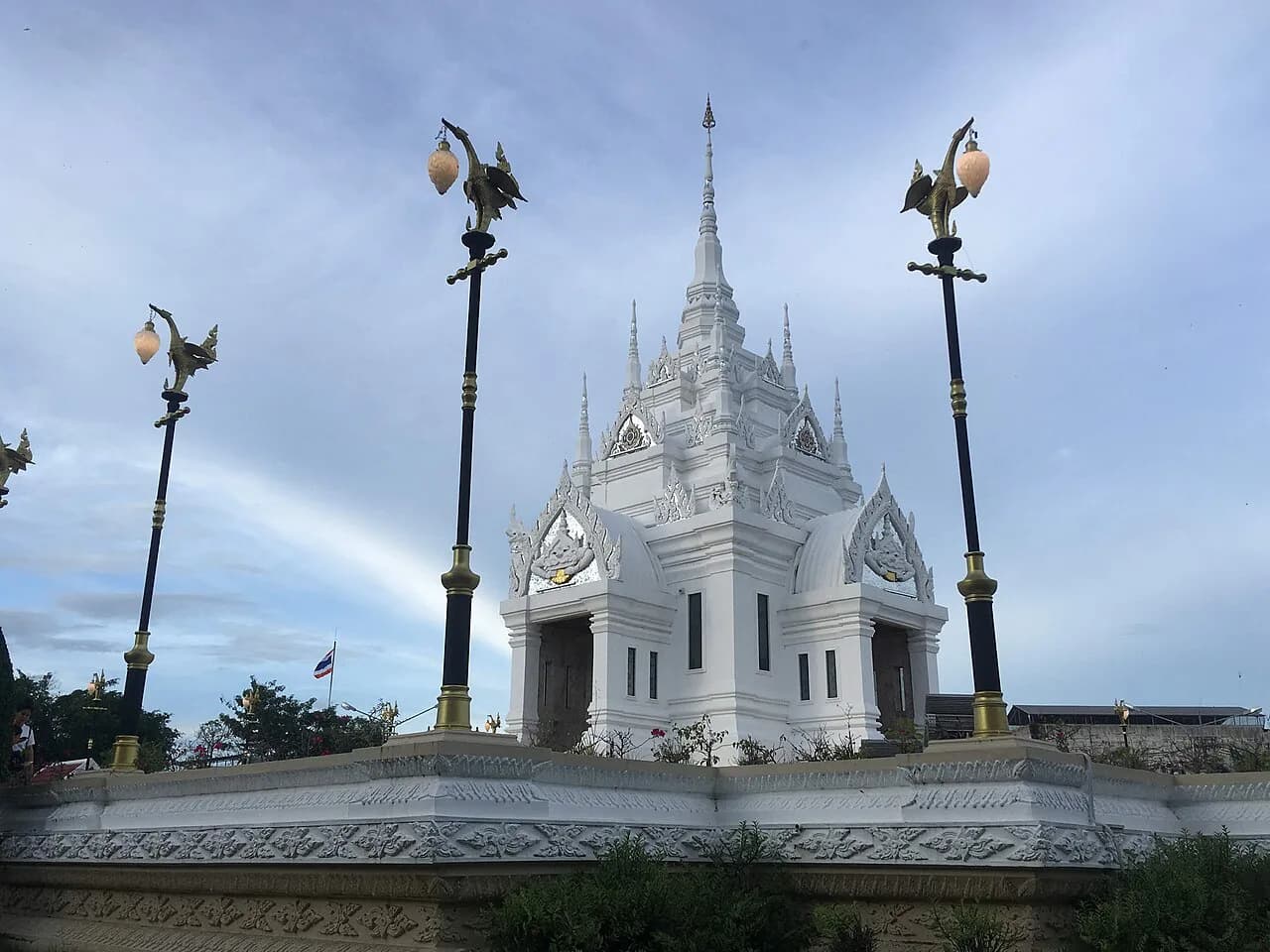
Surat Thani City Pillar Shrine: What to See and How Long to Stay

The Surat Thani City Pillar Shrine is worth about 30 to 45 minutes, and it belongs inside a city-center walk rather than at the end of a dedicated detour. Travelers who arrive expecting a sprawling temple complex will be disappointed; those who treat it as the civic and spiritual anchor of downtown Surat Thani will find it a quiet, well-kept stop. This guide covers what the shrine is, where it sits near the old town and the Tapi River, how to reach it, what you actually see, and how to pair it with other stops.
Two names show up on signs and in local speech: San Lak Muang and Chao Pho Lak Muang. Both refer to the same guardian-spirit shrine, so if a driver or map listing uses one and not the other, you are still heading to the right place.
What the City Pillar Shrine Actually Is
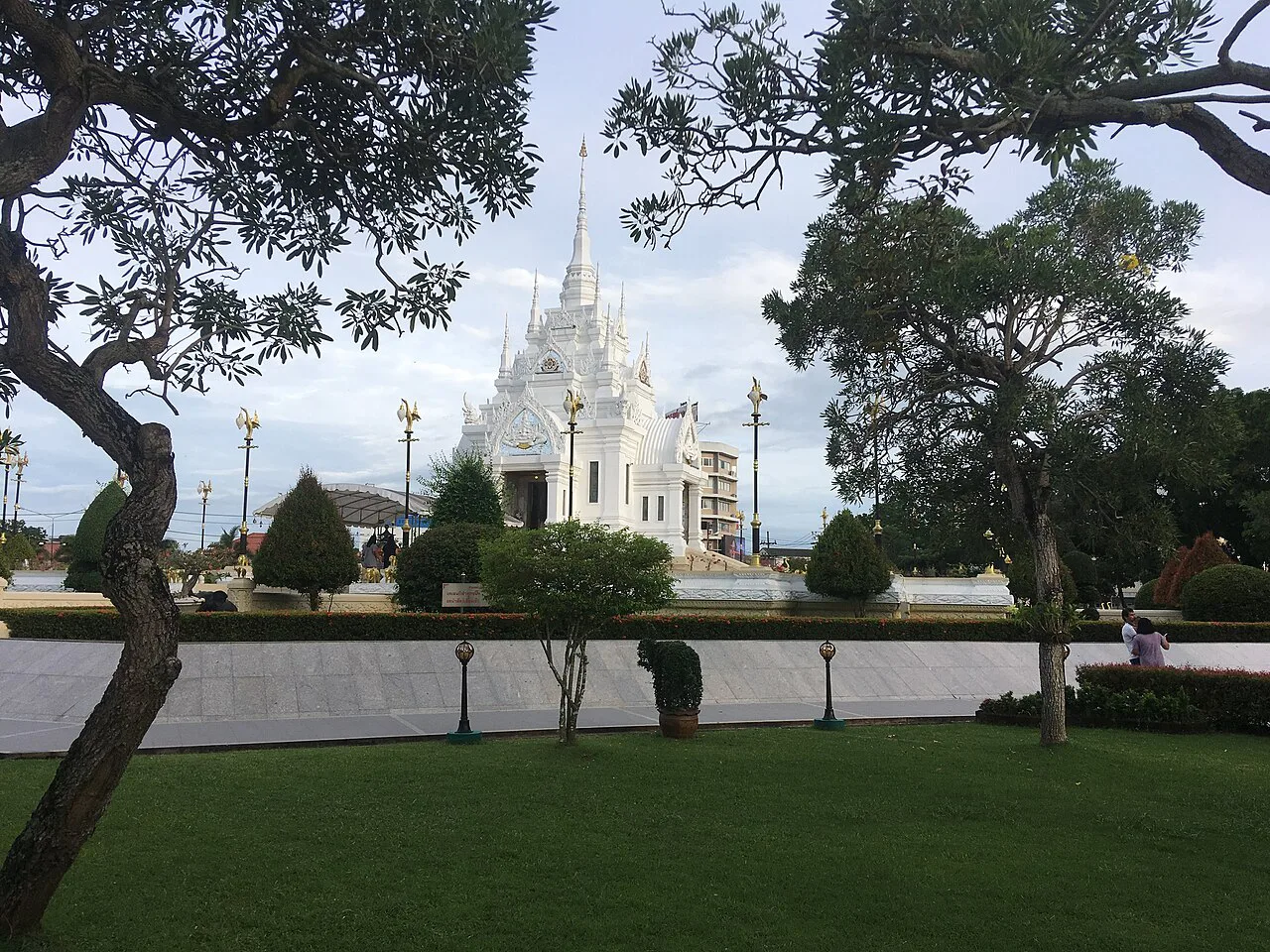
A city pillar shrine marks the guardian spirit of a town, and the ritual of raising the pillar before the settlement was established belongs to Brahman tradition, with prosperity for the city as the stated purpose. That context explains why the site reads as a sacred civic monument rather than a monastery: there is no cloister, no monks' quarters, and no long gallery of Buddhas to walk.
Treat it as one of the few central landmarks that still gives the town a clear sacred reference point close to the old-town and market layer. A secondary travel guide summarizes the shrine as an official Tourism Authority of Thailand attraction, which points to a recognized civic site rather than decorative filler, though that listing itself was not available to confirm here.
The practical consequence is simple: you are visiting a shrine, not a temple complex. Come for the pillar, the guardian figures, the grounds, and a few minutes of watching how locals use the space, then move on to the next stop on your Surat Thani sightseeing loop.
Where It Sits in Central Surat Thani
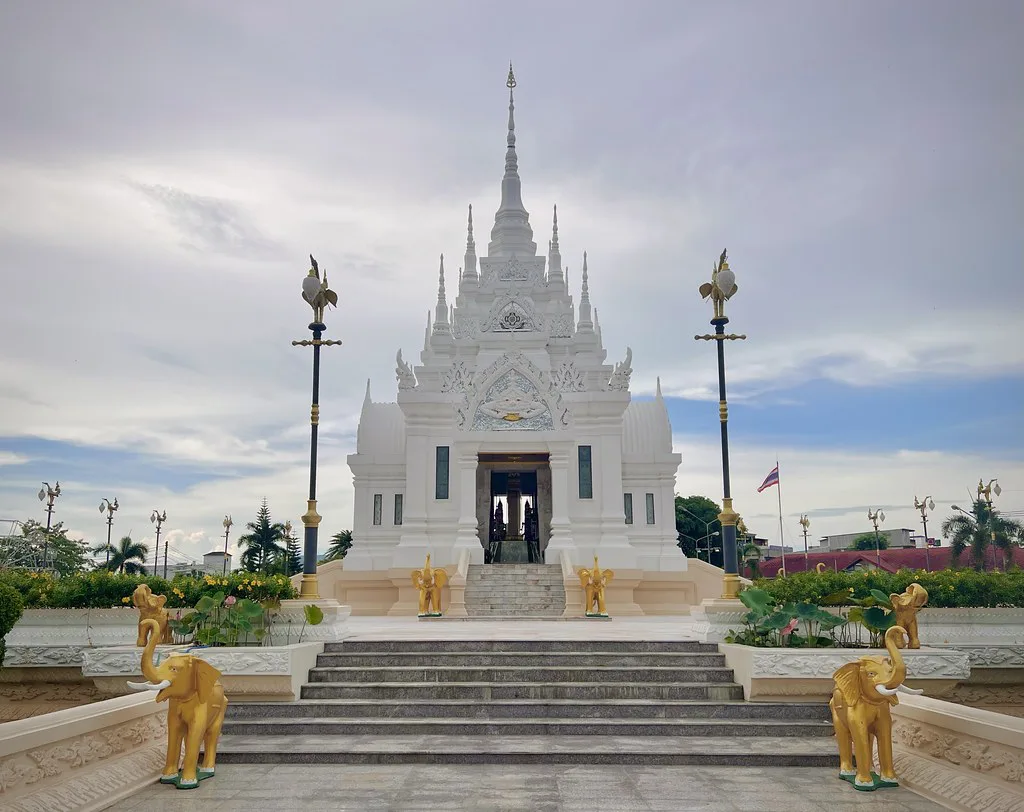
The shrine is in Mueang District, in the heart of the city, within the compact old-town and market layer. It also sits near the Tapi River, which one local account describes as the birthplace of the city, so the setting ties the shrine to the river rather than to a suburban temple plot.
Because it is a downtown landmark, you do not need a dedicated transfer to reach it. Build it into a walk that already includes the old town and market streets, and the shrine becomes a brief pause within that route rather than a separate outing.
How to Get There From the Train Station and City Center
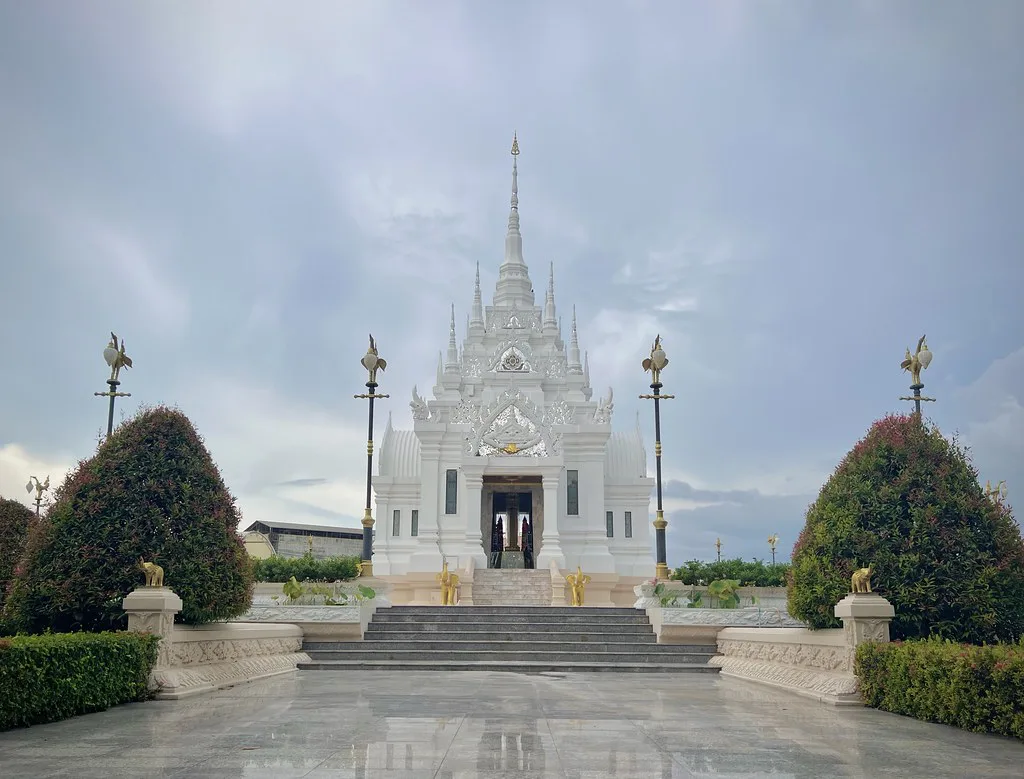
From the train station or your hotel in the city center, the practical options are a songthaew, a tuk-tuk, or a Grab car. Ask for San Lak Muang rather than an English name, and confirm the drop-off point by pointing at the shrine on your map, since the entrance sits on the street side of the grounds.
Distances in central Surat Thani are short, so if you are already in the old-town area on foot, walking is the simplest approach and avoids negotiating a fare for a two-minute ride. Riders should expect city traffic around the market streets at peak hours, so add a buffer if you are heading onward to a bus or ferry later the same day.
What to See Inside the Grounds
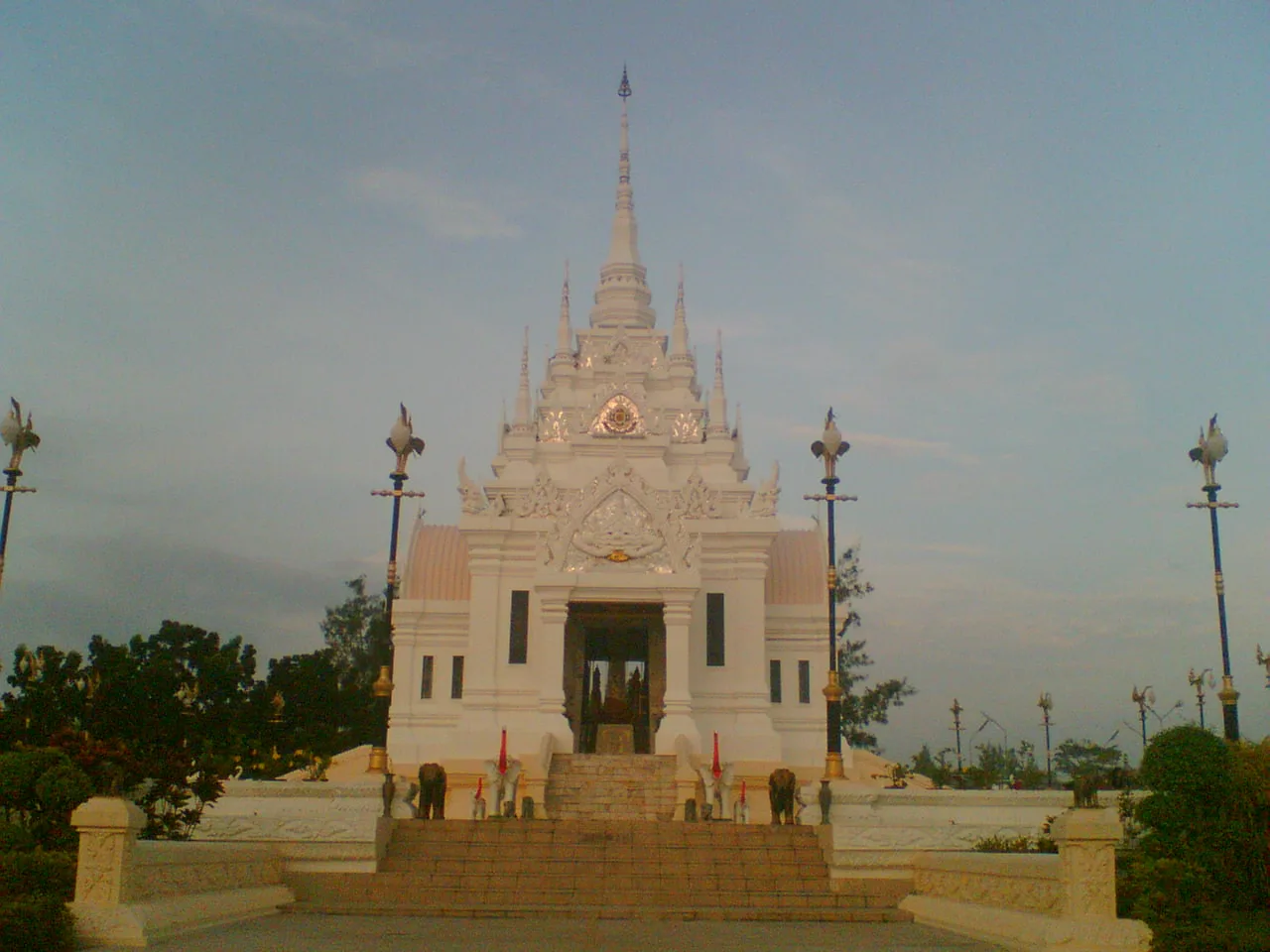
The centerpiece is the pillar itself, housed in an ornate structure that one popular description says is made entirely from the wood of the Golden Shower Tree. That claim is worth treating as a travel description rather than a verified construction record, but it points to the warm timber finish you will notice. Around it stand guardian figures and carved detail that reward a slow lap rather than a snapshot from the gate.
The grounds are landscaped with gardens and greenery, which is why the site reads as calm despite its central location. Flowers and incense sticks are sold at the entrance for those who want to make an offering, and locals come to pray for prosperity, success, and protection, so keep your voice low and give people space at the altar.
At night the shrine is lit and takes on a very different character from its daytime appearance, which is why so many photos of the site are taken after dark. If your schedule allows only one visit, late afternoon into early evening gives you the daylight detail and the lighting in a single stop.

How Long to Allow and When to Go
Budget 30 to 45 minutes, which is enough to see the pillar, walk the grounds, and sit for a few minutes without hurrying. A detailed visit with reading and photography might stretch a little longer, but there is no gallery or interpretive center that would justify an hour or more.
Late morning or late afternoon is the most comfortable window, since central streets offer little shade and the midday heat builds quickly. Arriving in the late afternoon also sets you up for the evening lighting if you linger past sunset.
Hours and Admission: What to Confirm
Sources list opening hours of roughly 7:00 a.m. to 7:00 p.m., and Trip.com's live status for the shrine shows the same window. Hours at Thai civic shrines can shift around holidays and ceremonies, so check the listing again on the day you plan to go rather than planning a visit around a fixed closing time.
One visitor review notes no fee to enter and plenty of street parking nearby, but this is not an official tariff, so do not treat free entry as guaranteed. Bring small notes in case offerings or donations are expected, and confirm any charge on site.

What to Pair With the Shrine
The obvious pairing is the surrounding old-town and market streets, which sit in the same compact downtown layer as the shrine. Walk the market for food and everyday city life, then return to the shrine for the evening lighting, and you have used an afternoon well without a single long transfer.
If you have a vehicle or a hired driver for the day, extend the loop to Wat Suan Mokkh, the forest monastery south of the city known for its plain, contemplative layout. It is a different kind of sacred site from a guardian pillar, which makes the contrast useful rather than repetitive, but it needs its own travel time.
Travelers heading north toward Chaiya can add Wat Phra Borommathat Chaiya, whose central stupa is the classic monument of the Srivijaya kingdom in this part of the peninsula. The carving and proportions there give context to the smaller, more civic shrine in the city.

Who Should Skip It
Skip the shrine if you have one day in Surat Thani and want a headline sight, or if you are squeezing it in between a train arrival and a ferry departure. It is a short, meaningful stop that adds cultural structure to a city walk, but it does not pretend to be a half-day destination, and a rushed visit does nothing for you or for the people praying there.
Travelers staying near the piers and using Surat Thani purely as a transit point gain little from a detour into town for the shrine alone. If a temple detour fits your route, Wat Khao Suwan Pradit hilltop temple in Don Sak is closer to the ferry corridor and answers a different question.
Should the City Pillar Shrine Be on Your Surat Thani List?
Yes, if you are already spending time in central Surat Thani: the shrine costs you roughly half an hour, anchors the old-town and market walk, and gives the city a sacred reference point that the surrounding streets otherwise lack. Combine it with the market and the riverfront, and aim for late afternoon so the lighting finishes the visit.
No, if it would be your only stop in town. Treat it as a compact, respectful pause inside a longer city day, confirm the posted hours on the day, and put the rest of your time toward the temples and river landscapes that need more of it.
Explore more Surat Thani guides
Frequently Asked Questions
Is the Surat Thani City Pillar Shrine free to enter?
Visitor reports describe no entry fee and free street parking, but no official tariff is published, so treat free entry as likely rather than certain. Offerings such as flowers and incense are sold at the entrance, and any donation is at your discretion. Confirm on arrival.
Can you visit the shrine in the evening?
Listings show the shrine open until around 7:00 p.m., and the site is lit after dark, which is when many visitors photograph it. Hours can change around civic ceremonies and holidays, so check the current listing on the day you plan to go before making the trip into the center.