
Wat Phra Borommathat Chaiya: What to See at Surat Thani's Srivijaya Temple

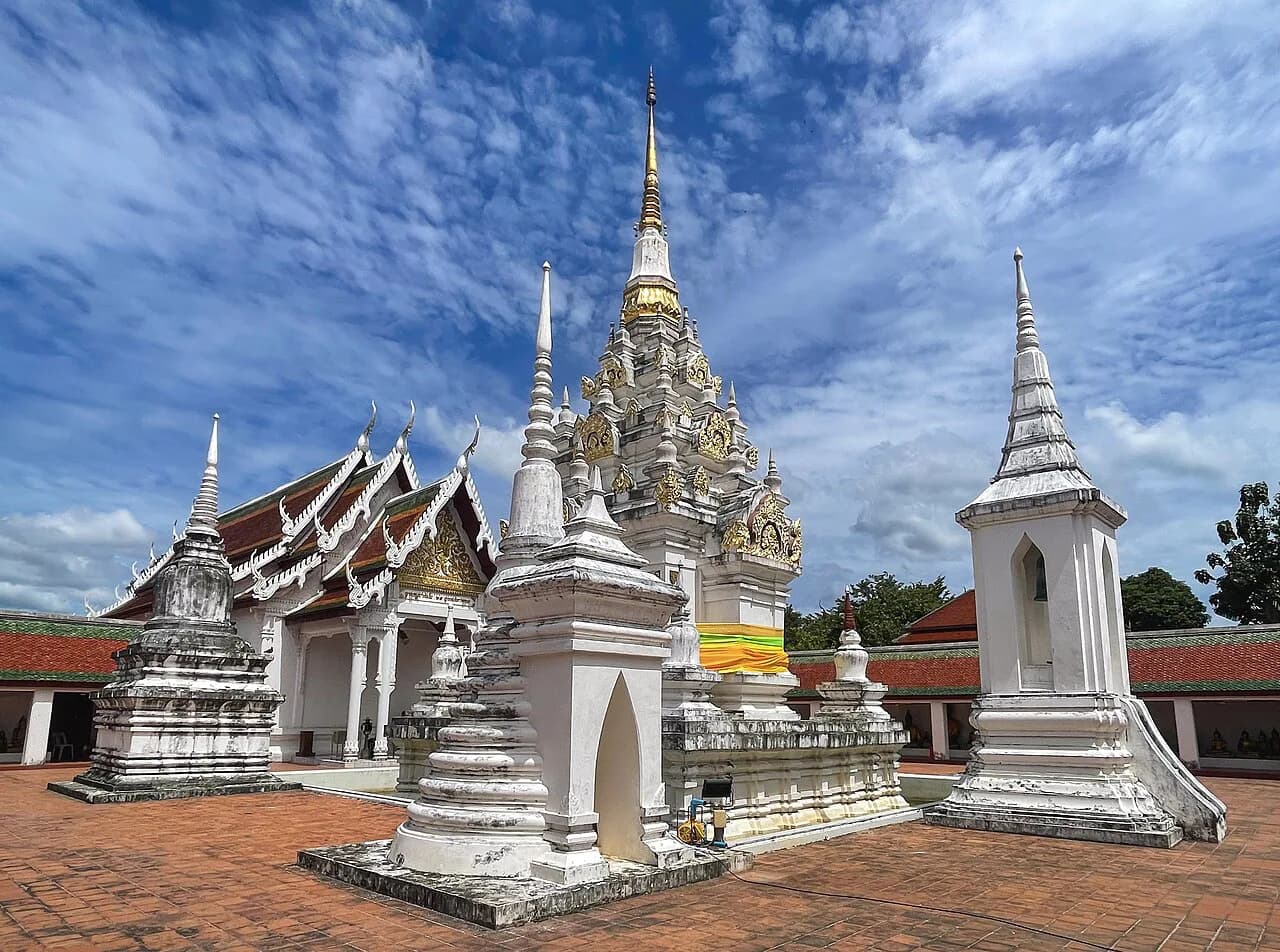
Wat Phra Borommathat Chaiya is worth a deliberate stop if you care about Southeast Asian history before the Thai kingdoms: its central chedi is described as the most elaborate surviving example of Srivijaya influence in Thailand. Budget about an hour for the chedi and cloisters, and closer to two if you add the Chaiya National Museum next door. This guide covers where the temple sits in Chaiya town, how the site is laid out, the specific objects worth hunting for, and how it fits a route south through Surat Thani toward the Gulf islands.
What Wat Phra Borommathat Chaiya is and why it matters
The temple is a first-class royal temple in Chaiya, in Thailand's Surat Thani Province. Its reputation rests on the central monument, which the Tourism Authority of Thailand describes as an ancient pagoda built in the Mahayana Buddhist style during the height of the Si Wichai empire, the Thai rendering of Srivijaya. Travel accounts go further and call it the most elaborate Srivijaya monument still standing in Thailand, a claim that tells you how rare the structure is rather than how large the site is.
Srivijaya was a seaborne Buddhist empire centered on Sumatra that shaped much of Southeast Asia, and Chaiya is thought to have been an important regional center of that kingdom. One photographer's account links the temple's founding to roughly the eighth century and dates the brick-and-mortar chedi to about 1,200 years ago. Treat those dates as the estimates sources give rather than fixed facts, and read the building as a layered object: an original Srivijayan core, restorations in the early 20th century, and Thai artistic elements added along the way.
Where the temple sits in Chaiya and how it fits your route
Chaiya is a district town in Surat Thani Province, north of Surat Thani city along the road and rail line that runs down the Gulf side of the peninsula. That position makes the temple a natural pause if you are moving between the Surat Thani area and the Gulf islands rather than a destination you build a whole day around. If you are basing yourself in the provincial capital first, Surat Thani sightseeing covers the city's own shrines and temples before you head north.
The temple's own academic and tourism write-ups treat it as the anchor of a wider cultural circuit: one study of pilgrimage routes lists it alongside Wat Kaew, Wat Long, Wat Wiang, Wat Suan Mokkh and several other Chaiya-area temples, packaged as half-day, one-day and two-day programs. You do not need a formal route to benefit from that logic. Pairing the chedi with one or two nearby temples gives the detour more weight than a quick photo stop.
How to get there from Surat Thani and the southbound road
Chaiya has its own rail stop on the southern line, and the town is also reached by road from Surat Thani city, which makes the temple feasible by train, by bus or with your own or hired wheels. This page does not publish timetables, fares or journey times because they change by operator and season. Check the State Railway of Thailand site for train times to Chaiya and confirm bus departures locally or at the Surat Thani station when you arrive.
From the Chaiya stop or town center, the last stretch is short enough that a local taxi, a motorbike taxi or a ride-hailing car will do; agree the fare before you set off, since drivers in a district town may not use a meter. If you are driving yourself, the temple is the obvious landmark in town and easy to find once you reach Chaiya. Plan the visit as a half-day from Surat Thani city rather than a quick errand, because the road time is the bulk of the trip.
What to see at the chedi itself
The chedi is the reason to come, and it rewards slow looking. It rises from a square base through five patterned tiers, with shelves, niches and points leading to a lotus top and a slender spire, and Buddhist relics are said to be enshrined inside. Some visitors note a resemblance to Japanese temple architecture, a useful comparison for reading the shape even if the historical link is Srivijayan rather than Japanese.
Restoration is a real possibility rather than a hypothetical. One visitor found a section of the chedi covered in scaffolding, and the building has been restored twice in the early 20th century with Thai elements added while the original shape was largely kept. Expect partial views if work is underway, and check the Tourism Authority of Thailand listing before a long detour if a clear view of the spire is the point of your trip.
The cloisters and the Buddha images around the chedi
Ceramic-roofed cloisters run around the chedi on all four sides, and they are packed with Buddha images of varying shapes and sizes. Walk the full circuit rather than stopping at the first gallery: the density is the experience, and a single lap takes only minutes but shows you how the site was meant to be circled. Photography is common here, but rules can vary at active royal temples, so watch for posted signs and follow what monks or staff ask.
Outside the cloisters, near a Bodhi tree, three sandstone Ayutthaya-era Buddha images sit side by side in the Subduing Mara posture, fully exposed to the elements. Local lore holds that the images prefer to be outdoors, a story tied to a lightning strike on a building where they were once housed. This trio is easy to miss if you only look at the chedi, so make a point of finding it before you leave.
The Chaiya National Museum next door
The Chaiya National Museum is a separate stop with its own collection of statues found in the area, including an Avalokitesvara head roughly 1,300 years old kept in the front room and images of the Hindu deities Ganesha and Vishnu. It is described as small but interesting, which is the right expectation: this is a focused collection, not a full regional museum. Adding it roughly doubles your time on site, so decide before you arrive whether you want the quick temple visit or the fuller one.
Museum opening days, ticket prices and photography rules are not published in the sources used here, and they can change with the season and with staffing. Confirm them with the museum directly or through the provincial tourism office before you build your day around it. If the museum turns out to be closed, the temple alone still justifies the trip, which makes it a low-risk addition rather than the centerpiece.

How much time to allow
For the chedi, the four cloisters and the outdoor Buddha trio, plan on about an hour at an unhurried pace; the site is compact and you will not be walking long distances. Add the Chaiya National Museum and budget roughly two hours in Chaiya, then add the road or rail time from Surat Thani on top of that. Heat is the main constraint on how long you linger, so an early start is more comfortable than midday.
If your only goal is a photo of the chedi, 30 minutes will do, but you will skip the galleries that make the site distinctive. Half a day from Surat Thani city is the realistic frame once travel is included, and a full day only makes sense if you are also visiting other Chaiya-area temples. Read the site as a pilgrimage stop rather than a museum, and the shorter visit feels less rushed.
When to go and what to expect on site
This is an active royal temple, so expect worshippers alongside visitors and dress and behave accordingly even though the site is relaxed about tourists. The chedi stands in the open, and the cloisters offer shade around the circuit, so you can alternate sun and shelter rather than committing to a long exposed walk. Restoration work is the main variable that can change what you see, and it is not announced in advance in any source here.
Rather than promise a pristine monument, assume part of the chedi may be covered and plan your photos around the tiers and the cloisters instead. The academic work on pilgrimage routes in the area confirms the temple's role as a working religious site with community-guided activity, which is a fair signal that access can shift with religious events. Ask locally or check the Tourism Authority of Thailand page close to your date if the chedi's appearance matters to you.
Nearby stops worth pairing with the temple
The most natural pairing in the same district is Wat Suan Mokkh, the garden monastery associated with the monk Buddhadasa, which appears on the same pilgrimage-route lists as Wat Phra Borommathat Chaiya. It is a different kind of visit, quieter and more contemplative, and it balances the architectural focus of the chedi. Wat Suan Mokkh, Surat Thani is close enough to combine in a single loop from Chaiya.
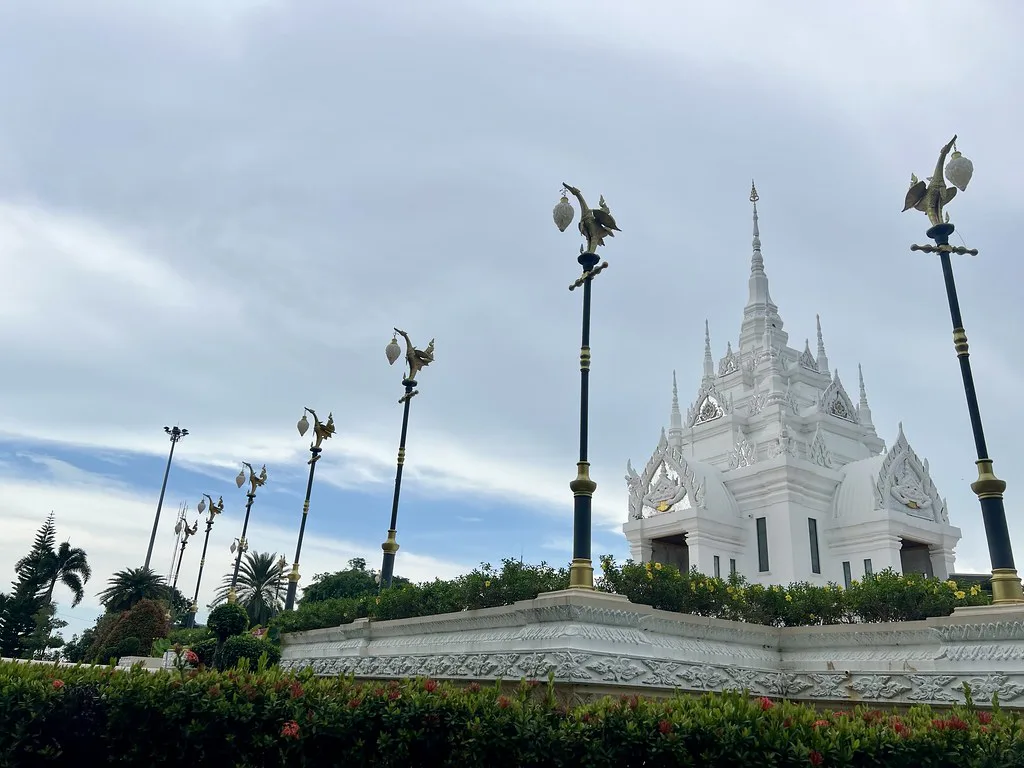
If you are coming from or returning to Surat Thani city, the Surat Thani City Pillar Shrine in the provincial capital makes an easy bookend, and the city has plenty of eating options to round out the day before or after the drive. Travelers heading onward to the Gulf islands often pass through this corridor, so the temple fits a transfer day better than a dedicated excursion. Choose the pairing that matches your direction of travel rather than trying to see everything in one push.
Is the Chaiya detour worth it?
Yes, if you want to see the oldest major religious monument on this stretch of the Gulf coast and you are already moving between Surat Thani and the islands. No, if you are short on time and heading straight for a ferry, because the road time from Surat Thani city eats the margin. The one-hour temple visit plus the optional museum is a genuine half-day, not a roadside pause.
Before you go, confirm the museum's opening arrangements and check whether restoration work is visible at the chedi, then let those answers set your time budget. Everything else at the site can be appreciated on foot in an hour or so, with the chedi, the cloisters and the outdoor Buddha trio as your three fixed stops.
Explore more Surat Thani guides
Sources
- Wat Phra Borommathat Chaiya - Marla Keown Photography
- DEVELOPMENT OF PILGRIMAGE ROUTES TO PROMOTE CULTURAL TOURISM AT WAT PHRA BOROMMATHAT CHAIYA RATCHAWORAWIHAN, SURAT THANI PROVINCE | Journal of Buddhist Anthropology
- Wat Phra Borommathat Chaiya
- Wat Phra Boromathat Chaiya
- Wat Phra Borommathat Chaiya Ratchaworawihan