
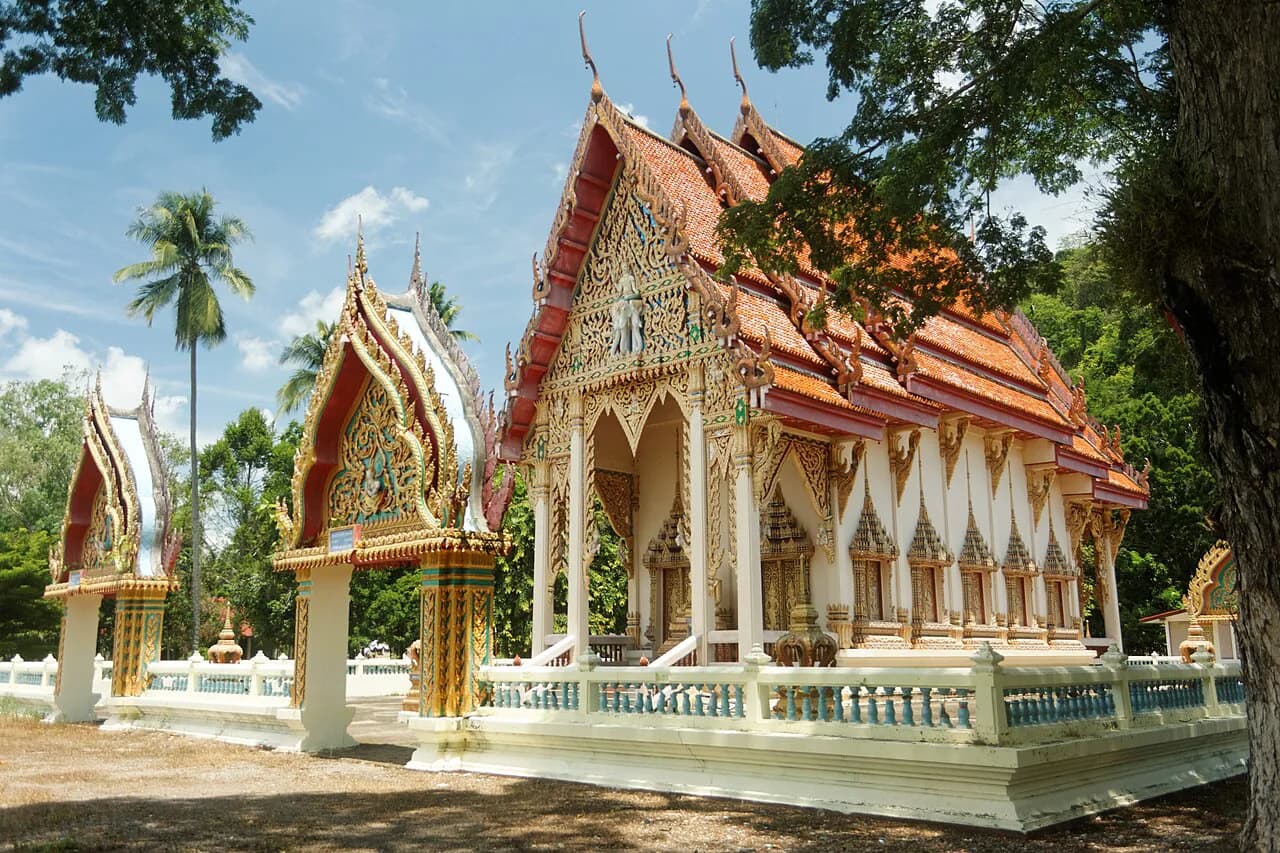
Wat Tham Khuha: A Practical Guide to Surat Thani's Cave Temple

Treat Wat Tham Khuha as a 30-to-60-minute stop built around a limestone cave, not as a destination that justifies a whole day on its own. It is a Wat Tham, a temple arranged around a natural cavern in Surat Thani province, and it is most practical for travelers who already have wheels or a hired driver. This guide covers where it sits, how to get there, what the cave chambers and grounds usually contain, how much time to allow, and how to avoid booking the wrong cave temple of a similar name.
What Wat Tham Khuha is, and why the name confuses people
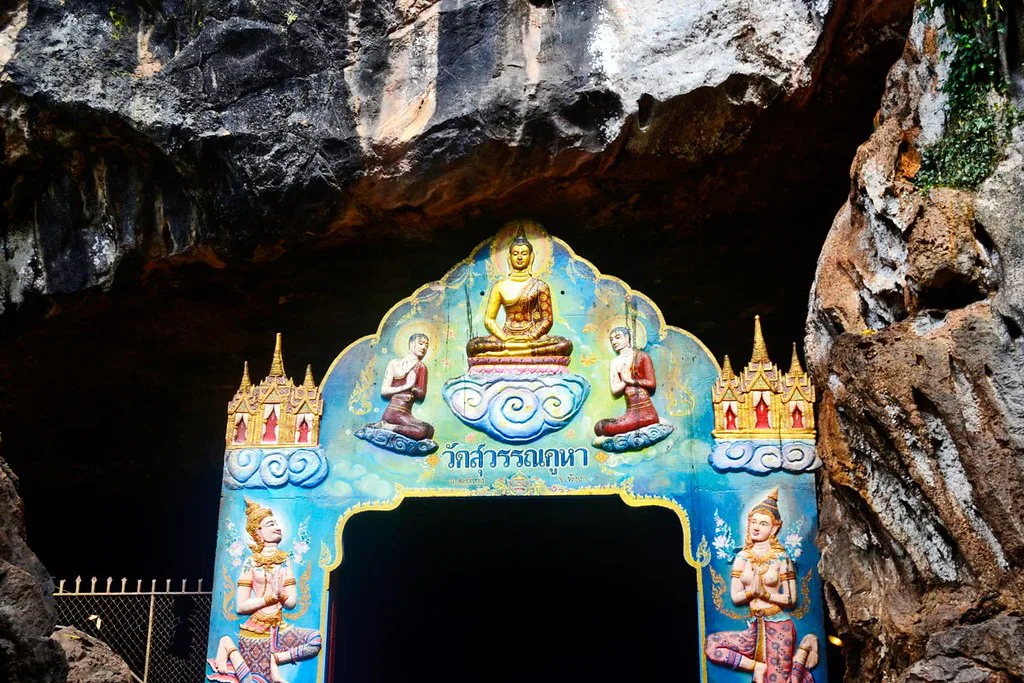
A Wat Tham is simply a temple built into or around a cave, so the word tells you about the setting rather than the fame of the site. Wat Tham Khuha in Surat Thani is a local temple of that type: expect a cavern used for worship, Buddha images and a surrounding compound rather than a ticketed heritage attraction. It is not a museum with curatorial signage, and it does not have the visitor infrastructure of a major provincial temple.
Thailand has several cave temples whose romanized names look nearly identical on a booking screen, and that is where most trip-planning errors happen. Wat Tham Khuha Sawan in Khong Chiam, Ubon Ratchathani province — written วัดถ้ำคูหาสวรรค์ in Thai, not วัดถ้ำคูหา — is a separate cliffside monastery above the Mekong, described by travel writers as having a monumental gong installed in 2016, a stupa, and cave chambers holding Buddha images, plus a viewpoint over the river toward Laos. Wat Suwan Khuha in Phang Nga's Takua Thung district is yet another separate cave temple, built into a limestone cliff and best known for its 15-meter golden reclining Buddha; it is a standard stop on Phang Nga Bay day trips.
None of those features belong to the Surat Thani temple, so do not plan around them. If a listing shows a giant gong, a Mekong cliff view or a fifteen-metre reclining Buddha, you are looking at Ubon Ratchathani or Phang Nga instead. Match the province and district in the address before you commit to a driver or a tour.

Where it sits and how to get there
The temple lies in Surat Thani province, away from the compact downtown core where the night market and riverside promenade sit, so treat the transfer as a separate outing. The realistic options are a private car or hired driver, your own motorbike, a Grab ride, or a local songthaew if one runs that way. A private car gives you the most control because cave temples often sit off the main road, and a driver can wait while you look around.
Do not bank on a published transfer time, because none is documented for this temple and provincial roads vary with traffic and your exact starting point. Ask your hotel or driver how long the run takes from central Surat Thani on the day, and build in slack if you are connecting to a ferry or a flight. Grab availability thins out in provincial areas, so a return trip is easier if the driver waits or you keep a local car-service number.
If you rely on songthaews, confirm the route and the last return trip before setting out, since local services wind down earlier than city transport. The trade-off is the same whichever mode you pick: cheaper shared transport means less flexibility, while a hired car costs more and removes the return-planning headache.
What you see inside the cave
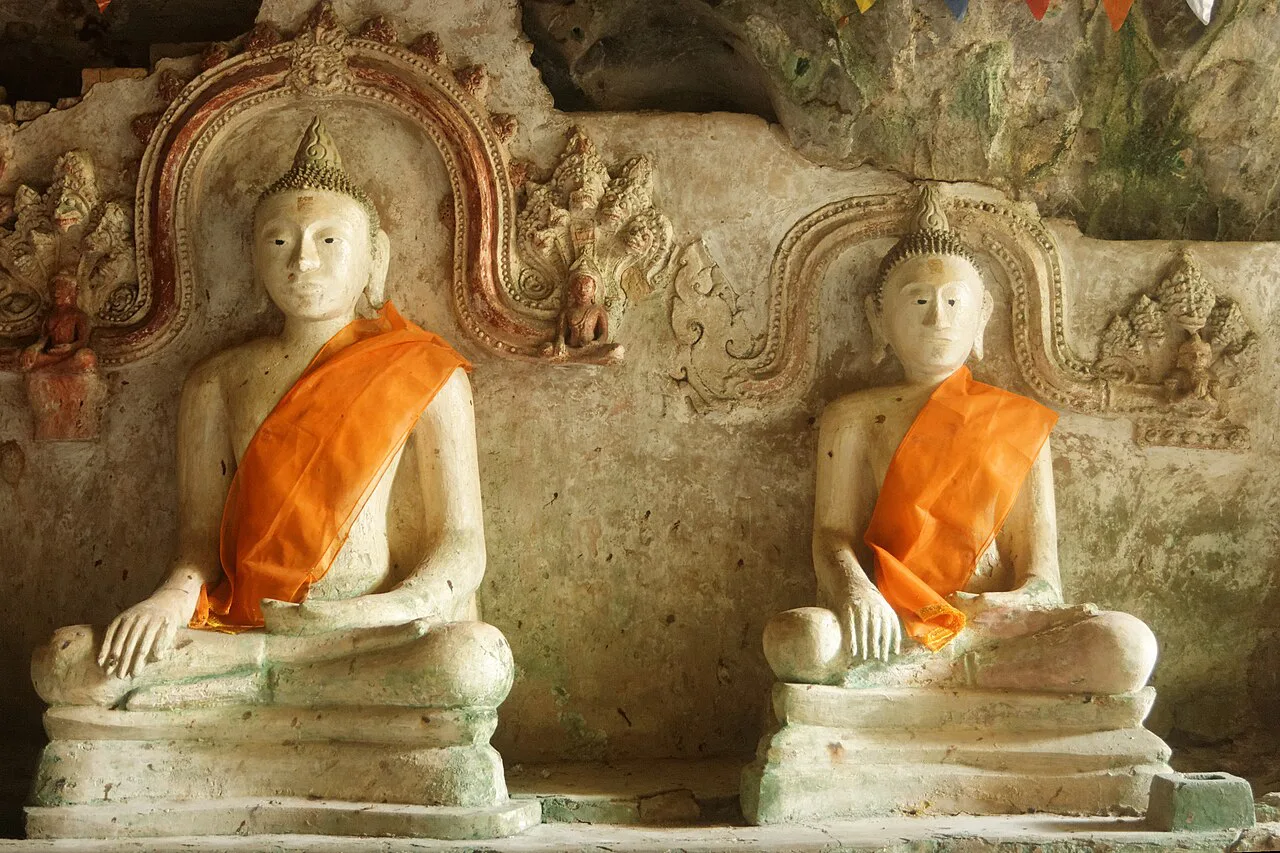
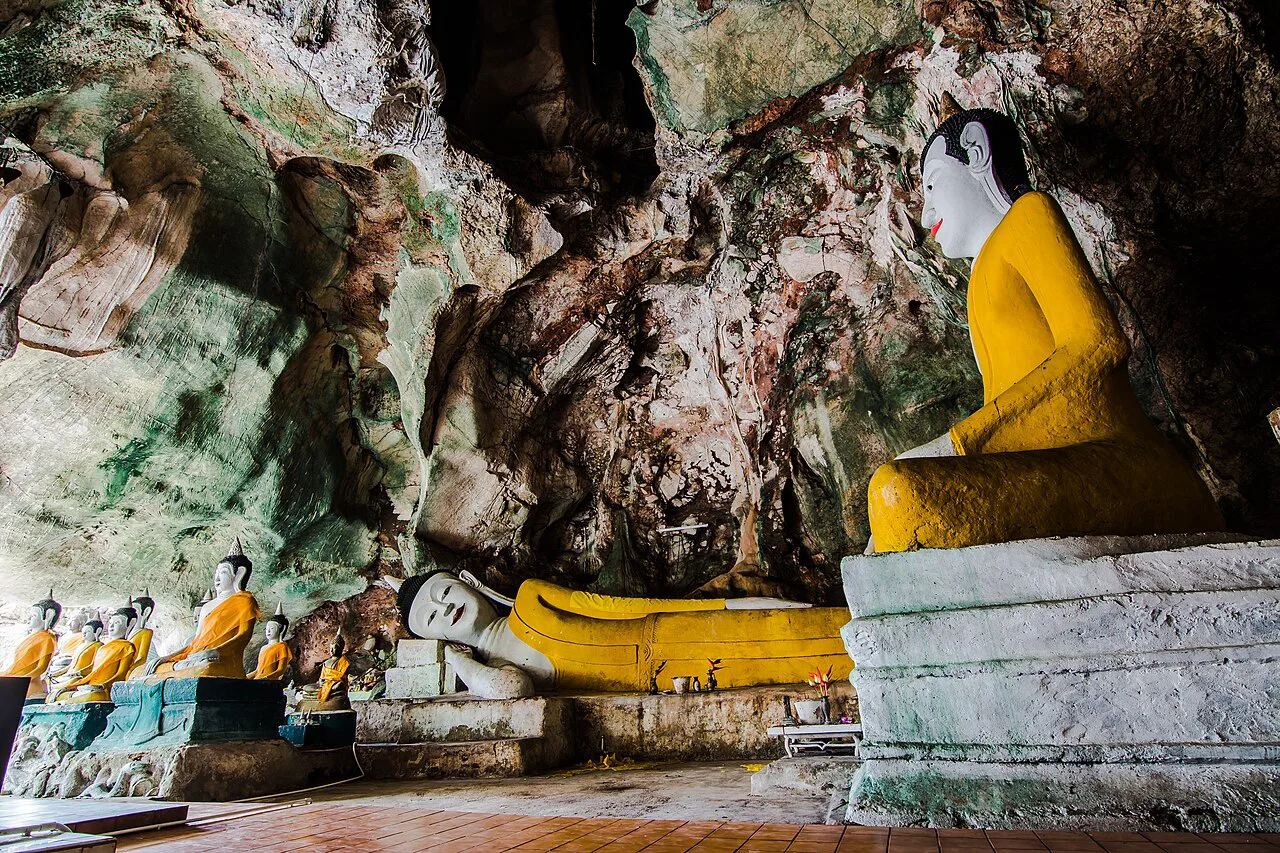
Cave temples in Thailand follow a recognizable pattern, and Wat Tham Khuha is best approached with those expectations. You will typically find a main chamber where the natural rock ceiling is largely intact, Buddha images arranged for worship, and side recesses or a short passage with more images. The appeal is atmosphere and the scale of the rock rather than decorative spectacle, so anyone who has seen one cave temple will find the next quieter rather than grander.
Outside the cavern, expect a working temple compound with an ordination hall or shrine building, small stupas and shade trees rather than landscaped gardens and interpretive panels. Surfaces are uneven, the interior is dim and humid, and there are likely steps between levels, which is normal for a cave site. Plan to remove shoes where signs indicate, as at any active temple.
Photography inside is usually fine where worshippers are not actively praying, but flash and tripods are commonly frowned upon in cave shrines. Keep voices low and stay clear of anyone making offerings. If a ceremony is under way, wait at the entrance rather than walking through.
How much time to allow
Budget roughly 30 to 60 minutes on site for the cave, the images and a walk around the compound, then add the transfer each way. That makes Wat Tham Khuha a pairing stop rather than a standalone afternoon, especially if you are driving yourself. If you hire a car, agree on a pickup time so the stop does not stretch into an hour of waiting.
The heat-and-stairs reality matters more than the distance on paper. Cave temples combine a climb or stepped approach with a humid interior, so the visit feels longer than the square footage suggests, and midday is the least comfortable window. Going earlier gives you cooler air and better odds of having the chamber to yourself.
Travelers with mobility limits should ask the driver or a temple attendant about the approach before committing, because cave sites rarely have step-free access. If the walk in turns out to be more than you want, the compound is still worth a look from the entrance area.
Opening days, hours and entry: confirm before you go
No reliable published hours or entry fee for Wat Tham Khuha in Surat Thani appear in the sources checked here, so do not plan around a specific closing time or a set ticket price. Thai cave temples are commonly free to enter, with donations accepted, but that is a general pattern rather than a confirmed fact for this site. Ask your hotel, your driver or the temple before building it into a tight day.
The trap is that listing platforms merge names, so a page labeled Wat Tham Khuha may actually describe the Ubon Ratchathani monastery, including a 24-hour, year-round access note on Trip.com. That note applies to the Khong Chiam temple and should not be read as a promise about Surat Thani. Check the province and district line in the address and treat any hours on a third-party page as a clue to verify, not a schedule.
Nearby stops to pair with a cave temple visit
If you are already driving in Surat Thani province, the strongest companion stop is Wat Suan Mokkh, the forest monastery associated with Suan Mokkh International Dharma Hermitage, which suits travelers who want quiet grounds and a contemplative hour rather than another cave. Pairing the two gives your day a clear theme, and both reward an unhurried pace.
Closer to town, the Surat Thani city pillar shrine, also known as San Lak Muang or Chao Pho Lak Muang, is an easy add-on at the end of the drive back and a natural stop for anyone interested in how local residents actually use a shrine. Khao Tha Phet offers a hilltop view over the Tapi River if you want one elevated lookout to close the day.
Travelers heading south toward Chaiya can fold in Wat Phra Borommathat Chaiya, a temple whose roots reach back to the Srivijaya kingdom, along with the Chaiya National Museum in Tambon Wiang if the history angle appeals more than another cave. On the Don Sak side, Wat Khao Suwan Pradit works as a stop on the way to the ferry piers.

Is Wat Tham Khuha worth the detour?
Yes, if you already have a car or driver and want a quiet, unpolished cave temple between bigger stops; no, if you expected a headline attraction with fixed hours and a ticket booth. Pair it with Wat Suan Mokkh or the city shrine, go earlier in the day, and confirm access with your hotel before you set out.
Explore more Surat Thani guides
Frequently Asked Questions
Is Wat Tham Khuha free to enter?
Entry fees are not documented for this temple, so treat the cost as unconfirmed. Many Thai cave temples are free with donation boxes, but ask your hotel or the temple directly rather than assuming.
How far is Wat Tham Khuha from Surat Thani city?
There is no published figure to rely on, and the drive depends on your exact starting point and traffic. Ask your hotel or driver for the day's estimate, and allow extra time if you are connecting to a ferry or flight.
Is Wat Tham Khuha the same as Wat Tham Khuha Sawan in Ubon Ratchathani?
No. Wat Tham Khuha Sawan is a separate monastery in Khong Chiam, Ubon Ratchathani, known for a large gong and a Mekong cliff view. Check the province and district in the address so you do not book a driver to the wrong region.
Do I need a guide to visit?
No guide is required for a cave temple of this size, and the visit is self-directed. A driver is more useful than a guide here, since transport is the main logistical hurdle and the site itself is compact.