
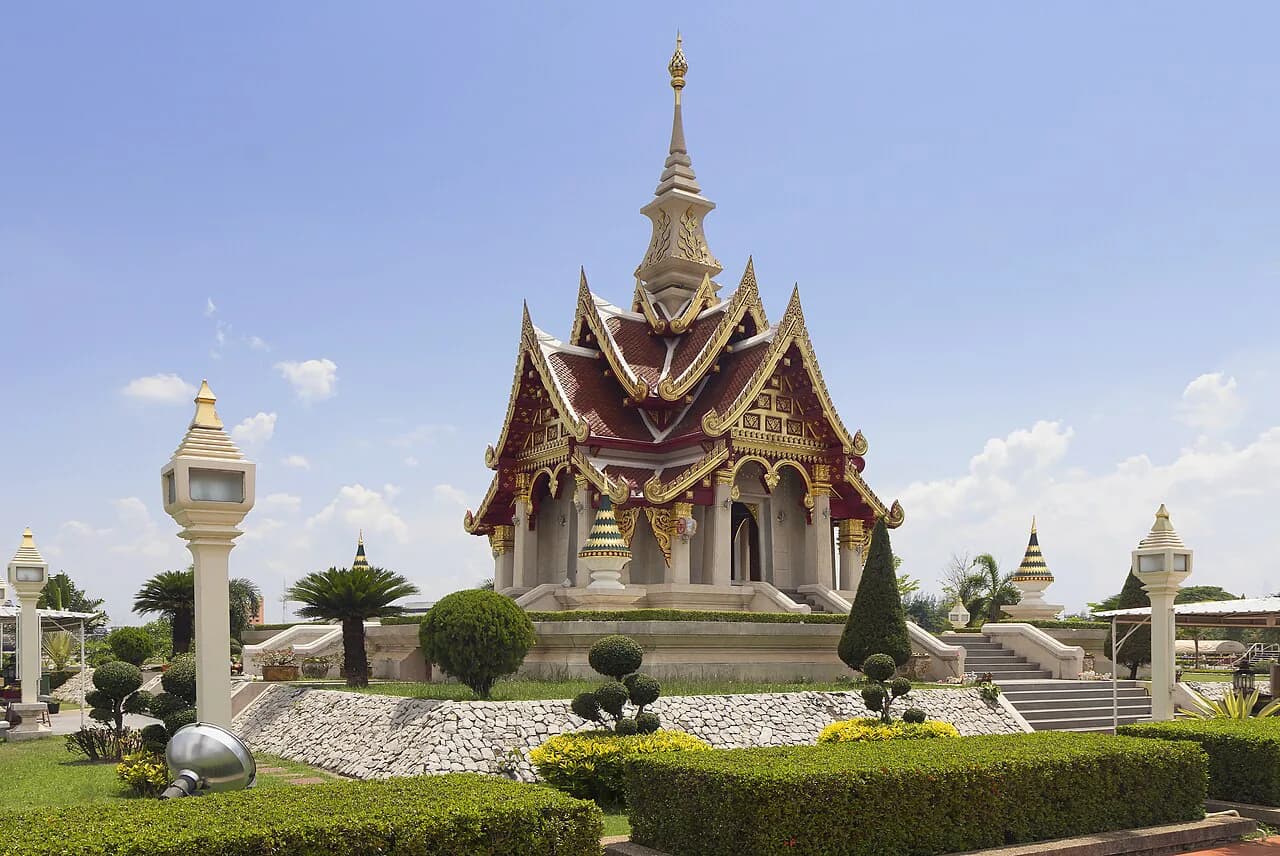
Udon Thani City Pillar Shrine (San Lak Mueang): A Visitor's Guide

The Udon Thani City Pillar Shrine is worth 20 to 40 minutes, not a half day. It sits in the Mak Khaeng sub-district of Mueang Udon Thani District, a short walk from Thung Si Muang and the city museum, which is what makes it easy to slot into a downtown morning. This guide covers what is inside the compound, how to get there without a car, and how the surrounding stops fit together.
Locals call it San Lak Mueang, or ศาลหลักเมืองอุดรธานี in Thai, and treat it as an active place of worship rather than a sight. Expect people making offerings at the pillar and at the statues around it, so plan your visit around their rhythm rather than a photo checklist.
What the shrine is and where it sits
A city pillar shrine marks the spiritual anchor of a Thai town, and Udon Thani's is a compact compound in the provincial capital rather than a walled temple complex. It is listed at 41000 Mueang Udon Thani District, which is the general postal area for the center. The setting is urban: roads, civic buildings and open square around it, not gardens.
Visitor accounts describe the original shrine as built in 1959 and replaced by a newer structure in 1999, with the main building mixing Thai and Isan styles. Treat that timeline as reported background rather than official interpretation, since the shrine does not publish an English history page. The detail that matters for a visit is the style: an ornate pavilion with the pillar at its center.
For a sense of how the shrine fits the wider city, the Udon Thani attractions hub maps out the temple and museum stops around it, including what each one needs in time.
Getting there from Thung Si Muang and the city center
If you are staying anywhere near the center, walk. The shrine sits roughly 140 meters, or a couple of minutes, from China City Shrine and about 220 meters from Thung Si Muang, so the open square is a natural starting point for the approach. Those are listing-based walking estimates, not a surveyed route. Distances are short but the sun is not forgiving, so an early start makes the walk easier.
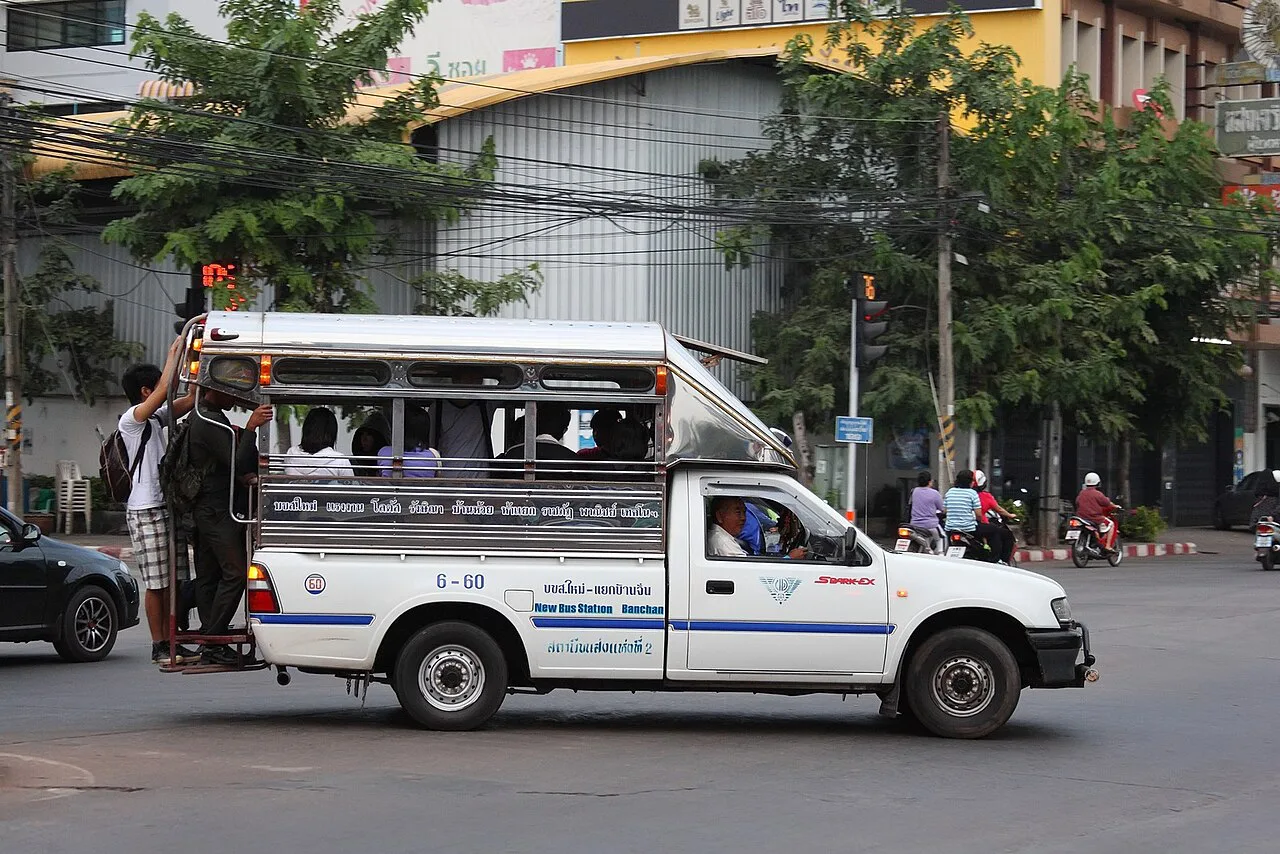
Tuk-tuks, songthaews and Grab cars all work for the last stretch if you are coming from further out; give the driver the Thai name, San Lak Mueang, rather than an English label. Udon Thani is served by a railway station and an airport, and both sit a short ride from this downtown pocket rather than within walking distance.
Drivers should note that a visitor post reports comfortable parking at the compound, so it is not a hard stop to reach by car.
The three things people come to see
Visitor reports point to three focal points: Phra Phuttha Phothong, the Buddha image associated with the city; the city pillar itself inside its pavilion; and a large Thao Wessuwan statue at the front. One circuit of the compound takes you past all three, so there is no route to plan.
Thao Wessuwan is one of the four guardians in Thai Buddhist cosmology, usually shown as an imposing figure, and here he stands outdoors, which is why photos of him read differently from the covered pavilion behind. The pillar building is the quiet, central element; the guardian is the one that greets you.
Look also at the carved stones of the twelve zodiac animals reported around the grounds, a detail easy to walk past when you are fixed on the main pavilion.
How the compound is laid out and how to move through it
Treat the compound as a loop rather than a building to enter and exit: the Thao Wessuwan statue sits at the front near the road, the pillar pavilion sits behind it, and the Buddha image is honored alongside. You will see worshippers kneeling and offering at each point, so walk behind them rather than between them and the image.
Staff are reported on site to guide visitors on how to make offerings, which helps if you want to participate but are unsure of the sequence. Keep voices low, and follow what the people ahead of you do.

How much time to allow
Budget 20 to 40 minutes: enough for the three focal points, a slow lap, and a few minutes sitting quietly. It is not a destination that rewards an extended stay, because there is no museum or cloister to wander.
The better plan is to pair it with the walk rather than build a morning around it. The city museum sits about 550 meters away, Wat Matchimawas about 510 meters, and Thung Si Muang next door, so three stops together fill a relaxed half day without rushing.
If your itinerary includes a trip out to the Ban Chiang Archaeological Site, keep the shrine for a city day rather than squeezing it in before a day trip; the two sit in different parts of the province and pairing them makes for a long, hot day.

Does it cost anything, and what about offerings?
A visitor account states that no tickets are required for the shrine, so entry has not been reported as ticketed. That same report describes a set of flowers for worship and wishes sold for around 100 baht, but treat the amount as something to confirm on site rather than a fixed, published price.
If you plan to make an offering, carry small notes so you can buy a set without hunting for change. Buying one is optional; walking through, looking and leaving is perfectly acceptable.

Hours and when the shrine is busiest
Published hours conflict, so check before you go rather than trusting a single figure. One attraction listing marks the shrine open all day, while a visitor post gives 06:00 to 23:00 and notes it can be visited at night.
Locals come throughout the day, and a blogger who arrived late in the evening found the shrine still busy with people paying respects, so there is no guaranteed quiet hour. Early morning and the cooler end of the afternoon are the most comfortable times to stand around outside.

What's within a five- to ten-minute walk
China City Shrine is the closest neighbor at roughly two minutes, a Chinese-style shrine reflecting the city's Chinese community, and a logical next stop while you are already on foot. It is a quieter, smaller site, so ten minutes there is usually enough.
Thung Si Muang, the broad civic square a few minutes away, is best walked at dawn or late afternoon when the light softens. Wat Matchimawas and the Udon Thani City Museum both fall inside a ten-minute walk, so a simple loop covers four stops without transport.
For a bigger temple stop, Wat Phothisomphon is the other name worth adding to a Udon Thani day, and it rewards more time than the pillar shrine does.

The walking street beside the shrine
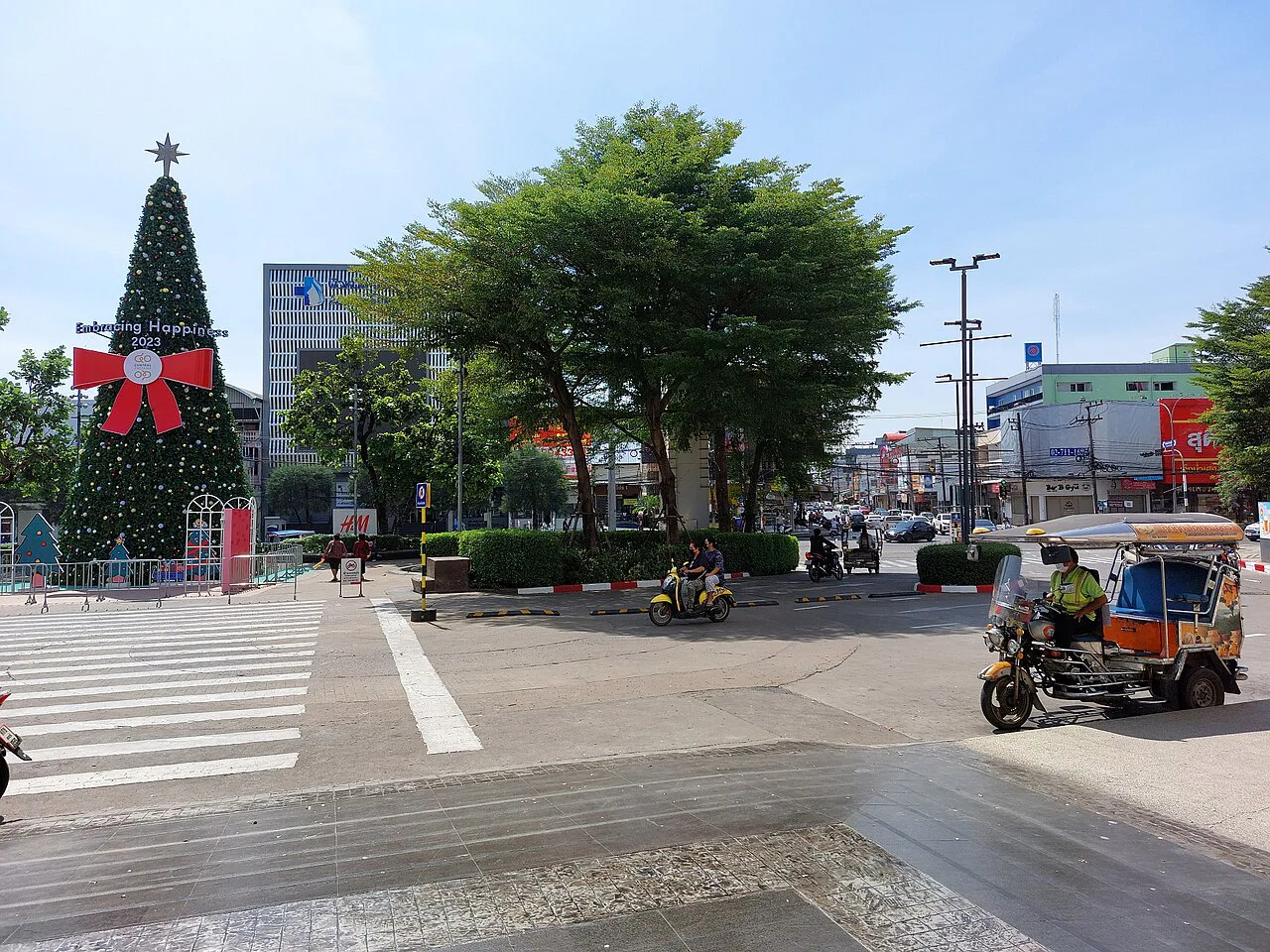
A main road next to the shrine becomes a walking street with food, local products and general goods, according to a visitor report, but the days it operates were not confirmed by any official source. Do not plan a trip around a specific night without checking locally first; ask at your hotel or look for signage at the site.
If you do catch it, the market traffic makes the shrine noticeably busier in the evening, which is either atmosphere or a crowd depending on your mood. Go earlier in the day for a calmer visit and return for the market later.
Worth the stop, or skip it?
Make the stop. The Udon Thani City Pillar Shrine has not been reported as charging admission, takes under an hour, and puts you within a short walk of the city museum, Thung Si Muang and two other shrines, so the only real cost is the time.
Skip it only if you are in Udon Thani purely for Ban Chiang or the red lotus lake and have a single tight day. Otherwise slot it into a downtown morning, check the hours before you set out, and leave the evening free for whatever the walking street is doing that week.
Explore more Udon Thani guides
Frequently Asked Questions
Where is Udon Thani?
Udon Thani is a city in northeastern Thailand, in the Isan region, and it is the capital of the province of the same name. It sits close to the Laos border and is reached by domestic flight or by train. The City Pillar Shrine is in the Mak Khaeng sub-district of the central Mueang Udon Thani District.
Is the Udon Thani City Pillar Shrine the same as China City Shrine?
No. They are separate sites roughly 140 meters apart, so a couple of minutes on foot. The City Pillar Shrine is the Thai civic shrine with the pillar, the Buddha image and the Thao Wessuwan statue; China City Shrine is a Chinese-style shrine that reflects the city's Chinese community.
Sources
- City Pillar Shrine or San Lak Mueang Tickets [2026] - Promos, Prices, Reviews & Opening Hours | Trip.com
- Memberikan penghormatan dan memohon berkah di Kuil Pilar Kota, Udon Thani. | Trip.com Udon Thani
- Readme.me - One Day in Udon Thani: Sri Mueang Park, City Pillar Shrine, and Udon Thani Walking Street.
- Udon Thani Pillar Temple in Thailand: a holy place for locals, suitable for praying and taking photos📸 | Trip.com Udon Thani
- China City Shrine, Udon Thani — Udon Thani, Thailand