Best Time to Visit Koh Yao Noi: Month-by-Month Guide
Best time to visit Koh Yao Noi: January to March is driest. Month-by-month rain, heat, crowd and ferry notes, plus what the May–October monsoon really means.
On this page
Last updated November 2026. The best time to visit Koh Yao Noi is January to March, when modeled data shows the fewest rainy days and the most sunshine. Those months also bring the highest demand on a small island, so book early. May to October is a real trade-off rather than a write-off: rougher seas and fewer boats, but quieter roads and a flowing waterfall.
Best Time to Visit Koh Yao Noi: The Short Answer
Key facts: the best months are January, February and March. February is the safest single month, with about 4 rainy days on average. September and October are the months to avoid, with 20 and 21 rainy days. Plan around the last mainland boat, which leaves at about 5 PM and as early as 3:30 PM in low season. Typhoons are not a real factor here, but the southwest monsoon is. Weather figures in this guide are modeled averages, not station readings. They come from NASA POWER and ERA5 reanalysis for 1996–2025, on a grid of about 50 km. The source notes there is no official station within 30 km, so totals on a small island can differ. Check the Thai Meteorological Department forecast before you commit to specific dates.
Koh Yao Noi Weather Month by Month
Use this table to match your dates to a band. Peak dry runs January to March. Shoulder months are April, November and December. Green season runs May to October. Sunset ranges from 18:03 in November to 18:48 in July, so evenings stay short all year.

| Month | Band | Rainy days | Median rain | High | Sea | Verdict |
|---|---|---|---|---|---|---|
| January | Peak dry | 5 | 40 mm | 34°C (93°F) | 28°C (82°F) | Go |
| February | Peak dry | 4 | 25 mm | 35°C (95°F) | 29°C (84°F) | Go, safest |
| March | Peak dry | 8 | 53 mm | 36°C (97°F) | 30°C (86°F) | Go, hot |
| April | Shoulder | 12 | 136 mm | 36°C (97°F) | 31°C (88°F) | Go with caveats |
| May | Green | 17 | 229 mm | 34°C (93°F) | 31°C (88°F) | Skip unless flexible |
| June | Green | 18 | 238 mm | 33°C (91°F) | 30°C (86°F) | Skip |
| July | Green | 18 | 242 mm | 33°C (91°F) | 30°C (86°F) | Skip |
| August | Green | 18 | 301 mm | 33°C (91°F) | 29°C (84°F) | Skip, park closures |
| September | Green | 20 | 313 mm | 33°C (91°F) | 29°C (84°F) | Avoid |
| October | Green | 21 | 305 mm | 33°C (91°F) | 29°C (84°F) | Avoid |
| November | Shoulder | 15 | 226 mm | 33°C (91°F) | 29°C (84°F) | Go with caveats |
| December | Shoulder | 9 | 114 mm | 32°C (90°F) | 29°C (84°F) | Go, busiest |
How Reliable Is Each Month? What 30 Years of Rainfall Shows
Averages hide variation. From 1996 to 2025, February stayed under 60 mm of rain in 24 of 30 years. January managed 19 of 30, and March only 17 of 30. That makes the reliability ranking February, then January, then March. April stayed dry in just 5 of 30 years, and December in 3. Dry season does not mean dry week. January 2017 recorded 435 mm, and March 2011 reached 552 mm. A "1 in 10 wet year" means one year in ten exceeds that total. For January that is 155 mm, against a 40 mm median. Pack a light rain layer even in February.
Best Month by Traveler Type
Match your priorities to the trade-offs below. Every pick is based on the modeled rain and crowd data above.
- Beach and swimming: February or January. Low tide limits swimming at most beaches, so check tide tables too.
- Couples: January or February for sunsets, or early December for slightly lower demand.
- Families with young kids: January to March, when seas are calmest and boats run most reliably.
- Budget travelers: November or early December. Avoid the peak weeks, and expect showers.
- Kayakers and photographers: February or March for clear light. Start early to dodge heat of up to 44°C (111°F) in April.
- Quiet-seekers: May or June if you accept rain. Otherwise choose early January and skip holiday weeks.
Green Season (May–October): Rough Seas, Ferries and the Upside
The southwest monsoon brings rough seas, frequent red flags for rip currents, fewer boat connections and some closed small-island accommodation. September and October are the heaviest, with medians above 300 mm. Boat tours and swimming suffer most. Check the current schedule on the Koh Yao Noi Ferry: Piers, Routes & Boat Tips guide before you book. The upside is real. Tha Khao Waterfall only flows after good rain, and the rice fields turn green. Accommodation costs drop sharply, though competitor sources give no figures. Green season suits flexible, low-budget travelers who value quiet roads. Beach-first travelers and anyone on a fixed itinerary should avoid it. Our verdict on whether the island is worth visiting covers the full trade-off.
Shoulder Months: April, November and December
April is go with caveats. Highs reach 36°C (97°F), and the heat index hits about 44°C (111°F) in the afternoon. Songkran runs 13–15 April and pushes up prices. Do outdoor activities in the morning. November is also go with caveats. It averages 15 rainy days and scores 64 out of 100 in the source's climate model, a transitional month. December is go, but it is the busiest month. It has 9 rainy days and a score of 88 out of 100 in the same model. Book early, and expect the best weather to cost more.
Crowds, Holidays and Closures
Good weather and crowds coincide here. Official Phang Nga counts for 2024–2025 peak in December, with 15% more visitors per day than average. September sits 22% below average. Koh Yao Noi is still quiet next to Phuket and Krabi. Hotels sell out because the island is small, so book peak weeks early. Several Phang Nga Bay islands, including Koh Lawa Yai, Ao Thian and Koh Boi Yai, closed from 1 August to 30 September in 2026, per the source. Dates change yearly, so verify with the national parks authority. Closures matter for Day Trips From Koh Yao Noi: Hong Islands, Phang Nga Bay & More in those two months.
September sits 22% below average on visitor counts, yet its 313 mm median rain is the highest in the monthly table.
Seasonal Logistics: Ferries, Last Boats, Tides and Getting Around
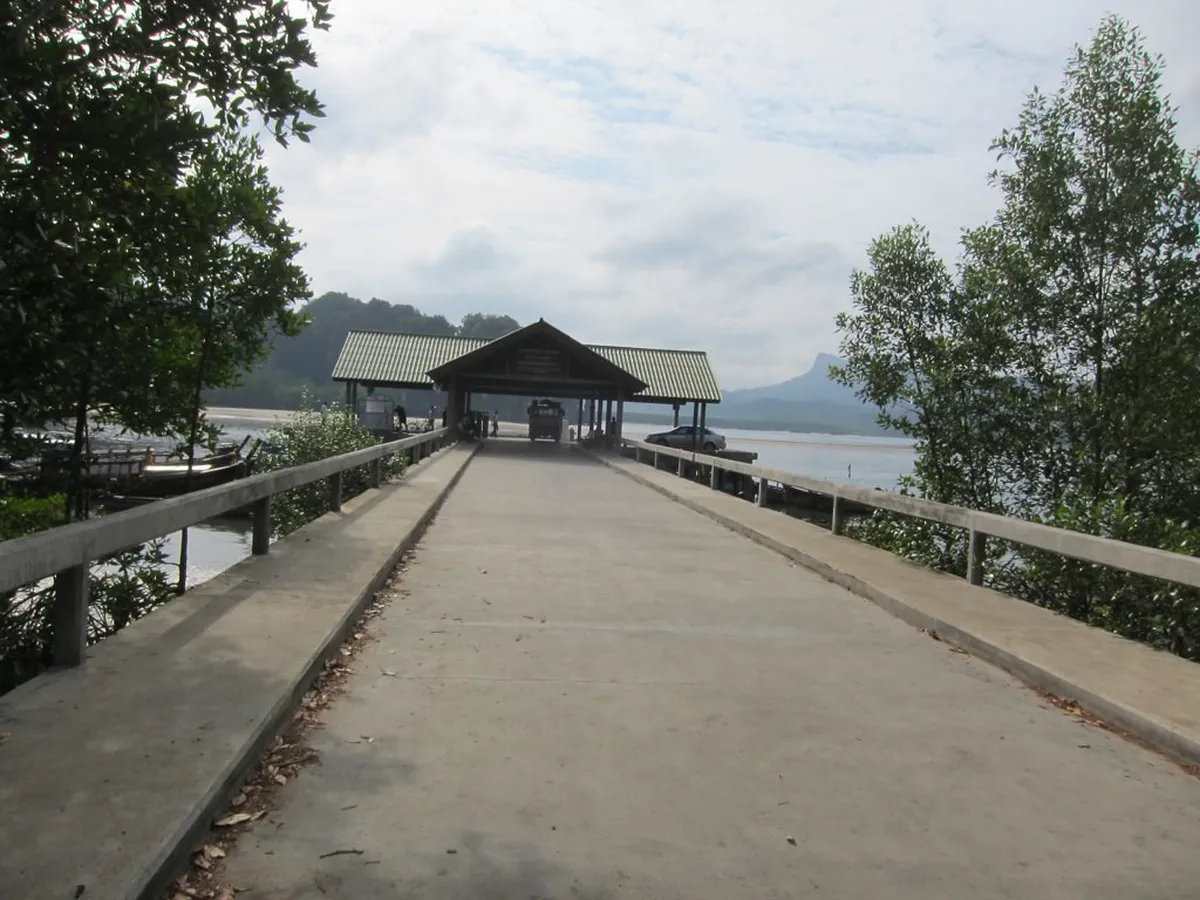
The last mainland boat leaves at about 5 PM, and as early as 3:30 PM in low season. A late flight into Phuket or Krabi means an overnight on the mainland. Speedboats take about 30 minutes from Bang Rong Pier near Phuket or Nopparat Thara Pier in Ao Nang. One 2025 guide quotes roughly ฿400–600 from Bang Rong and ฿600–800 from Krabi, depending on operator and time of year. Treat those as rough and check current fares. Our guide to reaching the island covers routes. Flights into Phuket are listed on the Phuket Airport site. If you land late from the capital, see Bangkok to Koh Yao Noi: Routes, Boats and Real Travel Time. Tides matter as much as season. Most beaches are hard to swim at low tide, so read the Koh Yao Noi Beaches: Best Spots, Tides & Access (Local Guide) notes first. After heavy rain, unpaved roads such as the one to Long Beach get rough, so see getting around the island before renting a scooter.
What to Do by Season
In the dry months, kayak the mangroves from An Pao and climb the Tha Khao lookout. Visit the fishing villages early, before heat builds. In the green months, swim at Tha Khao Waterfall once it is flowing and cycle or ride through the rice fields. Browse 10 Best Things to Do in Koh Yao Noi: Beaches, Kayaks & Boats for the full list, and pick indoor-friendly options on wet days.
Evenings and Nightlife by Season
Evenings stay quiet all year. Koh Yao Noi is a predominantly Muslim island, so expect prayer calls and limited drinking spots. Sunset falls between 18:03 and 18:48, so plan dinner early. West-coast spots such as An Pao suit sunset and local seafood. See 5 Ways to Find the Best Restaurants in Koh Yao Noi for choices. For the full picture, read Koh Yao Noi Nightlife: Bars, Sunsets & What to Expect. Check the night market for current days, since stalls may change in the wet months.
If Your Dates Don't Work: Where to Go Instead
Scores below 75 out of 100 apply from May to November. The source suggests these alternatives for those months. Distances are straight-line.
November travelers can swap to Koh Phayam (180 km), scoring 88 out of 100, while August and September boat tours face island closures.
- May to September: Koh Samui (216 km) or Koh Phangan (234 km), both 80 or higher out of 100.
- October: Redang Island, Malaysia (550 km), or Koh Samet (582 km).
- November: Koh Phayam (180 km), scoring 88 out of 100.
Mistakes to Avoid When Timing Your Trip
Avoid these common timing errors.
- Booking April without checking Songkran on 13–15 April.
- Relying on the last boat, which can leave as early as 3:30 PM in low season.
- Assuming dry season means no rain. March has been dry in only 17 of 30 years.
- Planning boat tours in August or September, when several bay islands close.
- Visiting Tha Khao Waterfall in dry months, when it may be bare rock.
- Waiting until the week before to book December or January rooms.
Notes for your Thailand trip
Optional updates when we add or change a town or island guide.
You might also like


Continue reading
More guides you'll find useful