
Chiang Mai Night Bazaar: A Neighborhood Guide to the Night Market District

The Chiang Mai Night Bazaar is a shopping and eating district, not one market: a run of stalls and market buildings along Chang Khlan Road east of the Old City, in the area known as Chang Khlan. It is the most convenient base in Chiang Mai if you want market browsing, street food and a hotel all within a few minutes on foot. This guide covers what the district is actually like, where it sits relative to the old town and Chiang Mai Gate Night Market, what to browse and eat, who should stay here and who should not, and how to arrive and get around without a car.
What the Night Bazaar actually is, and where it sits
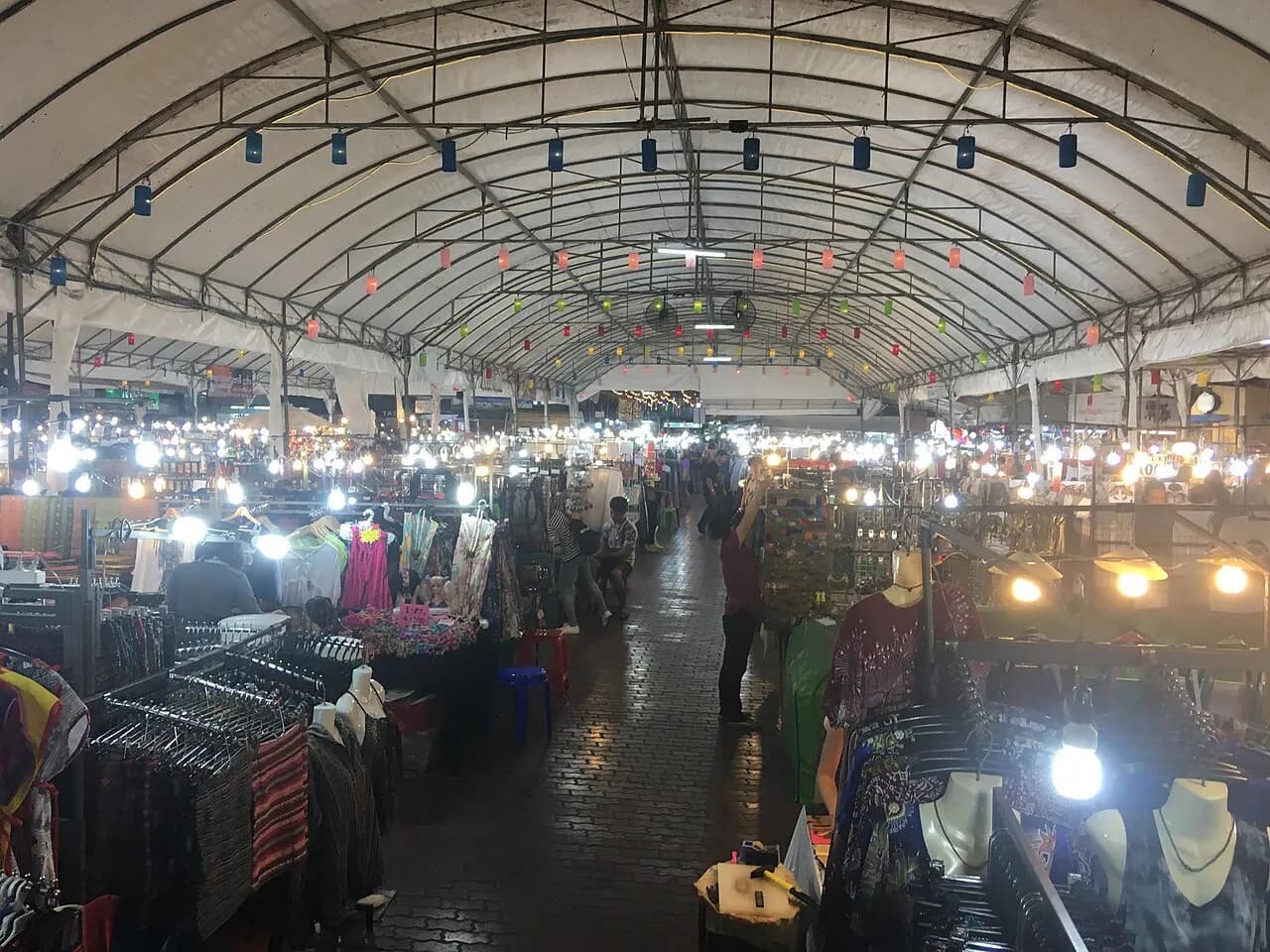
Treat the Night Bazaar as a strip rather than a destination with a gate. The stalls and market halls string along Chang Khlan Road, which runs outside the Old City's eastern moat. Because it is linear, you can enter at almost any point and walk a section instead of committing to the whole length.
The Old City sits immediately west, which makes the district easy to combine with a day of temple-hopping inside the moat. Chiang Mai Gate Night Market is a separate nightly street market just outside the Old City's south gate on Bumrung Buri Road, so it is its own stop rather than part of the Chang Khlan strip. It is one of the city's better-known evening markets and worth folding into a walk that ends at the Night Bazaar.
One caveat up front: the Night Bazaar is widely described as a nightly market, but the published sources do not confirm hours or guarantee that every stall trades every evening. Plan it as an evening activity and check with your hotel or the stalls themselves on the day rather than building a tight schedule around a fixed opening time.
Character and who it suits
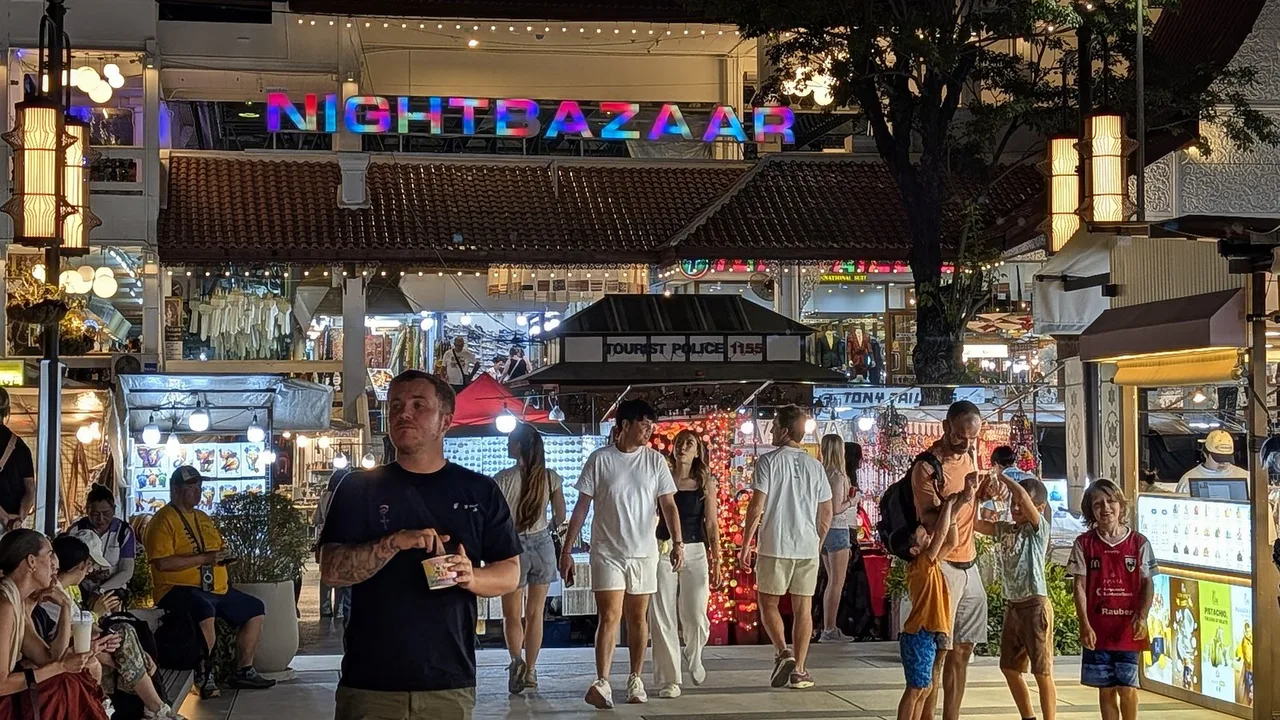
This is Chiang Mai's most commercial night-market zone: busy, brightly lit and built for browsing, with a mix of handicrafts, clothing, souvenirs and food. It is practical rather than atmospheric, and the appeal is convenience — you can shop, eat and walk back to your room in minutes.
It suits first-time visitors who want everything close, shoppers who like comparing dozens of stalls in one evening, and anyone who values a short walk home after dinner over a quiet street. It suits families reasonably well too, since the market is flat and easy to wander at your own pace.
It does not suit travelers who want calm evenings, a local neighborhood feel or design-led cafés. If that is your priority, the Old City gives you temples and lanes on your doorstep, while Nimmanhaemin Road offers a more contemporary eating and coffee scene. Both are better bases for a slower trip, and both are covered in the wider set of Chiang Mai Neighborhoods guides.
What to browse: the stalls and market halls
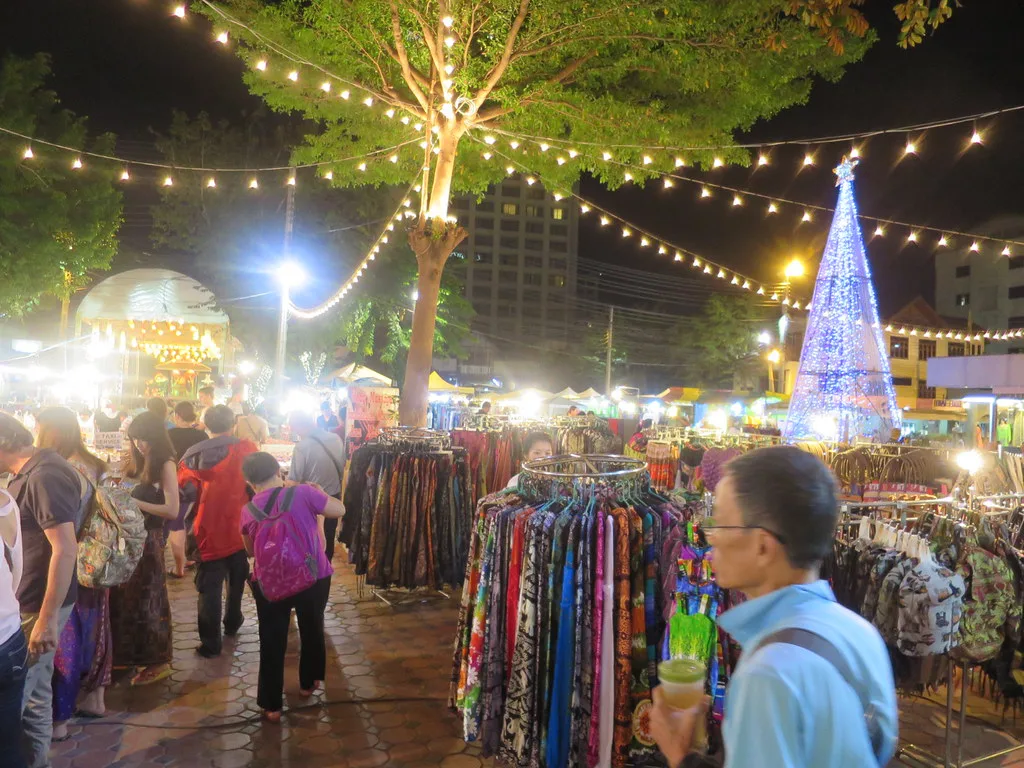
Start with the open-air stalls along Chang Khlan Road, where the stock runs from textiles and bags to carvings, lamps and small souvenirs. The fun is in the repetition: walk a stretch first to gauge prices and quality, then return to the stalls you liked rather than buying at the first table you see.
Kalare Night Bazaar appears in roundups of Chiang Mai's night markets as a covered complex of stalls and food, and it is a useful name to know if you want to sit down and then continue browsing. The White Market and Wua Lai Walking Street also show up in night-market roundups as handicraft stops, but they are separate spots rather than part of the Chang Khlan strip, so do not expect to find them on the same walk.
Bargaining is normal in this kind of market, but keep it light and polite, and walk away if a price does not suit you. Cash in small notes makes everything faster, and many stalls will not accept cards. The published sources do not list stall-by-stall prices, so treat any figure you are quoted as a starting point to compare across stalls.
Food in and around the district
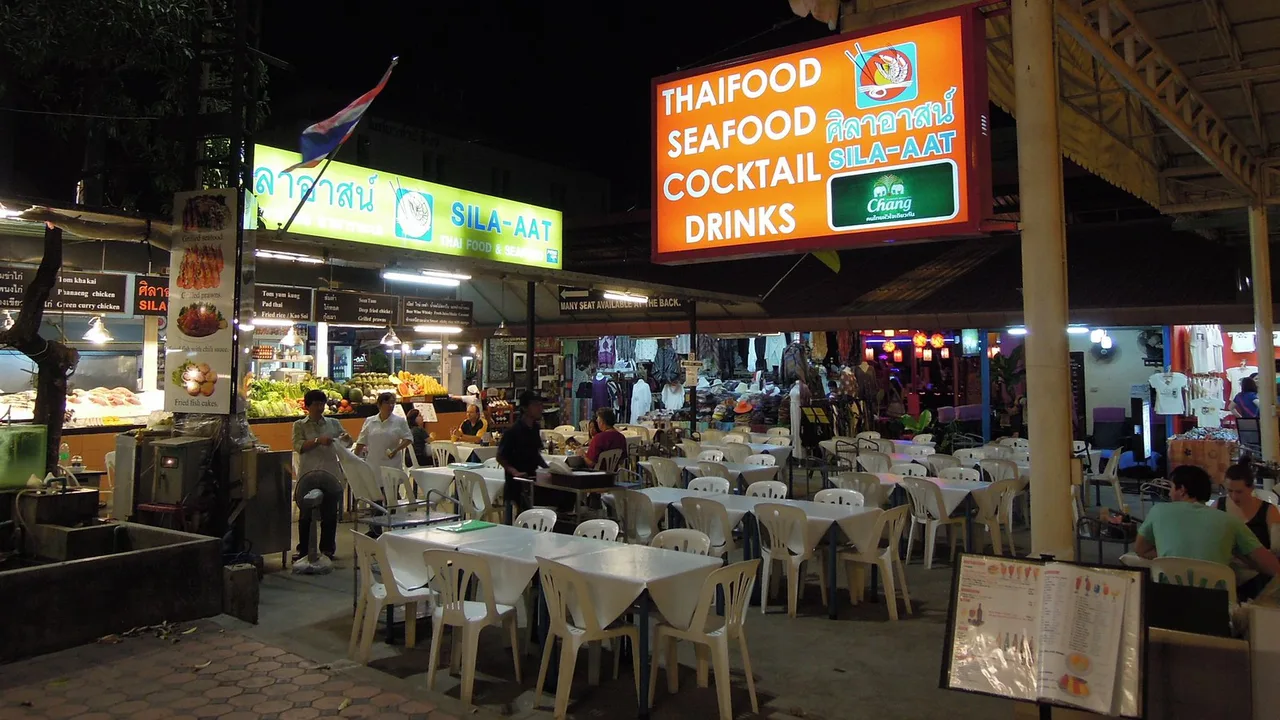
The market halls and food areas inside the Night Bazaar are the easy option: you sit down, order from a menu or counter, and eat without leaving the district. They are convenient rather than destination dining, which is exactly the point when you have been walking all evening.
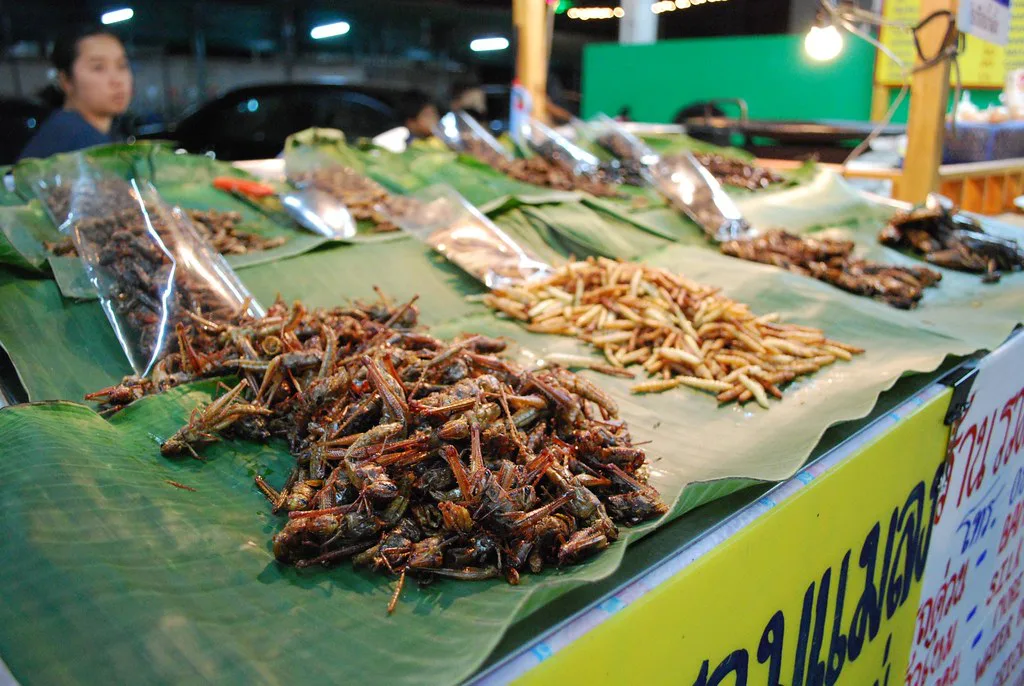
For street food, graze rather than commit to one stall: grilled skewers, noodles and fruit are the kind of thing to pick up as you walk, and portions are usually small enough to try several. The sources used here do not name specific vendors, so judge by turnover — a busy stall is generally a better bet than an empty one.
If you want a proper sit-down meal, the surrounding Chang Khlan blocks have plenty of restaurants, but no single one is confirmed by the available sources, so check menus and reviews as you go rather than planning around a particular kitchen. Eating early, before the peak browsing hours, usually means shorter waits and cooler air.
Where to stay in and around the Night Bazaar
The main decision is which side of Chang Khlan Road you are on. Staying on the market side puts the stalls and food halls a minute or two from your door, which is ideal if shopping is the point of the trip, but it also means noise and light late into the evening.
Staying on the Old City side of the road, or a block or two into the moat area, buys you quieter nights at the cost of a ten- to fifteen-minute walk to the stalls. That trade-off favors light sleepers and anyone who wants temples in the morning and the market only when they choose it.
Hotel names and room rates are not covered by the sources used here, so compare current listings for Chang Khlan and the eastern moat area and read recent reviews for noise. Ask specifically whether the room faces the road, since that single detail matters more here than star rating.
Getting there from the Old City and beyond
From the Old City, the walk to the Night Bazaar is short. Tha Phae Gate is the Old City's eastern gate, and the Chang Khlan strip lies just beyond the eastern moat, so walking is often the simplest option in the early evening before traffic builds.
For a ride, songthaews and tuk-tuks are the traditional choices and are easy to flag along the moat roads; agree the fare before you get in. Ride-hailing apps such as Grab are also widely used in Chiang Mai and let you fix the price in advance, which removes the negotiation. Neither the sources nor this guide give current fares, so check the app quote or confirm the price with the driver.
If you are coming from Nimmanhaemin or further afield, a Grab or a songthaew is more sensible than walking, since the distances stretch out. Allow extra time in the early evening, when the roads around the night market district are at their busiest.
Getting around and what's within walking distance
Once you are in the district, everything is on foot: the stalls, the market halls and the eating areas sit along the same stretch of Chang Khlan Road. Wear shoes you can walk in for an hour or two, and expect to double back several times as you compare stalls.
Everything inside the district is on foot: the stalls, the market halls and the eating areas sit along the same stretch of Chang Khlan Road. Wear shoes you can walk in for an hour or two, and expect to double back several times as you compare stalls. The Old City temples are a short walk west, and the Ping River and Wat Ket area lie a ride east across the river, making the Night Bazaar a workable base for a day that mixes temples, the river and an evening market.
For a different, more local-feeling evening, Santitham, Chiang Mai sits north of the Old City and is worth a separate trip rather than an add-on to a Night Bazaar night. Use songthaews or a ride-hailing app to link the two if you want to compare.
How long to give it, and pairing it with the walking streets
Give the Night Bazaar two to three hours if you want to browse properly, eat and walk a good stretch of Chang Khlan Road. An hour is enough for a quick look and a snack, but you will be rushing if shopping is the goal.
The weekend walking streets are the natural pairing, and they are different in character: the Saturday Night Market Walking Street and the Sunday Night Market Walking Street take over entire streets on their respective evenings, with Wua Lai Walking Street among the routes used. Because they fall on specific days, plan your trip so a Saturday or Sunday evening is free if these are a priority, and confirm the current setup locally before you go.
A sensible split is the Night Bazaar on a weekday evening, when it is at its most manageable, and a walking street on the weekend. That way you get both experiences without trying to do two crowded markets in one night.
The trade-offs: crowds, heat and browsing versus buying
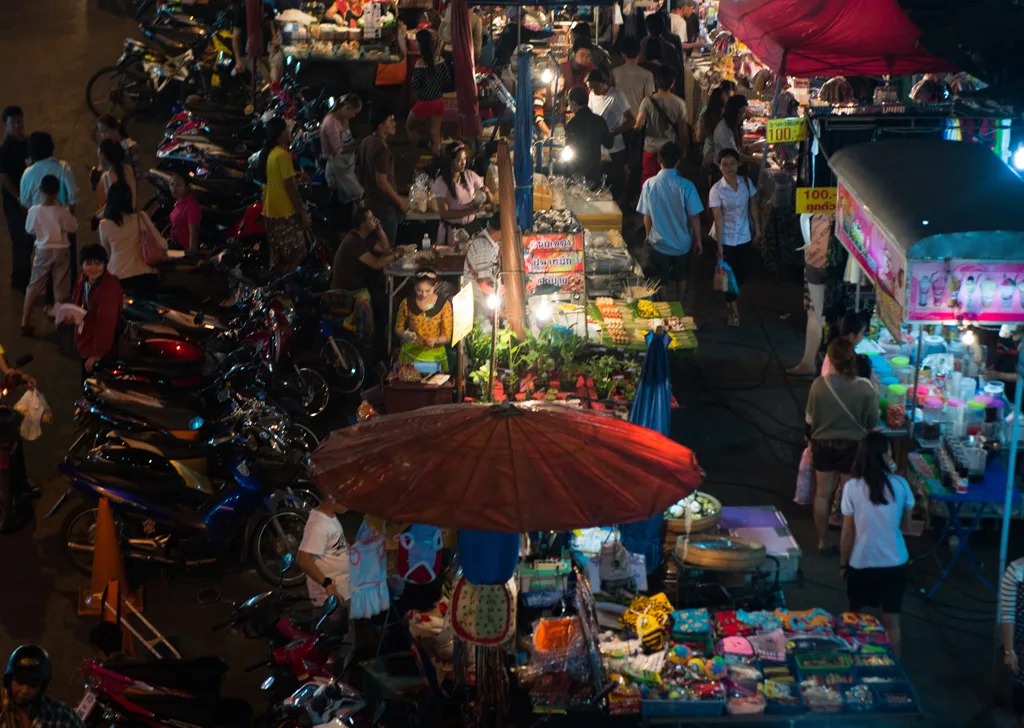
The main cost of the Night Bazaar's convenience is company: it is one of the busiest evening areas in the city, and the narrow lanes between stalls slow to a shuffle at peak times. Arrive early in the evening for a calmer browse, and save the food halls for when you want to sit down and escape the flow.
Heat is the other factor. Even after dark, the combination of crowds, cooking and covered halls can feel sticky, so plan a drinks stop midway and do not try to cover the whole strip in one push. Lighter clothing and a bottle of water make more difference here than any strategy.
Decide before you go whether you are browsing or buying. Browsers should walk the length first and circle back; buyers should set a budget in baht, compare at least three stalls for the same item and accept that the first price is rarely the last. The sources do not publish fixed prices for Night Bazaar goods, so your own comparison is the only reliable guide.
One thing to confirm before you go
The Night Bazaar is a living market, so individual stalls open, close and change hands, and the makeup of the halls shifts from season to season. Confirm the current state of the district with your hotel or the vendors themselves rather than relying on any fixed list of shops.
Should you base yourself at the Night Bazaar?
Yes, if you want market browsing, street food and a hotel within a few minutes of each other, and you value convenience over quiet. Book a room away from Chang Khlan Road if you sleep lightly, and treat the stalls as a nightly stroll rather than a scheduled attraction.
No, if you want calm evenings, local character or a café-led scene — base in the Old City for temples and lanes, or Nimmanhaemin for coffee and restaurants, and visit the Night Bazaar as an evening outing instead. Whichever you choose, the rest of the city's areas are easy to compare in the full set of Chiang Mai Attractions and neighborhood guides.
Explore more Chiang Mai guides
Frequently Asked Questions
What day is the night market in Chiang Mai?
The Night Bazaar on Chang Khlan Road is generally described as a nightly market, but the sources used here do not confirm hours or guarantee every stall trades every evening. The weekend walking streets, by contrast, run on specific days, so check locally and plan a Saturday or Sunday evening if those matter to you.
Does Chiang Mai have nightlife?
Yes, and the Night Bazaar district is one of its busiest evening zones, with stalls, food halls and restaurants along Chang Khlan Road. If you want a calmer evening, the Old City and Nimmanhaemin offer quieter dinners and cafés a short ride away.
How far is the Night Bazaar from the Old City?
It is close. Tha Phae Gate is the Old City's eastern gate and the Chang Khlan strip lies just beyond the eastern moat, so it is a short walk. Songthaews, tuk-tuks and ride-hailing apps are all options if you would rather not walk, especially later in the evening.