
Tha Phae Gate: Visiting Chiang Mai's Old City East Gate
Plan on 10 to 15 minutes at Tha Phae Gate if you only want the photo, or about 30 minutes if you walk the square, cross to the moat and follow a stretch of the reconstructed wall. The gate is the eastern entrance to Chiang Mai's old city, standing where Tha Phae Road meets the moat on the Chang Khlan side of Mueang Chiang Mai district. This page covers what the gate actually is, how to reach it without a car, what to look at up close, and which sights sit within a short walk inside the walls.
What Tha Phae Gate Is
Tha Phae Gate is the eastern of the old city's gates, the point where the road from the Ping River side enters the square-walled core that King Mengrai laid out in 1296. The name translates as raft landing, a reference to the river traffic that once fed the road leading to the gate. Five gates sit along the old city walls, and Tha Phae is the one most visitors meet first because it faces the modern city center.
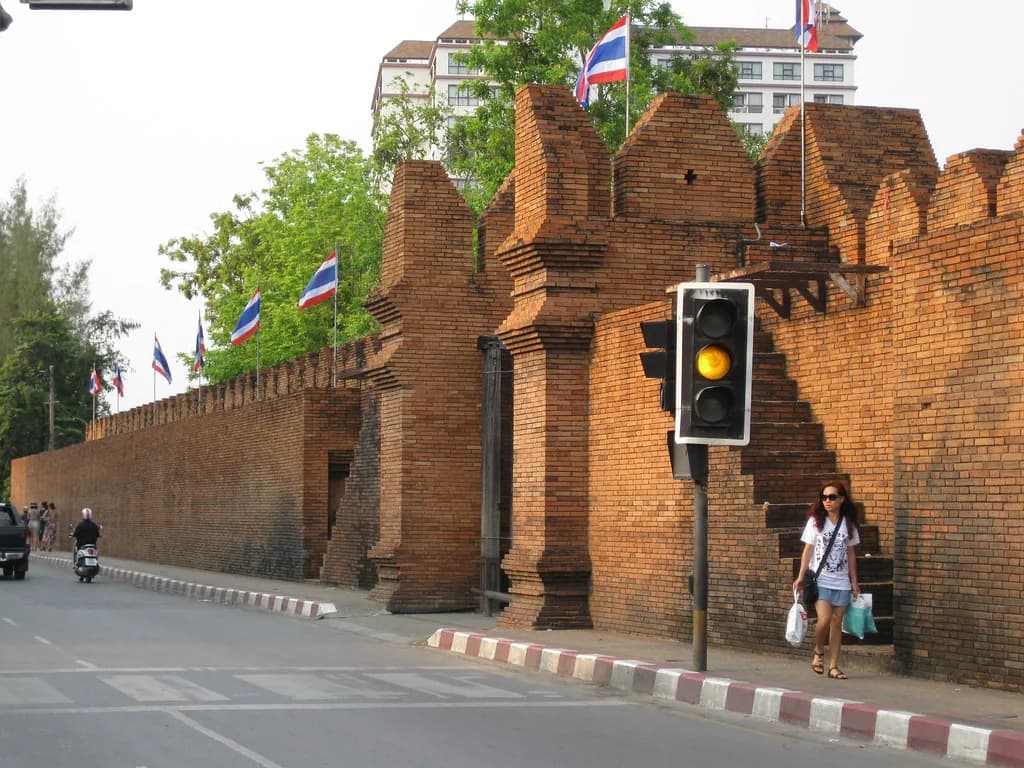
What you see today is the eastern gate in its role as the city's civic front porch: a brick arch flanked by wall stubs, with the moat running past it and a wide paved square on the outer side. That square, Tha Phae Square, hosts festivals and evening gatherings and is described by one history of the walls as livelier than the Three Kings Monument square in the middle of the old town. It is a place to stand and orient yourself rather than a site with exhibits or a route through it.
Where It Sits
The gate marks the boundary between the old city and the Chang Khlan side of Mueang Chiang Mai district, with Tha Phae Road running east from the gate toward the Ping River, Warorot Market and the Night Bazaar. Inside the walls, the same road continues west into the temple-heavy lanes of the old city. That position makes the gate a natural starting point for a walk in either direction, and you can use the moat as a compass: it traces the full square of the old city.


The Short Version on Authenticity
The gate's fresh red brick is not Lanna masonry. One detailed history of the walls records that an ornamental gate built in 1966 was demolished in 1985, and that the larger gate standing today is a reconstruction from 1986, with a plaque beside the wall stating as much. Another account dates the rebuild to 1985, so treat the precise year loosely and think of the gate as a mid-1980s reconstruction.
That matters for how you spend your time: the genuinely old fabric around the old city is in the moat and the four corner bastions, which have been restored repeatedly but trace the original fortifications, rather than in the gate itself. Look for the bastions at the corners as you walk the moat, and read the plaque at the gate to see the reconstruction credited on site. If you came for centuries-old architecture, the temples inside the walls will reward you more than the gate will.
How to Get There
If you are staying inside the old city, the gate is a walk from most guesthouses, and arriving on foot is the sensible choice. From elsewhere in Chiang Mai, a songthaew, tuk-tuk or Grab can drop you at the square; the old city lanes narrow quickly and parking near the gate is awkward, so a scooter is more trouble than it is worth here. One local operator puts it plainly: treat the gate as a walking base, park on the surrounding streets if you drive, and explore the temples and lanes on foot.
A hotel on the Nimman side of town describes the gate as roughly a 17-minute drive away, which gives a fair sense of the distance from the newer city to the east gate. Allow for traffic on that run, especially in the late afternoon. Once you are at the square, everything in this guide is reachable on foot.
What to See at the Gate and Square
Start with the gate itself: the brick arch, the wall stubs on either side, and the plaque that explains the reconstruction. Then cross to the moat edge for the classic view back at the gate with the water in front of it, which is the shot most visitors come for. The square in front is where people gather in the evening, and it is a good place to watch the city go about its business.
From the square, walk a section of the moat in either direction to see how the old city's edge reads on the ground: water, road, and fragments of wall rather than a continuous rampart. The corner bastions, known as jaeng, are the strongest surviving pieces of the fortification and have been renovated in phases, including a large project in the winter of 2018 to 2019. Budget your moat walk by appetite; even a quarter lap gives you the shape of the place.
How Long to Allow
A photo stop takes about 10 minutes: arrive, frame the gate over the moat, and move on. A half-hour version adds a slow loop of the square, a read of the plaque and a short stretch of moat-side walking to a bastion. If you want to follow the wall remnants around a full side of the old city, set aside an hour and treat it as a walk with temples and cafés as stops along the way.
When the Square Is Busiest
Weekends bring the Sunday Walking Street Market, which one guide describes as beginning at Tha Phae Gate and turning the road into pedestrian territory packed with vendors. The same source notes the square hosts festivals and evening gatherings, and a hotel guide lists Songkran, Loy Krathong and Yi Peng among the celebrations centered here. If you want a quiet photo of the gate, come on a weekday morning rather than during a market evening or a festival.
Nearby on Foot
Inside the walls, Wat Chedi Luang and Wat Phra Singh are the big temple stops within walking distance of the gate, and both deserve more time than the gate itself. Wat Phra Singh, Chiang Mai sits west along the old city's main lanes, so you can link the two on a single loop from Tha Phae.
East of the gate, Tha Phae Road runs toward the Ping River, where Warorot Market and the Night Bazaar sit on the Chang Khlan side. That makes an easy pairing: see the gate, then walk down to the market side for food and shopping. For a longer day out of the city, Doi Suthep is the obvious temple trip, though it needs wheels rather than a stroll.

Practical Notes
No source here records a ticket window, entry fee or fixed opening hours for Tha Phae Gate, and it reads as an open public square rather than a ticketed monument, so there is nothing to book in advance. Confirm any current arrangements on the plaque or with your accommodation if you are planning around an event. Note that pigeons are part of the scene at the square, and vendors selling feed are a common sight.
Is Tha Phae Gate Worth Stopping For?
Yes, but adjust your expectations: this is a 1980s reconstruction at the head of a lively square, not a surviving Lanna gateway, and it earns its place as the orientation point for the old city rather than as a destination in itself. Pair a 10-minute photo stop with a moat walk or a temple visit inside the walls, and the gate becomes a useful first move on your first morning in Chiang Mai.
Explore more Chiang Mai guides
Frequently Asked Questions
Is Tha Phae Gate original?
No. The gate standing today is a mid-1980s reconstruction, and one history of the walls notes a plaque beside it stating the 1986 date, while another account gives 1985. The moat and the four corner bastions are the older surviving elements of the fortifications, though they too have been restored.
Do you need tickets for Tha Phae Gate?
No ticketed entry is recorded here, and the gate works as an open public square rather than a gated monument. Check the plaque on site or ask your accommodation if you are visiting around a festival or market day.
How long should you spend at Tha Phae Gate?
Allow 10 minutes for a photo over the moat, around 30 minutes to add the square and a short moat walk to a bastion, or an hour if you follow the wall remnants around one side of the old city. Most visitors combine it with temples inside the walls.