
Wat Phra Singh: A Practical Guide to Chiang Mai's Golden Temple
Allow roughly 45 to 60 minutes at Wat Phra Singh if you want to look at the murals inside Viharn Lai Kham rather than file past them, and as little as 25 to 30 minutes for a loop of the main chedi and the central halls. The temple occupies a walled compound in the western half of Chiang Mai's old city, and it is usually visited on foot as part of a morning among the old-city temples. This guide covers where the compound sits, how to reach it, the buildings worth your attention in the order you will meet them, and what sits within a short walk.
What Wat Phra Singh is and why it anchors the western old city
Wat Phra Singh holds one of the most venerated Buddha images in northern Thailand, the Phra Buddha Sihing, and its grounds combine a working monastery, a school and a set of Lanna-style halls that visitors walk through freely. Its reputation rests on that image rather than on a single showpiece building, so the visit is less about one photograph and more about moving between four or five structures. The Phra Buddha Sihing is kept in Viharn Lai Kham, the hall most visitors come specifically to see.
The accounts of the temple's age vary depending on who is telling them. One source dates the first chedi to 1345, built for the father of King Phayu and originally named Li Chiang, with the Phra Buddha Sihing arriving about two decades later in 1367; the temple's UK affiliate describes it as roughly 700 years old. Treat the founding dates as tradition rather than a fixed record, and treat claims that it is the oldest or most important temple in the city as the opinion of whichever source is making them.
For a sense of how this compound fits alongside the city's other temple stops, a broader set of Chiang Mai Attractions covers what each one offers and how they cluster geographically.
Where it sits: Sam Lam Road in the old city
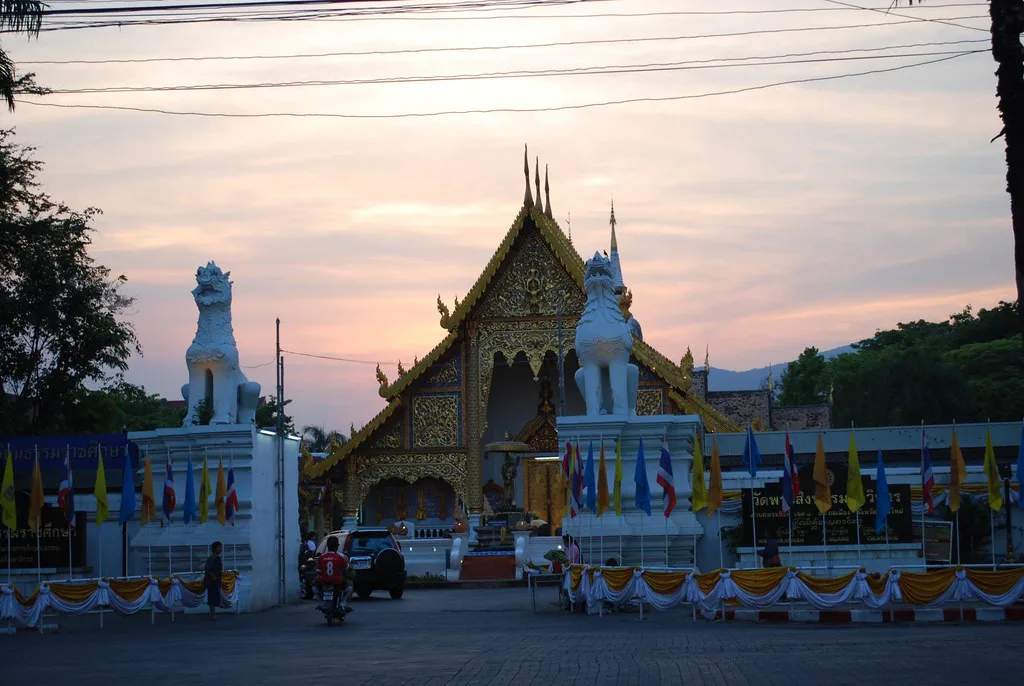
The entrance address is Sam Lam Road in Tambon Phra Sing, in the western part of the square old city, so the temple sits inside the moat rather than out toward the river or the mountains. If you are coming from Tha Phae Gate on the east side, plan on a walk of roughly 20 to 25 minutes straight through the grid of lanes; from the Nimmanhaemin side to the northwest, it is a longer haul of around 35 to 45 minutes on foot, which is usually the point where a ride makes more sense. The surrounding lanes are low-rise and shaded in patches, so the eastern approach on foot is pleasant early in the day.
Getting there: songthaew, tuk-tuk, Grab or a rented bike
The red songthaew is the cheapest shared option for the last stretch, but you will be sharing the bed with other passengers and the driver may wait until the truck fills before leaving, so build in slack if you are heading to the temple for a specific time. A tuk-tuk or a Grab car or bike is more direct and drops you at the gate on Sam Lam Road, which matters in the middle of the day when the walk from the eastern gate feels longer than the map suggests. Renting a bike or scooter gives you the most flexibility for linking temples, provided you are licensed and comfortable with Chiang Mai traffic.
Whichever you choose, ask to be set down on Sam Lam Road rather than at a general old-city drop-off, and confirm the fare before you get in a tuk-tuk. The last stretch is on foot through the compound gate, flat and short, so there is no climbing involved.
Opening hours and entry: what to check before you go
Published times should be confirmed at the gate or on the temple's own channels before you build a day around them. One visitor-mapping source lists the temple as open daily from 7:30am to 7pm, which is a useful planning figure but not an official schedule, so treat any specific closing time you see online as something to verify rather than assume.
The same caution applies to tickets. No entrance fee or ticket practice is set out in the sources used here, so plan on asking at the entrance whether there is a charge for foreigners, and carry small notes in baht either way. Whatever the arrangement on the day, the temple is an active religious site, so behave as you would in any working monastery rather than as a paying attraction.
Viharn Lai Kham: the hall holding the Phra Buddha Sihing
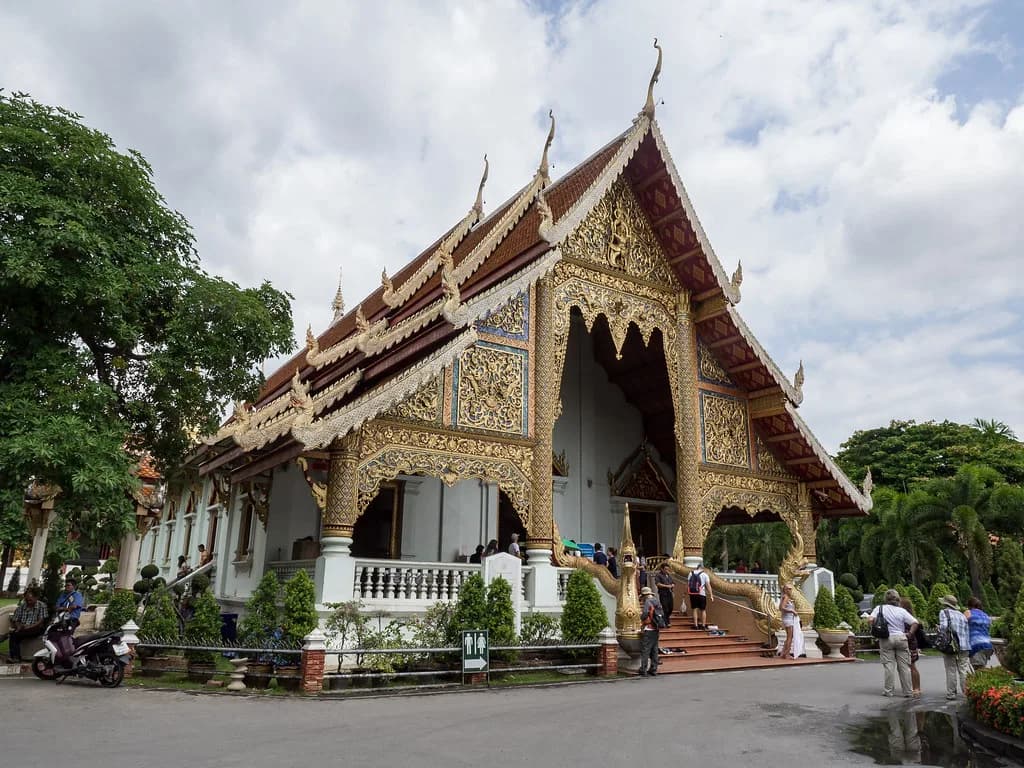
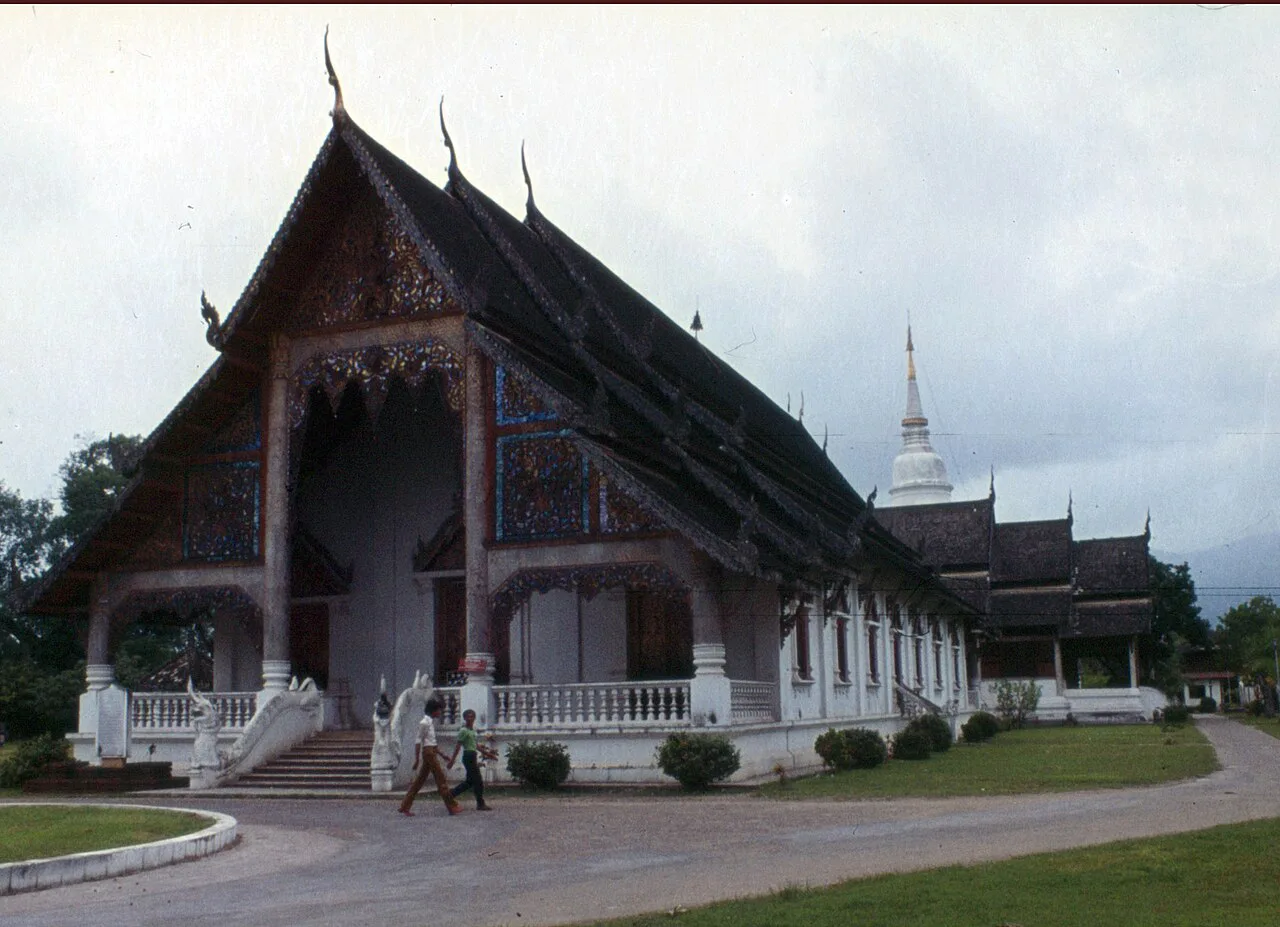
Viharn Lai Kham is the building most visitors remember, and it is where the Phra Buddha Sihing is enshrined. The hall itself is modest in size, gilded on the outside and richly detailed within, and the interior murals are the reason to slow down rather than walk through in a minute. Give the interior ten to fifteen minutes if you want to actually look at the painted panels on the walls.
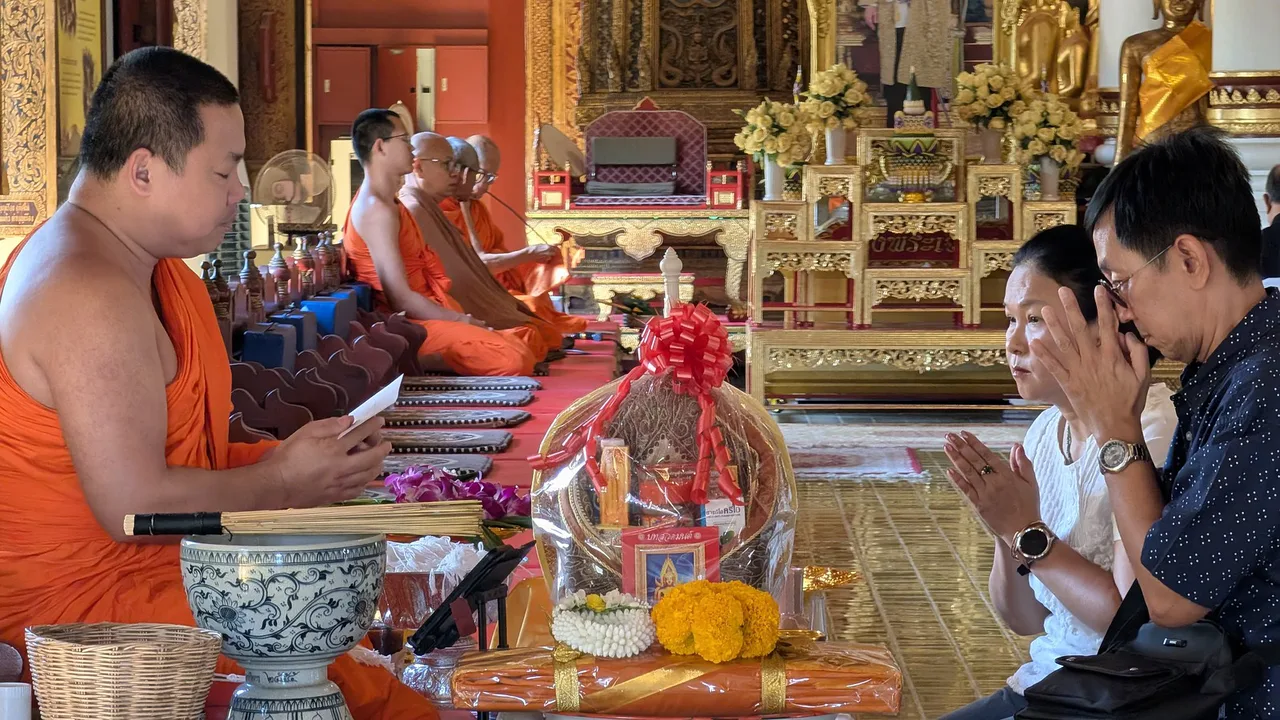
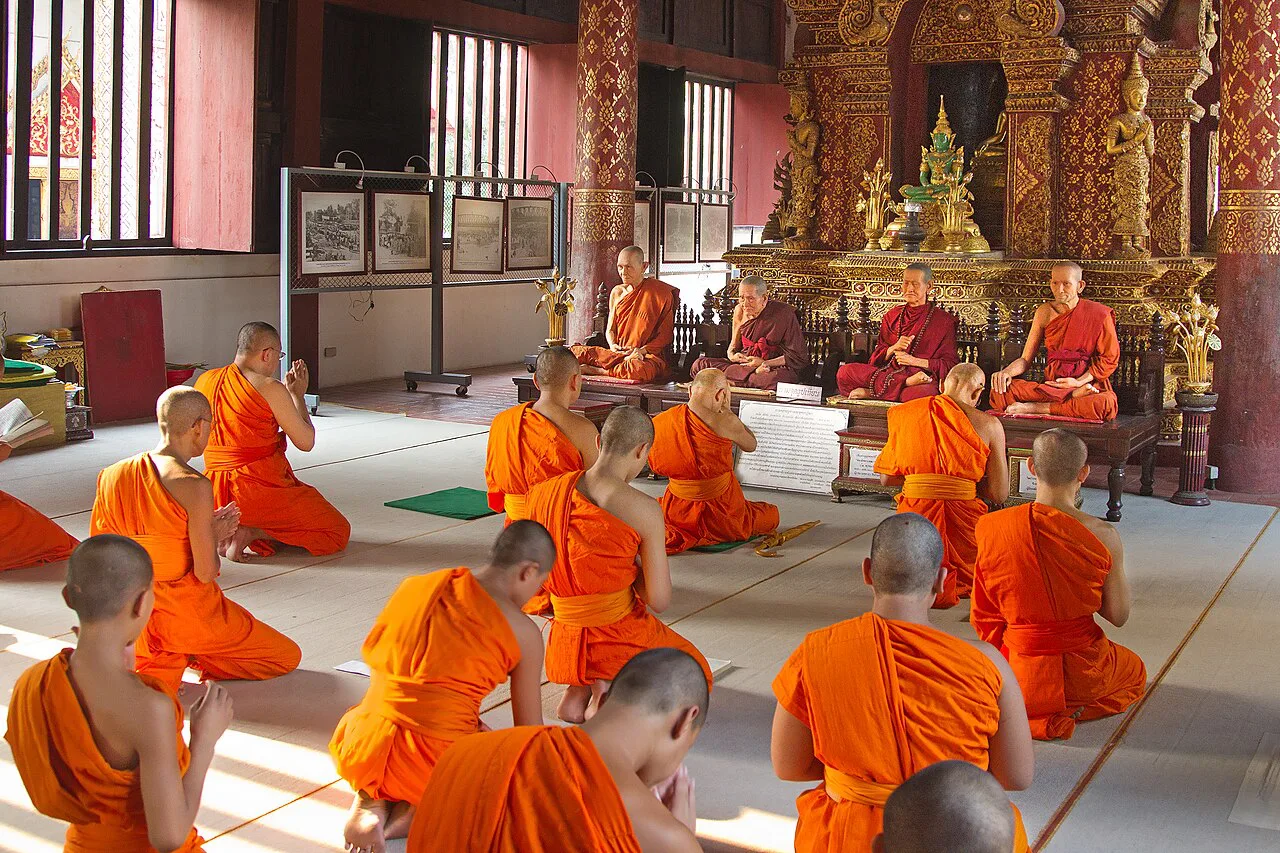
Photography inside worship halls is often restricted and the rules change, so look for a sign at the door rather than assuming your camera is welcome. Shoes come off before you step up into the hall, and you should expect other people to be praying rather than sightseeing, so keep voices low and do not block the central aisle.
The main chedi and its elephant-flanked base
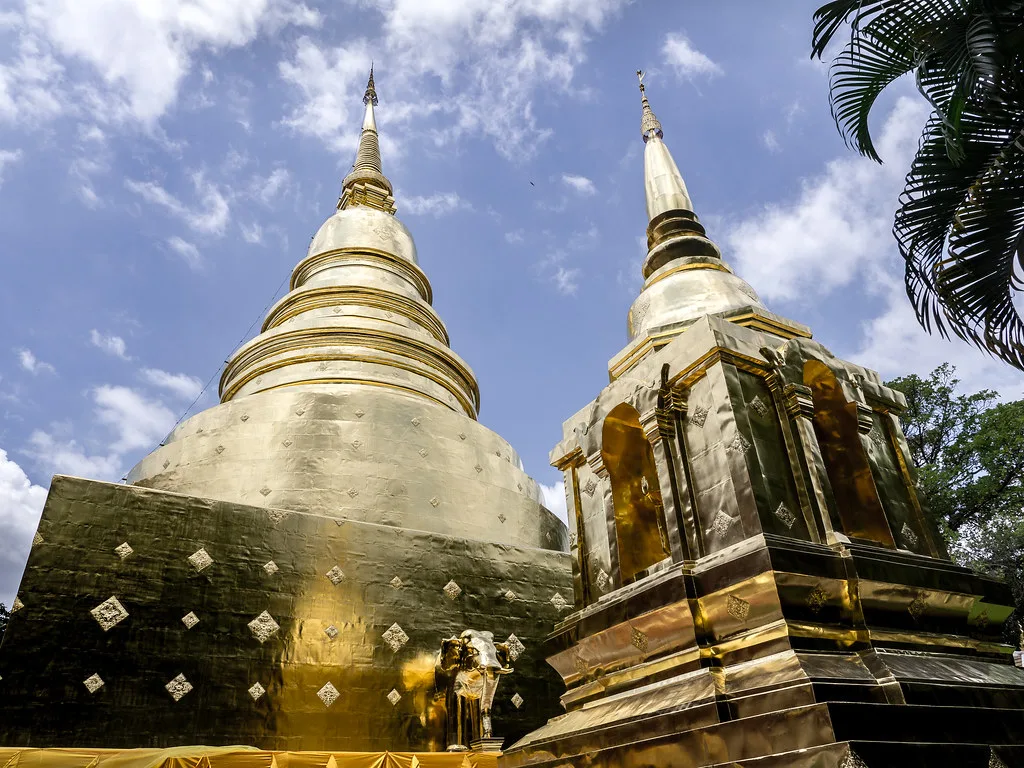
The central chedi is the oldest structure in the compound by the traditional account, and it has been enlarged and altered over the centuries rather than preserved as a single original build. Elephant figures emerge from its sides at the base, and the upper portion has been clad in gold-plated copper, which is what gives the temple its golden reputation on a clear day. This is the spot to give your eyes some time: walk the full circuit of the base rather than stopping at the first corner.
The shape of the plaza around the chedi means you can complete the circuit in a few minutes, and the light changes across the gold surface through the morning, so it looks different on the way in and the way out.

Ho Trai, the raised Lanna library, and the Viharn Luang
The Ho Trai is the small raised library building, designed that way to protect its manuscripts, and its carved woodwork and tiered roofline are a good example of Lanna design in miniature. You will not go inside it, but it is worth a couple of minutes from the outside. The Viharn Luang is the largest hall in the compound and holds a large central Buddha image together with cast images of former abbots.
The compound also houses the ubosot, the ordination hall, which is typically the most restricted building for visitors and may be closed to anyone other than monks and those being ordained. If a door is shut or a rope is across an entrance, take it as a hard boundary rather than a suggestion.
The ubosot and the working monastery around it
Beyond the visitor-facing buildings, the grounds function as a monastery and a school, with administrative buildings and monks' accommodation woven between the halls. That is the reason part of the compound feels less like a monument and more like a campus, and it is worth adjusting your expectations accordingly. Walk quietly past the school and residential buildings rather than treating every door as part of the attraction.
If you see monks moving between buildings or students at lessons, keep your distance and do not photograph people without their agreement. Modest dress with shoulders and knees covered is expected in the worship halls, and shoes come off at the thresholds.

How long to allow: a quick circuit versus a slower look
A quick loop that takes in the chedi, Viharn Lai Kham and the Viharn Luang from the outside will take around 25 to 30 minutes, which suits anyone squeezing the temple into a packed morning. Stretch that to 45 to 60 minutes if you plan to sit with the murals in Viharn Lai Kham and walk the full chedi circuit, and longer again if you pause in the shaded garden areas between buildings.
If you want both Wat Phra Singh and the neighbouring temples in one outing, budget a half-day rather than an hour, because the walking between compounds takes as long as the visits themselves.
Shape of a visit: order of buildings and time of day
Enter from Sam Lam Road and work inward: the Viharn Luang and Viharn Lai Kham come early, the chedi sits in the open central space, and the Ho Trai and outer buildings are best left for last so you are heading back toward the gate. Doing the murals first, before the compound fills up, means you get the interior of Viharn Lai Kham with fewer people in it.
Mornings and late afternoons are easier on the feet because more of the compound is in shade and the light on the gold chedi is lower. The middle of the day is when the open plaza around the chedi offers the least cover, so plan to be inside the halls then if you cannot shift your timing.

What's within a short walk: Wat Chedi Luang and Wat Chiang Man
Wat Chedi Luang is the nearest major temple, roughly ten minutes on foot to the south and east, and its large central chedi makes a strong contrast with the gold-clad chedi at Wat Phra Singh. The Lanna Thai Kingdom left both compounds behind, and seeing the two in one morning shows two very different states of preservation.
Wat Chiang Man, in the north of the old city, is a further walk of around 15 to 20 minutes and is often paired with the first two on a single loop. It is built in a different idiom and worth a stop if you are already inside the moat. Beyond the old city, Doi Suthep is a different kind of outing altogether and needs its own half-day rather than being tacked onto a temple morning.
Songkran and the Phra Buddha Sihing procession
During Songkran, the Thai New Year in mid-April, the Phra Buddha Sihing is carried out of the temple and processed through the streets of Chiang Mai, with onlookers sprinkling water as it passes. It is a religious procession rather than a performance, and the streets around the temple are far busier than usual while it is under way.
If you are in town for it, check the current year's route and timing locally rather than relying on a past schedule, and expect the temple itself to be crowded around the departure.
Is Wat Phra Singh worth an hour of your Chiang Mai morning?
Yes, if you make it a slow hour rather than a checkpoint. The combination of the Phra Buddha Sihing in Viharn Lai Kham, the murals that surround it and the elephant-flanked chedi in the open plaza gives the compound more substance than its modest size suggests, and the whole thing is walkable from Tha Phae Gate on a cool morning.
Check the opening arrangement at the gate before you set out, since the schedule you find online may not match the day, and leave the rest of the old city for the hours that follow.
Explore more Chiang Mai guides
Frequently Asked Questions
Do I need to pay to enter Wat Phra Singh?
No entrance arrangement is published in the sources consulted here, so the honest answer is to ask at the entrance when you arrive and carry small baht notes in case there is a charge or a donation box.
How far is Wat Phra Singh from Tha Phae Gate?
It is a walk of roughly 20 to 25 minutes west through the old-city lanes, and tuk-tuk or Grab rides take a few minutes on top of traffic.
What is Wat Phra Singh known for?
It is best known as the home of the Phra Buddha Sihing, one of the most venerated Buddha images in northern Thailand, housed in Viharn Lai Kham. The building and the gold-clad central chedi are the two things most visitors come for.