
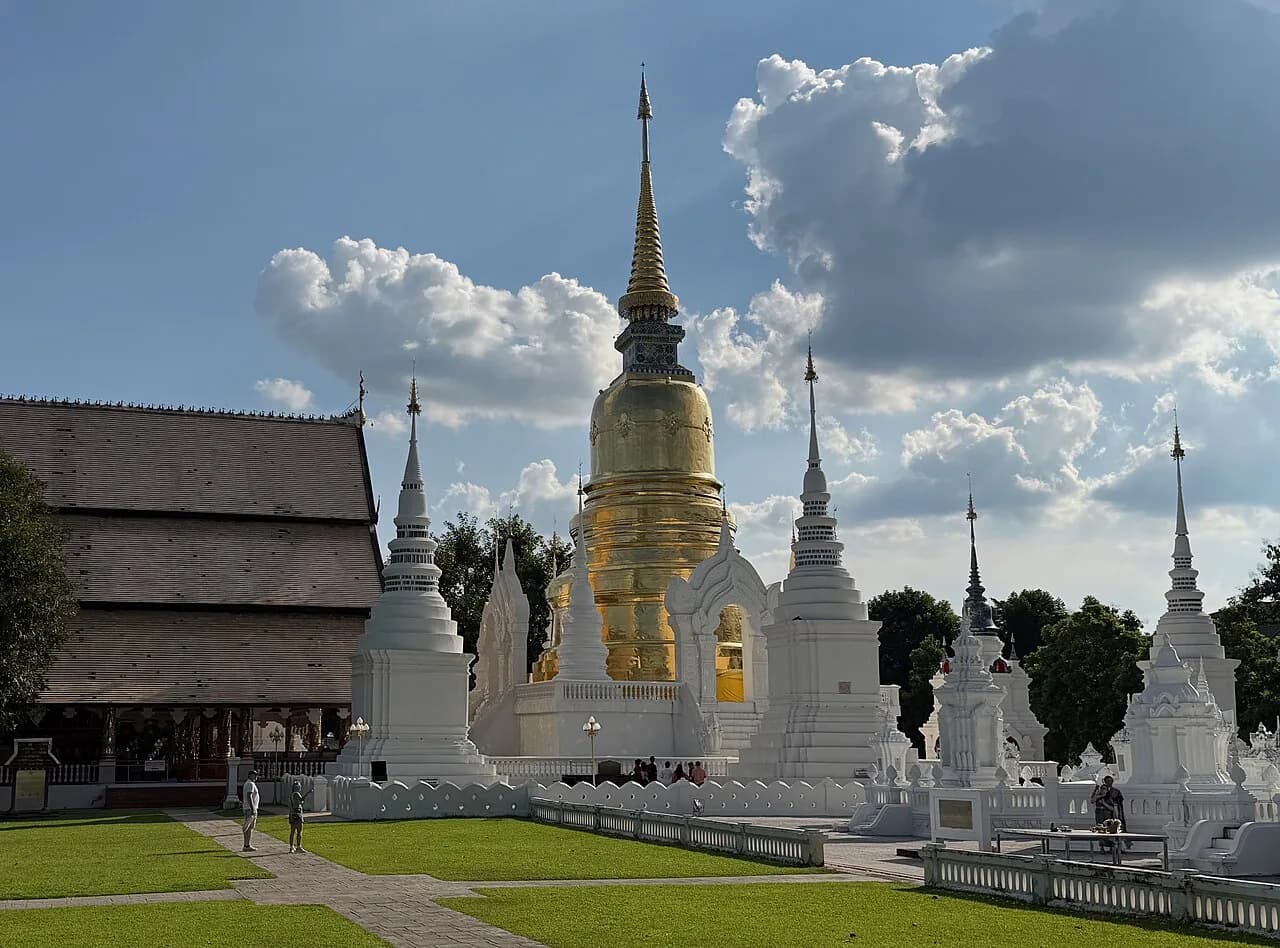
Wat Suan Dok: Chiang Mai's Temple of the Flower Garden

Allow about an hour for Wat Suan Dok, and come expecting a working monastic campus rather than a single photogenic stupa. The temple spreads along Suthep Road just west of Chiang Mai's old city moat, so it slots easily into a morning or late-afternoon loop without a dedicated half day. This guide covers where the grounds sit, how to reach them by red songthaew, bus or ride app, what to look at inside, and how the Monk Chat program is booked separately.
A Working Temple, Not Just a Photo Stop
Wat Suan Dok means "temple of the flower garden," and its Thai name is วัดสวนดอก. It is an active temple with university buildings attached, which changes how you should read the site: monks and students move through the same grounds you are walking, and some structures are off-limits or in use. Treat the chedis and the wihan as the visitor-facing core and the surrounding campus as a place where people work.
It sits just west of the old city walls on Suthep Road, which puts it on the road axis that eventually climbs toward Doi Suthep. That position makes it a natural first stop if you are heading up the mountain later, or a quick add-on if you are staying around Nimmanhaemin. It is not inside the moat, so do not plan to walk to it from Tha Phae Gate without budgeting real time in the heat.
Where It Is and How to Get There
The simplest low-cost approach from the old city or Nimmanhaemin is a red songthaew, the shared pickup that circulates around Chiang Mai; you tell the driver your stop before climbing into the back. A third-party guide lists a flat foreigner fare of 40 THB as its last known price, which is dated, so treat it as a rough anchor rather than a quote and confirm the fare before you board. Ride apps such as Grab are the other straightforward option, and the Smart Bus R3 line marks a stop at the temple if you happen to be on its route.
If you are combining the temple with a Doi Suthep run, do Wat Suan Dok on the way rather than as a return trip, since both sit on the same westward corridor. Drivers and songthaew operators understand the temple by name, so having the Thai script วัดสวนดอก on your phone helps if pronunciation stalls. Wat Phra That Doi Suthep is the mountain temple further up the same road, and it needs its own separate block of time.
Layout of the Grounds
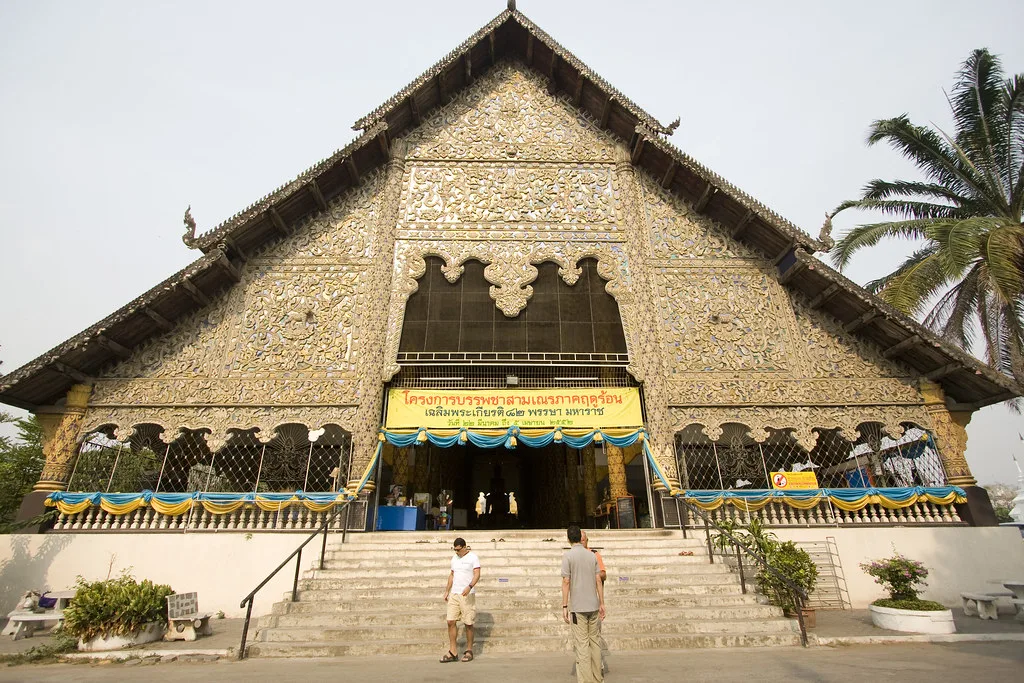
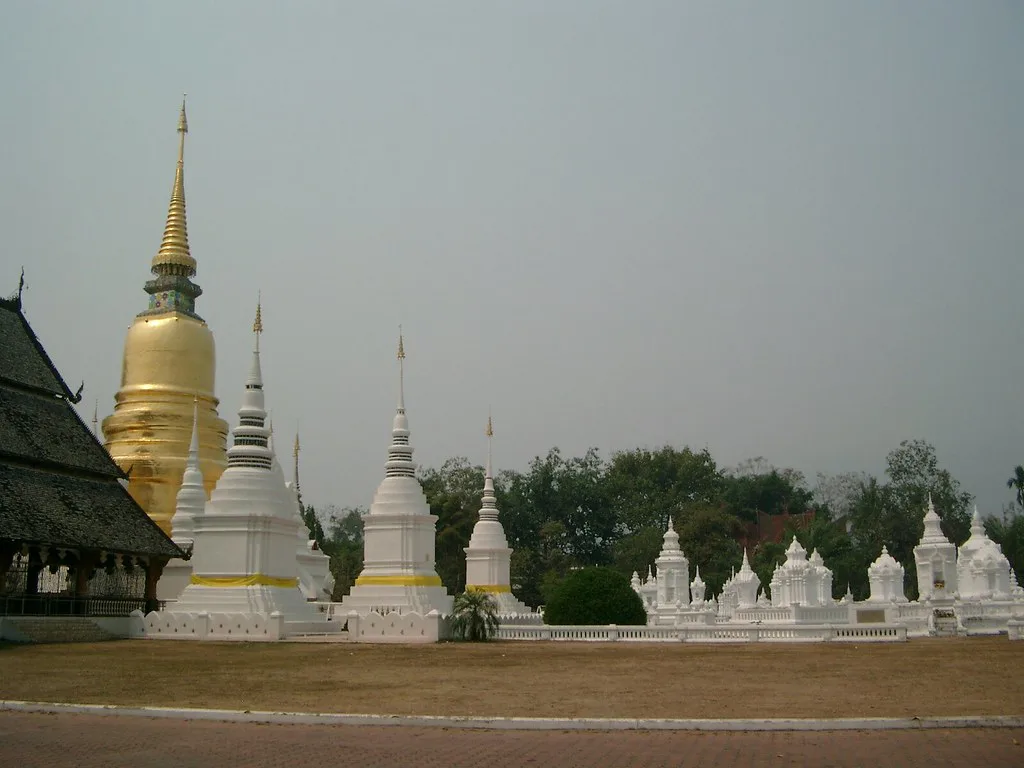
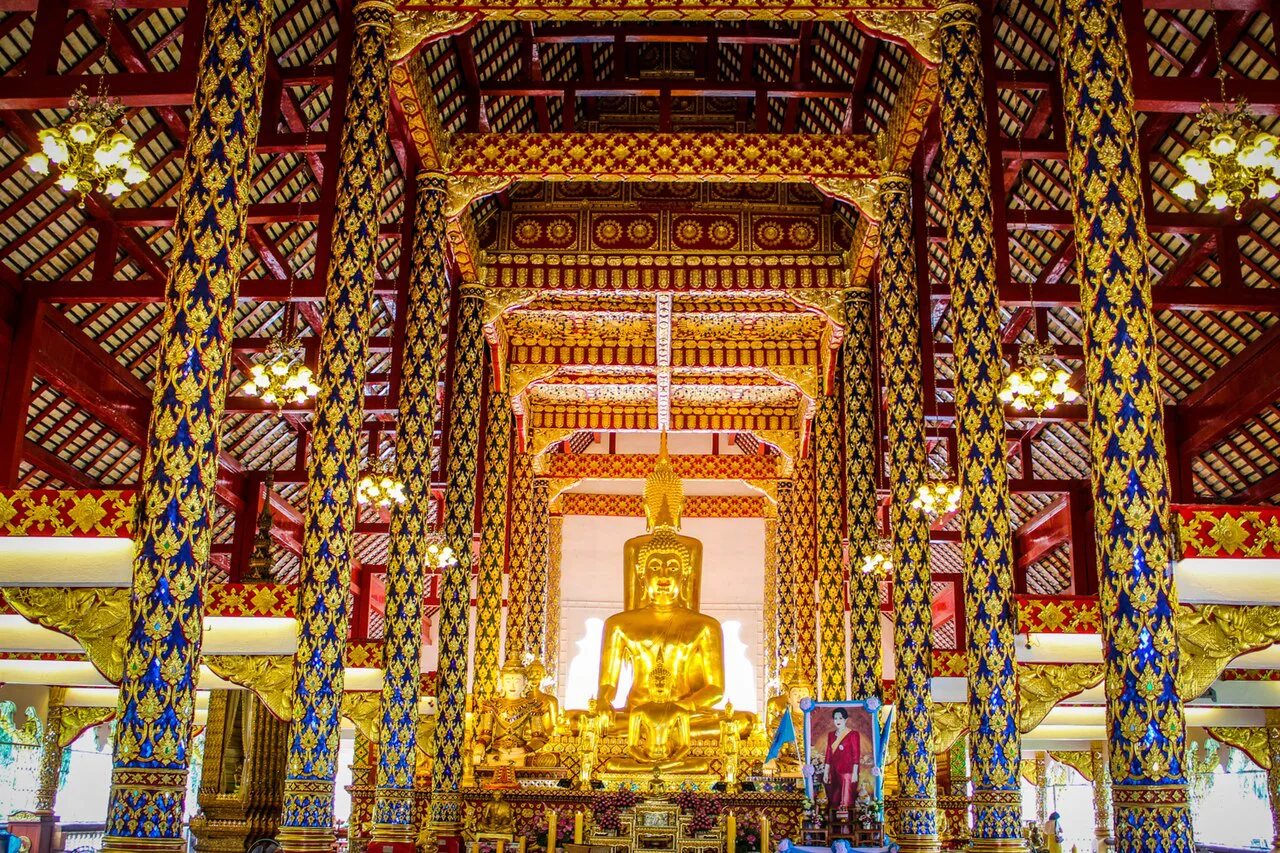
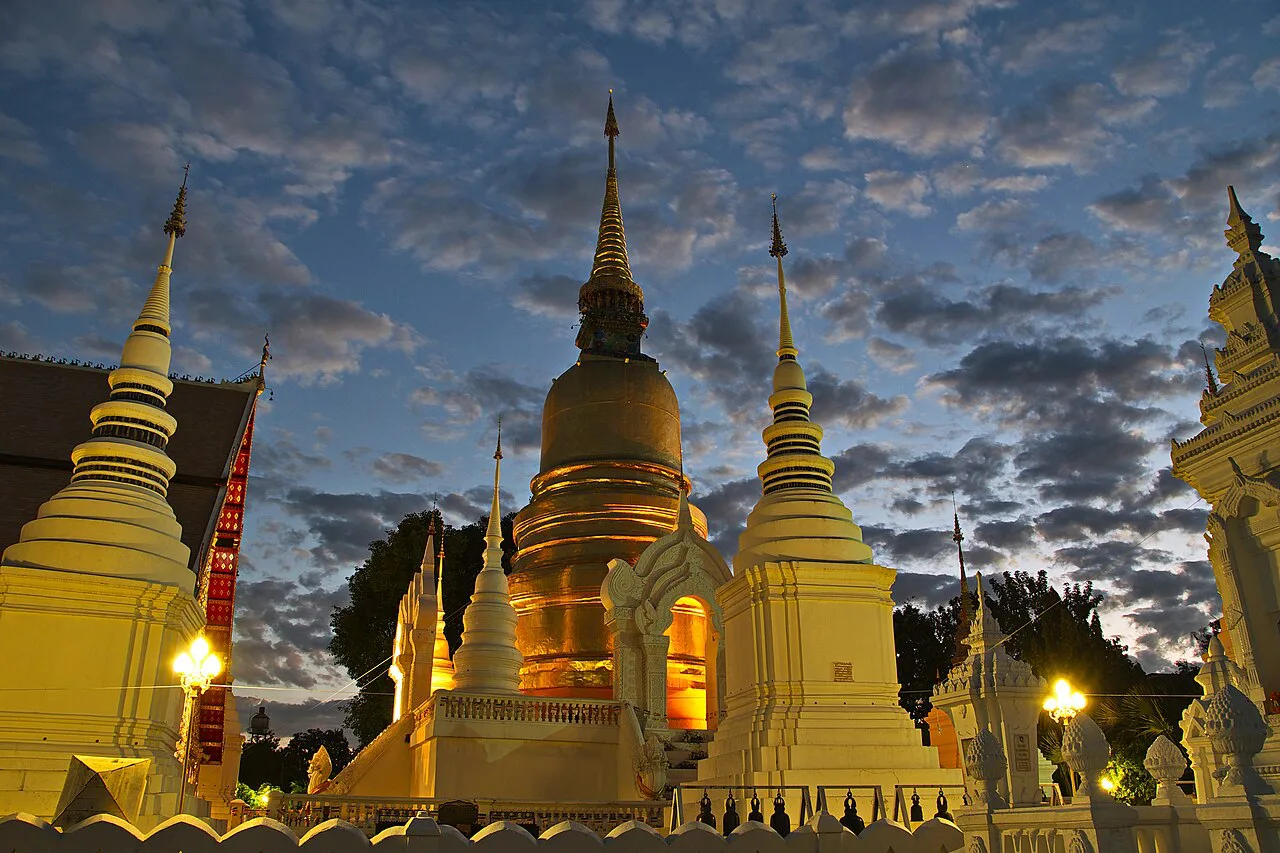
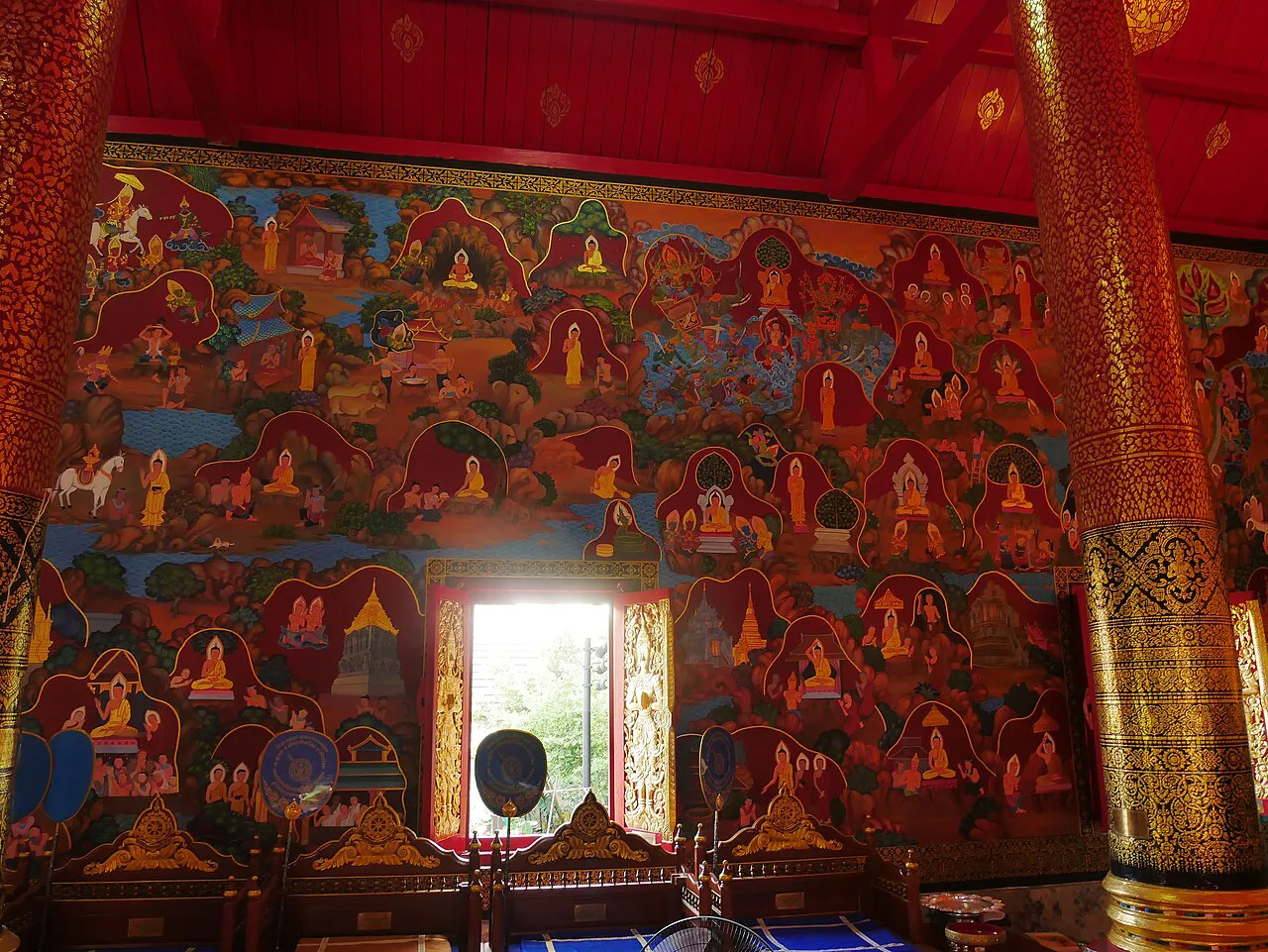
The grounds read as three layers: a large gilded main chedi, an airy wihan, and rows of smaller chedis clustered around them. The main stupa is the visual anchor and the piece most visitors photograph, while the open wihan gives you a shaded place to sit and look rather than a museum-style interior to file through. Because the buildings sit close together, you can see the core in one slow circuit instead of crisscrossing the site.
The rows of smaller, whitewashed chedis are the detail most people miss on a fast pass, and they give the site much of its character. Walk the perimeter rather than only the central axis, and keep an eye on where campus buildings begin so you do not wander into active rooms. A magazine profile frames the temple around a Buddhist legend tied to the site, which is worth reading up on before you arrive.
The Royal Chedis and the Founding Story
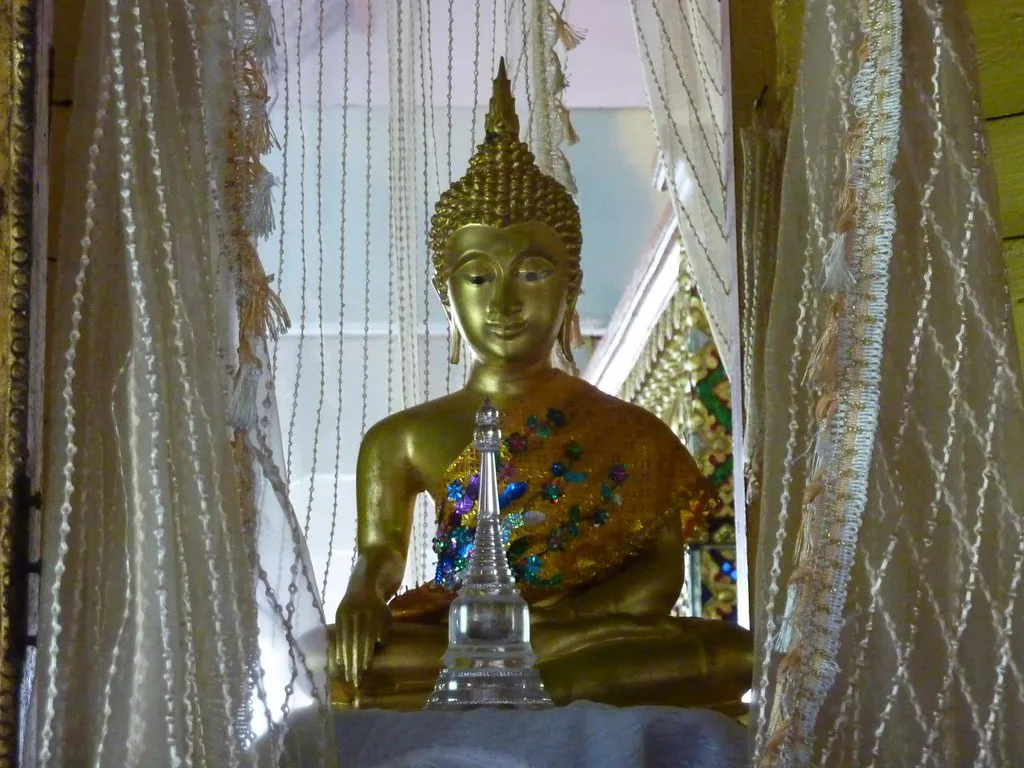
Wat Suan Dok is closely associated with Chiang Mai's founding history and with the Lanna royal line, which is why the smaller chedis carry more weight than their size suggests. The Chiang Puak Magazine feature describes the site as an important and unusual temple wrapped in a Buddhist legend; read it before or after your visit rather than expecting on-site panels to explain everything. Treat the legend as tradition rather than verified chronology, and let the architecture carry the visit.
Monk Chat and Meditation: A Separate Booking
Monk Chat runs out of the Mahachulalongkornrajavidyalaya University campus based at Wat Suan Dok, and it is a program you register for, not something folded into temple admission. One third-party guide lists chats on Monday, Wednesday and Friday from 5pm to 7pm, plus meditation sessions on Wednesdays and the last Friday of each month; that schedule comes from a secondary source and can change, so check the program's own site before you build an evening around it. Registration details and current course listings sit on the Monk Chat site.
Set expectations about location: a visitor review notes that the retreat is run through the temple but the retreat center sits some distance from the temple itself. That is a single reviewer's account, so a chat session at the temple and a multi-day meditation course are not necessarily the same logistics; ask which building you are expected at when you register. If you only want to see the chedis, skip the program entirely and visit in daylight.

How Long to Allow and When to Walk It
Budget 45 minutes to an hour for the chedis and wihan at an unhurried pace, and add time if you are reading the smaller chedis properly or sitting in the wihan. Late afternoon suits the site: the light softens on the gilded stupa, the heat drops, and you are well placed for an evening Monk Chat session if you have registered. Midday works only if you keep the visit short and use the shaded wihan as your rest stop.

Entry, Hours and What to Confirm
One third-party guide states there is no entry fee at Wat Suan Dok, but that is not the temple's own published policy in the sources checked, so check at the gate rather than assuming. Opening hours are likewise not set out in a single reliable source; ask at your hotel or check the temple's signage on arrival. Keep one reminder in mind: confirm both before you make the trip, especially if you are traveling across town for an evening program.

What's Nearby on the Same Corridor
Nimmanhaemin is the closest dining and café district, a short ride east, which makes Wat Suan Dok an easy pre-dinner stop if you are staying in that area. The old city's western side is also close, and Wat Phra Singh, Chiang Mai's main temple in the historic center, pairs naturally with a same-day old-city walk rather than a separate outing.
If you want a wider spread of temples, markets and day trips around the city before locking in a route, start from the Chiang Mai Attractions: 10 Visitor Guides overview and pick the ones that cluster geographically. Doi Suthep is the obvious mountain pairing on the same westward corridor. Keeping the day to two sites usually means you actually see both.
Is Wat Suan Dok Worth an Hour?
Yes, if you want a working temple with real history rather than a ticketed spectacle, and if you are already heading west toward Doi Suthep or staying near Nimmanhaemin. Skip it if your time in Chiang Mai is one day and you have not yet seen the old city's core temples, since the old city packs more major temples into a walkable area. Either way, treat Monk Chat as its own booking and verify hours and any fee at the gate before you go.
Explore more Chiang Mai guides
Frequently Asked Questions
Can you talk to monks at Wat Suan Dok without booking a course?
The Monk Chat program is the structured way to do it, and it runs on a schedule you check in advance on the program's site. Casual conversations on the grounds depend on who is around and are not something to count on. Register for a session if talking with a monk is the point of your visit.
Do you need to dress modestly at Wat Suan Dok?
It is an active temple, so cover shoulders and knees and remove shoes before entering buildings. Beyond that, keep your voice down and avoid turning your feet toward a Buddha image. The site is a campus as well as a shrine, so behave as you would in someone's workplace.
How far is Wat Suan Dok from Chiang Mai's old city?
It sits just west of the old city walls on Suthep Road, outside the moat. A red songthaew, a ride app, or the Smart Bus R3 line (per a third-party guide) will get you there faster than walking in the heat. Confirm the fare with the driver before you get in.