
Wat Chiang Man: Visiting Chiang Mai's Oldest Temple in the Old City

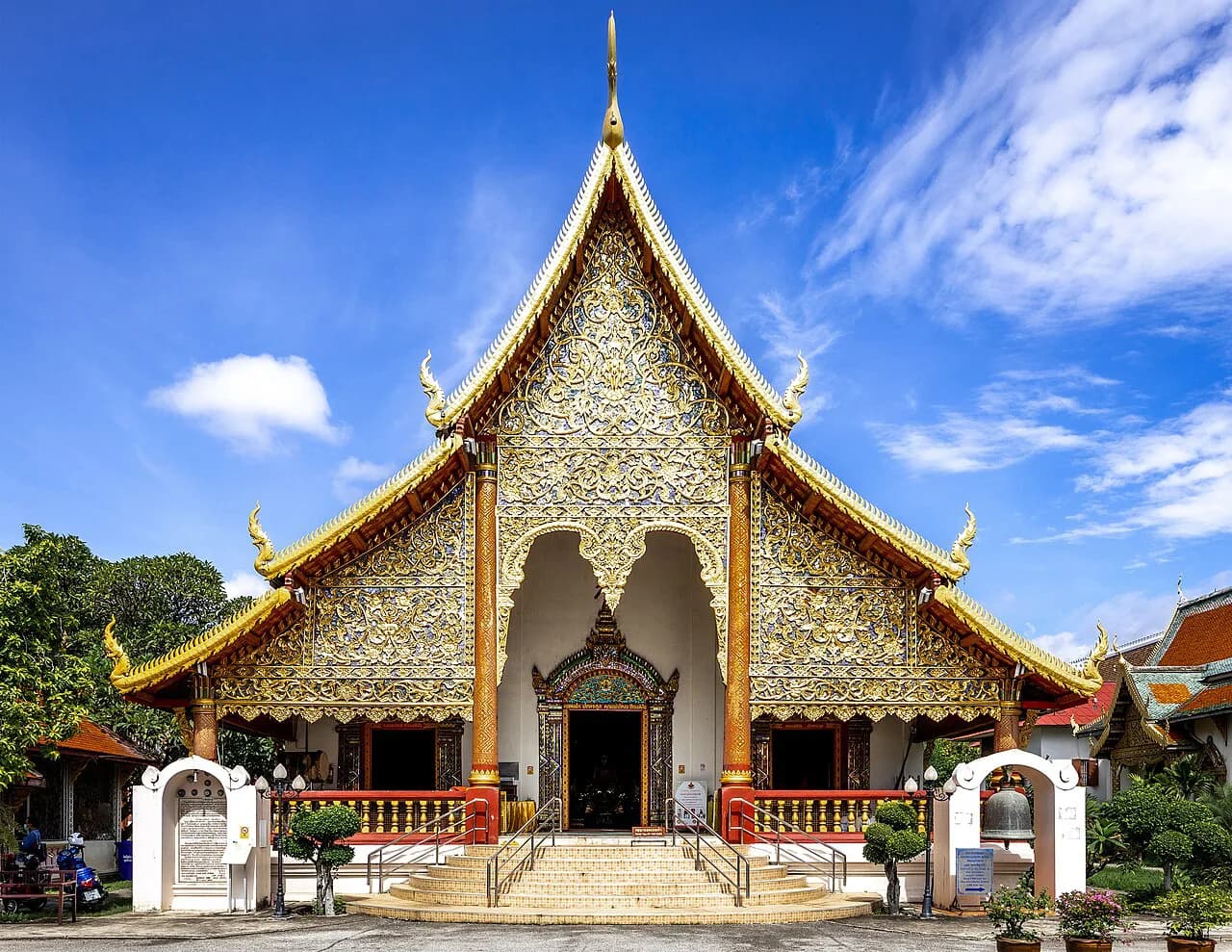
Wat Chiang Man is a 30- to 45-minute stop, not a half-day, and it earns that time as the temple tied to the founding of Chiang Mai itself. The compound sits in the northeast corner of the Old City, ringed by a modest cloister, and its central chedi supported by 15 stone elephants is the image most visitors come for. This page covers the temple's history, its location and walking approach, the buildings and Buddha images inside, and how to fit it into an Old City morning.
The first temple inside Chiang Mai's walls
Wat Chiang Man is generally described as Chiang Mai's oldest temple still standing, built on the ground where King Mangrai is said to have overseen construction of his new capital. That founding link is the reason to visit: this is the city's origin story in brick and gold rather than one more stop on a temple checklist. Travel accounts give the founding as 1296 or 1297, so treat any single year as approximate.
What the various accounts agree on is the role, not the calendar. It was established as the first royal temple within the walls of the new Lanna capital and served as a civic and spiritual anchor while the city took shape around it. For a traveler, that context turns a small compound into a useful starting point before you look at the larger temples elsewhere in the Old City.

Where it is in the Old City
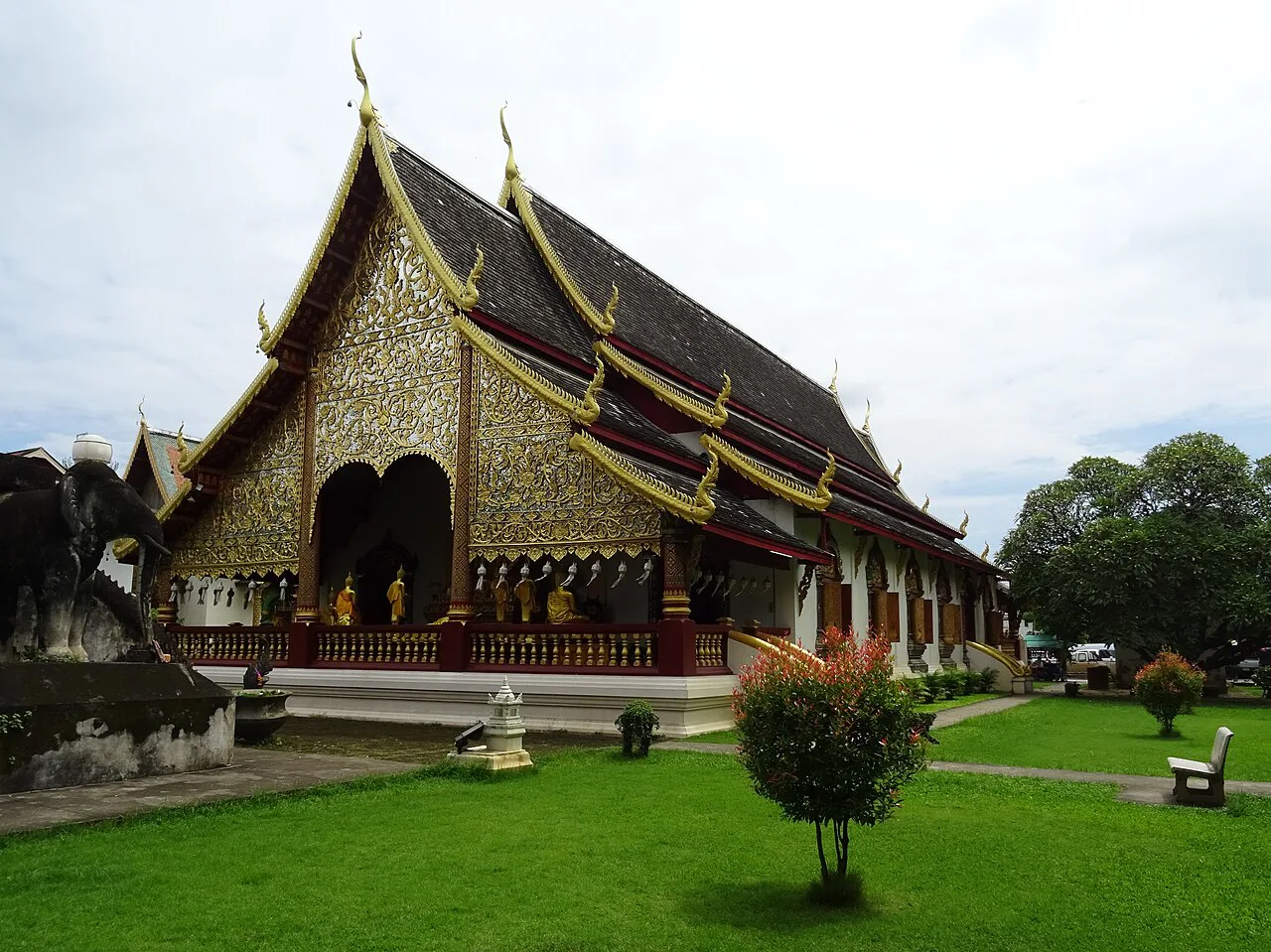
The temple address is 171 Ratchapakhinai Road in Tambon Si Phum, in the northeast quadrant of the walled Old City. If you enter through Chang Puak Gate on the north wall, turn left onto Ratchapakhinai 1 Road and the temple entrance appears on your right after roughly 200 meters, about a three-minute walk.
Because it sits inside the moat, Wat Chiang Man fits neatly between a coffee stop near Tha Phae Gate and the cluster of temples to the south. If you are orienting yourself around the east wall first, the area around Tha Phae Gate, Chiang Mai is the usual starting point for an Old City walk.

How to get there
Guests staying anywhere inside the Old City can simply walk. From the moat area or the Nimman side, a tuk-tuk or a Grab ride drops you at the Ratchapakhinai Road entrance; agree the fare or confirm the app price before you set off, since no source here publishes typical fares.
Travelers coming from further out, including Doi Suthep (Wat Phra That Doi Suthep) on the mountain west of the city, should plan the temple as its own short stop rather than tacking it onto a mountain morning.
The Chedi Chang Lom and its elephants
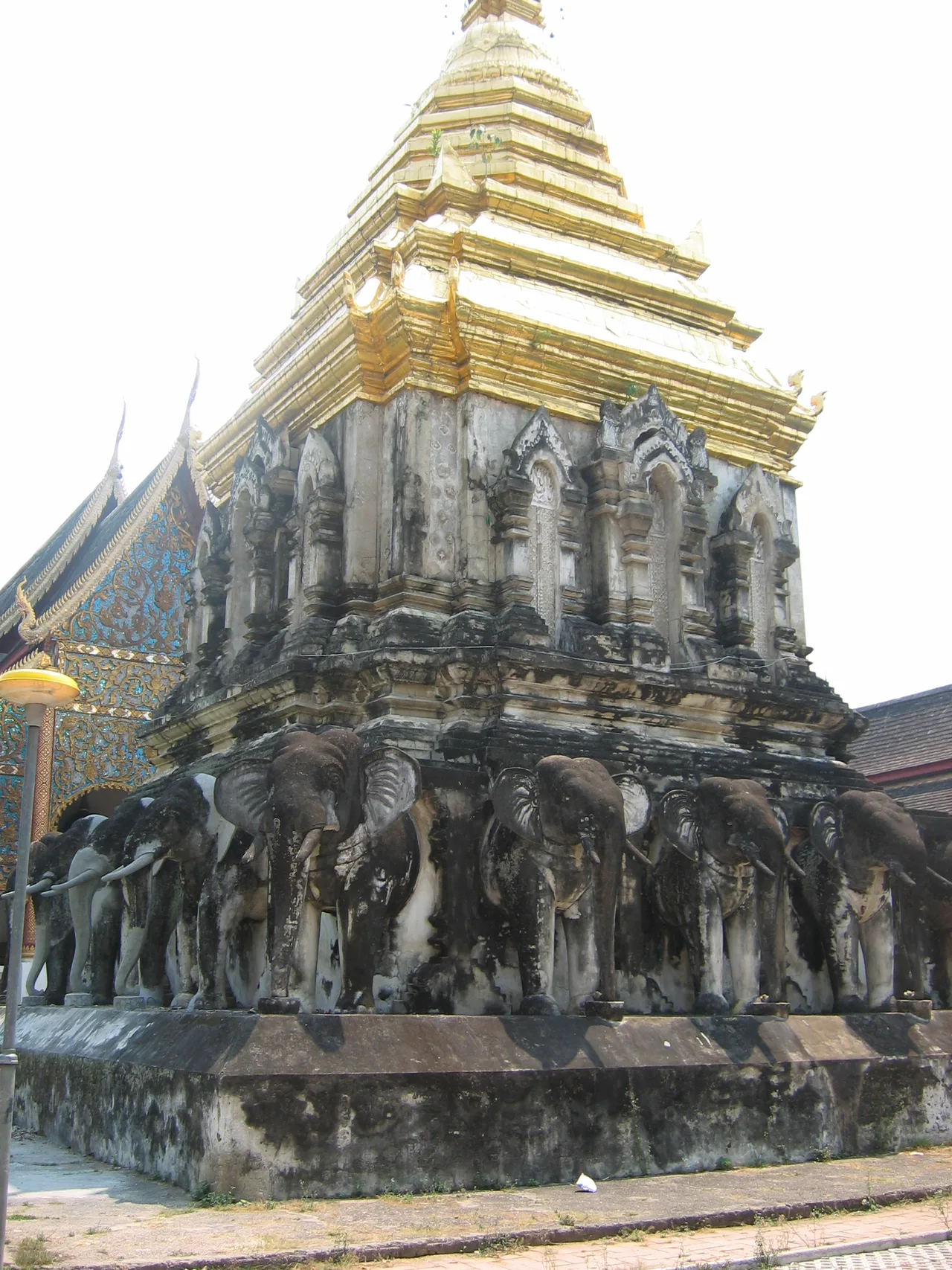
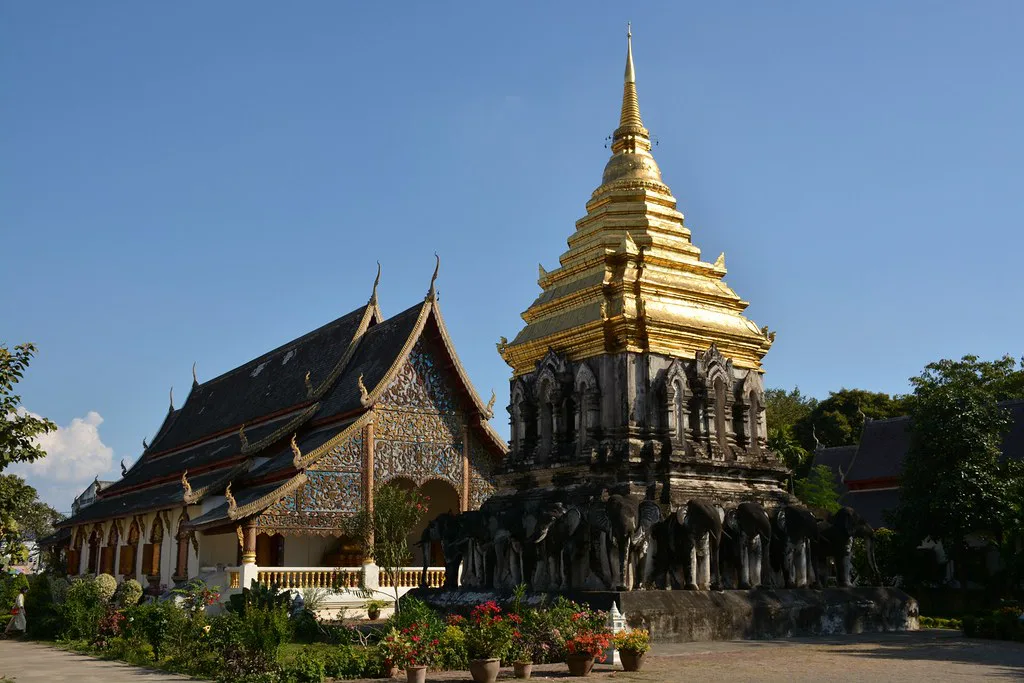
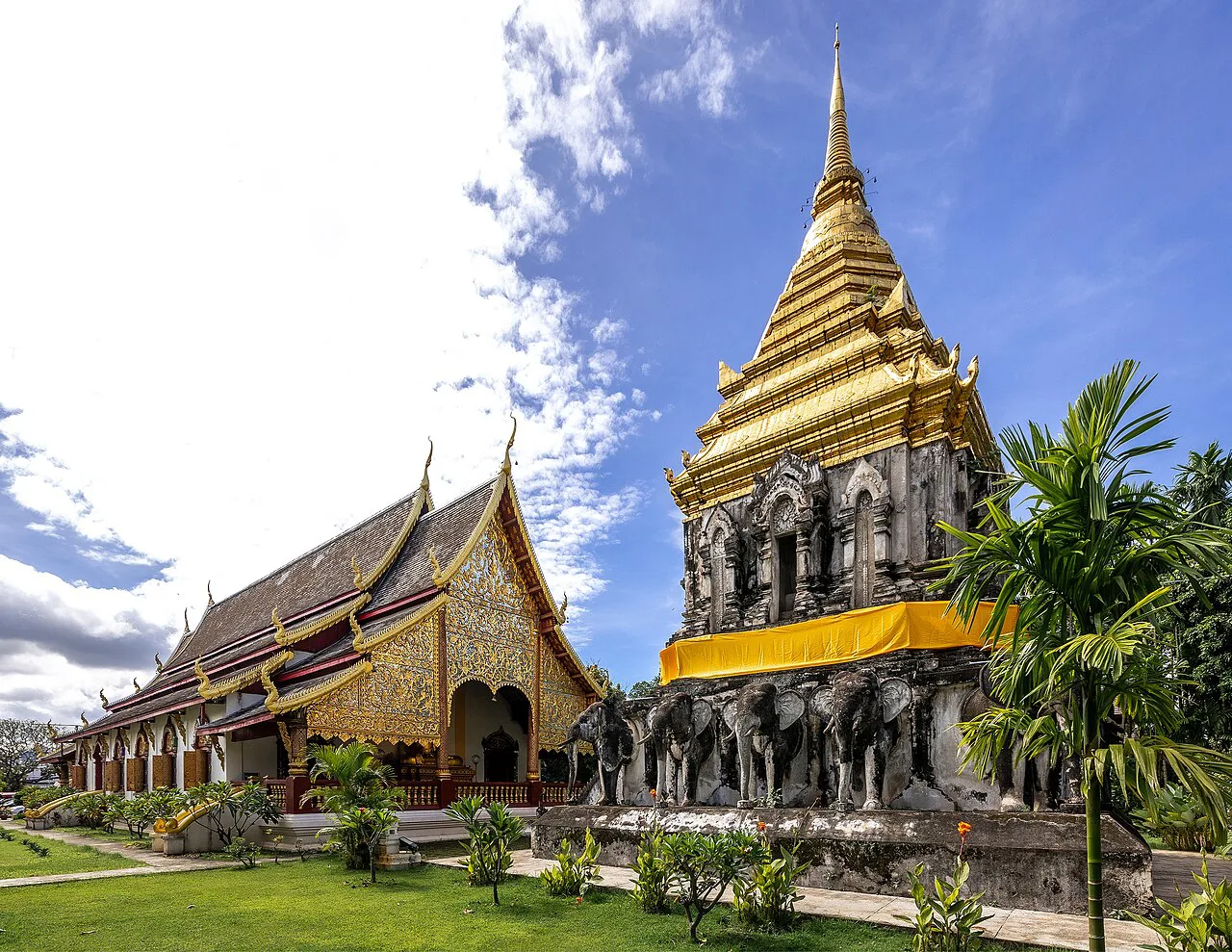
The Chedi Chang Lom is the temple's oldest structure and the reason most cameras come out. A gilded bell-shaped stupa rises from a square base ringed by 15 life-sized stone elephants that appear to shoulder the weight of the monument, a design described as a classic example of Lanna craftsmanship. Walk a full circuit at ground level: the elephants read differently from each side.
Stone inscriptions on the grounds record repeated restorations over roughly six centuries, which explains why the complex mixes eras rather than reading as a single build. That layering is part of the appeal for anyone interested in how Lanna religious architecture evolved—see the wider Planning Chiang Mai sightseeing around temples and the old city guide for how this fits into a day.
The Grand Viharn and the standing Buddha
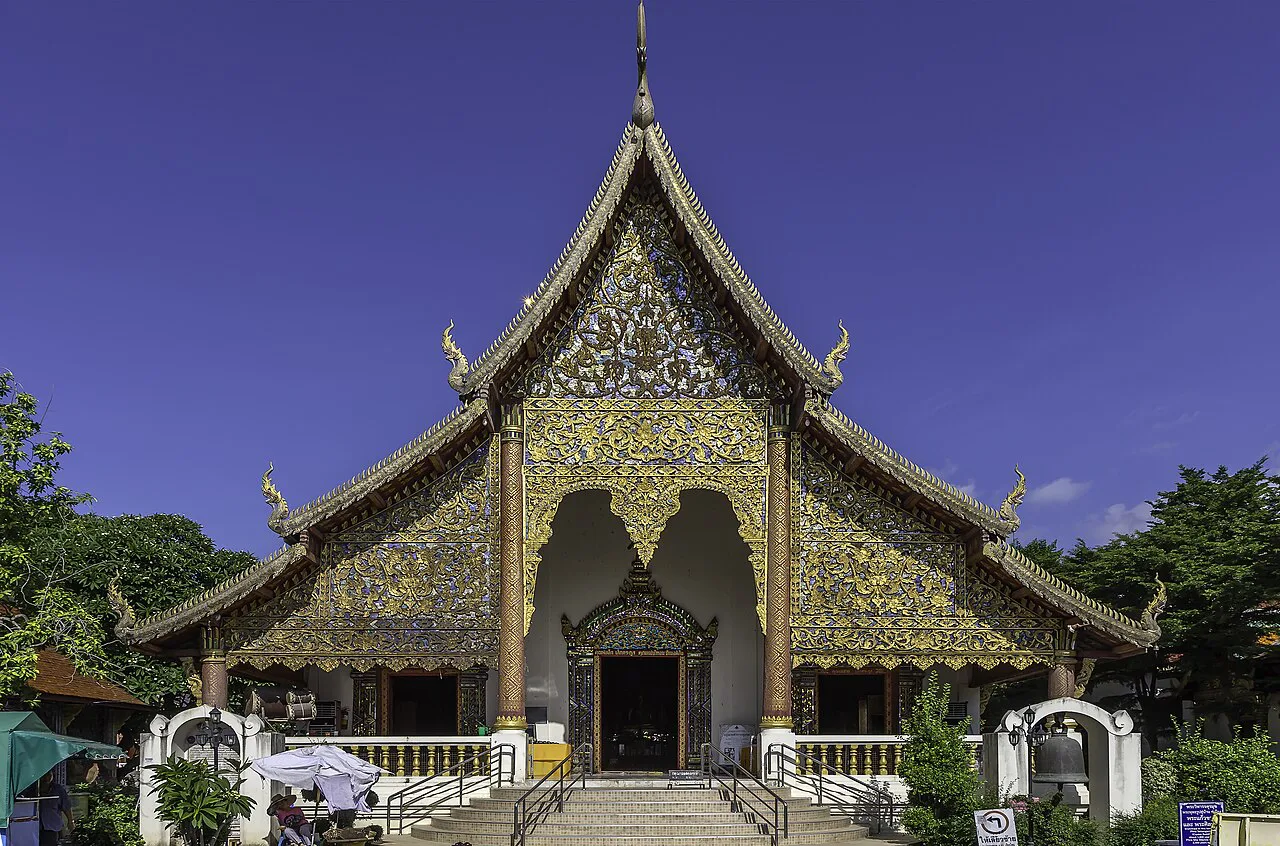
The main viharn, or prayer hall, carries the multi-tiered Lanna roof and gilded wood carving that define the style at its most ornate. Inside sits a standing Buddha holding an alms bowl, which one travel account calls the oldest Buddha image in Chiang Mai—a claim not confirmed by a primary source, so take it as reported tradition. Look up into the roof beams as well as at the altar; the carving is easy to miss when the hall is dim.
The Crystal Buddha and the Phra Sila Buddha
A smaller viharn near the entrance holds the two images that give the temple much of its reputation. The Phra Sae Tang Khamani, known as the Crystal Buddha, is a roughly 10-centimeter figure carved from clear quartz, and legend credits it with protective power against disaster. Beside it is the Phra Sila Buddha, a stone bas-relief stele associated with bringing rain, which is why it features in Songkran-season ritual.
Treat the origin stories as belief and folklore rather than verified history. Accounts place the Crystal Buddha's creation many centuries ago and the Phra Sila Buddha's carving in Ceylon, now Sri Lanka, but these are traditions the temple preserves, not dates you should plan around. Knowing that distinction makes the images more interesting, not less.
Layout and pace
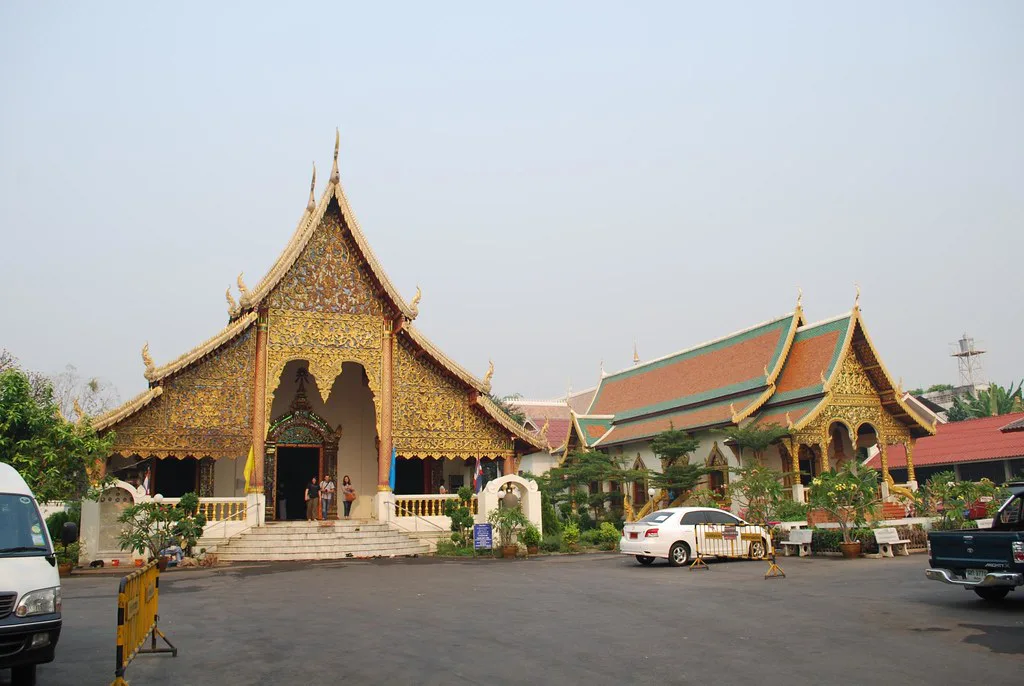
The compound is compact: a main hall, the smaller viharn with the revered images, a scripture library, ordination spaces and the central chedi, all knitted together by a shaded courtyard and a well-kept garden with seating. That tight footprint is why the temple stays calm even when the Old City is busy; there is no long approach to absorb crowds. Plan to wander rather than follow a fixed route.

How long to allow
Thirty to 45 minutes covers the chedi circuit, both viharns and a sit in the garden, with time for photos. A quick photo stop at the elephants takes 10 to 15 minutes if you are moving fast between temples. The trade-off is heat: the courtyard is open, so an early morning or late afternoon slot is more comfortable than midday, and the temple's quiet makes a slow visit genuinely pleasant.
Entry, hours and donations
Published travel sources describe entry as free, with donations appreciated, though neither is an official statement. Hours are reported inconsistently: one lists roughly 5:00 AM to 7:00 PM, another 6:00 AM to 5:00 PM. Treat both as reported rather than guaranteed and check the posted times at the gate or with your hotel before making the temple a first or last stop of the day.
Nearby in the Old City
Wat Phra Singh, Chiang Mai: What to See and How Long to Allow sits a short walk south and is the natural next stop, with its own revered Buddha image and dense Lanna decoration. Wat Chedi Luang, Chiang Mai lies further south again, home to a massive ruined chedi that gives a very different sense of scale. Chaining all three on foot makes a coherent half-day rather than three separate trips.
For a broader menu of what else fills an Old City day, start with the planning guide to Chiang Mai sightseeing around temples and the old city, which lays out the main stops by area.
Who should skip it
Wat Chiang Man is small, and travelers chasing monumental scale or long cloister walks will find more to occupy them at the larger southern temples. There is no museum, no substantial interpretive signage and no viewpoint, so it rewards curiosity about the city's founding more than it rewards a checklist. If you have only one temple slot in Chiang Mai, spend it where the architecture is biggest, and come here if you have an hour to spare in the northeast corner.
Is Wat Chiang Man worth the detour?
Yes, if you are already inside the Old City and want the temple that explains how Chiang Mai began. Give it 30 to 45 minutes in the morning, walk in from Chang Puak Gate or your guesthouse, and pair it with Wat Phra Singh and Wat Chedi Luang to the south. Skip it only if your time is tight and scale matters more to you than origin stories.
Explore more Chiang Mai guides
Frequently Asked Questions
What is special about Wat Chiang Man?
It is the temple tied to the founding of Chiang Mai, built as the first royal temple inside the new city walls under King Mangrai. Its Chedi Chang Lom, ringed by 15 stone elephants, and the Crystal Buddha in a side viharn are the two things most visitors come to see. Sources disagree on the exact founding year, so treat specific dates as approximate.
Is Wat Chiang Man free to enter?
Published travel accounts describe entry as free, with donations appreciated rather than required. Hours are reported inconsistently, so confirm the posted times at the gate before you build your day around an early or late visit.
How long does a visit to Wat Chiang Man take?
Budget 30 to 45 minutes for the elephant chedi, both viharns and a short sit in the garden. A fast photo stop takes 10 to 15 minutes. The courtyard is exposed, so early morning or late afternoon is more comfortable than midday.