
Wat Chedi Luang: A Visitor's Guide to Chiang Mai's Temple of the Big Stupa

Plan on 30 to 45 minutes for Wat Chedi Luang if you want the big chedi and the city pillar shrine, and closer to an hour if you photograph the ruins and walk the surrounding viharns. The temple is the symbolic center of Chiang Mai's walled old city, built around a massive Lanna-style stupa that has dominated the skyline for roughly seven centuries. This guide covers where the temple sits, how to reach it, what the courtyard and surrounding buildings contain, and how to fit it into a walkable old-city cluster.
What Wat Chedi Luang Is and Why It Defines the Old City
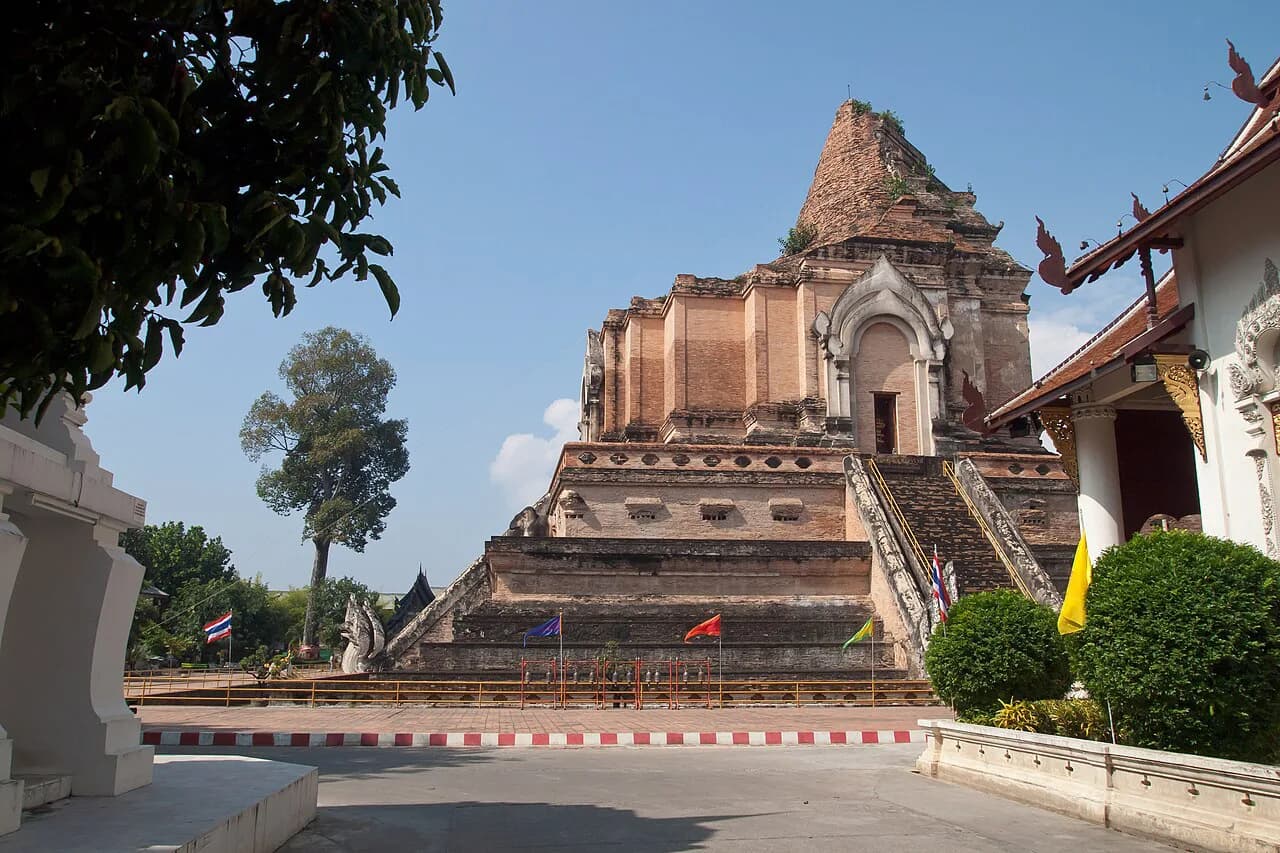
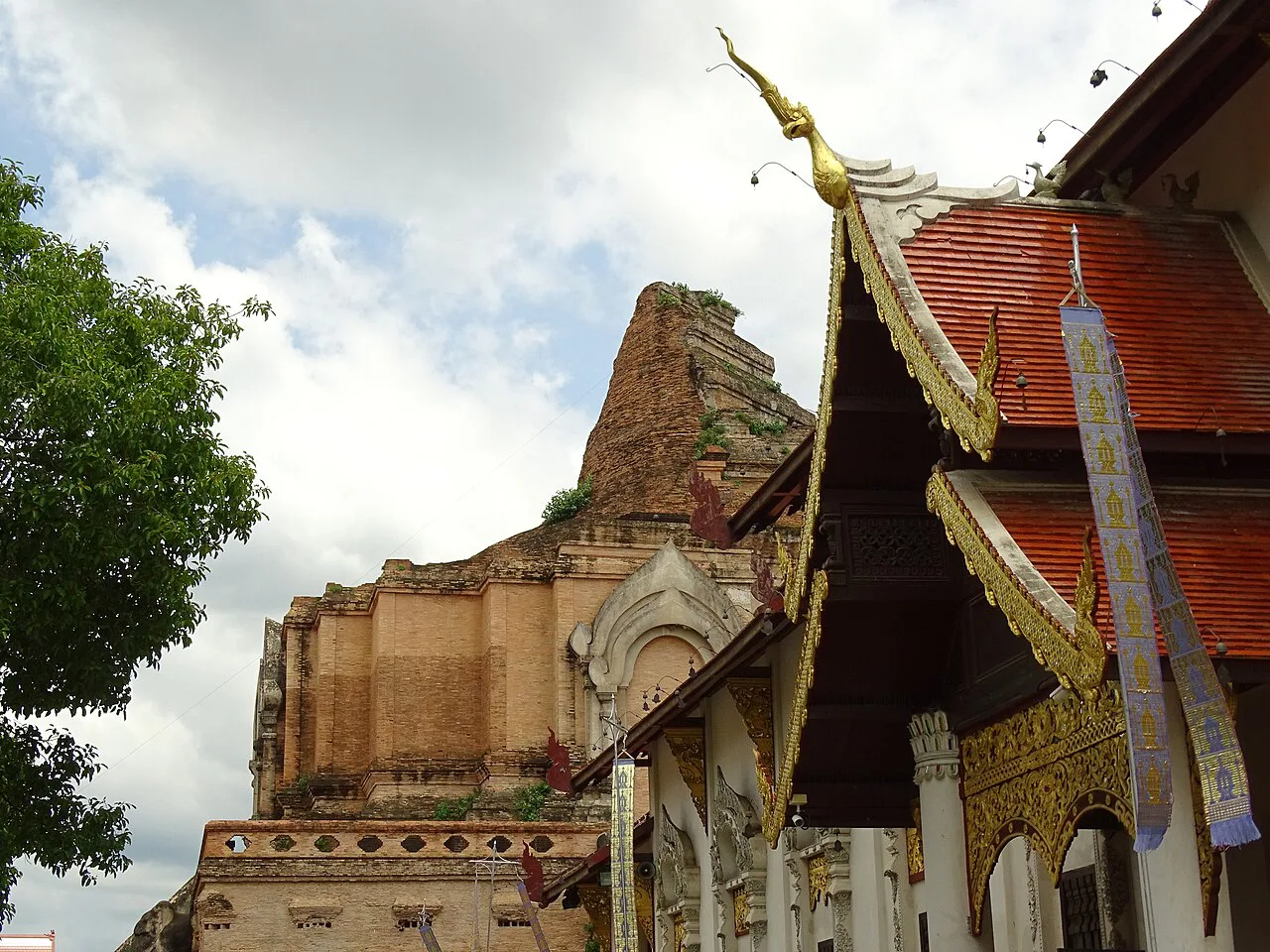
Wat Chedi Luang is known in English as the Temple of the Big Stupa, and the name is literal: the ruined brick-and-stone chedi at its center is the largest in Chiang Mai and the image most associated with the city. The temple dates to the 14th century and was founded during the Lanna Thai Kingdom period, when Chiang Mai was the capital of a northern kingdom that shaped the region's temple architecture. Functionally it is more than a single monument: the walled grounds hold several shrines and viharns plus a Buddhist University, so the chedi is one stop within a compound rather than the whole visit.
The temple also houses the Sao Inthakin, the city pillar shrine, which gives Wat Chedi Luang a civic and spiritual role beyond tourism. For local visitors the pillar is the reason the temple matters, and you will often see people making offerings there while tour groups cluster at the chedi. Expect the atmosphere to be mixed: devotional at the shrines, busy and photo-focused in the open courtyard.
Where It Sits in the Walled Old City
Wat Chedi Luang sits inside the moat on the central old-city grid, on Prapokklao Road, a short walk from the intersection many visitors know from the Sunday Walking Street. If you are staying anywhere within the square of the old city walls, the temple is walkable in roughly 10 to 20 minutes from most guesthouses and hotels. Coming from the east, walk in through Tha Phae Gate and continue west along the main lanes; from the north or west of the old city, head for the central intersection and look for the chedi rising above the rooflines.
Because the chedi is visible from several streets, it works as a navigation landmark rather than an address you need to punch into a map. Walk toward the tallest brick structure you can see inside the moat and you will arrive at the temple's entrance on Prapokklao Road. The old city's one-way lanes can confuse drivers, so if you take a car, agree on a drop point near the main gate rather than asking the driver to find the exact entrance.
How to Get There: Walking, Songthaew, Grab
From within the moat, walking is the simplest option, and the temple pairs naturally with a loop past Wat Phra Singh and the old-city lanes. From Nimmanhaemin or the riverside, a red songthaew or a Grab car is the usual choice; tell the driver Prapokklao Road or simply Wat Chedi Luang, since it is a well-known destination. Traffic inside the old city is slow, so a short ride can take longer than the map suggests at peak hours.
If you are combining the temple with a hill trip, note that Wat Phra That Doi Suthep sits outside the city on the mountain and needs its own transport, typically a songthaew from the Chang Phueak area or a booked car. Do not try to fold both into a single walking morning; give the mountain its own half-day. Read the details on getting up to the temple before you plan the sequence.
The Grand Chedi: Origins, Dimensions and the Ruined Crown
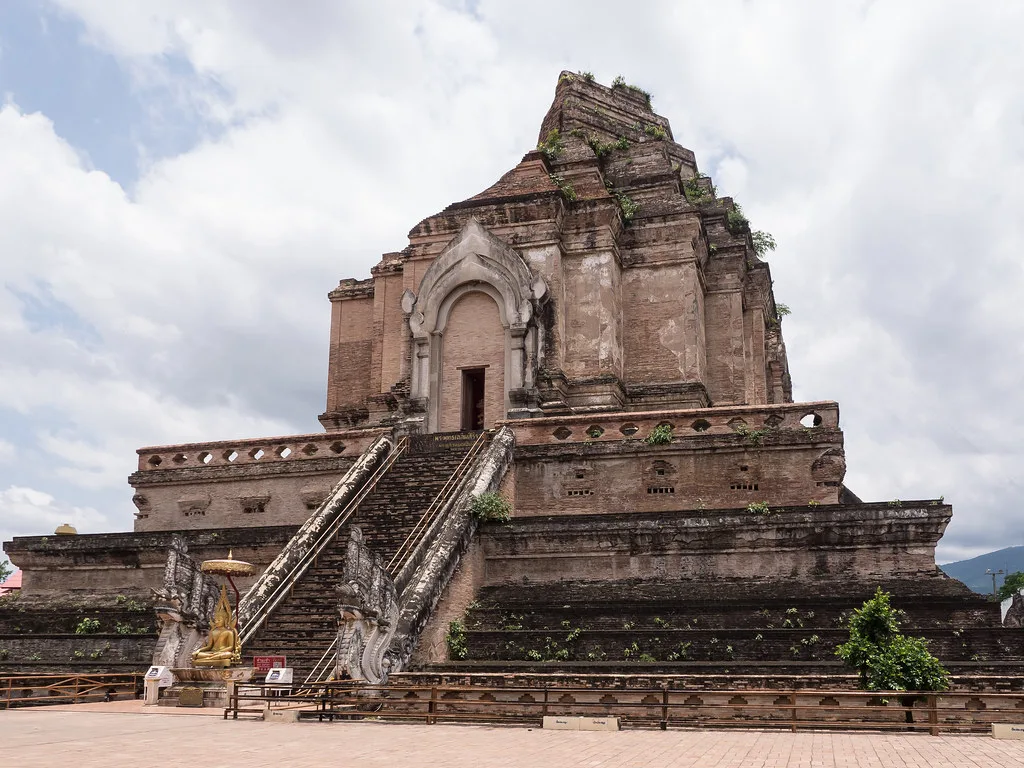
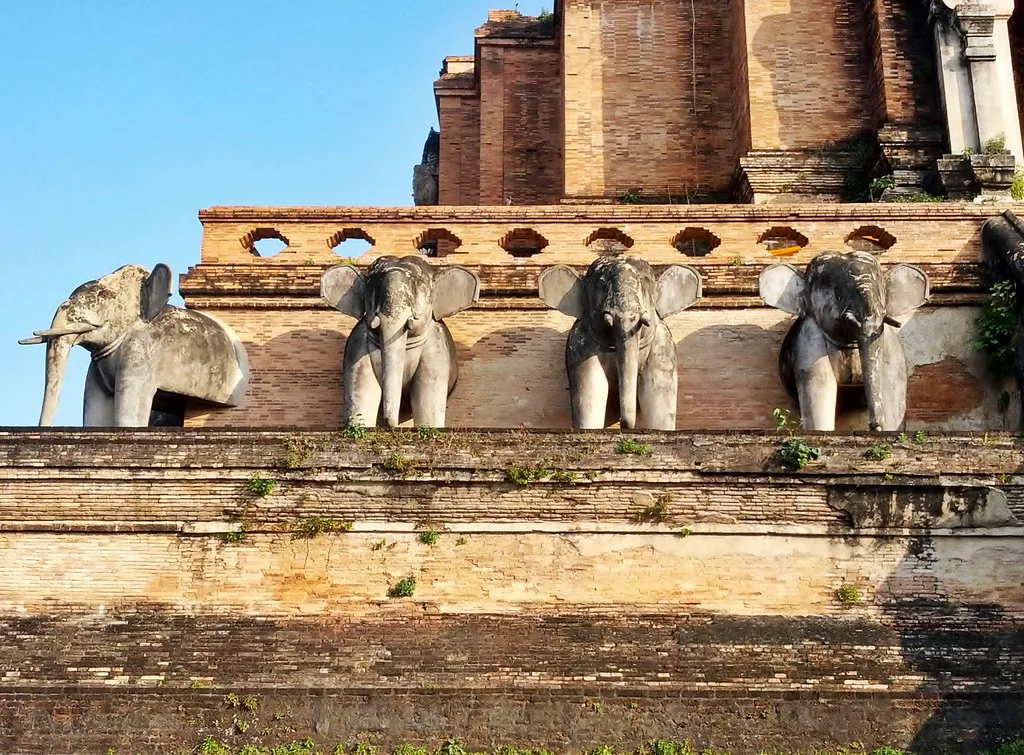
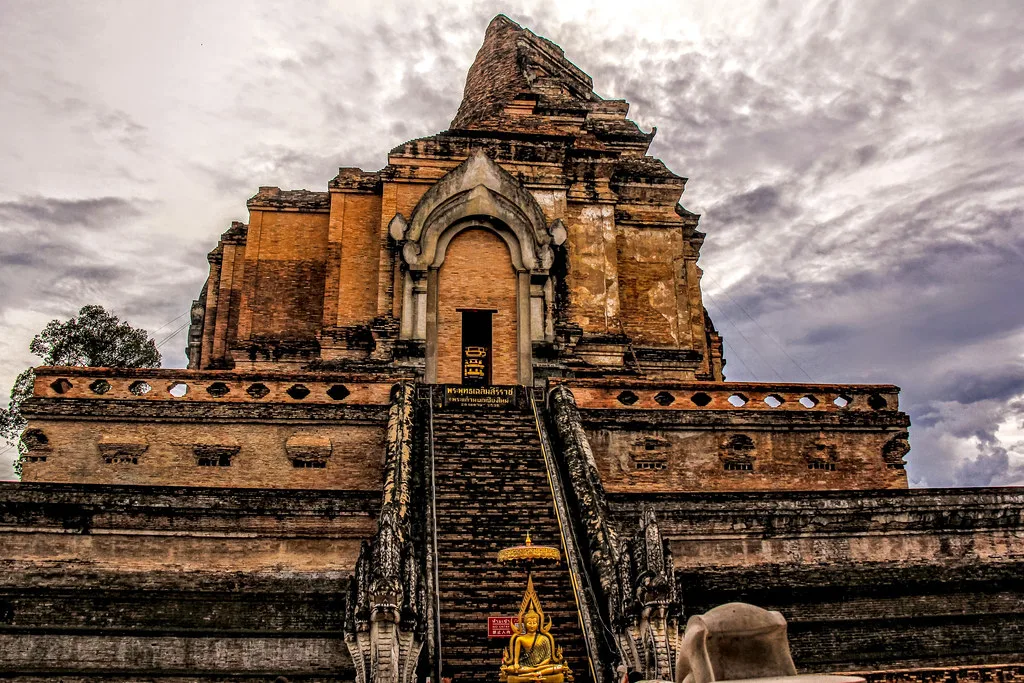
The Tourism Authority of Thailand describes the chedi as measuring about 282 feet high and 144 feet wide at its base, and dates the temple to the 14th century. The monument has been tied to that 14th-century foundation ever since and remains the defining feature of the Chiang Mai skyline, though sources stop short of a single confirmed construction year. Its upper section is open and partly ruined, which is what gives the monument its distinctive broken silhouette.
The chedi's upper portion is ruined, and the temple has been described as partially destroyed for centuries rather than as a restoration in progress. The broken, uneven crown — not a smooth bell — is what visitors now see, and it explains the exposed brickwork on the flanks. Photo essays of the temple describe the same broken profile, so treat the ruin as the monument's settled state.
The Sao Inthakin and the City Pillar Shrine
The Sao Inthakin, or city pillar shrine, stands within the temple grounds and is considered the spiritual anchor of Chiang Mai. The Tourism Authority of Thailand listing identifies the temple as the home of the City Pillar Shrine, which is why the compound carries importance beyond its architecture. Treat the shrine as an active place of worship: keep a respectful distance when people are praying and avoid interrupting offerings.
Visitors commonly spend a few quiet minutes at the pillar before moving to the chedi courtyard, and the two together are the core of the visit. If you are short on time, see the pillar and the chedi first, then decide whether the surrounding buildings justify a longer stay.

The Viharns, Pavilions and Reclining Buddha
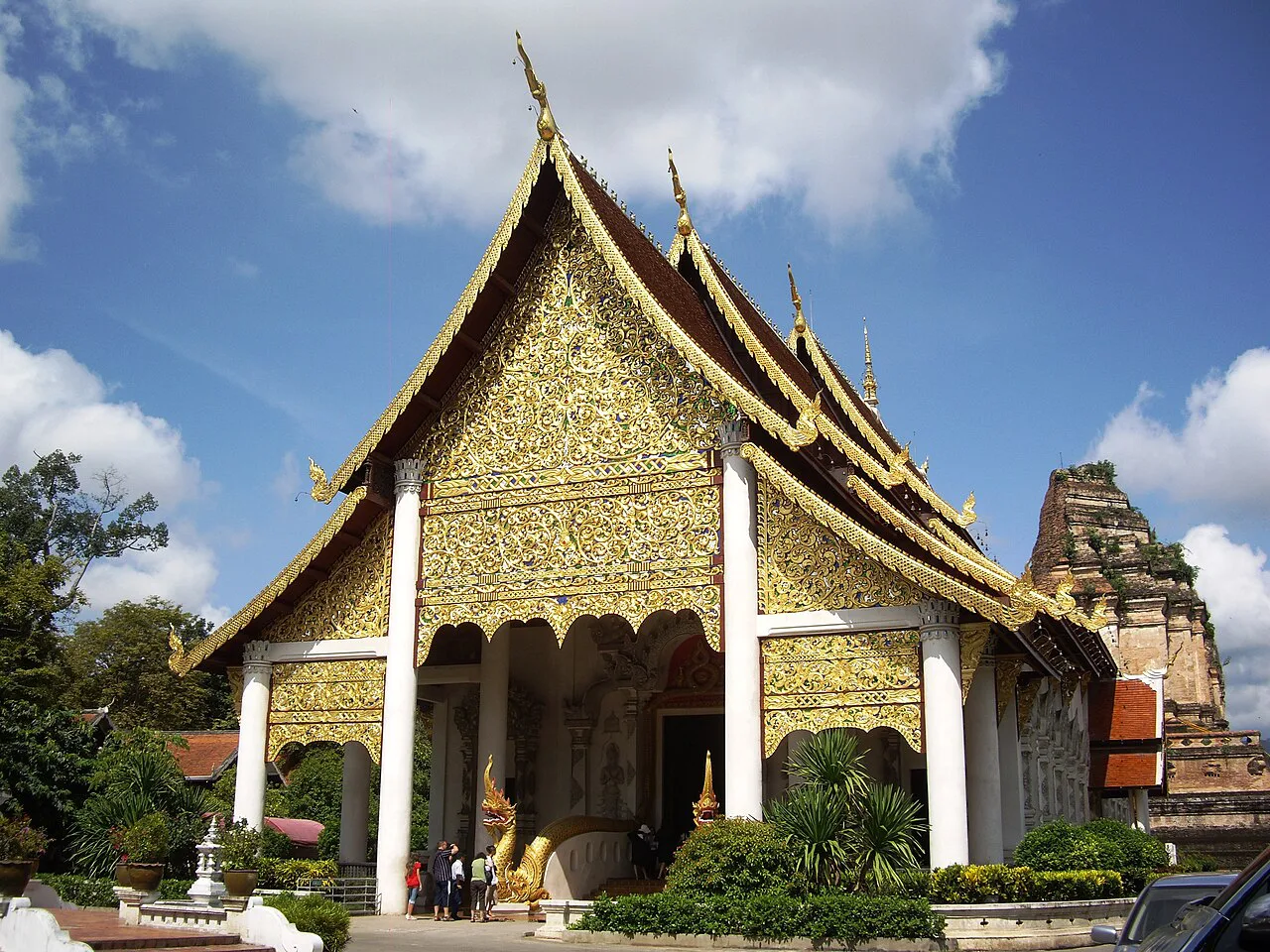
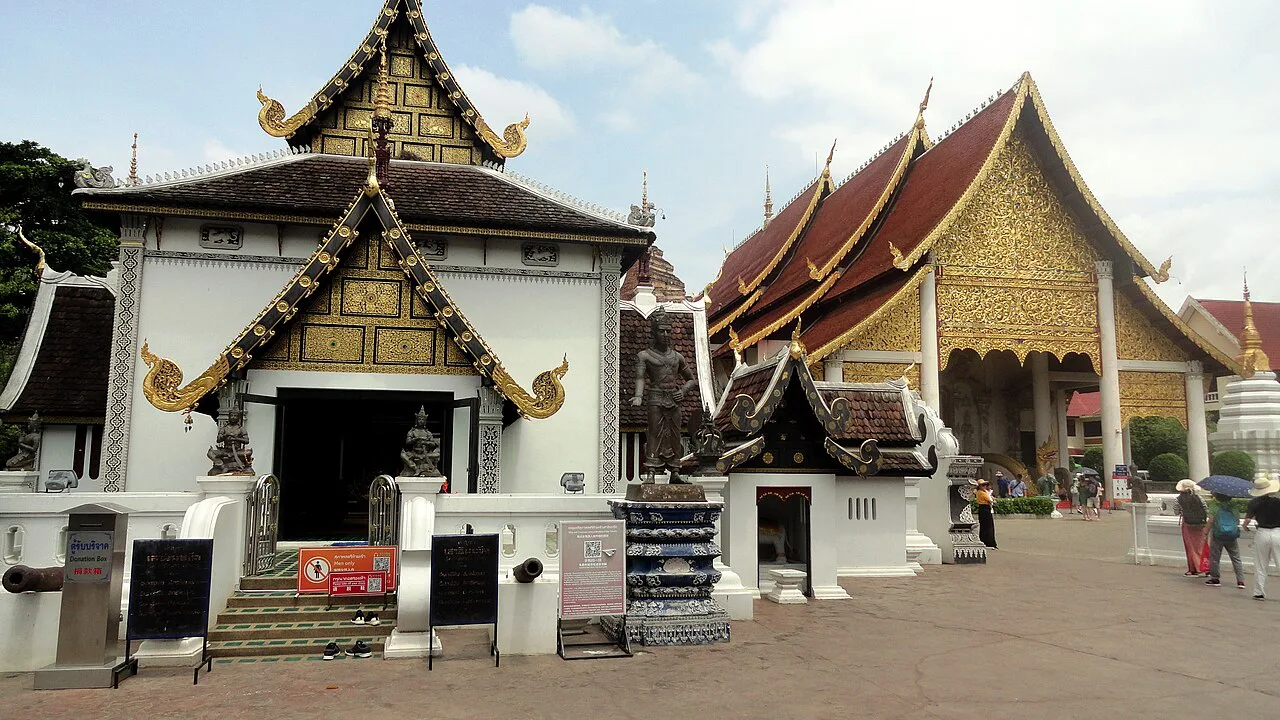
Around the chedi courtyard you will find the Phra Viharn Luang, the main assembly hall, along with smaller viharns and pavilions that hold Buddha images and murals. A reclining Buddha pavilion is among the structures on the grounds, and the temple complex includes a Buddhist University, which means parts of the property are working religious and academic space rather than open sightseeing areas. Do not assume every building is open to visitors; look for signs or ask at the entrance.
The result is that Wat Chedi Luang rewards a slow loop rather than a single photo stop. Walk the courtyard perimeter to see the chedi from different angles, then step into the main viharn for the interior. If you are building an old-city temple walk, nearby Wat Phan Tao is a short stroll away and makes a natural next stop.
How Much Time to Allow
A quick loop of the chedi courtyard and the city pillar shrine takes about 30 to 45 minutes, which suits most first-time visitors. Photographers and anyone who wants to sit with the shrines should plan closer to an hour so they can see the chedi in different light and visit the main viharn without rushing. Midday heat in Chiang Mai is real, so morning or late afternoon is more comfortable and usually less crowded.
If you are in Chiang Mai for several days, treat the temple as one stop in a walkable old-city cluster rather than a standalone excursion. Pair it with the old-city lanes and a café break, and save longer outings for another part of the day. A glance at the wider Chiang Mai Attractions collection helps you sequence the stops realistically.

Hours, Tickets and Access: What to Confirm Before You Go
Current opening hours and entry fees for Wat Chedi Luang are not clearly confirmed by an official source in the material available here, so check the temple signage at the entrance or ask at the gate before you set out. One third-party travel guide lists daily hours (see below), but treat that as a rough guide rather than a guarantee. Do not assume an entry ticket covers every building on the grounds. If a restoration or access closure is in place, the temple gate is the most reliable place to see it.
One travel guide lists daily hours of 6:00 AM to 6:00 PM, but this is a third-party source and should be treated as a rough guide rather than a guarantee. Check again on the day, especially if you are visiting around a holiday or during a period of restoration work. Photography rules and dress expectations are not consistently documented, so look for posted signs rather than relying on secondhand advice.

What's Nearby Within Walking Distance
Wat Phra Singh, one of the old city's most important temples, is a short walk west along the same central lanes and pairs well with Wat Chedi Luang in a single morning. The Sunday Walking Street market runs along the streets near the temple on Sunday evenings, so if your visit coincides you can combine the two. Wat Chiang Man, the oldest temple in the old city, is also within walking distance to the north.
If you want a break from temples, the Chiang Mai National Museum sits outside the old city to the northwest in the Chang Phueak District, which makes a separate half-day rather than a walk from Wat Chedi Luang. Further afield, Wat Umong's forest setting and tunnels offer a different kind of temple visit and are best reached by car or songthaew.
Getting the Most From a Visit
Go early or late if you want the chedi without a crowd; midday brings tour groups and strong light that flattens the brickwork in photos. Walk the courtyard clockwise and stop at the city pillar shrine before the chedi so you see the devotional side of the temple first. Keep your loop slow enough to notice the smaller viharns and the university buildings, which most visitors walk past.
If you are staying in the old city, the temple is easy to revisit at different times of day, and a second short stop costs little. If your time is tight, see the chedi and the pillar and move on to the next temple rather than trying to cover every building.
Is Wat Chedi Luang Worth a Stop?
Yes, for most first-time visitors to Chiang Mai: the chedi is the city's defining monument and the city pillar shrine gives the stop a significance the surrounding temples do not duplicate. Budget 30 to 45 minutes, walk in from within the old city, and go early or late to avoid the midday crush. Confirm current hours and any entry fee at the gate before you go, and pair the visit with Wat Phra Singh for a natural old-city temple morning.
Explore more Chiang Mai guides
Frequently Asked Questions
What happened to the top of Wat Chedi Luang?
The upper section of the chedi is partly ruined, giving it a broken-topped silhouette rather than a smooth bell. That broken crown is the shape you see in most photos of the temple today.
How long does a visit to Wat Chedi Luang take?
Most visitors need about 30 to 45 minutes for the chedi courtyard and the city pillar shrine. Photographers and anyone who wants to sit with the shrines should allow closer to an hour.
Do I need a ticket for Wat Chedi Luang?
Entry fees are not clearly confirmed by an official source in the material available here, so check the signage at the temple entrance or ask at the gate before you go. Do not assume a ticket covers every building on the grounds.
What is the best time of day to visit Wat Chedi Luang?
Early morning or late afternoon is more comfortable and usually less crowded than midday. The light is also better for photographing the brickwork of the chedi.