Songthaew Guide: How to Ride Thailand's Shared Pickup Taxis
What a songthaew is, how to ride one, how fares work, and when BTS, Grab or a taxi is the better choice in Bangkok and other Thai cities.
On this page
Last updated November 2026. A songthaew is a pickup truck fitted with two bench seats in the back, used in Thailand as a shared taxi or a hired ride. Bangkok has far fewer of them than Chiang Mai, Phuket Town, Pattaya, Krabi or Hat Yai. This guide shows how to recognise one, board it, pay fairly and decide when another mode is smarter.
What Is a Songthaew?
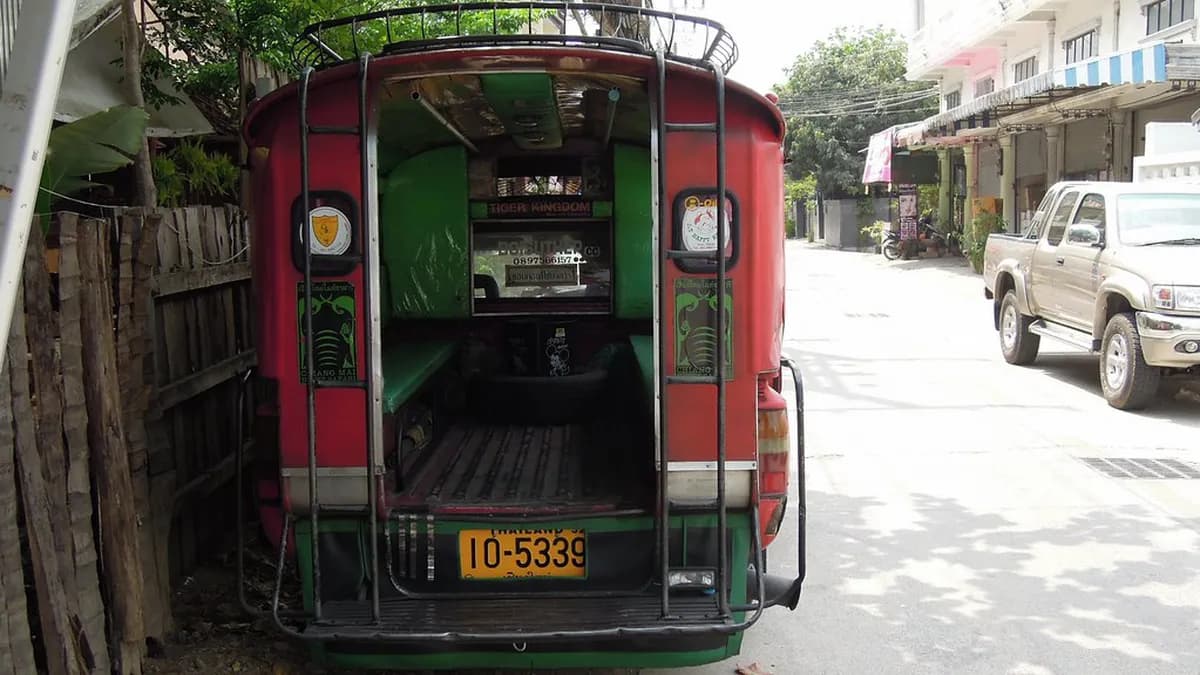
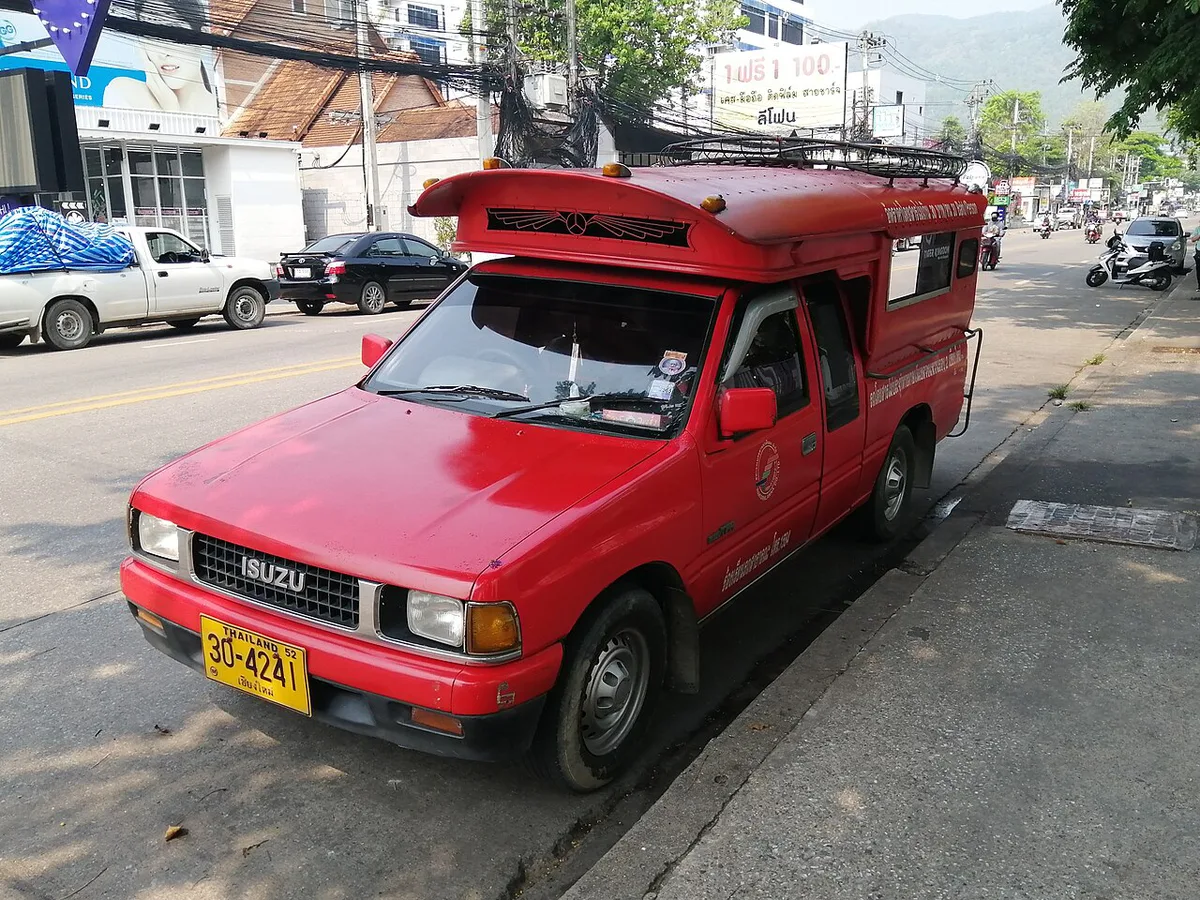
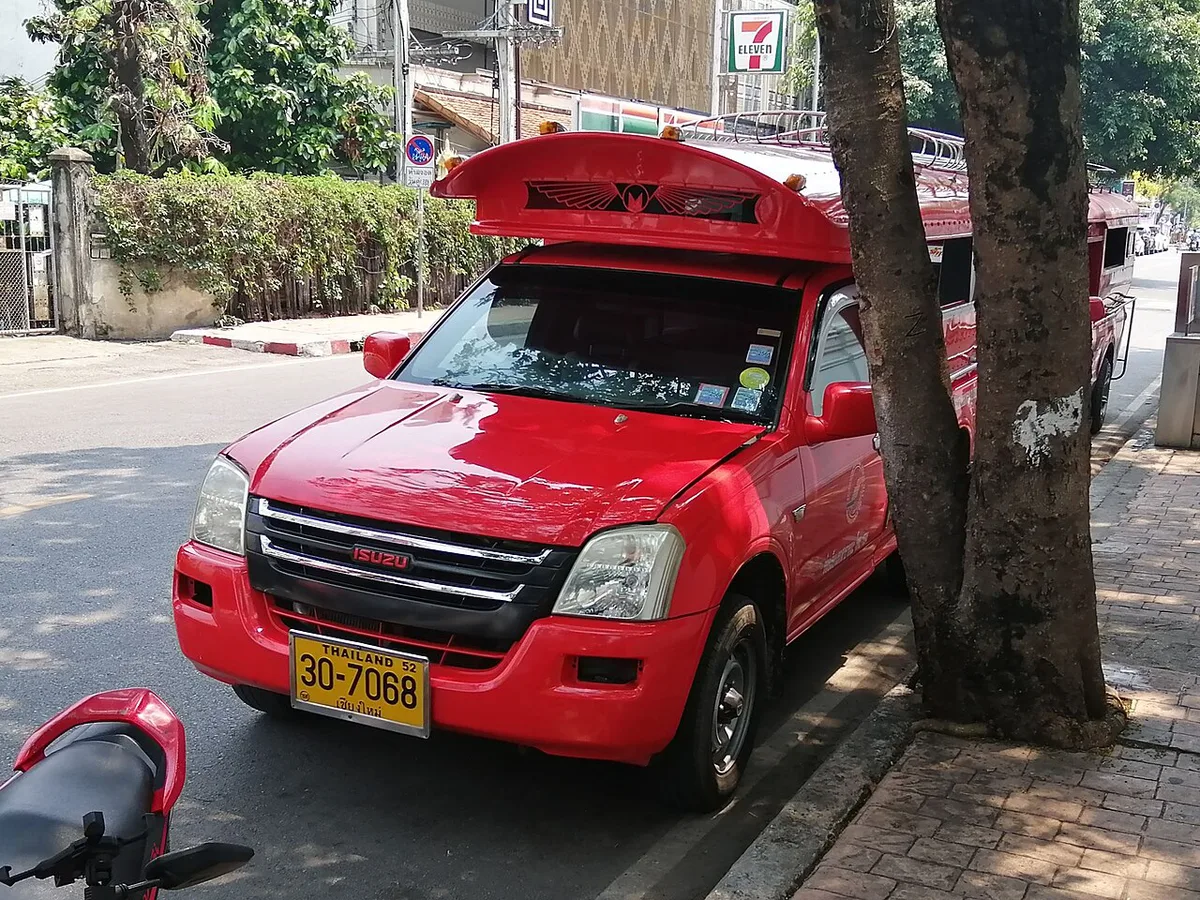
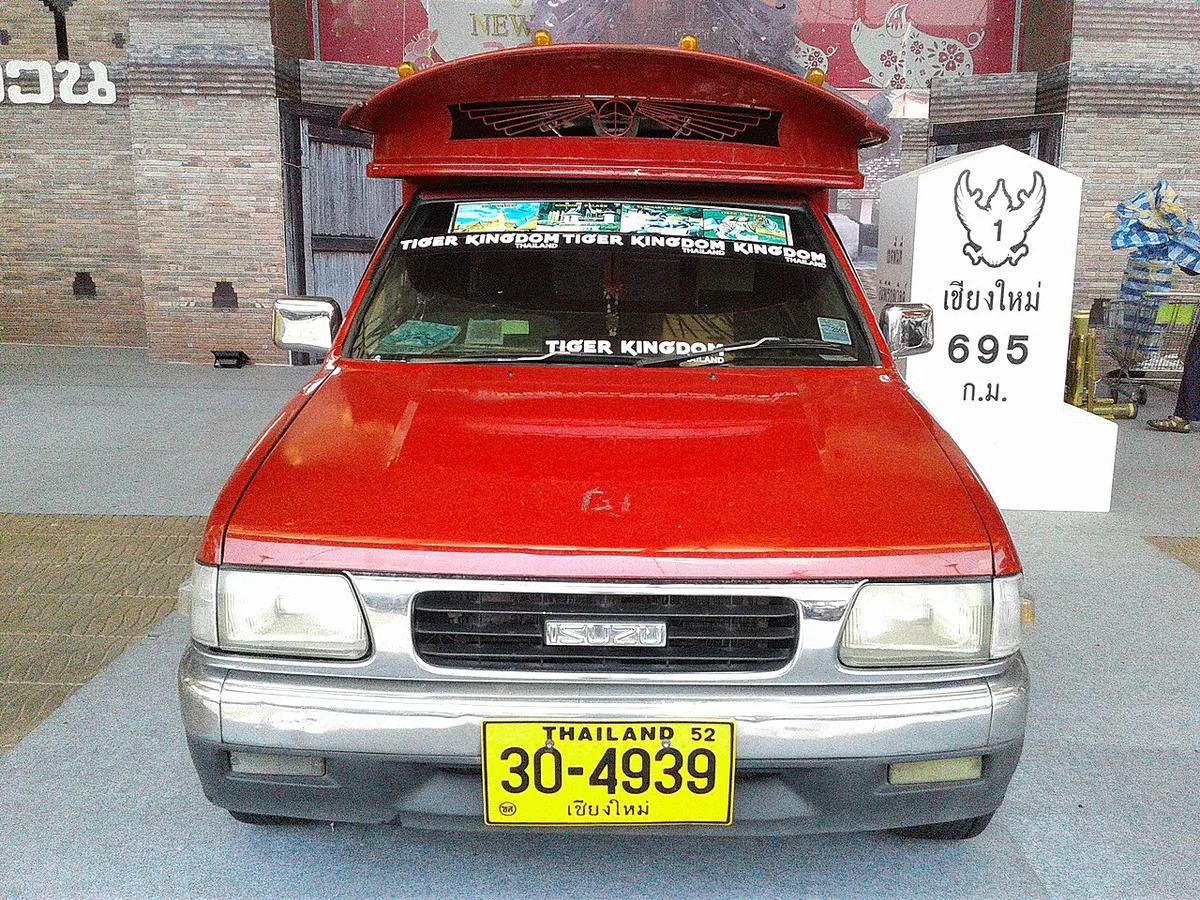
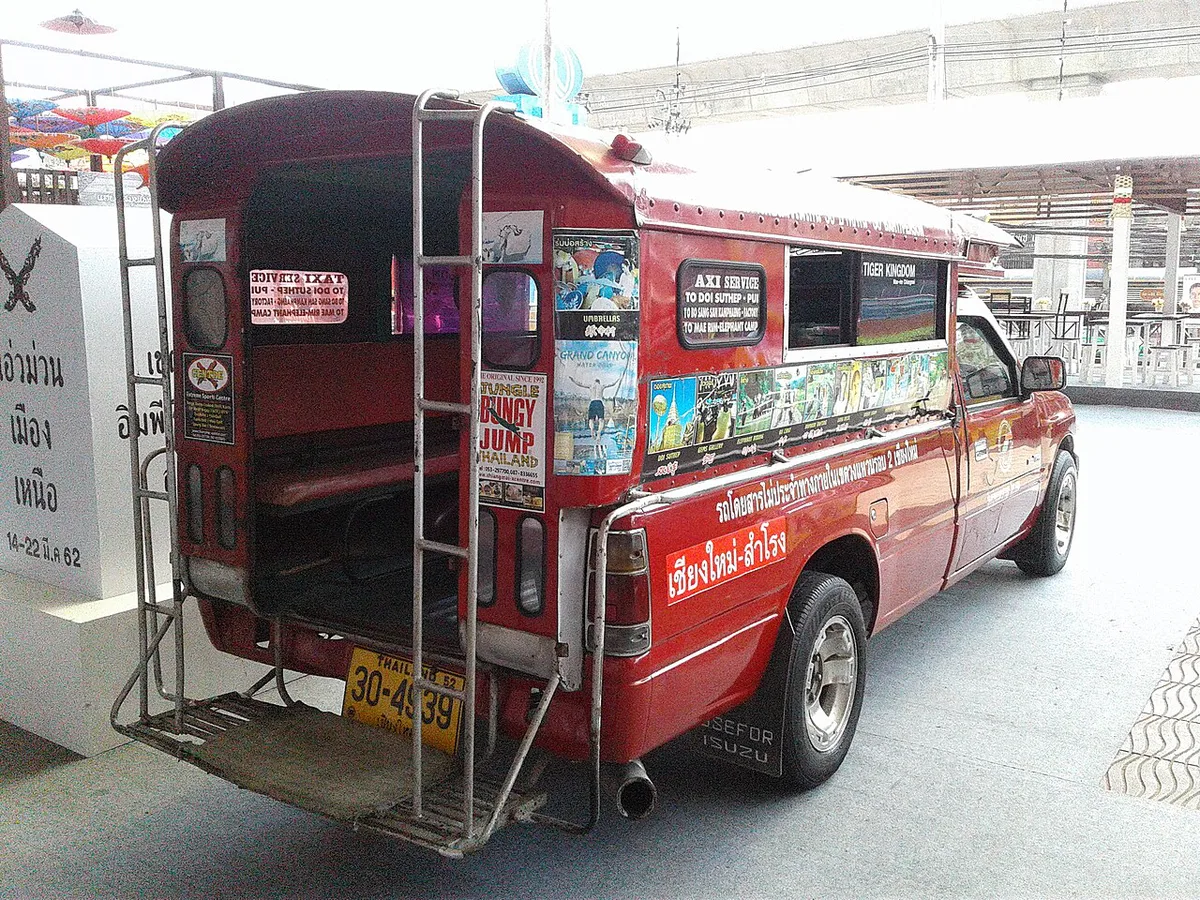
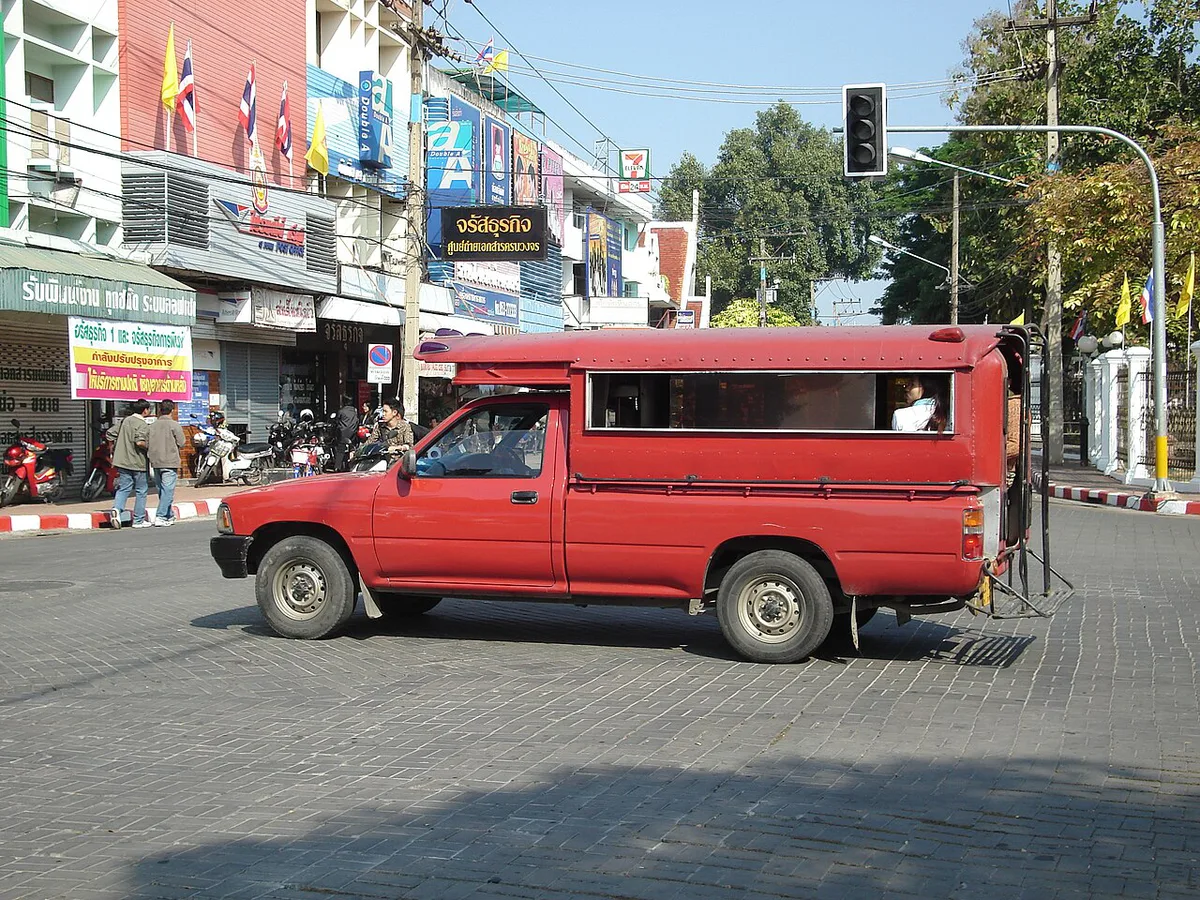
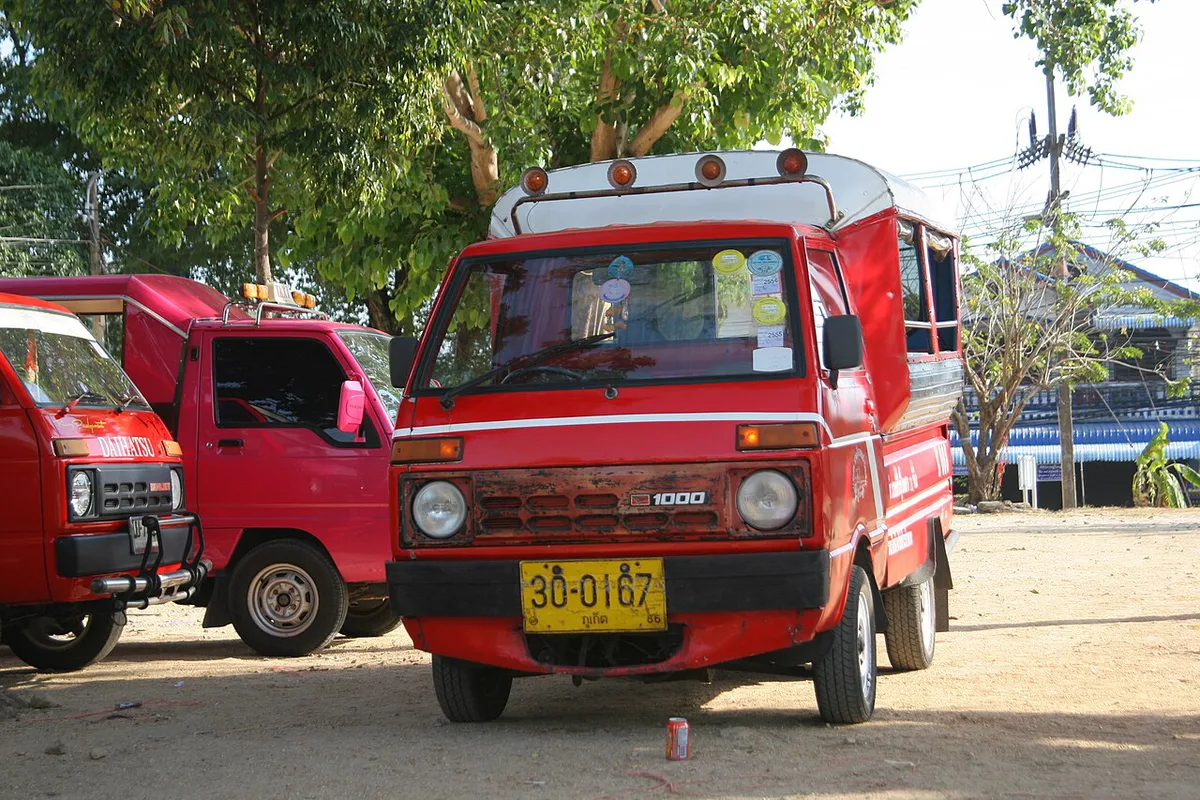
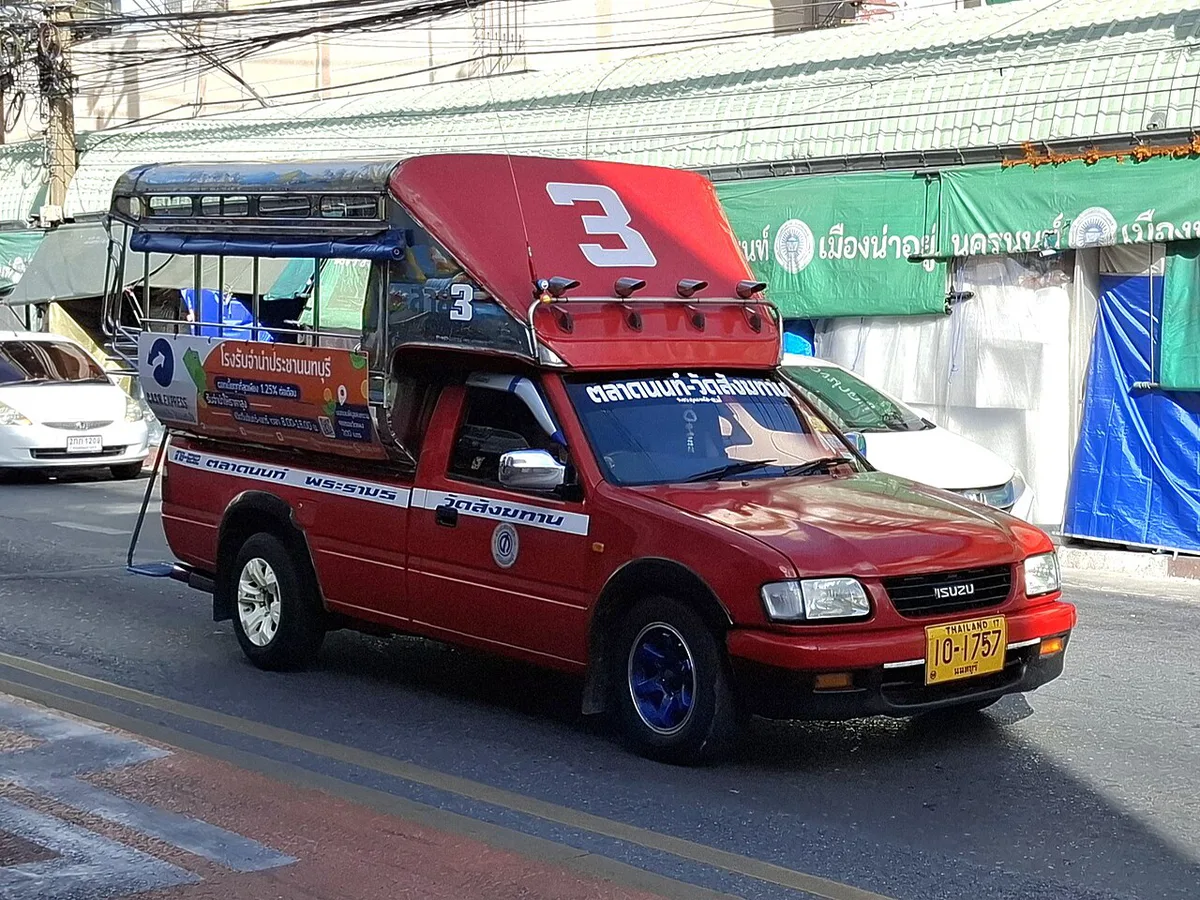
The name means "two rows" in Thai, and it describes the layout. Passengers sit on two benches facing each other in a covered truck bed. Sides are usually open or have only a rail, so you get airflow but little protection from rain spray.
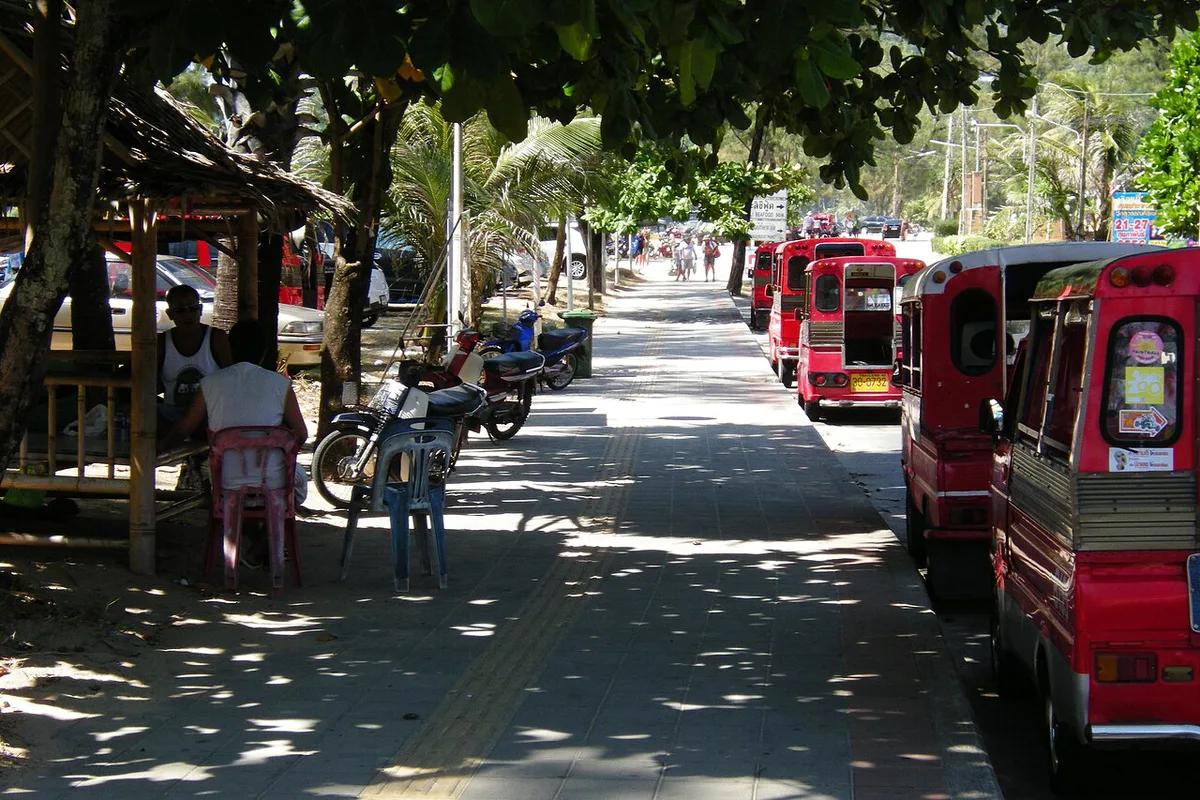
Songthaews are not one product. Some run a fixed route and pick up anyone along it. Others work like a private taxi and drive wherever you negotiate. Knowing which one you are looking at is the single most useful skill, and the next sections explain how to tell.
Do Songthaews Run in Bangkok? Where They Fit in the Transit Mix
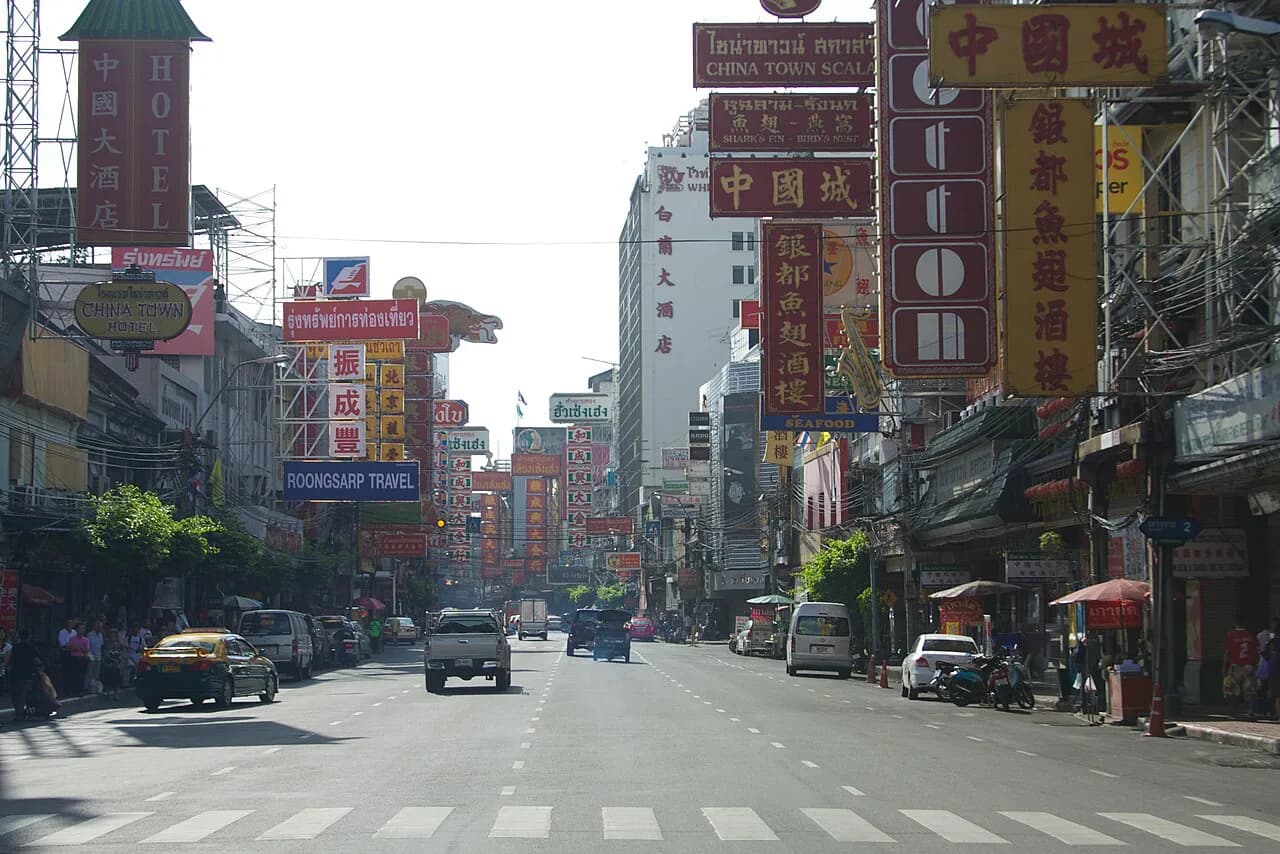
Yes, but they are a niche choice in the capital. In central Bangkok, rail and ride-hailing cover most trips faster and with less guesswork. Check the official BTS site for the current network before you plan a route around a truck.
Songthaews earn their place on short feeder runs, in suburban neighbourhoods and around markets that sit away from stations. They also serve some day-trip towns outside the city. Route lists change, and we have no verified corridor list to publish here. Ask your hotel or a station information desk which routes currently operate near your destination.
For trips that start with a railway journey, a songthaew can be the last-mile hop from the station. Our Thailand train guide covers the intercity side. For pier connections, see the longtail boat guide.
How to Ride a Songthaew, Step by Step
Procedures differ a little by city, but the sequence is similar almost everywhere. Confirm each step with the driver, because local habits vary.
- Find the vehicle. Fixed-route trucks often wait at a market, terminal or busy corner. Look for a route sign on the front or rear, often in Thai script only.
- Flag it down. Raise your hand at the roadside as the truck approaches, much as you would for a bus.
- Confirm the destination. Show the name written in Thai on your phone, and ask whether the truck goes there. Wait for a clear yes before you climb in.
- Board at the rear. Step up onto the back platform and take a bench seat. Expect a high step and an open back.
- Hold on and keep bags in your lap. Do not block the exit for people behind you.
- Signal your stop. Press the buzzer if the truck has one. Otherwise tap the roof or the rail, or call out to the driver.
- Pay. Many fixed-route trucks collect fares at the end, often at the driver's window. Hired trucks settle the price before departure. Watch what other passengers do and copy them.
Songthaew Fares and How Not to Get Overcharged
We have no verified fare figure to quote, so use the pricing model as your guide. Fixed-route trucks usually charge per person. Hired trucks usually charge for the whole vehicle, so a group splits one price.
The overcharging risk is highest when a truck is hired and the price is vague. Agree on the fare before you board, and ask whether it is per person or for the full truck. Posted prices and what other passengers hand over are your best reference.
Carry small notes and coins, because drivers often will not break large bills. Cash is the expected payment. Cashless options are uncommon, so confirm before you assume one exists.
If a price feels inflated, decline politely and walk away. Another option is almost always nearby, including a metered taxi or a ride-hailing booking.
Songthaew vs BTS, Grab, Taxi and Tuk-Tuk
Cost tiers below are relative, not baht prices. Check current local fares before you travel. Use the table to match the vehicle to your priorities.
| Option | Cost tier | Speed | Comfort and heat | Luggage | Language demand | Best for |
|---|---|---|---|---|---|---|
| Songthaew (fixed route) | Low | Slow, frequent stops | Open sides, warm, bumpy | Poor | Medium to high | Short local hops off the rail map |
| Songthaew (hired) | Mid | Direct once agreed | Same as above | Fair | High, you must negotiate | Small groups on a set route |
| BTS or MRT | Low to mid | Fast, avoids traffic | Air-conditioned | Fair | Low | Central Bangkok, see BTS Skytrain basics |
| Grab or similar app | Mid | Direct, traffic dependent | Air-conditioned | Good | Low, app handles it | Door-to-door, late nights |
| Metered taxi | Mid | Direct, traffic dependent | Air-conditioned | Good | Medium | Airport runs, heavy bags |
| Tuk-tuk | Mid to high | Direct, open to the street | Open, loud | Fair | High, you must negotiate | Short photo-friendly rides |
Take a Songthaew If, Skip It If
Use these quick rules when you are deciding at the roadside.
- Take it if the route is short and fixed.
- Take it if the destination sits off the rail map.
- Take it if you are on a budget or want a local ride.
- Skip it if you carry heavy luggage or have a tight schedule.
- Skip it for a late-night arrival or if you have mobility limits.
- Skip it if the destination is already on a BTS or MRT line.
Songthaew Tips by Traveler Type
Solo riders should keep a phone with an offline map and a translation app. A Thai SIM Card for Tourists: Airport, eSIM & Picks (2026) makes confirming the destination much easier. You can compare plans on the AIS Thailand site.
Families with small children should think about the high step and open sides. A child on a lap, a firm grip on the rail and a short route make it workable. Strollers and car seats are awkward here.
Travelers with heavy bags are better off with a booked car. Grab Thailand lists its service options, and our Grab guide explains how to book. First-timers should start on a fixed route with other passengers aboard, so they can watch how payment works.
Budget travelers get the most value from shared trucks. Riders with mobility limits should skip them, since boarding needs a climb and a steady grip.
Songthaews in Other Thai Cities
Do not assume Bangkok habits apply elsewhere. Colours, fares and routes differ by city, and each place runs its own system.
- Chiang Mai: red trucks run as shared taxis and can also be hired.
- Phuket Town: trucks serve local routes, and practices differ from Chiang Mai.
- Pattaya: shared trucks run along set roads. Confirm the route and fare before boarding.
- Krabi: songthaews connect town with nearby areas. Ask locally about current routes.
- Hat Yai: trucks play a regular local transport role. Check which line goes where.
Frequently Asked Questions
Which rideshare app is used in Thailand?
Grab is the main ride-hailing app travelers use across Thai cities. You can read about the service on the Grab Thailand site. Confirm coverage in smaller towns before you rely on it.
What are the best ways to get around Thailand?
It depends on distance and city. Trains and buses handle long hauls, while BTS or MRT work in Bangkok. Songthaews, tuk-tuks and ride-hailing fill local gaps. Check the State Railway of Thailand for current train options.
How to ride songthaew Pattaya?
Flag a truck along its route and confirm the destination with the driver. Agree on the fare before you sit, or watch what other riders pay. Press the buzzer or tap the rail to stop, then pay as the driver directs.
Notes for your Thailand trip
Optional updates when we add or change a town or island guide.
You might also like
Continue reading
More guides you'll find useful