
Kad Kong Ta Walking Street: Lampang's Riverside Old Market Road

Kad Kong Ta Walking Street is Lampang's weekend evening market on the old market road, Thanon Talad Gao, which runs along the Wang River between Ratchadapisek Bridge and the Riverside Guest House. Go on a Saturday or Sunday evening for the vendors and the street life; on other days the same road is a quieter heritage walk with the shophouses, cafés and river still in place. This guide covers what the street is, how to reach it from central Lampang, what to look for along the roughly 2 km stretch, and how to fit nearby sights around a market visit.
What Kad Kong Ta Walking Street is
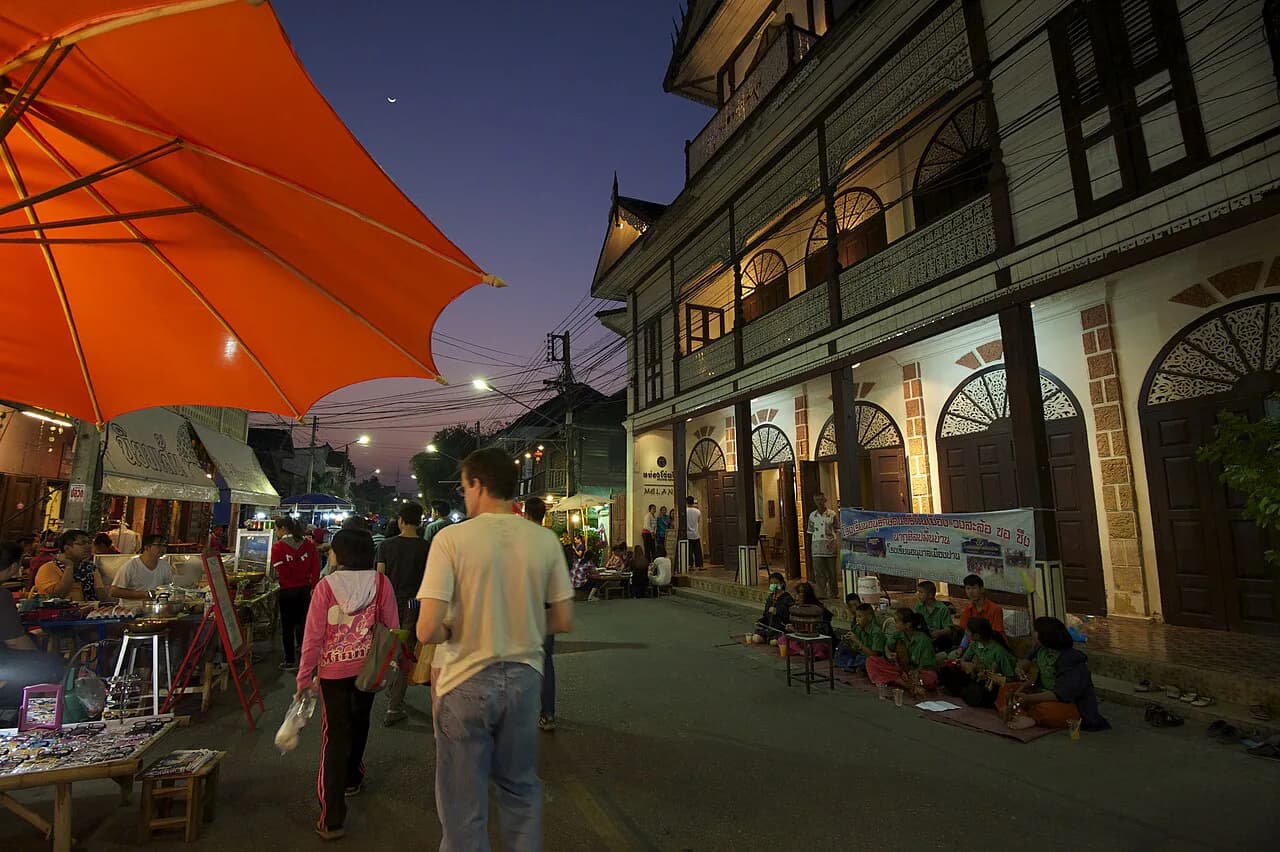
Kad Kong Ta is the old commercial road of Lampang, known in Thai as Thanon Talad Gao, and in local speech as Kad Kong Ta, a name that referred to the market on the road by the port. The street is lined with buildings over a century old that mix European, Chinese and Burmese architectural styles, and some of these old houses have been renovated into shops, restaurants and coffee shops. In the evening on weekends the road becomes the Kad Kong Ta Walking Street, where local vendors sell food, clothes and souvenirs. If you visit Lampang and skip this road, you miss one of the town's landmark stops.
Treat the place as a heritage streetscape first and a market second. The shophouses, the old trees and the riverfront are there every day, but the stalls appear only on weekend evenings. That distinction matters if you are in Lampang midweek and wondering whether to bother walking the road. For a broader look at what else the town offers, Lampang sightseeing: plan big temple and teak house stops sets this market next to the city's temples and museums, so you can see how the old market road fits into a full day rather than a single stop.
Where it sits in Lampang
The street sits in Lampang's old commercial quarter, close to the Chinese Market area, and follows the Wang River between Ratchadapisek Bridge and the Riverside Guest House. That gives you two clear bookends for finding it on a map. One source places the old market road between Ratchadapisek Bridge and the Riverside Guest House and describes it as following the river, so if you can locate either end, you can walk to the other. The buildings on the road still carry the names and stories of the teak and trading era, making the route a readable piece of the town's history rather than just a shopping strip.
If you are exploring the town center first, use the road as a river-edge anchor for your walk. Lampang sightseeing: plan big temple and teak house stops is a useful starting point for placing the old market road alongside the other central sights. The market road itself is not a single gate or ticketed entrance; it is a public street, so you enter wherever you meet it.
Getting there from central Lampang
From the heart of Lampang, drive along Ratchadapisek Road, cross Ratchadapisek Bridge and turn left into the Kad Kong Ta community. That left turn is the main move: once you are across the bridge, the old market road is on the near side of the river. If you do not have a car, a truck taxi is the practical hop, and one source describes that service as costing about 20 baht at the time of writing. Treat that figure as a rough historical guide rather than a current fare, and check locally when you arrive.
The street is not a place you drive into on a market night. The road closes to vehicles in the late afternoon, with one source stating closure from 16:00 and another describing the street as closed from 4pm until the market winds down. That means you should park nearby and continue on foot, or arrange for your taxi to drop you at the bridge end. Walking in from Ratchadapisek Bridge is straightforward and puts you at one end of the strip with the whole road ahead of you.

Timing the visit
Plan around a weekend evening. One source says the walking street operates Saturday and Sunday from 16:30 to 22:00, while another describes the street closing to traffic from 4pm to 10pm. A third account describes a Saturday-only market from the afternoon until about 21:00. The sources do not agree on the exact timetable, so do not build a tight schedule around one of them. Instead, plan to arrive in the late afternoon, when the buildings are still lit by daylight and the vendors are setting up, and let the evening unfold.
The road and the shophouses are there all week, so a midweek stroll gives you the architecture without the stalls and with far fewer people. Use the market evening if you want food, clothes and souvenirs, and use a quiet morning or afternoon if you want to photograph the facades and read the streetscape without crowds. The practical trade-off is simple: atmosphere comes with the weekend crowd, while clarity comes on a weekday. Check the current market days and hours locally before you commit, since the sources disagree.

How walkable the street is and how long to allow
The old market road is about 2 km long, and one self-guided walking route covers it in roughly 1.5 hours and around 2,764 steps. That estimate comes from a heritage walking route, not from the market operator, so treat it as a pacing guide rather than official signage. If you stop to eat, browse stalls and look inside renovated shophouses, you will easily spend longer. Budget two hours if the market is on and you want a proper look at the buildings as well as the stalls.
A workable evening plan: arrive across Ratchadapisek Bridge in the late afternoon, walk the length of the road toward the Riverside Guest House and back at a relaxed pace, then loop into the stalls for food on the return. Keeping the architecture for the first pass and the market for the second means you actually look at the shophouses instead of just following the crowd. The town is also known for its horse-drawn carriages, a heritage feature Lampang is famous for.

What to look for along the road
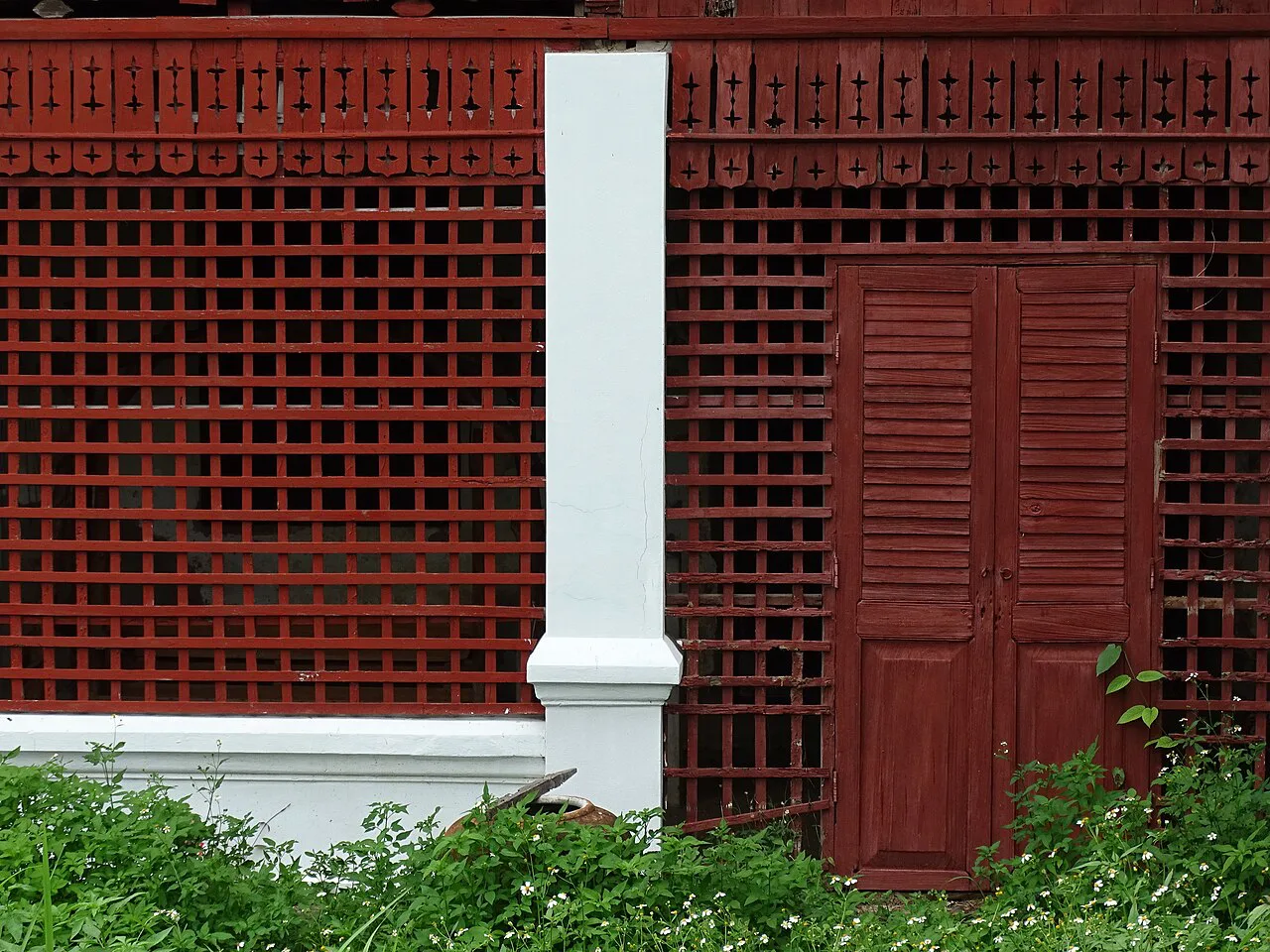
The main attraction is the architecture: century-old buildings that blend European, Chinese and Burmese styles, many of them former merchant houses and trading shophouses. The iDiscover heritage route lists stops such as a community library, a ceramics market and several preserved timber houses, while a separate account notes an old Chinese herbalist shop, all carrying the trading history of the street. Some of these buildings have been converted into gift shops, cafés and guesthouses, so the historic fabric and the modern businesses sit side by side. This is the part of the visit that rewards slow walking rather than shopping.
For a different kind of heritage and a grander architectural contrast, Wat Phra That Lampang Luang: Visiting Lampang's Wooden Lanna Temple in Ko Kha district is the town's signature temple, worth pairing with the old market road on a separate half-day. It is not on the market street itself, so plan it as a separate stop and check its own access details before you build a half-day around it.
What's actually for sale
On market evenings, local vendors bring food, clothes, handicrafts, antiques and souvenirs onto the road. The range is broad rather than curated: expect casual street food, sweet and savory snacks, and household goods alongside souvenir stalls. One account notes traditional Thai musical entertainment along the river bank during the market, which adds to the evening atmosphere more than any single stall. Come with an appetite and small cash rather than a shopping list.
Treat prices as vendor-by-vendor rather than a set market rate; it is a public street and the stalls are individual vendors. If you want to buy, ask the vendor directly and pay in cash. The same road has cafés and restaurants inside renovated shophouses that operate on their own hours, so check opening times at the door rather than relying on a market-night assumption.
Nearby add-ons to stack with the market
Two sights sit close enough to combine with a market evening. Wat Pong Sanuk is less than a kilometer away and is described as an important Lampang temple with striking architecture and a relaxed atmosphere, and Baan Sao Nak, a museum of Burmese-Lanna wooden houses filled with old utensils and furniture, is about 1.1 km away. Those distances come from a single travel source, so treat them as approximate. Stacking one temple and one museum with the market makes a natural half-day rather than a rushed circuit.
If you want a fuller plan for the town beyond the river road, the Best Things to Do in Lampang guide groups the museums, temples and riverside stops into workable days. For a temple visit with a different character, Wat Chedi Sao Lang and Wat Phra Kaeo Don Tao, Lampang are the other central-temple options worth checking before you lock your schedule around the market evening.
Morning street or market night?
Choose the market night if you want food, souvenirs and riverfront atmosphere, and choose a quiet daytime walk if you want the shophouses and the river without the crowd. Either way, start at Ratchadapisek Bridge, walk the length of the road, and use the buildings as your landmarks rather than a fixed route. Plan the nearby temple and wooden-house museum as separate stops, and check the current market days and hours locally before you go, since sources disagree on the timetable.
Explore more Lampang guides
Frequently Asked Questions
Is Kad Kong Ta Walking Street open every night?
No. The market operates on weekend evenings according to the sources, though they give slightly different days and times: one says Saturday and Sunday from 16:30 to 22:00, another a Saturday market until about 21:00. The road itself is a public street you can walk any day; the stalls are what appear at the weekend. Confirm the current market days locally before you plan your evening.
How long does it take to walk Kad Kong Ta?
The road is about 2 km long, and one self-guided walking route estimates roughly 1.5 hours and around 2,764 steps. If you stop for food and browse the stalls on a market night, allow two hours. The estimate is from a heritage walking route rather than the market operator, so use it as a pacing guide.
Do you need tickets for Kad Kong Ta Walking Street?
No ticket is mentioned in the sources; it is a public street with individual vendors. The nearby Wat Pong Sanuk and Baan Sao Nak are separate sights with their own arrangements, so check their details separately.
What time does the street close to cars?
The road closes to vehicles in the late afternoon on market days. One source states 16:00 and another describes closure from 4pm to 10pm, so plan to park nearby and walk in from Ratchadapisek Bridge rather than driving onto the road.