
Wat Phra Kaeo Don Tao: Lampang's Emerald Buddha Temple

Allow about an hour for Wat Phra Kaeo Don Tao, and go in the morning if you can: it is the most interesting temple inside Lampang city, and it sits within walking distance of the Wang River and the old shophouses. The draw is not one building but a layered compound, gilded chedi beside Burmese-style mondop, with a 15th-century claim on Thailand's most famous Buddha image. This page covers where the temple is, how to reach it without a car, what to look for in each part of the compound, and how to pair it with the sights around it. For a wider set of stops, see [Lampang sightseeing: plan big temple and teak house stops].
Why Wat Phra Kaeo Don Tao matters in Lampang
Like other temples carrying the Phra Kaew name, this one held the Emerald Buddha, which stayed here for 32 years in the 15th century on its long journey toward Bangkok, where it now stands at Wat Phra Kaew inside the Grand Palace. The emerald itself was reportedly discovered in Chiang Rai in the early fifteenth century; a Chiang Mai king sent troops with an elephant to carry it north, but the elephant refused the road to Chiang Mai and ended up in Lampang, where the image was enshrined. The temple you see today blends Lanna and Burmese work, reflecting Lampang's history as a teak-trading town with a sizeable Burmese community.
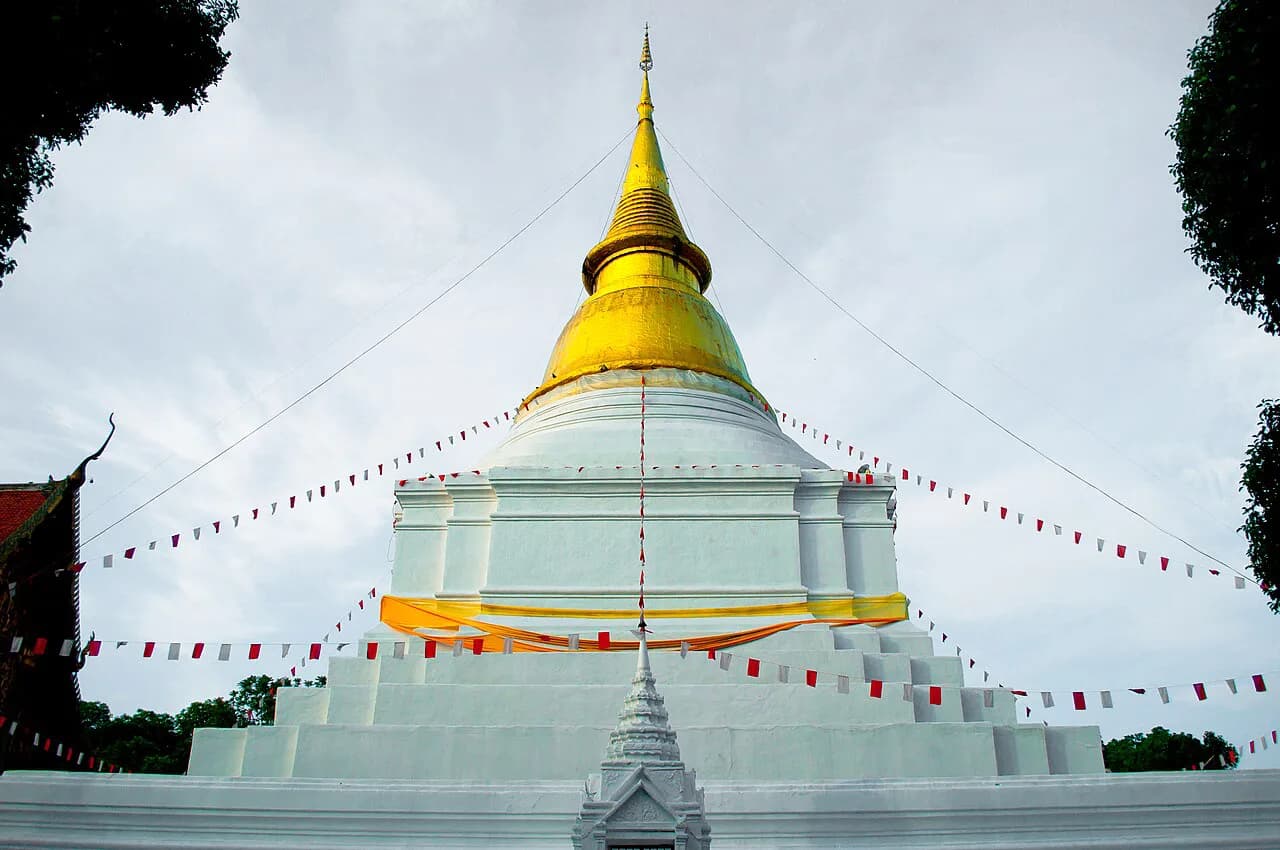
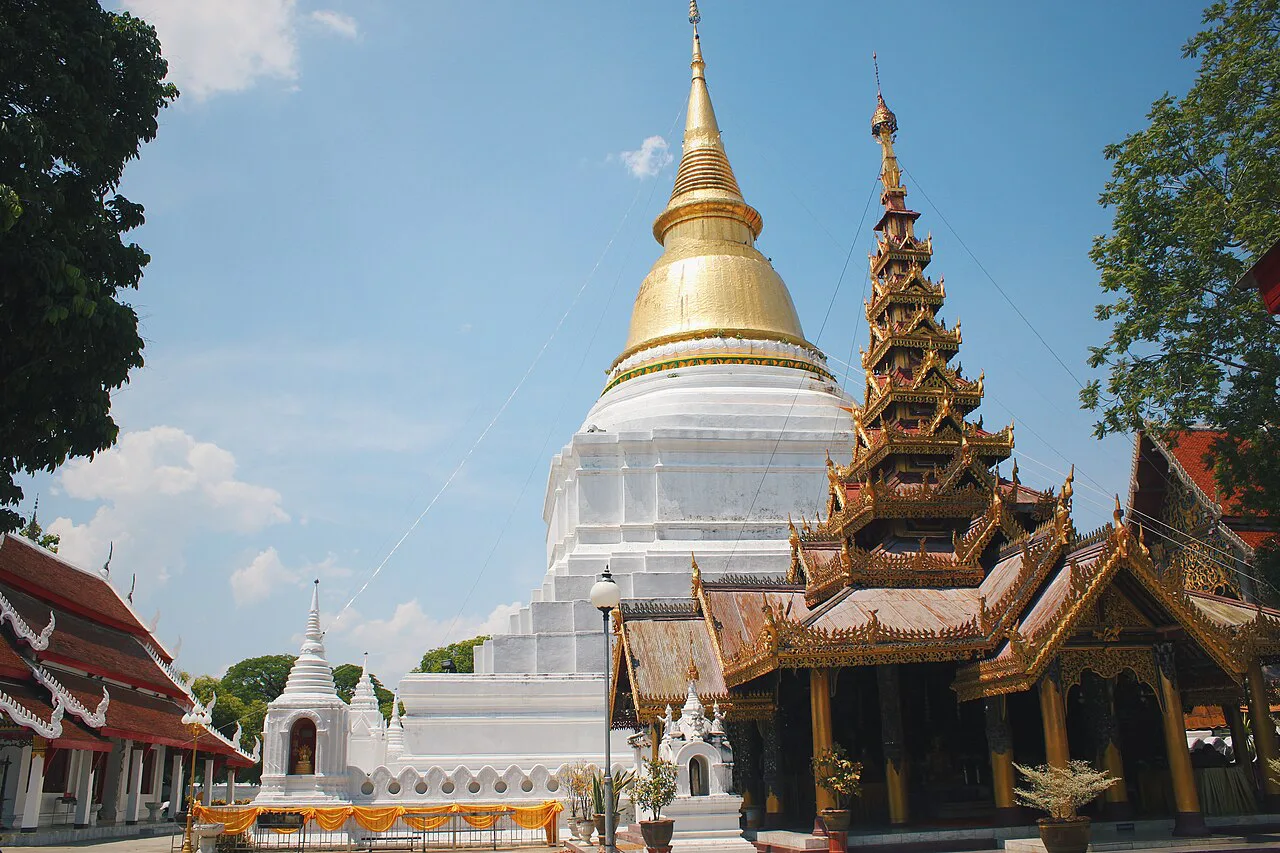
One secondary travel guide frames the architecture as the point: a tall Lanna chedi clad in gilded copper plate stands next to a mondop built in the Burmese style in the late nineteenth century, tiered and inlaid with coloured glass and mother-of-pearl by Burmese craftsmen. Expect to spend your time switching between those two poles and the smaller halls behind them.
Where the temple is, and how to get there
The temple sits on the north bank of the Wang River in Wiang Nuea sub-district, Mueang Lampang, on Phra Kaeo Road, a short walk from the river and from the old teak shophouses of Talat Kao. That puts it inside the compact town centre rather than out in the countryside, which is why the usual question of transport has an easy answer.
Getting there depends on where you are staying: walk if your hotel is central, rent a bicycle from a hotel or guesthouse that offers them, or flag one of the yellow songthaews, the shared pickups with benches in the rear that pass often along Lampang's main streets. Songthaews do not follow a published timetable, so ask your accommodation which direction to wait on rather than assuming a stop.
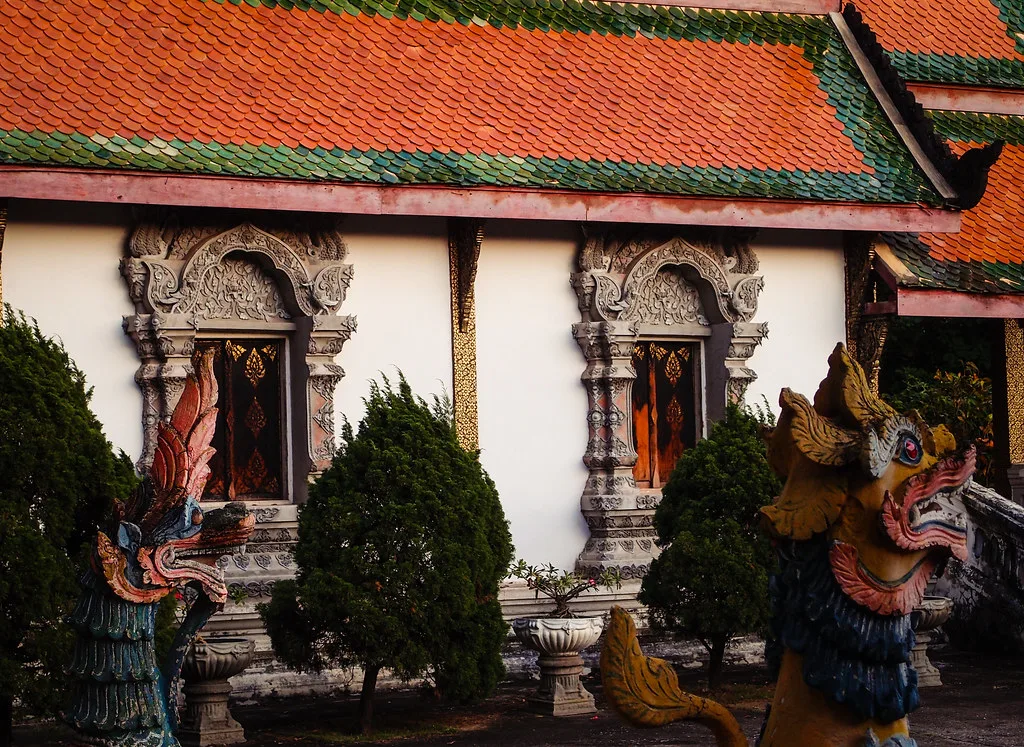
The main entrance makes the arrival part of the visit: a staircase flanked by two Naga, the serpent figures common at northern temples. Climb it and the compound opens in front of you, with the chedi as the visual anchor.

What to see inside the compound
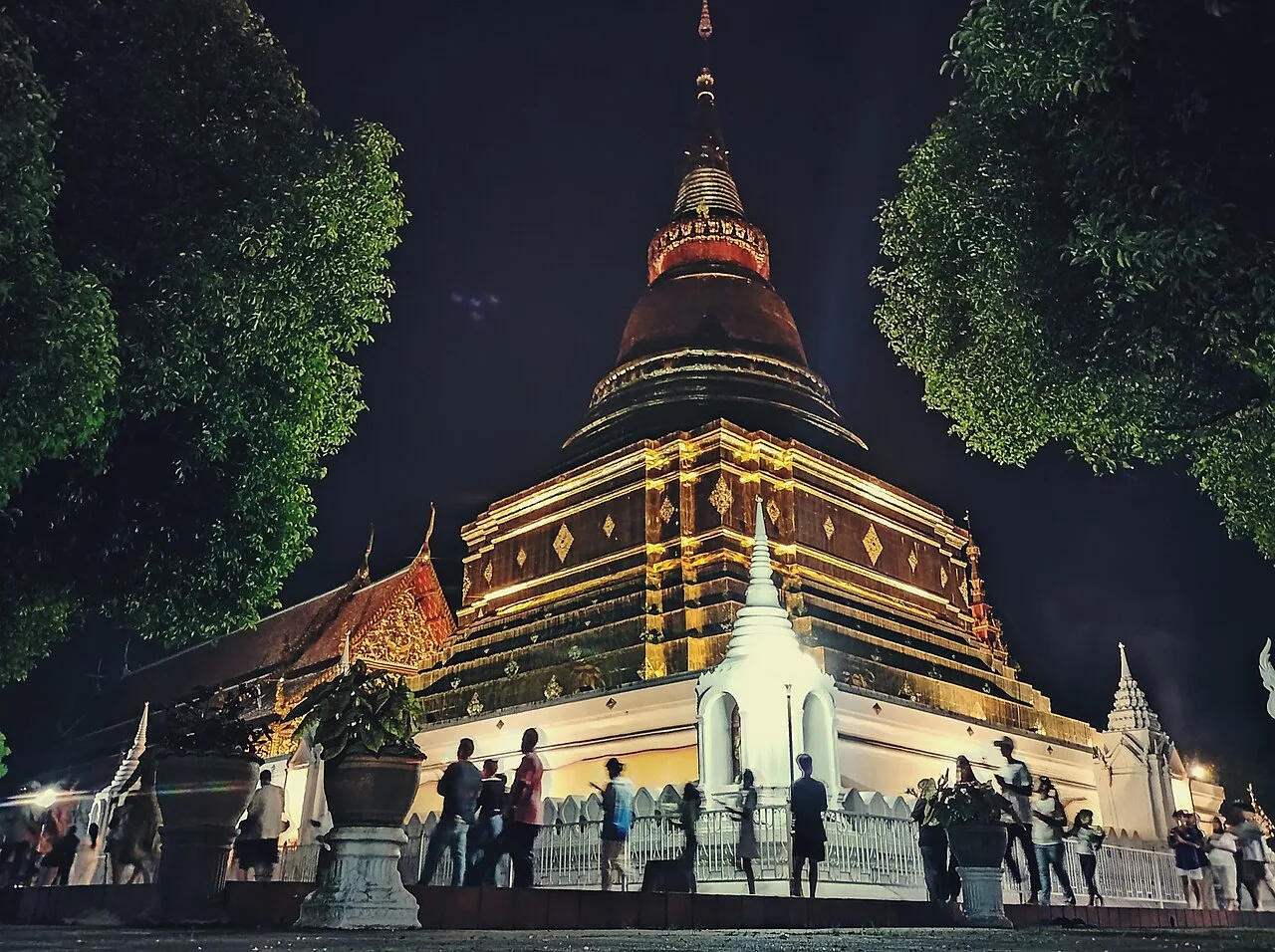
Start with the chedi, roughly 50 metres tall and partly gilded, ringed by a Buddha image for each day of the week. One travel guide calls it the only thing that remains from the original temple, while other buildings around it are treated as later additions, so read the compound as layers built up around it. Walk a full circuit before moving on, since the Buddha images are easy to miss if you approach only from the stairs.
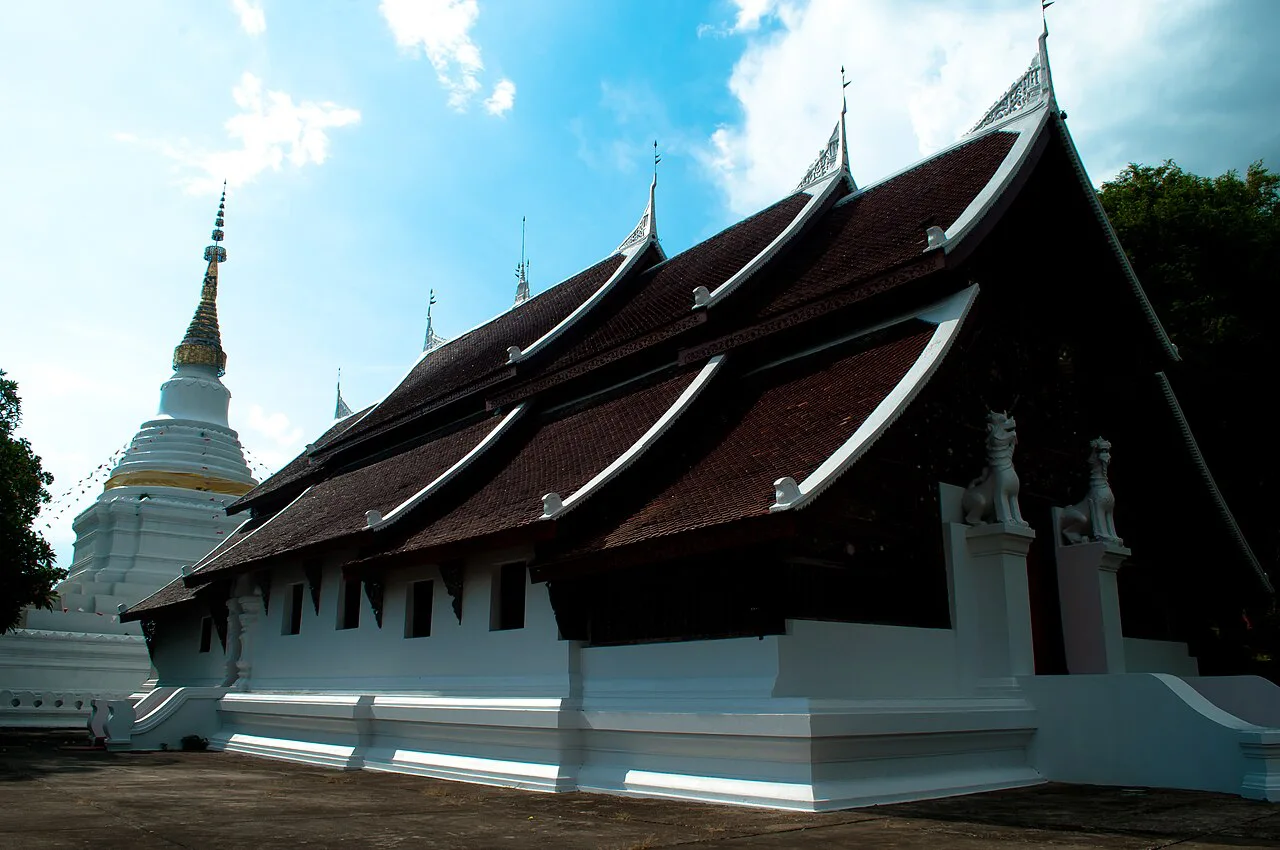
The Burmese-style mondop is the detail-heavy stop, its tiered roof and coloured-glass and mother-of-pearl inlay best seen up close rather than from across the courtyard. Behind the chedi stands a wooden hall with an unusual roof, and another building further back houses a reclining Buddha. A small museum of Lanna art sits within the compound, with woodcarving and lacquerware among the holdings.
Opening hours and any entry charge are not consistent across published sources, so treat what you read online as a rough guide and confirm on arrival. One travel guide lists a small entrance fee collected at a desk inside the temple after the chedi and gives a 6 a.m. to 6 p.m. day, while a separate listing gives an 8 a.m. to 7 p.m. span with no fee mentioned, and the two do not agree. Look for the desk rather than assuming you pay at the stairs, and carry cash in small notes in case there is a charge.
Renovation work on the main chedi has been reported, so it is worth setting expectations before you go: parts of the structure may be screened or scaffolded, and no published source confirms the current state. The rest of the compound, the mondop, halls and museum, is what fills the visit if the chedi is partly obscured.
The Suchadaram half of the compound
Wat Phra Kaeo Don Tao and Wat Suchadaram were originally two adjacent temples and were officially merged in 1984, so what looks like two stops on a map is one site. There is no real physical separation between them, which is why you should plan one visit rather than two. Budget your time across both halves instead of turning around at the chedi.
On the Suchadaram side, look for the Chiang Saen-style viharn with its golden murals and the wooden chapel and ordination hall. The remaining buildings here include an unusual pagoda with a wooden chapel in front of it, while the wooden ordination hall is closed to the public. Plan to view it from outside rather than expecting to enter.
The watermelon legend and the elephant statue
The temple's name comes from a northern legend: a woman named Suchada found an emerald inside a watermelon, Mak Tao in the northern dialect, and offered it to a revered monk to be carved into a Buddha image. That is the story the compound tells about itself, and it explains why the name pairs an emerald with a watermelon rather than a landmark.
The legend has a physical anchor just inside the entrance: on your left after the Naga stairs stands an elephant carrying a small pavilion with a Buddha inside, commemorating the episode in which the elephant carrying the image refused the road to Chiang Mai and ended up in Lampang. Look for it on the way in, because it is easy to walk past while heading for the chedi.
How long to allow
An hour covers the chedi, the mondop, the wooden hall and a quick look at the museum; add twenty to thirty minutes if you read the displays and walk the Suchadaram side slowly. The compound is compact, so the limit is your attention rather than distance. If the chedi is under renovation, you will likely finish sooner and can redirect the time to Talat Kao.
Time your visit for the cooler part of the day and check the hours before you set out, since published times disagree and a temple is a working religious site rather than a fixed-hours attraction. Grounds may be accessible when buildings are not, so a closed hall does not necessarily mean a wasted trip.

What to pair with it nearby
Because the temple is a short walk from the Wang River and Talat Kao, the natural pairing is a slow loop through the old shophouse streets rather than another temple immediately. For a wider shortlist of what else the city offers, the [Lampang sightseeing: plan big temple and teak house stops] guide lays out the options by area. If you want a longer day out, [Wat Phra That Lampang Luang: Visiting Lampang's Wooden Lanna Temple] is the region's headline temple and needs its own half-day.
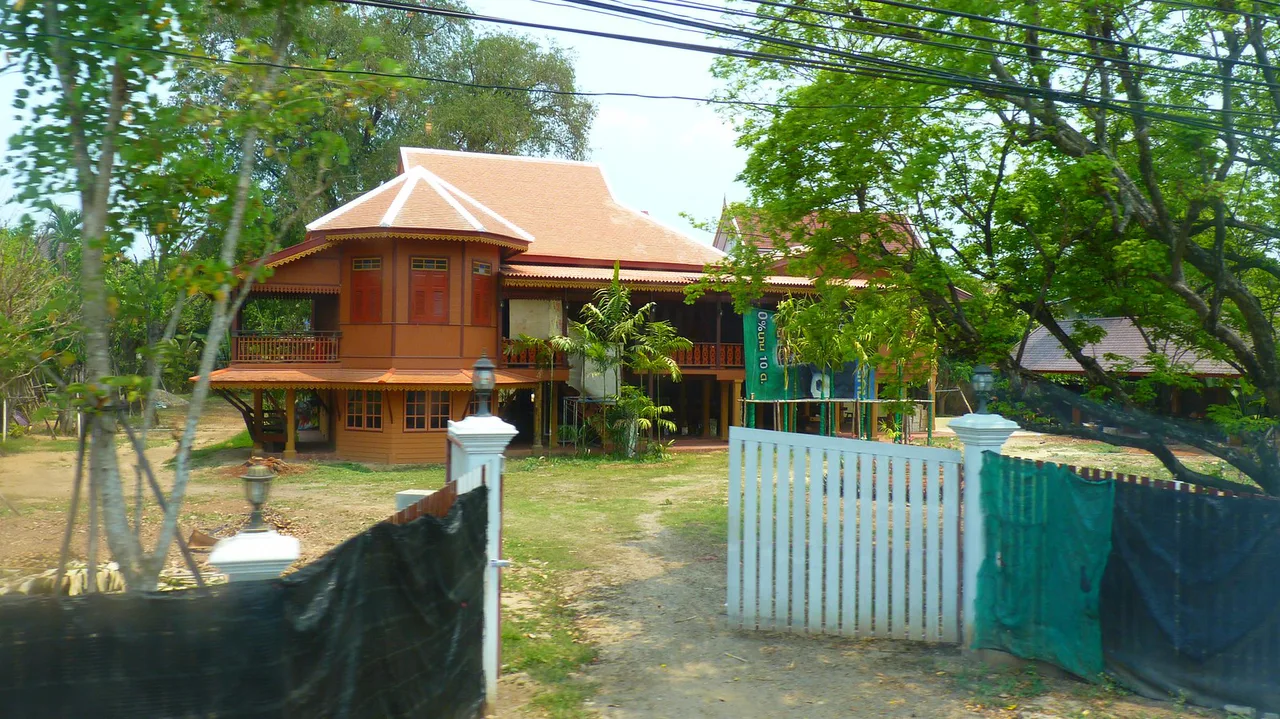
For a change of register, Baan Sao Nak in Lampang is a teak mansion described as having 116 supporting pillars, a short trip from the centre and a good counterweight to temple fatigue. [Wat Chedi Sao Lang] is another in-town option if you want a second temple without leaving Lampang.
If you are in town over a weekend, Kad Kong Ta Walking Street along the old riverside street is the evening counterpart to a morning temple visit.

Is Wat Phra Kaeo Don Tao worth an hour in Lampang?
Yes, if you want the in-town temple that carries Lampang's history rather than a scenic detour. It is walkable from the centre, it folds two temples into one visit, and the Burmese-Lanna mix gives you something to look at beyond another gilded chedi. Go early, carry small notes in case there is an entrance charge, and confirm the hours and renovation status when you arrive rather than trusting a single listing.
Explore more Lampang guides
Frequently Asked Questions
Is Wat Phra Kaeo Don Tao the same as the Temple of the Emerald Buddha in Bangkok?
No. They share a name because both are associated with the Emerald Buddha, but the Bangkok temple, Wat Phra Kaew, sits inside the Grand Palace and houses the image today. The Lampang temple is where it was kept for 32 years in the 15th century before it moved on.
Do I need a car to reach Wat Phra Kaeo Don Tao?
No. The temple is on Phra Kaeo Road in Wiang Nuea, close to the Wang River and the old shophouses, so walking or a rented bicycle works if you are staying centrally. Otherwise take one of the yellow songthaews that run along Lampang's main streets.
How much time should I set aside for the temple?
About an hour is enough for the chedi, the Burmese-style mondop, the wooden hall and a quick look at the Lanna museum. Add twenty to thirty minutes if you read the displays or linger on the Suchadaram side of the compound.