
Wat Chedi Sao Lang: A Practical Guide to Lampang's Temple of 20 Chedis

Wat Chedi Sao Lang is worth roughly an hour of your time in Lampang: the draw is a tight cluster of twenty white chedis in a single courtyard, not a sprawling ancient complex. It sits just outside the city center, so most travelers pair it with other temples rather than making it the day's main event. This guide covers where it is, the route from town, what stands inside the grounds, and how to slot the stop into a wider Lampang day.
What Wat Chedi Sao Lang is, and why Lampang visitors add it
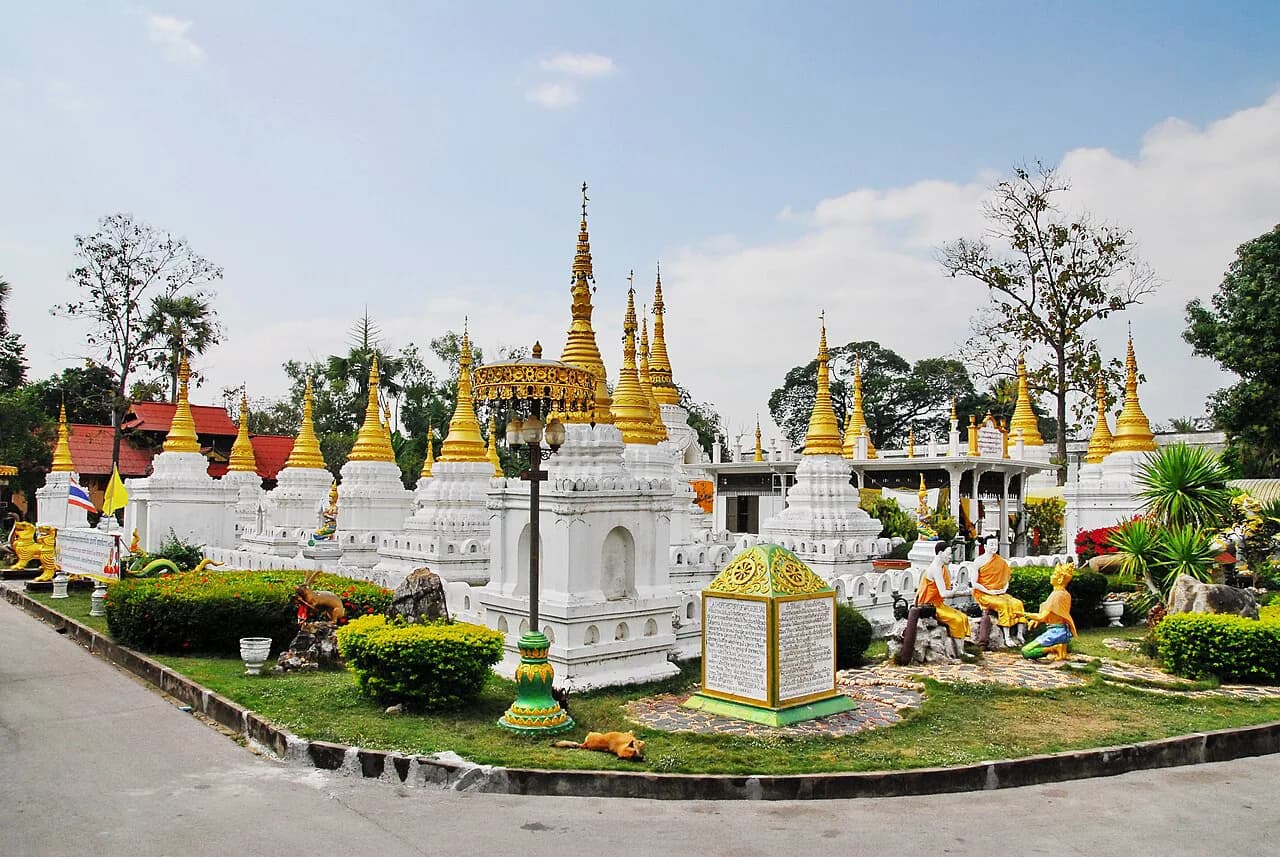
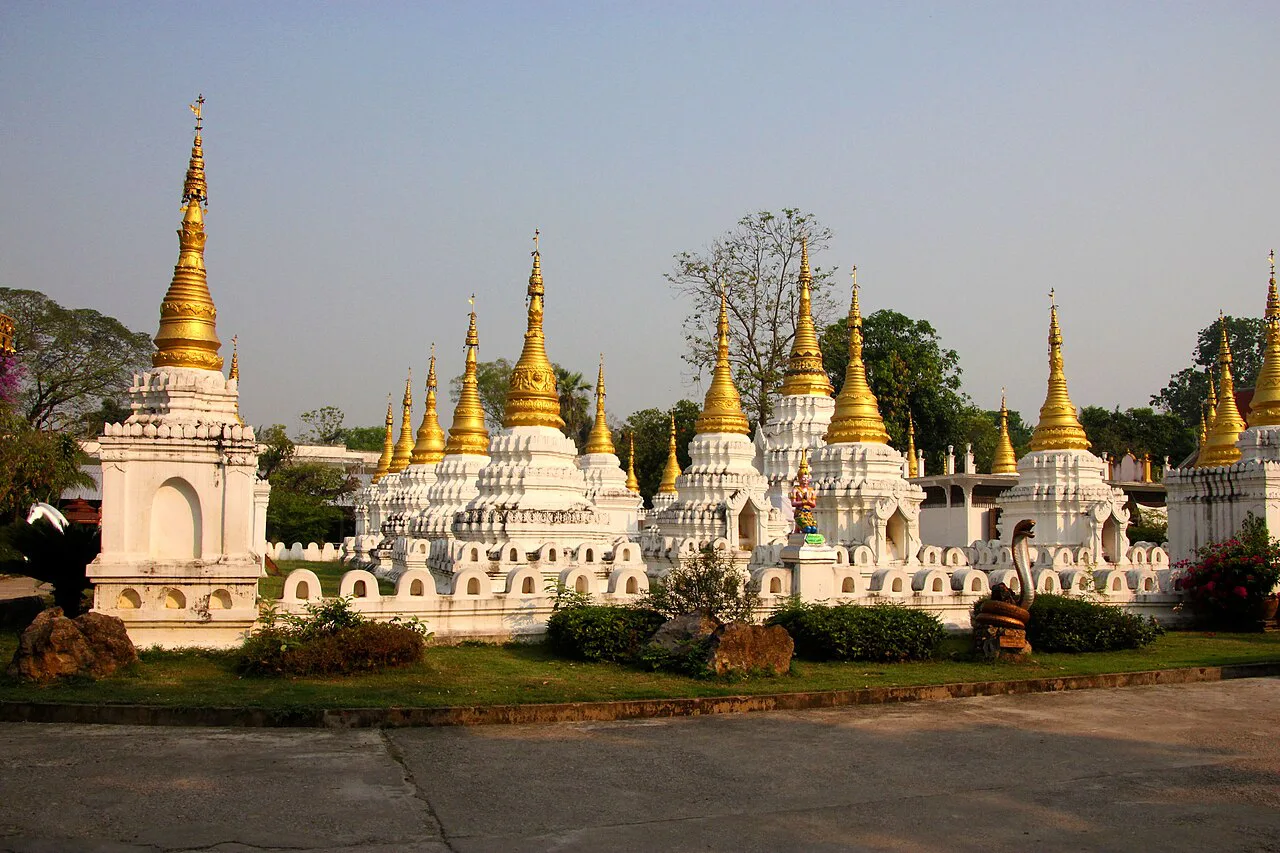
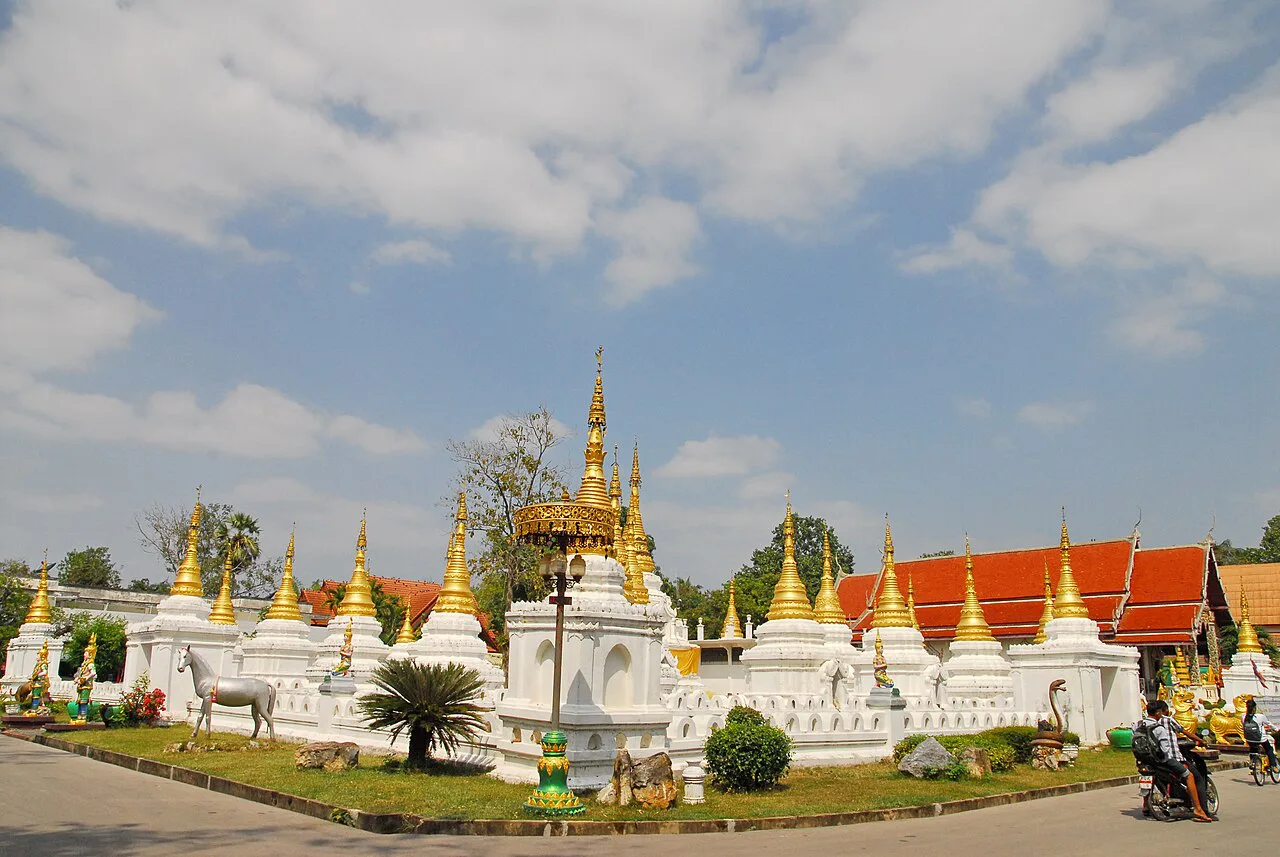
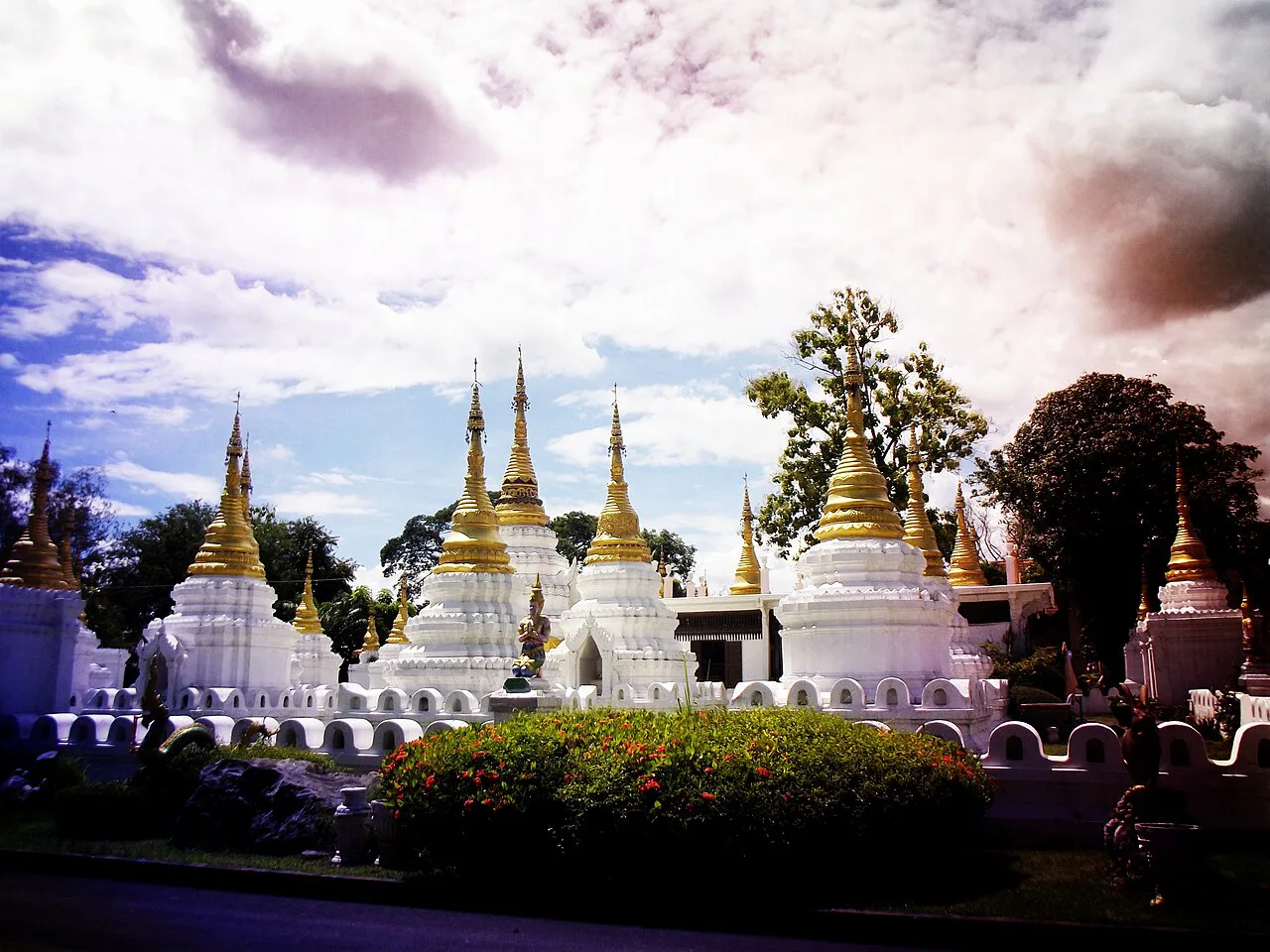
The temple's name means "Temple of Twenty Chedis," and the courtyard explains it immediately: twenty white stupas of Lanna-Burmese style stand close together, often compared to pearls. The surrounding setting is farmland and rice fields, so the visit feels rural even though the temple is close to town. Travel agencies selling north Thailand tours list it as one of the better temples to see in Lampang.
Anyone weighing the temple against Lampang's bigger names should know what it is not. It is a living neighborhood temple with no grand gate complex, so the main reward is the sight of the twenty chedis up close and the older Buddha images in the halls. Set your expectations on a compact, quiet stop. For an overview of how this compares with Lampang's other sights, the [Lampang sightseeing: plan big temple and teak house stops](/attractions/lampang) hub lays out the options.
Where it is: on Lampang's outskirts, north of the center
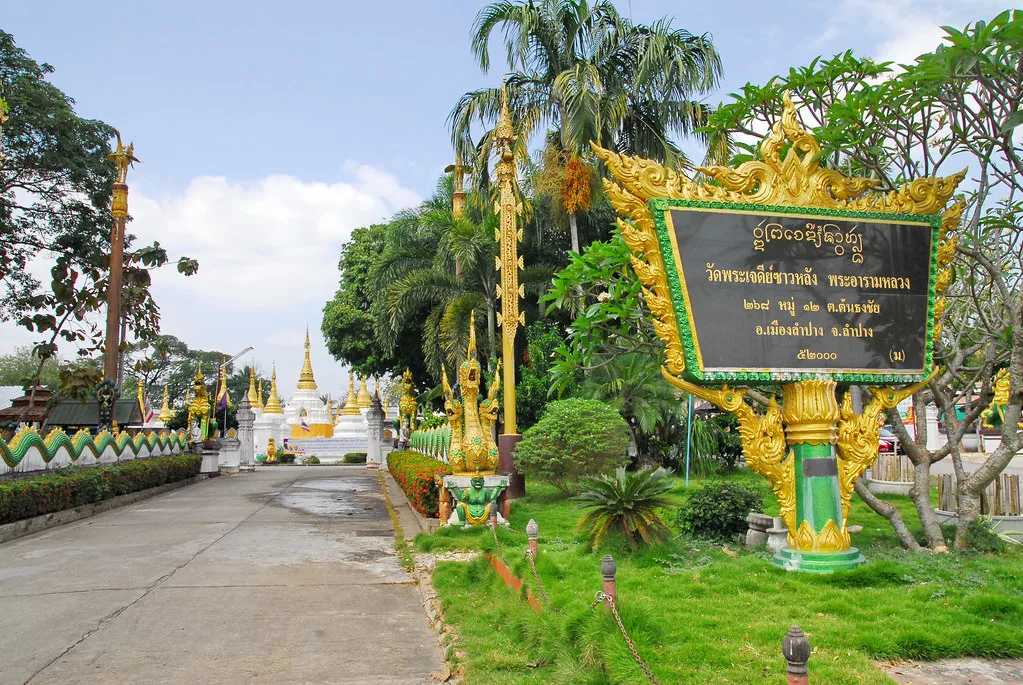
Wat Chedi Sao Lang lies just beyond Lampang town, and the sources disagree on how far. Wikipedia describes it as roughly 1.5 kilometers north of Lampang, while another traveler source puts it about three kilometers northeast of town, so treat it as a short ride rather than pin down one figure. Either way, you are crossing the Wang River out of the center and heading into fields, not walking deep into the countryside. The temple sits in Muang district, the same district as the city.
Orientation matters more than an address here. The temple grounds are approached from Highway 1035, the road that takes you out past the Rassadapisek Bridge side of town. If you are using a ride-hailing app or a driver, the practical instruction is to name the temple in Thai or show the listing rather than an address, because local drivers know it by the chedi count.

How to get there from Lampang town
Driving or being driven is the straightforward option. One route description starts at the Rassadapisek Bridge, continues to an intersection known locally by the animal-slaughter factory, turns right onto Highway 1035, passes Trilak Cemetery for about 1.5 kilometers, then turns left and continues about a kilometer to the temple. That is a set of local landmarks rather than road signage, so follow it loosely and expect to ask once near the end.
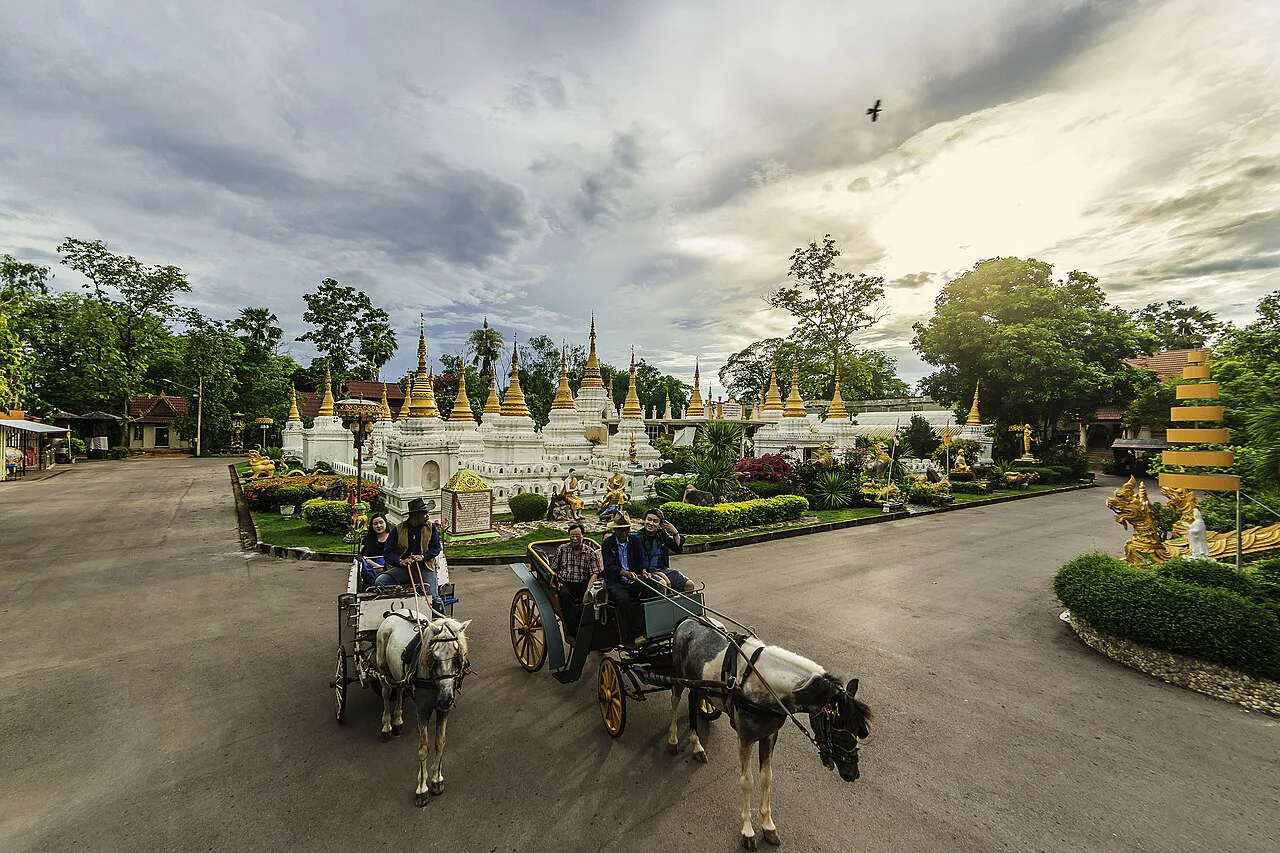
Without your own wheels, travelers describe taking a samlor, the three-wheeled local taxi, from Lampang town. No source gives a fare, so agree on the price before you get in and arrange the return, since you will not find a queue of samlors waiting in the fields. Many visitors instead fold the temple into an organized day trip or a private car hire that also covers other Lampang sights, which avoids the return-trip question entirely.
A note on the temple's age: tablets versus legend
No source states a founding year. Votive tablets from the Haripunchai period found in the area suggest the temple could be more than a thousand years old, and one account says a sign at the site makes the same estimate. That is an archaeological inference, not a dated record, and the temple's own story is much older still.
The legend told at the temple places its origin about two thousand years ago, when two monks came from India and a local prince asked each for ten hairs, placing one in each chedi. Two wells were later dug in the monks' honor and reportedly filled with clear water. Treat both versions as heritage storytelling rather than verified history, which is part of the charm of a place whose real age nobody can pin down.

Counting the chedis: the courtyard and its luck tradition
The twenty white stupas are the reason to come, and they stand close enough together to photograph in a single frame. Local tradition holds that if you manage to count all twenty, good luck follows, and some believe relics of the Buddha are enshrined inside them. Walk around the cluster at least once before you start counting, because several chedis overlap from any given angle.
Look beyond the whitework as well. Statues of mythical figures from both Chinese and Hindu traditions are dotted around the pagodas, and the grounds hold Buddha images in several styles, including a rare emaciated Buddha. These are easy to miss when you are focused on the chedis, so budget a slow lap of the courtyard.
What to see beyond the chedis
The vihara enshrines Phra Chao Tan Chai, a Buddha image named by tour listings as a respected image of Lampang, and there is a separate ubosot with its own principal Buddha. A smaller temple building on the site houses a Chiang Saen-style image. These halls are the working heart of the temple, so give them the same attention you give the courtyard.
Behind the chedis stands a small two-story museum. The upper floor displays artifacts recovered in and around the temple, while the ground floor holds objects donated over the years for the monks' use, from old bicycles and phonograph records to film reels. A separate pavilion described as an antique museum rounds out the collection. Which floors are open on a given day is not published reliably, so ask at the temple rather than counting on the whole building.

The wells and the smaller wiharn
Behind the main hall is a smaller, richly decorated wiharn holding a highly revered Buddha image. The cast image is described as fifteenth-century work, unearthed by a farmer in his rice field in 1983, and tradition says the skull of the Buddha is enclosed in its head. It is a modestly scaled building, but for many visitors it is the most affecting spot on the grounds.
The two wells dug in honor of the legendary monks can still be seen in the grounds, according to the temple's own account. Look for them near the chedis rather than on the way in, and expect unmarked openings rather than a formal exhibit. If you plan the rest of your day around photographs of Lampang's temples, the guide to [Wat Phra That Lampang Luang: Visiting Lampang's Wooden Lanna Temple](/attractions/lampang/wat-phra-that-lampang-luang), the region's most famous temple, shows a very different scale of site.

How long to allow, and how to sequence the stop
Allow about an hour. That covers a slow lap of the chedis with the counting tradition, the vihara and ubosot, the smaller wiharn and the wells, and a quick look at the museum if it is open. Forty-five minutes is enough if you skip the museum; an hour and a half if you linger over the Buddha images.
Because the temple is a short drive from town, the natural sequence is to see it alongside other Lampang stops rather than give it its own outing. Wat Phra Kaeo Don Tao is a common temple pairing in the city center, and a market stop fills the evening if your visit falls on a weekend. One source suggests combining the chedis with the more spectacular [Wat Phra Kaeo Don Tao](/attractions/lampang/wat-phra-kaeo-don-tao) on the way, though treat that as one suggested route rather than a fixed itinerary.
Kad Kong Ta, the weekend evening market street, runs roughly late afternoon to late evening on Saturday and Sunday, which makes it a good end to a day that started with temples. The full menu of local options is on our [things to do in Lampang](/things-to-do-in-lampang) page.
Opening hours and admission
Current information lists the temple as open daily from 8 a.m. to 4:30 p.m. with free admission, so there is no ticket to buy. It is described as accessible for wheelchair users. Because these are the hours a tour operator publishes rather than an official temple notice, confirm before making a special trip, particularly if you are traveling on a public holiday.
The pragmatic move is to call or message the temple or your hotel the day before and ask two things: whether the gates are open as usual and whether the museum is unlocked. Lampang's temples are working religious sites, and small buildings close for repairs or ceremonies without any online notice. Arriving before mid-afternoon also keeps you inside the published window.
Is Wat Chedi Sao Lang worth the detour?
Yes, if you have a car, a driver or a samlor and an hour to spare, and no, if your Lampang time is tight enough that one temple is all you can manage. The twenty chedis are genuinely distinctive, the smaller wiharn is quietly memorable, and the stop fits easily on the way to or from the city's more famous temples. Approach it as a pleasant side chapter to Lampang rather than the headline sight.
Explore more Lampang guides
Frequently Asked Questions
How many chedis are at Wat Chedi Sao Lang?
There are twenty white chedis in the courtyard, arranged close together in Lanna-Burmese style. Local tradition says that successfully counting all twenty brings good luck. From most angles the stupas overlap, so it takes a couple of laps to make an honest count.
Do I need a ticket for Wat Chedi Sao Lang?
The temple has been published as free to enter rather than ticketed, but that information comes from a tour operator's listing, not an official notice. Check with the temple or your hotel before a special trip, and remember that donations at working temples are customary rather than compulsory.
Can I visit Wat Chedi Sao Lang without a car?
Travelers have reached it by samlor from Lampang town, roughly a few kilometers away. Agree the fare and the return pickup before you set off, since there is no line of vehicles waiting at the temple. A private car or organized day trip is the simpler alternative.