
Wat Phra That Lampang Luang: A Practical Guide to Lampang's Wooden Lanna Temple
Wat Phra That Lampang Luang is worth roughly two hours of your day, but only if you treat it as a compound rather than a single hall: it is a walled temple on a raised mound, about 20 km from Lampang town in Ko Kha district. Travelers who arrive expecting a quick photo stop tend to leave within twenty minutes and miss the older wihans and the relic chedi at the center. This guide covers where it sits, how to reach it and get back, which buildings deserve your time, and how to pace a visit around the closing hour.
Expect a temple that rewards slow walking. The layout leads you from an entrance stairway through a courtyard of wooden structures toward the gilded chedi, with smaller shrines and a museum around the edges. Because it sits outside the city, most of the practical difficulty is transport, not the visit itself.
Where Wat Phra That Lampang Luang is and why the location matters
The temple stands in Ko Kha district, roughly 20 km from Lampang town, according to traveler accounts of the trip. That distance makes it a separate outing rather than a stop you fold into a walk around the old town, and it is generally reached by traveling out of the city rather than by a short in-town hop. Plan it as a half-day block with transport built in, not as a fifteen-minute detour between city sights.
For context on what else the city holds, the wider set of Lampang attractions runs from riverside streets to teak houses, so the temple competes for the same hours. If your stay is short, decide early whether this out-of-town temple or the in-town sights get priority.
How to get there: car, driver, or songthaew
Most visitors reach the temple by private car or a hired driver, which solves the return trip in one decision. The alternative is a songthaew from Lampang, and that is where the day can unravel: reviewers on Tripadvisor specifically warn about managing transport there and especially back to Lampang, because the temple is not on a busy city route. Sort your return ride before you arrive, either by keeping a driver waiting or by asking at the temple for the local songthaew arrangement.
Fares and journey times shift, so treat any figure you read online as a rough planning number rather than a quote. Confirm the price with your driver or at the songthaew stand before setting off, and agree on a pickup time if the driver is waiting. A mobile connection helps, but do not assume a ride-hailing app will have cars hovering near Ko Kha.
What you are walking into: the walled wiang on its mound
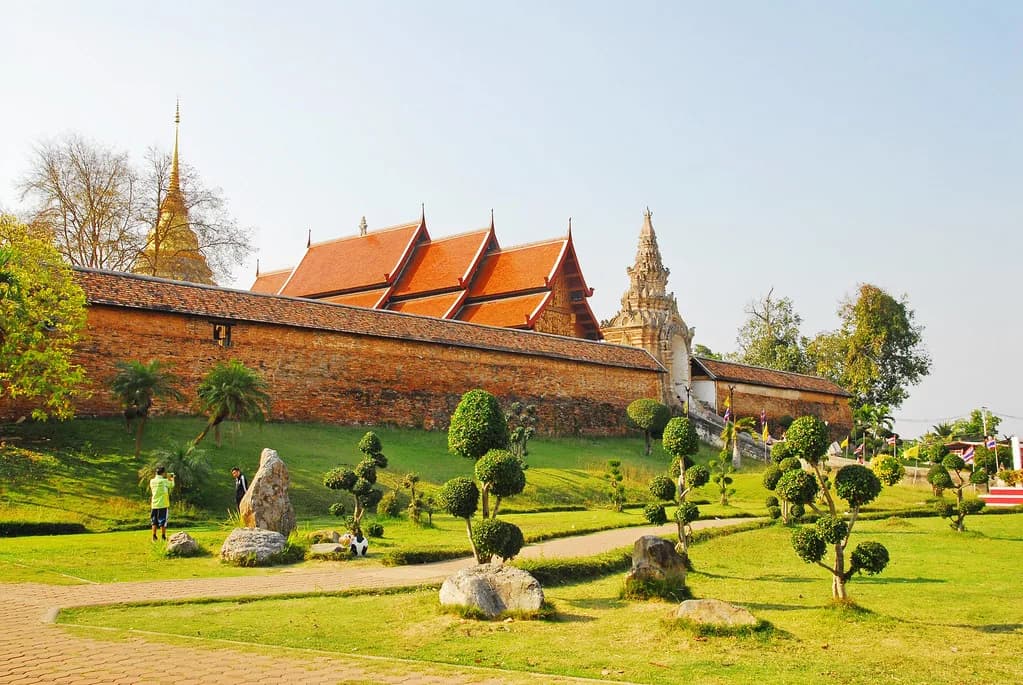
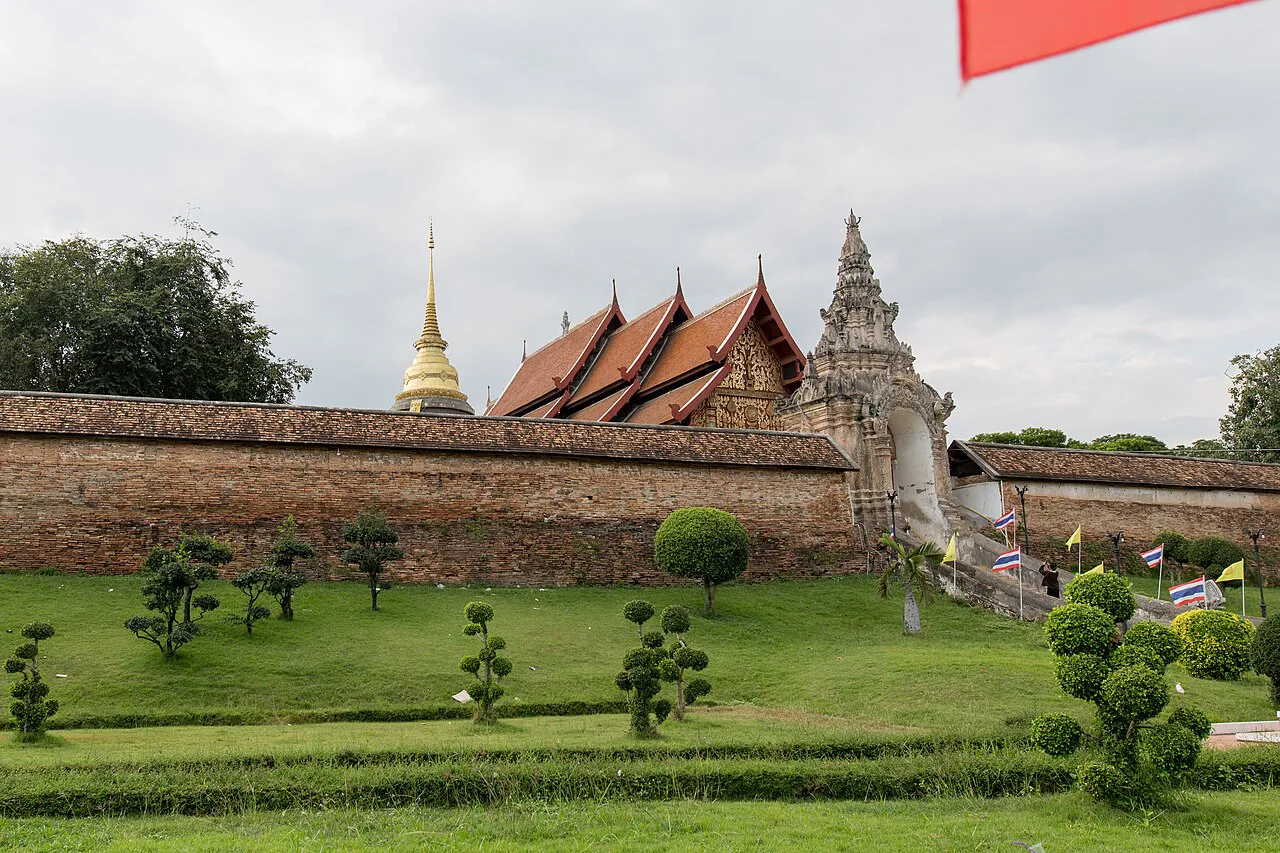
This is not a flat temple lawn but a fortified wiang, a walled enclosure built up on a mound and entered through gateways. Travel writers describe the walls and layout as dating to 1476, with the complex often called the oldest surviving wooden structure of its kind in Thailand; those claims are attributed rather than settled, so take them as context, not as a verified fact. What matters on the ground is the sequence: you enter, climb into the courtyard, and the gilded chedi holding the relic anchors the center.
Because the compound sits inside walls, you move between shaded structures rather than across open ground. That makes it easier to spend time than a single open plaza, but it also means the site unfolds in pieces, so walk the perimeter before deciding which halls to enter.
The buildings worth your time
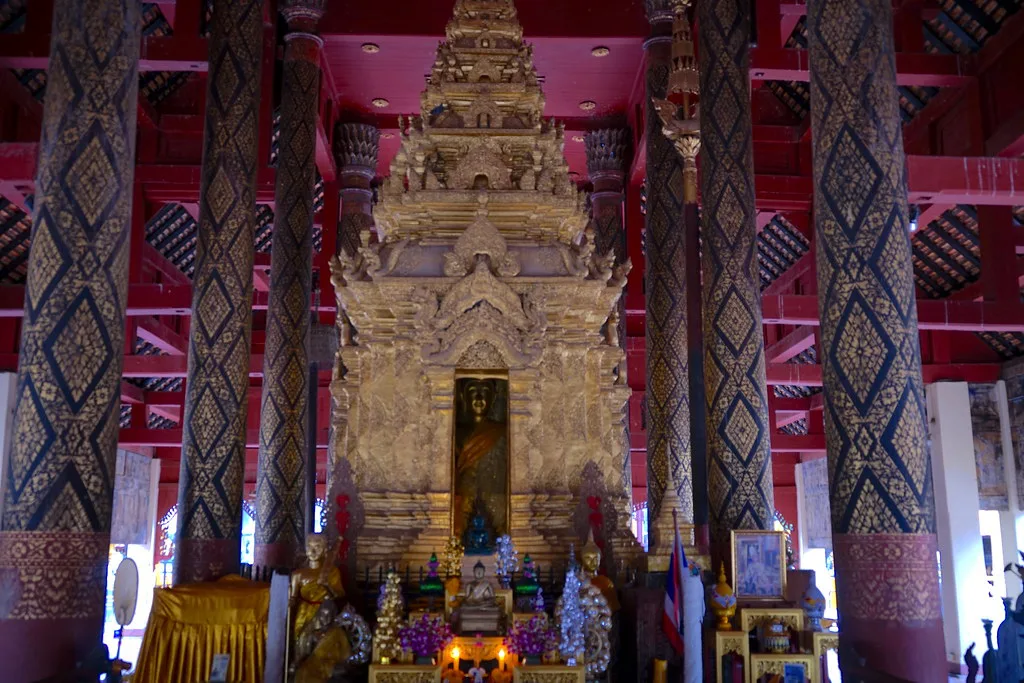
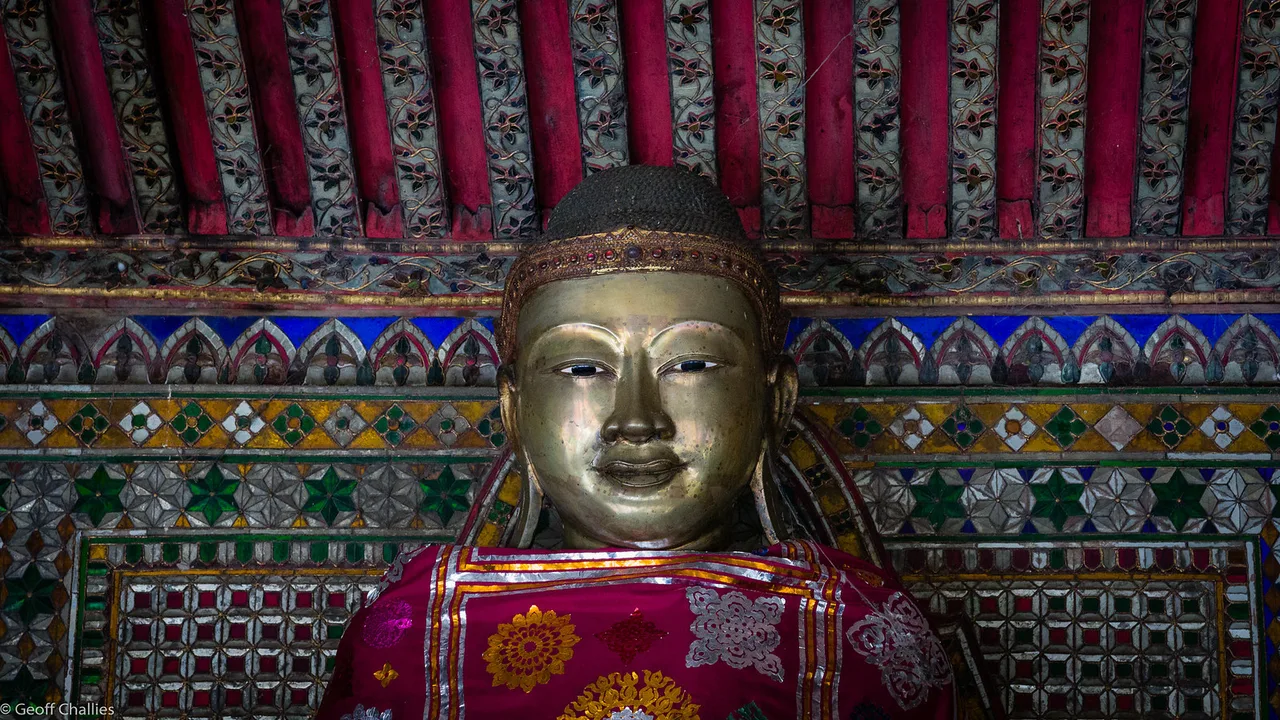
Start with Wihan Phra Put, the main prayer hall, which holds Phra Chao Lan Ton, a bronze Buddha image. The hall's gilded, intricately carved mondop altar is the detail most travelers photograph, so give it a few minutes rather than a passing glance.
Then look for the older wihans around the court, some of which retain traces of original murals. A temple guide points to the murals as a reason to slow down, and they are easy to walk past if you are moving at photo-stop speed. Natural light is limited inside these halls, so your eyes need a moment to adjust before the painted panels read clearly.
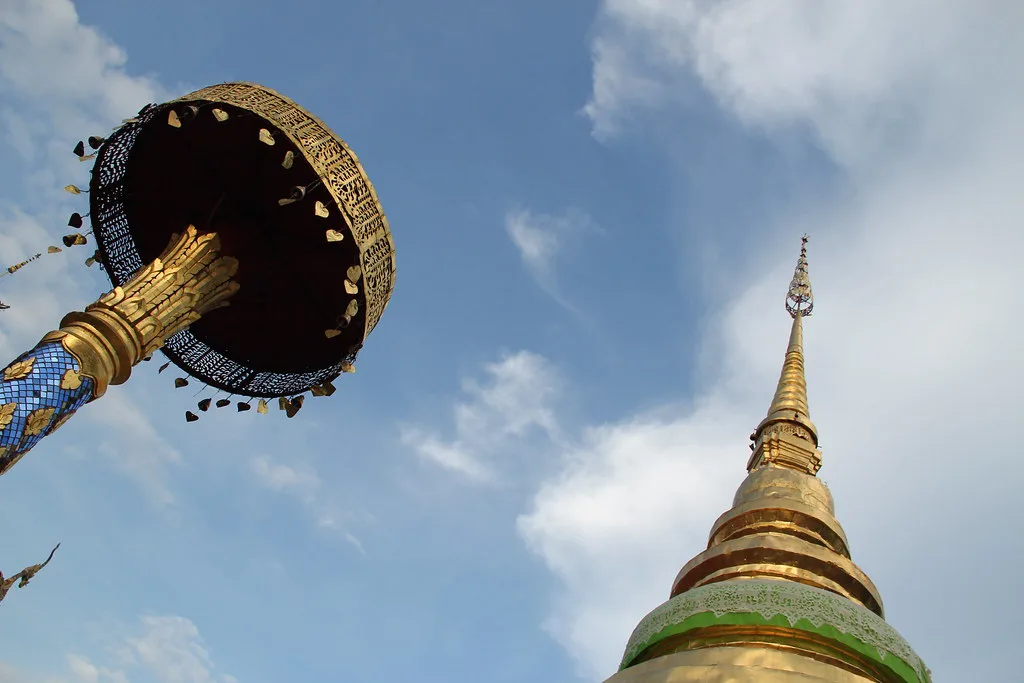
The compound's reputation rests on its Lanna craft: the gold-covered chedi, the antique wooden vihara, and the carving detail across the halls. One travel account calls it the city's iconic temple and a must-see, which is fair as an assessment of the architecture, though the site is usually calm rather than crowded.
The camera obscura rooms
At the back of the compound, one travel account describes a structure where closing the doors produces an upside-down image of the wihan and chedi projected on white cloth, and states that only men may enter that particular room. Treat that restriction as one visitor's report rather than a confirmed current rule, and follow whatever signage or attendants indicate on the day. A second camera obscura is found in Wihan Nam Tam, the hall with the three-tiered roof, and both are easy to skip if you do not know to look for them.
The projection is a genuine image of the temple, flipped by the optics, not a screen or a display. Give your eyes a minute in the dark and the buildings resolve. If a room is occupied or closed when you arrive, move on rather than waiting; the visit does not depend on it.
The Bodhi tree and its wooden poles
On the way out you pass a sacred Bodhi tree propped up by dozens of wooden poles offered by devotees, a Lanna ritual described in traveler accounts. Each pole represents support for the tree, and by extension for Buddhism, which is why they accumulate rather than get cleared away. The result is one of the more distinctive sights at the temple, and it is free to look at on your way to the exit.
The same source ties the poles to a ritual held around Songkran, when Northern Thais carry poles for the tree. You do not need to time a visit to it, but knowing the practice explains why the poles look improvised and why they matter to the people placing them.
The museum and the annexes
The main court is ringed with smaller structures and a museum, and Tripadvisor reviewers single out the museum as something not to miss. Whether it fits your time depends on your pace: if you are squeezing the temple into a drive between cities, the halls and chedi come first. If you have a relaxed half-day, the annexes reward a look, and they add context that the main court alone does not give.
Check on arrival whether the museum is open that day, since small temple museums run on their own schedules. Do not build your timing around it unless you have confirmed it is operating.
How long to allow on site
Budget about two hours inside the walls if you want the main wihan, the chedi, the murals, the camera obscura rooms and the Bodhi tree without rushing. A brisk pass through the courtyard and chedi alone can take under an hour, which suits a traveler fitting the temple into a longer drive. Add time for the museum if it is open and you are interested.
The bigger constraint is daylight and the closing hour, not your stamina. The Ivan Henares account notes the temple closed before 5 p.m. on the day of the visit, so an arrival after mid-afternoon leaves little room. Plan to be inside by early afternoon, which also protects you if the return songthaew takes longer than expected.
Opening hours and admission: what to confirm
An aggregator listing shows hours of 07.30 to 17.00 and free entry, but that is a third-party figure rather than an official temple statement. Treat it as a planning hint and check locally, at your hotel or by phone, before you build a day around it. Do not assume a ticket price either; confirm on arrival whether any donation or entry charge applies.
If you are crossing the city by hired car, ask the driver what time the temple actually closes that day, since they make the trip regularly. That single question is more reliable than any cached web page.

What's nearby and how to pair it
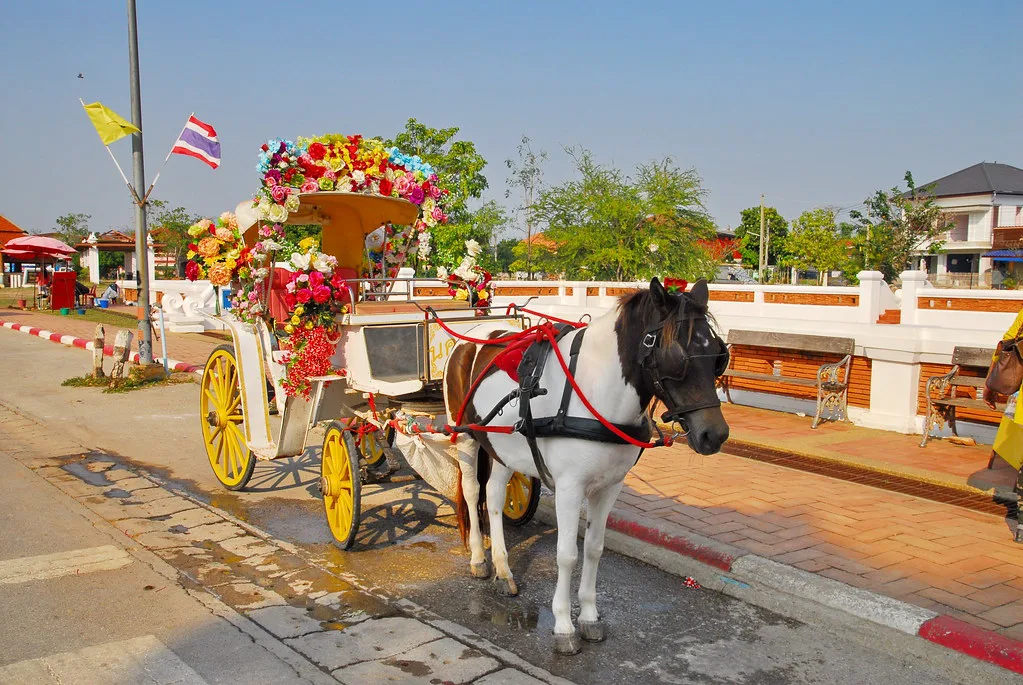
Because the temple sits in Ko Kha rather than in Lampang town, pair it with in-town sights on a different part of the day rather than trying to stack everything. Wat Phra Kaeo Don Tao is the city's other major temple and fits naturally into a separate city block, and horse-cart rides around Lampang are a well-known way to see the old town.
For a fuller plan of the city, the Lampang attractions overview lays out temple and market stops, and a separate Lampang temples guide helps you weigh this out-of-town wiang against the city's other sites such as Wat Chedi Sao and the teak house at Ban Sao Nak, so you can decide what earns your remaining hours. If your trip runs into a weekend, Kad Kong Ta Walking Street is the evening counterpart to a morning at the temple.
Is Wat Phra That Lampang Luang worth the trip out of town?
Yes, if you have a half-day and a way back. The walled compound, the relic chedi, the older wihans and the camera obscura rooms give you more to see than a single hall, and the site stays calm in a way city temples often do not. If your schedule is tight, the transport problem is the real cost, not the visit.
Skip it if you cannot arrange a return ride or you are passing through Lampang with only an hour to spare. If you are building a longer stay, see the rest of the things to do in Lampang and slot the temple into a morning.
Explore more Lampang guides
Frequently Asked Questions
Do I need a guide to visit Wat Phra That Lampang Luang?
No. The compound is easy to walk on your own, and the main buildings are recognizable from the courtyard. A guide helps most with the murals and the older halls, where context makes the details legible. If you hire a driver for the trip, ask whether they can explain the layout or wait while you walk.
Is Wat Phra That Lampang Luang the same as the temple in Lampang town?
No. Wat Phra That Lampang Luang sits in Ko Kha district, roughly 20 km from Lampang town, while Wat Phra Kaeo Don Tao is the major temple inside the city. They are separate visits, so plan them for different parts of the day rather than one continuous stop.