
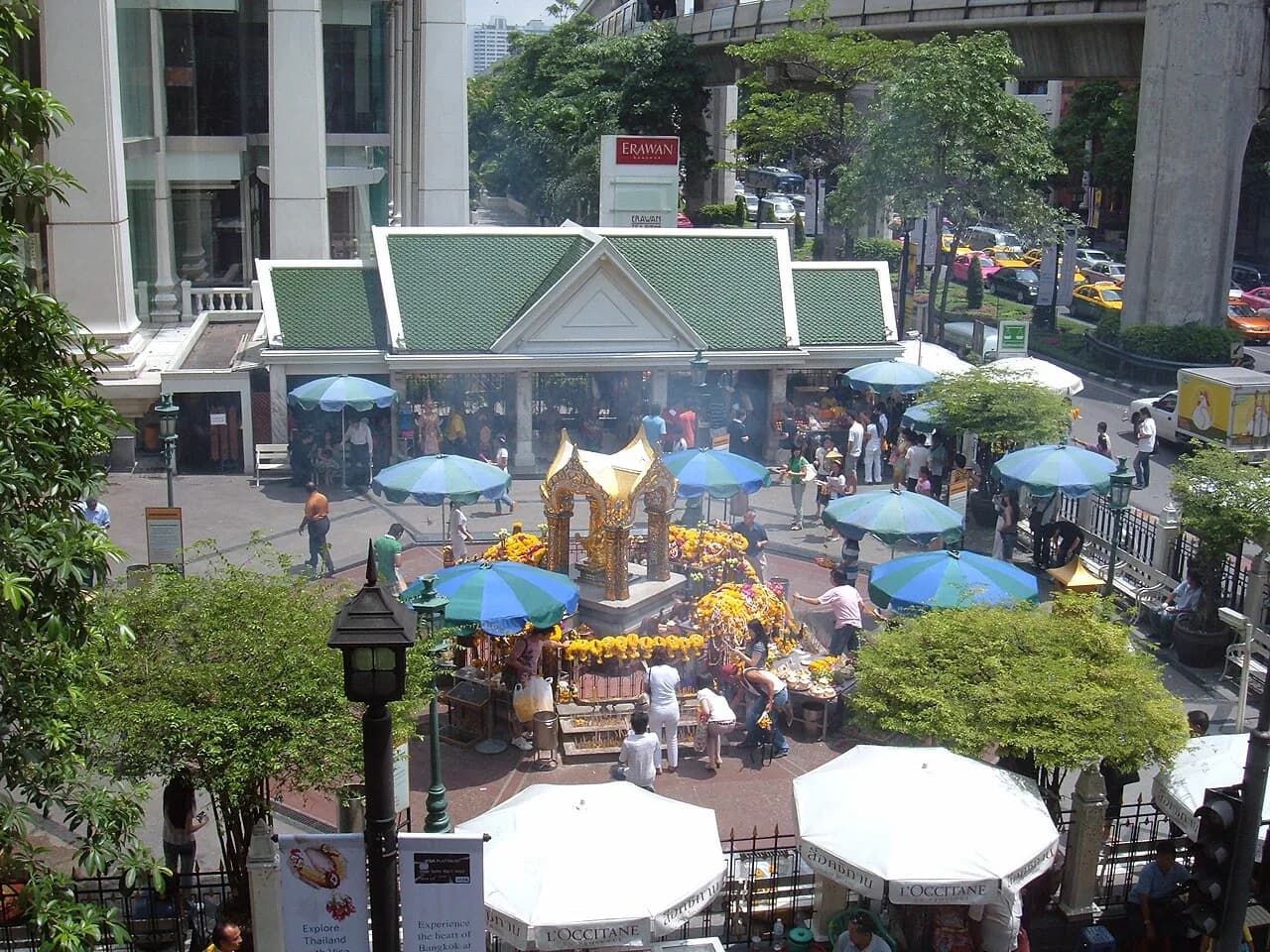
Erawan Shrine (Thao Maha Brahma): A Visitor's Guide to Bangkok's Ratchaprasong Landmark

Erawan Shrine is a Hindu shrine to Phra Phrom, the Thai name for Brahma, and most visitors should plan on 20 to 30 minutes here rather than a half day. It sits at the Ratchaprasong intersection in Pathum Wan, wedged between shopping malls and five-star hotels, so it works best as a stop you fold into a BTS ride rather than a destination of its own. This guide covers where it is, how to reach it, what you see, how worshippers pray, and when to time your visit.
What the Erawan Shrine is, and what it is not
Locals also call the site Thao Maha Brahma, and it is dedicated to the four-faced Phra Phrom rather than to the Buddha. Plenty of English-language material labels it a temple or a "four-faced Buddha," which blurs what you are actually looking at: a Hindu deity who is also revered in Thai Buddhist practice. Keep that distinction in mind and the offerings, the dancers and the constant flow of devotees make much more sense.
The shrine dates to 1956, when it was built during construction of the original Erawan Hotel after the project ran into delays and accidents. Astrologers recommended a shrine to Phra Phrom to restore balance, and the site was inaugurated that November. That origin story explains why a religious landmark sits so comfortably in a retail district.
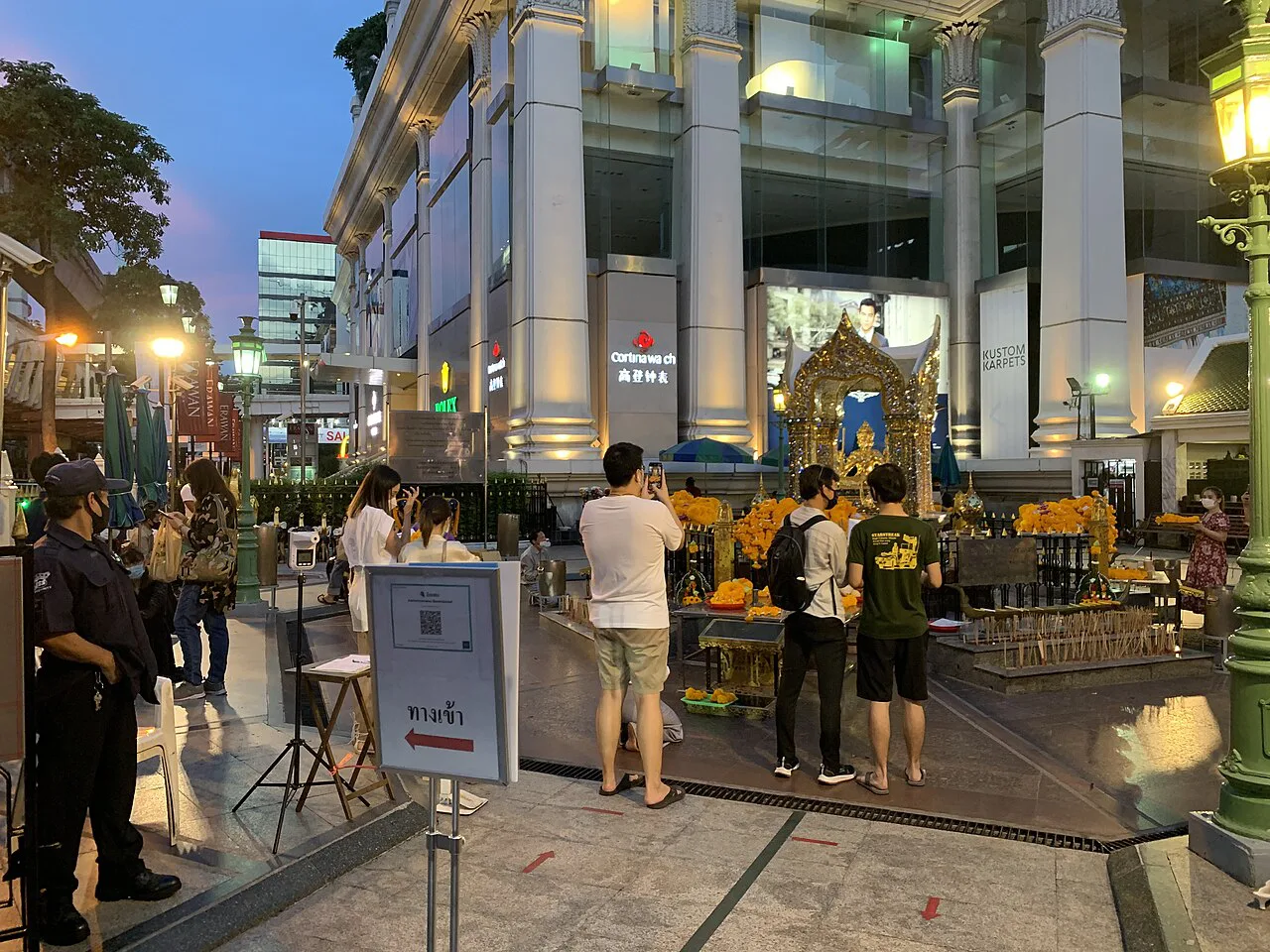
Expect a compact, open-air shrine with no gates, ticket booth or interior hall to walk through. The marble platform, the statue and the dance stage occupy a corner of a major intersection, which is exactly why the visit is short and why traffic noise is part of the experience.

Where exactly it sits at Ratchaprasong
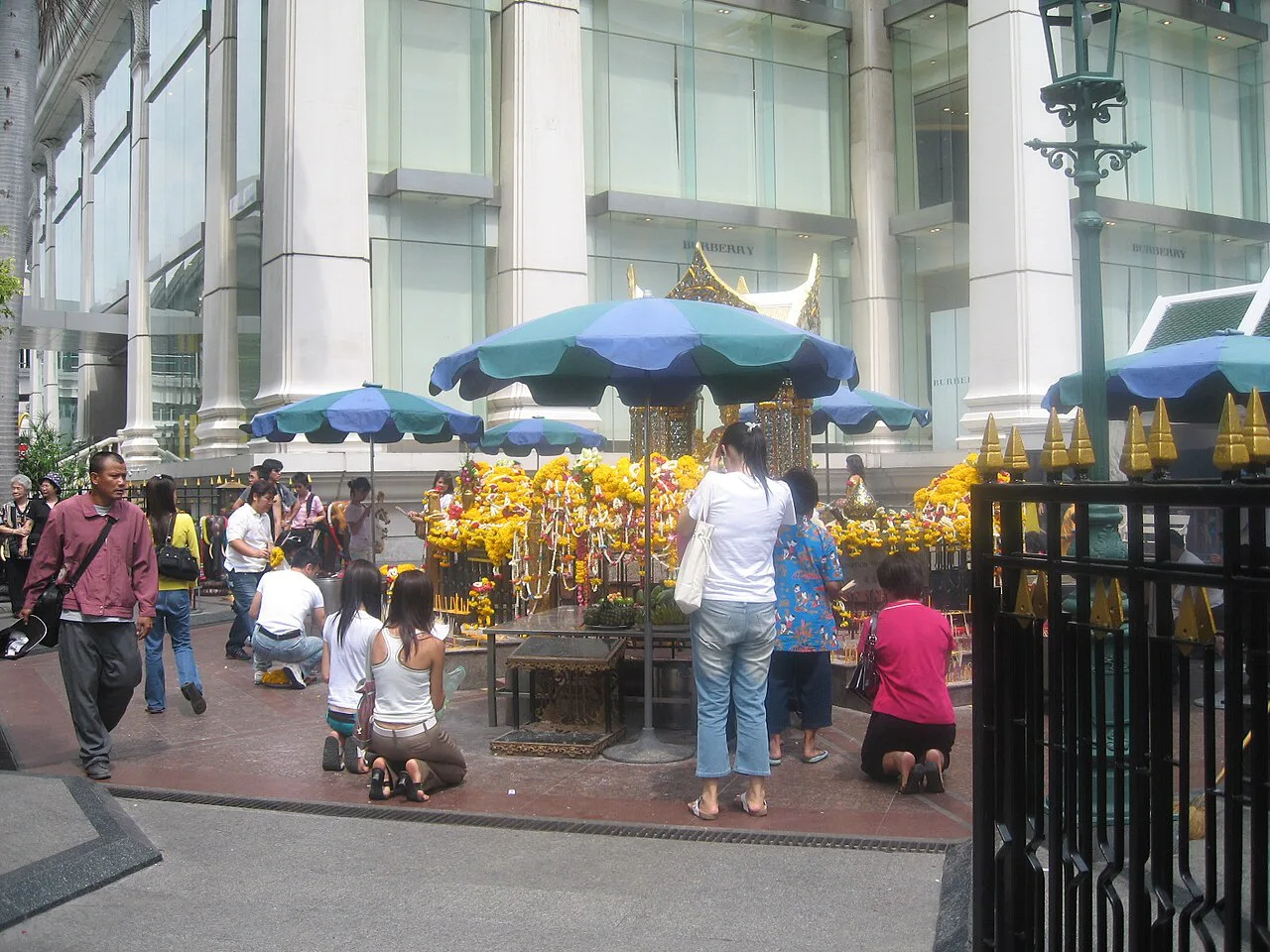
The address is Ratchadamri Road, Pathum Wan, on the corner where the Ratchaprasong intersection meets the Phloen Chit Road corridor. Gaysorn, CentralWorld and Amarin Plaza surround it, and the covered walkways of the skywalk network pass close by. If you can find the malls, you can find the shrine.
Because the shrine fronts a working intersection, there is no quiet approach or landscaped forecourt. You arrive off a busy pavement, step up onto the platform and you are there. That layout is the trade-off for its convenience: no atmosphere on the way in, but zero travel time lost once you are in the district.
Getting there by BTS, taxi or tuk-tuk
BTS Chit Lom is the closest station, and the walk from the exit to the shrine is short via the skywalk. Siam station, the interchange where the Silom line meets the Sukhumvit line, is also within walking distance if you are coming from the Silom side or combining the stop with a mall crawl. A single BTS ride covers either station, whichever line you start on.
Taxis and tuk-tuks will drop you at the shrine's edge, which is useful in the heat but puts you at the mercy of Ratchaprasong traffic. If you are already in the mall cluster, walking through the skywalk is faster and avoids the fare negotiation. Give the driver the Ratchaprasong intersection or CentralWorld rather than an exact address.
Opening hours, entry and what you pay for
The shrine is generally described as open daily from 6:00 AM, but sources disagree on when it closes: one lists 11:00 PM and another says 10:00 PM. Treat the morning opening as reliable and the evening cut-off as something to confirm before you build a late-night plan around it. Entry is described as free, with donations welcome; offerings and any hired dance are separate purchases.
Garlands, incense sets and a dance offering are all paid for on site, and the shrine does not publish a fixed rate card online, so check the posted rates at the stalls inside the grounds before you commit. Bring small notes and coins, since donations and offerings are easier to handle that way. If a price quote matters to your trip, ask at the counter first.
What you actually see on the platform
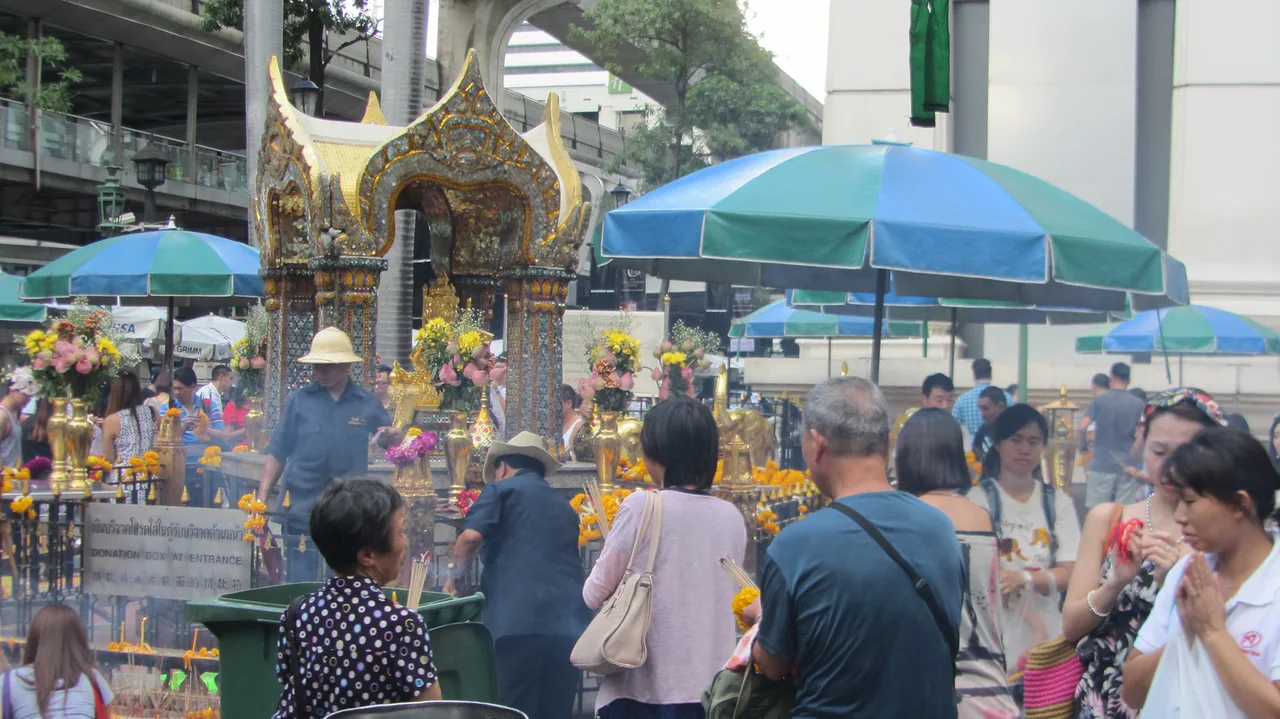
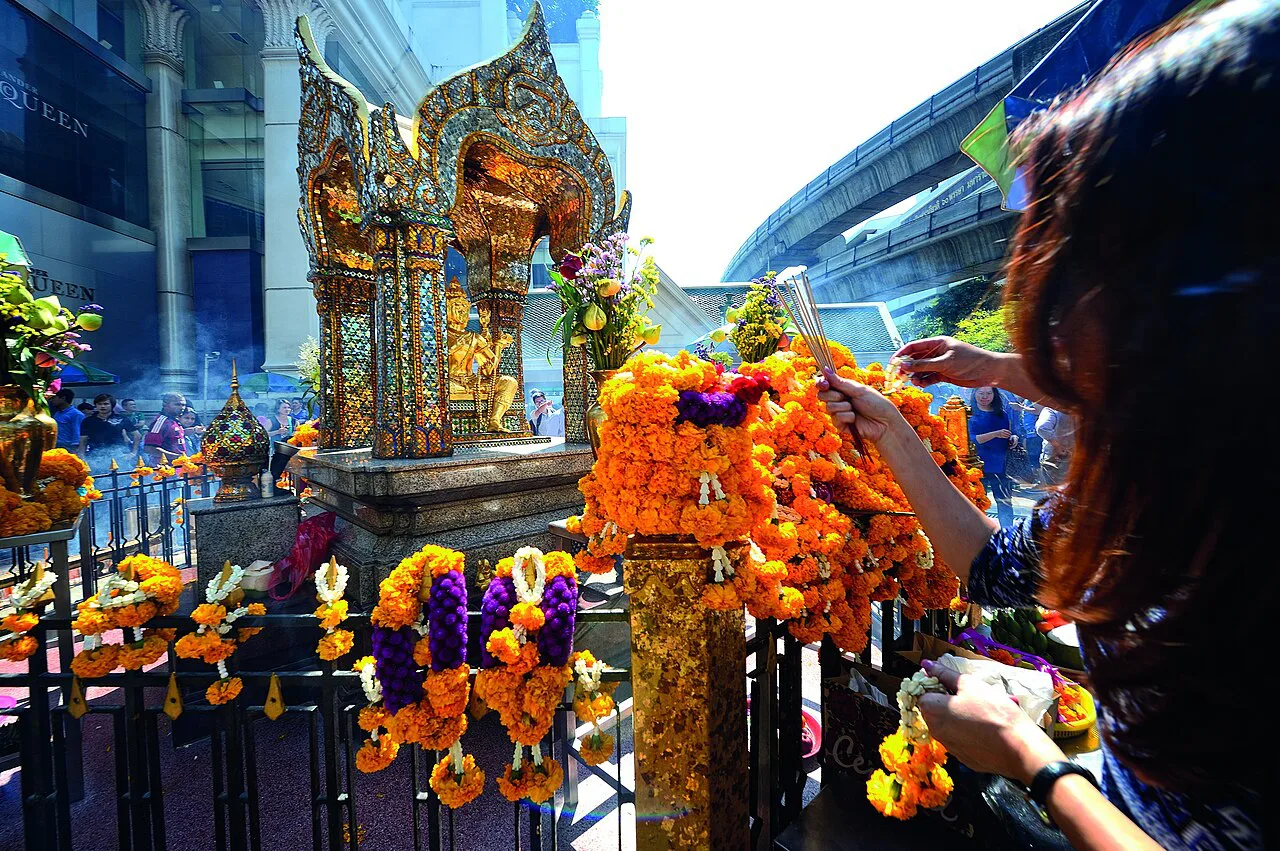
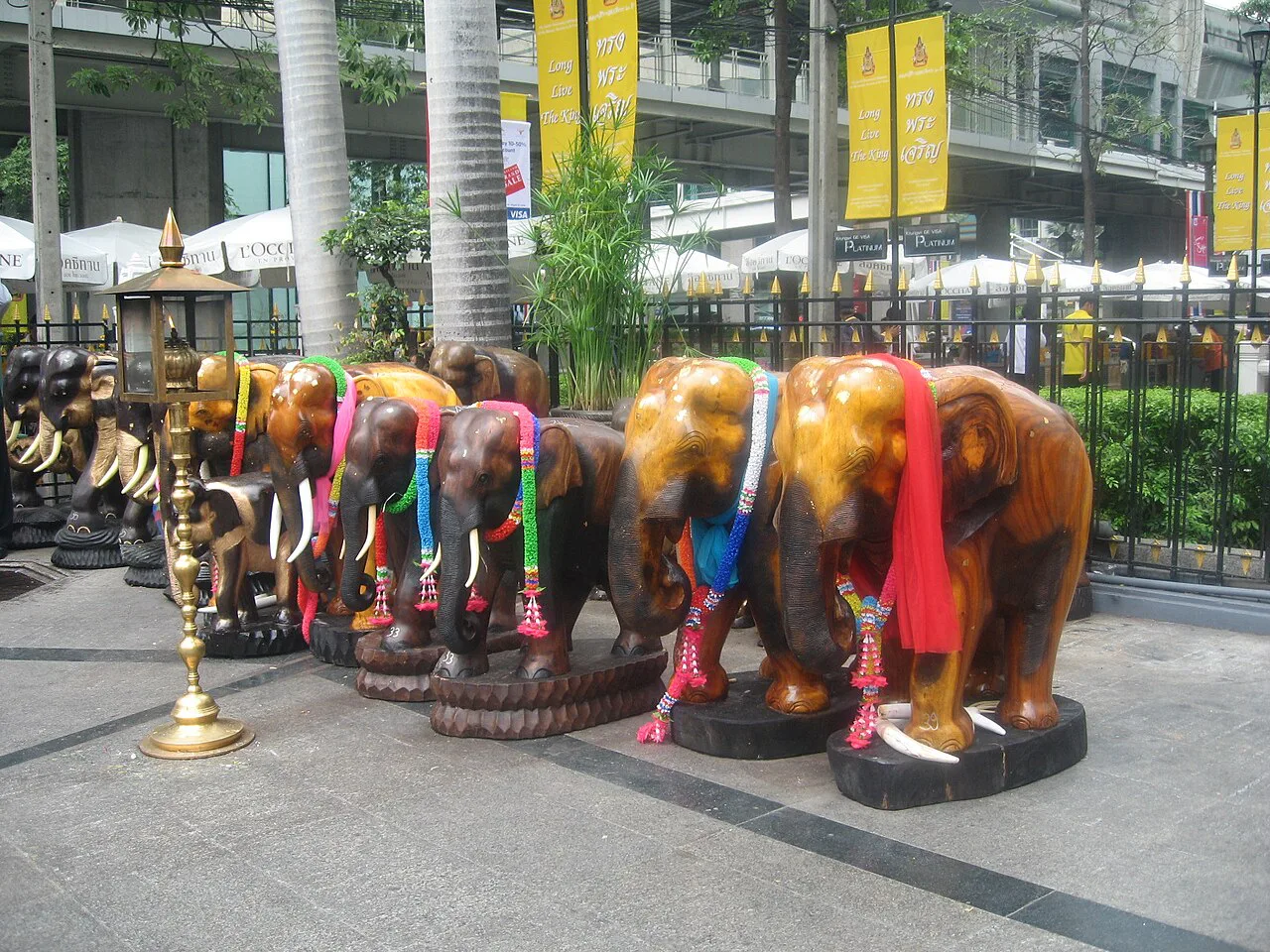
The centerpiece is the four-faced Phra Phrom statue, each face turned to a different direction and each associated with a different kind of blessing. Around it, worshippers move in a steady circuit with marigold garlands, lotus, incense and candles, and the air stays thick with smoke through the day. Wooden elephants pile up among the offerings, and the site is rarely without someone mid-prayer.
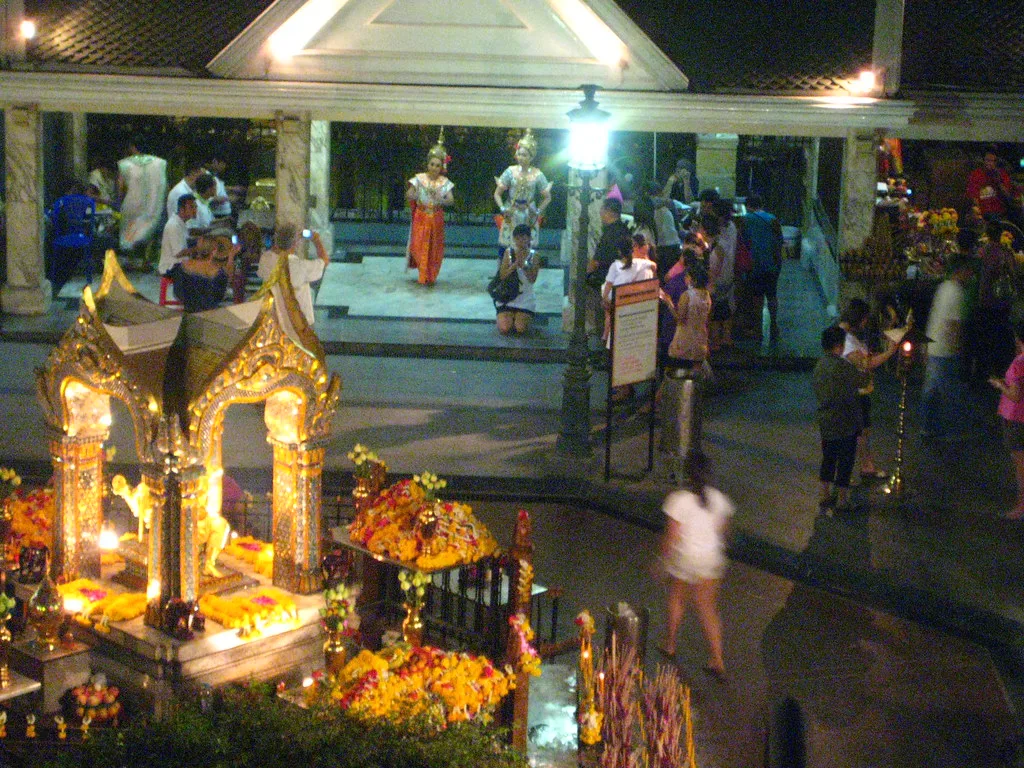
To one side sits the dance stage, where hired classical Thai dancers perform in thanks for wishes believed to have been answered. This is not street performance for tourists; it is a paid religious offering, and the number of dancers is tied to the size of the wish being acknowledged. Understanding that changes how you watch it.
How to pray like the people around you
Offerings are sold both outside and inside the shrine grounds, but buying from the stalls inside keeps your money with the shrine and makes the pricing clearer. A typical set covers the four elements: lotus or flowers, clean water, incense and candles. Vendors will assemble a set for you if you are unsure what to pick.
The customary sequence is to make your wish before each face in turn, working around the statue rather than standing in one spot. Worshippers often pray for well-being, success, career or health, matching the face to the request. When a wish comes through, the return visit is the point: many people come back to give thanks, frequently by commissioning a dance.
You do not need to be Hindu or Buddhist to take part respectfully; standing quietly to one side while others pray is also perfectly acceptable. What matters is not blocking the circuit, not stepping in front of someone mid-prayer, and keeping voices low near the statue.

The dance offering, explained
Devotees commission the dancers as a thank-you once a prayer has been answered, and the troupe performs classical Thai choreography on the small stage beside the shrine. As the Bangkok Post describes it, the number of dancers reflects the size of the fulfilled wish, so a modest request may bring a pair and a bigger one a fuller group. That is why the stage is busy at some hours and quiet at others.
For a visitor, the practical takeaway is to watch from the edge and let worshippers get close. Photography is generally fine, but swinging a camera toward someone in the middle of a prayer is the one move that reads badly here. If you want a clear view of the dancers, stand back and wait for a gap rather than edging forward.

Timing your visit: morning calm versus evening crowds
Early morning is the calmest window, with thinner crowds, softer light and space to move around the statue. Late afternoon and evening bring the fuller atmosphere, with more worshippers and the best chance of catching dance performances. Decide which you want before you set a time, because the two versions of the shrine feel quite different.
Midday combines the largest crowds with the least shade, since the shrine sits on open pavement at a major intersection. If your schedule only allows lunchtime, keep the stop short and use the skywalk and mall air-conditioning before and after. A quick look at the statue and the stage still delivers the essential experience.
How long to allow, and what's nearby
Budget 20 to 30 minutes for a straightforward visit: a circuit of the statue, a few minutes watching the dancers and some photos. If you intend to buy offerings, pray at each face and stay for a full dance offering, allow closer to an hour. Either way, the site is small enough that you will not fill an afternoon here.
The obvious pairing is the mall cluster immediately around you. Gaysorn connects via the skywalk, CentralWorld is a short covered walk away, and Amarin Plaza sits on the same corner; all three let you cool down and eat without a taxi ride. Browse the full set of Bangkok attractions: plan your days around temples and markets if you are building a wider itinerary in the district.
If you want a bigger market outing on the same trip, the Chatuchak Weekend Market, Bangkok: Layout, Hours & How to Get There rewards a separate half day rather than a detour squeezed around the shrine. Closer in, Jim Thompson House in Bangkok is a compact museum stop reachable by BTS and a short walk, while the Grand Palace Bangkok: Tickets, Hours and What to See complex and Wat Phra Kaew sit across town near the river at a different scale entirely.
Etiquette that actually matters here
There is no enforced dress code at the shrine, but covering shoulders and knees is the considerate choice at a site this sacred. Keep hats off during prayer and keep your voice down near the statue. Modesty here is about the worshippers around you, not about a guard at a gate.
Photos of the shrine itself are fine; pointing a lens at someone mid-prayer is where the line sits. Buy offerings from the stalls inside rather than touts on the pavement, and carry small change so you are not hunting for a note in a crowd. These three habits cover almost every awkward moment a first-time visitor runs into.
Which shrine stop fits your day
Ratchaprasong has more than one stop worth a short walk, and they draw different crowds. The Erawan Shrine is the quick, central devotional one you can fold into a shopping afternoon, while the art and culture centre a few BTS stops away suits a slower indoor break. Both work best when you keep them short and let the day's other plans carry the rest.

Should the Erawan Shrine be on your Bangkok list?
Yes, if you are already shopping or staying around Ratchaprasong: it costs nothing to enter, takes half an hour, and shows you a living religious practice rather than a preserved monument. No, if you are expecting a temple complex to explore; this is one statue, one stage and a lot of incense.
Come early for calm or late for the dancers, bring small notes for offerings, and confirm the evening closing time the day you go. Pair it with the malls on the skywalk and save your longer temple days for elsewhere in the city.
Explore more Bangkok guides
Sources
- Erawan Shrine | Novotel Bangkok Platinum Pratunam
- Erawan Shrine Bangkok Guide 2025: Hours, How to Pray, Location
- Bangkok's Erawan Shrine, dedicated to the Hindu god Brahma, is a vibrant landmark where Thais and tourists pray for good luck, fortune, and success. Devotees express their thanks by hiring dancers to perform, with the number of dancers reflecting the size of their fulfilled wish. #พระพรหม #เอราวัณ #