
Grand Palace Bangkok: How to Visit Wat Phra Kaew
Give the Grand Palace a solid half day, and go early: one ticket gets you into both the palace courtyards and Wat Phra Kaew, the temple of the Emerald Buddha, which sits inside the same walled compound on Rattanakosin Island. Most first-timers treat the two as separate sights and end up rushing the best parts. This guide covers where the complex sits, how to arrive by boat or road, the walking order that works, and what the published ticket and hours say.
Where the Grand Palace sits on Rattanakosin Island
The Grand Palace occupies the western edge of Rattanakosin Island, Bangkok's old royal quarter, with the Chao Phraya River to its west and its main visitor entrance off Na Phra Lan Road. The complex has been the official royal residence since 1782, and although the current royal family does not live there, it remains a working ceremonial site rather than a museum. Inside, the grounds split into three courts: a front court of government and guard offices, a middle court of throne halls and state buildings, and an inner court historically reserved for royal consorts and female courtiers.
For planning purposes, treat the whole walled area as one attraction: Wat Phra Kaew occupies the northern section and the throne halls the central and eastern sections, so you walk between them without a second gate. That is why the ticket is sold once and why a sensible route matters more than a checklist. If you want a wider look at what else the old city holds, the Bangkok Attractions: 12 Visitor Guides page groups the surrounding sights by area.
The ticket price, what it covers, and where to buy it
Several visitor guides report the adult entrance fee as 500 baht, bought at the ticket booth near the main gate on Na Phra Lan Road before you pass through into Wat Phra Kaew. One long-running fan guide to the palace lists 500 baht as the fee and says children under 120 cm enter free, and the VisitBangkok post describes buying the 500-baht ticket at the main gate. Treat that as the price reported by those sources rather than a locked-in rate, and check the figure at the booth or on the official palace site before you travel.
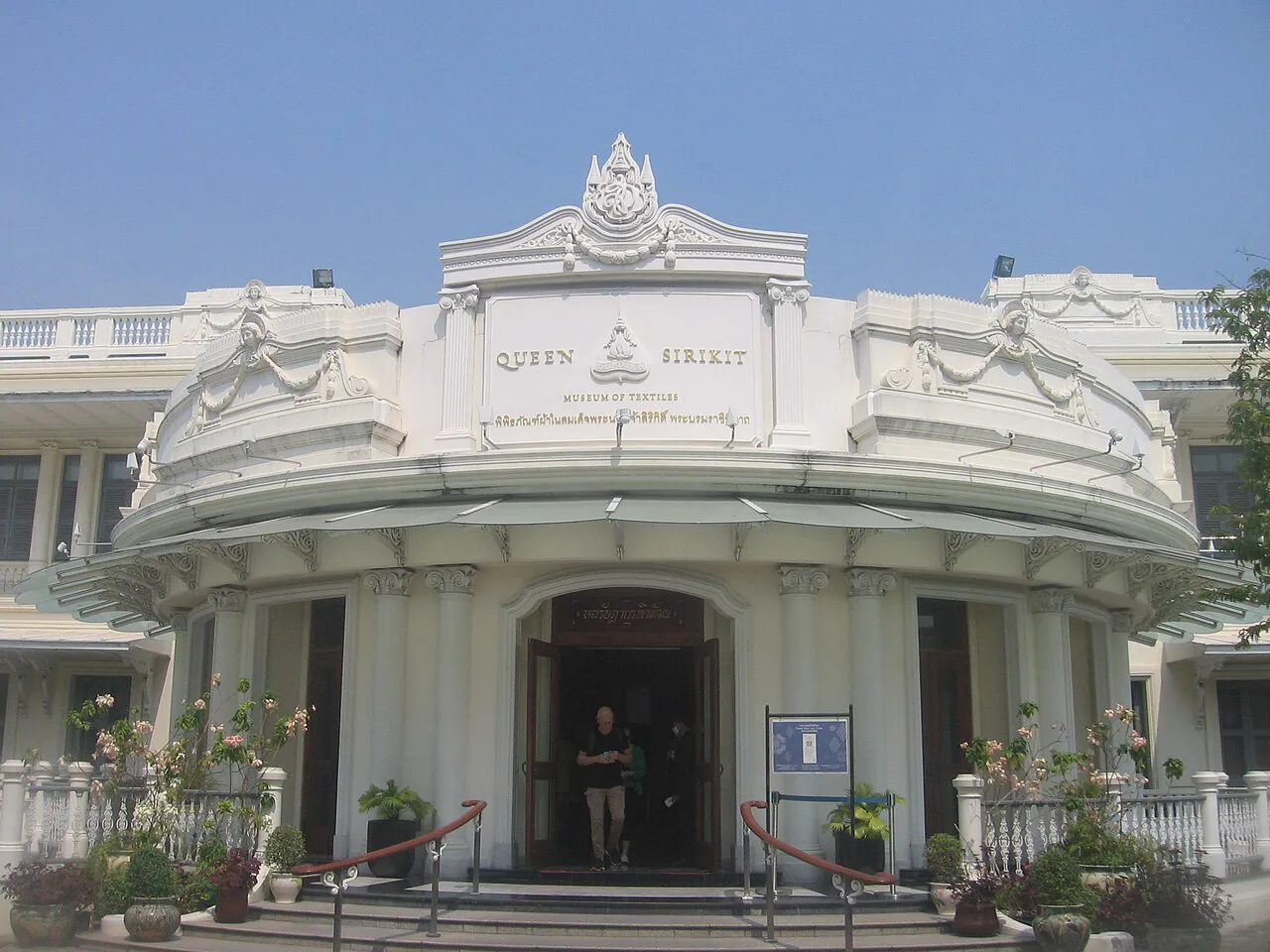
Some guides describe the same ticket as covering more than the palace: the same fan site says it also admits you to the Queen Sirikit Museum of Textiles and lists further inclusions such as a museum at Bang Pa-in and a Khon masked-dance performance, on separate days after purchase. None of that comes from an official palace source, and inclusions do change, so ask at the booth what your ticket covers rather than budgeting around a dance show. Bring cash in baht as a backup in case card payment is unavailable.

Opening hours and the last ticket sale of the day
Sources disagree on closing time. One palace guide says the site opens at 8:30 and closes at 15:30, while a self-guided tour write-up says the grounds stay open to 16:30 with ticket sales stopping at 15:30. The one point they share is an 8:30 opening and a last ticket sale of 15:30, which is the number that actually shapes your day. Confirm the current closing time on the official palace site before you set out, since a late arrival with no ticket is the most common wasted trip.
The sources also differ on closures, and some describe occasional ceremonial days when the palace is shut to sightseeing. Rather than guess at dates, check the palace's own notices in the days before your visit and build your Bangkok plan around a morning slot. That is the second and last details check worth doing; everything else you can sort out at the gate.
Getting there by BTS, boat, Grab or tuk-tuk
The pleasant route is by water: ride the BTS Skytrain to Saphan Taksin, walk down to Sathorn Pier, and take a Chao Phraya Express boat north to Tha Chang Pier, which sits a short walk from the palace entrance. The same route is described in a trip-planning guide to the palace, and it sidesteps the old-city traffic that can swallow a taxi ride. Boats run frequently during the day, but check the pier's posted timetable for the last return.
By road, a Grab car or a metered taxi from Sukhumvit or Siam is straightforward outside peak hours, and a tuk-tuk works for the final stretch if you agree the fare first. Allow more time than the map suggests, because Na Phra Lan Road and the surrounding old-city streets jam up through the middle of the day. If you are based near the river, walking from Tha Chang is often faster than any vehicle.
The walking order inside the walls
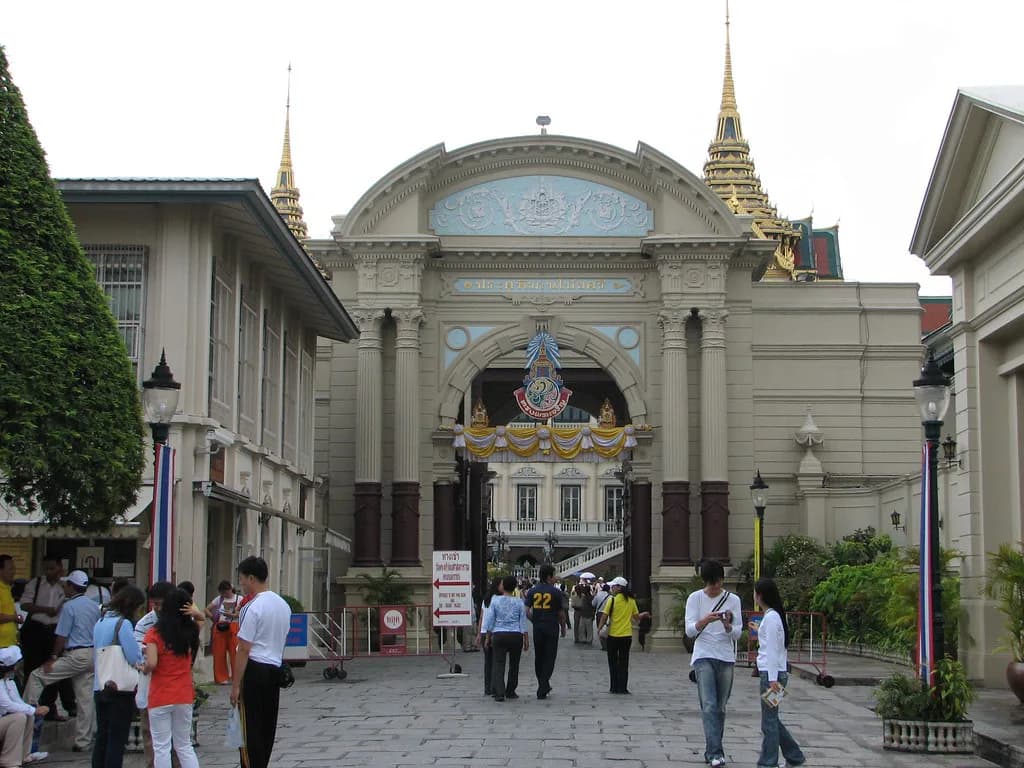
The route that works starts at the Mani Nopparat Gate on Na Phra Lan Road: the ticket booth sits to your left, with an e-gate into Wat Phra Kaew just beyond. Go into the temple first, while the light is still soft and the courtyards are thinnest, then move on to the state halls. Save the Queen Sirikit Museum of Textiles for the end, since it sits near the exit gate and gives you air-conditioned relief before you leave.
Follow the terrace circuit at Wat Phra Kaew before entering any building, then walk through the middle court in this order: Phra Maha Monthien, Chakri Maha Prasat and Dusit Maha Prasat. Following the marked one-way flow keeps you out of oncoming crowds and means you see the big halls before fatigue sets in. Signage inside is in English, so you can self-guide without a map app.
What to see at Wat Phra Kaew
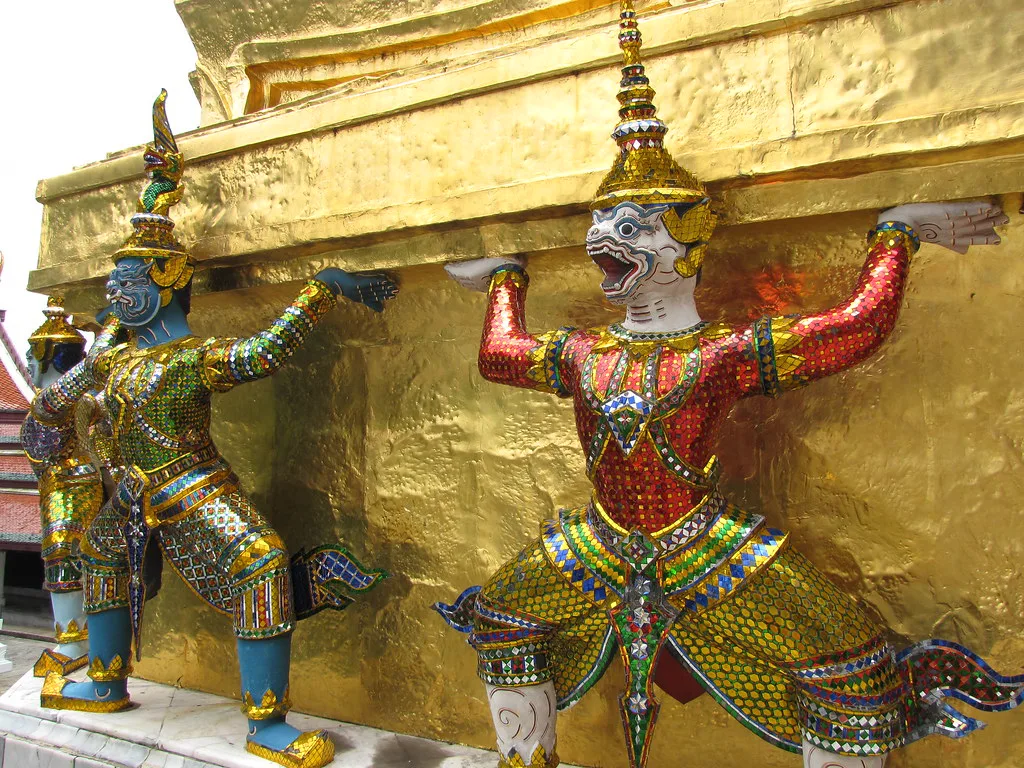
The Emerald Buddha is the reason most people come: a small, deeply revered figure of green jade dressed in gold, seated high in the Ubosot hall, and visible only from a distance below. The surrounding terrace holds the Ramakien murals, among the longest painted epics in the world, plus eight pagodas, the Phra Sri Rattana Chedi and a miniature replica of Angkor Wat. Walk the mural gallery slowly; most visitors pass it in two minutes and miss the detail.
Shoulders and knees need covering here, as at any active temple in Thailand, and the complex enforces that at the gate. Beyond that, treat the visit as you would any working religious site and follow the posted signs once you are inside.
The throne halls
Dusit Maha Prasat is the purest Thai building in the complex, a golden throne hall that began as King Rama I's royal crematorium and later served lying-in-state and commemorative ceremonies. Chakri Maha Prasat is the showpiece hybrid, a neoclassical base under a Thai roof that locals nicknamed the farang wearing a chada, or Westerner in a Thai headdress. Phra Maha Monthien is a cluster of seven connected halls that was the monarch's residence and the setting for coronation ceremonies.
Expect some halls to be off-limits when ceremonial use takes priority, which is another reason to check the palace's own notices rather than a blog post. The Queen Sirikit Museum of Textiles, near the exit, holds royal costumes and woven textiles and is an easy, quiet finish if your energy is fading.
How much time to allow, and when heat and crowds peak
Plan on two to three hours at a steady pace, and closer to four if you read the murals and linger in the museums. One guide suggests two hours and another three to four, which tells you the honest range depends on how much you stop. The palace is mostly open paving with little shade, so an 8:30 start buys you cooler air and thinner courtyards; by late morning the middle court bakes and the tour groups arrive in waves.
That heat is why the walk south to Wat Pho feels longer than the 700 meters one palace guide gives: the Reclining Buddha sits in a complex roughly that distance from the palace gate, and the last stretch is exposed. If you plan to continue there, a short tuk-tuk hop or a taxi is a reasonable trade for the sweat, or you can read our Wat Pho Bangkok guide before deciding.
What else is within walking distance
Beyond Wat Pho, the riverside old city puts several sights within a stroll: Wat Arun (Temple of Dawn) sits across the Chao Phraya and is reachable by a short cross-river ferry, and Wat Saket (The Golden Mount) is a longer but flat walk east. Both make sensible companions to a morning at the palace, provided you start early enough to beat the heat.
If you would rather spend the afternoon indoors, the Jim Thompson House in Bangkok offers a teak-house tour and textile collection a Grab ride away, and the Bangkok Art and Culture Centre has air-conditioned galleries in Siam. Both pair well with a palace morning if you plan the transport in advance.
Is the Grand Palace worth a morning?
For a first trip to Bangkok, yes: one walled compound holds both the Emerald Buddha and the royal throne halls, and the 500-baht ticket reported by several guides covers a genuine half day of sightseeing. Go at 8:30, follow the Wat Phra Kaew to throne halls to textile museum route, and confirm hours and inclusions before you travel, since the sources disagree.
If you have a second day in the old city, spend it at Wat Pho and Wat Arun rather than squeezing everything into one hot morning. And if you want a weekend alternative, the Chatuchak Weekend Market makes an easy contrast to royal courtyards.
Explore more Bangkok guides
Frequently Asked Questions
Is the Grand Palace the same as Wat Phra Kaew?
They share one compound. Wat Phra Kaew, the temple of the Emerald Buddha, sits within the Grand Palace walls, so a single ticket admits you to both and you walk between them without a second gate.
How do I get to the Grand Palace by public transport?
Take the BTS Skytrain to Saphan Taksin, walk to Sathorn Pier, then ride a Chao Phraya Express boat north to Tha Chang Pier and walk to the Na Phra Lan Road entrance. A Grab car or metered taxi works too, but allow for old-city traffic.
Sources
- 🙏How to Visit The Grand Palace & the Temple of the Emerald Buddha in this period🙏 There are two routes: sightseeing or paying respects. 1️⃣ For sightseeing, buy a 500-baht ticket at the main gate, then enter Wat Phra Kaew on the right. 2️⃣ For paying respects to H.R.M. the Queen Mother, start at Na
- Grand Palace | Bangkok - What to Expect | Timings | Tips - Trip Ideas by MakeMyTrip
- Grand Palace Thailand: Self-Guided Must-Sees | TAGTHAi
- ENTRANCE FEE FOR THE GRAND PALACE & EMERALD BUDDHA TEMPLE BANGKOK