
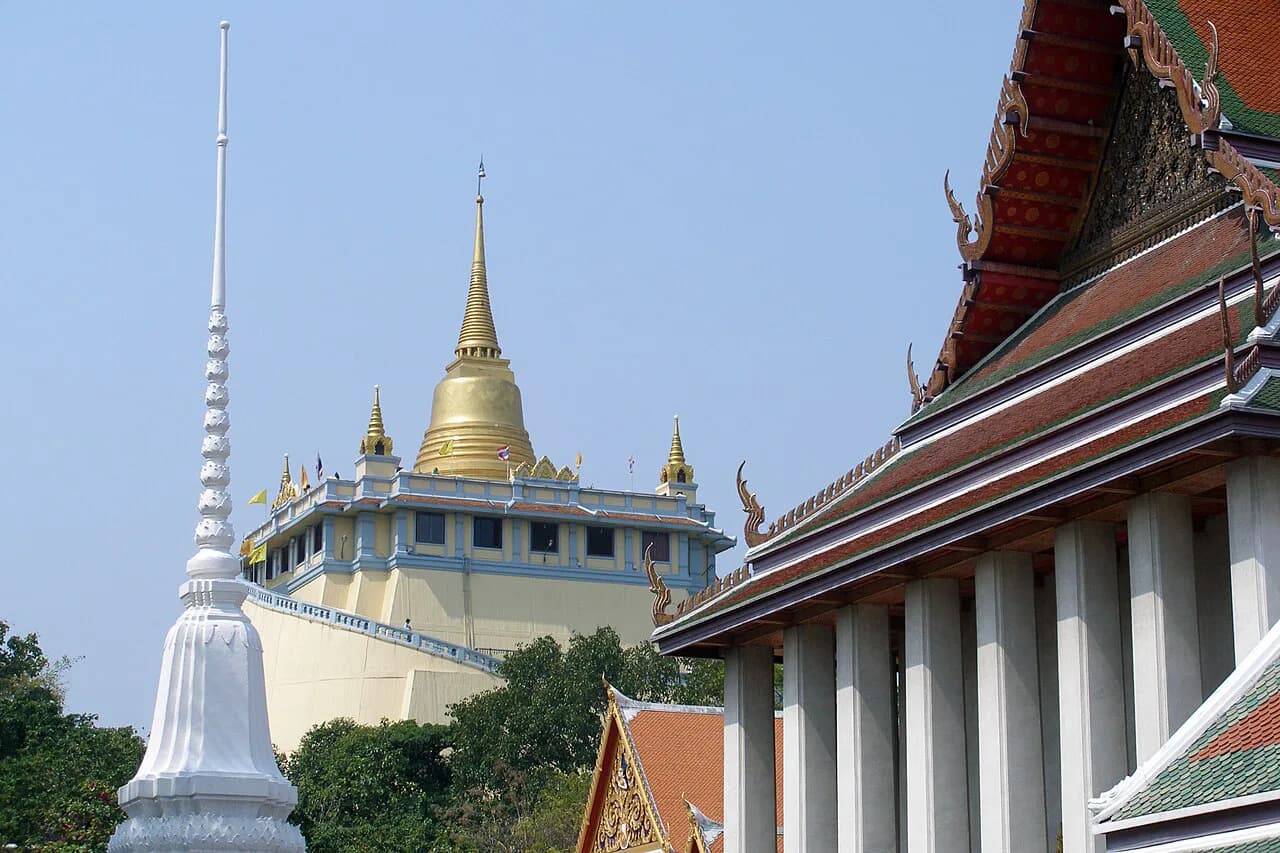
Wat Saket (The Golden Mount) in Bangkok: What to See and How Long to Allow

Wat Saket, better known as the Golden Mount, is worth about 60 to 90 minutes of your Bangkok time: a spiral stair climb to a hilltop chedi with a wide rooftop view over the old city. It suits travelers who want a temple without the crush of the Grand Palace, and it costs far less time and money than the riverside giants. This page covers where the temple sits, how to reach it, what you pass on the way up, the ticket and hours question, and how to pair it with nearby sights.
Where Wat Saket sits, just outside the old city walls
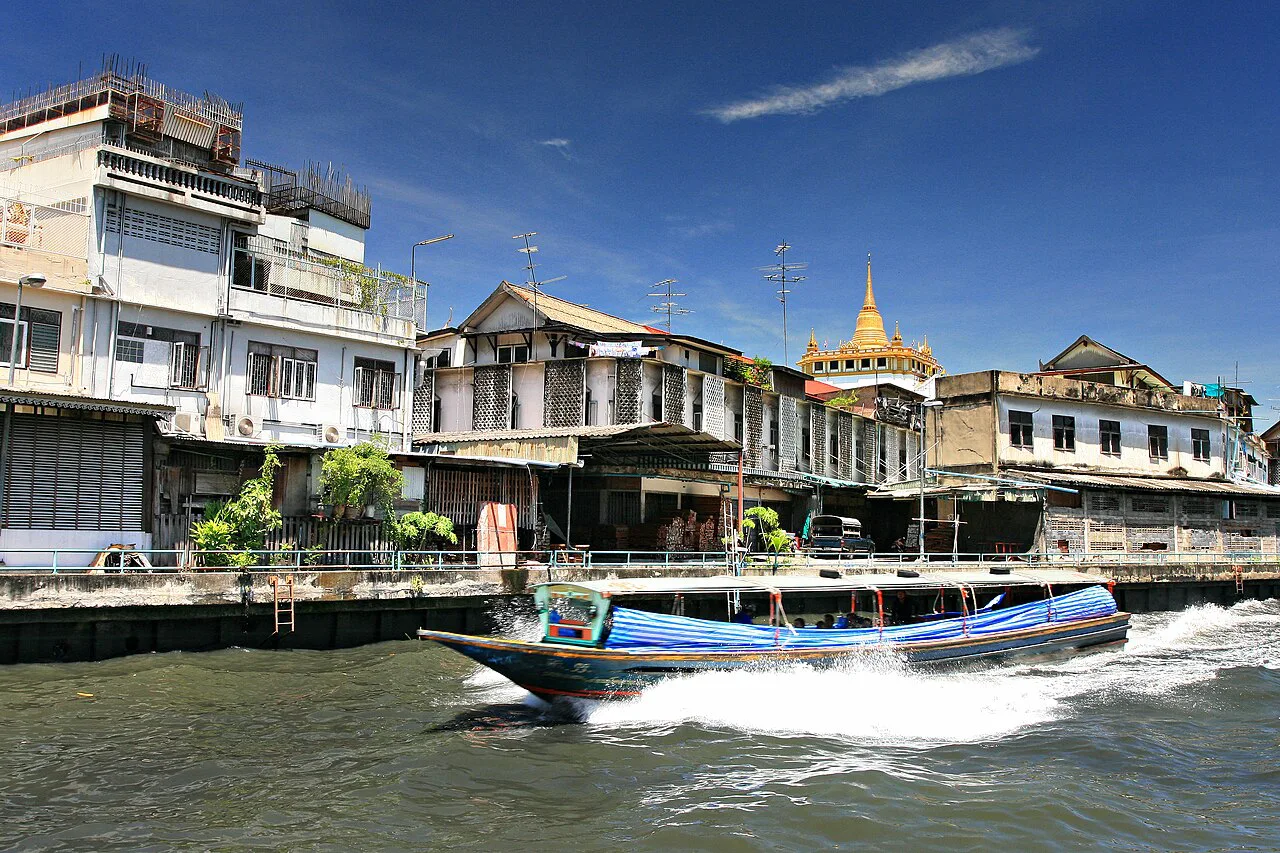
Wat Saket Ratchawora Mahawihan occupies a corner of the Pom Prap Sattru Phai district, on Boriphat Road just beyond the historic core. The artificial hill topped by its golden chedi is called Phu Khao Thong, and it rises above a low-rise neighborhood of shophouses and street food stalls rather than a monument-lined Avenue. That position outside the old walls is not incidental: the temple historically handled cremations that were not permitted inside the walled city.
For orientation, treat it as a stop between Khao San Road and Chinatown. Travel sources put Khao San at roughly a 20-minute walk, the Grand Palace and Wat Pho about 25 to 30 minutes on foot or around 10 minutes by car, and Yaowarat Road about 15 minutes by car. If you are building an Old Town day, the Grand Palace is the heavyweight anchor and Wat Saket is the calmer bookend.

How to get to Wat Saket
The nearest rail option is MRT Sam Yot on the Blue Line, from which the temple is about a 15-minute walk. Grab is the simplest door-to-door choice, and travelers who use it often prefer GrabBike to sit out Bangkok's traffic. Public buses also pass nearby, and route planning apps will show the stop and walking leg.
Canal boats are a genuinely local approach: the pier area just north of Wat Saket connects toward the town center and on toward Siam and Sukhumvit. If you are already in the Old Town or Chinatown, walking is pleasant in the cooler morning hours and avoids the fare negotiation entirely. Whichever mode you pick, confirm the current pier or stop on a mapping app before you set out. See the wider Bangkok attractions: plan your days around temples and markets for how this fits the rest of your week.
Inside the temple grounds at the base
The Wat at ground level is the older part of the site, restored under King Rama I and used for centuries before the hill was built. It is not the ornate showpiece that draws most visitors, and many travelers pass through it quickly on the way to the stairs. Give it ten minutes anyway: the ordination hall area and the shaded courtyard set the tone, and the contrast with the climb above is part of the visit.
The base is also where you will find the usual temple facilities and vendors, plus the ticket point for the climb. Buy water here rather than at the top, and keep small notes handy. If you want a second Old Town temple in the same outing, Wat Pho is the obvious pairing for its reclining Buddha and riverside setting.
The climb up the Golden Mount
The stair count is the real planning variable here. One travel guide counts 344 steps to the top, while a reference site gives 318; either way, plan for a steady spiral climb of roughly 10 to 15 minutes with pauses. The route winds around the hill through trees and past bells and shrines, so it feels less like a stairwell and more like a slow procession.
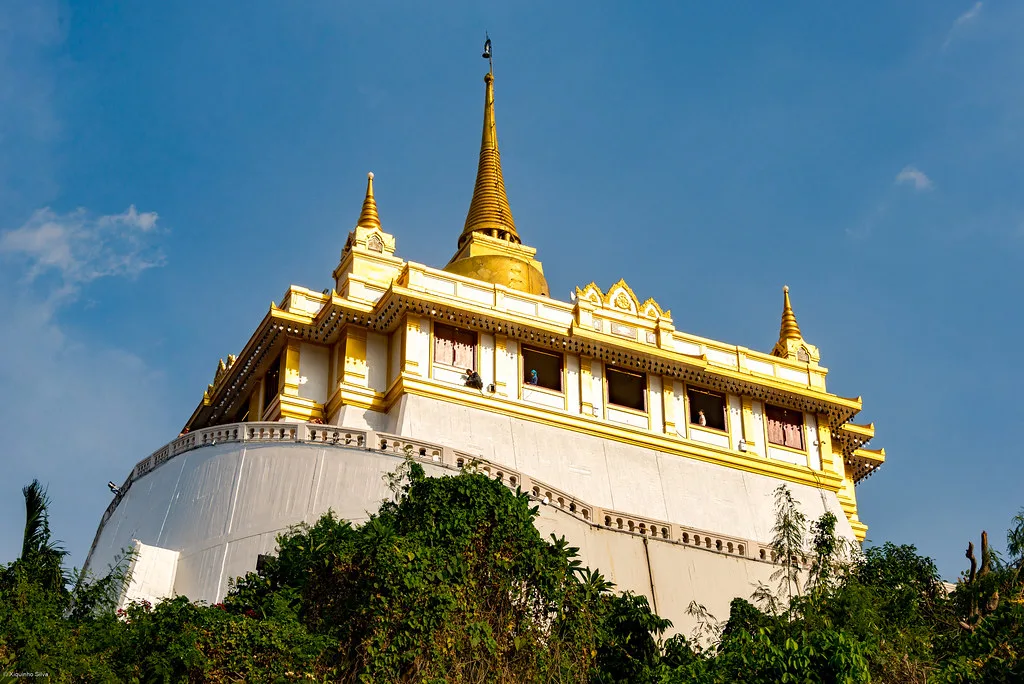
Terraces break up the ascent, and each one gives you a reason to stop without feeling like you are blocking the flow. The hill itself is artificial, built up under King Rama III after an earlier chedi collapsed on soft ground, then stabilized with teak logs and crowned under later reigns. That engineering history explains the wooded, mound-like profile rather than a stone tower.
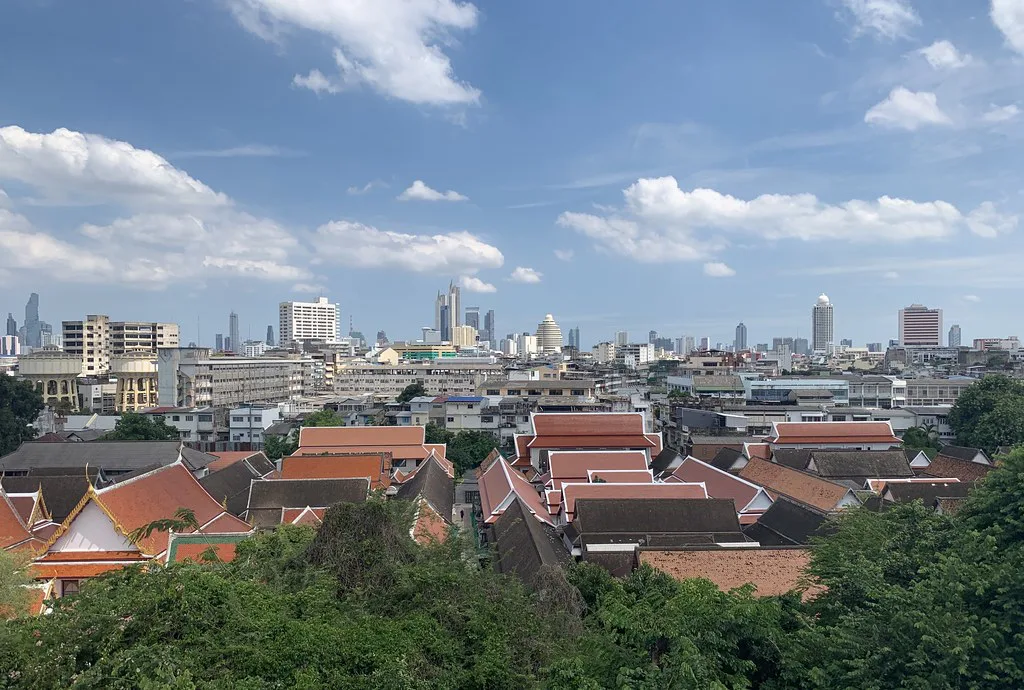
The chedi and the view at the top
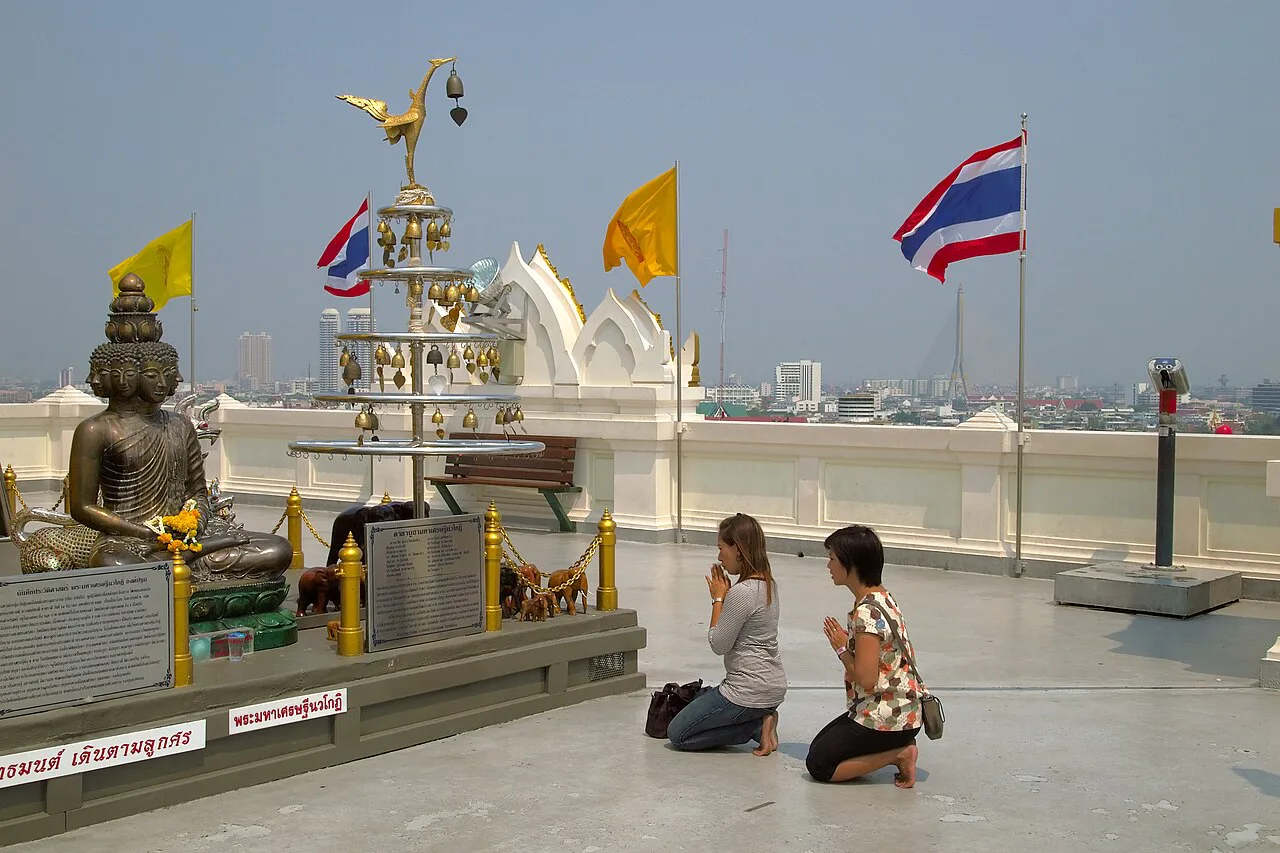
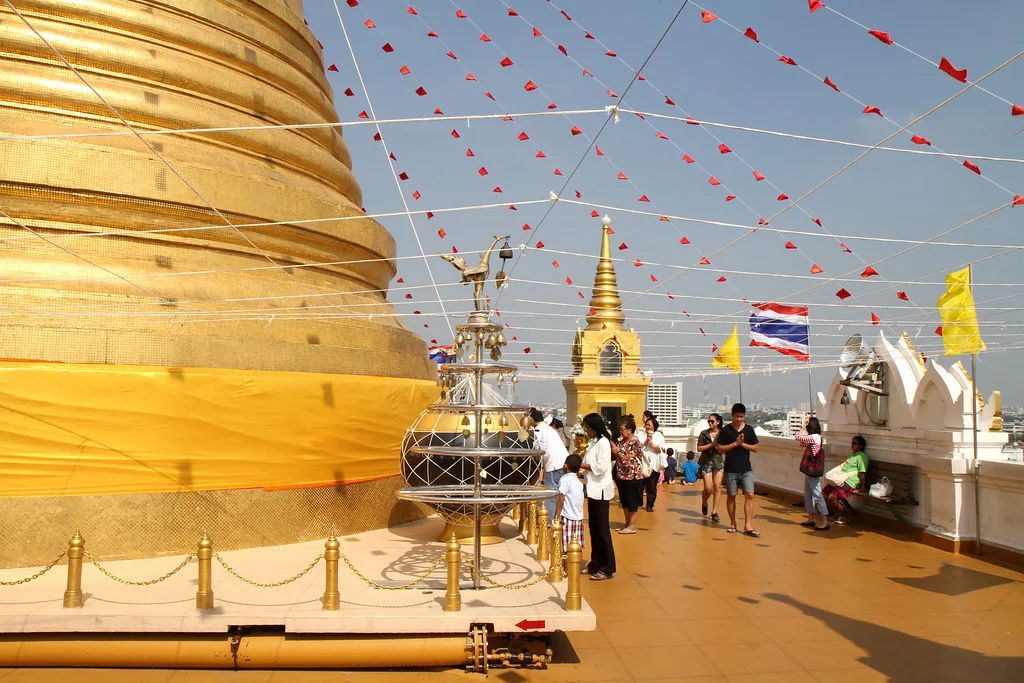
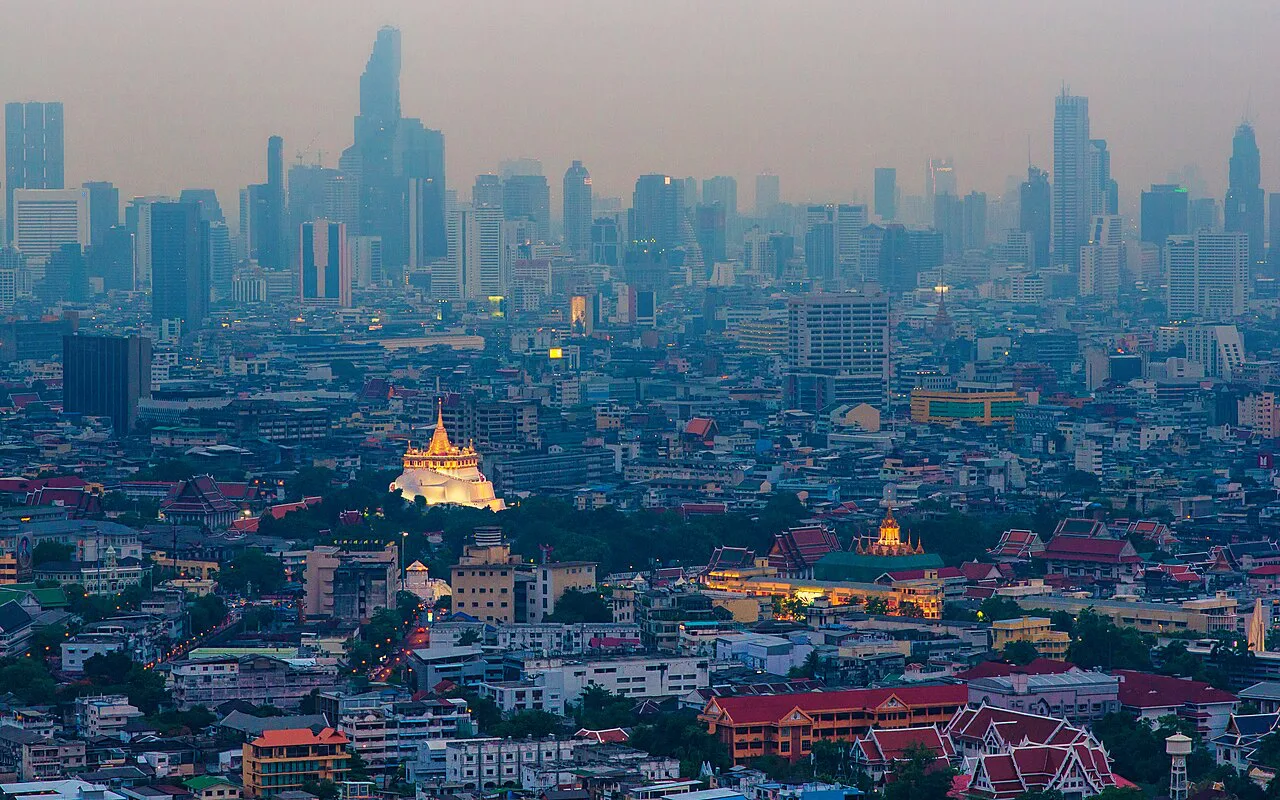
At the summit, the gilded chedi holds pride of place, said to enshrine a Buddha relic given to King Rama V, and it was once the highest point in Bangkok. The viewing platform wraps around it, so you can walk a full circuit and pick your angle: old Rattanakosin Island rooftops on one side, the sprawl of the modern city on the other. On a clear day the panorama is the best you will get in the old city without paying for a skyscraper bar.
Timing the light matters more than any other choice. Early morning gives softer air and fewer people, while late afternoon into golden hour is when the chedi glows and the city haze turns photogenic; reviewers commonly head up around 6pm for exactly that reason. Carry your own water and expect the platform to get crowded at sunset on weekends.
Entrance fee and opening hours: confirm before you go
Ticket information is inconsistent across available sources, so treat any figure as a planning estimate rather than a fact. One recent guide lists 100 THB with hours of 07:00 to 19:00, while an older post cites 20 Baht, a spread that almost certainly reflects a price increase over the years. Check the posted rate at the gate or the temple's own channels before you budget, and carry cash in small notes.
The 07:00 to 19:00 window comes from a third-party guide, not from the temple or a tourism authority, so verify current hours the day before you visit, especially if you are aiming for sunset. Check recent visitor posts or the temple's own channels for closures or renovation before you travel, rather than assuming the site is fully open. A quick look at recent photos will flag any scaffolding on the chedi.

How much time Wat Saket needs, and what to pair with it
Budget 60 to 90 minutes total: about 20 minutes at the base, 15 minutes up, 20 to 30 minutes at the top, and 10 minutes down. Add 15 to 20 minutes each way if you are walking from Sam Yot or Khao San Road. If you are short on time, skip the ground-level halls and go straight for the climb, since the view is the reason most people come.
The most natural pairing is a morning at the Grand Palace and Wat Pho, then a Grab ride here for late-afternoon light, which splits the crowds and the heat across the day. In the other direction, Chinatown's Yaowarat Road is a short ride away and works well as an evening finish. For a completely different half-day, Chatuchak Weekend Market is a BTS ride north and only runs on weekends.
If you are staying in the Old Town and want an indoor break from the heat, the Bangkok Art and Culture Centre is a free-feeling contemporary counterpoint to the temple circuit. Otherwise, keep the day simple: one big temple, one climb, one food street. Spreading yourself across three districts in a single afternoon mostly buys you time in traffic.

Is Wat Saket worth it next to the Grand Palace crowds?
Yes, if you reframe what you are buying. The Grand Palace and Wat Phra Kaew deliver the maximum of gold and grandeur with the maximum of queues and heat, and they are worth the effort once. Wat Saket delivers a hilltop view, a genuine neighborhood atmosphere, and a fraction of the crowd pressure, which makes it the better choice when you want a temple that still feels like a place of worship rather than a circuit.
The honest trade-off is that the temple itself is modest and the stairs are the attraction. If mobility is a concern, or if you have only one temple day in Bangkok, prioritize the riverside sights and treat this as a bonus. If you have two days, this is the calm second act, and the walk down through the street food stalls below is part of the reward.
Slot the Golden Mount into your Old Town day
Treat Wat Saket as a 90-minute late-afternoon stop rather than a headline sight, and it earns its place in a Bangkok itinerary. Check the current ticket price and hours before you go, arrive with small cash and water, and give yourself time at the top instead of racing the stairs. If you are still mapping the rest of the city, start with the full Bangkok attractions: plan your days around temples and markets and build the day around one anchor sight.
Explore more Bangkok guides
Frequently Asked Questions
How many steps are there at the Golden Mount?
Sources give 318 and 344, so plan for roughly 320 to 345 steps on a spiraling route with terraces where you can pause. The climb typically takes 10 to 15 minutes at an easy pace.
Is Wat Saket free to enter?
Sources disagree on the ticket, citing both a low older figure and a much higher recent one, so check the posted rate at the gate before you pay. Carry small notes in Thai baht either way.
What is the best time of day to visit Wat Saket?
Early morning is coolest and quietest, while late afternoon gives the best light on the chedi and the rooftops. Confirm current closing time before planning a sunset visit.