
Wat Pho Bangkok: Visiting the Temple of the Reclining Buddha

Wat Pho is worth 1.5 to 2 hours of a Bangkok morning, and the Reclining Buddha hall alone justifies the trip. It sits on Rattanakosin Island at the southern edge of the old royal quarter, a short walk from the Grand Palace, which makes it the natural second stop after Wat Phra Kaew. This page covers what is inside the compound, how to arrive by MRT or river boat, and which details to confirm before you set out.
What Wat Pho is and where it sits
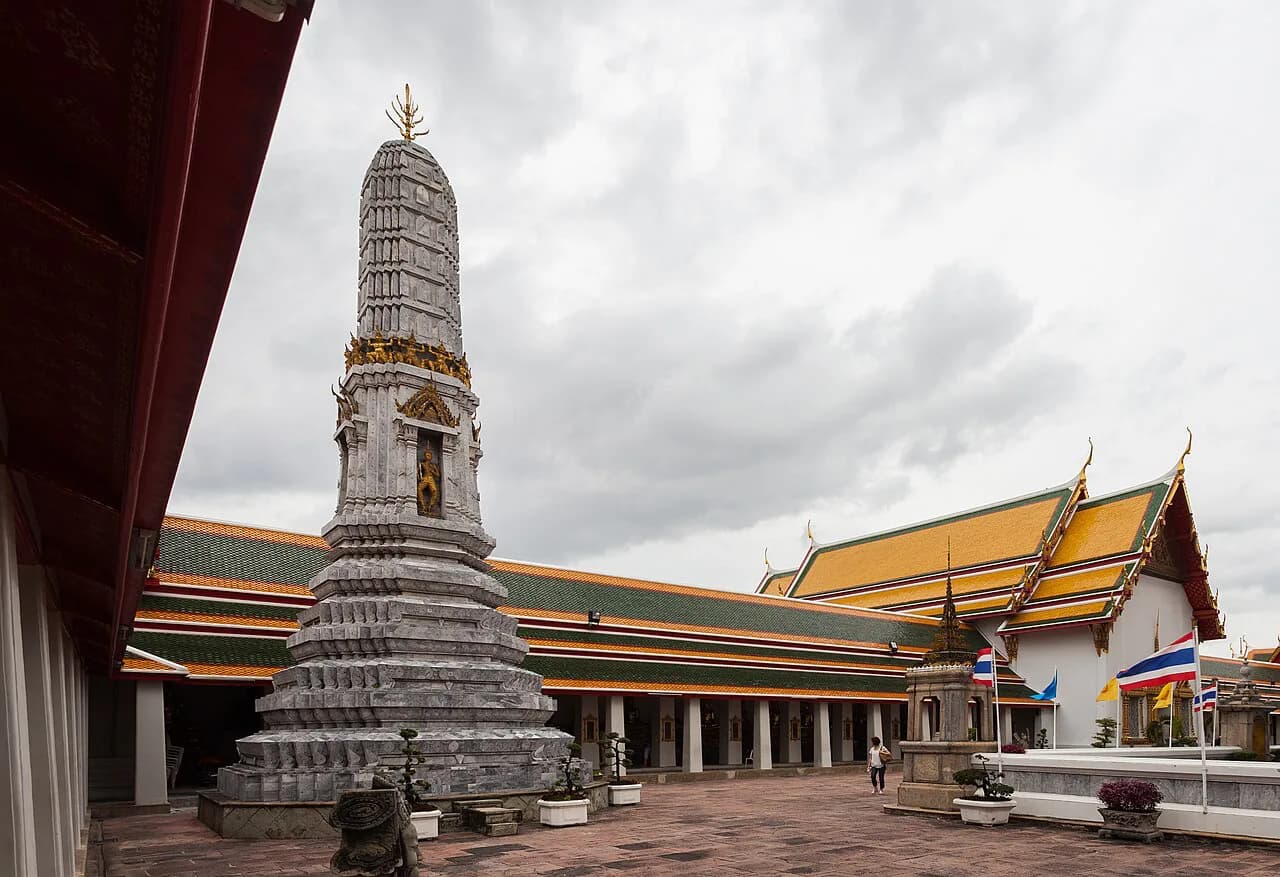
Wat Pho's full royal name is Wat Phra Chetuphon Vimolmangklararm Rajwaramahaviharn, but almost everyone uses the short form. It is one of the oldest and largest temples in Bangkok, and it occupies a walled compound on Rattanakosin Island just south of the Grand Palace. The address published for visitors is 2 Sanam Chai Road, Phra Borom Maha Ratchawang, Phra Nakhon.
The compound holds the Reclining Buddha hall, a small museum near the entrance, a Bodhi tree in the courtyard, the four great chedis and galleries of Buddha images, all within a single set of walls. Walking south through the compound brings you out near the river, where you can look across at Wat Arun. If you are building a day around this part of town, our Bangkok Attractions: 12 Visitor Guides put the old city stops in order.
The Reclining Buddha: 46 metres in a single hall
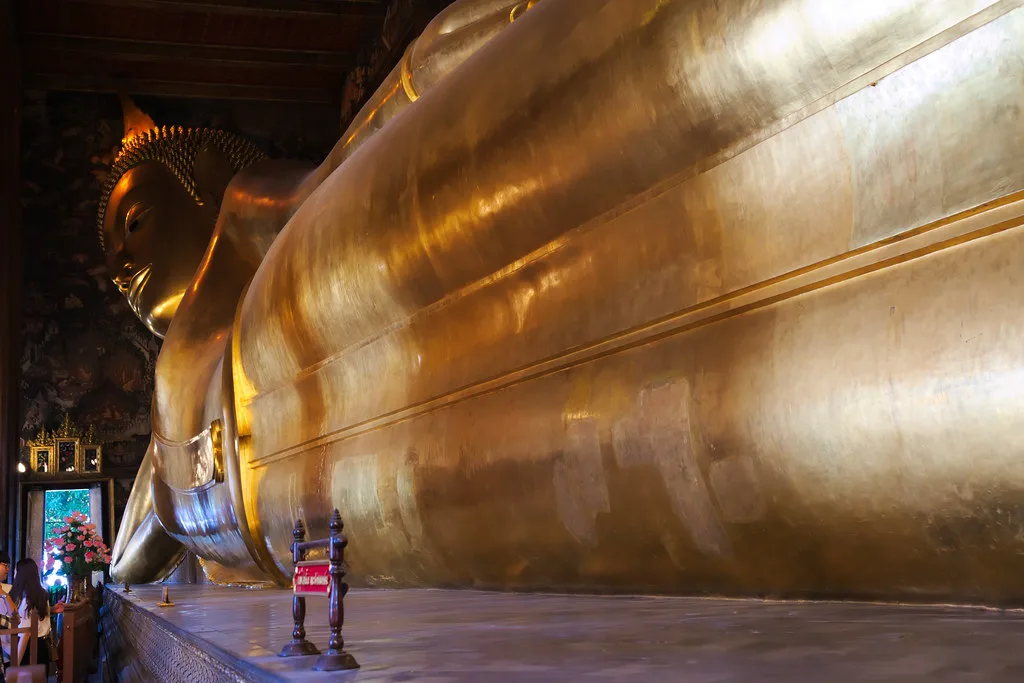
The statue known as Phra Buddha Saiyas measures 46 metres from head to feet and stands about 15 metres high from its base to the topknot. It was built in the early Bangkok period from brick and stucco, then lacquered and gilded, and it fills almost the entire length of its hall. The walls behind it carry paintings from the reign of King Rama III, which most visitors photograph without noticing.
You view the statue from a narrow lane that runs along its front, so the experience is a slow shuffle rather than a wide vista. That is one reason to arrive near opening rather than at midday, when the hall is at its most congested. Photography is permitted inside, but keep flashes and conversation low around anyone praying or meditating.
The mother-of-pearl soles of the feet
The Buddha's feet are the detail people remember. Each foot is 5 metres long and 3 metres high, with soles inlaid in mother-of-pearl and divided into panels of Buddhist symbols. They sit at the far end of the hall. Do not touch the inlay, and step aside once you have taken your look so the queue behind you can move.
The four great chedis: a color code
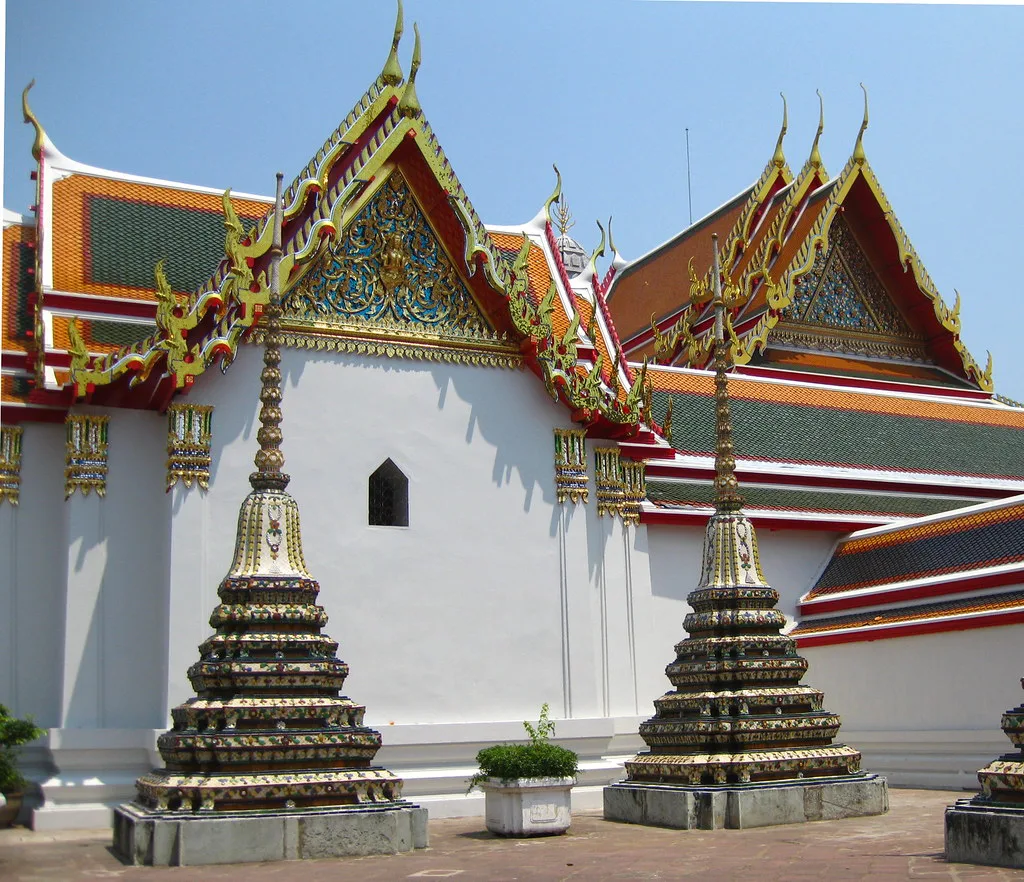
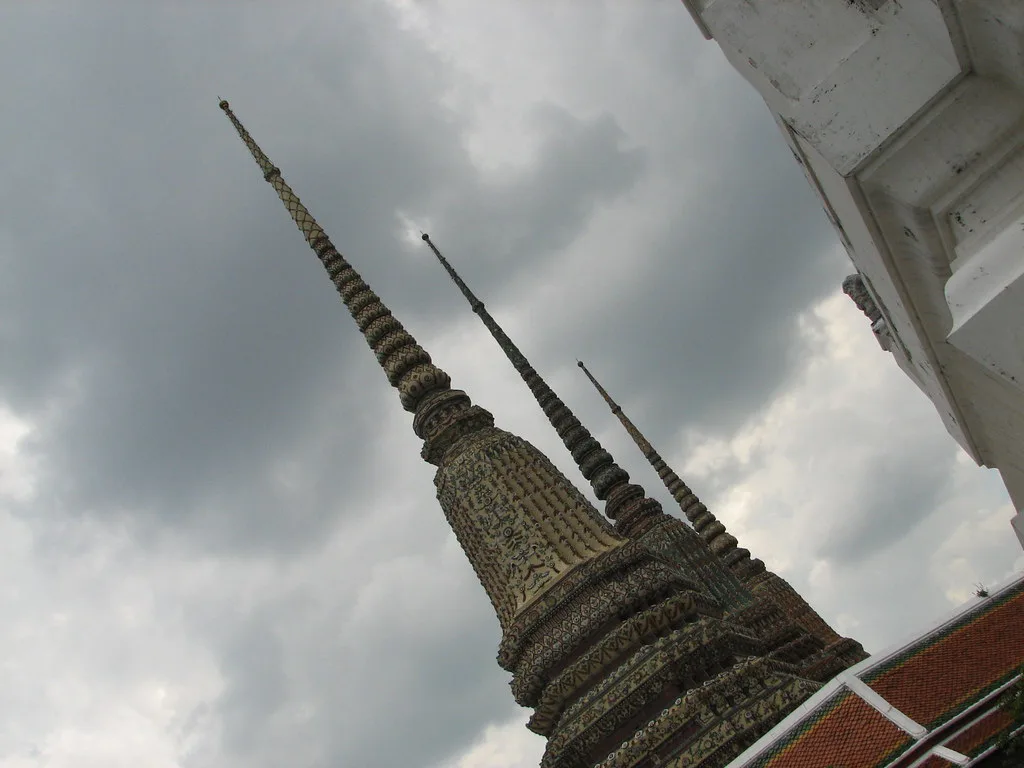
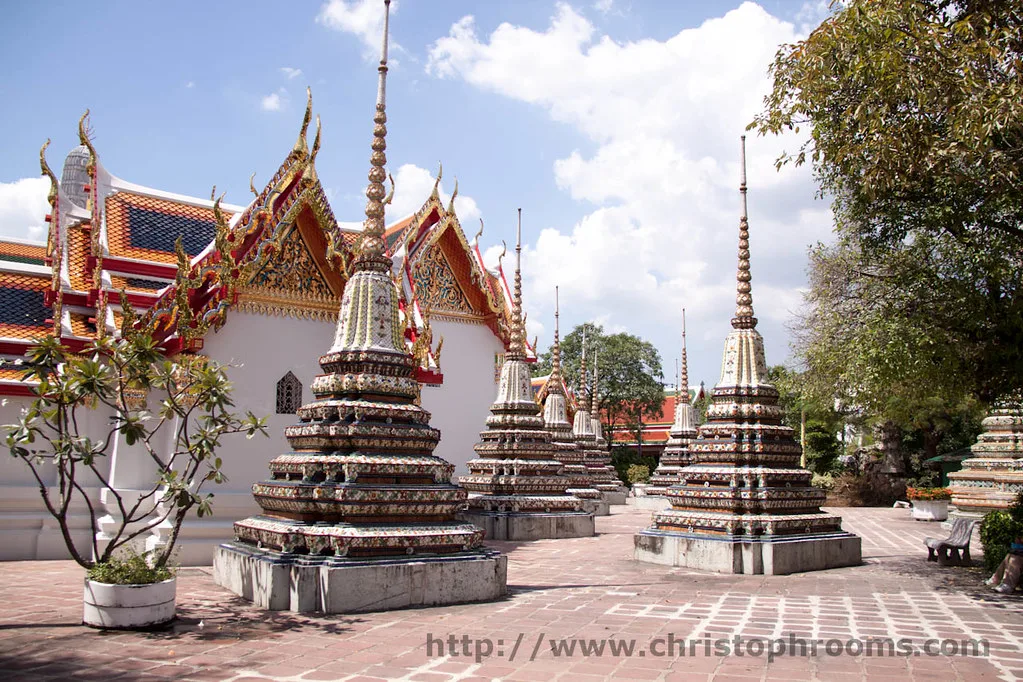
Behind the Reclining Buddha hall stands the Phra Maha Chedi Si Rajakarn group, four stupas each about 42 metres tall and covered in ceramic mosaic. The colors identify the kings: green for Rama I, white for Rama II, yellow for Rama III and dark blue for Rama IV. Rama IV had the enclosure walled off so that no further chedis could be added to the set.
Once you know the sequence, the group reads quickly and you can spend your remaining time elsewhere. Most visitors walk the perimeter of the courtyard, photograph the chedis from a few angles and move on within ten or fifteen minutes. The tiles catch light best when the sun is high, which is an argument for seeing the Reclining Buddha first and the chedis second.
Beyond the Buddha: halls, galleries and guardians
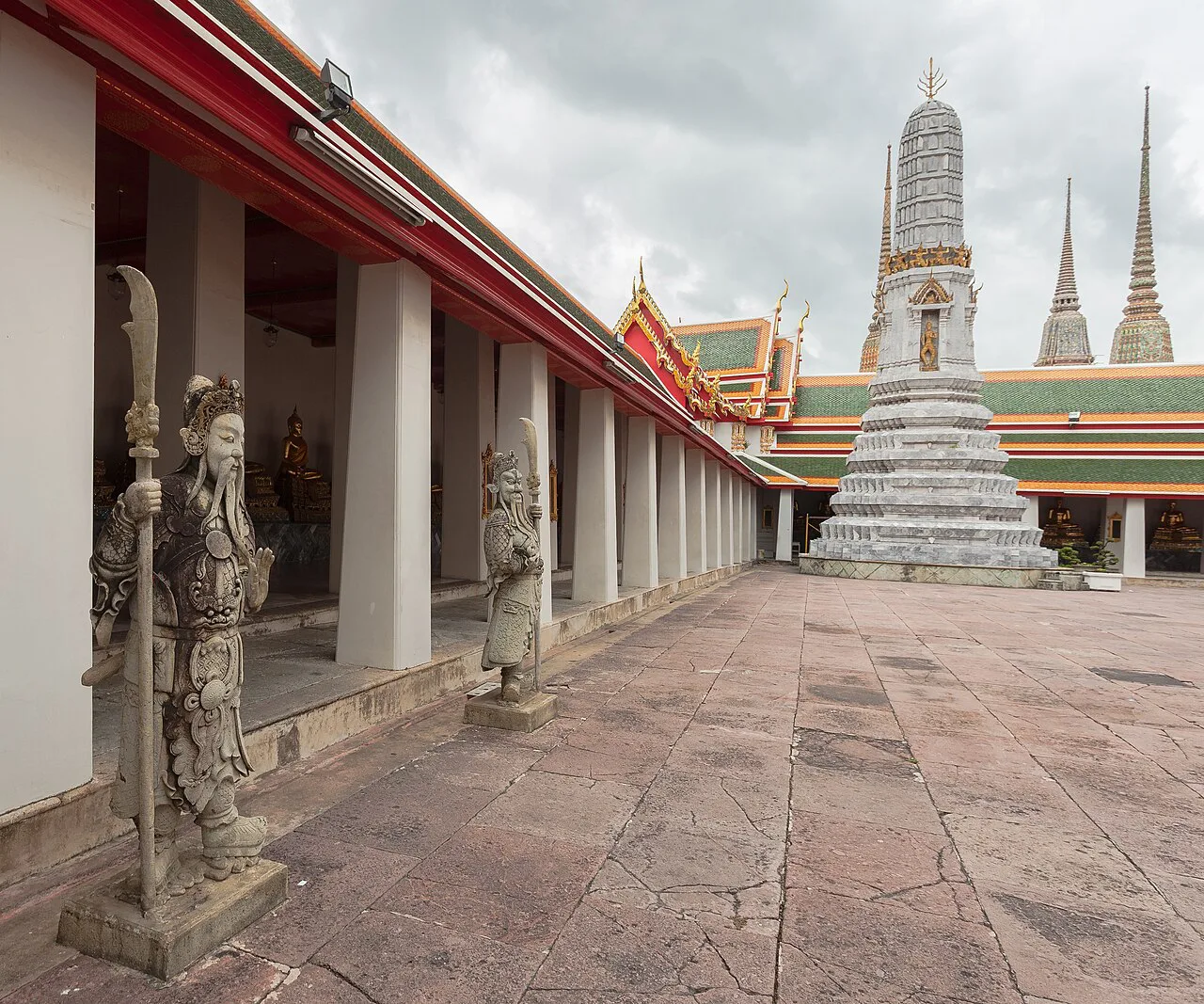
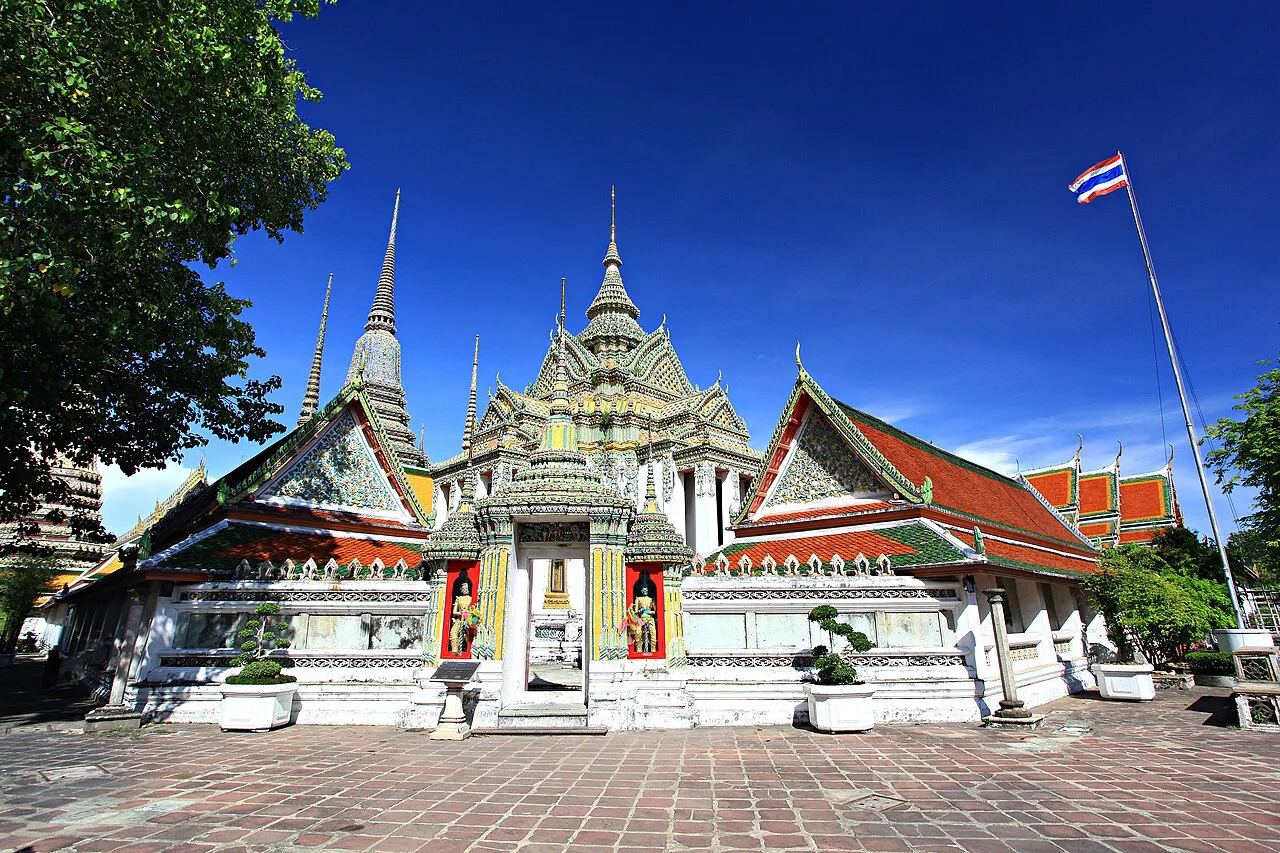
The compound holds more than the statue. The ordination hall, the galleries of seated Buddha images and the small temple museum near the entrance all sit within the same walls, and the museum explains the architectural and mythological figures you pass outside. A Bodhi tree in the courtyard is described as a descendant of the tree at Bodhgaya in India, and the grounds are dotted with Chinese guardian figures.
Allow time to wander without a route. The galleries and courtyards are where the compound stops feeling like a single-ticket attraction and starts feeling like a working temple. If you want a contrast later in the day, the National Museum Bangkok is a short ride north in the same old quarter.
Getting there by MRT, boat or bus
The simplest arrival is the MRT Blue Line to Sanam Chai station and exit 1, which puts you a few minutes' walk from the temple entrance. On the river, Chao Phraya Express Boat services stop at Tha Chang pier, and Tha Tien pier sits right beside the temple. City buses 1, 3, 6, 9, 12, 25, 32, 44, 47, 48, 53 and 82 also serve the area.
Coming from the Grand Palace, walk south for roughly ten minutes rather than taking a vehicle; the distance is short and the sidewalks along the palace wall are the fastest route. Do not accept a driver's claim that the temple is shut for a holiday and that you should take a tour instead. That line is a well-documented approach used to redirect visitors, and the ticket office is the only place to confirm whether the temple is open.
How long to allow
Plan on 1.5 to 2 hours for the Reclining Buddha, the four chedis, the ordination hall and the galleries. One account of a visit covered the main sights in about an hour before walking to the river, so a rushed pass is possible if you skip the museum and courtyards. Add another hour if you intend to have a massage on site, and more if you are combining the temple with the Grand Palace.

Tickets and opening hours: what is published
Published figures vary, so treat them as a starting point. Bangkok Authority lists admission at 300 baht with free entry for children under 120 cm and daily hours of 8am to 7:30pm, with prices checked in October 2026; an older travel blog cites 100 baht and a 6:30pm close; a 2026 ticket guide repeats the 300 THB figure and the 8am to 7:30pm day. Confirm the current price at the ticket window or on the temple's official site before you budget for it.
Buy at the temple ticket office rather than from anyone approaching you outside. Some tickets have historically bundled a bottle of water, but do not count on extras and do not treat third-party listings as confirmation. If your dates fall around a public holiday, check the official temple channels the week before you travel.

The Wat Pho Thai massage school
The temple houses the school of traditional medicine and Thai massage that opened within its walls in 1955, and massages are offered inside the grounds on the same daily schedule as the temple. Published rates run 340 baht for 30 minutes, 520 baht for an hour and 1,040 baht for two hours, with balm and plai-oil options priced separately. These figures were checked in October 2026 and should be reconfirmed at the counter.
Longer courses in traditional Thai massage are also taught here, running from a few weeks to a year, which is why the pavilion feels more like a school than a spa. If you only have an hour, book the massage before you tour the compound so you are not deciding while tired and hot.
Nearby: Wat Arun and the rest of the old city
Wat Arun (Temple of Dawn) stands directly across the Chao Phraya, a few minutes away by cross-river ferry from Tha Tien. The riverside path at the southern edge of Wat Pho is the spot to photograph it, particularly late in the day when the light softens. Pairing the two temples is straightforward: see Wat Pho first, cross for Wat Arun, and return before the boats thin out.
North of the temple, the Grand Palace and Wat Phra Kaew are within walking distance and fill a whole morning on their own. Further afield, Pak Khlong Talat, the flower market on Chak Phet Road, is a short walk or ride away and works well as a late-afternoon stop. If you want a full day of old-city sights, the Bangkok Attractions overview maps the sequence.
Is Wat Pho worth the stop?
Yes, if you give it a proper morning rather than squeezing it between two other sights. The Reclining Buddha, the feet panels and the four chedis are close together, so 1.5 to 2 hours covers the essentials without rushing. Arrive at opening, walk south to the chedis and the river, and leave the Grand Palace for a separate slot.
Before you go, confirm the current ticket price and closing time through the temple's official site or the ticket window, since published figures differ. Then build the rest of the day around the old city: the Grand Palace to the north, Wat Arun across the water, and Chatuchak Weekend Market if your visit lands on a weekend.
Explore more Bangkok guides
Frequently Asked Questions
What is the biggest Buddha in Thailand?
The Reclining Buddha at Wat Pho is 46 metres long and about 15 metres high, and it is one of the country's largest reclining Buddha images. Thailand has other very large Buddha images in different postures at other temples, so the title depends on which measurement you use.
What is the difference between Wat Arun and Wat Pho?
Wat Pho is on the Rattanakosin side of the Chao Phraya and is built around the Reclining Buddha hall, the four mosaic chedis and the Thai massage school. Wat Arun sits directly opposite on the far bank, a few minutes away by cross-river ferry, so the two make a natural pair with a short river crossing between them.