Floating Markets in Thailand: Which to Visit (Honest Guide)
Damnoen Saduak, Amphawa or Maeklong? Compare Thailand's floating markets by timing, getting there from Bangkok, food and crowds, with honest trade-offs.
On this page
Last updated November 2026: among the floating markets Thailand offers near Bangkok, Damnoen Saduak is the best known and also the most tourist-heavy. Amphawa is the weekend evening, food-led option, and Maeklong Railway Market pairs with either one. Pick Amphawa if you came to eat, Damnoen Saduak for the classic canal scene, and add Maeklong if a train passing inches from the stalls appeals. This page sits inside our Thai street food cluster, so food comes first in every recommendation.
Floating Markets Thailand Quick Answer: Pick by Traveler Type
Hours and logistics below come from operator pages and Wikipedia. They were not confirmed against official sources, so check Tourism Authority of Thailand listings before you go. Damnoen Saduak is about 100 km southwest of Bangkok. Amphawa is roughly 90 km southwest. Use the table to choose, then read the market sections for the trade-offs.
| Market | Best for | Days and hours (verify) | Trade-off |
|---|---|---|---|
| Damnoen Saduak | First-timers, canal photos, a classic boat ride | Daily; sources conflict, from 6 or 7 am to noon or 5 pm | Tourist-heavy and overpriced; tour-bus crowds by mid-morning |
| Amphawa | Evening eating, sunset, fireflies, overnight stays | Fri–Sun only, about 2–9 pm | Closed Monday to Thursday; very busy in the evening |
| Maeklong Railway Market | Watching vendors clear the tracks for a train | Daily, about 6 am–5 pm | A market on rails, not a floating one; timing depends on trains |
Damnoen Saduak: What It Is and Who Should Skip It
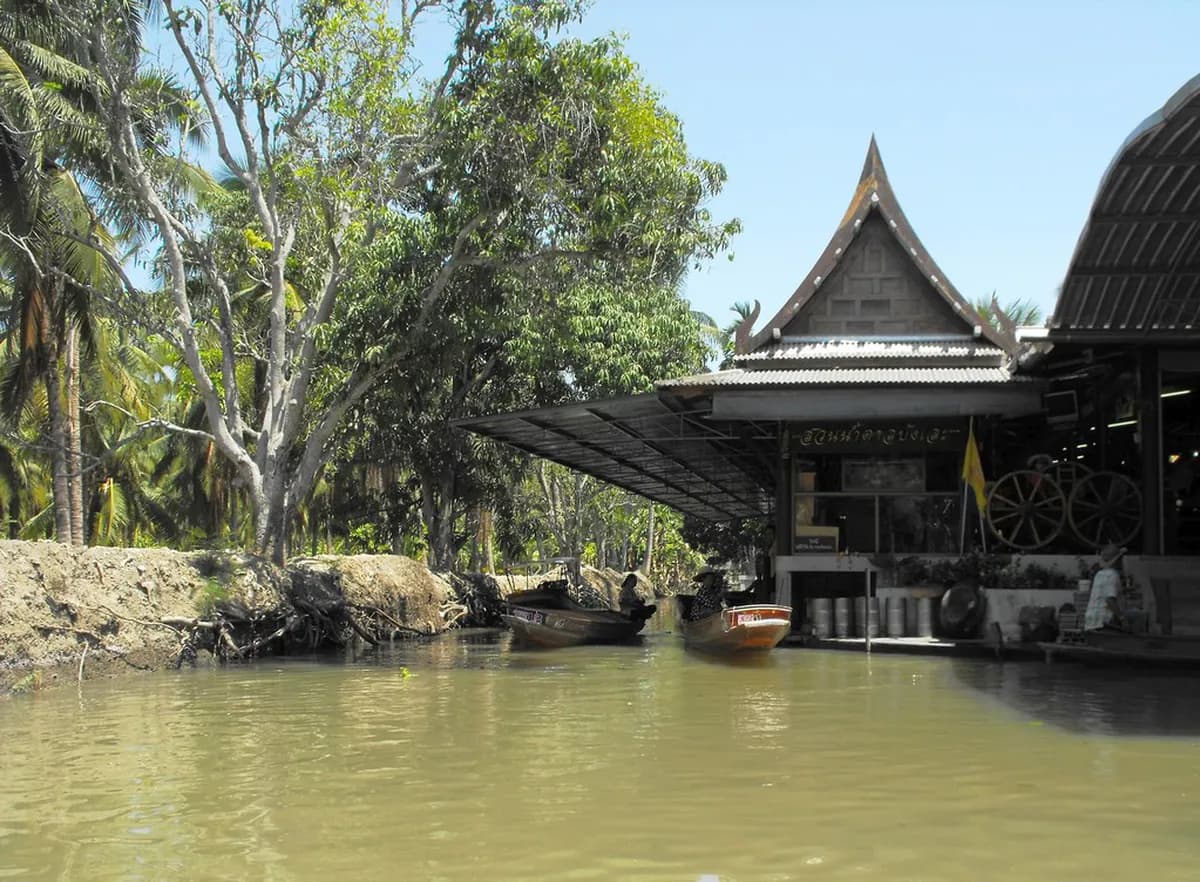
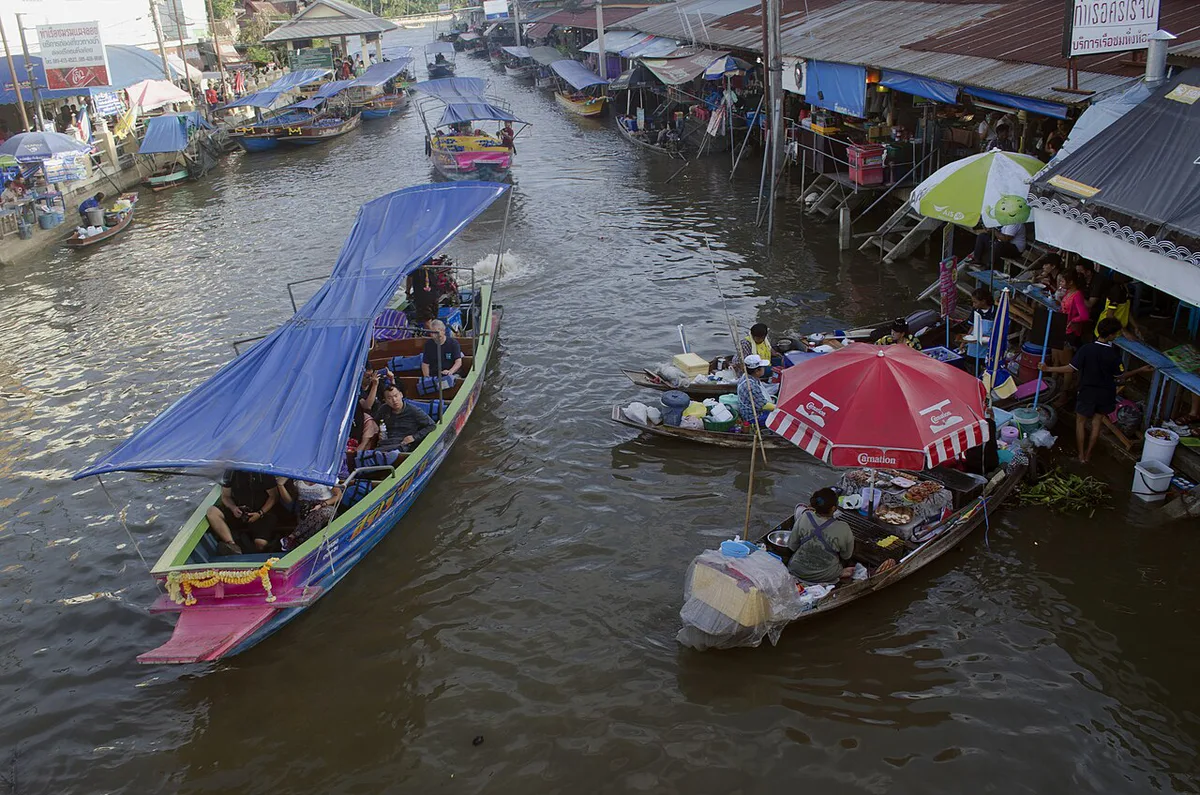
Damnoen Saduak is in Ratchaburi province. King Rama IV ordered the 32 km canal dug between 1866 and 1868 to join the Mae Klong and Tha Chin rivers. Wikipedia notes the modern market formed along Ton Canal after a road arrived in 1981. It has become primarily a tourist attraction and is often called a tourist trap, with overpriced wares and a reputation for thin authenticity. Bargaining is normal, although food and souvenir prices tend to be fixed within a few baht.
It is really three markets. Ton Khem is the largest, on Khlong Damnoen Saduak. Hia Kui has souvenir shops aimed at large tour groups. Khun Phitak lies about 2 km south of Hia Kui and is the smallest and quietest. Skip the main strip if you dislike souvenir-led crowds, and head for Khun Phitak instead.
Plan timing around the tour buses. Wikipedia says the market is busiest from 7 am to 9 am. One operator warns that arriving after about 9 am means boat gridlock. Arrive close to opening, and confirm the hours locally because sources disagree. Narrow, uneven alleys make wheelchair access limited, according to one operator guide.
Amphawa: The Evening Food Market
Amphawa sits on the Mae Klong River in Samut Songkhram province. Operator pages list it as open Friday to Sunday, from about 2 pm to 9 pm, though one FAQ says 8 pm. Monday to Thursday it is closed, so a weekday trip fails. Aim for 4 pm to 7 pm to catch sunset over the canal, or arrive near 2 pm to beat the later crowds.
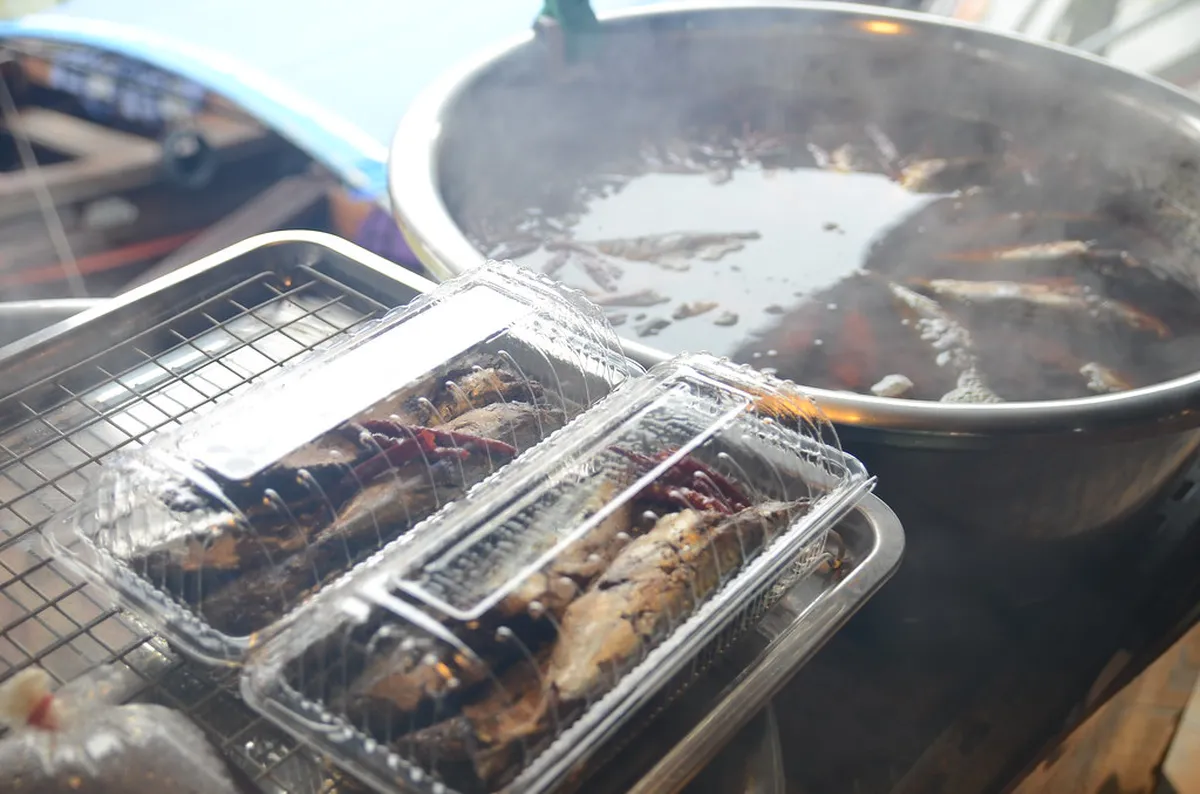
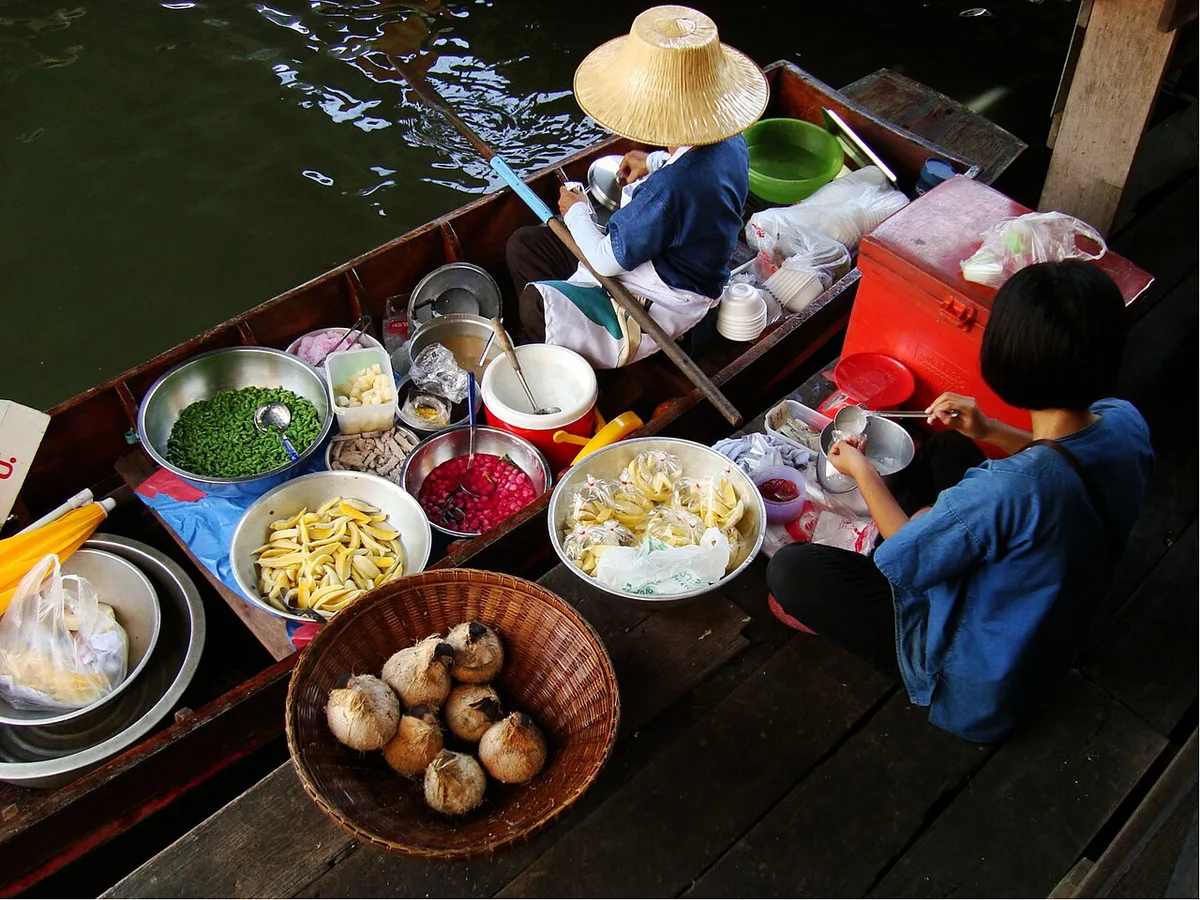
Seafood comes first here. Operators mention grilled and steamed seafood, steamed fish and squid. Sweet stalls sell coconut ice cream, coconut pancakes and fried bananas. Skewers of satay are common too. Our street food dish shortlist covers what to order. Canoe cooks also serve boat noodle bowls, and coconut pancakes and other Thai sweets are easy to find.
Firefly boat rides run in the evening through the mangroves. One operator describes a 1-hour ride. Check seasonality and the current fee on arrival, because none of our sources give a price. If you want fireflies and the sunrise, book a homestay in Amphawa. Compare the mood with the evening night-market food in Bangkok, which runs without boats.
Maeklong Railway Market: Train-Time Logistics
Maeklong Railway Market is in Mae Klong town, Samut Songkhram. Stalls line the tracks, and vendors pull back awnings and goods as a train arrives. Operator pages say it opens daily from about 6 am to 5 pm.
One operator lists seven passes a day, from 8:30 am to 5:40 pm. Another FAQ points to 11 am. Those times conflict and are unverified, so confirm with State Railway of Thailand before you plan around a train.
Stay behind the line and keep clear of the tracks when a train approaches. Do not step onto the rails for a photo. Fold away your bag and any hanging items. Wait until vendors reopen their awnings before you move forward again. Operators say accessibility is limited, with narrow spaces and uneven surfaces. Bangnoi Floating Market and Wat Bang Kung are listed as nearby.
Getting There From Bangkok: Time, Cost and Effort
Road is the easy route. Operator figures put Damnoen Saduak at about 1.5 hours by car, taxi or private van. Maeklong takes a little over an hour, and Amphawa about 75 minutes. Private vans need at least 5 people, per one operator. Public transport is slower, and the last leg is the main friction.
Work backward from the 7 am to 9 am window when you book, since the road trip to Damnoen Saduak takes about 1.5 hours by car.
- Damnoen Saduak by bus: about 3 hours via the Southern Bus Terminal (Sai Tai Mai), then a 1.2 km gap to the market.
- Maeklong by train and minivan: about 2.5 hours via Wongwian Yai and Maha Chai, then Samut Sakhon and a minivan on line 481.
- Amphawa by bus: about 3.5 hours, changing at Samut Sakhon and Maeklong, with a 15-minute final leg.
- Amphawa by train: one train a day, no. 169 from Bang Bamru to Pak Tho, then an 18.9 km taxi ride of about 23 minutes.
Tour or DIY: How to Decide
A tour makes sense if you want an early start without arranging transport. Operator listings show Damnoen Saduak and Maeklong tours lasting 7 to 8.5 hours. Amphawa tours run 7.5 to 10.5 hours, and Ayutthaya combos take 10 to 12 hours. Join-in tours leave from central points such as Central World or Siam Paragon, while private tours add hotel pickup.
Amphawa tours run 7.5 to 10.5 hours, so a Friday-to-Sunday stay for sunset and fireflies suits going yourself better.
Go DIY if you want a Friday-to-Sunday Amphawa stay or time at the food stalls. Check whether a tour actually stops to eat. Discount claims on tour pages are sales language, so ignore them.
Some combos add an elephant camp. Research animal-welfare practices before booking any camp visit, and skip it if you cannot verify them. After the trip, a hands-on cooking class is a natural follow-up.
When to Go: Season, Day and Time
The cool, dry season from November to February is the comfortable window, per one operator. One source says Damnoen Saduak is less active on public holidays and in the monsoon from July to September. Another calls the rainy season May to October. Treat both as rough guides.
Time of day matters more than season. Reach Damnoen Saduak between 7 am and 9 am, before the boat gridlock. Reach Amphawa between 2 pm and 4 pm for fewer crowds. Pair Maeklong with whichever market you choose, since it opens from about 6 am. For an early start, early-morning Thai breakfast spots in Bangkok make a useful warm-up.
What to Eat and Pay: Cash, Bargaining and Boat Fees
Bring cash. One operator suggests about ฿2,000 in small notes such as ฿20 and ฿50. ATMs sit near the markets if you run short. Ask the price before you order, and bargain politely at Damnoen Saduak and Amphawa.
Operators say the markets themselves charge no entrance fee. Boat rides may cost extra, for example the 40-minute longtail ride one operator describes. Verify current boat fees on the day. Walking the banks costs nothing and suits most Amphawa visits. A boat ride suits Damnoen Saduak better, where the canals are the draw.
Wear sturdy shoes with grip, because canal edges get slippery. Pack a hat and sun protection.
Common Mistakes
Most failed trips come from timing and expectations. These are the errors to avoid.
- Arriving at Damnoen Saduak after the tour buses, around 9 am or later.
- Going to Amphawa from Monday to Thursday, when it is closed.
- Expecting boats at every market. Maeklong has trains, not boats.
- Skipping a hat and sun protection.
- Booking a tour that never stops at the food stalls.
- Not confirming Taling Chan, Khlong Lat Mayom or Hat Yai's Khlong Hae with Tourism Authority of Thailand, since our sources give no hours for them.
Frequently Asked Questions
What is the most famous market in Thailand?
Damnoen Saduak in Ratchaburi province is often considered the most famous floating market. It is also widely described as a tourist trap, so Amphawa suits food-focused visitors better.
What is a floating market?
A floating market is a market where vendors sell produce and cooked food from boats on a canal, or Khlong. Many older ones faded as roads replaced water travel. Today's versions at Damnoen Saduak and Amphawa mix boat vendors with stalls on the banks.
Notes for your Thailand trip
Optional updates when we add or change a town or island guide.
You might also like
Continue reading
More guides you'll find useful