Boat Noodles in Bangkok: What They Are & Where to Eat
What Thai boat noodles are, how to order the small bowls, what the broth contains, and where to eat them in Bangkok, with ordering and timing tips.
On this page
Last updated November 2026: boat noodles (kuaytiaw reua) are small bowls of Thai rice-noodle soup, usually with a dark, savory broth that is often thickened with blood. In Bangkok, we point first-timers to the Victory Monument area. Our guide covers what is in the bowl, how to order, and how to decide about the blood.
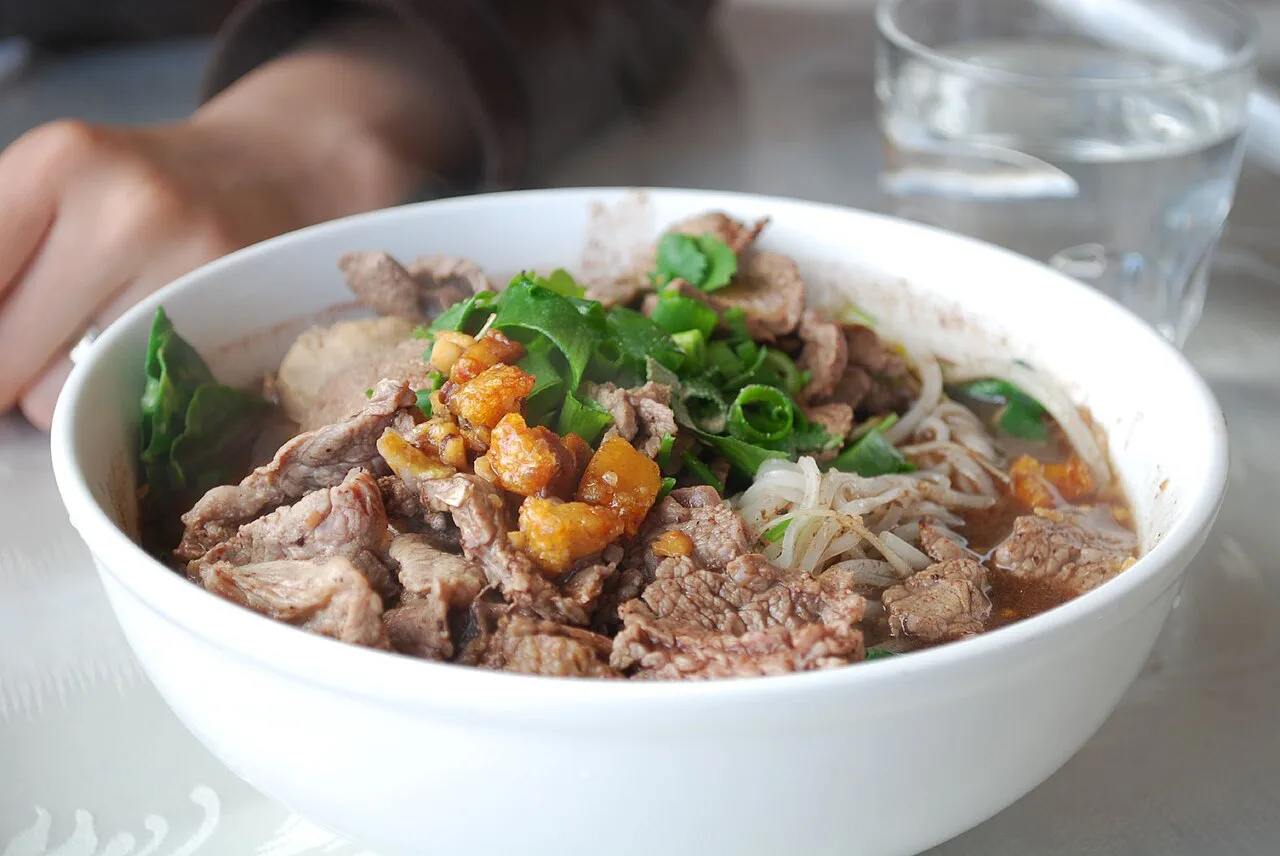
Featured image: Flickr user Alpha, CC BY-SA 2.0, via Wikimedia Commons.
What Are Boat Noodles?
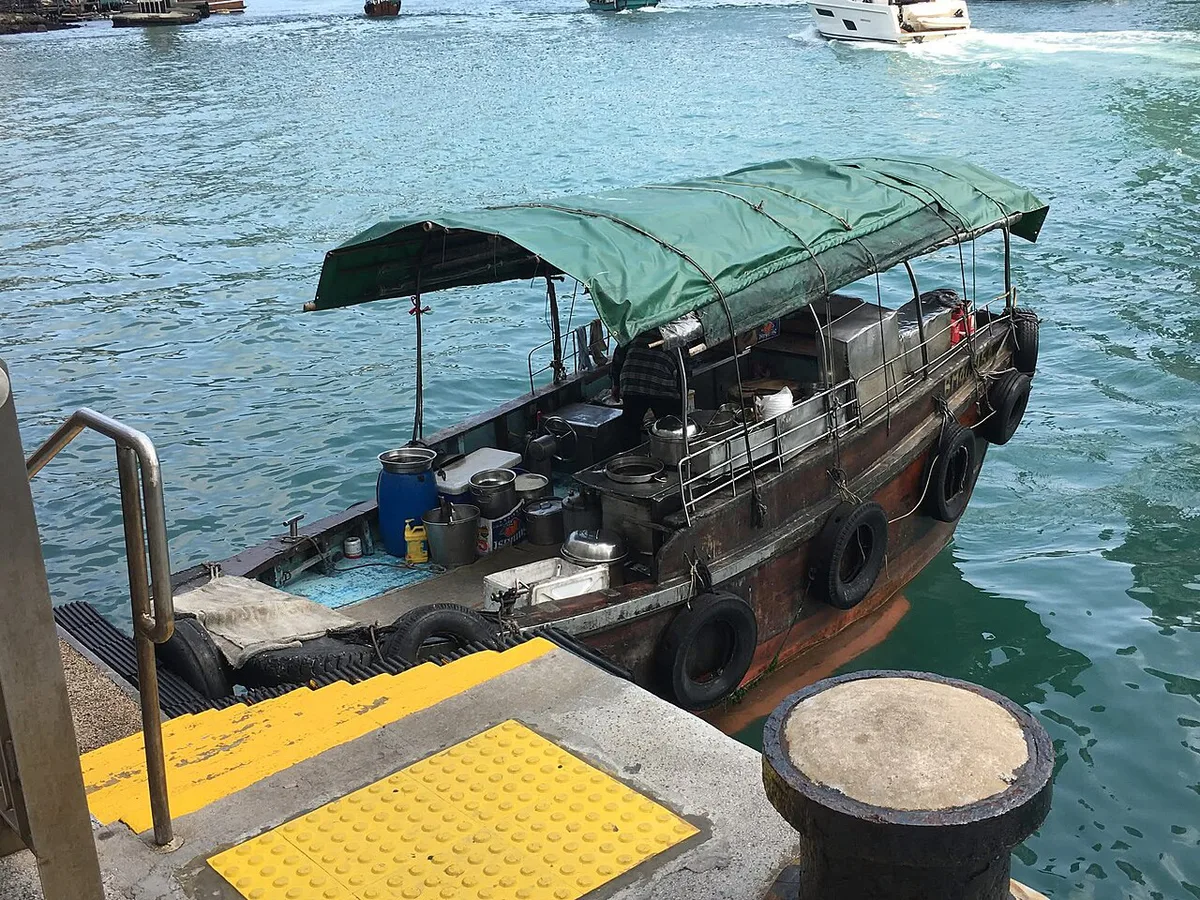
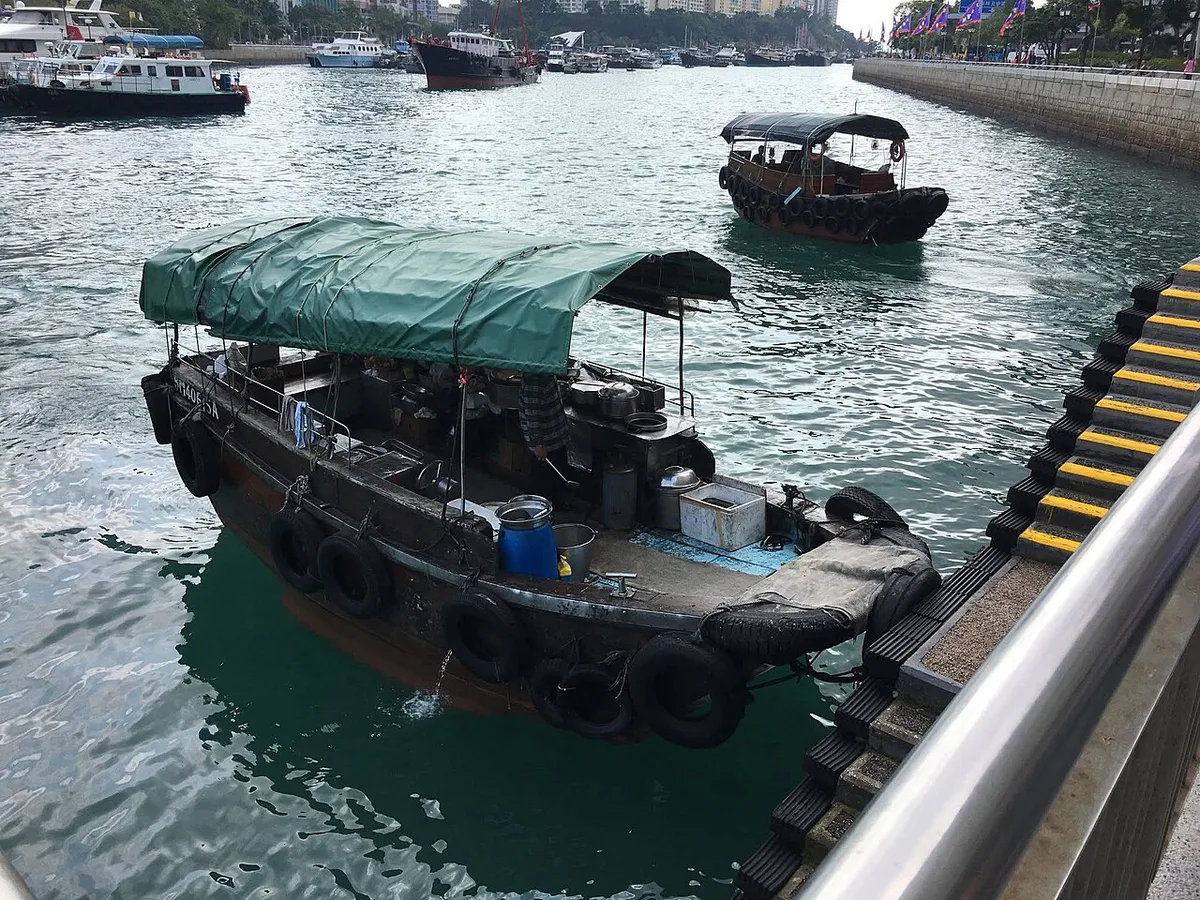
Boat noodles are a Thai noodle soup served in bowls only a few spoonfuls deep. The Thai name is ก๋วยเตี๋ยวเรือ, romanized as kuaytiaw reua. Kuaytiaw means rice noodles or rice-noodle soup, and reua means boat. Competitor writing links the name to the era when Ayutthaya was the capital and canals served as roads. In that account, vendors tied up at the bank and served soup to people eating along the water, or sold it in crowded floating markets. We treat that origin story as a popular account, not a settled fact. For the canal setting today, see our guide to canal-side floating markets. Boat noodles also sit among the dishes covered in our Bangkok street food guide.
What's in the Bowl
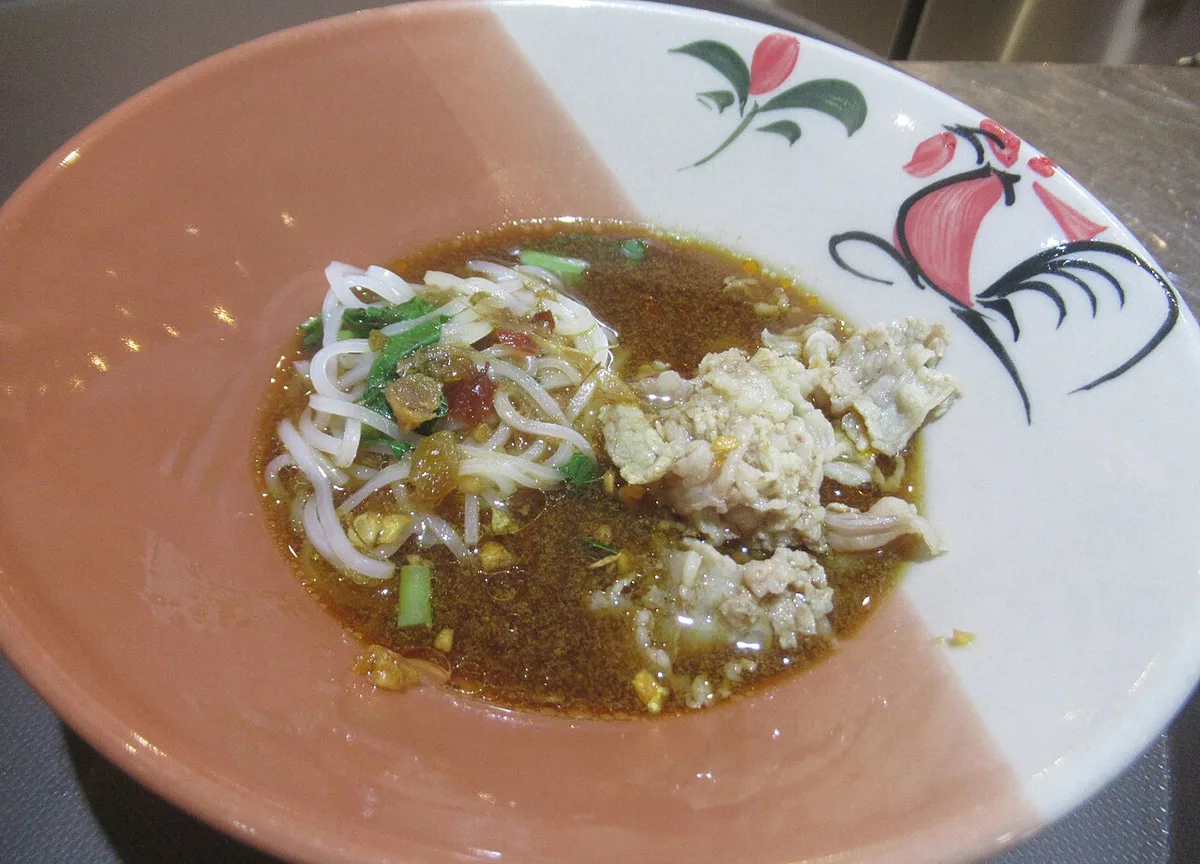
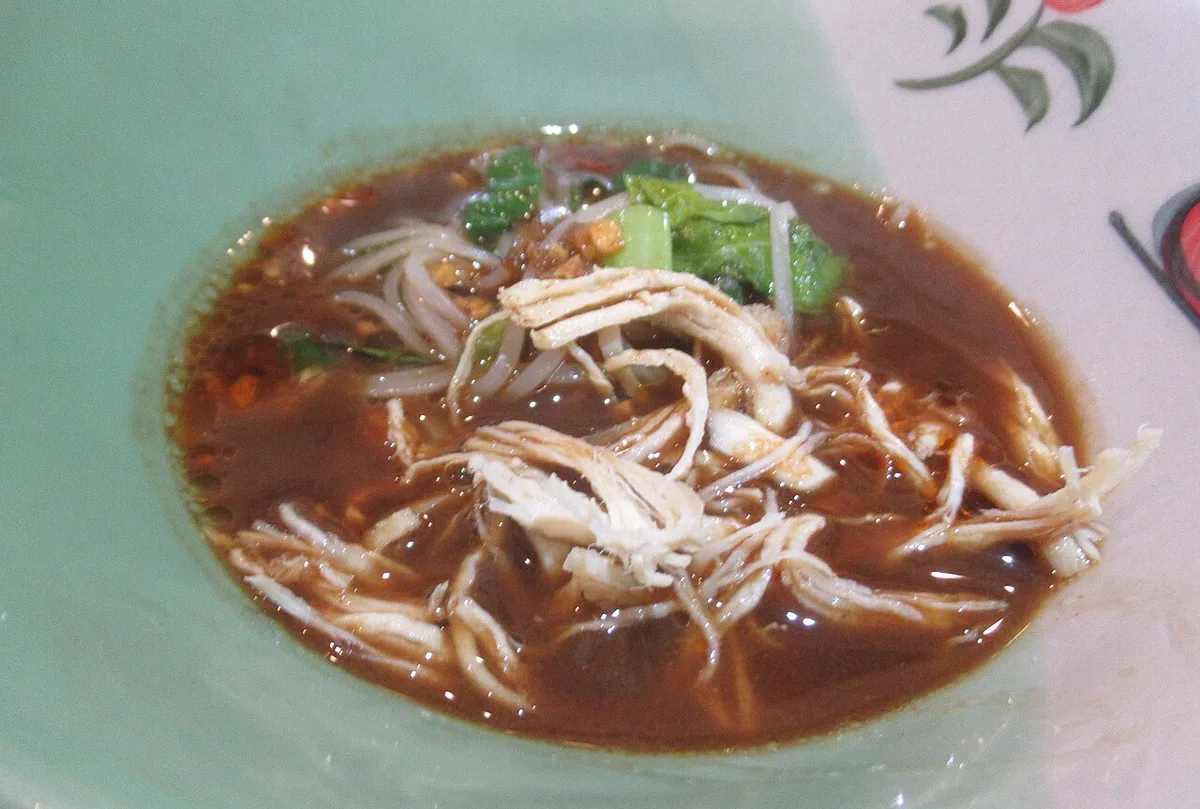
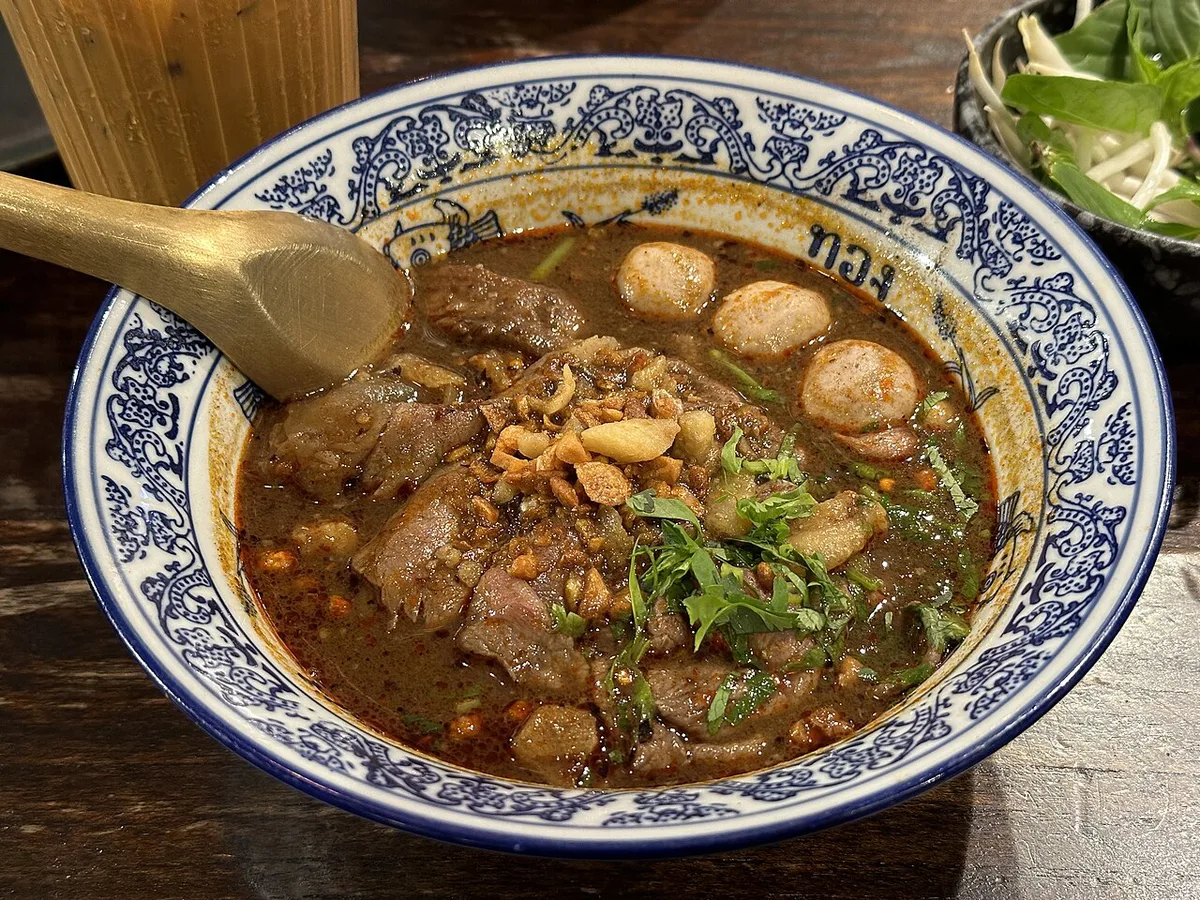
Expect a dark, savory broth with chili heat and herbs. Pork is the usual protein, often with sausage or pork liver, plus bean sprouts and other greens. Rice noodles are standard, though noodle choices differ by stall, so look at what is on display. Pork rinds (the Thai term is cap Moo) usually arrive on the side. You can crumble them into the soup or eat them as a crunchy snack. Basil is commonly described as masking the smell of the blood. Many boat noodle bowls get their dark burgundy color and richness from blood. A ladle of raw blood is mixed into hot broth, and that is what darkens the soup. We say this plainly because visitors often miss it until the color gives it away. If the idea bothers you, you can ask for the soup without it, as covered below.
- Broth: dark, savory, spiced, and often blood-thickened
- Protein: pork, often with sausage or liver
- Extras: bean sprouts, herbs, basil, chili
- Side: pork rinds (cap Moo)
Where to Eat Boat Noodles in Bangkok
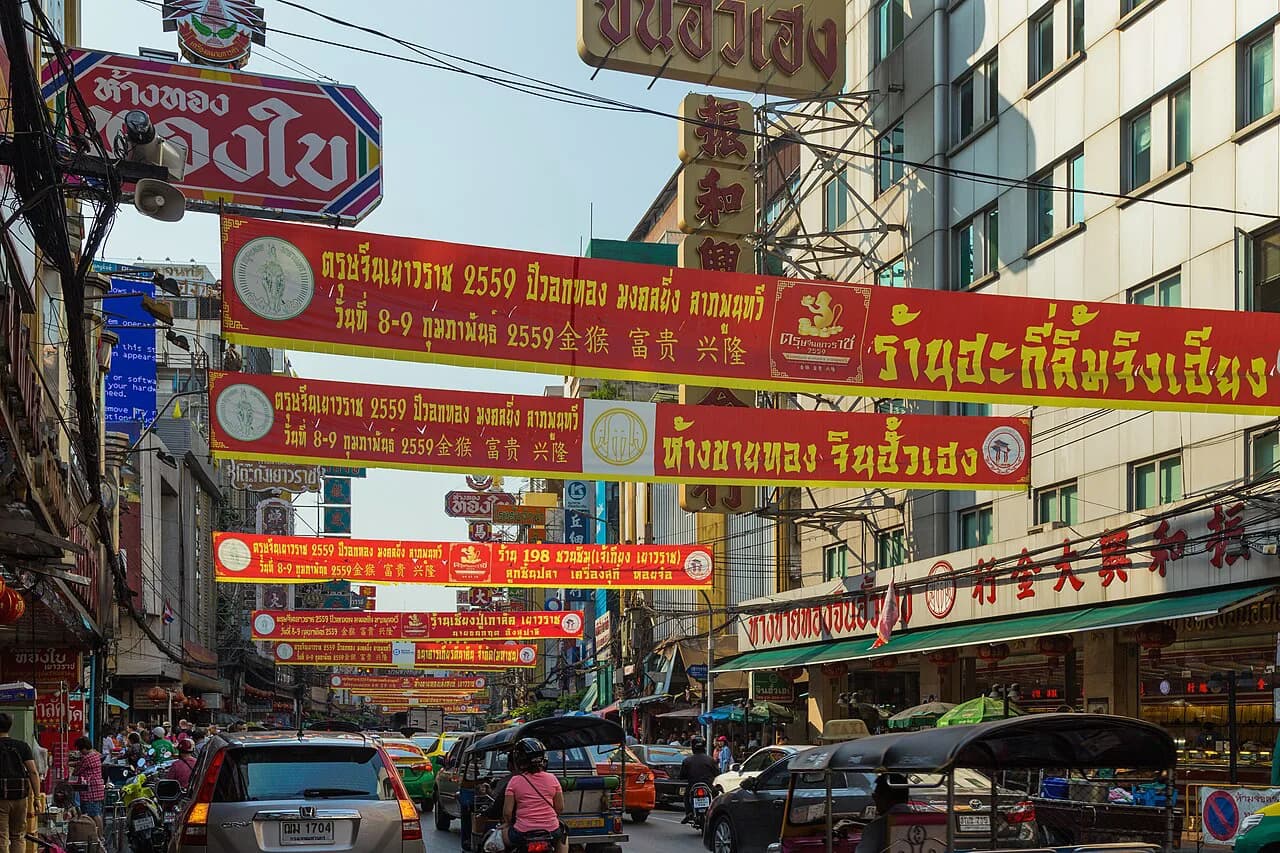
Our default pick for a first bowl is the Victory Monument area. Competitor writing names it as one of the best-known places in Bangkok to eat boat noodles in the traditional fashion. Our notes place the boat-noodle alley around Soi Phahonyothin 3. BTS Victory Monument station is the usual transit anchor, but confirm exit routes and walking times on the official BTS site. We have not verified individual vendors, so we name none. For Michelin-listed restaurants, check the Michelin Guide Thailand listings for current entries. If you want the canal experience, one account says eating on a grassy canal bank beats any alley. Weekend floating-market stops are the closest match.
Soi Phahonyothin 3 alley stalls are likely crowded at lunch, so arrive with time to wait.
| Area or setting | Type | Best for | Trade-off |
|---|---|---|---|
| Victory Monument area (Soi Phahonyothin 3) | Street alley stalls | First-timers who want many bowls | Likely crowded at lunch; cash and Thai-only menus are likely |
| Canal or floating-market setting | Water-side vendors | Atmosphere and the dish's heritage | Tourist versions may differ from the street benchmark |
| Sit-down restaurant | Indoor, seated | Heat-averse or cautious eaters | Less street-stall feel; check current listings |
How to Order and Eat Boat Noodles
Order several bowls, because the portion is built for it. Competitor sources say most people eat 2 or 3 servings. Start with 2 and add a third if you are hungry. Reports say the broth arrives fully seasoned, so you may not get a condiment caddy. Taste before you add anything. Tell the vendor your spice level when you order. Cash and no English menus are likely, so confirm on the spot. Pointing at what neighbors are eating works at most stalls. To skip the blood, ask for the soup without it, and check the Thai phrasing with a native speaker or authoritative source first. The broth will taste lighter and look paler. Our plan by eater type:
- First-timer: 2 bowls, pork rinds on the side
- Adventurous eater: 3 bowls, with liver included
- Cautious eater: 2 bowls, blood-free request
- Short layover: 1 or 2 bowls at the Victory Monument area, then move on
Costs and Time
The brief supplies no verified per-bowl price or opening hours. Check current prices on site, or look up listed restaurants through the Michelin Guide Thailand pages.
Dietary, Allergy, and Safety Notes
Pork and offal are standard in boat noodles, and blood is common in the broth. Strict halal and vegetarian travelers will find few suitable bowls at traditional stalls. Ask clearly before you order, or choose a different dish from our other dishes to order next. Rice noodles are not a guarantee of allergen safety, since the broth and toppings vary. This is general guidance, not medical advice. For food safety, pick a busy stall where the broth is steaming hot. Raw blood is mixed into hot broth, so skip any bowl that arrives lukewarm. Bangkok heat adds to the load of hot soup and chili. Carry water and avoid peak midday sun if you can. For a regional contrast, Isaan noodle and soup styles use quite different flavors.
Mistakes to Avoid
Most first-visit mistakes come from judging one bowl or skipping the preparation. We would avoid these.
- Ordering one bowl and judging the whole dish
- Assuming the broth is mild
- Missing the blood in the broth until it arrives
- Arriving at peak lunch without a plan to wait
- Treating tourist-boat versions as the benchmark
Making a Food Day Around Boat Noodles
Small bowls leave room for more eating. Many travelers pair a boat noodle stop with evening snacks at evening market stalls. If you would rather learn the dish yourself, look into a hands-on cooking class.
Before an evening market stop, plan on 2 or 3 servings, since small bowls are built for ordering several.
Frequently Asked Questions
What does Thai boat noodle taste like?
Expect a savory, dark, richly spiced broth with chili heat and herbs. Blood gives it body and a slightly metallic edge, which basil is said to soften. Spice levels vary by stall.
Is boat noodle halal?
Usually not. Pork and blood are standard at traditional stalls. Halal travelers should ask directly and consider other dishes.
What is the difference between boat noodle and Pho?
Pho is Vietnamese, while boat noodles are Thai. Boat noodles are served in very small bowls, so you order several. Their broth is typically darker and often blood-thickened.
What are those Thai noodles called?
Kuaytiaw reua, also spelled guay tiew rua, means boat noodles. Kuaytiaw is the general word for rice noodles. Reua means boat.
Notes for your Thailand trip
Optional updates when we add or change a town or island guide.
You might also like

Continue reading
More guides you'll find useful