6 Thai Street Food Dishes to Try First in Bangkok
What to eat, where to find it, how to order, and how to stay safe. A practical Bangkok guide to Thai street food, with regional dishes and spoke guides.
On this page
Last updated November 2026. Thai street food means cooked-to-order meals from carts, stalls, and open-air markets, and Bangkok is the easiest place to start. Begin with six dishes: pad Thai, pad kee Mao, Moo yang, Hat Yai-style fried chicken, Khao soi, and som tam. Below you will also find a time-of-day table, a venue comparison, and a short safety checklist.
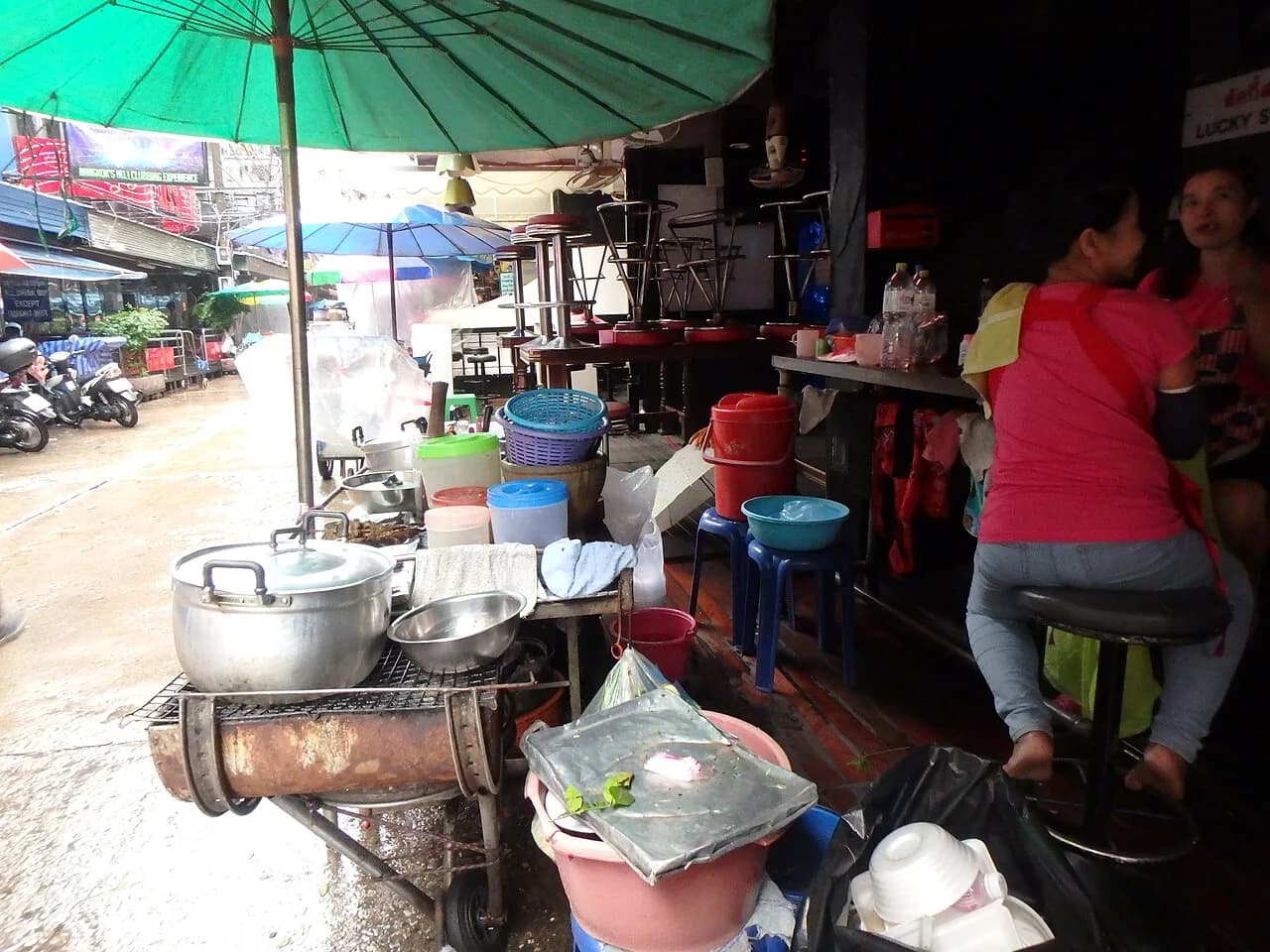
Featured image: Blemished Paradise, CC BY-SA 2.0, via Wikimedia Commons.
What Counts as Thai Street Food (and Why Bangkok Is the Place to Start)
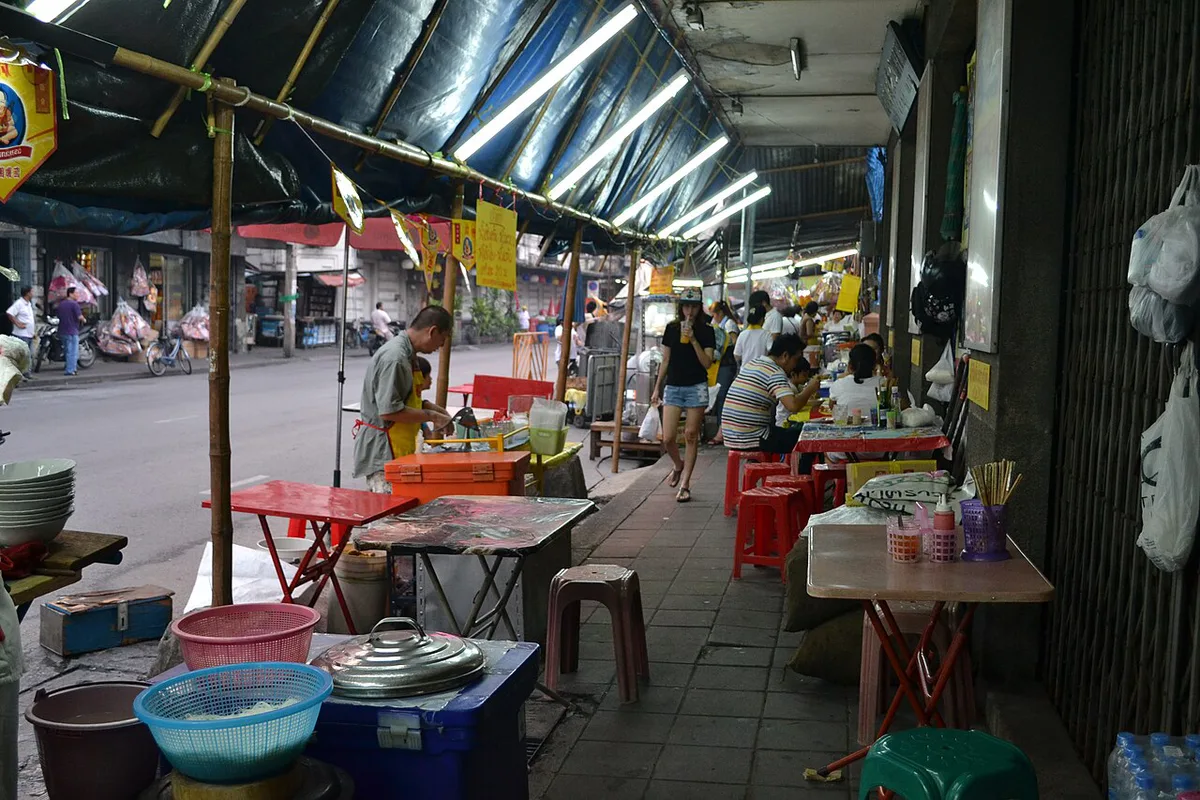
Street food here is prepared meals sold by vendors on the street or in open-air markets. Stalls, carts, and small stands are the core of it. Cooks work fast, and you often eat standing up or on a plastic stool. Central Thailand, where Bangkok sits, is described as blending styles from every region, so one city lets you sample the whole country. Treat that as a reason to start here, and confirm regional details with a Thai tourism source before you plan around them.
6 Thai Street Food Dishes to Try First
Start with these six and add more as your confidence grows. Our full dish catalogue goes well beyond this list.
- Pad Thai
- Stir-fried rice noodles with shrimp, chicken, or tofu, plus egg and bean sprouts. Tamarind and fish sauce give a sweet, salty, tangy balance.
- Spice level is mild to medium, which makes it the usual first order.
- Pad kee Mao (drunken noodles)
- Wide, flat rice noodles tossed with fresh basil, chilies, and a savory sauce.
- Expect real heat. It is one of the spicier dishes you will meet at a street stall.
- Moo yang (grilled pork belly)
- Pork marinated in garlic, coriander root, and soy sauce, then grilled over charcoal. It comes with sticky rice and jaew, a spicy dipping sauce.
- Dip lightly at first, since jaew carries most of the heat.
- Hat Yai-style fried chicken
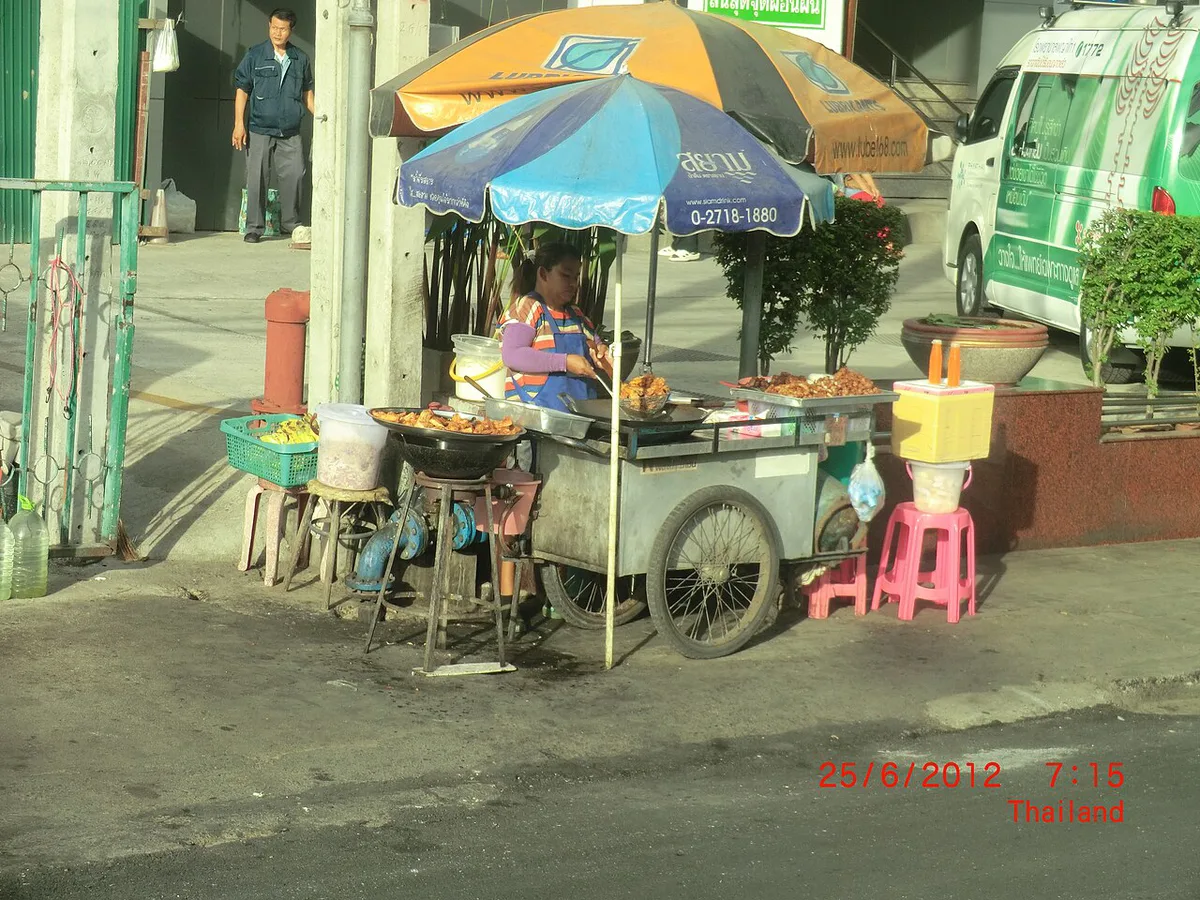
- This southern style is marinated in garlic, coriander, and pepper, then deep-fried until crisp. It is often served with sticky rice and a sweet and spicy sauce.
- Eat it with your hands. Marinade details vary by vendor.
- Khao soi
- A curry noodle dish tied to northern Thailand. Order it when you want something richer than stir-fried noodles.
- Ask the vendor about heat before you sit down. For more noodle depth, try these boat noodle bowls.
- Som tam (green papaya salad)
- A spicy salad from the northeast, known as Isaan. It is the dish to order if you want sharp, sour, and hot flavors.
- Ask for less chili on your first try. Pair it with grilled meat from northeastern cooking stalls.
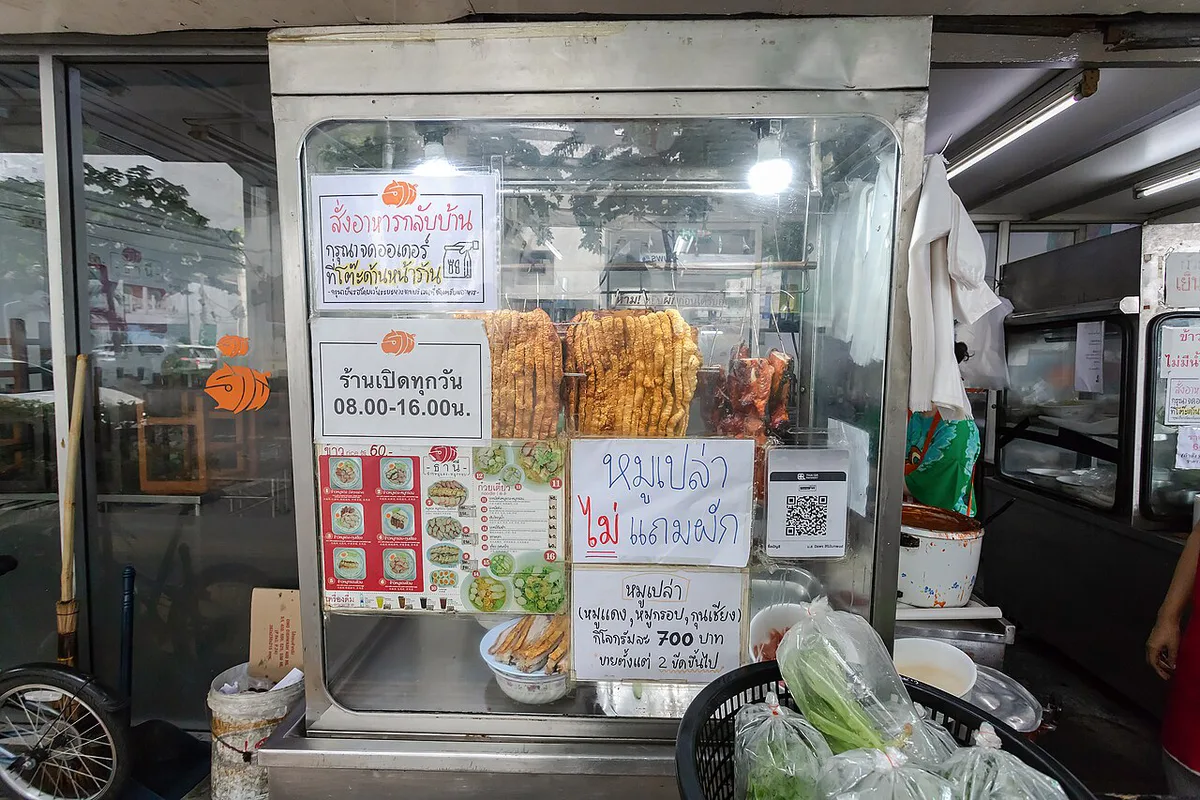
Street Food by Time of Day
Markets tend to be busiest in the morning and early evening, and vendors may sell out of their best items. Treat those hours as a guide and verify on the day. Morning is the time for typical morning dishes. Afternoon is a good moment for sweet stops. Pair either with coffee options when you need a break.
| Slot | Good fit | Watch for |
|---|---|---|
| Morning | Light noodle bowls, breakfast plates | Popular stalls can run out early |
| Midday | Noodles or rice dishes in covered markets | Heat and crowds; drink water |
| Evening | Grilled meats, stir-fries, som tam | Busiest period; expect queues |
| Late night | Stir-fried noodles such as pad kee Mao | Fewer stalls open; confirm hours locally |
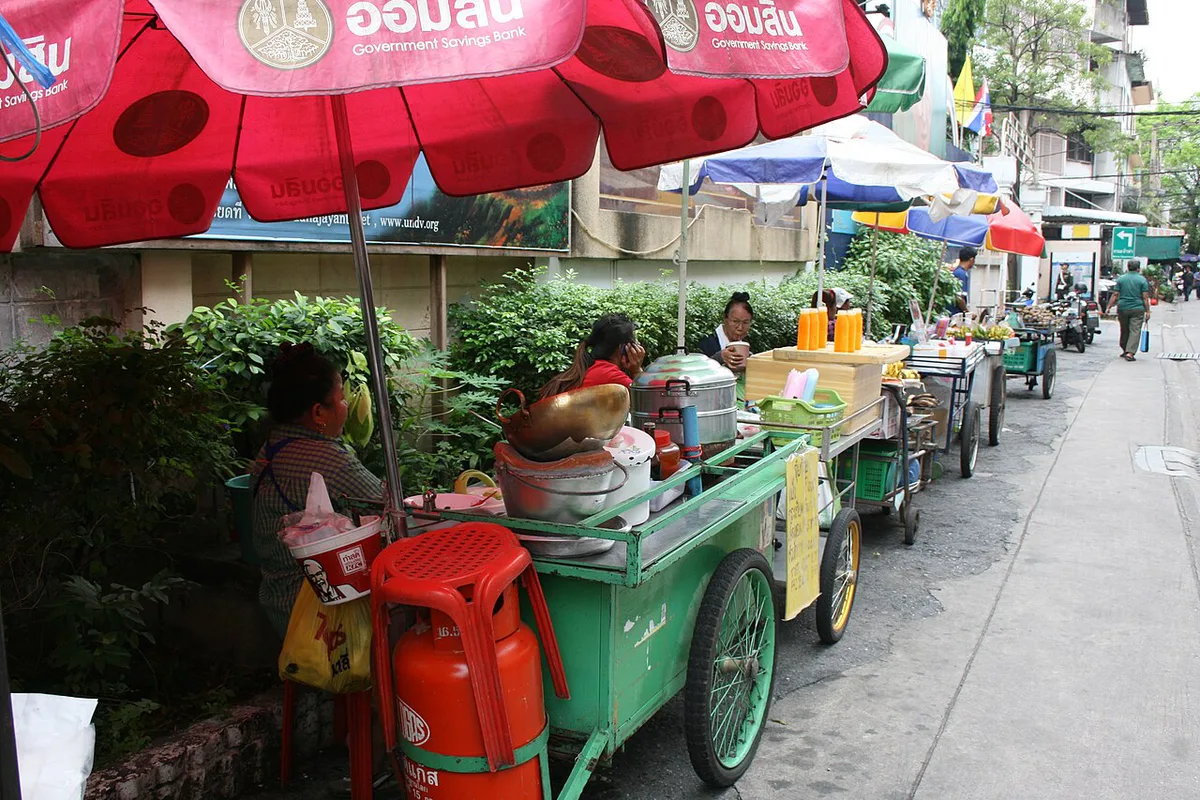
Where to Eat: Street, Market, or Food Court?
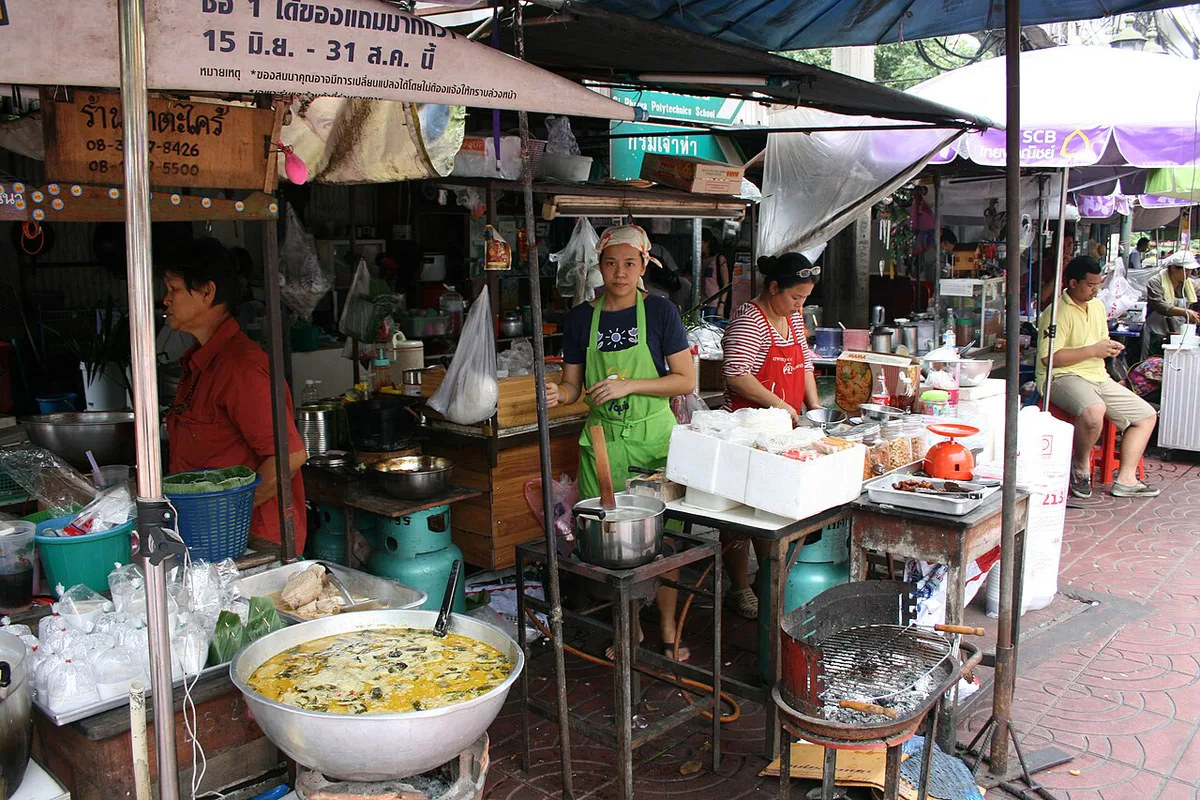
Match the venue to your comfort level. Roadside stalls are the purest version, but night markets give you many vendors in one place. Our evening market guide covers that format. Floating market trips suit a half-day outing rather than a quick meal. The Michelin Guide Thailand selection is a place to check for vendors it has recognized. Confirm any listing before you travel.
| Venue | Best for | Ease for first-timers | Who should skip it |
|---|---|---|---|
| Roadside stall | One dish done well | Moderate; ordering is by pointing | Anyone short on time or wary of heat |
| Night market | Variety in one walk | High; many vendors to compare | Visitors who dislike crowds |
| Floating market | A scenic outing with snacks | High, but plan a half day | Travelers on a tight itinerary |
| Food court | Comfortable first meal | Highest; clear menus | Those chasing the full street experience |
How to Order, Pay, and Not Get Lost
Pointing works. Most vendors understand gestures and smiles, and a short line usually signals food that turns over quickly. Treat that as a heuristic, not a guarantee. Carry small cash, since many stalls may not take cards. Verify that on the spot. Shared tables and plastic stools are normal. Ask for less heat with a phrase such as Mai Phet, meaning not spicy, and have a local confirm the pronunciation. Most vendors will adjust heat on request, though not all. Allergies need extra care. Vegetarian, shellfish, and peanut restrictions are hard to explain over a wok, so write them in Thai on your phone and expect that a shared wok can still carry traces.
Costs and Budget Planning
We have no verified baht prices for this guide, so none are quoted. Check the Tourism Authority of Thailand's current visitor information and the posted menu at each stall.
Food Safety: A Practical Checklist
Use your eyes before your appetite. Pick stalls where you can see the cooking and where customers keep arriving. For sensitive stomachs, start with one cooked-to-order dish on day one.
- Choose busy stalls, since high turnover means ingredients move quickly.
- Eat food served hot, straight from the wok or grill.
- Watch the cooking and the prep surfaces.
- Be cautious with ice and tap water; check current health guidance from WHO or CDC.
- Add spice and new dishes gradually over your first days.
Regional Flavors You Can Eat in Bangkok
Northern Thailand is known for Khao soi. The northeast, Isaan, is known for sticky rice, som tam, and grilled meats. The south leans toward grilled and seafood-forward dishes, and Hat Yai fried chicken comes from there. Central Thailand blends styles from all regions. To learn how these flavors come together, book a hands-on cooking class.
Building the rest of the trip? Our Bangkok attractions guide covers the sights, districts and logistics around this guide.
Frequently Asked Questions
What is the most popular Thai street food?
Pad Thai is probably the best-known Thai street food worldwide. It is mild to medium in spice, so it suits beginners. Locals and regulars at each stall may favor other dishes, so watch what the queue orders.
Explore More Bangkok Guides
Keep planning your Bangkok trip with these guides.
Bangkok Guides
- Thai Street Food Dishes: What to Order in Bangkok
- Boat Noodles in Bangkok
- Thai Breakfast: What Locals Eat in Bangkok & Where to Try It
- Thai Desserts: What to Try and Where to Find Them in Bangkok
- Thai Coffee Guide
- Isaan Food Guide
- Thai Night Markets: Best Picks by City, Day and Budget
- Thai Cooking Class in Bangkok
- Floating Markets in Thailand
- Wat Saket (The Golden Mount) in Bangkok
- Jim Thompson House in Bangkok
- Ari, Bangkok
- Pak Khlong Talat
- Yaowarat Bangkok
- Museum Siam (Museum of Siam), Bangkok
- Lumphini Park, Bangkok
- Wat Pho Bangkok
- Erawan Shrine (Thao Maha Brahma)
- Chatuchak Weekend Market
- Grand Palace Bangkok
- Sukhumvit, Bangkok
- Khao San Road, Bangkok
Notes for your Thailand trip
Optional updates when we add or change a town or island guide.
You might also like
Continue reading
More guides you'll find useful