Thai Silk: Spot the Real Thing and Where to Buy
What makes Thai silk genuine, how mat mii and brocade differ, and where to buy it in Bangkok or Isan, with an authenticity checklist.
On this page
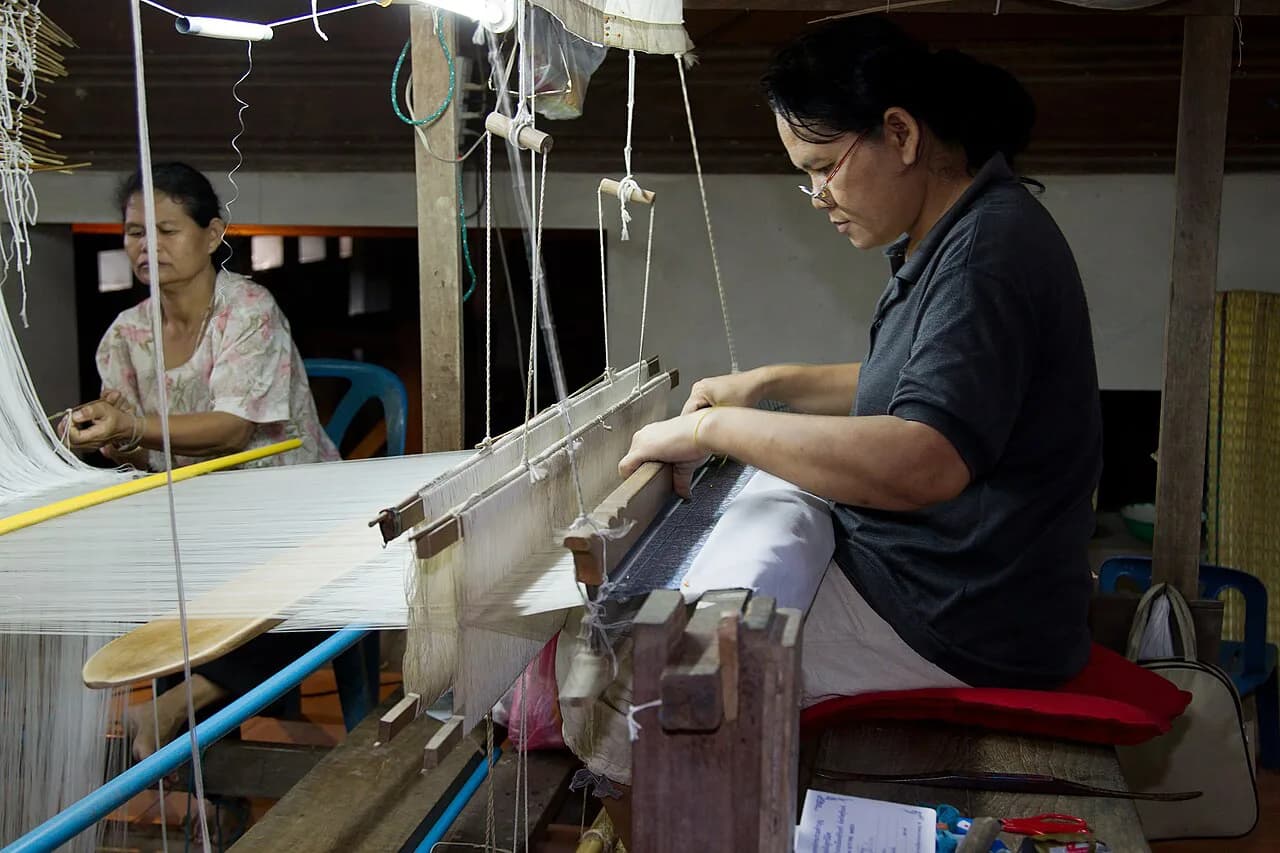
Last updated November 2026. Thai silk is handwoven silk, traditionally from Isan in northeast Thailand, and it is known for mat mii ikat and brocade. This guide explains how to recognize genuine pieces, how Jim Thompson's post-war work shaped the market, and what to ask before you pay in Bangkok.
Featured image: JJ Harrison (https://www.jjharrison.com.au/), CC BY-SA 3.0, via Wikimedia Commons.
What Is Thai Silk?
Thai silk is a lustrous plain-weave cloth made from the filament of domesticated silk moths. Yarns are often dyed in strong colors or woven from two colors for an iridescent shimmer. Slight slubs in the weft are normal, and they are one sign of handwork.
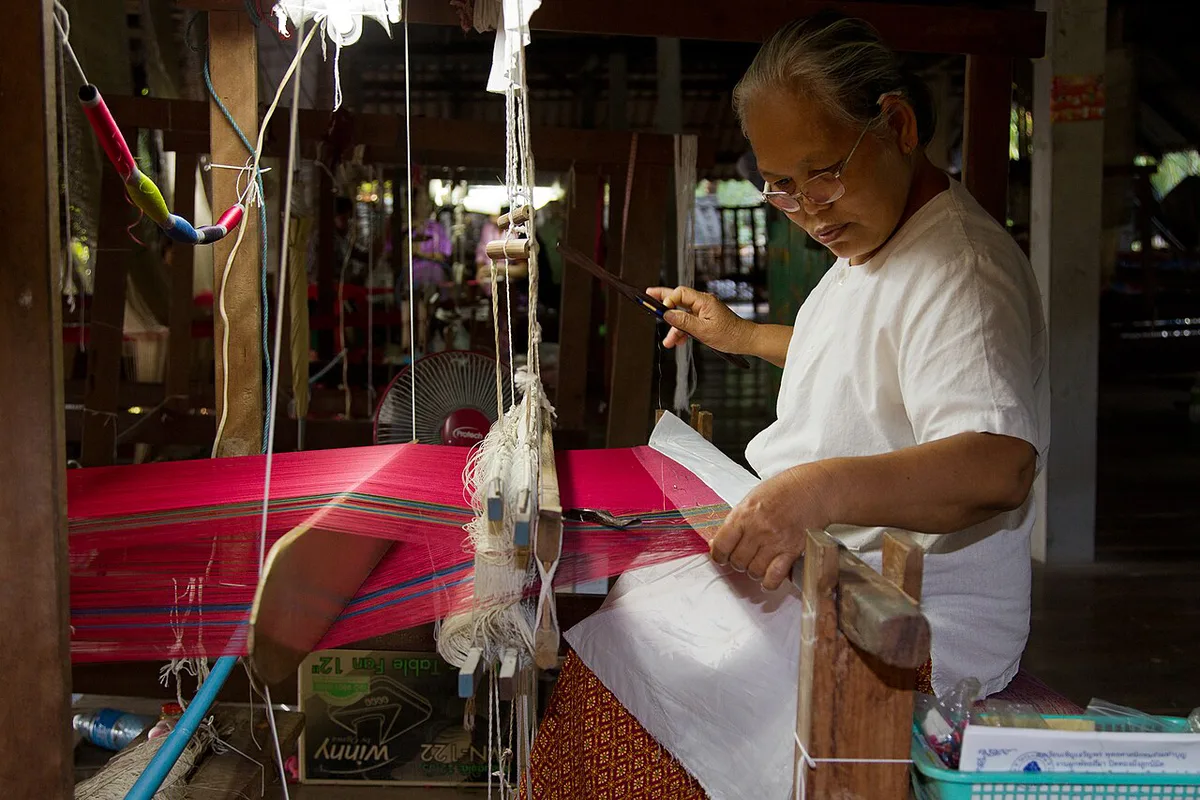
Two techniques define it. Mat mii is ikat: weft threads are bound and dyed before weaving, which gives softly blurred patterns. Brocade adds extra weft threads to build raised motifs. Chok comes from the Central region and pha yok from the South, where metallic thread creates a glimmer. Khit and phrae wa come from the Northeast.
Sericulture and weaving still support many communities, especially in the Northeast. Our Thai culture guide covers the wider heritage.
How Thai Silk Is Made
Silkworms feed only on mulberry leaves, so farmers grow mulberry bushes close to the rearing baskets. After about 36 days the worms reach full growth and are moved onto round, flat bamboo trays called chor. They spin cocoons there over five to eight days. Most cocoons are harvested fast so the moth cannot hatch and spoil the filament.
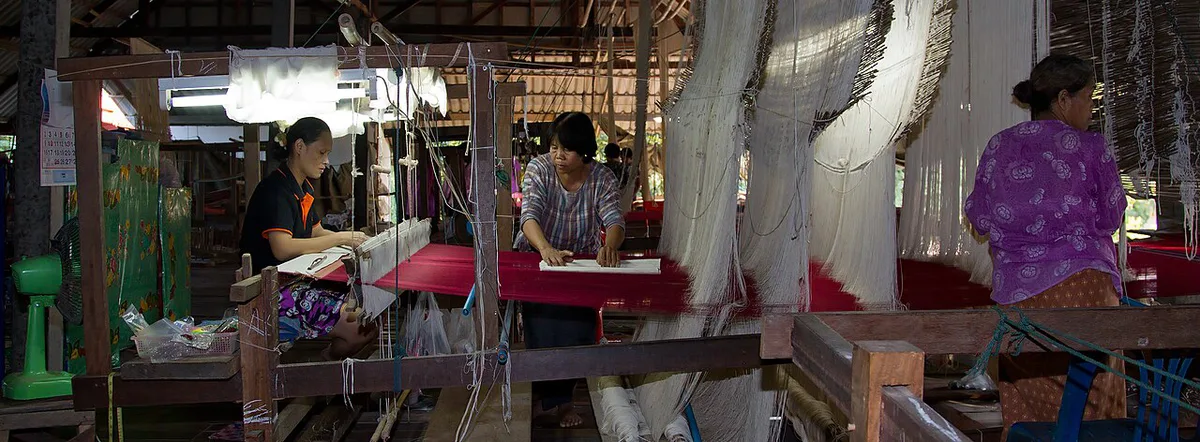
Cocoons are boiled to release the filament. Filaments from 10 to 20 cocoons are twisted into one thread, then hand-reeled into skeins. The golden thread is bleached, dyed with natural or synthetic dyes, and set on the loom. That labor explains much of the price difference from machine silk.
How to Tell Real Thai Silk From Imitations
No single test settles it, so combine several checks in person. Ask to handle the cloth in daylight, and compare two or three pieces side by side.
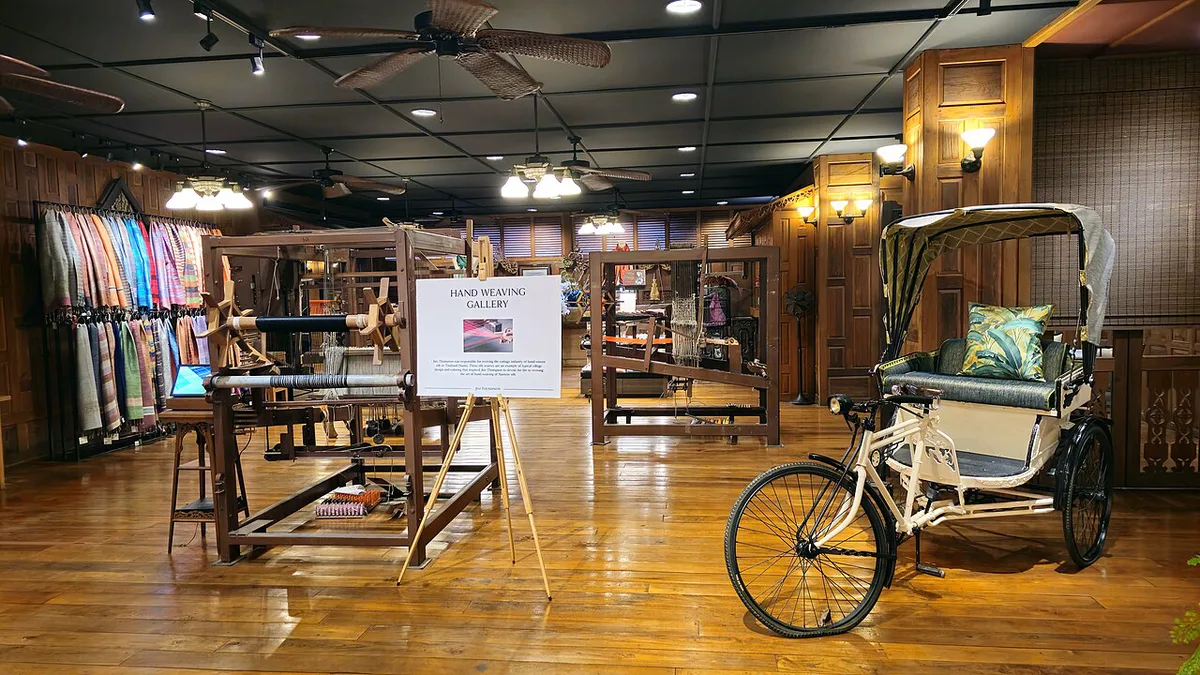
- Look for slight slubs and small irregularities in the weft. Perfectly uniform cloth suggests machine production.
- Tilt the fabric. Handwoven pieces woven from two colors show a shifting, iridescent shimmer.
- Feel the weight. Silk should feel smooth and cool, not slick or stiff like polyester.
- Ask where it was woven and by whom. A genuine seller can name a region or village.
- Ask for fiber content in writing. Treat a burn test as a last resort, and never light a shop's stock without permission.
- Check any quality seal against an official source before you trust it. Verify current certification marks with the Tourism Authority of Thailand.
Jim Thompson and the Thai Silk Revival
Silk had been woven in Asia for thousands of years. Thai silk grew into an important industry after World War II, when American ex-pat Jim Thompson worked to build a worldwide market for it. Queen Sirikit also helped raise the cloth's profile abroad. Her state visits to the United States and Europe in the early 1960s showcased handwoven silk in couture-style outfits.
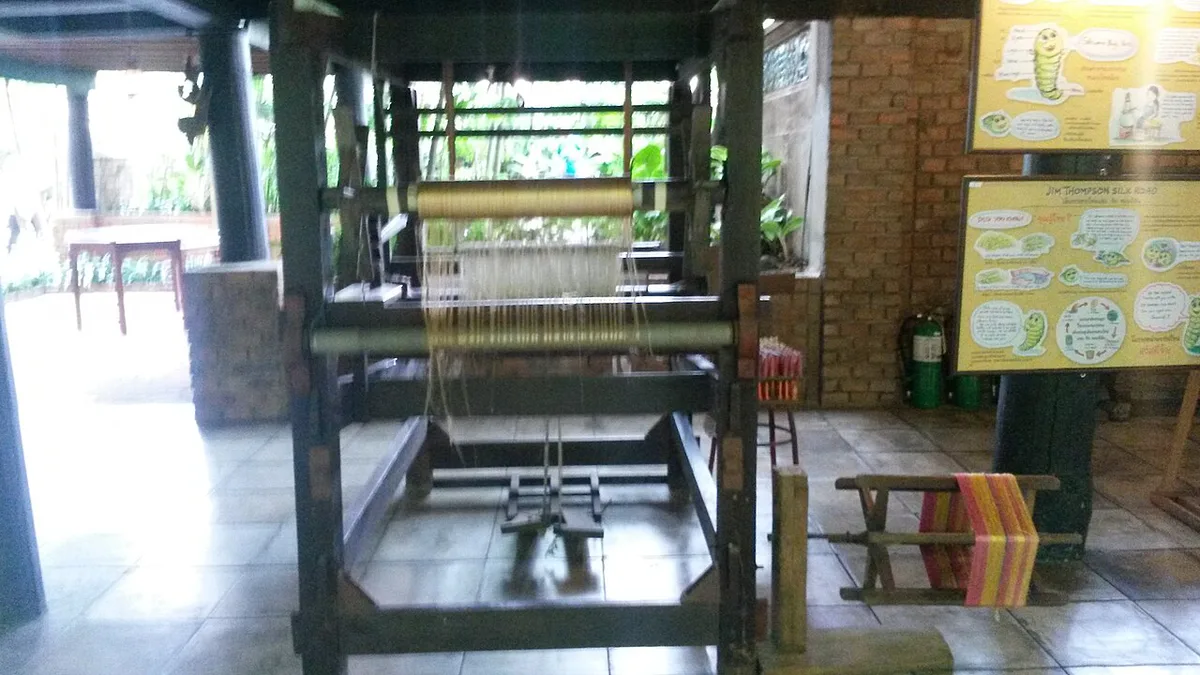
In Bangkok, the Jim Thompson House Museum is the natural starting point. Check its official site for current hours, ticket prices, and whether a shop operates on site. A visit gives you a reference for color, weight, and finish before you compare cloth elsewhere.
Where to Buy Thai Silk in Bangkok and Beyond
Match the place to your priorities: confidence, price, or time. Every tier below is relative, so verify details locally before you commit.
| Buyer type | Authenticity confidence | Price tier | Bargaining | Time cost | Best for |
|---|---|---|---|---|---|
| Museum-linked or established shop | Highest, with clear provenance | High | Usually fixed prices | Low, a half day with a museum visit | First-time buyers who want certainty |
| Bangkok markets and malls | Mixed, so inspect each piece | Low to mid | Common at market stalls | Medium, since comparing stalls takes time | Scarves and small gifts |
| Weaving villages in Isan | High when you buy from the weaver | Low to mid | Gentle, if at all | High, a day trip or overnight | Collectors and craft-minded travelers |
What to Expect to Pay and How to Bargain
Our sources give no reliable baht figures, so check current prices in person and compare at least three sellers. Handwoven silk costs more than machine silk because of the slow, manual work, so compare price against width and weight, not just the tag.
Each thread draws filaments from 10 to 20 cocoons, so machine-silk prices make a poor yardstick for handwoven cloth.
- Fixed-price shops rarely negotiate. Stall holders often do.
- Stay polite and smile. A How to Wai in Thailand: Thai Greeting Etiquette for Visitors sets a friendly tone.
- Learn a few useful Thai phrases for price questions.
- See Thai Customs & Etiquette: What Visitors Need to Know for wider shop etiquette.
Plan Your Time: Bangkok Half-Day vs Isan Trip
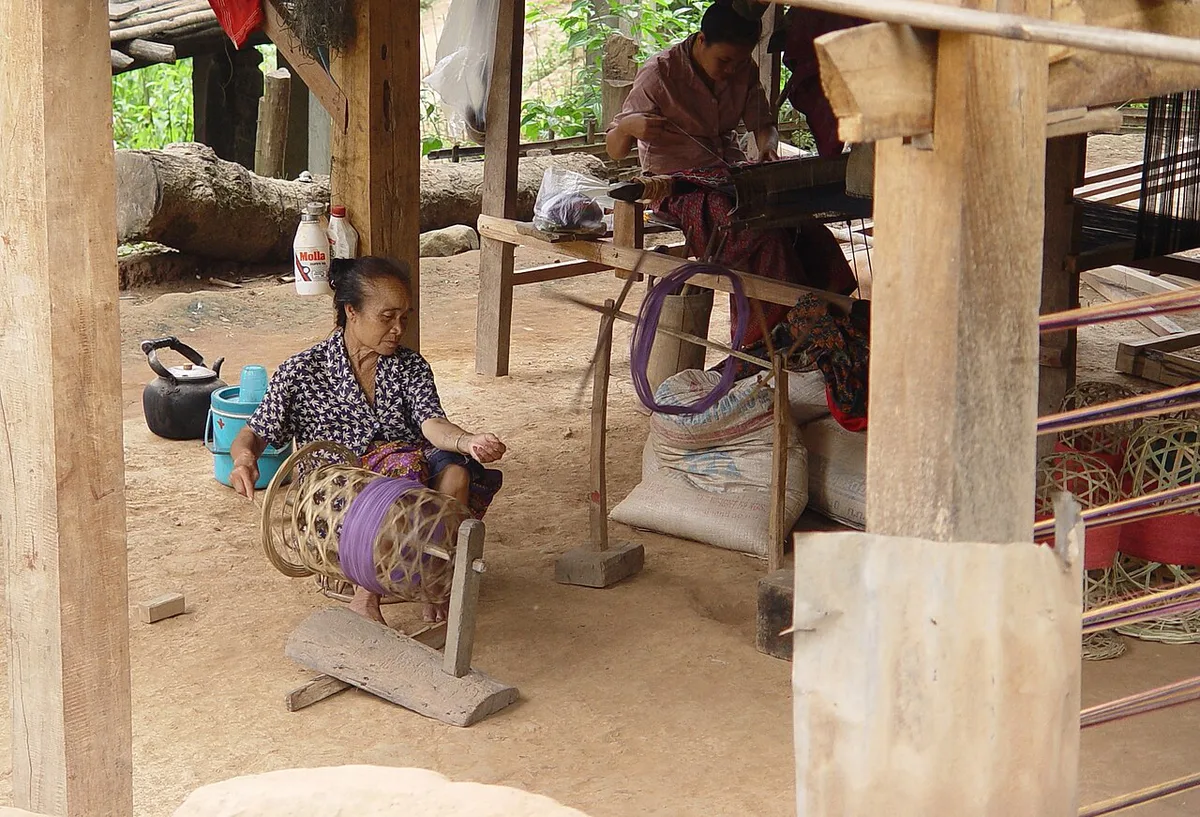
A Bangkok half day pairs a visit to the Jim Thompson House with shopping. Isan takes longer but puts you near the weavers in Nakhon Ratchasima, Surin, and Khon Kaen. Check official sources for transport options and travel times, because our sources do not supply them.
- Bangkok half day: lowest effort, best for comparing quality.
- Isan trip: higher time cost, best for buying direct and seeing looms.
- Pair a shopping day with 8 Thai Temples: Best Wats by Region, Costs and Etiquette if you want a mixed itinerary.
What to Buy and How to Care for It
Silk suits scarves, neckties, blouses, dresses, suits, and cushion covers. Our Thai souvenirs guide covers other gift ideas. Ask each seller for care instructions, since our sources give none. Check airline and customs rules for carry-on and export through official sources before you pack.
Mistakes to Avoid
Most silk regrets come from rushing the decision.
- Accepting a "silk" label without handling the cloth.
- Following touts who offer "special" gem and silk deals.
- Ignoring fabric width when comparing prices.
- Buying before you compare three stalls.
- Skipping care instructions at the till.
- Tipping or haggling awkwardly. Read Tipping in Thailand: How Much, Who and When (2026) for context.
Frequently Asked Questions
What's special about Thai silk?
Thai silk is handwoven, often with hand-reeled filament, and it has a two-color iridescent shimmer. Mat mii ikat and regional brocades give each region a recognizable look.
How much does Thai silk cost?
Our sources give no reliable baht figures, so check prices in person. Handwoven silk costs more than machine silk, so compare price against width and weight.
What are the best souvenirs to buy from Thailand?
Thai silk scarves and neckties are easy to pack and give. See our Thai souvenirs guide for other ideas.
Notes for your Thailand trip
Optional updates when we add or change a town or island guide.
You might also like
Continue reading
More guides you'll find useful