
Wat Lokayasutharam: Ayutthaya's Outdoor Reclining Buddha

Wat Lokayasutharam is worth 20 to 30 minutes, not a half-day. The draw is a single enormous reclining Buddha lying in the open, with a weathered prang behind it and almost nothing else standing. This guide covers where the site sits in Ayutthaya, how to reach it, what you actually see, how much time to budget, and which ruins fit naturally before or after.
The setting is part of the appeal, and part of the trade-off. The statue lies outdoors with no shelter from the midday sun, and there is very little on-site explanation, so a short briefing on what you are looking at pays off. It is also a working place of reverence, so expect local worshippers leaving offerings alongside tour groups.
What Wat Lokayasutharam actually is
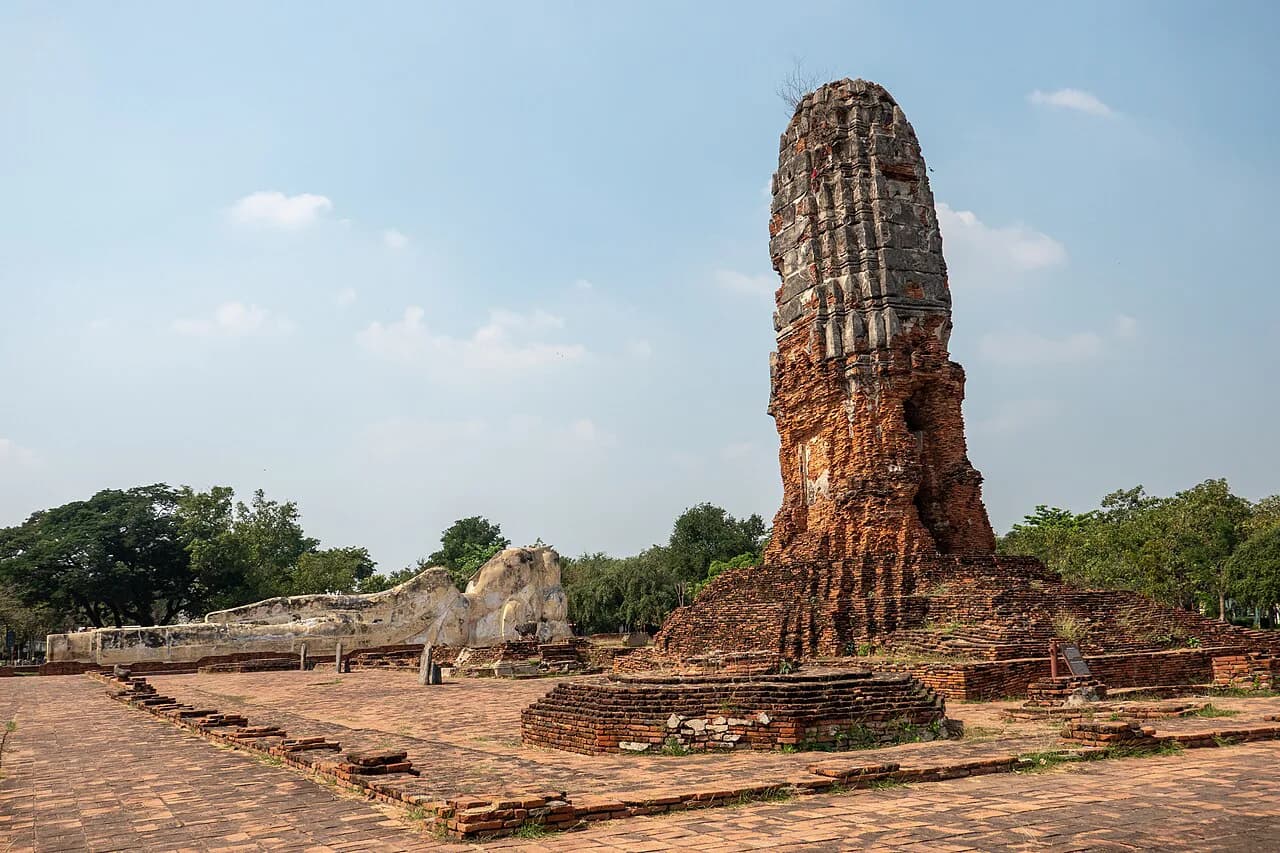
This is a ruined temple site rather than an active complex of halls and courtyards. Locals know the reclining Buddha as Phra Buddha Sai Yat, and visitors describe the once-royal temple as reduced to the statue plus a single standing prang. The essential visit is looking, photographing and quietly walking the perimeter.
Ayutthaya was the Thai capital for centuries before the city fell in 1767, and much of what you see across the province is the shell of that former capital. That context matters here: this is not a temple you enter so much as a monument you look at.
Because so little interpretive material is posted at the site, stories about the statue's history tend to come from guides and vary in detail. Treat confident onsite claims about kings and construction as lore unless you have read up first.

Where it sits in Ayutthaya
Wat Lokayasutharam is in Pratu Chai subdistrict of Phra Nakhon Si Ayutthaya, part of the Ayutthaya Historical Park. The park is a broad heritage area with several separately managed monuments rather than one walled site, so plan the stop as a point on a route, not a single destination. For the full set of monuments, see Ayutthaya Attractions: 12 Visitor Guides.
Distances between ruins on the island are short by vehicle and long on foot in the heat. A tuk-tuk or Grab hop from one monument to the next takes only minutes, which is why most visitors chain three or four stops in a morning. Walking between the central ruins is possible but eats time.

How to get there from Bangkok
The trip splits into two legs: Bangkok to Ayutthaya, then Ayutthaya to the monument. Trains leave from Bangkok's main stations and take roughly an hour to an hour and a half to Ayutthaya, while buses and minivans from the northern bus terminals take a similar amount of time depending on traffic. Confirm current departure points and times with the operator before you set out, since timetables shift.
From Ayutthaya's station or bus drop-off, take a tuk-tuk, a songthaew or a Grab to the ruins. The ride into the historic core is short, typically 10 to 20 minutes depending on where you start and how many stops you add. Agree on the fare or use the app before you set off, and keep the driver's number if you plan to continue to other temples.
Many travelers hire a driver or a tuk-tuk for a few hours to cover several sites, which suits this stop well because it needs so little time. If you are coming by train, book a return that leaves you a comfortable buffer in the afternoon. The ground leg is what shapes your day.
What you actually see
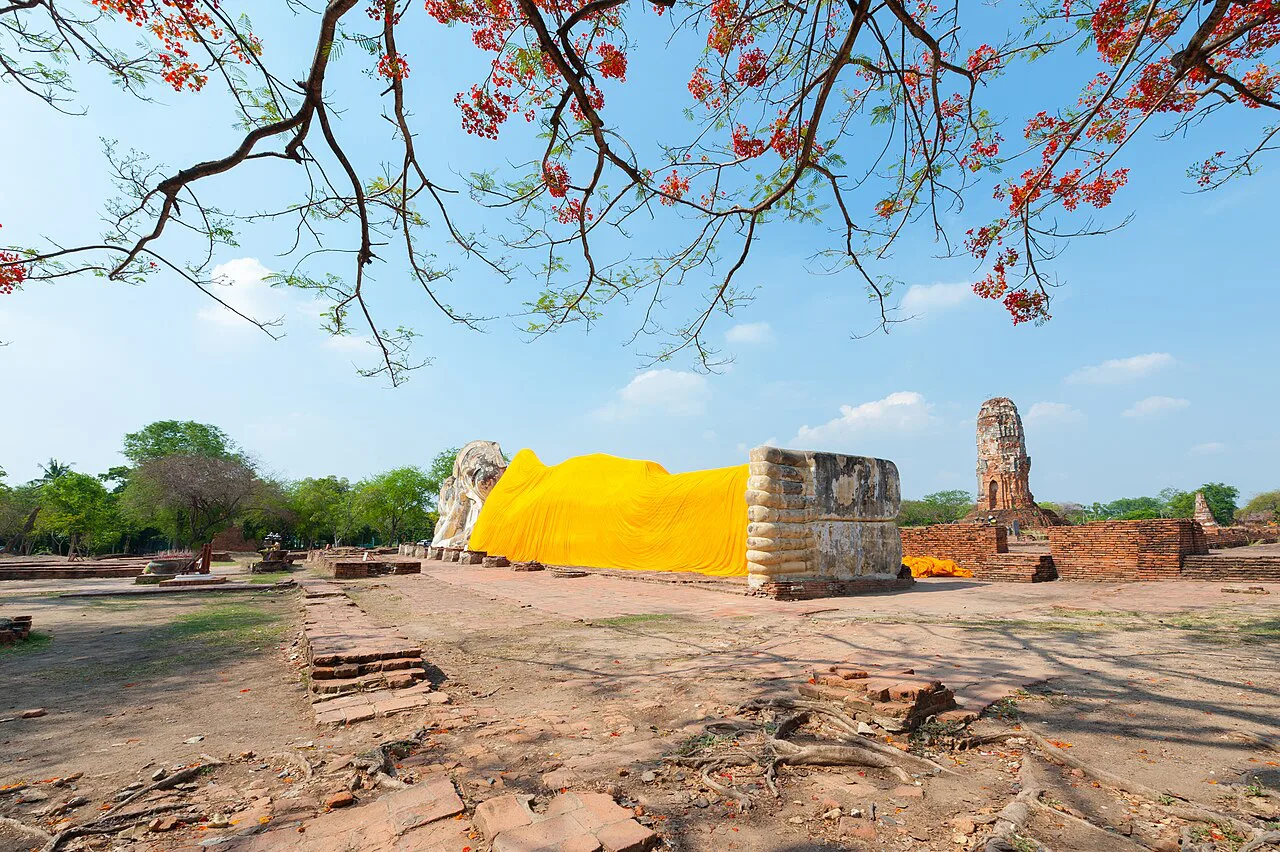
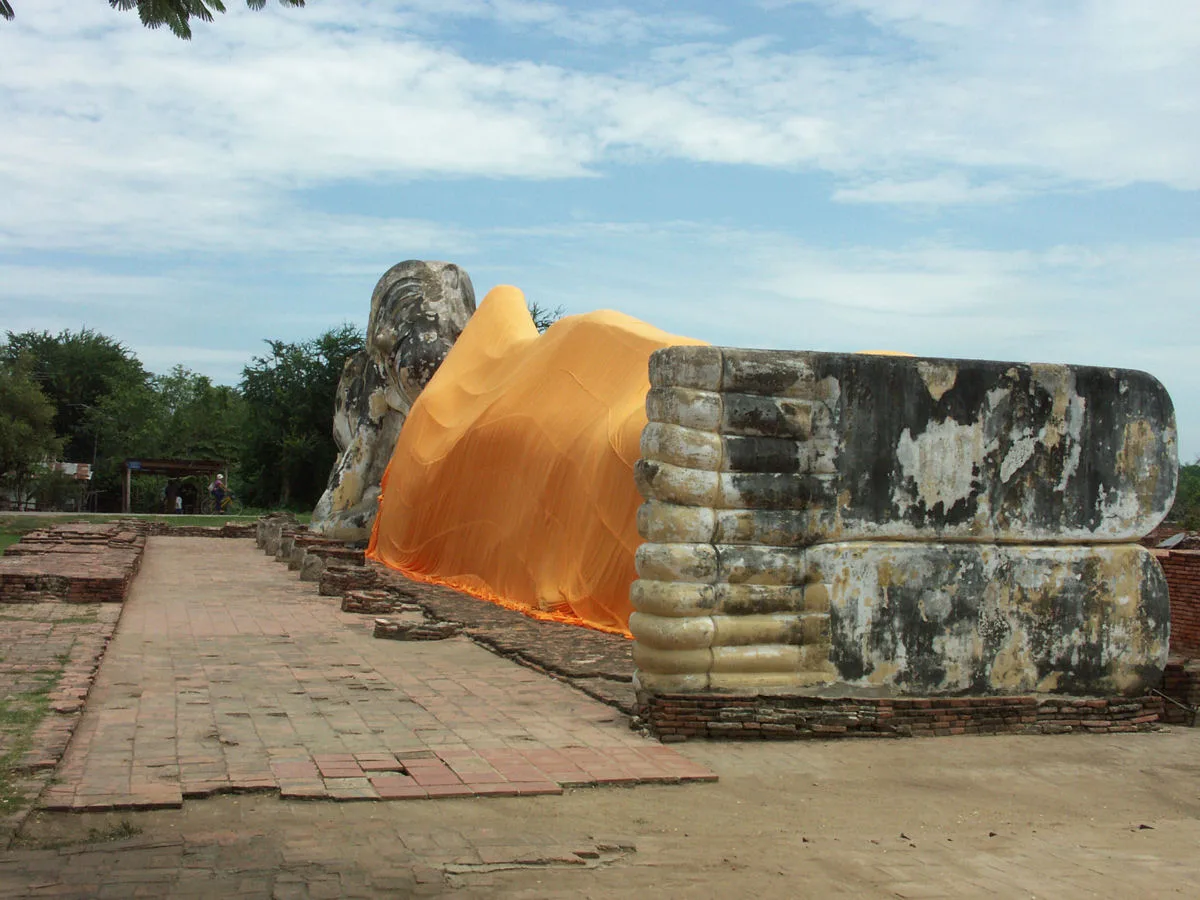
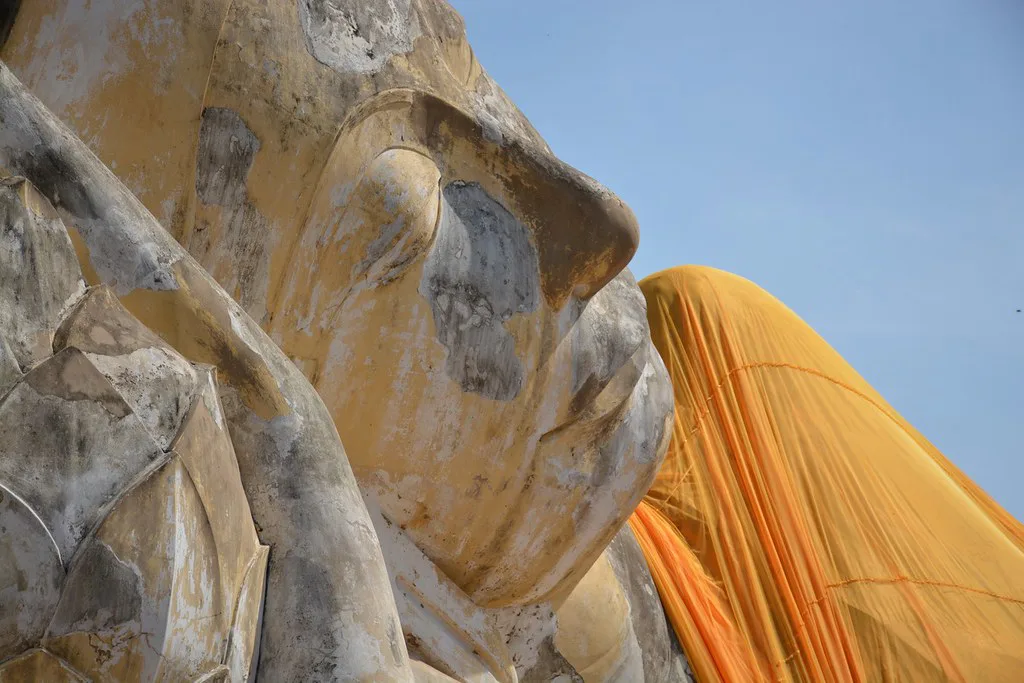
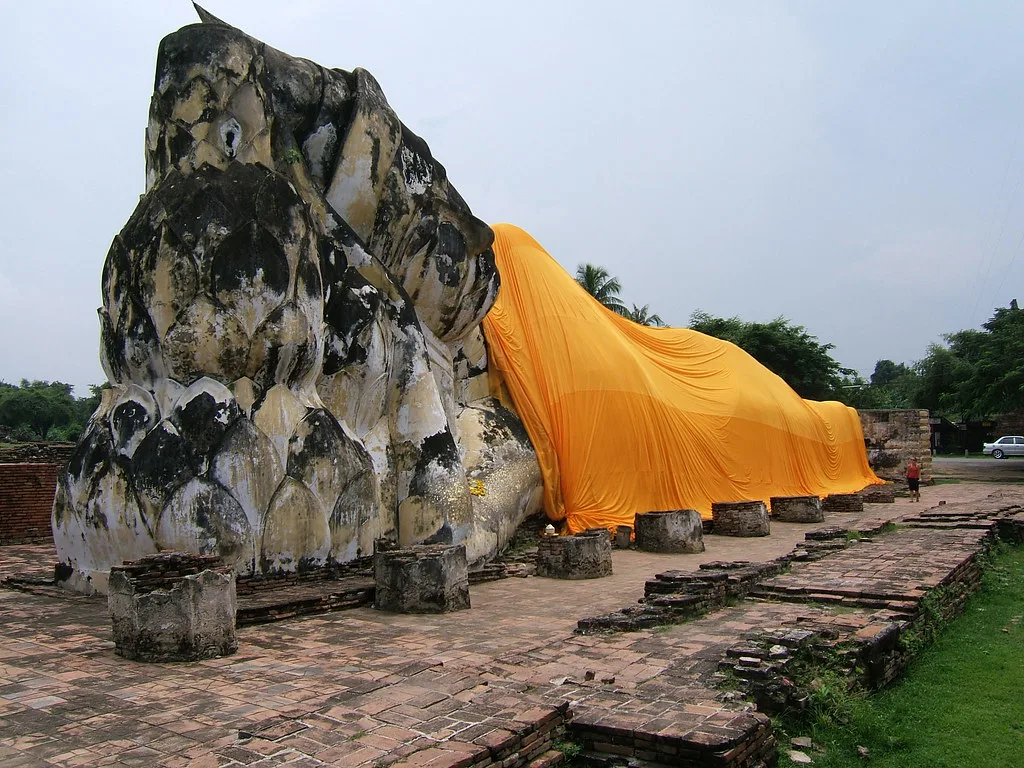
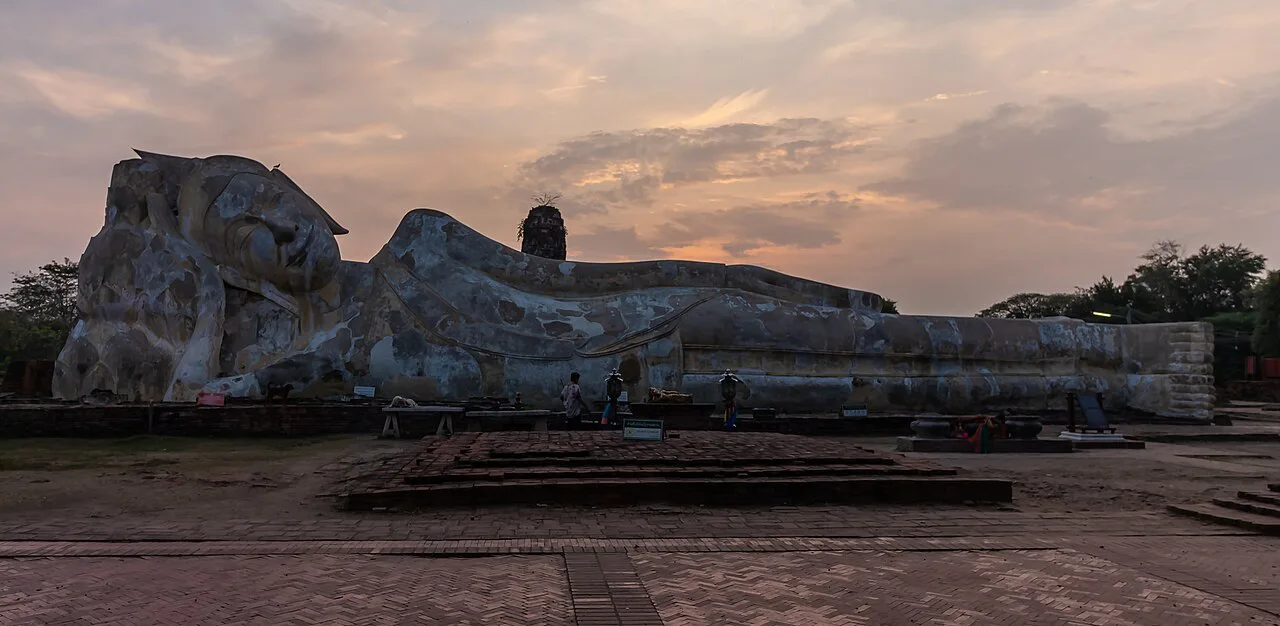
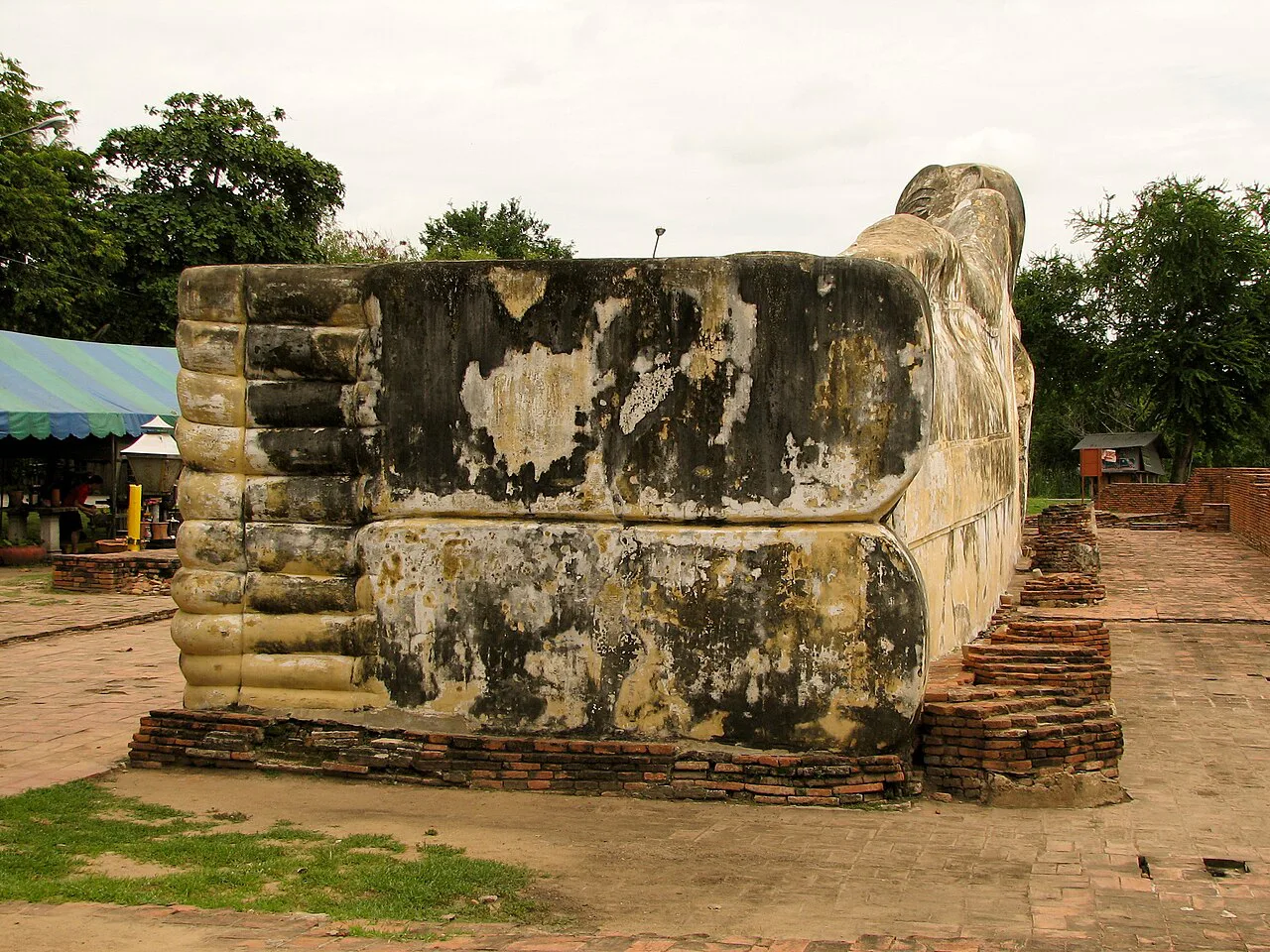
The reclining Buddha is the main event: a long brick-and-stucco figure lying on its side, head propped on a lotus and feet finishing square with even toes. Travel bloggers have put it at roughly 37 meters long and 8 meters high, but no authoritative figure is readily available, so treat those numbers as approximate. The statue is sometimes draped in a large marigold robe.
Behind the statue stands a lone prang, the tower form that once anchored the temple's center. Everything around it is low brick rubble and open ground, which is precisely why the site reads as a ruin rather than a shrine. Photographers should walk the length of the figure for the angle that shows both the head and the prang.
A makeshift altar in front of the statue draws offerings from local worshippers, so give people space when they are praying. Keep your voice down near the figure and resist climbing on the brickwork. Whether the monument is ticketed separately or covered by a wider park pass is best confirmed on arrival.
How long to allow
Twenty to thirty minutes covers the statue, the prang and a few photos comfortably. Add fifteen minutes if you want to sit in the shade of a nearby tree or watch worshippers at the altar. This is a stop, not a visit, and treating it as such keeps your day moving.
Pair it with the main ruins rather than making it the centerpiece. A realistic half-day loop takes in two or three larger monuments plus this one, with short vehicle hops between them. If you are building a full day in the city, the broader list of things to do in Ayutthaya helps you sequence the stops.
Hours, entry cost and tickets
Opening hours, entry fees and whether a separate ticket is required are not consistently published for this monument, and heritage-park ticketing in Ayutthaya varies by site. Check at the site entrance, at a nearby ticket office or with your driver on the day rather than relying on an old blog post. If a combined park pass is being sold, ask exactly which monuments it covers.
Budget for the possibility that there is no formal ticket window at all, in which case the visit is simply open. Bring small notes in case an attendant or donation box is present. Any quoted figure you see online may be out of date, so confirm locally before you plan around it.

What is nearby
The central ruins are the natural pairing. Wat Mahathat, famous for the Buddha head tangled in tree roots, is close enough to visit in the same hour, and Wat Ratchaburana sits nearby with its climbable central prang. Both are standard stops on any Ayutthaya circuit.
Wat Phra Si Sanphet, the royal temple with its three aligned chedis, and Wat Phra Ram are also within easy reach on the island. Slightly farther out, Wat Chaiwatthanaram on the riverbank is worth the extra ride for sunset. Build a loop of three or four and you have a solid morning.
If you want context before or after the ruins, the Ayutthaya Historical Study Centre and the Chao Sam Phraya National Museum both explain the former capital in air-conditioned comfort. Wat Yai Chai Mongkhon, east of the island, makes a good final stop with its large chedi.
Across the river, Wat Phanan Choeng is an active temple with a huge seated Buddha and its own following, while Wat Na Phra Men and Wat Thammikarat round out the quieter stops. These pair well with a slow afternoon rather than a rushed checklist.

Practical trade-offs
Expect full sun and little shade at midday, plus minimal signage explaining what you are looking at. Tour groups tend to arrive in mid-morning, so an early start or a late-afternoon stop gives you a quieter view of the statue. Bring water and plan the stop for the cooler edges of the day.
Treat this as a companion stop, not a headline sight. If your time in Ayutthaya is very short, the larger royal ruins deserve priority, and this is the one you slot in when it is on the way. If you have a half-day or more, it earns its place as a memorable pause.
Is the reclining Buddha worth the stop?
Yes, if you are already touring Ayutthaya and have 20 to 30 minutes to spare. The statue is genuinely striking, the open setting is photogenic, and the stop costs almost nothing in time. It is not worth a dedicated trip from Bangkok on its own.
Build it into a loop with Wat Mahathat or Wat Chaiwatthanaram, arrive early or late, and confirm any ticket requirement on the day. That is the honest shape of a visit to Wat Lokayasutharam.
Explore more Ayutthaya guides
Frequently Asked Questions
Is the reclining Buddha at Wat Lokayasutharam bigger than the one in Bangkok?
Wat Pho in Bangkok is the more famous reclining Buddha and is generally described as larger. The figure at Wat Lokayasutharam is substantial, but published dimensions for it are hard to pin down, and the site itself is a ruin, so the experience is quieter and much shorter. If scale is your priority, Wat Pho is the better stop.
Can you walk from Ayutthaya's central ruins to Wat Lokayasutharam?
Yes, it is walkable from the central monuments, but the heat makes vehicles the more comfortable choice. A tuk-tuk or Grab between stops takes only minutes. Most visitors combine three or four ruins in a morning using short rides.
Do you need a guide to understand Wat Lokayasutharam?
Not strictly, but signage on site is limited and accounts of the temple's history vary. A guide or a quick read beforehand helps you make sense of the statue and the prang. Otherwise, treat it as a visual stop rather than a lesson.
Was Ayutthaya the old capital of Thailand?
Yes. Ayutthaya was the Thai capital for centuries before the city fell in 1767, and the ruins across the province are what remains of that era. That history is why the city's monuments are grouped together as a heritage area.